
How Long Does It Take for Cockroach Treatment to Work? A Week-by-Week Breakdown
Cockroach treatments start working within 24 to 48 hours for sprays and contact insecticides, within hours for gel baits, and take 2 to 8 weeks for full colony elimination depending on infestation severity, species, and the methods used. Professional pest control combined with sanitation and IGRs delivers the fastest and most durable results.
Key Takeaways
Treatment timelines vary by product type, species, and how severe the infestation is. Here is what to expect at each stage.
- Sprays show a surge in roach activity within 1 to 3 days followed by a 70 to 80 percent kill by days 3 to 7, but effects are short-lived.
- Gel baits attract feeding within hours, reduce visible activity by week one, and can push mortality past 80 percent within two weeks.
- Professional cockroach treatment produces a clear drop in activity within the first week with full eradication typically reached in 2 to 8 weeks.
- Light infestations often collapse in 1 to 2 weeks; moderate ones in 3 to 8 weeks; heavy infestations in 1 to 4 months.
- IGRs disrupt molting and reproduction and need 4 to 6 months for major population reduction but are essential for breaking the lifecycle.
Immediate-Effect Sprays and Aerosols: What to Expect in the First Week
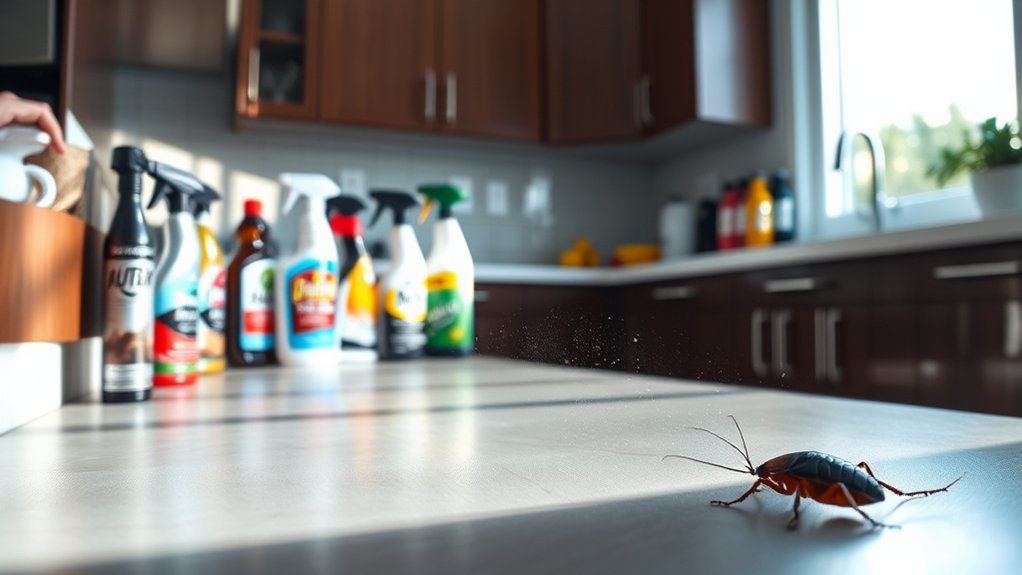
Sprays are the fastest-acting tool in cockroach pest control, but speed comes with trade-offs. Understanding what the first week looks like helps you distinguish a treatment that is working from one that is not.
Within the first 24 to 48 hours after spray application, expect a noticeable surge in roach activity. Cockroaches appear in unusual places, even during daylight, as the insecticide irritates their nervous system and flushes them from wall voids, crevices, and harborages. This spike is not a sign of failure; it means the chemical is reaching colonies in their hiding spots and forcing them out. Warmer house temperatures accelerate this process by increasing cockroach metabolism, so knockdown can happen faster in summer months.
Days 3 to 7: The Population Drop
The visible drop in live cockroaches arrives between days 3 and 7. In moderate infestations, expect 70 to 80 percent mortality during this window as residual insecticide on treated surfaces continues to work through contact.
- Dead roaches appearing in the open confirm the treatment is reaching active zones
- Sluggish or disoriented cockroaches indicate recent contact with residual spray
- German cockroaches may resist common spray actives and require multiple treatment rounds or rotation to boric acid dusts
- Avoid cleaning treated surfaces for several days to preserve residual effectiveness
- Keep areas dry and free of food debris to eliminate competing resources that slow the process
Most spray residuals remain active for 2 to 4 weeks depending on surface porosity, foot traffic, and cleaning frequency. Heavy traffic and frequent mopping on hard floors significantly shorten residual life. For heavy infestations, professional cockroach extermination methods that combine sprays with baits and IGRs produce stronger and more durable results than spray programs alone.
How Long Gel Baits Take to Work: Gradual Decline and Colony Collapse
Gel baits work on a slower clock than sprays, but their population-level impact runs far deeper. The process relies on the colony spreading the toxin among itself through feces, grooming, and cannibalism of poisoned individuals, which reaches cockroaches that never directly contact a treated surface.
Feeding activity begins within hours of correct bait placement. Cockroaches ingest the slow-acting active ingredient, return to the harborage while still mobile, and die there. This allows other colony members to contact lethal residues indirectly. Visible activity starts declining between days 3 and 7 as poisoned adults stop foraging and secondary transfer spreads through the population.
First-Week Drop: What Bait Progress Looks Like
Tracking bait consumption and sighting counts during the first week tells you whether the treatment plan is landing correctly.
- Declining sightings between days 3 and 7 confirm bait uptake is occurring
- Dead roaches appearing near bait placements indicate transfer kill is working
- If bait placements show no consumption after 5 days, relocate them closer to warm, dark harborages and travel routes
- Do not remove dead roaches immediately; they enable secondary poisoning through cannibalism
- Establish baseline trap counts before treatment and compare weekly to track actual population trends
Placement accuracy matters more than product quantity. Bait placed on open surfaces dries quickly and attracts less feeding than bait placed inside cracks, cabinet hinges, and behind appliances where cockroaches actually spend time. Choosing the right bait formulation for the species and placement environment significantly affects how quickly this first-week drop occurs.
Full Colony Collapse Timeframe
The first-week drop sets the pace for full elimination, but real homes vary significantly from controlled study conditions. Expect 80 percent or higher mortality within 14 days in lighter infestations with good sanitation. Heavy infestations with multiple harborage zones and competing food sources stretch the collapse process considerably.
| Infestation Level | Visible Reduction | Full Collapse |
|---|---|---|
| Light | 3 to 10 days | 2 to 3 weeks |
| Moderate | 1 to 3 weeks | 3 to 8 weeks |
| Heavy | 2 to 4 weeks | 1 to 4 months |
Keep bait fresh every 7 to 14 days as gel dries and loses palatability. Rotate active ingredients after 2 to 3 weeks if consumption drops without a matching decline in sightings. Plateaus at months one and two are common with some formulations before sharper declines occur as IGRs begin cutting reproduction.
Professional Treatments: Noticeable Results and Full Eradication Window
Professional pest control services combine inspection, species identification, targeted chemical placement, and follow-up scheduling in a way that self-treatment typically cannot match. The initial activity spike in the first 48 hours after professional treatment is expected and signals that products are disturbing hidden colonies.
A clear drop in live cockroaches should be visible within the first week. Dead roaches in treated areas, declining droppings, and reduced nighttime sighting counts are all positive indicators that bait and insecticides are reaching active zones.
First-Week Visible Reduction
Faster first-week results happen when gel baits are placed precisely where cockroaches feed, moisture and food sources are restricted between treatment and follow-up, and the technician revisits within 7 to 14 days to monitor and reapply. If clusters persist around pipes, corners, or wall crevices after the first week, flag those specific locations for the follow-up visit.
- Smaller infestations with confined harborages show stronger week-one declines
- German cockroach populations in kitchens and bathrooms typically respond faster than American cockroach colonies in basements and utility spaces
- Species that reproduce faster create more pressure on the treatment plan during the first week
- Reducing food debris, fixing moisture sources, and clearing clutter between visits accelerates visible reduction
Full Eradication Timeframe
For minor infestations, professional services often achieve full control within a few weeks. Moderate to severe cases typically reach complete elimination in 4 to 8 weeks when follow-up visits stay on schedule and sanitation is maintained throughout.
Fast knockdown from sprays or fumigation does not equal instant total collapse. Deep colonies in wall voids, under floors, and inside appliance motors continue producing nymphs until bait transfer and IGR effects accumulate across multiple generations. The extermination process is not linear; expect visible progress to slow after an initial dramatic drop before activity resumes its decline in weeks three and four.
What to expect after a professional cockroach treatment includes this slower middle phase, which is why maintaining your role in removing food, water, and clutter matters as much as the chemical products the technician applies.
Follow-Up Visit Schedule
The initial treatment knocks down active adults. Follow-up visits eliminate the eggs that survive first-round chemicals, the nymphs that hatch after treatment, and any resistant individuals that avoided contact with treated surfaces.
- First follow-up: 2 to 4 weeks after initial service to target newly hatched nymphs and survivors
- One-week emergency check: schedule this if activity spikes unexpectedly between planned visits
- Severe infestations or hot, humid environments: may require visits every 2 to 3 weeks during the first two months
- Each visit includes inspection, trap monitoring, bait reapplication, and product rotation as needed
- After elimination: shift to quarterly maintenance in multi-unit buildings and every 2 to 3 months during peak activity seasons
Life Cycle Factors: Eggs, Nymphs, and Insect Growth Regulators
Understanding the cockroach lifecycle explains why even successful treatments seem to stall before achieving full elimination. Eggs and nymphs create waves of new activity that extend the process well past the initial adult knockdown.
Females carry eggs inside a protective case called an ootheca containing 6 to 40 eggs depending on species. These cases are often tucked into crevices and wall voids where they are shielded from spray residues and even heat treatments. German cockroach egg cases hatch within 20 to 30 days. American cockroach cases take 6 to 8 weeks. Oriental cockroach cases can take up to two months. Warm, humid environments inside walls and under appliances boost egg survival rates and accelerate hatching.
Why IGRs Are Essential for Complete Elimination
Once nymphs hatch, they go through 6 to 14 molting cycles before reaching reproductive age. Fast species like German cockroaches can mature in as little as 40 days. Each new generation of adults that reaches reproductive age resets the infestation pressure on the treatment program.
Insect growth regulators interrupt this process by mimicking juvenile hormones and preventing nymphs from maturing into breeding adults. Some IGR formulations also reduce hatch rates by affecting embryonic development inside egg cases. Cockroach lifecycle timelines by species make clear why IGRs need 4 to 6 months to show maximum population reduction: they work across multiple generations, not just the current adult population.
- Time follow-up visits to coincide with expected egg hatch windows for each species
- Deploy point-source IGR devices in harborage zones alongside gel bait at every treatment cycle
- Combine baits, residual sprays, and IGRs to bridge the coverage gaps that egg resistance creates
- Do not discontinue IGR applications after the first visible improvement; population suppression depends on maintaining IGR pressure across multiple nymph generations
How Infestation Severity and Environment Change the Timeline
The conditions inside a house or commercial property directly determine how quickly any treatment plan reaches full control. No product timeline is fixed independently of the environment it operates in.
Small infestations with a single harborage zone often show visible drops within days and can collapse within 1 to 2 weeks after a single professional visit. Moderate to severe cases with spread-out colonies across multiple rooms, appliances, and wall voids require repeated treatment passes because no single application reaches every active zone simultaneously.
Environmental Factors That Slow Treatment Progress
Heat, humidity, food availability, and structural complexity all extend the elimination timeline by giving cockroaches the resources and shelter they need to survive and reproduce faster than treatments can suppress them.
- High humidity and moisture inside walls boost egg survival and accelerate nymph development
- Exposed food and water sources reduce bait uptake by giving cockroaches competing options
- Clutter, wall voids, and gaps in baseboards shield colonies from direct product contact
- Multi-unit buildings and complex layouts add coordination challenges that slow building-wide elimination
- Poor sanitation between treatment visits resets the resource environment and slows colony collapse
- Entry points left unsealed allow reinfestation pressure from neighboring units or exterior harborages
You directly accelerate results by reducing moisture sources, sealing entry points, decluttering all active zones, maintaining clean surfaces, and securing food in sealed containers. Understanding what attracts cockroaches to specific areas inside a house guides where these sanitation efforts need to be most concentrated.
Method Comparison: Speed, Effectiveness, and When to Combine Approaches
Each treatment method operates on a different timeline and delivers different levels of colony penetration. Knowing the trade-offs helps you build a plan that covers all three phases: immediate knockdown, sustained reduction, and long-term prevention.
Sprays deliver contact kill within minutes and flush roaches from hiding spots within hours. Their residual effect lasts 2 to 4 weeks on most surfaces, but they do not reach eggs or deeply hidden colonies and they cannot stop reproduction. Gel baits work more slowly but penetrate far deeper into the colony through transfer kill. Full visible decline takes days to weeks, but 80 percent or higher mortality within 14 days is achievable in controlled conditions. Insect growth regulators are the slowest tool in terms of visible results, taking 4 to 6 months for major population reduction, but they are the only category that directly stops colony growth by preventing reproduction.
When to Combine Methods for Faster Results
Combining tools covers the gaps that each individual method leaves on its own. This is the approach behind every effective professional extermination process.
- Use sprays for quick surface knockdown in the first visit, then follow with gel bait placement in harborages
- Add IGRs during the same visit to begin disrupting nymph development immediately
- Never apply repellent sprays within two feet of active bait placements; repellency drives cockroaches away from bait and undermines the transfer kill mechanism
- Use sticky traps throughout the entire program to monitor activity trends and guide product adjustments
- Rotate bait active ingredients every 2 to 3 weeks to prevent resistance and maintain palatability
DIY versus professional cockroach extermination comes down to whether you can execute this multi-layered approach consistently. Products are available to homeowners, but the application precision, product rotation, and follow-up scheduling that professional services provide are difficult to replicate without training and experience.
Seeing Dead Cockroaches After Treatment: What It Means
Finding dead cockroaches after treatment is one of the most reassuring signs that the control program is working. It confirms that bait transfer is reaching colony members beyond the immediate placement zones and that spray residuals are making contact with foraging adults.
Seeing dead cockroaches after treatment in large numbers during the first week indicates strong initial knockdown. A continued trickle of dead roaches through weeks two and three indicates that bait transfer and IGR effects are still actively working through the population. Cockroaches found dead near entry points or exterior walls may indicate reinfestation pressure from outside that needs to be addressed with exclusion measures.
How Long It Takes for Cockroaches to Die After Extermination
The timeline from exterminator visit to complete elimination is not the same as how quickly individual cockroaches die after contacting treatment products. Individual contact kill from sprays can happen within minutes to hours. Gel bait mortality typically occurs 24 to 72 hours after ingestion, which is intentional: the delayed action allows transfer to other colony members before the exposed roach dies.
How long it takes for cockroaches to die after extermination at the colony level depends on infestation size, species, and whether eggs survive the initial treatment. The individual die-off timeline and the full elimination timeline are two separate measurements that often confuse homeowners into stopping treatment too early.
How to Tell If Cockroach Treatment Is Working
Monitoring progress systematically is what separates a treatment plan that adjusts and succeeds from one that stalls. Do not rely only on visual sightings, which fluctuate naturally during treatment.
- Sticky trap counts declining week over week confirm population reduction is occurring
- Bait consumption decreasing at established placement points indicates fewer surviving adults are feeding
- Droppings becoming less frequent or absent in previously active zones signals that foraging activity is collapsing
- Daytime sightings dropping below the baseline established before treatment began confirms measurable progress
- No new egg cases appearing during inspection checks indicates that reproduction has been successfully disrupted
If trap counts are not declining after two full weeks of correct bait application and maintained sanitation, the treatment plan needs adjustment. Either the bait active needs rotation, a harborage zone was missed during inspection, or reinfestation through unsealed entry points is undermining results. Stopping cockroaches from coming back after elimination requires keeping all these monitoring practices in place as a permanent habit rather than stopping them once visible activity disappears.
Frequently Asked Questions
How Can I Tell if the Treatment Is Actually Working?
Look for a surge in visible cockroach activity within the first 24 to 48 hours, followed by a clear decline in sightings by day 5 to 7. Dead cockroaches appearing in treated areas, declining droppings, sluggish or disoriented insects, and falling sticky trap counts all confirm the treatment is having an effect. Persistent nymph sightings after week two suggest egg cases survived the initial treatment and a follow-up visit with IGR application is needed.
Is It Safe for Pets and Children During and After Treatment?
Yes, when the correct precautions are followed. Keep pets and children out of treated areas during application and until all residues are fully dry, which typically takes 1 to 4 hours depending on the product. Place gel baits in locations inaccessible to pets and children. Ventilate rooms thoroughly after spray applications. For heat treatments, vacate the entire property for the duration specified by the technician. Monitor for any unusual symptoms after reentry and contact the pest control service or a veterinarian if concerned.
What Preparation Should I Do Before Treatment?
Declutter all rooms, empty cabinets and drawers in kitchens and bathrooms, and deep clean all food preparation surfaces. Store all food in sealed containers and remove trash, pet food bowls, and water dishes. Pull appliances away from walls to give the technician access to wall gaps and utility penetrations. Vacuum thoroughly to remove egg cases and debris that could interfere with bait placement. Relocate pets and fish tanks before treatment begins and cover any exposed aquarium filters.
Will Treatments Affect Other Insects in the House?
Sprays and dusts applied broadly can harm other crawling insects including beneficial species like ground beetles and certain spiders. Heat treatments eliminate all insects present during the treatment, beneficial or not. Gel baits are highly selective because they rely on cockroach-specific attractants and feeding behavior, so they pose far less risk to non-target insects. IGRs may affect other insect species that share similar hormonal development pathways. Using localized crack-and-crevice applications and IPM practices minimizes impact on beneficial insects in and around the house.
How Much Do Different Cockroach Treatments Typically Cost?
Professional cockroach extermination costs typically range from $150 to $300 for a single visit and $200 to $500 for full treatment packages that include follow-up visits. Ongoing quarterly maintenance visits run $30 to $100 each. DIY sprays cost $5 to $20, gel baits $10 to $30, and IGR products $15 to $40. Sticky monitoring traps run $5 to $15 per pack. Heat treatment for severe or whole-structure infestations typically starts around $400 and increases with the size of the property.
When Should I Call a Professional Instead of Doing It Myself?
Call a professional if two correctly applied rounds of DIY gel bait and sanitation have not produced measurable population decline within four weeks. Heavy infestations across multiple rooms, German cockroach colonies in kitchens with evidence of multiple harborages, American cockroach activity in basement utility areas, or any infestation in a multi-unit building where neighbors have untreated colonies all warrant professional intervention. Exterminator costs by city vary, but professional service is almost always more cost-effective than months of failed DIY attempts against an established colony.
{
“@context”: “https://schema.org”,
“@type”: “FAQPage”,
“mainEntity”: [
{
“@type”: “Question”,
“name”: “How Can I Tell if the Cockroach Treatment Is Actually Working?”,
“acceptedAnswer”: {
“@type”: “Answer”,
“text”: “Look for a surge in visible cockroach activity within the first 24 to 48 hours, followed by a clear decline in sightings by day 5 to 7. Dead cockroaches appearing in treated areas, declining droppings, sluggish or disoriented insects, and falling sticky trap counts all confirm the treatment is having an effect. Persistent nymph sightings after week two suggest egg cases survived the initial treatment and a follow-up visit with IGR application is needed.”
}
},
{
“@type”: “Question”,
“name”: “Is It Safe for Pets and Children During and After Cockroach Treatment?”,
“acceptedAnswer”: {
“@type”: “Answer”,
“text”: “Yes, when the correct precautions are followed. Keep pets and children out of treated areas during application and until all residues are fully dry, which typically takes 1 to 4 hours depending on the product. Place gel baits in locations inaccessible to pets and children. Ventilate rooms thoroughly after spray applications. For heat treatments, vacate the entire property for the duration specified by the technician. Monitor for any unusual symptoms after reentry and contact the pest control service or a veterinarian if concerned.”
}
},
{
“@type”: “Question”,
“name”: “What Preparation Should I Do Before Cockroach Treatment?”,
“acceptedAnswer”: {
“@type”: “Answer”,
“text”: “Declutter all rooms, empty cabinets and drawers in kitchens and bathrooms, and deep clean all food preparation surfaces. Store all food in sealed containers and remove trash, pet food bowls, and water dishes. Pull appliances away from walls to give the technician access to wall gaps and utility penetrations. Vacuum thoroughly to remove egg cases and debris that could interfere with bait placement. Relocate pets and fish tanks before treatment begins and cover any exposed aquarium filters.”
}
},
{
“@type”: “Question”,
“name”: “Will Cockroach Treatments Affect Other Insects in the House?”,
“acceptedAnswer”: {
“@type”: “Answer”,
“text”: “Sprays and dusts applied broadly can harm other crawling insects including beneficial species like ground beetles and certain spiders. Heat treatments eliminate all insects present during the treatment, beneficial or not. Gel baits are highly selective because they rely on cockroach-specific attractants and feeding behavior, so they pose far less risk to non-target insects. IGRs may affect other insect species that share similar hormonal development pathways. Using localized crack-and-crevice applications and IPM practices minimizes impact on beneficial insects in and around the house.”
}
},
{
“@type”: “Question”,
“name”: “How Much Do Different Cockroach Treatments Typically Cost?”,
“acceptedAnswer”: {
“@type”: “Answer”,
“text”: “Professional cockroach extermination typically costs $150 to $300 for a single visit and $200 to $500 for full treatment packages that include follow-up visits. Ongoing quarterly maintenance visits run $30 to $100 each. DIY sprays cost $5 to $20, gel baits $10 to $30, and IGR products $15 to $40. Sticky monitoring traps run $5 to $15 per pack. Heat treatment for severe or whole-structure infestations typically starts around $400 and increases with the size of the property.”
}
},
{
“@type”: “Question”,
“name”: “When Should I Call a Professional Instead of Doing It Myself?”,
“acceptedAnswer”: {
“@type”: “Answer”,
“text”: “Call a professional if two correctly applied rounds of DIY gel bait and sanitation have not produced measurable population decline within four weeks. Heavy infestations across multiple rooms, German cockroach colonies in kitchens with evidence of multiple harborages, American cockroach activity in basement utility areas, or any infestation in a multi-unit building where neighbors have untreated colonies all warrant professional intervention. Professional service is almost always more cost-effective than months of failed DIY attempts against an established colony.”
}
}
]
}
