

Best Cockroach Prevention Protocols for Restaurants and Food Service
Keep cockroaches out by pairing strict daily sanitation with tight building exclusion and continuous monitoring. Sweep, mop, and sanitize all prep areas; empty and disinfect bins and grease traps daily. Seal cracks, repair door sweeps, keep doors shut, and elevate equipment six inches. Use glue boards to spot hotspots, log sightings, and schedule routine inspections. Manage waste with sealed containers, cleaned dumpsters, and dry, well-lit storage. This protects public health, compliance, and reputation—and the next steps make it practical.
Key Takeaways
- Enforce daily sanitation: sweep, mop edges and under equipment, sanitize prep areas, wash dishes promptly, and empty, disinfect, and reliner trash and grease traps.
- Exclude entry points: seal cracks and gaps, repair door sweeps and screens, maintain drains, and keep doors closed with effective weather stripping.
- Implement IPM: monitor with glue boards, log sightings and actions, train staff, and schedule regular inspections with a licensed pest management provider.
- Manage waste strictly: use sealed, tight-lidded bins, clean and dry waste areas, remove trash daily, and place dumpsters clean and away from buildings.
- Maintain equipment and layout: elevate or seal equipment six inches off floors and coordinate treatments during downtime to minimize disruption.
Sanitation and Hygiene Protocols That Minimize Infestations
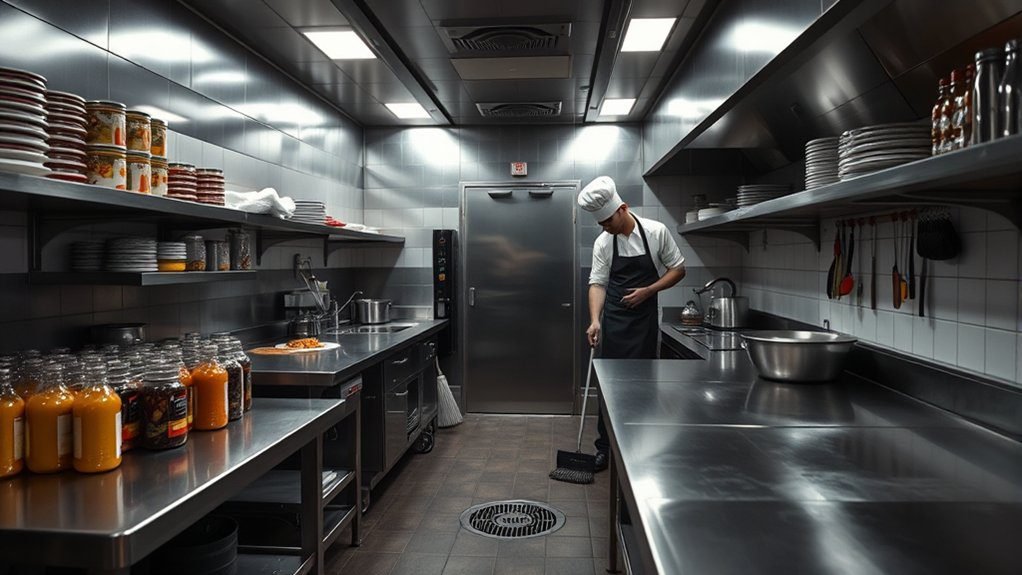
Cleanliness is your first line of defense against cockroaches, and it starts with disciplined daily routines that remove food, water, and shelter.
Sweep and mop thoroughly, hitting edges and the space under and behind equipment. Sanitize counters and prep areas daily. Wash dishes promptly, and empty, disinfect, and reliner trash bins and grease traps each day. Keep dumpster lids sealed and remove food scraps frequently. Coordinate with your licensed pest control provider to schedule treatments during downtime to minimize disruption and allow residuals to settle.
Control moisture relentlessly. Fix leaks under sinks and near cooklines immediately. Eliminate standing water, keep floor drains and grease traps dry and clean, and ventilate kitchens and storage to lower humidity.
Protect food and cut harborage. Store ingredients sealed, off the floor. Organize shelves, remove cardboard and paper, and rotate stock to prevent spoilage. Deep clean pantries, behind equipment, and inside ovens on a schedule.
Train staff. Teach roach biology, signs, and “clean as you go.” Document cleaning, inspections, and sightings. Use sticky traps, inspect hotspots, and coordinate with your pest control partner.
Facility Maintenance and Exclusion Tactics to Block Entry
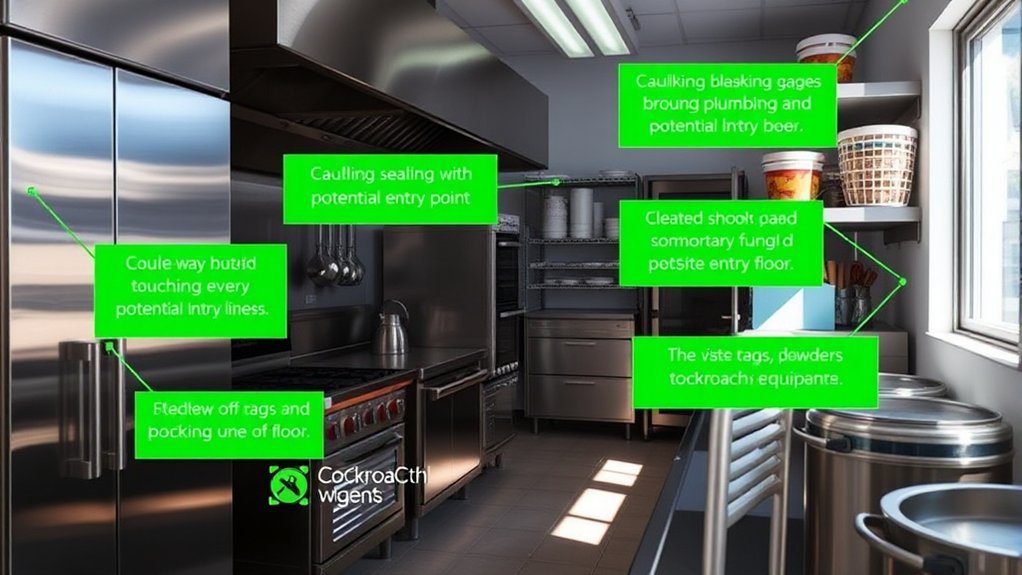
While sanitation keeps roaches hungry and thirsty, exclusion keeps them out. Start by sealing cracks, crevices, and gaps around walls, baseboards, windows, and doors with weather-resistant caulk; pack copper mesh or steel wool into larger voids to stop chewing pests.
Repair damaged door sweeps, weather stripping, torn screens, and seal openings around plumbing, conduits, and utility lines—common cockroach highways. Maintain foundations, drains, and floor penetrations to close hidden routes. Health inspectors may impose fines or closures for infestations, so rigorous exclusion helps protect your reputation.
Modify the facility to remove harborage: elevate or seal equipment at least six inches off the floor, seal fixtures attached to walls, install tight-fitting sweeps, and screen vents. Purge cardboard quickly or store it sealed, and keep storage organized.
Inspect routinely—under, behind, and inside equipment—and monitor deliveries for hitchhikers. Fix leaks, remove standing water and condensation, clean grease traps and floor drains, and keep basements and storage dry and ventilated.
Keep doors closed, use automatic closers, and maintain effective weather stripping.
Integrated Pest Management Strategies for Food Service

Even before you reach for chemicals, integrate monitoring, sanitation, and targeted controls into a single, documented IPM plan.
Use glue boards and traps on defined routes to reveal hotspots, guide actions, and reduce unnecessary treatments. Log every sighting, inspection, and intervention so you can spot trends, prove compliance, and brief health inspectors confidently. Schedule regular inspections by trained staff and your pest management provider to verify conditions and trigger timely responses. Incorporate regular rodent monitoring alongside cockroach checks, placing bait and traps near droppings to identify activity and adapt controls as part of a comprehensive IPM.
Tighten sanitation to cut off food, water, and harborage. Clean spills immediately, empty lined, sealed trash daily, and scrub drains with enzymatic or organic agents to remove grease.
Remove dead insects, egg cases, and frass to eliminate pest allergens that feed nymphs. Review practices with your provider and adjust.
When needed, deploy low-toxicity baits as targeted spot treatments. Place baits in harborage based on pest behavior, and coordinate timing with inspections.
Train staff to recognize signs, report quickly, and uphold daily routines. Maintain clear communication for continuous improvement.
Mechanical and Physical Controls That Work Without Broad Chemicals
Because cockroaches exploit tiny gaps, your strongest non-chemical defense is physical control: exclude, trap, and remove them. Weekly inspections are critical in restaurants to catch early signs of activity and document actions as part of an IPM program.
Seal cracks as small as 1/16 inch in walls, door frames, utility penetrations, countertops, cabinets, and behind appliances. Install door sweeps, weather stripping, and tight-fitting screens on drains, vents, and pipe openings. Repair damaged grout, wallboard, and kick plates to erase harborages and keep them out long term.
Target them where they travel. Place bait stations behind refrigerators, along baseboards, near sinks, inside wall voids, and beneath heavy equipment. Apply bait gels precisely in cracks, drawer frames, and under counters with precision tips; use food-safe dusts only inside inaccessible voids.
Deploy sticky monitors to map activity, then rotate trap locations to follow fresh pressure.
Modify habitat to make survival hard. Lower humidity, ventilate, and stabilize temperatures. Remove clutter and cardboard. Shield warm equipment bays.
Vacuum cracks and access points, then pair heat treatments with sealing for durable, chemical-sparing control.
Waste Management Practices That Deny Food and Water
You shut roaches out by using sealed, pest‑proof bins with tight‑fitting lids and durable liners.
Place dumpsters away from the building, keep them clean, and store all waste only in covered containers.
Remove trash on a strict schedule before it overflows or leaks, and train staff to report any missed pickups immediately. Cockroach activity can lead to health risks, as they spread bacteria like Salmonella and E. coli that contaminate food and surfaces.
Sealed, Pest-Proof Bins
While scraps and spills are inevitable in a kitchen, sealed, pest-proof bins cut off cockroaches’ access to food and water at the source. Choose durable, rust-proof bins with tight lids, pest-proof gaskets, and airtight liners (minimum 1.9 mm). Elevate bins 6 inches off the floor and keep them a few inches from walls to deter harborage and allow cleaning. Line each bin with heavy-duty bags, place a bleach-soaked absorbent rag at the bottom and top, and knot bags tightly. Avoid cardboard or paper liners. Position bins away from prep zones, in clean, well-lit areas, and rinse recyclables before tossing. Clean bins regularly with approved sanitizers, inspect frequently, and remove any nests. Use lockable lids, screened openings, and door sweeps.
| Lid Clamped | Gasket Sealed | Bin Elevated |
|---|---|---|
| Thick Liner | Bleach Rag | Bag Knotted |
| Clean Zone | Screened Vents | Door Sweeps |
Timely Waste Removal
Even a spotless line can attract roaches if trash lingers. Remove garbage at least daily and never leave food waste overnight.
Empty bins before they overflow to avoid odors and residue that pull pests in. Coordinate pickup with your hauler so trash isn’t stored long enough to become a breeding ground.
Keep dumpsters clean, lidded, and positioned away from doors and prep areas on hard, cleanable surfaces.
1) Set strict schedules: log removal times, align with municipal collection, and inspect dumpsters and drains.
2) Contain and clean: use heavy‑duty, tight‑lidded containers with liners; sanitize bins, clear spills immediately, and keep waste zones dry.
3) Control the environment: maintain drainage, seal cracks, use pest‑proof enclosures, and train staff to report leaks and follow protocols.
Health, Compliance, and Reputation Impacts of Effective Control
Although cockroach control is often viewed as routine maintenance, effective prevention directly safeguards health, preserves compliance, and protects your reputation.
Effective cockroach prevention safeguards health, ensures compliance, and protects your hard-earned reputation.
Cockroaches carry E. coli, Salmonella, and dysentery-causing bacteria, so prompt control and strict sanitation reduce contamination on food-contact surfaces and cut foodborne illness risk. You also lower allergens and asthma triggers for staff and guests by removing food residues, water, and shelter, which boosts overall hygiene.
Compliance hinges on documented prevention. Inspectors issue critical violations for sightings, leading to fines or closures. By running an IPM program—focused on sanitation, exclusion, targeted treatments, and routine monitoring—you align with regulatory best practices.
Keep service records and trend logs to prove due diligence and avoid repeat violations that threaten licensing.
Reputation follows results. Guests quickly report sightings, and negative reviews drain revenue. A pest-free environment builds trust, supports strong public health scores, and differentiates your brand, preventing long-term damage from bad publicity.
Frequently Asked Questions
How Do We Select a Licensed Pest Control Provider?
Verify current state pesticide business license and technician certifications, confirm food-service experience, ask for credentials, IPM-focused scope, inspection reports, and records. Check references, audit readiness, and product choices. Validate through state databases. Prioritize local expertise and clear service documentation.
What Documentation Satisfies Health Inspector Pest-Control Requirements?
You satisfy inspectors with pest service records, sighting logs, HACCP plans, sanitation schedules, structural maintenance records, IPM details, training proof, standardized checklists, verification follow-ups, retention per code, and accessible on-site files. Keep digital/written logs updated, legible, and quickly retrievable.
How Often Should We Audit Staff Pest-Prevention Training?
Audit staff pest-prevention training monthly, shift to weekly in high-risk seasons, and conduct quarterly trend reviews. Verify knowledge, observe practices, and review records. Increase frequency after incidents or changes. Align with regulatory standards and your risk assessment to stay compliant.
What Budget Should We Allocate Annually for Cockroach Prevention?
Allocate $900–$1,800 annually for monthly service; $400–$1,000 if quarterly. Budget extra for emergencies and severe infestations. Include funds for inspections, monitoring, exclusion, and sanitation fixes. Adjust for size, layout, pest pressure, and seasonal spikes.
How Do We Handle Pest Incidents During Peak Service Hours?
Designate a trained responder, communicate silently, and discreetly isolate the area. Clear and sanitize contaminated items, deploy portable traps, and maintain visible cleanliness. Log the sighting, conduct quick inspections, replace affected supplies, and call pest control immediately if severity escalates.
Conclusion
You’ve got the tools to keep cockroaches out and your kitchen compliant. Focus on daily sanitation, fix structural gaps, and seal entry points. Use IPM to monitor, target hotspots, and verify results. Rely on traps, heat, and physical removal before chemicals, and choose least-risk products if needed. Manage waste tightly—dry, sealed, and removed often. Document everything. You’ll protect food safety, pass inspections, and safeguard your brand while cutting costs and preventing infestations before they start.
