
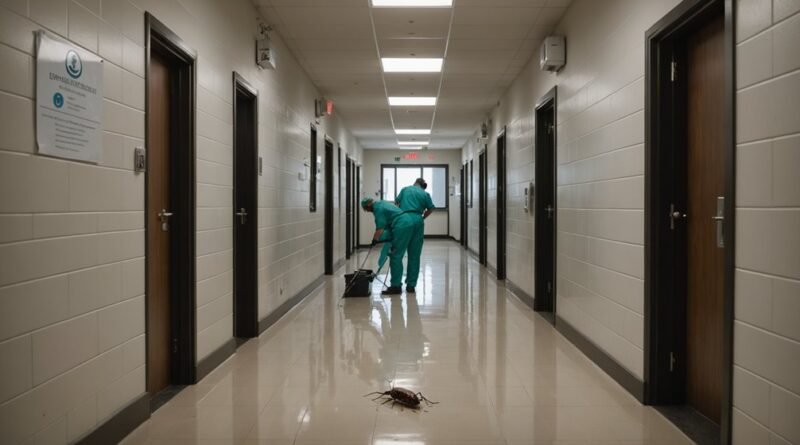
Cockroach Control Requirements for Hotels, Schools and Healthcare Facilities
You must implement a documented IPM program: map high‑risk zones (kitchens, food lines, waste), tighten sanitation, fix leaks, and seal entry points. Use least‑toxic, targeted baits in cracks/crevices, keep treatments away from food and occupied areas, and train staff to spot activity. Maintain pesticide logs, service reports, licensing, and EHR‑adjacent notes where applicable. Deploy discreet monitors, track trends, and adjust quickly with scheduled professional visits. Strict waste handling and continuous documentation are required—and the next steps make it straightforward.
Key Takeaways
- Implement building-wide IPM: routine inspections, discrete monitors, least-toxic baits in cracks/crevices, and quick adjustments based on activity trends.
- Maintain strict sanitation: clean kitchens/food lines, manage moisture, seal entry gaps, and use sealed, lidded waste containers with tightened disposal schedules.
- Document thoroughly: service reports, pesticide application logs, IPM policies, inspection schedules, and provider licensing for audits and accreditation.
- Protect occupants: separate treatments from food handling and patient/guest areas; train staff to recognize pests and follow hygiene protocols.
- Use technology for oversight: real-time electronic monitoring, record sightings, analyze data, and report regularly to management for continuous improvement.
Regulatory Compliance and Documentation Standards
Even before you choose a treatment, you need a compliance framework that aligns with healthcare, hospitality, and education regulations and that produces defensible records. Regulatory compliance is essential for property management because non-compliance can lead to fines and legal issues, so ensure your program aligns with varying regulations across industries and locations.
Build compliance first: align across sectors and produce defensible records before selecting any treatment.
In hospitals, you must integrate Joint Commission requirements, embedding pest control into patient safety and infection control. In hotels and schools, follow IPM frameworks that prioritize prevention and minimal pesticide use while meeting OSHA and EPA guidelines and any local disclosure mandates.
Document everything. Create service reports for every visit, listing areas treated, products with EPA registration numbers, and applicator certification numbers.
Maintain pesticide application logs with product name, amount, location, date, time, and SDS. Record monitoring data—trap counts, sensor alerts, inspections—to show trends and inform actions. Capture corrective actions taken after sightings or inspections and keep training records proving staff education.
Build IPM documentation: written policies, role definitions, thresholds, sanitation plans, inspection schedules, occupant notification procedures, and minutes from review meetings.
Verify provider licensing and certification. Retain records to satisfy inspections and accreditation.
High-Risk Areas and Sanitation Protocols

Before you deploy baits or monitors, map the high‑risk zones and harden them with tight sanitation. Focus on dark, moist, organic‑matter‑rich areas: kitchens, food service lines, dish rooms, garbage rooms, floor drains, and sink surrounds.
In hotels, add kitchen storage, dining areas, housekeeping closets, and spaces behind appliances. In schools, prioritize cafeterias, dumpsters, restrooms, and maintenance rooms. In healthcare, tighten controls in break rooms, janitorial closets, food service, laundry, vending zones, ICUs, autopsy rooms, basements, loading docks, and garbage areas. Cockroaches can rapidly multiply—high reproductive rate—so early mapping and sanitation prevent small issues from becoming infestations.
Standardize cleaning: sweep, mop, and HEPA‑vacuum under and around equipment, beds, and fixtures. Strip food residues from prep and dining surfaces on strict schedules.
Remove trash frequently, use sealed liners and lidded containers, and keep dumpster pads clean. Eliminate moisture: fix leaks, dry wet spots, and clear standing water.
Reduce clutter and organize storage. Seal cracks, plumbing penetrations, and gaps at doors and windows; install door sweeps. Train staff and restrict personal items in sensitive zones.
Integrated Pest Management and Targeted Treatments
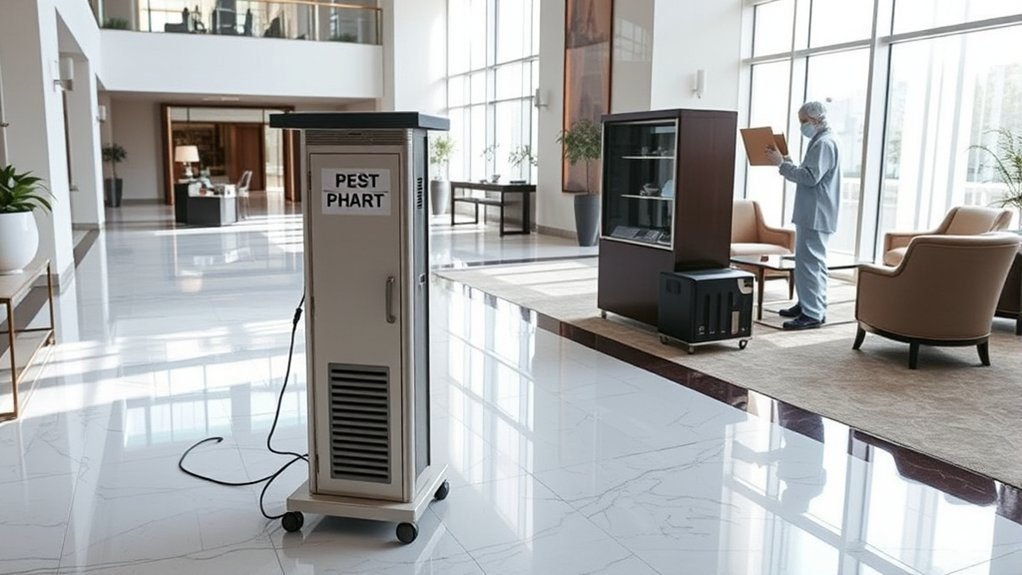
While sanitation hardens your defenses, Integrated Pest Management (IPM) drives precise, low‑risk control that prevents rebounds. You prevent cockroaches by denying food, water, and shelter through repairs and disciplined housekeeping, then act only when monitoring shows thresholds are exceeded. You choose the least‑toxic option that will work. IPM is widely used across the U.S., including over 400 school districts, and is mandated on federal property since 1996.
Deploy building‑wide IPM, not unit‑by‑unit spot sprays. Start with inspection, sticky‑trap monitoring, and species identification to target harborages. Seal pipe and conduit penetrations, repair window frames, add weather stripping, and trim exterior vegetation to block movement. Reduce clutter, fix leaks, and maintain tight food storage.
Deploy building‑wide IPM: inspect, monitor, identify; seal gaps, improve exteriors; declutter, fix leaks, tighten food storage.
Use insecticidal baits as your primary chemical—placed in cracks and crevices—to cut populations and allergens without broadcast residues. Add traps, barriers, and selective heat or cold where practical.
Schedule single 2–3 hour professional IPM visits for quick knockdown, then re‑inspect and adjust placements. Train staff and vendors in IPM basics so sanitation and monitoring stay consistent, reducing infestations, pesticides, and complaints.
Health, Safety, and Occupant Protection Measures
Although IPM guides what to do, health, safety, and occupant protection dictate how you do it—clean first, exclude second, and treat last with precision.
You reduce risk by scrubbing kitchens, dining areas, guest rooms, and common spaces, emptying sealed trash bins before nightfall, and cleaning under and behind equipment. Keep sinks dry, fix leaks fast, and store all food in sealed, pest-resistant containers. Regularly clean under kitchen equipment and appliances to remove debris that attracts cockroaches, as they are drawn to warmth, food, and moisture.
Tighten the envelope. Seal cracks, door and window gaps, and pipe penetrations; add door sweeps and tight screens. Use metal shelving, elevate stored items, and schedule maintenance to catch vulnerabilities early.
Protect people by complying with regulations and using licensed professionals who apply low-toxicity, targeted formulations appropriate for sensitive settings.
Separate any treatments from food handling and occupied care areas, and train staff to recognize pests and uphold hygiene.
Control waste and food handling: segregate and seal food waste, remove it promptly, avoid overnight food exposure, and use pest-proof storage to prevent contamination and allergens.
Monitoring, Recordkeeping, and Rapid Response Procedures
Even with strong sanitation and exclusion, you need vigilant eyes on risk zones and a plan to act fast. Train housekeeping and maintenance to inspect dark, moist areas—kitchens, storage, bathrooms—for droppings, skins, and eggshells. Place discrete monitors and traps to quantify activity, and in healthcare, use digital sensors to map movement in real time. An IPM team should schedule, conduct, and review monitoring so trends guide action. A proactive pest control approach safeguards reputation by reducing the likelihood of costly incidents and protecting guest and staff safety.
Keep precise records: inspection dates, sightings, device counts, and all treatments—chemical or non-chemical—by date, location, and method. Use a centralized digital system to share findings with staff and providers and to satisfy audits.
When you detect activity, seal entry points immediately. Deploy targeted baits and residuals or non-chemical options, escalate to emergency treatments for severe cases, and increase monitoring frequency. After treatment, evaluate results and adjust tactics. Coordinate with sanitation and maintenance to fix leaks, close gaps, and remove food and clutter.
| Key Area | Action |
|---|---|
| Kitchens | Inspect drains; deploy gel baits; log counts |
| Storage rooms | Use monitors on perimeters; reduce clutter |
| Bathrooms | Check pipe chases; seal gaps; track sightings |
| Waste holding | Increase trap density; tighten schedules |
| Healthcare units | Use electronic monitoring; document in EHR-adjacent systems |
Frequently Asked Questions
How Do We Train Frontline Staff to Recognize Early Cockroach Signs?
Train staff with short, hands-on sessions: show droppings, egg cases, shed skins, and odor cues; practice flashlight inspections and sticky-trap placement; role-play reporting; explain hotspot biology; reinforce sanitation, moisture control, sealing gaps, and documentation for trend tracking and rapid escalation.
What Budget Range Should Facilities Allocate for Annual Cockroach Control?
Allocate roughly ₹180,000–₹360,000 for mid-sized hotels, higher for complex healthcare IPM programs, and moderate for schools emphasizing low-risk methods. You’ll adjust for size, sanitation, occupancy, risk, emergency response capacity, staff training, documentation, and off-peak scheduling.
How Can We Communicate Infestations to Stakeholders Without Causing Alarm?
Use calm, factual updates emphasizing professional management, IPM steps, and safety protocols. Share early detection benefits, progress, and clear reporting channels. Tailor detail to the audience, avoid jargon, coordinate messages with leaders and vendors, and document communications for transparency without oversharing.
What Are Contract Terms to Include When Hiring Pest Vendors?
Include scope, covered pests, treated areas, methods, products, inspection, customized plan, service frequency, records, safety measures, regulatory compliance, technician licenses, documentation, warranties, performance KPIs, contract term, renewal, pricing, adjustments, invoicing, cancellation, and dispute resolution.
How Do Seasonal Changes Affect Cockroach Pressure in Different Regions?
Seasonal shifts change cockroach pressure by region: you’ll see summer surges with heat and humidity, indoor moves during dry or cold spells, spring spikes after rains, and mild-winter cities sustaining year-round activity, species varying by moisture, warmth, and habitat.
Conclusion
You’re now equipped to meet cockroach control requirements with confidence. Prioritize compliance, document everything, and focus on high-risk areas with tight sanitation. Use integrated pest management to prevent infestations and deploy targeted treatments when needed. Protect occupants with safe practices and clear communication. Keep monitoring, maintain precise records, and respond fast to any signs of activity. When you take a proactive, standards-driven approach, you’ll safeguard health, reputation, and operations across hotels, schools, and healthcare facilities.
