
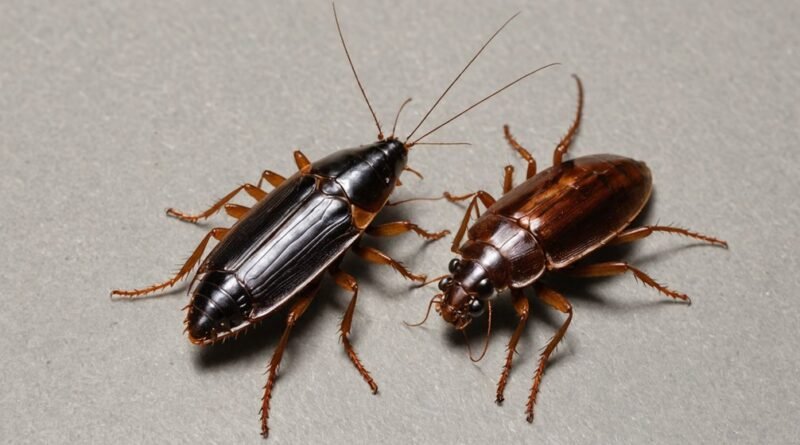
Cockroach Vs Waterbug: How to Tell These Two Species Apart
You can tell cockroaches from true water bugs by size, shape, and habitat. Cockroaches are slimmer, 1–1.5 inches long, with long antennae and spiky legs, and you’ll see them indoors around kitchens, sinks, and basements. Water bugs are broader, 2–4 inches, with short antennae, paddle-like back legs, and X-shaped wings, and they stick to ponds, pools, and lights outside. Knowing which you’ve found helps you choose the right control steps and spot important health risks.
Key Takeaways
- Cockroaches have long, thin antennae and spiky running legs; water bugs have short antennae with pincer-like front legs and oar-shaped hind legs for swimming.
- Cockroaches are slimmer, usually 1–1.5 inches, while water bugs are broader, leaf-like, and typically 2–4 inches long.
- Water bugs are aquatic predators found near ponds and pools; cockroaches prefer indoor areas like kitchens, basements, and around sinks.
- Cockroaches spread germs and allergens and can infest homes; water bugs rarely infest indoors and don’t transmit diseases.
- Water bug wings overlap in an X-shape on the back, while cockroach wings lie more flat and uniform over the body.
Cockroach vs Water Bug: Quick ID Guide
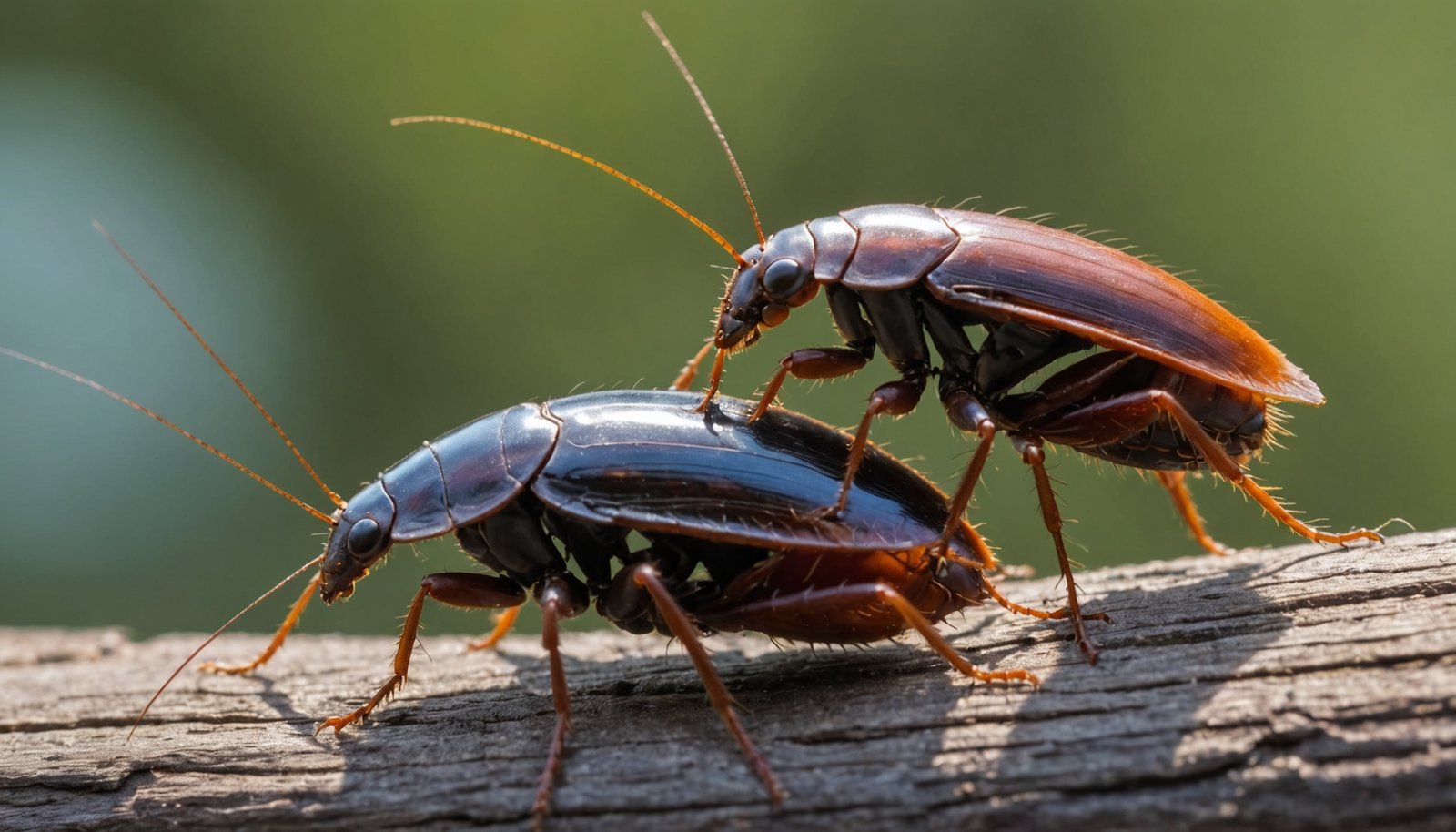
When a dark, oval-shaped bug darts across your path, antennae are your fastest clue for telling cockroaches and true water bugs apart. If you see long, sweeping antennae feeling along walls or floors, you’re looking at a cockroach. When antennae seem absent or extremely short, it’s a true water bug, built for life in the water, not your kitchen. Correctly identifying which one you’re dealing with matters because cockroaches can spread disease and trigger allergies, while true water bugs generally do not infest homes.
Next, watch the legs. Cockroaches have long, spiky legs that propel them quickly over dry surfaces, matching typical cockroach behavior as fast, nocturnal scavengers. Water bugs show specialized adaptations: pincer-like front legs for grabbing prey and flat, oar-like hind legs that power strong swimming.
Location also helps. Around sinks, basements, or sewers, you’ll usually find cockroaches. Near ponds, pools, or bright lights outdoors, you’re more likely seeing a water bug. Those water bug adaptations support a predatory lifestyle, while cockroaches thrive by rapidly multiplying and scavenging in moist, sheltered areas.
Body Shape and Size Differences Between Them
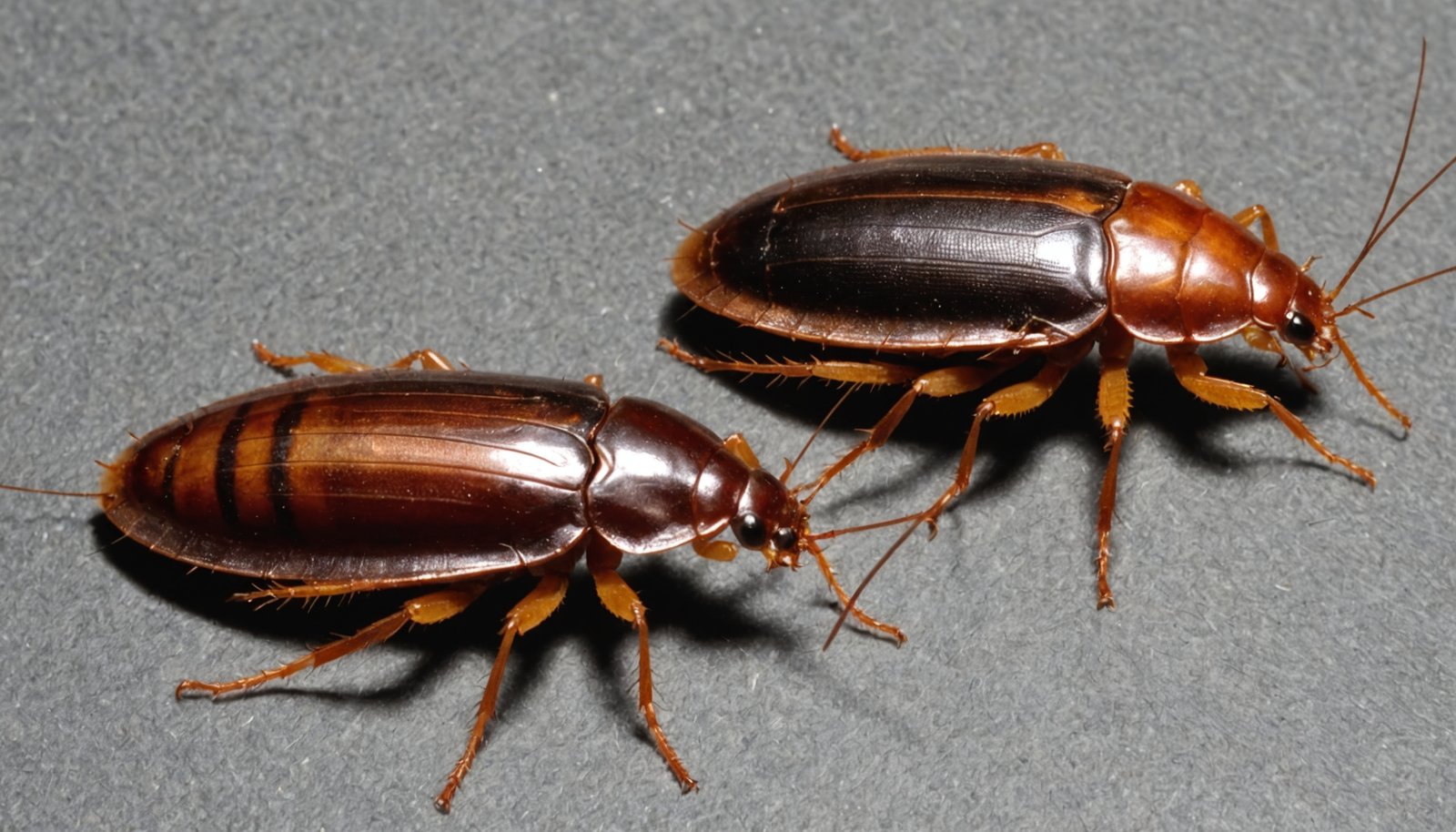
When you compare cockroaches and water bugs, you’ll notice their overall body shapes, lengths, and proportions aren’t the same at all. Cockroaches tend to have slimmer, more elongated oval bodies, while water bugs look broader and more leaf-like. You’ll also see a clear size range difference, with most water bugs running noticeably larger than common household roaches. In many cases, this size gap is significant, since water bugs can reach 2 to 4 inches long while most cockroaches are only about 1 to 1.5 inches.
Overall Body Shape
Viewed side by side, a cockroach and a water bug diverge most clearly in overall body shape, even though both look broadly oval and flattened. You’ll notice subtle body contour variations that reflect very different environmental adaptations. Cockroaches typically appear smaller in everyday household encounters, while most waterbug species grow notably larger, often exceeding 3.8 cm in length.
- Water bugs have a compact, leaf-like oval, matte tan to brown, helping them vanish against pond debris.
- Cockroaches show a broader, shinier oval that looks slightly stretched out, built for squeezing under baseboards and clutter.
- Water bugs keep a uniform oval from front to back, while cockroaches taper gently toward the rear, emphasizing their streamlined, ground-hugging profile.
- On resting insects, water bug wings overlap into a neat X, reinforcing that solid oval silhouette; cockroach wings (or wing pads) sit more flush and uniform, matching their smooth, glossy shell.
Length And Proportions
Beyond the overall outline, size and proportions make it even easier to tell a cockroach from a water bug at a glance. When you do a quick length distinctions check, most cockroaches you’ll see indoors stay under 0.5 inches, while true water bugs usually start around twice that length and can reach several inches. True water bugs are also much less likely to be encountered inside homes, since they prefer outdoor freshwater habitats rather than indoor spaces.
Proportion analysis helps when you’re too startled to measure. Water bugs have thick, clawed front legs that work like pincers and flattened, oar‑shaped hind legs with swimming hairs. Cockroaches keep slimmer, uniformly spiny walking legs without claws or oars. Antennae offer another cue: cockroaches carry very long, obvious antennae that can hide the head, but water bugs have short, stout antennae that barely show from above.
Size Range Comparison
One of the clearest ways to separate cockroaches from water bugs is by their overall size and build. When you make a quick size comparison, most cockroach species stay noticeably smaller, while water bugs push into much larger territory. Common house roaches hover around 0.5 inches, and even bigger species variations like American and Oriental cockroaches usually top out near 1–1.5 inches. Unlike cockroaches, water bugs are truly aquatic and are typically found near natural water sources rather than living indoors.
By contrast, typical water bugs measure about 2 inches, and giant species can stretch from 2 up to 4 inches long. Both insects share a flat, oval outline, but their scale differs enough that you can judge it at a glance:
- Picture a 0.5-inch house cockroach
- A 1–1.5-inch American cockroach
- A solid 2-inch water bug
- A massive 4-inch giant water bug
Antennae and Legs: The Fastest Way to Tell
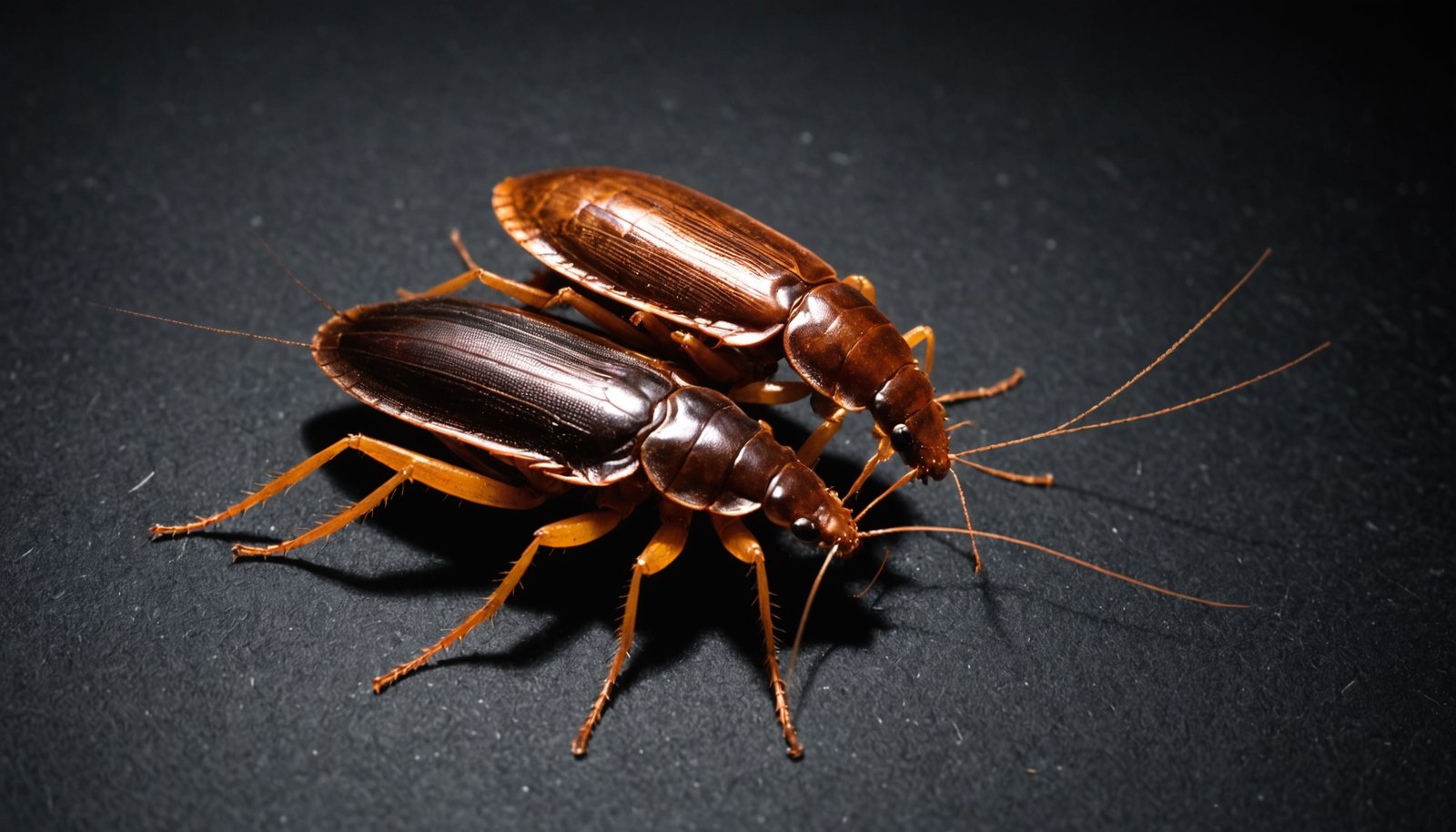
When you spot a mystery bug, you can usually sort out cockroach vs water bug just by checking the antennae and legs. You’ll see roaches with long, whiplike antennae and uniform running legs, while water bugs carry short, stubby antennae and specialized grabbing and swimming legs. Once you know how these features affect how they move on land or in water, you can identify them in seconds.
Antennae Length And Shape
Although cockroaches and water bugs can look similar at a glance, their antennae give them away almost instantly. Cockroaches carry long, filiform antennae that often exceed body length, waving constantly as ultra-sensitive feelers. This extreme antennae functionality reflects sensory adaptation and evolutionary traits for scavenging on land. Water bugs, by contrast, have short, stout antennae, under a third of body length, tuned more to predatory advantages in water than to broad environmental scanning.
Use quick visual recognition:
- Cockroach antennae: long, thin, hair-like, clearly visible from above
- Water bug antennae: short, thick, easily lost in the body outline
- Cockroach antennae sweep and twitch in low light, catching your eye
- Water bug antennae stay compact, shaped by habitat influence in aquatic life
Leg Design And Function
Legs might be the quickest giveaway once you’re close enough to see them. Cockroaches carry six long, slender legs that look almost oversized for their bodies. Those extended limbs, packed with spines, show leg evolution for sprinting—built to grip smooth floors, dash away, and even climb damp walls. You’re seeing a design aimed at escape, not combat.
Waterbugs, in contrast, have shorter, sturdier legs that match their heavier, broader bodies. Their compact build reflects habitat adaptation to life around water, where stability matters more than speed. The thick, pincer-like front legs are specialized for seizing and holding prey, not just running. When you compare them side by side, cockroaches wear “runner’s legs,” while waterbugs display “hunter’s legs.”
Movement On Land Or Water
Those runner’s legs versus hunter’s legs don’t just look different—they move differently, and that’s your fastest way to tell what you’re seeing. On land, you’ll notice cockroaches rely on land agility: they explode into darting runs, antennae sweeping as sensory adaptations guide them through tight cracks during habitat exploration. Their movement patterns scream escape strategies, not attack.
Waterbugs flip that script. On dry ground, they lumber or sit still, using front legs for predatory tactics, not speed. Their environmental preferences show in water: oar-like hind legs power precise water navigation as they ambush prey below the surface.
- Cockroach: rapid hallway dash toward dark gaps
- Waterbug: slow crawl on a patio
- Cockroach: avoids standing water
- Waterbug: glides confidently in ponds
Wings, Flight, and How They Rest
When you compare cockroaches and water bugs up close, their wings and the way they use them reveal clear differences in how each insect moves and rests. In this species comparison, focus on wing characteristics, flight behavior, and resting positions. German cockroaches have wings but rarely fly, relying on running instead. Oriental cockroaches show even weaker wings; males have short wings, and females are almost wingless. American cockroaches (palmetto bugs) have functional wings and can fly short distances.
Water bugs, including giant water bugs, have fully developed wings and fly actively, especially toward lights or between water sources. At rest, their wings overlap in a distinct “X” pattern, while cockroach wings lie flat along the body with no crossing pattern. Water bugs also hold their oar-like hind legs ready for swimming, combining strong flight with sudden, aggressive bites when handled, unlike the typically retreating cockroaches.
Where Cockroaches vs Water Bugs Usually Live
Although people often lump them together as “waterbugs,” cockroaches and true water bugs live in very different places. You’ll usually find true water bugs outdoors in natural freshwater habitats—ponds, marshes, slow streams, or vegetated shorelines. Their habitat preferences revolve around clean, still or sluggish water, where their environmental adaptations let them cling to plants and stay submerged. They may fly to bright lights near pools or fountains, but they don’t live in sewers or drains.
True water bugs thrive in clean, calm freshwater—not sewers, drains, or typical indoor cockroach hideouts
Cockroaches, in contrast, are land dwellers that simply need nearby moisture. Indoors, they concentrate in basements, kitchens, bathrooms, and around leaky pipes or damp utility rooms. Outdoors, they gravitate to warm, humid spots in urban landscapes, especially near ground-level clutter.
- A pond rimmed with cattails and lily pads
- A dim basement with dripping pipes
- A trash can beside leaf litter and mulch
- A quiet retention pond behind a neighborhood park
How Each Insect Moves, Hunts, and Feeds
When you compare cockroaches and water bugs, you’ll notice they don’t just live in different places—they move, hunt, and eat in completely different ways. You’ll see one built for speed on land and scavenging, while the other’s equipped for swimming, flying between ponds, and active predation. Understanding their movement styles and feeding behavior helps you recognize what you’re dealing with and how it might affect your home or yard.
Movement Styles And Speed
Two very different movement styles set cockroaches and waterbugs apart, and those differences shape how they hunt, feed, and escape. When you watch their movement patterns, a quick speed comparison and agility analysis make identification easier. Roaches rely on six spiny legs to sprint across floors, using sharp turns and sudden stops as escape tactics suited to indoor habitat preferences. Waterbugs, in contrast, show streamlined environmental adaptations for life in and around water, using paddle legs and direct lunges that reflect very different predatory strategies and behavior observations.
- Cockroaches scurry low and flat, vanishing into cracks.
- Waterbugs row powerfully through ponds or pool drains.
- Cockroaches may launch brief leg-powered jumps, then glide.
- Waterbugs swim, then fly between water sources when disturbed.
Hunting And Feeding Behavior
Even before you notice shape or color, the way each insect hunts and eats reveals whether you’re looking at a cockroach or a water bug. Water bugs use ambush hunting tactics, lurking in plants, then seizing live aquatic prey with raptorial forelegs. Their feeding methods rely on a pointed beak that injects lethal saliva, liquefies tissues, and allows suction feeding.
Cockroaches don’t hunt; they scavenge. You’ll see them follow crumbs, grease, cardboard, and trash, chewing everything with robust mouthparts. Their prey preferences center on decaying matter and scraps, not live animals.
Activity patterns differ too: water bugs boldly patrol ponds day or night, while roaches forage at night and bolt from light. Defensive strategies contrast: water bugs bite painfully; cockroaches simply flee and hide.
Bites, Health Risks, and Disease Concerns
Although cockroaches and waterbugs can look similar, the way they affect your health is very different. When a true waterbug bites, you’ll feel sudden, sharp pain, followed by swelling, redness, and a burning sensation. These bite symptoms usually fade within hours, but some people may experience allergic reactions and should watch for worsening swelling or trouble breathing. Waterbugs don’t transmit diseases, and their bites, while shocking, aren’t medically dangerous for most people.
Waterbug bites hurt sharply but fade fast, while cockroaches quietly threaten your health through germs and allergens
Cockroaches, on the other hand, rarely bite and usually can’t pierce your skin. If a bite occurs, it’s a minor red welt. Their real risk comes from the germs and allergens they spread.
- A waterbug you pick up at the lake delivers a “toe-biter” stab of pain.
- A cockroach scurries across your countertop, contaminating food.
- Waterbug discomfort fades after cleaning and icing the area.
- Cockroach droppings and shed skins quietly aggravate your asthma.
Infestation or One-Off Visitor: What Your Sighting Means
Spotting a roach or a large “waterbug” in your home can leave you wondering if you’re facing a full-blown infestation or just an unlucky encounter. To judge the risk, look for clear infestation signs rather than reacting to a single bug. Roach issues usually come with coffee-ground droppings, oothecae, smear marks, or a foul odor. Water bug problems often show as larger black pellets, a musty smell in damp spots, and repeated activity around standing water.
One off sightings tend to involve a single insect, no noticeable odor, and no droppings or egg casings. Here, pest behavior and seasonal activity matter: flying water bugs drawn to lights in warm months, or a lone roach that bolts when you turn on the kitchen light, may signal a drifter.
Still, your home’s leaks, humidity, and clutter increase environment impact and should guide your long-term control methods.
How to Confirm if It’s a Roach or Water Bug Before Treating
Before you grab sprays or traps, you need to know exactly what you’re dealing with—a roach or a true water bug. Use a few quick identification tips so you don’t waste time or choose the wrong treatment. Start with the antennae: roaches have very long, thread-like antennae that often sweep back over the body, while water bug antennae are short and barely visible.
Next, look at the legs and wings to confirm species differences. Water bugs have pincer-like front legs and oar-shaped hind legs for swimming, plus wings that rest in an “X” pattern. Roach legs are more uniform, without paddles or front claws, and wings (if present) don’t form that X.
To picture it clearly:
- Long, sweeping antennae = cockroach
- Short, hidden antennae = water bug
- Pincer front legs, oar hind legs = water bug
- Uniform walking legs, no paddles = cockroach
Best Control and Prevention Steps for Roaches vs Water Bugs
Two different pests demand two different game plans, so once you’ve confirmed what you’re seeing, tailor your control and prevention to either roaches or true water bugs. For cockroaches, your best DIY methods start with sanitation and exclusion: seal cracks around foundations, pipes, and drains with silicone caulk, store all food in airtight containers, and clear cardboard and paper clutter. Fix leaks, run dehumidifiers, and keep kitchens wiped down. Then layer controls: apply diatomaceous earth along baseboards, place gel baits in hidden runways, and use sticky traps and targeted insecticide sprays in crevices.
If roaches persist or you’re dealing with a large infestation, consider professional extermination options, which typically cost $150–$400 per visit.
For true water bugs, focus outside: remove standing water, reduce lights near doors, seal gaps, add door sweeps, and use soapy water or sticky traps. They don’t breed indoors, so professionals are rarely necessary.
Frequently Asked Questions
Can Water Bugs and Cockroaches Live in the Same Areas Outside the Home?
Yes, they can. You’ll often see them share damp outdoor zones where their habitat preferences overlap—near sewers, ponds, and leaks. You’ll notice different survival strategies: water bugs hunt aquatic prey, while cockroaches scavenge decaying matter.
Do Water Bugs and Cockroaches Have Any Natural Predators That Help Control Them?
Yes, they do. You’ll see cockroaches eaten by amphibians, reptiles, spiders, beetles, and parasitic wasps—their key natural enemies. Water bugs face fewer predators, but some wasps and mosquitoes still help maintain ecological balance in aquatic habitats.
Are Water Bugs or Cockroaches Affected by Seasonal Changes or Specific Temperatures?
Yes, both are affected. You’ll notice water bugs show strong seasonal behavior, appearing mostly in summer warmth. Cockroaches have broader temperature preferences, survive indoors year‑round in heated buildings, but still peak during hot, humid months.
Can Keeping Certain Pets or Houseplants Help Deter Cockroaches or Water Bugs?
You can deter cockroaches more than water bugs by smart pet choices and plant types. Keep cats, use catnip, mint, and bay leaves, combine with diatomaceous earth and essential oils in pet-safe spots for better control.
Are There Eco-Friendly or Non-Toxic Methods Specifically for Managing These Insects?
You can use eco-friendly methods: seal cracks, reduce moisture, and deploy natural repellents like diatomaceous earth, bay leaves, and cedar. Spray diluted essential oils such as peppermint or tea tree, and set sticky or light traps indoors.
Conclusion
Once you know the key differences between cockroaches and water bugs, you won’t second‑guess what you’re seeing. Use body shape, antennae, and where you found it to make a fast ID, then choose the right control steps. If it’s a roach, act quickly to prevent an infestation. If it’s a true water bug, focus on outdoor moisture control. Either way, you’re now ready to respond confidently and protect your home.
