
German Cockroaches, Appearance, Life Cycle and Behavior Patterns
You’ll spot German cockroaches by their small, tan bodies (10–16 mm) with two dark stripes and quick, nocturnal scurrying. Females carry tan oothecae holding 30–48 eggs; nymphs go through incomplete metamorphosis, molting 5–7 times before becoming adults in 6–10 weeks. Adults live up to a year, producing 5–8 oothecae and fueling rapid infestations. They prefer warm, moist crevices near kitchens and bathrooms, eating sugars, starches, grease, and more. They spread bacteria and trigger allergies — as you explore, you’ll see how to control them at every stage of the cockroach life cycle.
Key Takeaways
- German cockroaches are 10–16 mm, light brown with two dark pronotal stripes, long antennae, and fast, spiny legs.
- Females carry a tan ootheca with 30–48 egg cases for 20–30 days; nymphs hatch after 14–35 days.
- Nymphs go through incomplete metamorphosis, molting 5–7 times over 40–65 days, reaching winged adulthood and reproductive capability within 6–10 weeks.
- Adults live up to a year; females produce 5–8 oothecae, enabling rapid population growth and persistent infestations.
- Nocturnal and aggregation-prone, they hide in warm, moist crevices and forage at night in kitchens, bathrooms, and laundry areas.
- Early inspection and integrated pest control management are essential to break the german cockroach life cycle before populations explode.
Identifying German Cockroaches: Key Physical Traits

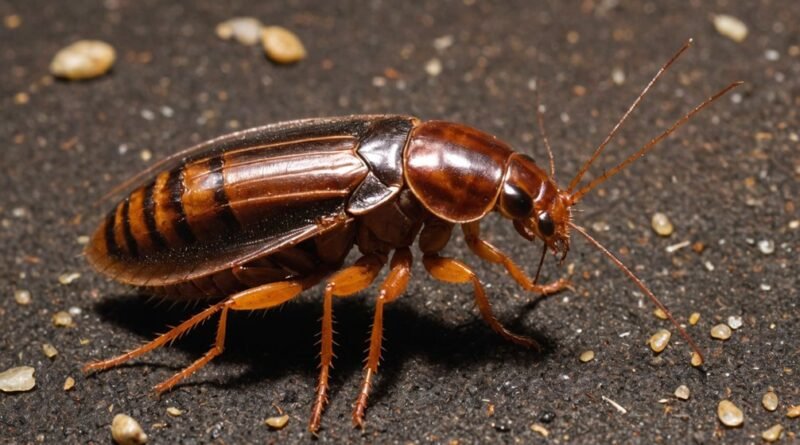
Although they’re small, German cockroaches are easy to spot once you know the cues: adults measure about 10–16 mm in length with a flattened, oval body, light brown to tan color and two nearly parallel dark stripes running from the back of the head across the pronotum. These physical traits make identification straightforward once you know what to look for — a critical first step in any effective pest control plan.
Small but distinctive: 10–16 mm, tan bodies, and two dark stripes across the pronotum.
Look closely at shape and posture: the body‘s low profile lets them squeeze into tight gaps and floors, baseboards, and walls. You’ll notice long, flexible antennae sweeping constantly, and spiny legs built for speed; adhesive pads on their feet help them climb glass and even ceilings. They thrive in human-associated environments and cannot survive away from human activity — which is why homes, restaurants, and commercial kitchens are their primary habitats.
Check for dimorphism to confirm ID. Males look slimmer with a tapered posterior and terminal segments of the abdomen partly exposed. Females appear bulkier; their wings fully cover the rounded abdomen. Both sexes have wings covering the abdomen, but they rarely fly.
If you spot a light brown ootheca protruding from a stouter roach, you’re likely seeing a female. Darker, wingless nymphs — with a single stripe down the back — also signal German cockroach presence and indicate an active cockroach life cycle is underway inside your home.
Life Cycle Stages: From Egg to Adult
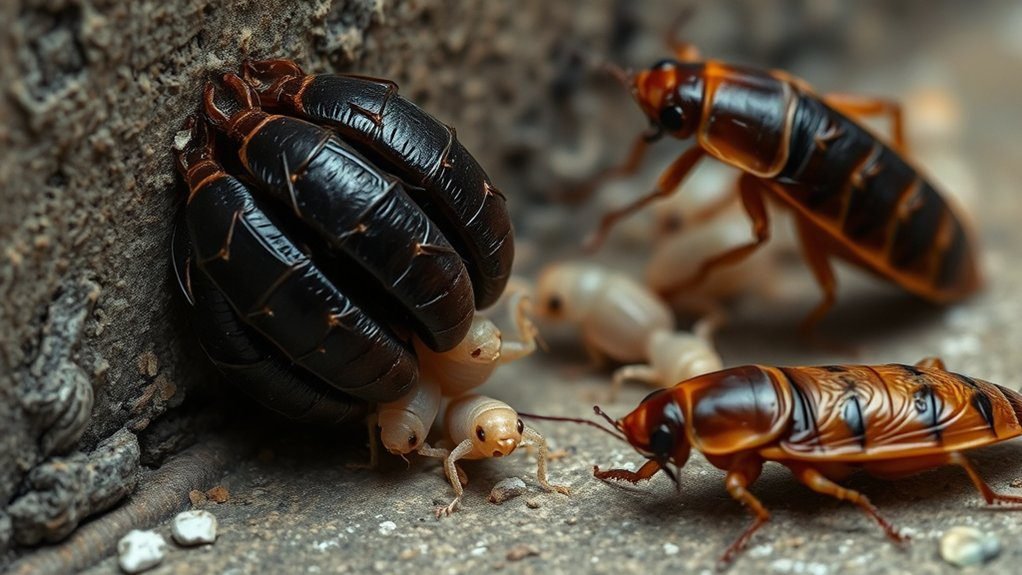
When conditions favor them, German cockroaches race through a compact life cycle — a form of incomplete metamorphosis — that turns a few individuals into a full infestation fast. Understanding each stage is the foundation of effective pest control management.
You’ll first notice the egg stage: a female carries a tan ootheca — one of the most durable egg cases in the insect world — containing about 30–48 eggs for roughly 20–30 days, then tucks it in a hidden crevice about two days before hatching. Incubation can run 14–35 days, depending on temperature and humidity. Females often produce multiple oothecae and may generate about 350 offspring over their lifespan.
Nymphs emerge as small, wingless versions of adults — the start of the juvenile development phase. They start pale, darken to brown or black in color, and show the familiar twin stripes on the pronotum. Each juvenile stage is called an instar, and nymphs pass through 6–7 instars before reaching adulthood.
Expect 6–7 molts over about 40–65 days as they hide in cracks and feed; each molt briefly leaves them pale until the new cuticle — the replacement exoskeleton — hardens. Shed exoskeleton skins left behind in cabinets, behind appliances, and along baseboards are key signs of an active infestation that warrant immediate inspection.
The final molt produces a 15 mm, winged adult — the adulthood stage. Adults prefer to scuttle, stay nocturnal, and under ideal warmth and moisture can become reproductive in as little as 10 weeks from hatching. Cooler, drier conditions lengthen every stage of the german cockroach life cycle.
Reproduction Rates and Growth Timelines
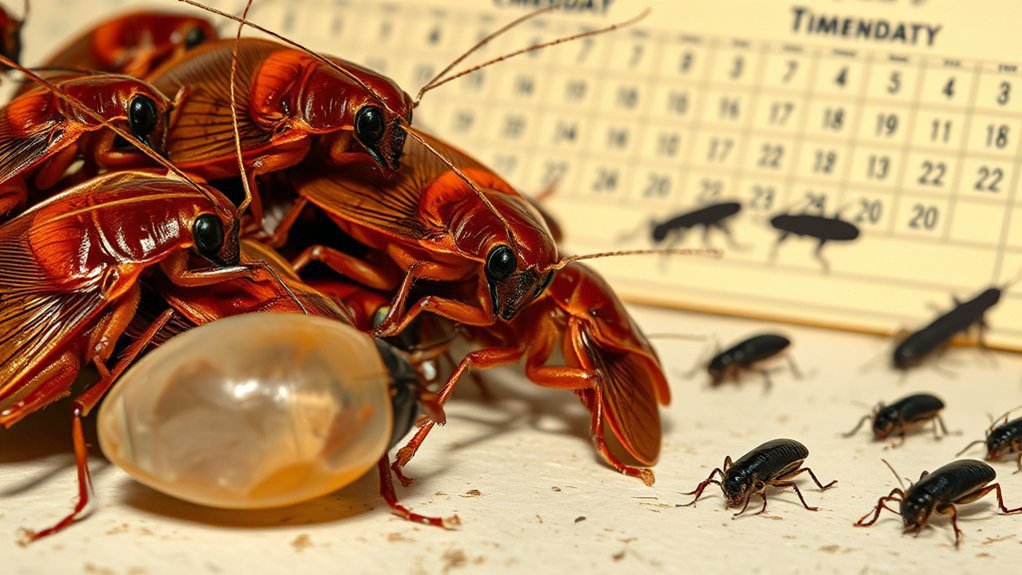
Even under average indoor conditions, German cockroaches churn out eggs and new adults at a pace that quickly outstrips most control efforts. You’re looking at oothecae forming every 20–30 days, each holding about 30–48 eggs with 80–90% hatch success — a number that compounds rapidly across generations.
Females typically mate once and then generate 5–8 oothecae (roughly 200–250 eggs) across a lifespan, carrying each capsule until about two days before hatching to boost survival. Adult German cockroaches can live up to a year, extending the window in which females can produce multiple egg cases and sustain population growth.
From egg to reproductive adult takes only 6–10 weeks. Incubation runs 20–30 days; nymphs progress through each instar over 40–60 days of development. Adult females become fertile 4–6 days after their final molt; males are ready in 6–10 days and use pheromones and secretions to secure mates. Warmth accelerates development timelines: around 86°F, eggs hatch in about 28 days; at 70°F, closer to 60 — a key fact for pest control and prevention strategies.
Because aggregations maintain a 1:1 sex ratio and continuous reproduction, a single female and her descendants can seed thousands — potentially hundreds of thousands — in a year, especially with parthenogenesis as a fallback. This capacity for explosive population growth is why early inspection and management are so critical.
Daily and Nighttime Behaviors
That rapid reproductive churn only works because German cockroaches run on a tight daily rhythm. You’ll notice their clock most after sunset: activity typically peaks two to four hours later, when they slip from harborages to forage, drink, and find mates. They’re primarily nocturnal, and if you see them in daylight, the infestation‘s usually heavy — a clear sign that pest control intervention is overdue.
At night they extend their range, map food sources with smell and limited vision, then return efficiently to shelters. Disturb them and they scatter instantly — light and vibration trigger rapid, survival-driven retreat across floors, walls, and baseboards. German cockroaches are primarily nocturnal, hiding during the day and emerging at night to feed and mate.
By day, they pack into tight, warm, moist crevices — cracks, wall voids, behind appliances, plumbing runs. Aggregation in mixed-family groups reduces drying, boosts mating chances, and offers safety from predators, even though each cockroach forages alone at night to reduce competition.
Their choices shift with resource availability, density, and learned cues; adults feed daily, and females adjust intake around reproduction.
- Silver-brown arcs slip under a fridge lip.
- A sudden light; a fan of legs vanishes.
- Grease specks on counters become a midnight feast.
Preferred Habitats and Indoor Hotspots
Where do German cockroaches dig in? They settle where warmth, moisture, and darkness overlap — making habitat selection a direct reflection of what your home or business offers them. Aim for 70°F–75°F and high humidity, and you’ll find them.
Kitchens top the list of preferred habitats: under sinks, inside cabinets, behind refrigerators, around dishwashers, and near heat sources like microwaves or coffee makers. Grease buildup on counters, floors, and appliances is a primary food source and a reliable indicator of elevated risk. Bathrooms follow — check sink bases, drain rims, and the space behind toilets.
Laundry rooms and utility areas offer water lines, condensation, and appliance heat — all contributing to the moisture-rich environment these pests need. They crowd close to food and water, so pantries, greasy surfaces, crumbs, spills, and garbage attract them. Identification of species is crucial for effective pest control.
Leaks, damp wood, and sweating pipes lock in colonies. During the day, they press into cracks as thin as 3/8 inch — behind baseboards, inside drawers, wall voids, and electrical equipment. Paper and cardboard stacks, clutter, and stored items are classic harborage spots that make inspection harder and give infestations more places to hide.
Look for pepper-like droppings and smears near harborage areas. Infestations start near kitchens and baths, then spread at night through adjacent rooms, especially when clutter and poor sanitation provide new shelter.
Diet, Health Risks, and Infestation Challenges
You’ll see German cockroaches eat almost anything — sugars, starches, grease, meats, and even glues — so crumbs and residues easily sustain them. Their variety of food sources makes pure sanitation rarely sufficient as a standalone control measure. They spread bacteria and allergens that aggravate asthma and contaminate surfaces, causing serious diseases and health complications — particularly for children, the elderly, and pets.
Because they exploit moisture, clutter, and plentiful food, you’ll need rigorous sanitation, moisture control, and targeted treatments to limit infestations. This is why integrated pest control management — combining chemicals, exclusion, and behavioral strategies — consistently outperforms single-method approaches.
Omnivorous Feeding Habits
Although notoriously adaptable, German cockroaches are true omnivores that exploit almost any organic resource in their environment — from fats, starches, sugars, and meats to non-food items like paper, glue, leather, and even shed skins. Their feeding behavior across such a wide variety of sources is a core reason they’re so difficult to starve out of an established habitat.
You’ll see them target greasy residues first, but they’ll switch diets quickly, balancing protein and carbohydrate near a 1:2–1:3 ratio and cannibalizing dead roaches when protein runs short. This ability to shift diet based on access to resources is a key part of their biology.
They forage mostly at night, following scent and taste cues from crevices to nearby food and water, with females increasing intake during egg development. Crowding intensifies competition and shifts where they feed across floors, counters, and surfaces.
- Grease-slick stove knobs.
- Paper edges with glue seams.
- Crumb-lined baseboards near sinks.
Health and Control Challenges
Greedy appetites don’t just fuel German cockroaches — they amplify health risks and make control harder. They contaminate food, utensils, and surfaces with saliva, feces, and body parts, spreading bacteria like Salmonella, E. coli, and Shigella, plus pathogens tied to typhoid, cholera, dysentery, and gastroenteritis. These diseases pose real risks for humans, especially people living in multi-unit homes where a cockroach infestation can spread between units.
You can face diarrhea, cramps, and severe infections if you’re immunocompromised. In hospitals and restaurants, they carry opportunistic bacteria, including Staphylococcus aureus, Pseudomonas aeruginosa, and resistant strains — making pest control a regulatory requirement in food service environments.
Their allergens build up in droppings and cast skins — including shed exoskeleton versions left along walls and baseboards — triggering sneezing, runny nose, watery eyes, rashes, cough, and wheezing, and they worsen asthma — especially in children and urban communities. Clutter and items stored on floors make allergen accumulation worse by giving shed skins more places to collect undisturbed.
Rapid reproduction, hidden harborages, recontamination, resistance to chemicals, and odorous secretions compound infestations. Prioritize tight sanitation, allergen-safe debris removal, exclusion, targeted baits, and integrated pest management to overcome resistance and achieve full eradication.
Prevention and Inspection Tips
The most effective approach to the german cockroach life cycle is stopping it before adulthood and mating can occur. Here’s what pest control professionals and homeowners should prioritize:
- Inspection: Check behind appliances, inside cabinets, along baseboards, and around plumbing for droppings, egg cases, and shed exoskeleton skins — the clearest signs of an active cockroach life cycle.
- Moisture control: Fix leaks, dry wet surfaces, and improve ventilation. Without moisture, their preferred habitat becomes uninhabitable.
- Sanitation: Eliminate crumbs, seal food in airtight containers, degrease stove surfaces and counters, and take out trash regularly.
- Clutter reduction: Remove paper, cardboard, and stored items from floors and corners — these are prime harborage locations for nymphs during vulnerable molting stages.
- Chemical treatments: Gel baits combined with insect growth regulators (IGRs) that disrupt the development cycle are among the most effective methods. Rotate active ingredients every 3–4 months to prevent resistance to chemicals.
- Professional management: For persistent infestations, integrated pest control management by licensed professionals is the most reliable path to full eradication.
Frequently Asked Questions
How Do German Cockroaches Enter Homes in the First Place?
They enter through tiny cracks, vents, drains, and gaps under doors and windows. You also bring them in on bags, boxes, used furniture, and appliances. In multi-unit buildings, they migrate via shared walls, plumbing, and ventilation — which is why a cockroach infestation in one unit can quickly spread to neighbors without coordinated pest control management.
What Preventive Measures Effectively Stop Re-Infestations?
You stop re-infestations by denying food, water, and shelter. Clean spills immediately, seal cracks, store all food airtight, empty trash often, dry damp areas, flush drains monthly, declutter, inspect incoming items, vacuum appliances, use traps, and hire professionals when needed. Consistent prevention between inspection cycles is what keeps the german cockroach life cycle from restarting.
Which Professional Treatments Work Best Against Resistant Populations?
Use gel baits like dinotefuran or fipronil with IGRs to disrupt the development cycle at the nymph and egg stages, rotate chemicals every 3–4 months, and add non-repellent residuals (e.g., Phantom). Target harborage with dusts, maintain sanitation, and monitor, adjusting locations to sustain kill and prevent resistance. Integrated pest control management accounts for all stages of the cockroach life cycle.
How Can I Monitor and Confirm Eradication Progress?
Use dated, mapped sticky traps along walls, corners, and travel routes. Replace regularly, log adults vs nymphs by instar, and track trends. Inspect nearby when early nymphs appear. Coordinate with sanitation. Remove traps before inspections. Continue monitoring post-treatment to confirm eradication — a full german cockroach life cycle can complete in as little as 6 weeks, so gaps in monitoring can allow populations to rebound.
Are There Pet-Safe Control Methods That Still Work?
Yes — use gel baits plus an IGR, keep strict sanitation, and seal cracks. Add thin boric acid or silica dust in inaccessible voids away from pets, vacuum and steam floors, and place glue traps. Avoid foggers. Reapply, monitor hotspots, and stay patient. Always check that chemicals used are labeled safe for homes with pets and children.
Conclusion
You’ve now got the essentials to spot, understand, and outsmart German cockroaches. When you recognize their body shape, distinctive stripes, rapid cockroach life cycle, and relentless breeding, you can act fast at every stage — from the egg cases and nymph instars through to reproductive adulthood. Watch their nighttime patterns, check warm, humid habitats, and eliminate food, moisture, and clutter. Seal entry points, clean surfaces consistently, and use baits or traps strategically. If activity persists, don’t wait — call a pest control professional. With vigilance, regular inspection, and a solid management plan, you’ll break their development cycle and reclaim your home.
