
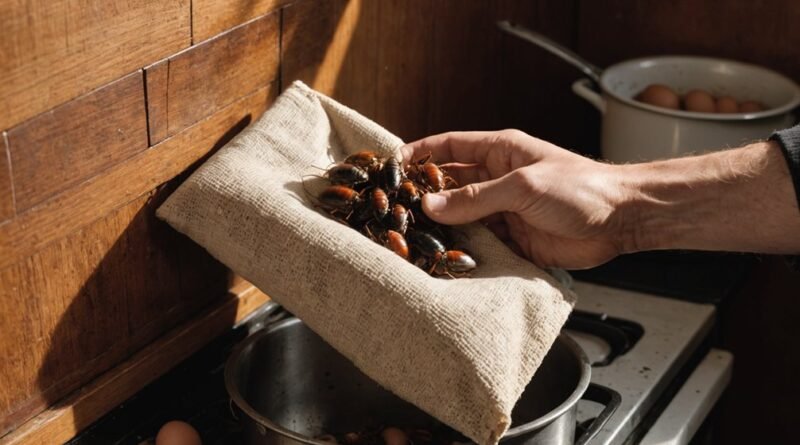
How to Get Rid of Cockroach Eggs and Nests Safely and Effectively
Spot oothecae (tiny tan-to-dark capsules) in kitchens, bathrooms, under sinks, and behind appliances. Wear gloves, lift with tweezers, seal in double bags, and discard. Vacuum cracks, bag contents, and use steam above 50°C; freeze small items. Dust boric acid in non-food crevices, add IGRs to stop hatchlings, and place baits for transfer kill. Seal entry points, fix leaks, clean crumbs, and set sticky traps. Call pros if it persists. Next, you’ll learn the exact steps and placements.
Key Takeaways
- Identify oothecae (tiny capsules, tan to dark brown) in kitchens, bathrooms, under sinks, and behind appliances.
- Wear disposable gloves; gently lift eggs with tweezers, seal double-bagged, and discard outdoors; wash hands afterward.
- Vacuum cracks and tight spots, then bag and trash contents; use steam above 50°C or freeze small items for several days.
- Apply boric acid lightly in non-food areas, use IGRs to halt reproduction, and deploy baits for adult control and secondary transfer.
- Seal entry points, reduce moisture and crumbs, monitor with sticky traps, and call professionals for persistent or hard-to-reach infestations.
Identifying Cockroach Eggs and Common Hiding Spots
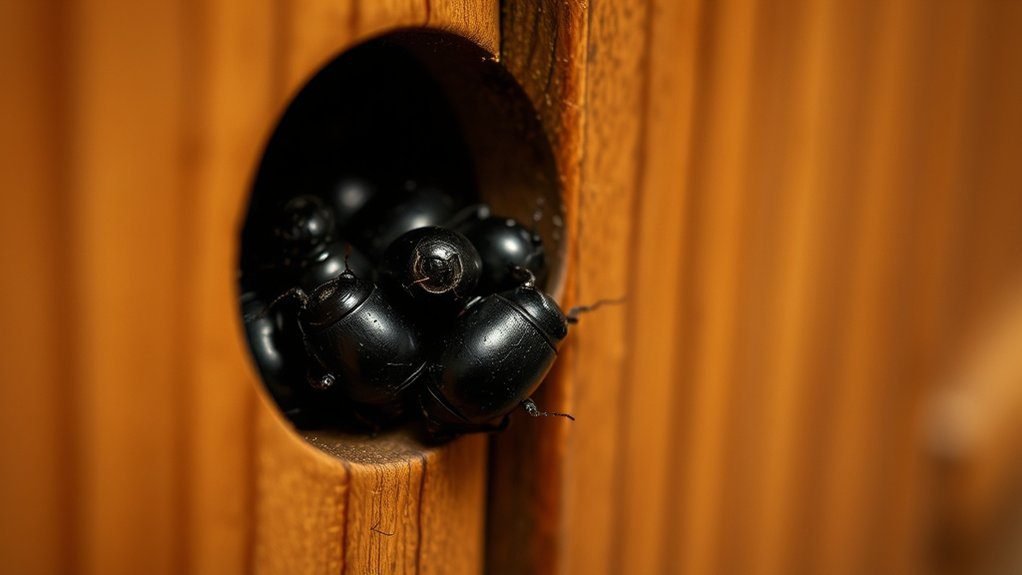
Ever notice a tiny, shiny capsule tucked in a crack or behind an appliance? You’re likely seeing a cockroach ootheca—an egg case.
These capsules range from light tan to dark reddish-brown or almost black, often blending into surfaces. They’re oval or elongated, smooth and glossy, sometimes with fine ridges or a segmented look. Size helps you tell species apart: German cockroach oothecae are light brown, about 5–6 mm, with a distinct seam; American are larger (8–10 mm), dark mahogany with ridges; Oriental are pill-like, 8–10 mm, dark reddish-brown; brown-banded are smaller (4–5 mm), lighter, and may show banding; smoky brown are dark brown to black. Female cockroaches may carry the ootheca until hatching or attach it to hidden surfaces, and each ootheca can contain a dozen to fifty eggs.
Check warm, humid, sheltered spots: cracks, crevices, wall voids, inside cabinets, under sinks, basements, utility rooms, near drains, and behind appliances.
German oothecae concentrate in kitchens and bathrooms; American and Oriental prefer humid areas; brown-banded may be attached to walls or ceilings; some cases appear outdoors near foundation cracks or mulch.
Safe Handling and Immediate Removal Techniques
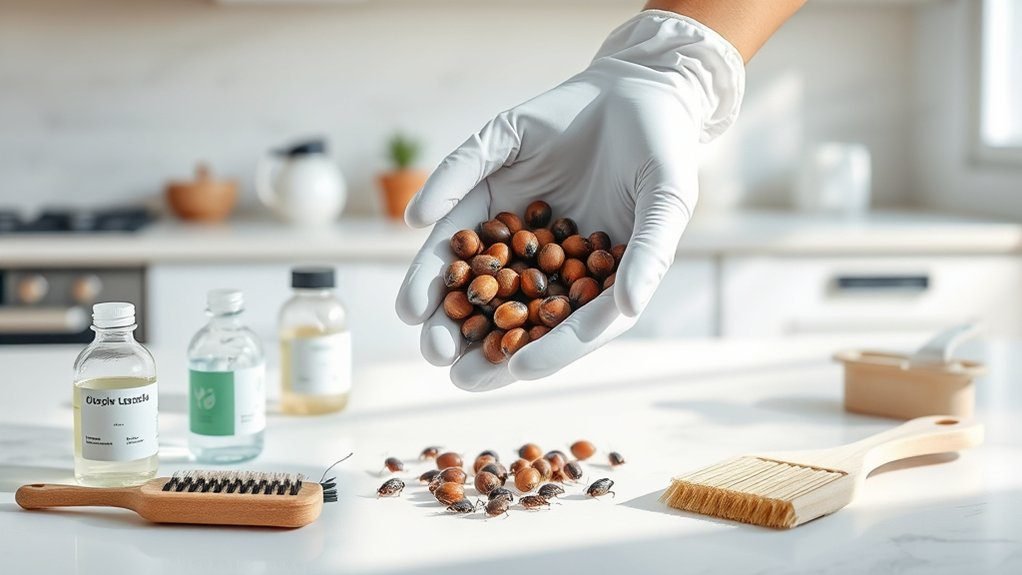
Although it’s tempting to rush, handle cockroach eggs methodically to avoid spreading them.
Put on disposable gloves, grab a flashlight, and inspect tight, dark gaps.
Don’t crush oothecae; you could spread viable eggs.
Lift them gently with tweezers or a tissue, then seal immediately in a plastic bag.
Double-bag and place them in an outdoor bin.
Wash your hands with soap and water after you’re done, even if you wore gloves.
Keep kids and pets away until areas are dry and safe. Cockroach oothecae can hatch in weeks depending on temperature, so early removal helps break their lifecycle.
1) Immediate containment
- Seal eggs the moment you find them; avoid indoor trash.
- For cluttered spots, declutter to expose hiding places.
- Clean and disinfect after removal to erase attractants.
2) Careful collection
- Use a disposable-bag vacuum or manual pick-up.
- Empty vacuum contents outdoors promptly.
- Wear a mask if working with dusts or aerosols.
3) Targeted treatments
- Lightly apply diatomaceous earth or boric acid near sites.
- Skip direct sprays on eggs; consider IGRs.
- Maintain dryness for powder efficacy.
Physical Methods: Vacuuming, Steam, and Freezing
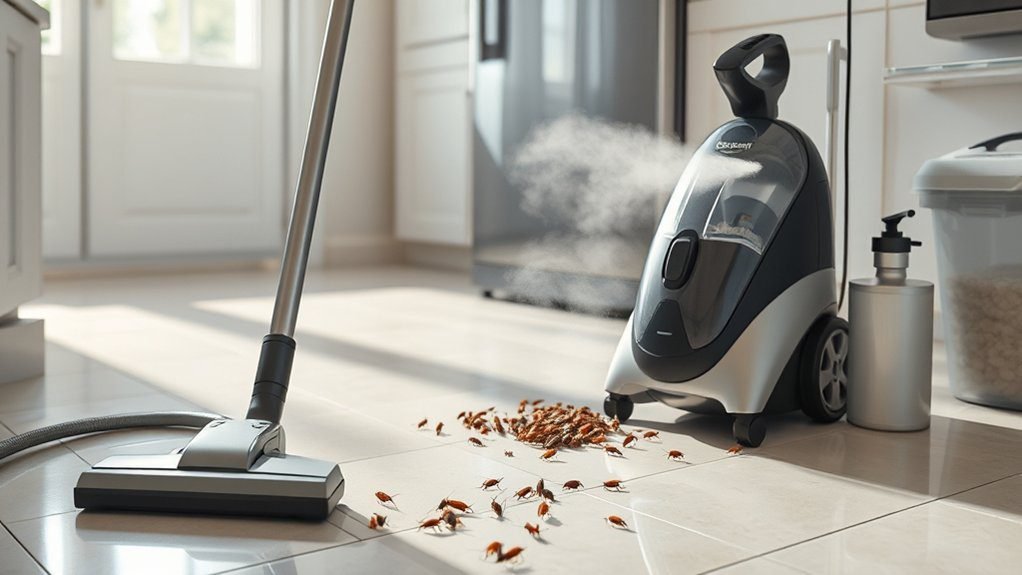
When you need chemical-free control, physical methods—vacuuming, steam, and targeted freezing—let you remove or kill cockroach eggs and nests at their source. Start with vacuuming: use strong suction and a crevice tool to reach cracks, behind appliances, cabinets, under sinks, and near plumbing. Immediately seal vacuum contents in a plastic bag and discard outdoors; clean the canister to stop eggs from hatching inside. Vacuum frequently to strip away fresh ootheca and roach debris that fuel reinfestation.
Steam delivers lethal heat (above 50°C) into crevices, killing eggs, nymphs, adults, and reducing bacteria. Focus on kitchens, damp zones, and utility penetrations; pest-control-rated steamers improve safety and reach. Because ootheca can contain dozens of eggs depending on species, thorough coverage is essential to prevent large numbers of nymphs from hatching.
Freeze small, suspect items for several days; it’s ideal for delicate materials, though impractical for rooms. Combine with inspection and debris removal.
- Reduce crumbs and moisture in target zones.
- Wear gloves; bag and dispose outdoors.
| Feeling | Impact |
|---|---|
| Relief | Silent eggs eliminated |
| Control | Hidden cracks treated |
| Cleanliness | Contamination reduced |
Chemical Options: Boric Acid, IGRs, and Baits
A smart chemical plan pairs boric acid, insect growth regulators (IGRs), and targeted baits to hit roaches at multiple life stages and hiding spots. Cockroaches are highly adaptable and can survive harsh conditions, which is why combining methods is crucial for integrated control.
Dust fine boric acid into cracks, wall voids, and under cabinets. It clings to roaches, gets ingested during grooming, abrades the exoskeleton, and dehydrates them. It doesn’t repel and stays potent if dry, but it won’t penetrate egg cases, so keep it off wet areas and reapply if disturbed.
IGRs complement boric acid by disrupting molting and reproduction. They don’t deliver quick kills; instead, they keep nymphs from maturing and reduce future egg output. They’re considered low-risk for people and pets.
Use baits to draw foraging adults and spread toxicants via secondary transfer. Choose gel or granular formulations with food attractants.
1) Dust boric acid lightly where roaches travel; avoid food surfaces and kid/pet zones.
2) Deploy IGRs to suppress hatchlings and population growth.
3) Place baits strategically to feed and share poison.
Prevention, Monitoring, and When to Call Professionals
Even before you spot a single ootheca, cut off roaches’ access, food, and moisture while tracking any stragglers. Seal entry points with caulk or foam around doors, windows, pipes, and foundations.
Keep kitchens spotless: wipe spills, sweep, and store food in airtight containers. Fix leaks, dry sinks and tubs, and ventilate damp rooms. Declutter cardboard and paper piles, and trim vegetation away from vents and the foundation; remove mulch and yard debris. Oothecae are not sticky, so they can be deposited in hidden cracks without adhering to surfaces.
Monitor weekly. Inspect kitchens, bathrooms, behind appliances, and dark corners. Learn what oothecae look like—brown, capsule-shaped cases tucked in cracks.
Place sticky traps or bait stations along walls and near warm, moist spots to measure activity and trends. Log trap counts to guide follow-ups.
Call professionals when infestations persist, egg cases keep appearing, or nests hide in wall voids and hard-to-reach places.
If DIY methods stall or you’ve got numerous sightings, pros bring targeted tools, safer application, and an integrated plan.
Frequently Asked Questions
Are Cockroach Eggs Dangerous to Pets or Cause Allergic Reactions?
Yes. Cockroach eggs and residues can trigger your pet’s allergies and asthma, spread pathogens via contamination, and increase infestation risks. You’ll notice coughing, itching, rashes, vomiting, or diarrhea. Reduce exposure, secure food, clean surfaces, and consult your veterinarian.
How Long Do Cockroach Eggs Take to Hatch Indoors?
Indoors, they hatch in about 28 days, but it varies by species and conditions. You’ll see German in 24–38 days, American 28–81, brown-banded 20–60, and Oriental much longer. Warmer, humid rooms speed development noticeably.
Can Eggs Hitchhike on Luggage, Clothing, or Packages?
Yes. Eggs and oothecae can hitchhike on luggage, clothing, footwear, and packages, hiding in seams and folds. You should bag items, wash hot and dry thoroughly, inspect and vacuum luggage, and isolate non-washables in sealed plastic.
Do Different Cockroach Species Have Different-Looking Oothecae?
Yes. You’ll notice species-specific ootheca differences: size (6–10 mm), color (brown to black), texture (ridged or smooth), and shape. German are smaller and carried; American are deposited; Oriental are largest, inflated, laid in cool, damp spots.
What’s the Safest Way to Treat Eggs in Electronics?
Use gel baits with IGRs around vents and ports, not sprays. Unplug devices, inspect with a flashlight, and target warm, dark spots. Consider controlled heat-bagging. Avoid disassembly unless confident. Keep monitoring, clean regularly, and seal openings to prevent reinfestation.
Conclusion
You’ve learned how to spot cockroach eggs, remove them safely, and use tools that actually work. Act fast: vacuum, steam, or freeze what you find, and handle oothecae carefully. Use targeted chemicals like boric acid, IGRs, and baits, not broad sprays. Seal entry points, reduce moisture, and keep traps to monitor progress. Stay consistent for several weeks. If you still see activity or suspect a larger nest, don’t wait—call a licensed pest control professional for thorough treatment.
