
How to Get Rid of Cockroaches
Cockroaches are among the hardest household pests to eliminate. They hide in places most treatments never reach, reproduce faster than most people expect, and can survive conditions that would kill most other insects.
The good news is that a methodical approach works. Random spraying does not. What works is identifying the species, removing what attracts them, applying targeted treatments in the right locations, and following up consistently until activity stops completely.
This guide walks through every step, from the first sighting to long-term prevention. If you are not yet sure what species you are dealing with, start with our cockroach identification guide before taking any action, since the right treatment depends entirely on the species.
Not sure whether to DIY or call a pro?Our DIY guide breaks down exactly when each approach makes sense and what to expect from both.
Signs You Have a Cockroach Infestation
Cockroaches spend about 75% of their time hiding. By the time you spot one in the open, particularly during daylight hours, there are almost certainly many more out of sight.
Before treating, confirm the problem is real and get a sense of severity. Common signs include:
- Droppings that look like black pepper flakes or coffee grounds near baseboards, inside cabinets, and under appliances
- Egg casings (oothecae): small, dark brown, bean-shaped capsules, tucked into cracks or behind furniture
- A musty, oily odor in enclosed spaces like cabinets, especially noticeable in larger infestations
- Smear marks along walls or floors in areas of high activity
- Shed skins left behind as nymphs grow through developmental stages
- Live roaches seen at night when lights are turned on suddenly
How to Get Rid of Cockroaches: 6 Steps
Identify the Species
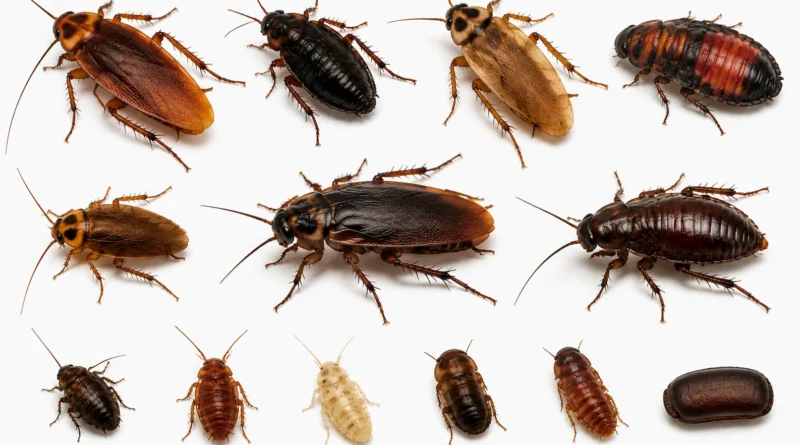
Different cockroach species hide in different locations and respond differently to treatments. German cockroaches cluster in kitchens and bathrooms. American cockroaches come in from drains and sewers. Brown-banded cockroaches hide throughout the home in high, dry spots like electronics and furniture.
Applying gel bait designed for German cockroaches in a kitchen will have almost no effect on brown-banded cockroaches hiding in a bedroom. Start here, or you risk wasting time and money on the wrong approach.
See our full breakdown of types of cockroaches in homes to confirm which species you are dealing with before moving to treatment.
Find the Harborage Areas
Cockroaches do not spread evenly through a home. They cluster in specific harborage areas close to food, water, and warmth. Treatment that misses these locations will not eliminate the infestation.
Conduct a thorough inspection with a flashlight, checking behind and underneath refrigerators, ovens, dishwashers, and microwaves. Check inside cabinet hinges and under sink cabinets. Look along the back edges of shelves and inside any cardboard boxes stored in kitchen areas.
For a nighttime inspection, use a flashlight with a yellow or red filter, which is less likely to scatter cockroaches before you can assess activity levels.
Remove Food, Water, and Shelter
No treatment will hold if the conditions that attracted cockroaches remain unchanged. This step reduces the infestation and makes treatments significantly more effective.
- Store all food in sealed airtight containers or in the refrigerator
- Wipe down counters, stovetops, and the inside of the microwave after every use
- Empty and clean the area under the kitchen sink; fix any dripping pipes immediately
- Take out garbage daily and use bins with tight-fitting lids
- Remove cardboard boxes from kitchens and storage areas, as cockroaches use them for harborage
- Dry sinks and pet water bowls overnight to reduce moisture access
According to the New York State Department of Health, removing food and moisture sources is one of the most effective long-term control strategies and should happen before any chemical or bait treatment begins.
Seal Entry Points
Cockroaches enter through remarkably small gaps. German cockroaches can squeeze through a gap as narrow as 1.6mm. Sealing entry points reduces new arrivals and contains the existing population to treated areas.
- Caulk gaps around baseboards, where pipes enter walls, and behind kitchen cabinets
- Install door sweeps on exterior doors, especially garage and back doors
- Add fine mesh screens over floor drains and utility vents
- Seal gaps around window and door frames with weather stripping
- Check where appliance cords and plumbing enter walls and seal around them
In apartment buildings, cockroaches also travel through shared walls and ceilings between units. Sealing gaps around electrical outlets and light fixtures on shared walls can help limit movement significantly.
Apply Targeted Treatments
With sanitation done and entry points sealed, apply treatment directly to harborage areas. Avoid whole-room sprays as a primary strategy; they scatter cockroaches and drive them deeper into walls, making the infestation harder to treat.
The most effective DIY treatment for German cockroaches. Apply small pea-sized dots inside cabinet hinges, behind appliances, and along the inside edges of drawers. Replace every 1 to 2 weeks.
Applied as a fine dust in hidden areas like behind appliances and inside wall voids. Works by attaching to the cockroach’s body and damaging its nervous system. Effective but slow-acting.
A physical, chemical-free option. Applied in thin layers inside cabinet bases and along wall voids. Damages the cockroach’s exoskeleton and causes dehydration. Safe around children and pets when dry.
Used primarily for monitoring rather than elimination. Place near suspected harborage areas to gauge population size and confirm which locations have the highest activity before deploying bait.
Prevent cockroach nymphs from developing into breeding adults. Used alongside gel bait or boric acid to break the reproduction cycle rather than simply killing existing adults.
Fast-acting on individual cockroaches but not a long-term solution. Useful for killing visible roaches on contact. Never use near food or in areas where bait has been applied, as it repels cockroaches from the bait.
Monitor and Follow Up
A single round of treatment is rarely enough. Egg casings that survived the first treatment will hatch 1 to 2 months later, restarting the infestation if follow-up is not done.
Check sticky monitoring traps weekly. Replace gel bait every 1 to 2 weeks. If activity has not dropped significantly within 3 to 4 weeks of consistent treatment, reassess the harborage locations or consider professional intervention.
Keep treatment going for at least 2 months after the last visible cockroach sighting to ensure all newly hatched nymphs are eliminated before they reach breeding age.
When to Call a Professional
DIY methods work well for early-stage or moderate infestations when the species is correctly identified and treatments are applied consistently. They are less effective in situations where access to harborage areas is limited, the infestation has spread through wall voids, or the cockroach species present is resistant to common OTC products.
Consider professional treatment when:
- You have been treating for 4 or more weeks without a clear reduction in activity
- Cockroaches are visible in multiple rooms or areas of the home
- The infestation is inside walls, ceilings, or large appliances you cannot access
- You live in a multi-unit building where roaches are entering from neighboring units
- There are household members with asthma or cockroach allergies that require fast resolution
Professional pest control offers access to commercial-grade products, fumigation, and treatment methods not available to the general public. For a full breakdown of professional options and what they cost, see our guide to professional cockroach treatment options and our detailed overview of cockroach inspection costs.
How to Prevent Cockroaches From Coming Back
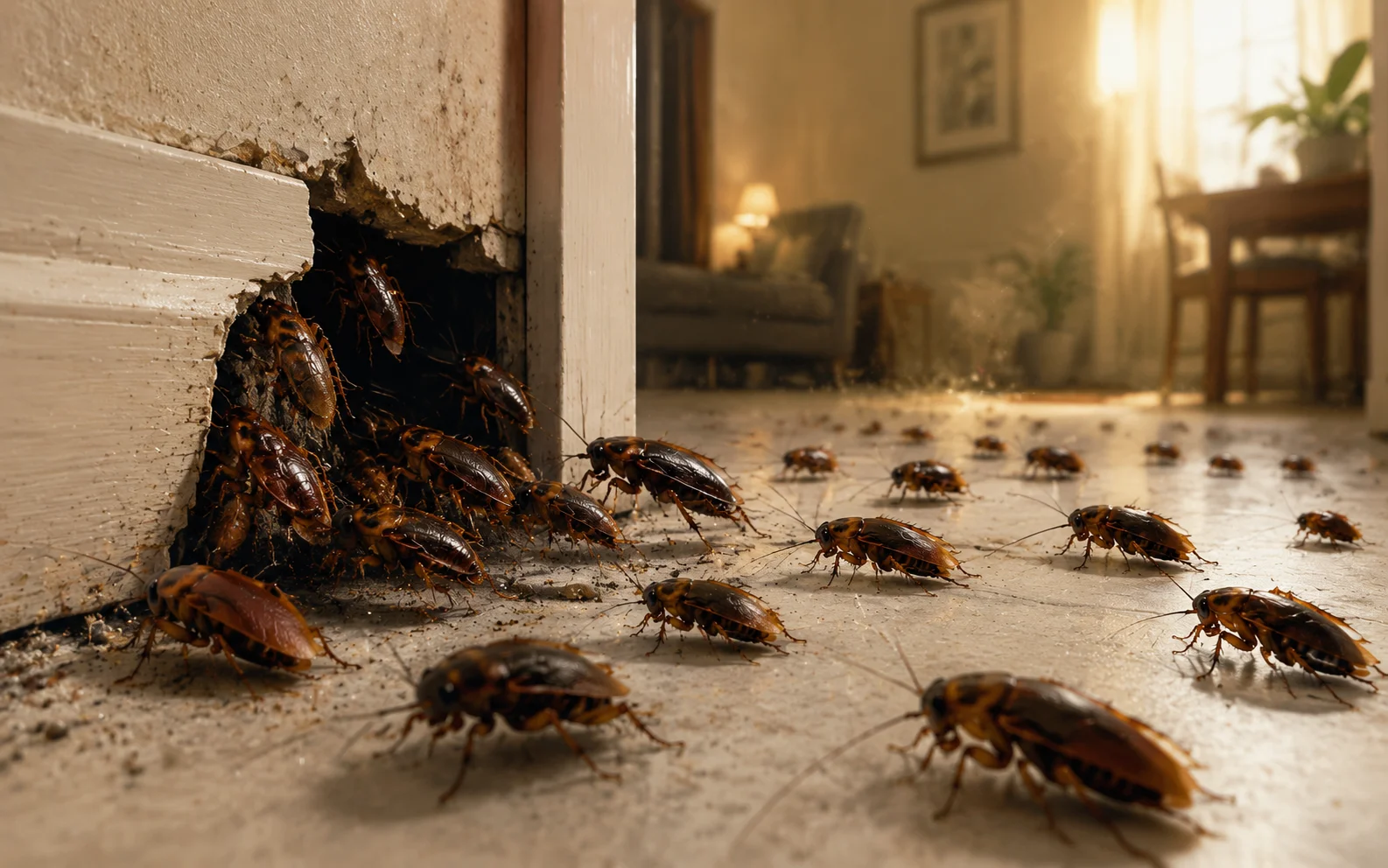
Eliminating an infestation is only part of the job. Without ongoing prevention, cockroaches will return, particularly in urban areas or homes near active sewer systems.
The EPA’s Integrated Pest Management guidance recommends an ongoing, layered approach that combines sanitation, structural exclusion, and regular monitoring rather than reactive one-time treatments.
- Maintain a clean kitchen as a daily habit, not just during an active infestation
- Inspect grocery bags, cardboard boxes, and secondhand appliances before bringing them inside
- Run a sticky trap near appliances every 2 to 3 months as a monitoring check even when no activity is visible
- Keep drains covered at night; this is particularly relevant for American and Oriental cockroach prevention
- Reapply caulk around pipes and baseboards annually as it dries out and shrinks over time
- Address any moisture problems promptly, including condensation, slow drains, and minor plumbing leaks
For a deeper understanding of what to expect once treatment has been applied, our guide on what to expect after professional cockroach treatment covers the full recovery timeline and what is normal during the process.
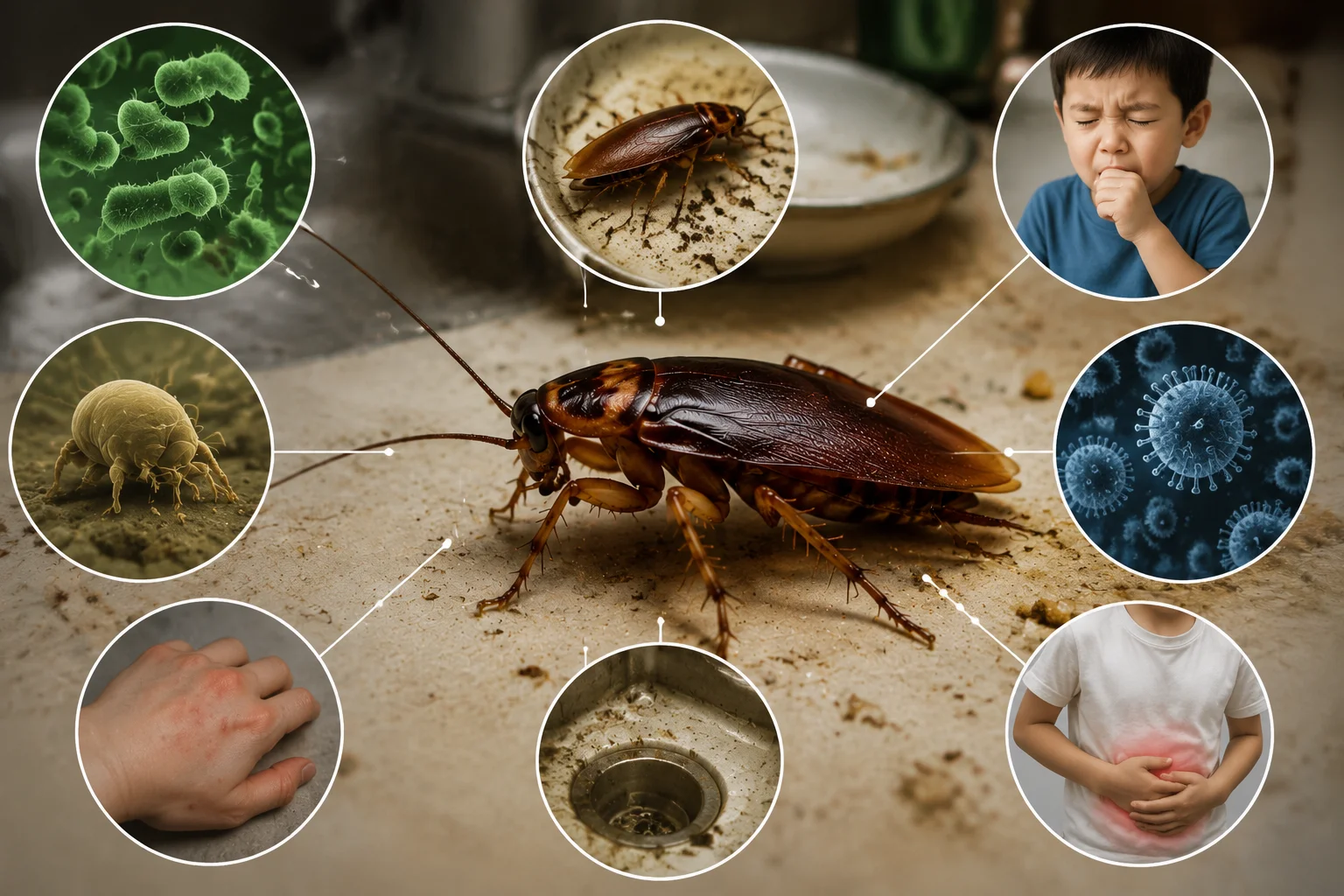
Cockroaches also pose serious health risks that go beyond the visible infestation. Read more about the long-term dangers in our article on health risks from cockroach species.
Frequently Asked Questions
1. How do I know if I have a cockroach infestation?
Signs include droppings that look like black pepper, egg casings, a musty odor, smear marks along walls, shed skins, and live roaches, especially during the day.
2. What are the best ways to get rid of cockroaches at home?
Effective methods include identifying the species, removing food and water sources, sealing entry points, applying targeted treatments like gel baits, boric acid, diatomaceous earth, and following up consistently until activity stops.
3. When should I call a professional pest control service?
If DIY methods have been applied for 4+ weeks with no improvement, roaches are visible in multiple rooms, infestations are inside walls or ceilings, or if there are household members with asthma or allergies, professional intervention is recommended.
4. How can I prevent cockroaches from coming back?
Maintain daily cleanliness, inspect new items brought indoors, use sticky traps for monitoring, cover drains, reapply caulk annually, and address moisture issues promptly to reduce the risk of reinfestation.
{
“@context”: “https://schema.org”,
“@type”: “FAQPage”,
“mainEntity”: [
{
“@type”: “Question”,
“name”: “How do I know if I have a cockroach infestation?”,
“acceptedAnswer”: {
“@type”: “Answer”,
“text”: “Signs include droppings that look like black pepper, egg casings, a musty odor, smear marks along walls, shed skins, and live roaches, especially during the day.”
}
},
{
“@type”: “Question”,
“name”: “What are the best ways to get rid of cockroaches at home?”,
“acceptedAnswer”: {
“@type”: “Answer”,
“text”: “Effective methods include identifying the species, removing food and water sources, sealing entry points, applying targeted treatments like gel baits, boric acid, diatomaceous earth, and following up consistently until activity stops.”
}
},
{
“@type”: “Question”,
“name”: “When should I call a professional pest control service?”,
“acceptedAnswer”: {
“@type”: “Answer”,
“text”: “If DIY methods have been applied for 4+ weeks with no improvement, roaches are visible in multiple rooms, infestations are inside walls or ceilings, or if there are household members with asthma or allergies, professional intervention is recommended.”
}
},
{
“@type”: “Question”,
“name”: “How can I prevent cockroaches from coming back?”,
“acceptedAnswer”: {
“@type”: “Answer”,
“text”: “Maintain daily cleanliness, inspect new items brought indoors, use sticky traps for monitoring, cover drains, reapply caulk annually, and address moisture issues promptly to reduce the risk of reinfestation.”
}
}
]
}
