

Sanitation Standards That Reduce Cockroach Infestations in Commercial Buildings
Cut cockroach risks by denying food and water daily. Clean prep areas immediately, store food in airtight containers, and empty sealed trash bins each day. Seal cracks, add door sweeps, and screen vents. Use an IPM plan: place sticky traps in hidden hotspots, log counts, and act only when thresholds are met. Fix leaks, dry sinks and mop buckets, and limit cardboard. Train staff to report sightings and inspect deliveries. There’s more you can do to make these standards stick.
Key Takeaways
- Deny food and water daily: clean prep areas immediately, empty indoor trash with tight lids, and dry sinks and mop buckets after use.
- Store all food and ingredients in sealed, airtight containers; remove exposed food and residues before closing each day.
- Establish strict trash handling: scheduled removals, clean receptacles and dumpster areas, and maintain tight-fitting lids to limit odors and residues.
- Minimize paper and cardboard; transfer goods to sealed plastic bins and promptly clear packing waste from receiving areas.
- Deep clean behind appliances, vacuum cracks and crevices, and maintain dry, debris-free floors to eliminate crumbs and grease buildup.
Sanitation Practices to Deny Food and Water

Start with the basics: deny cockroaches food and water every day.
Clean prep surfaces as you go, wiping crumbs and spills immediately. Don’t leave dirty dishes in sinks or on counters overnight. Store all food in airtight containers. German cockroaches are primarily active at night, so ensure closing procedures remove all food and water access before lights out.
Empty indoor trash at least daily and use tight‑fitting lids; clean receptacles to remove residues and odors. Keep dumpsters clean, serviced frequently, and positioned away from entrances. Remove exterior food waste and pet waste promptly.
Cut off water. Fix leaking pipes and dripping faucets quickly. Drain and dry mop buckets and sinks after use.
Maintain and clean floor and sink drains to remove organic buildup, and boost ventilation in damp spaces to reduce condensation.
Vacuum floors, cracks, and crevices often to remove food debris, shed skins, and egg cases. Inspect incoming goods for signs of cockroaches; reject infested items.
Store boxes off the floor and away from walls, limit clutter, train staff, post schedules, and require immediate reporting.
Structural Exclusion and Physical Barriers

Start by sealing gaps and cracks so roaches can’t enter or hide.
Then fortify doors and windows with tight fits, door sweeps, and weather stripping.
Finally, screen and inspect entries—vents, weep holes, and intakes—so you block pests and catch failures early.
In commercial settings, cockroaches can rapidly multiply and contaminate surfaces with pathogens like Salmonella, so maintaining sanitation and structural exclusion is critical.
Seal Gaps and Cracks
Few steps protect a facility from cockroaches as effectively as sealing every gap and crack that lets them in. Inspect wall voids, utility chases, dock areas, and behind kitchen equipment. Focus on gaps around plumbing and electrical penetrations. Use clear silicone for hairline cracks, and pack larger openings with stainless steel mesh before caulking. Choose non-decaying, pest‑resistant materials—galvanized hardware cloth, high‑density cement—so exclusions last. Thoroughness matters; partial seals still admit pests. Check incoming appliances, furniture, and boxes to prevent hitchhikers. Sticky traps can help identify entry points and confirm seal effectiveness by monitoring cockroach activity.
Schedule routine envelope inspections. Immediately seal new penetrations, baseboard separations, and leaks that invite moisture and access. Maintain landscape clearances and gravel strips to reduce harborage at the perimeter.
| Task | Material/Action |
|---|---|
| Small cracks | Clear silicone |
| Large gaps | Stainless steel mesh + caulk |
| Pipe penetrations | Silicone, escutcheon seals |
| Perimeter soil | Gravel strip, subsurface mesh |
Fortify Doors and Windows
Although roaches can squeeze through astonishingly small openings, you can shut down their main gateways by hardening every door and window.
Install durable door sweeps on all exterior doors and pair them with threshold seals; guarantee tight floor contact with no light showing. Choose metal or heavy-duty rubber, inspect frequently, and replace worn parts.
Add high-quality weatherstripping around door and window frames, and caulk any cracks along window frames. Where feasible, use tight-fitting storm windows. Reducing hiding places around entries is a key sanitation step that helps prevent infestations from taking hold.
Reinforce frames to resist warping, keep locks snug, and verify hinges and hardware don’t create gaps.
Add kick plates to protect door bottoms. Maintain intact window screens and fasten them securely.
Clear vegetation, clutter, and moisture near entries, maintain gravel borders, guarantee proper drainage, and routinely clean sills and thresholds.
Screen and Inspect Entries
Even with tight doors and windows, roaches slip in where you don’t look—so you must screen and inspect every potential entry.
Install door sweeps and weatherstripping; seal cracks, conduits, and gaps under doors. Fit fine mesh screens on vents, drains, and exhausts; cap chimneys and pipe terminations. Proactive control helps prevent early harborage that can lead to contamination and violations.
Screen rooftop HVAC units and other penetrations. Use stainless steel or galvanized hardware cloth for long-lasting barriers around perimeters, and add kick plates to heavy equipment to block harborage.
Inspect utility penetrations for plumbing, electrical, and gas lines, and seal them. Check loading docks, garages, and overhead doors; repair damaged seals with pest-resistant materials.
Schedule interior and exterior inspections, verify door and window seals at night, place sticky traps near entries, fix plumbing leaks, and scrutinize incoming goods.
Integrated Pest Management and Monitoring Protocols
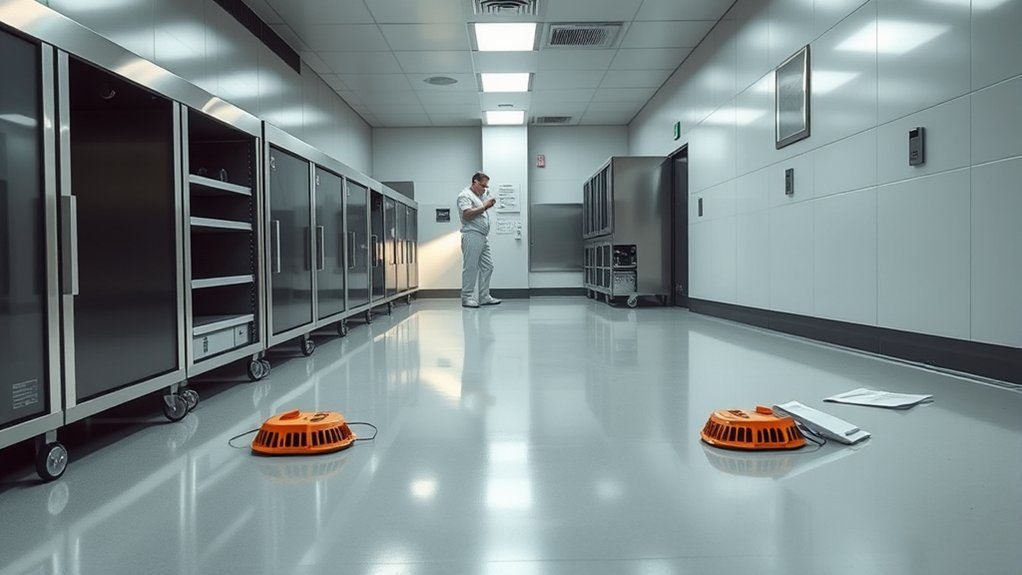
You’ll strengthen sanitation standards by using a proactive IPM framework that prioritizes prevention, minimizes pesticides, and coordinates with stakeholders.
Place sticky traps strategically in dark, hidden harborage zones to verify species, pinpoint hotspots, and gauge severity.
Track trap counts and inspection findings over time so you can trigger thresholds, adjust controls, and document results for data-driven decisions.
Proactive IPM Framework
Because cockroaches thrive where food, water, and shelter persist, a proactive IPM framework starts with disciplined monitoring and tight feedback loops.
You identify species and map infestation extent, then schedule systematic inspections that use flushing agents and monitoring traps. You predict trends, evaluate treatments over time, and adjust tactics without defaulting to spray-and-pray methods. Data guides timing and location of control, minimizing pesticide use and maximizing results.
- Standardize inspections: log trap counts, hotspots, and sanitation defects, then review weekly to spot upticks early.
- Tighten sanitation: empty and reline sealed waste bins daily; clean coffee stations, microwaves, fridges; dry leaks immediately.
- Exclude access: seal cracks, pipe chases, and vents; maintain screens and door sweeps.
- Prioritize targeted controls: deploy containerized gel baits (e.g., hydramethylnone); avoid foggers; adapt with continuous feedback.
Strategic Trap Placement
While sanitation and exclusion starve roaches of resources, trap placement tells you where they still travel and hide. Place traps near food and water: kitchens, pantries, break rooms, beverage stations, and coffee makers.
Slide units under sinks, beside plumbing penetrations, and around refrigerators, stoves, and dishwashers. Line cabinet edges and drawer crevices to intercept foragers.
Exploit harborage: tuck traps behind and under appliances, inside cracks, wall voids, structural joints, under bathroom sinks, utility rooms, behind furniture, under counters, storage rooms, and near electrical outlets and appliances for warmth.
Target pathways: doors, windows, vents, baseboards, corners, pipe and cable penetrations, corridors, and interior perimeter walls.
Maintain rigor: replace traps every 3–4 months, avoid sprays nearby, remove captures promptly, relocate inactive traps, ascertain child-safe placement, and document locations.
Data-Driven Pest Tracking
Even before you set a single trap, data drives cockroach IPM. You begin with correct species identification and thorough inspections of kitchens, storage rooms, restrooms, and moisture sources.
Place sticky traps and non-toxic bait stations to quantify activity without heavy pesticide use. Record counts, locations, and conditions, then map hotspots to guide resources and predict trends. Set action thresholds so you treat only when risk justifies it, and adjust tactics based on follow-up results.
- Schedule monitoring (daily, weekly, or monthly) combining visual inspections with trap counts for accuracy.
- Track sanitation audits, moisture, and structural gaps; verify door sweeps and screens.
- Use electronic sensors where feasible to enhance sensitivity in large sites.
- Target treatments by data, then evaluate outcomes and refine controls.
Waste and Clutter Control Standards
Clutter is a cockroach magnet, and waste is its fuel. Set strict removal schedules so trash never accumulates. Line bins and use tight-fitting lids to cut access to residues. Clean trash rooms and dumpsters inside and out to strip odors and debris.
Keep outdoor areas clear—remove fallen fruit and refuse, and position dumpsters away from entrances to prevent overflow risks.
Limit paper, cardboard, and idle supplies in storage and operational zones. Swap cardboard for sealed plastic containers. Elevate goods on pallets or shelving for quick inspections and easier cleaning.
Deep clean behind and under appliances, furniture, and equipment, and vacuum cracks and floor edges to collect food particles and egg cases.
Stop introductions at the door. Inspect deliveries, furniture, and transferred materials; reject suspect items and document findings. Train staff to recognize signs and report immediately.
Audit upstream suppliers for sanitation standards. Share clear guidelines with tenants and employees, and inspect exteriors regularly.
Moisture Reduction and Environmental Management
Because cockroaches thrive where water lingers, you need to cut moisture at its sources and along its pathways. Harden the building envelope with vapor barriers, waterproof sealants, and moisture-resistant finishes.
Repair leaks immediately—pipes, spigots, drains—and seal utility penetrations with caulk, foam, or metal mesh to block damp air and pest entry. Add door sweeps and weather stripping to curb seepage.
Indoors, ventilate kitchens, bathrooms, storage, and utility rooms; maintain HVAC to prevent condensation around vents and ducts; insulate without gaps; and keep areas under and behind appliances dry and clean.
- Exterior flow control: maintain gutters and downspouts to move rainwater away from foundations; install gravel bands 6–12 inches wide to dry perimeter soils.
- Landscape hygiene: trim vegetation, remove dense ground covers and leaf litter, and eliminate stagnant water and depressions.
- Cleanable interiors: use epoxy floors and smooth washable walls to shed moisture and reduce harborage.
- Routine oversight: inspect regularly, maintain waste areas dry, install vapor barriers in basements, and document findings.
Employee Training and Supply Chain Safeguards
Moisture control sets the stage, but people and processes keep cockroaches out. You train every employee to spot droppings, egg cases, and entry gaps, then act fast. Use hands-on and classroom sessions that move from pest ID to integrated pest management (IPM). Standardize reporting: log sightings immediately, notify supervisors, and position monitors in high‑risk zones. Keep communication open so responses are swift and coordinated.
Safeguard the supply chain. Teach receiving staff to inspect pallets, cartons, and seals; clear packing waste right away; and store goods sealed and elevated. Align expectations with suppliers, and time waste removal to avoid night harborage. Partner with pest professionals for inspections, targeted treatments, and compliance updates, and review results to refine tactics.
- Assign sanitation routines to all teams, including hard‑to‑reach zones.
- Schedule routine inspections and refreshers tied to seasonal risks.
| Focus | Action | Outcome |
|---|---|---|
| Training | ID, monitoring, reporting | Early detection |
| Inspections | Traps, gaps, storage | Fewer harborage sites |
| Receiving | Check, clean, seal | Cleaner inflow |
| Waste | Timing, removal, hygiene | Lower attraction |
| IPM | Pro support, review | Sustained control |
Frequently Asked Questions
How Often Should Third-Party Audits Evaluate Pest Prevention Compliance?
Schedule third-party audits quarterly, then adjust by risk: food service and healthcare monthly or weekly, warehouses monthly if handling perishables, offices and retail quarterly to bimonthly. Increase frequency after infestations, during peak seasons, or when regulations demand tighter compliance.
What Signage Helps Occupants Report Cockroach Sightings Effectively?
Post bold, high-contrast, multilingual signs with cockroach pictograms in kitchens, break rooms, and restrooms. You include simple instructions, required details (location, time, sighting), no-touch guidance, confidential tone, ADA features, durable materials, and QR codes or contacts for instant reporting.
Are There Certifications Proving a Building’s Pest-Preventive Sanitation?
Yes. You can pursue ISO 9001, ISO 14001, ISO 22000, HACCP, LEED, Green Shield Certified, AIB, WELL, BOMA 360, and IPM certifications (EcoWise, IPM Institute). They require documented sanitation, monitoring, audits, and least-toxic practices.
How Do Tenant Lease Clauses Address Pest Responsibilities?
They allocate duties. You’ll see landlords handle initial pest-free delivery, structure, common areas, and scheduled treatments. You must maintain hygiene, report promptly, grant access, and pay when negligence causes infestations. Leases define causation, documentation, dispute routes, and cost allocation.
What KPIS Measure Success of Cockroach Prevention Programs?
You measure success with infestation reduction, declining trap counts, fewer complaints, faster response times, inspection compliance, accurate documentation, trained staff, effective bait stations, sealed entry points, sanitation compliance, higher tenant satisfaction, lower turnover, avoided disruptions, improved reputation, reduced damage costs, and positive ROI.
Conclusion
You’ve got the tools to keep cockroaches out: starve them, block them, monitor them, and remove what attracts them. When you tighten sanitation, seal entry points, set IPM protocols, control waste, cut moisture, and train staff, you break their lifecycle and prevent rebounds. Hold vendors to standards, audit regularly, and document actions. If pressure spikes, escalate with targeted treatments. Stay consistent, and you’ll protect health, assets, and reputation while keeping your building compliant and cockroach-free.
