
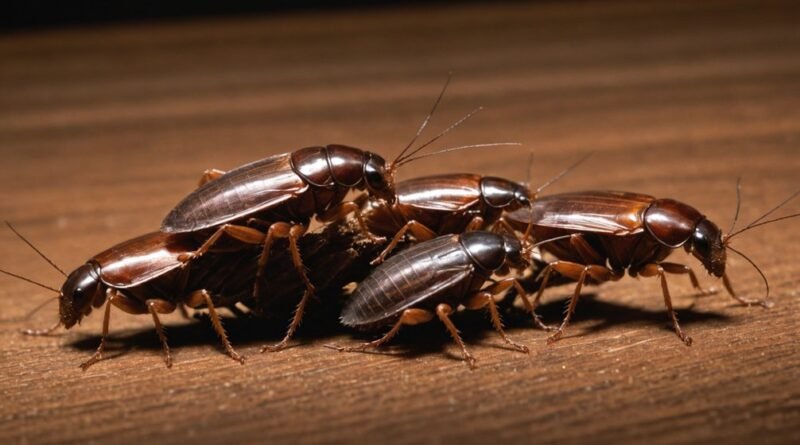
American Cockroaches, Identification, Nests and Movement Through Buildings
Spot American cockroaches by their large 1.25–2+ inch reddish‑brown bodies and a pale yellow band on the pronotum; adults have long antennae and full wings. They cluster in warm, humid, dark spots near food and water—basements, crawl spaces, under sinks, and around plumbing—or outside in mulch and compost. They enter through cracks, unsealed vents, pipes, and even boxes or used furniture, then spread via wall voids and sewer lines. You’ll also see why they’re a health concern and how to curb them fast.
Key Takeaways
Spot American cockroaches by their large 1.25–2+ inch reddish-brown bodies and a pale yellow band on the pronotum; adults have long antennae and full wings. Formally known as Periplaneta americana, these pests cluster in warm, humid, dark spots near food and water — basements, crawl spaces, under sinks, and around plumbing — or outside in mulch and compost. They enter through cracks, unsealed vents, pipes, and even boxes or used furniture, then spread via wall voids and sewer lines. Understanding their identification, behavior, and health risks helps you choose the right pest control and extermination approach before populations compound.
Key Takeaways
- Identification: large reddish-brown cockroach (Periplaneta americana) measuring 1.25–2+ inches, with a pale yellow figure-8 band on the pronotum; long antennae; fully developed wings.
- Look-alikes: German cockroaches have dark head stripes; Australian cockroaches show brighter yellow markings on the pronotum.
- Habitats: prefer warm, humid, dark areas near food and water — basements, crawl spaces, utility rooms, and plumbing voids.
- Movement: spread via pipe chases, wall voids, shared walls, and sewer lines; guided by moisture and warmth throughout buildings.
- Entry: infiltrate through foundation cracks, gaps, unsealed vents, leaky plumbing routes, and hitchhike in boxes, luggage, groceries, and used furniture.
- Early inspection and integrated pest control are essential — American cockroaches are nocturnal insects that can establish large hidden populations before people notice the cockroach infestation.
Identification Characteristics of American Cockroaches
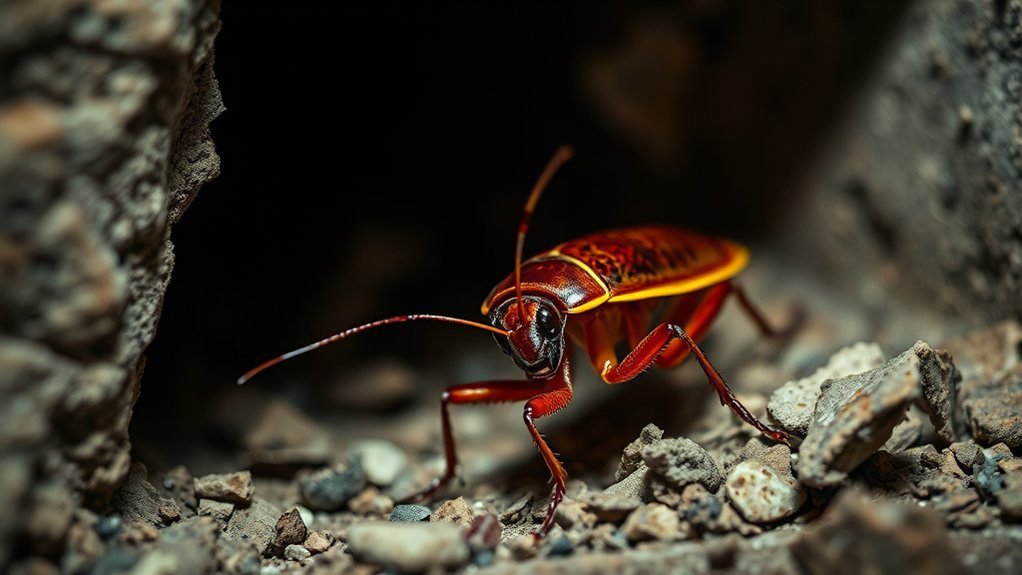
Although several household roaches look similar at a glance, American cockroaches (Periplaneta americana) stand out by their large size, reddish-brown coloration, and the pale yellow band outlining the pronotum behind the head. You’ll also notice a faint figure-8 pattern on the pronotum. Adults typically measure 1.25 to just over 2 inches (about 32–54 mm), averaging 1.5 inches on average, with a broad, flattened oval body about 7 mm tall. They are the largest cockroach species commonly found in homes across the United States, which helps distinguish them from other roaches in the region.
Check the wings: both sexes have fully developed forewings (protective tegmina) covering delicate hind wings. Males’ wings extend 4–8 mm beyond the abdomen; females’ are about equal to abdomen length. Flight is possible — they can fly short distances — though they rarely do in cooler regions. Distinguish them from look-alikes: German cockroaches have dark head stripes and don’t fly; Australian cockroaches show brighter yellow thorax and pronotum markings.
Nymphs are smaller, wingless, and lighter in color. Confirm with appendages: very long, slender antennae, six spined running legs, prominent compound eyes, and chewing mandibles. The thorax bears both pairs of wings and all six legs — a key anatomical feature of all cockroach species in the order Blattodea.
Nesting Habits and Preferred Habitats
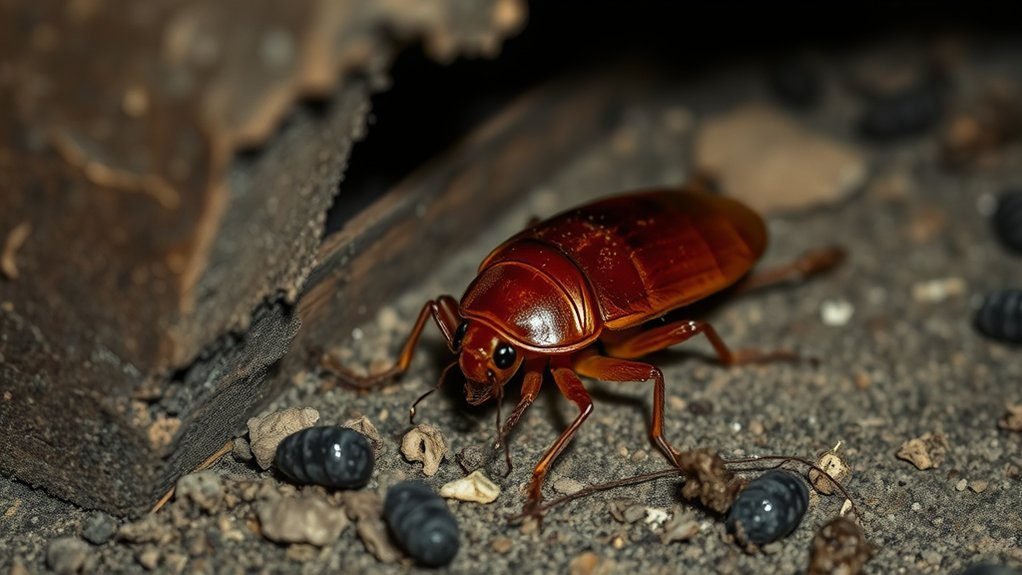
Once you can recognize an American cockroach, you’ll know where to look for it: warm, humid, and dark hideouts that keep food and water close. These pests are highly adaptable insects found across diverse environments — from urban sewers in cities like Miami and Houston to the basements of homes in northern states where they shelter indoors year-round.
Indoors, you’ll find aggregations in basements, crawl spaces, utility rooms, and first-floor voids. They wedge into cracks behind refrigerators and stoves, under sinks, inside cabinets, behind loose tiles, and around plumbing fixtures. Kitchens, bathrooms, boiler or furnace rooms, and even electronics offer the steady heat and moisture they crave. Roach droppings that look like coarse pepper around these areas signal active activity and nearby harborage.
Look low and warm: basements, crawl spaces, kitchens, baths — behind appliances, under sinks, inside cabinets.
Outdoors, they favor damp, decaying matter — mulch, compost, leaf litter, woodpiles, and tree hollows — especially near foundations. Trash bins, dumpsters, storm drains, and debris piles also shelter egg cases (oothecae) and mixed life stages. The odor of decay and fermenting organic material — including beer, rotting food, and compost — actively attracts these pests to outdoor harborage near homes and restaurants.
They don’t build a single “nest.” Instead, they cluster in protected microhabitats with humidity, temperatures above 70°F (21°C), and ready water from leaks, drains, or condensation. Their nocturnal behavior means most foraging happens after dark — a key reason daytime sightings signal a severe cockroach infestation.
- Prioritize inspections near drains, pipe chases, and utility lines.
- Check heat sources: appliances, electronics, boiler rooms.
- Inspect outdoor mulch, woodpiles, and litter touching structures.
Movement Through Buildings and Common Entry Points
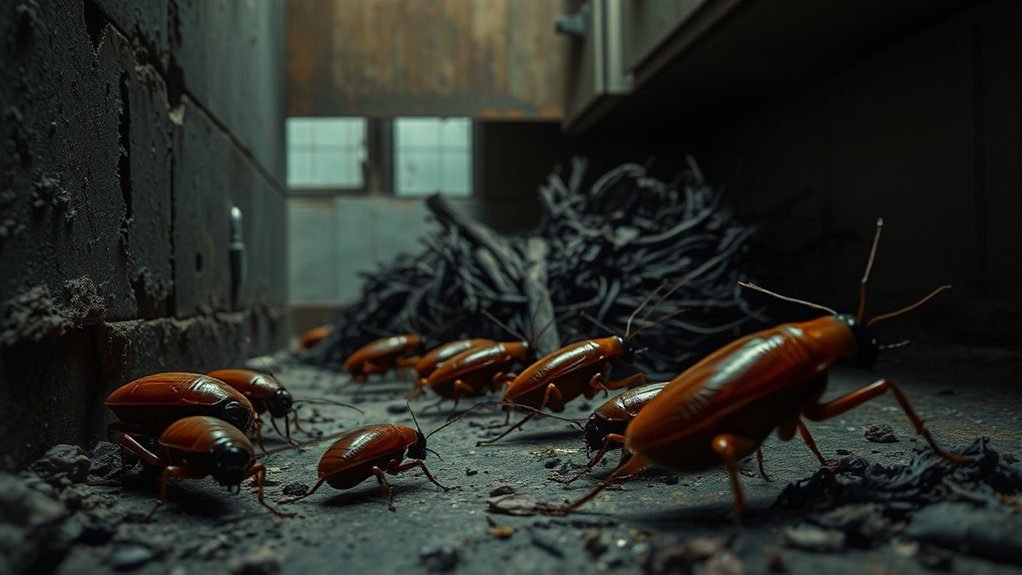
Guided by moisture, warmth, and darkness, American cockroaches slip into buildings through the smallest structural flaws and then spread along hidden utility routes. You’ll see infiltration through cracks in foundations, wall gaps, loose baseboards, worn door sweeps, and torn window screens. Unsealed vents, chimneys, and utility penetrations act like open doors. Early detection of cockroaches saves significant trouble because addressing entry points promptly prevents a worsening infestation.
Leaky faucets, broken pipes, and floor drains provide damp corridors; sewer lines lead them into basements, crawl spaces, sump pits, and ground floors. Once inside, they disperse through pipe chases, wall voids, electrical conduits, and shared walls between units. In cold climates, steam tunnels and warm mechanical rooms become highways for these insects.
They also hitchhike on a remarkable range of items — boxes, groceries, luggage, used furniture, clothing, and even paper and book bindings — making them easy to introduce unknowingly into any home. Originally from tropical Africa and introduced globally through trade routes, Periplaneta americana is now one of the most cosmopolitan pest species on the planet, found across environments from Florida to the Pacific Northwest.
Limit entry by sealing cracks and penetrations, screening vents, fixing leaks, replacing door sweeps, securing lidded trash, removing outdoor debris, and scheduling professional inspections to pinpoint hidden pathways. Containers stored on the floor in basements and garages are common locations where cockroaches hide — elevate storage and inspect regularly.
Physical and Behavioral Traits to Recognize
Even before you spot one, certain telltale traits help you identify an American cockroach quickly. You’re looking for a large, glossy insect — about 27–40 mm long — with a reddish-brown body and a pale yellow figure-eight band on the pronotum. The body is oval, flattened, and flexible, letting it slip through tight gaps. Long, slender antennae often exceed body length, and both sexes have two wing pairs: leathery forewings over flight-capable hind wings, though they rarely fly in cooler regions. Their behavior is primarily nocturnal — these pests are active at night, feeding on moist organic matter, hair, paper, book bindings, clothing, sweets, and almost any food residue they encounter.
Spot the American cockroach: large, glossy, reddish-brown, with a pale figure-eight band on the pronotum — and thorax bearing six spiny running legs.
Males are slightly longer, with wings extending beyond the abdomen; females’ wings reach the tip. Nymphs are smaller, wingless, and darker at the rear margins. Antennae and air-current-sensing cerci alert them to danger, while spiny legs power fast running and quick climbs across walls, pipes, and surfaces. Breeding behavior begins shortly after the final molt — females produce oothecae containing 14–16 eggs and deposit them in protected, warm locations. Reproduction continues throughout the year in warm indoor environments, which is why populations can grow large quickly in heated buildings and restaurants.
Health Risks and Lifecycle Overview
Although American cockroaches rarely bite, they pose significant health risks through the allergens and pathogens they spread in homes and workplaces. You’re exposed to allergens from droppings, saliva, shed skins, and decomposing bodies that become airborne and irritate airways. Symptoms include sneezing, runny nose, itchy eyes, coughing, rashes, wheezing, and shortness of breath.
In urban areas, cockroach debris is a major indoor allergen linked to more severe asthma, more frequent attacks, higher medication needs, and hospitalizations — especially in children. People in dense urban environments are at particularly high risk, as cockroach populations in shared buildings and restaurants can expose residents to chronic allergen levels. Humans with existing respiratory conditions are especially vulnerable.
They also contaminate food and surfaces with feces, body-borne microbes, and regurgitated material. American cockroaches can carry bacteria including Salmonella, E. coli, Staphylococcus, Streptococcus, viruses, and parasites tied to diarrhea, dysentery, cholera, typhoid, and gastroenteritis — the same disease-causing agents found in sewage systems these insects routinely travel through. Cockroaches often enter through cracks and crevices, drains, and vents, and can be brought in on packages, which facilitates rapid spread within buildings.
Their lifecycle amplifies risks. Eggs, nymphs, and adults all shed allergenic proteins; nymph molts and dead fragments persist and stay airborne. Reproduction is prolific — a female produces multiple oothecae in her lifetime, each containing about 14–16 eggs, with incubation taking 24–38 days depending on temperature. The full lifecycle from egg to adult takes roughly 6–12 months on average, making sustained pest control and regular inspection essential to prevent breeding populations from rebounding after extermination.
Infestations add odors — the musty, oily odor from cockroach secretions and feces is a reliable indicator of large, active populations — plus stress, sleep loss, and sanitation burdens. Poor control and reliance on ineffective sprays or insecticides alone often worsen resistance, which is why integrated pest control combining sanitation, exclusion, and targeted treatments delivers better long-term results.
Frequently Asked Questions
How Can I Prevent American Cockroaches From Entering My Home?
Seal cracks, add door sweeps and weatherstripping, and screen vents and windows. Fix leaks, dehumidify damp areas, and clear clutter. Store food airtight in sealed containers, clean food residue, and empty trash away from doors. Set sticky traps and baits; apply boric acid carefully in dry voids. Consider professional extermination for severe infestations. Prevention works best when you address all entry points — including gaps around pipes, utility penetrations, and crawl spaces — simultaneously.
What Are the Most Effective Non-Chemical Control Methods?
Focus on sanitation and exclusion: clean food residue, fix leaks, store food airtight in containers, and seal gaps. Use sticky traps and baited jars, apply diatomaceous earth or boric acid dust lightly in crevices and crawl spaces, reduce clutter, and lower humidity to deter infestations. For people dealing with outdoor populations, clearing mulch and debris from foundations removes the primary outdoor habitat these insects rely on near homes.
When Should I Call a Professional Exterminator?
Call a professional when you see daytime cockroaches, persistent musty odors, numerous droppings or egg cases, or activity after thorough cleaning. If DIY efforts and store-bought insecticides and sprays fail for weeks, don’t wait — book inspection and extensive treatment. American cockroaches found in sewers or crawl spaces often require professional pest control with commercial-grade treatments that people can’t access through retail sprays alone.
Do American Cockroaches Damage Electronics or Household Items?
Yes. These pests gnaw on paper, book bindings, clothing, and even electrical wiring. Gnawed wires, short circuits, and corrosive droppings can damage electronics and appliances. You’ll also get contamination and allergens. Clean diligently, seal gaps, isolate suspect devices, and deploy gel baits or call professionals promptly. Their wide diet — spanning food, hair, paper, beer, sweets, and book bindings — means almost any stored organic material in your home is at risk.
How Long Do Treatments Typically Take to Eliminate Infestations?
Treatments typically take a few weeks to six months, depending on species and severity. You’ll need multiple visits, monitoring, and IPM. Expect activity for weeks; don’t deep clean 5–10 days post-treatment. Vacuum stragglers, use traps, and schedule follow-ups. The reproduction rate of American cockroaches means any survivors will resume breeding quickly — consistent monitoring and follow-up inspection are what separate short-term knockdown from true extermination.
Conclusion
You’ve now got the essentials to spot American cockroaches fast, trace where they’re nesting, and block how they move through buildings. Use size, color, thorax markings, and flight capability to confirm ID — then target dark, humid harborage sites in basements, sewers, and crawl spaces. Seal gaps, fix moisture issues, and reduce food sources to cut access and survival. Act quickly to protect health from bacteria, disease vectors, and allergens these insects carry. Remember the lifecycle helps time treatments — breeding populations can rebound fast. Combine sanitation, exclusion, monitoring, and professional pest control help when needed to keep infestations from rebounding.
- Identification: large reddish-brown cockroach (1.25–2+ inches) with a pale yellow figure-8 band on the pronotum; long antennae; fully developed wings.
- Look-alikes: German cockroaches have dark head stripes; Australian cockroaches show brighter yellow markings on the pronotum.
- Habitats: prefer warm, humid, dark areas near food and water—basements, crawl spaces, utility rooms, and plumbing voids.
- Movement: spread via pipe chases, wall voids, shared walls, and sewer lines; guided by moisture and warmth throughout buildings.
- Entry: infiltrate through foundation cracks, gaps, unsealed vents, leaky plumbing routes, and hitchhike in boxes, luggage, groceries, and used furniture.
Identification Characteristics of American Cockroaches
Although several household roaches look similar at a glance, American cockroaches stand out by their large size, reddish‑brown coloration, and the pale yellow band outlining the pronotum behind the head.
You’ll also notice a faint figure‑8 pattern on the pronotum. Adults typically measure 1.25 to just over 2 inches (about 32–54 mm), averaging 1.5 inches, with a broad, flattened oval body about 7 mm tall. They are the largest cockroach species commonly found in Wisconsin, which helps distinguish them from other roaches in the region largest species.
Check the wings: both sexes have fully developed forewings (protective tegmina) covering delicate hind wings. Males’ wings extend 4–8 mm beyond the abdomen; females’ are about equal to abdomen length. They can fly short distances, though they rarely do in cooler regions.
Distinguish them from look‑alikes: German cockroaches have dark head stripes and don’t fly; Australian cockroaches show brighter yellow thoracic markings.
Nymphs are smaller, wingless, and lighter. Confirm with appendages: very long, slender antennae, six spined running legs, prominent compound eyes, and chewing mandibles.
Nesting Habits and Preferred Habitats
Once you can recognize an American cockroach, you’ll know where to look for it: warm, humid, and dark hideouts that keep food and water close.
Indoors, you’ll find aggregations in basements, crawl spaces, utility rooms, and first-floor voids. They wedge into cracks behind refrigerators and stoves, under sinks, inside cabinets, behind loose tiles, and around plumbing fixtures. Bathrooms, kitchens, boiler or furnace rooms, and even electronics offer the steady heat and moisture they crave. Roach droppings that look like coarse pepper around these areas can signal active activity and nearby harborage.
Look low and warm: basements, crawl spaces, kitchens, baths—behind appliances, under sinks, inside cabinets.
Outdoors, they favor damp, decaying matter—mulch, compost, leaf litter, woodpiles, and tree hollows—especially near foundations. Trash bins, dumpsters, storm drains, and debris piles also shelter egg cases (oothecae) and mixed life stages.
They don’t build a single “nest.” Instead, they cluster in protected microhabitats with humidity, temperatures above 70°F (21°C), and ready water from leaks, drains, or condensation.
1) Prioritize inspections near drains, pipe chases, and utility lines.
2) Check heat sources: appliances, electronics, boiler rooms.
3) Inspect outdoor mulch, woodpiles, and litter touching structures.
Movement Through Buildings and Common Entry Points
Guided by moisture, warmth, and darkness, American cockroaches slip into buildings through the smallest structural flaws and then spread along hidden utility routes. You’ll see infiltration through cracks in foundations, wall gaps, loose baseboards, worn door sweeps, and torn window screens. Unsealed vents, chimneys, and utility penetrations act like open doors. Early detection of roaches can save significant trouble because addressing entry points promptly prevents a worsening infestation.
Leaky faucets, broken pipes, and floor drains provide damp corridors; sewer lines lead them into basements, crawl spaces, sump pits, and ground floors.
Once inside, they disperse through pipe chases, wall voids, electrical conduits, and shared walls between units. In cold climates, steam tunnels and warm mechanical rooms become highways. Movement concentrates around bathtubs, manholes, and metal covers where moisture and food residue collect. They also hitchhike in boxes, groceries, luggage, and used furniture.
Limit entry by sealing cracks and penetrations, screening vents, fixing leaks, replacing door sweeps, securing lidded trash, removing outdoor debris, and scheduling professional inspections to pinpoint hidden pathways.
Physical and Behavioral Traits to Recognize
Even before you spot one, certain telltale traits help you identify an American cockroach quickly. You’re looking for a large, glossy insect—about 27–40 mm long—with a reddish-brown body and a pale yellow figure-eight band on the pronotum. The body is oval, flattened, and flexible, letting it slip through tight gaps. Long, slender antennae often exceed body length, and both sexes have two wing pairs: leathery forewings over flight-capable hind wings, though they rarely fly in cooler regions. These roaches are notable invasive pests in buildings where they feed on moist organic matter.
Spot the American cockroach: large, glossy, reddish-brown, with a pale figure-eight band on the pronotum.
1) Size and shape: Males are slightly longer, with wings extending beyond the abdomen; females’ wings reach the tip. Nymphs are smaller, wingless, and darker at the rear margins.
2) Sensory and speed: Antennae and air-current-sensing cerci alert them to danger, while spiny legs power fast running and quick climbs.
3) Habitat and behavior: Expect them near warmth and moisture—basements, sewers, and plumbing—where both nymphs and adults forage and females briefly carry oothecae before depositing them.
Health Risks and Lifecycle Overview
Although American cockroaches rarely bite, they pose significant health risks through the allergens and pathogens they spread in homes and workplaces. You’re exposed to allergens from droppings, saliva, shed skins, and decomposing bodies that become airborne and irritate your airways. Symptoms include sneezing, runny nose, itchy eyes, coughing, rashes, wheezing, and shortness of breath.
In urban areas, cockroach debris is a major indoor allergen linked to more severe asthma, more frequent attacks, higher medication needs, and hospitalizations—especially in children.
They also contaminate food and surfaces with feces, body-borne microbes, and regurgitated material. American cockroaches can carry Salmonella, E. coli, Staphylococcus, Streptococcus, viruses, and parasites tied to diarrhea, dysentery, cholera, typhoid, and gastroenteritis, including in kitchens and hospitals. Cockroaches often enter through cracks and crevices, drains, and vents, and can be brought in on packages, which facilitates rapid spread within buildings.
Their lifecycle amplifies risks. Eggs, nymphs, and adults all shed allergenic proteins; nymph molts and dead fragments persist and stay airborne.
Infestations add odors, stress, sleep loss, and sanitation burdens—sometimes worsened by improper chemical use.
Frequently Asked Questions
How Can I Prevent American Cockroaches From Entering My Home?
Seal cracks, add door sweeps and weatherstripping, and screen vents. Fix leaks, dehumidify damp areas, and clear clutter. Store food airtight, clean crumbs, and empty trash. Set sticky traps and baits; apply boric acid carefully. Consider professionals for severe infestations.
What Are the Most Effective Non-Chemical Control Methods?
Focus on sanitation and exclusion: clean crumbs, fix leaks, store food airtight, and seal gaps. Use sticky traps and baited jars, apply diatomaceous earth or boric acid dust lightly, reduce clutter, and lower humidity to deter infestations.
When Should I Call a Professional Exterminator?
Call a professional when you see daytime roaches, persistent musty odors, numerous droppings or egg cases, or activity after thorough cleaning. If DIY efforts and store-bought insecticides fail for weeks, don’t wait—book inspection and extensive treatment.
Do American Cockroaches Damage Electronics or Household Items?
Yes. You face real risks: gnawed wires, short circuits, and corrosive droppings can damage electronics and appliances. You’ll also get contamination and allergens. Clean diligently, seal gaps, isolate suspect devices, and deploy gel baits or call professionals promptly.
How Long Do Treatments Typically Take to Eliminate Infestations?
Treatments typically take a few weeks to six months, depending on species and severity. You’ll need multiple visits, monitoring, and IPM. Expect activity for weeks; don’t deep clean 5–10 days. Vacuum stragglers, use traps, and schedule follow-ups.
Conclusion
You’ve now got the essentials to spot American cockroaches fast, trace where they’re nesting, and block how they move through buildings. Use size, color, and flight capability to confirm ID, then target dark, humid harborage sites. Seal gaps, fix moisture issues, and reduce food sources to cut access and survival. Act quickly to protect health, and remember the lifecycle helps time treatments. Combine sanitation, exclusion, monitoring, and professional help when needed to keep infestations from rebounding.
