
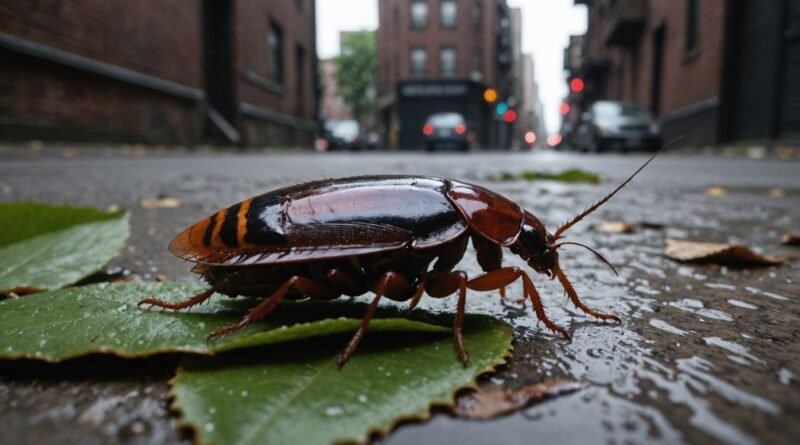
Oriental Cockroach: What It Is, Where It Hides, and How to Get Rid of It
Oriental cockroaches are large, dark, slow-moving cockroaches that prefer damp, cool environments — basements, drains, crawl spaces, and utility areas — over the kitchens and bathrooms where German cockroaches concentrate. About 62% of household infestations in urban areas involve Oriental cockroaches, 78% of them are found in basements and drains, and 88% of their activity occurs at night. They can survive up to 5 months without food, making them extraordinarily persistent once established in a cool, moist structure. Their combination of cold tolerance, moisture dependence, and preference for lower building levels makes them a distinct pest problem that requires a different identification and control approach from other common household species.
Key Takeaways
- Oriental cockroaches (Blatta orientalis) are dark brown to nearly black, 1 to 1.25 inches long, and slower-moving than most cockroach species.
- They prefer damp, cool environments — 78% are found in basements and drains — and are the cockroach most tolerant of cold temperatures.
- About 62% of urban household infestations involve Oriental cockroaches, and they can survive up to 5 months without food.
- Females produce egg cases containing 14 to 18 eggs on average, with 88% of activity occurring at night.
- Control requires targeting moisture sources and lower-level entry points rather than the kitchen-focused treatment approach that works for German cockroaches.
What Does an Oriental Cockroach Look Like?
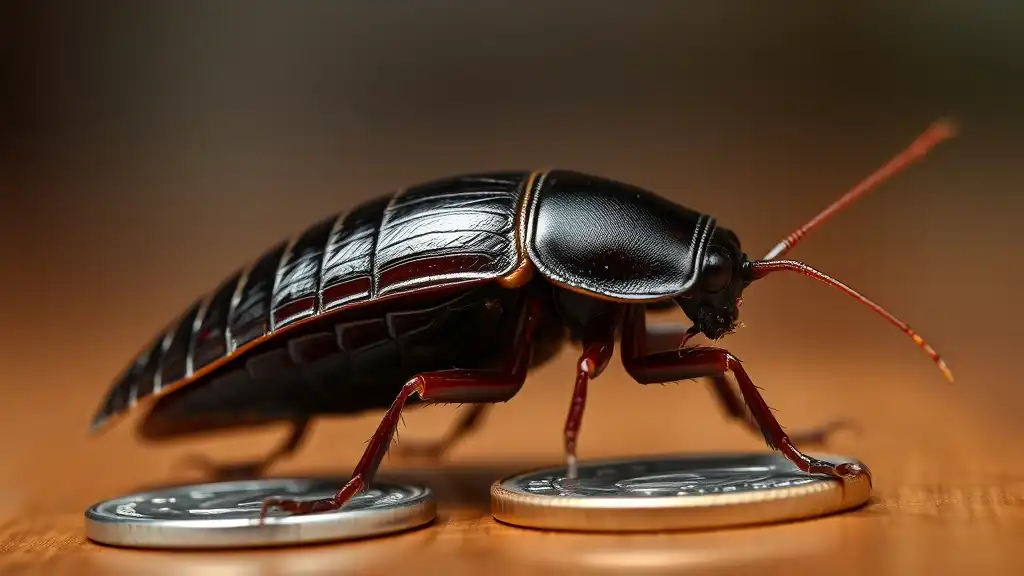
Oriental cockroaches (Blatta orientalis) are medium to large cockroaches measuring 1 to 1.25 inches, with a distinctly dark brown to nearly black, highly glossy body that sets them apart from the reddish-brown American cockroach and tan German cockroach. The glossy sheen on the exoskeleton is one of the most reliable identification features — no other common household cockroach species has this level of surface gloss. Six spiny legs extend outward from a wide, flattened oval body with a visible head tucked below the pronotum.
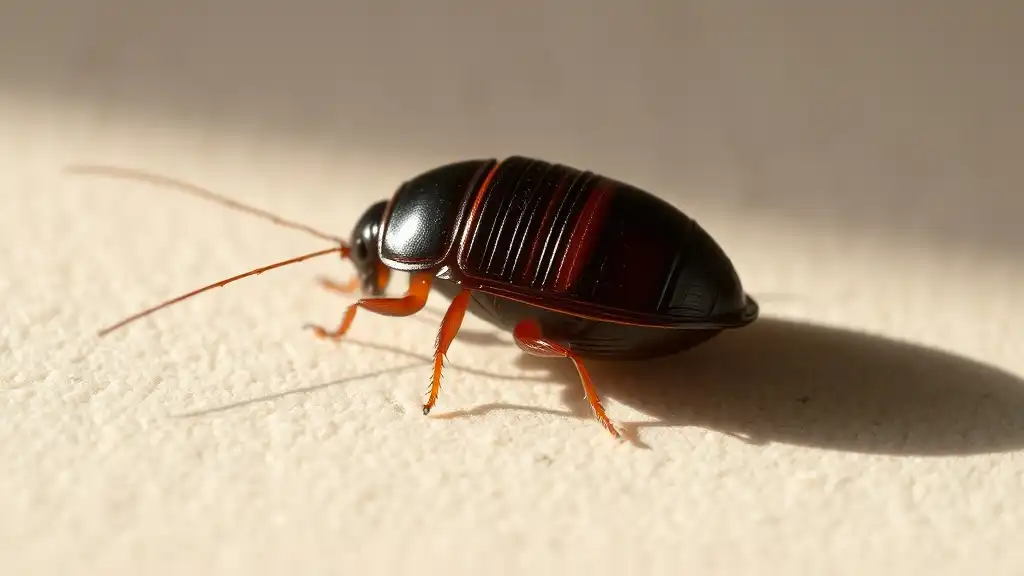
Wings exist on both sexes but neither can fly. Males have short wings covering roughly two-thirds of the abdomen, while females have only vestigial wing pads covering a fraction of the first abdominal segment. This winglessness combined with their slow, deliberate movement distinguishes them immediately from American cockroaches, which both fly and move quickly. Nymphs progress from reddish-brown in early instars to the darker adult coloration through 7 to 10 molts, making size the clearest indicator of development stage. See our cockroach identification guide for a full visual species comparison.
Where Oriental Cockroaches Live and How They Behave
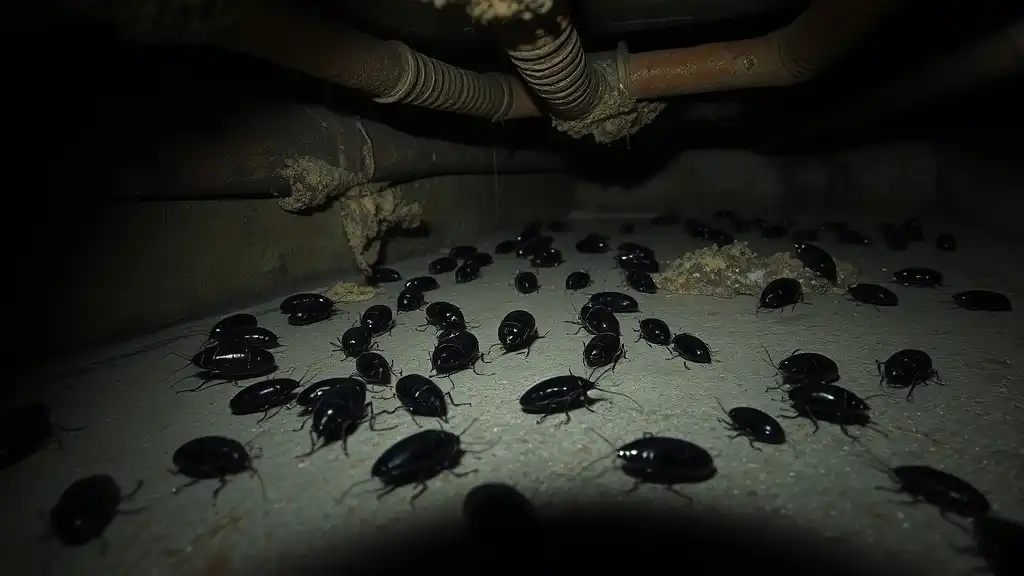
Oriental cockroaches are the most moisture-dependent and cold-tolerant of the common indoor cockroach species. They concentrate in basements, crawl spaces, floor drains, utility rooms, and the lower levels of structures where temperatures stay cool and humidity stays high. About 78% of confirmed Oriental cockroach activity is found in basements and drains — a habitat preference that explains why infestations often go undetected until they are well-established, since residents rarely spend time in these areas.
Outdoors, they shelter in leaf litter, mulch, beneath stones, in wood piles, and around drains, sewers, and utility access points. They enter structures through openings around pipes and utility penetrations, floor drains, gaps in foundations, and door frames at ground level. Unlike German cockroaches that colonize kitchens, Oriental cockroaches spread through utility areas, wall voids adjacent to plumbing, and storage rooms with poor ventilation. A persistent musty or sewage-adjacent odor in basement or crawl space areas is often the first sign of an established population. Their 88% nocturnal activity rate means sightings during daylight hours are a strong indicator of overcrowding and a larger-than-visible population.
Life Cycle and Reproduction
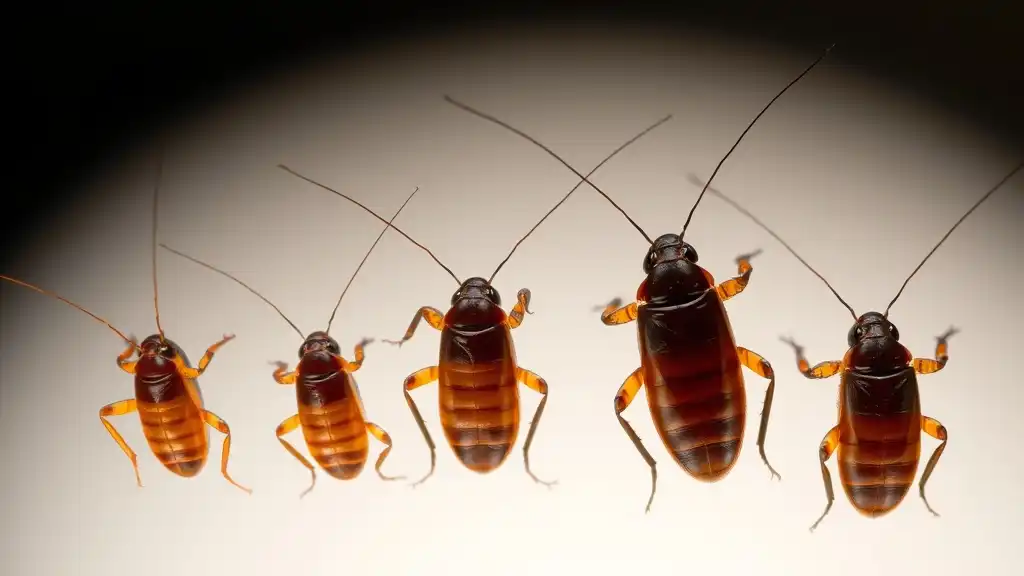
Females produce dark reddish-brown egg cases (oothecae) approximately half an inch long, carrying an average of 14 to 18 eggs per capsule. Unlike German cockroach females that carry the egg case until hatching, Oriental cockroach females deposit oothecae in sheltered locations near food and moisture sources within a day or two of production. Each female produces approximately 8 oothecae during her lifetime, and eggs hatch in 6 to 8 weeks depending on temperature and humidity conditions.
Development from nymph to adult takes 6 to 18 months — significantly slower than German cockroaches — which is why Oriental cockroach infestations build more gradually but sustain themselves through multiple seasons. Adults live 1 to 6 months. They can survive up to 5 months without food, making starvation-based control approaches ineffective, and approximately a month without water — though their moisture dependence means dehumidification is one of the most effective long-term control tools available. See our full Oriental cockroach life cycle guide for detailed stage-by-stage development timelines.
Signs of an Oriental Cockroach Infestation
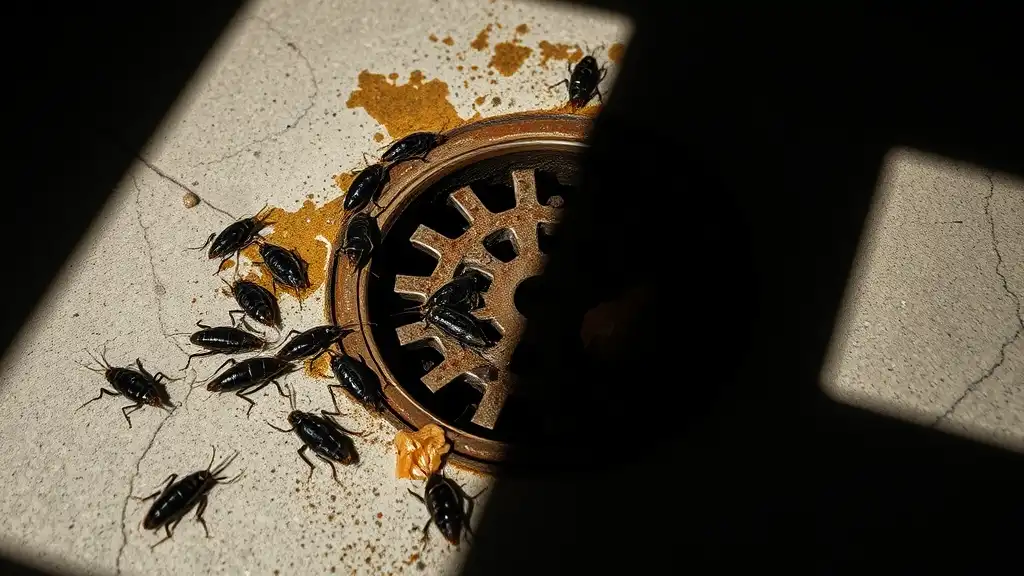
Oriental cockroach evidence differs from German cockroach evidence because it concentrates in lower building levels and near water sources rather than kitchen and bathroom surfaces. Check these specific locations and look for these specific signs.
Droppings appear as dark blunt-ended cylinders approximately 1mm wide near drain openings, basement corners, along utility pipes, and in the damp soil under crawl spaces. A persistent musty, damp, or sewage-adjacent odor in basement or utility areas without an obvious plumbing source often indicates a large Oriental cockroach population in wall voids or drain infrastructure. Egg cases deposited in sheltered spots near drains, behind water heater bases, and in crawl space debris confirm active breeding rather than occasional wandering. Shed skins in utility areas accumulate as nymphs progress through their 7 to 10 instars. Daytime sightings in basement or crawl space areas signal an established population significantly larger than what you can see — about 62% of urban household infestations involve this species, and their nocturnal preference means visible daytime individuals represent only a fraction of the total population.
Health Risks
Oriental cockroaches carry bacteria, pathogens, and parasites on their bodies and legs from the sewers, drains, and decaying organic material they travel through. They contaminate food, food preparation surfaces, and water sources by depositing fecal material and shed skins during nocturnal movement. Documented pathogen carriage includes Salmonella, E. coli, Staphylococcus, Streptococcus, and various molds and fungi. The diseases they can mechanically transmit include food poisoning, dysentery, and gastroenteritis.
Their feces and shed skins carry allergens that trigger asthma and allergic reactions across all age groups. Oriental cockroach allergens are comparable in severity to German cockroach allergens and represent a significant respiratory risk in buildings with established populations in basement and utility areas, since HVAC systems distribute allergens from these areas into living spaces above. Oriental cockroaches’ preference for sewers and drains means their allergen and pathogen load is typically higher than surface-dwelling species. See our guide to Oriental cockroaches as water bugs for more on their sewer and drain behavior.
How to Get Rid of Oriental Cockroaches
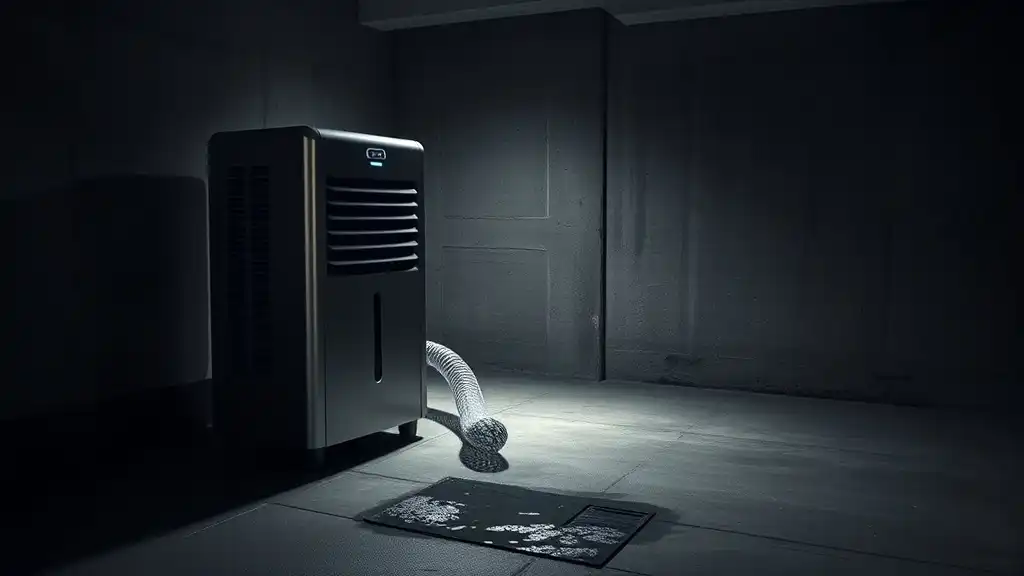
Moisture Control First
Because Oriental cockroaches cannot survive without consistent moisture access and concentrate in 78% of cases in basements and drains, moisture elimination is the highest-priority control action — more effective for this species than for any other common household cockroach. Fix all plumbing leaks under sinks, around water heaters, and in crawl spaces. Install a dehumidifier in basement areas and maintain indoor relative humidity below 50%. Ensure floor drains have functional P-traps and flush seldom-used drains monthly to prevent biofilm accumulation. Improve crawl space ventilation and seal crawl space vents against outdoor moisture entry.
Exclusion and Chemical Treatment
Seal all openings around pipe penetrations, utility entries, and foundation gaps with silicone caulk and expanding foam. Install fine mesh screens on floor drains if drain seal integrity is compromised. Apply gel bait in harborage zones identified by monitoring trap captures — harborage near drains, utility pipes, and basement perimeter walls rather than kitchen areas. Boric acid dust applied in crawl spaces and wall voids at ground level reaches cockroaches in areas surface bait cannot access. Residual perimeter spray applied around the exterior foundation in spring before peak population pressure reduces entry volume significantly. For severe infestations with confirmed sewer or municipal drain connections, professional treatment is appropriate — both to apply product inside drain infrastructure and to assess whether the infestation source is internal or shared through building plumbing systems.
Frequently Asked Questions
Is an Oriental Cockroach the Same as a Water Bug?
Yes, Oriental cockroaches are commonly called water bugs in the eastern United States, a nickname that reflects their strong preference for moist, damp environments and their frequent presence in drain and sewer systems. They are not true water bugs in the entomological sense, which refers to aquatic insects in the order Hemiptera. Both terms describe the same species — Blatta orientalis — and the water bug label is especially common in urban areas where they are encountered in basement drains and sewer-connected plumbing.
Are Oriental Cockroaches Dangerous?
Yes. Oriental cockroaches carry bacteria, parasites, and pathogens from sewers and drains onto food and surfaces. They spread Salmonella, E. coli, and other pathogens through fecal deposits and surface contact. Their droppings and shed skins generate allergens that trigger asthma and allergic reactions. The combination of sewer access and indoor movement makes them a genuine public health concern rather than just a nuisance pest.
Can Oriental Cockroaches Survive Cold Weather?
Yes — Oriental cockroaches are the most cold-tolerant of the common indoor cockroach species. They remain active at temperatures as low as 40°F, survive outdoors through mild winters in the southern United States, and exploit the cold lower levels of heated buildings in northern states where German cockroaches cannot establish. Their cold tolerance is why they concentrate in basements and crawl spaces rather than the warm upper levels where German cockroaches predominate.
Why Do Oriental Cockroaches Smell?
Oriental cockroaches produce a distinctive musty or damp odor from aggregation pheromones released in their droppings and from oils secreted from their bodies. The smell intensifies in enclosed areas with large populations — basements, crawl spaces, and utility rooms — and worsens when cockroaches are disturbed or crushed. The odor is often the first indication of an established infestation in areas residents do not regularly access. It is distinct from the sweet musty smell of bed bugs and closer in character to a sewage or wet earth smell.
How Are Oriental Cockroaches Different From American Cockroaches?
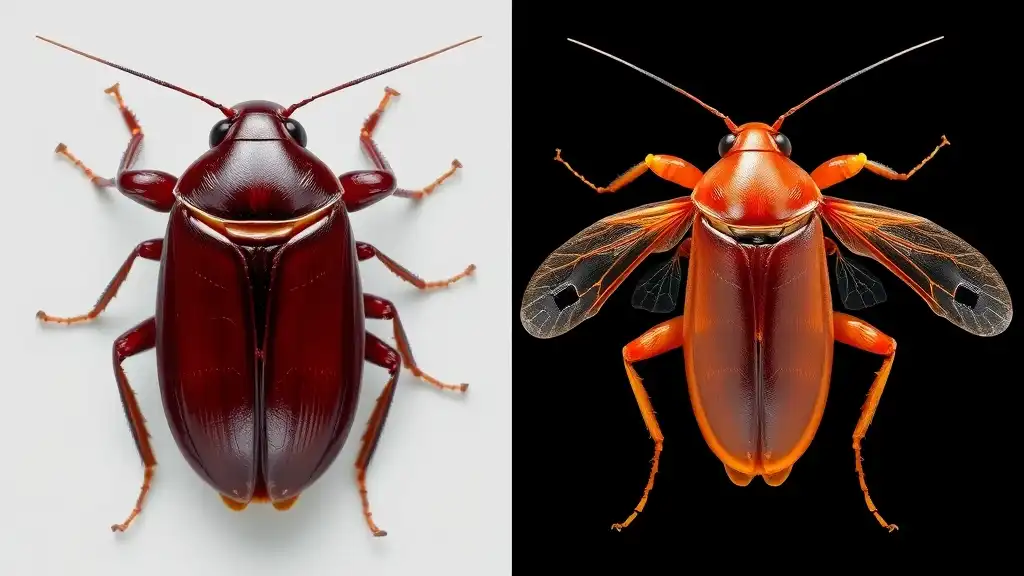
Oriental cockroaches are smaller (1 to 1.25 inches vs 1.5 to 2 inches), darker (near-black vs reddish-brown), cannot fly despite having vestigial wings, move more slowly, and prefer cool damp environments rather than the warm, higher-level areas American cockroaches occupy. American cockroaches have a distinctive yellowish figure-eight marking on the head that Oriental cockroaches lack entirely. Both species are found in drains and sewers, but American cockroaches range further indoors into kitchens and food storage areas while Oriental cockroaches remain concentrated in lower, cooler building zones.
