
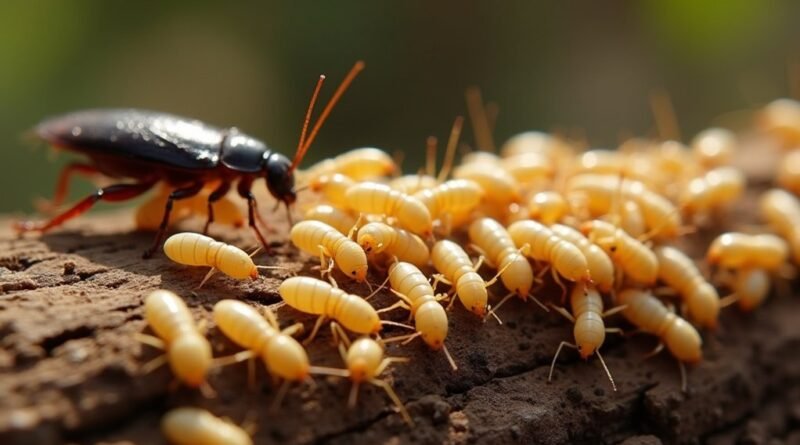
Are Termites Cockroaches? The Surprising Science Connection
Yes, you’re looking at cockroaches when you see termites. Scientists now place them in the order Blattodea, right alongside roaches. DNA evidence shows termites evolved from a cockroach ancestor roughly 170 million years ago. Their closest living relative is the wood-feeding *Cryptocercus* roach. Termites don’t look like roaches, though, and they live in complex, eusocial colonies. You’ll uncover how that dramatic transformation happened and why it matters just ahead.
Key Takeaways
- Termites are now classified within the order Blattodea, the same order as cockroaches, rather than in their own order, Isoptera.
- Genetic data show termites evolved from a cockroach ancestor, with the lineages splitting roughly 170 million years ago.
- Termites are nested within the cockroach family tree, and their closest living relative is the wood-feeding cockroach *Cryptocercus*.
- Termites are often called “eusocial cockroaches” because they live in colonies with queens, kings, workers, and soldiers, a lifestyle rooted in shared ancestry.
- Termites still look different from cockroaches, with cylindrical bodies, short antennae, and distinctive soldier mandibles, while cockroaches are flattened with long antennae.
Are Termites Actually Cockroaches?
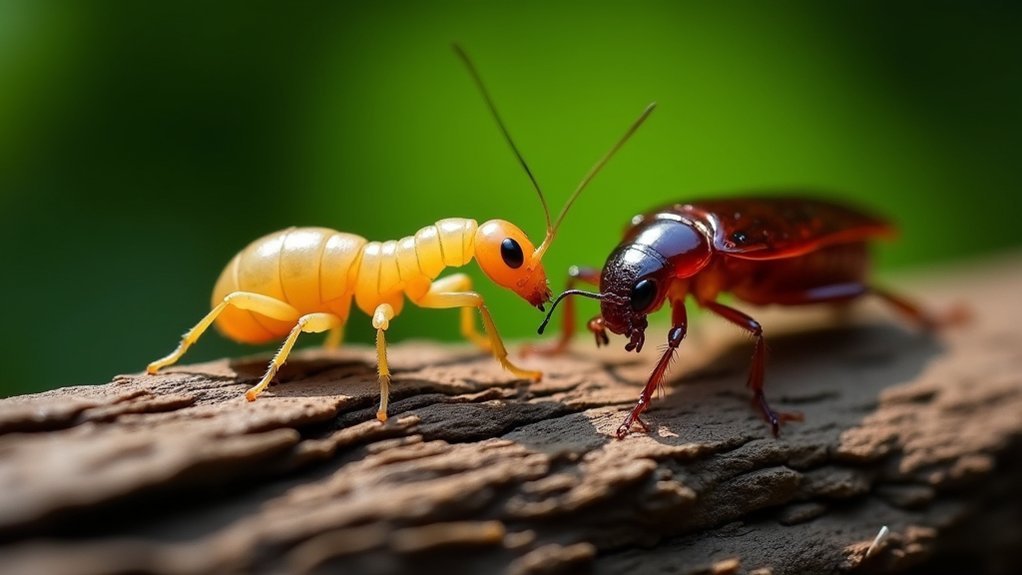
Are termites actually cockroaches? Yes, technically they are. Modern taxonomy no longer treats termites as their own order. You’ll find them inside Blattodea, the same order that includes cockroaches.
Technically, yes: termites are cockroaches. Modern taxonomy folds them into Blattodea, the same order as their roach relatives.
Older textbooks may still list them as Isoptera, but entomologists have merged that group into Blattodea. The order Blattodea includes approximately 4,400 cockroach species and about 3,000 species of termites.
Here’s why. DNA, morphology, and evolutionary history show that termites sit inside the cockroach lineage. They share a common ancestor with cockroaches, and their closest living relative is the woodroach genus Cryptocercus.
Both groups belong to the broader lineage Dictyoptera.
That doesn’t mean every cockroach is a termite. Termites are a specialized branch of cockroaches adapted to eusocial life, which is why some sources call them “social cockroaches.”
You won’t see the connection by appearance, because classification reflects ancestry, not looks.
How Do We Know Termites Are Cockroaches?
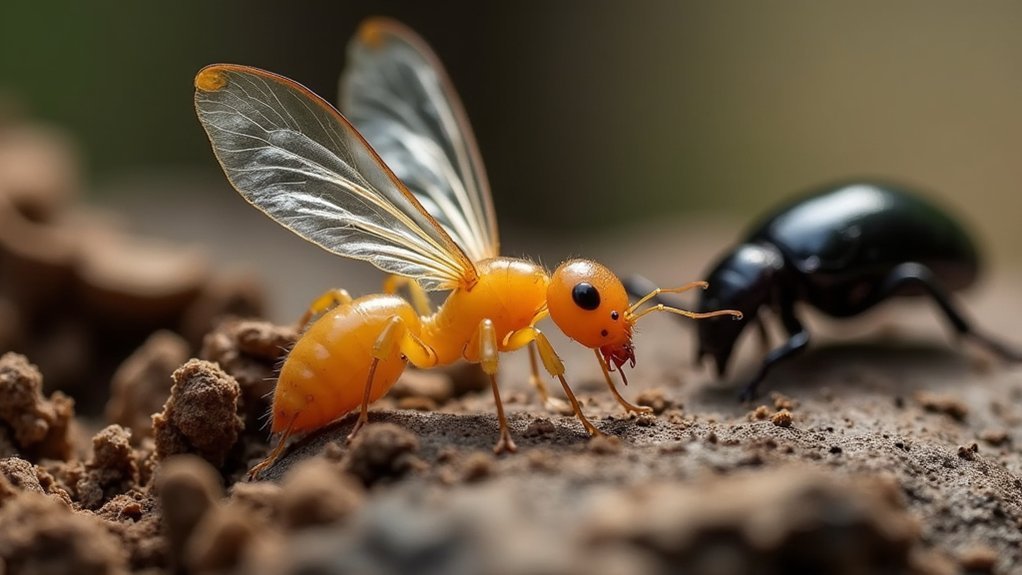
You might wonder how scientists can say termites are cockroaches when the two insects look and live so differently.
You’ll find the answer in three lines of evidence: DNA comparisons that place termites inside the cockroach family tree, the shared gut symbionts that let both groups digest wood, and the fossils that trace their common origin.
Let’s start with the genetic data, since it’s the main reason scientists reclassified termites. This DNA evidence indicates that termites evolved from a cockroach ancestor during the Jurassic or Triassic periods.
Molecular and DNA Evidence
Genomes tell the same story. When researchers sequenced the German cockroach and drywood termite genomes side by side, they found close shared ancestry.
A later study of 45 termite genomes and two cockroach genomes strengthened that framework.
The closest relative you’ll find is the wood-feeding *Cryptocercus*; its genome resembles termite genomes more than other cockroaches’ do. The *Cryptocercus meridianus* genome is only 0.819 Gb with 15,909 gene models, and 46.8% transposons make up its genome.
Termites and *Cryptocercus* together form the sister lineage to Blattidae.
Single-copy ortholog analyses keep confirming that placement.
Gut Symbionts and Fossils
Living guts and ancient amber back up the DNA, and they’re where the cockroach connection gets easiest to see. If you open the hindgut of a lower termite, you’ll find protists and bacteria that digest wood. You’ll find the same partnership in *Cryptocercus*, a wood-feeding cockroach.
Termites didn’t invent this system. Their ancestors inherited it vertically from a shared wood-eating ancestor, and the protists were already in place by the late Jurassic.
Fossils confirm it. Miocene amber preserved *Mastotermes electrodominicus* with spirochete bacteria and wood-digesting protists still inside its intestinal tissue. Research on Cretaceous amber-preserved cockroaches also suggests that some lignin-decomposing symbionts may have passed to cockroaches from dinosaur feces.
You’re looking at direct evidence that gut symbiosis existed long before modern termite diversity, and before complex termite societies evolved. Digestion came first; eusociality followed. That sequence places termites firmly inside cockroach evolution.
Why Aren’t Termites Their Own Insect Order?
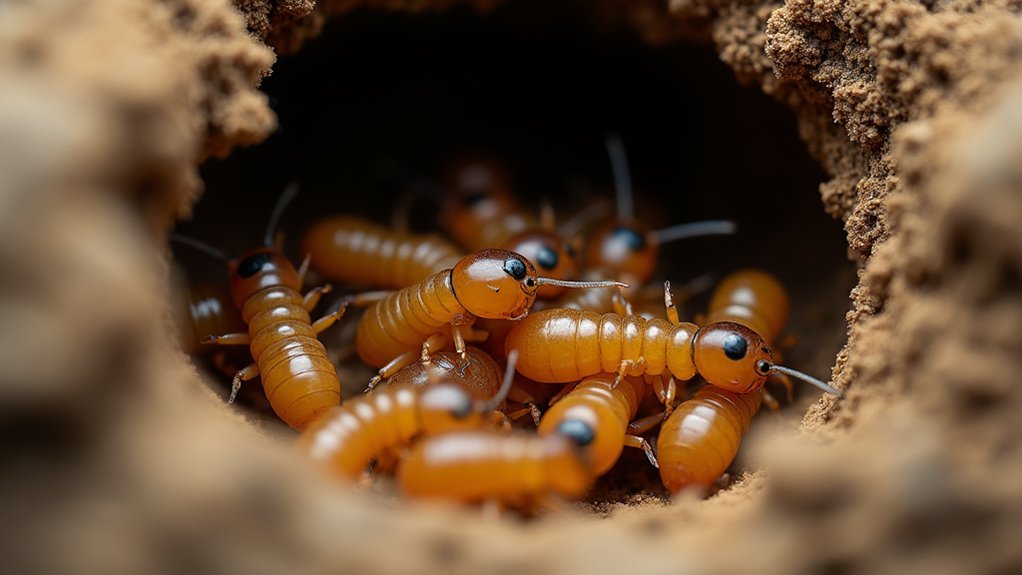
You might expect termites to have their own insect order, since they look and live so differently from cockroaches.
But taxonomists don’t group insects by appearance, and DNA evidence shows termites nest inside the cockroach family tree.
That’s why Isoptera, the old order for termites, became part of Blattodea, and you’ll see how that change happened below.
Genome comparisons of five termite and three cockroach species show that termites have smaller genome sizes and less gene content than cockroaches, which supports their place within the cockroach lineage.
Termites Nest Within Cockroaches
Taxonomists don’t treat termites as their own insect order anymore, because the evidence shows they sit inside the cockroach family tree.
Published phylogenetic analyses concluded that termites are “nested within the cockroaches.” That matters because you can’t rank a group as a separate order when it’s embedded inside another order. If you did, the cockroach order would be left incomplete.
The closest living relative you’ll find for termites is Cryptocercus, a wood-feeding cockroach genus. Both groups eat wood and host similar gut symbionts, which supports the connection.
Termites later evolved eusocial colonies, castes, and nests, but those specializations don’t erase their cockroach ancestry.
Read “termites are cockroaches” as a statement about ancestry, not appearance. Taxonomy groups organisms by evolutionary history; termites belong to Blattodea.
Molecular Evidence Rewrites Taxonomy
When genome-scale analyses compared termite DNA with that of other cockroaches, they showed that termites aren’t a separate lineage at all. Termite lineages sit inside the cockroach family tree, so the old order Isoptera doesn’t hold up. If you kept it, you’d leave Blattodea incomplete and evolutionarily misleading. Researchers now place termites within Blattodea instead.
The evidence runs deep. Phylogenomic work links termites closely to the wood-feeding cockroach Cryptocercus, and a genome-based chronogram dates their split from other cockroaches to about 170 million years ago, with living termites’ last common ancestor at roughly 149 million years ago.
You’re looking at continuity, not a separate origin.
Multiple markers agree: mitochondrial, nuclear, and transcriptome data consistently support termite clades. DNA, not morphology alone, drove this change.
Isoptera Becomes Blattodea
That DNA evidence changed the label on termites, too. You might’ve learned that termites belong to their own order, Isoptera, but modern classification places them inside Blattodea, right alongside cockroaches. Many current references now list termites as Epifamily Termitoidae or a similar lower rank.
Why not keep them separate? Taxonomy now follows evolutionary relationships, not appearance. If you kept Isoptera as its own order, you’d leave cockroaches as a group that excludes descendants nested within it. Blattodea fixes that by covering the whole cockroach-termite lineage.
Some sources even call termites eusocial cockroaches.
You’ll still see Isoptera in older literature, so don’t be thrown off. For clear phrasing, remember this: termites aren’t a separate order anymore in modern classification. They’re now part of order Blattodea.
How Did Cockroaches Become Termites?
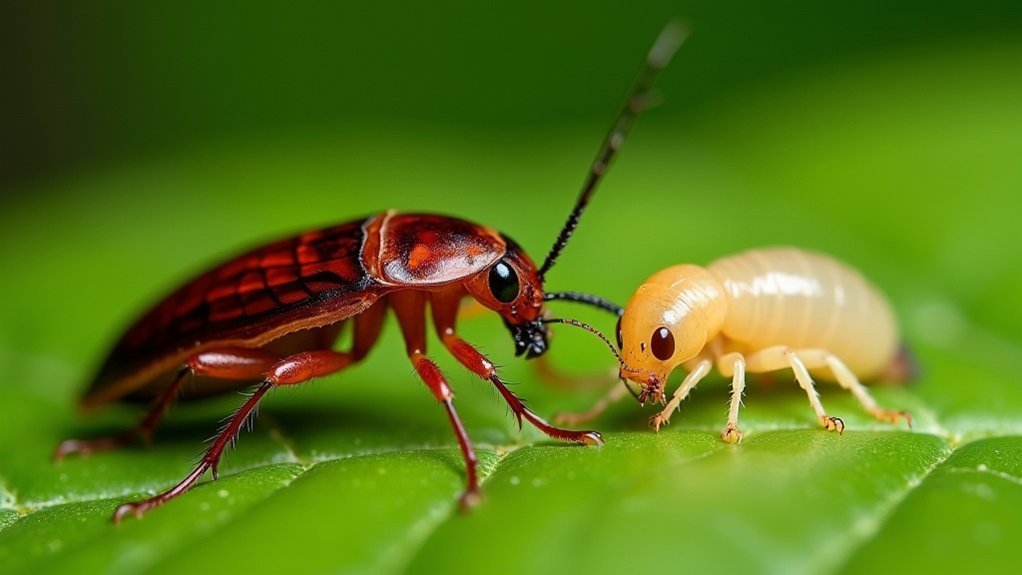
Termites didn’t branch off from cockroaches so much as grow out of them, and that’s why scientists now place them inside the cockroach order, Blattodea.
Termites didn’t break away from cockroaches; they grew out of them, which is why scientists now classify them within the order Blattodea.
You can trace the shift through five steps, beginning roughly 150–170 million years ago in the Jurassic:
- Diet change: Ancestors moved from omnivorous scavenging to eating dead wood.
- Gut partners: You’d find cellulose-digesting flagellates in their intestines, letting them exploit wood most insects can’t use.
- Group living: Wood-dwelling habits encouraged tight groups and food sharing.
- Social complexity: Simple subsocial behavior became eusociality after the split from cockroaches, with cooperative brood care.
- Cooperation: Monogamous kings and queens stabilized colonies and reduced internal conflict.
Later, groups such as Termitidae diversified, and gene loss affecting metabolism, digestion, and reproduction marked their specialization.
When you ask whether termites are cockroaches, you’re describing a single lineage that kept its cockroach ancestry while building a remarkably cooperative, wood-digesting society.
Which Wood-Eating Roaches Are Termites’ Closest Kin?
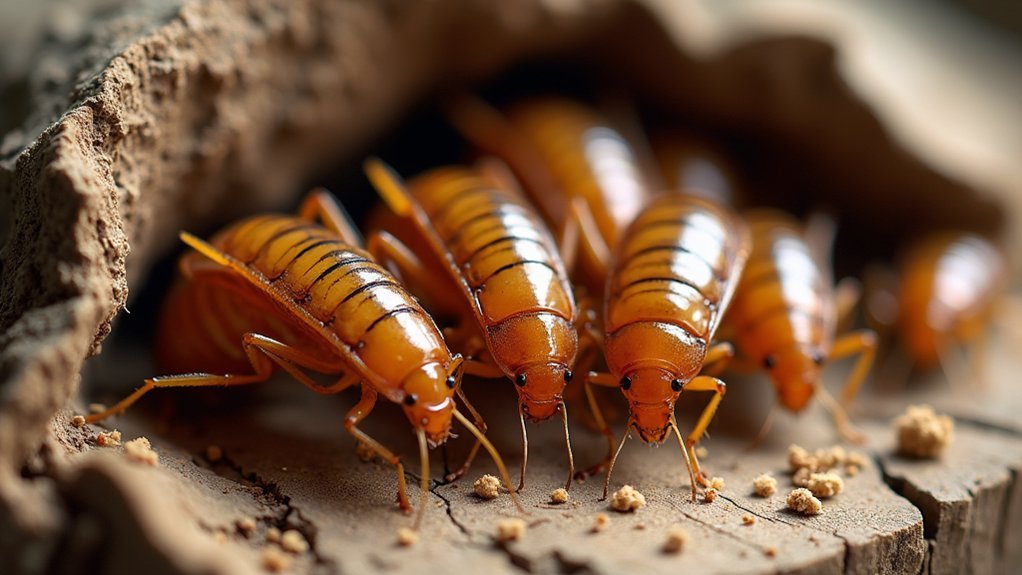
If you’re looking for the wood-eating roach that’s closest to termites, you’ll want to look at *Cryptocercus*. Multiple phylogenetic studies place these wood roaches as the sister group to termites, and a 2026 genome-based study describes them as the nearest extant sister lineage.
You’ll notice the similarities right away. Both groups live in and feed on wood, and both rely on specialized hindgut flagellates and other symbionts to digest lignocellulose. They also share biparental care, subsocial family living, and proctodeal trophallaxis, which transfers gut contents and passes microbes along. Researchers treat these traits as evidence of common ancestry.
Other roaches sit nearby, but they’re noticeably less close. Some phylogenies place Anaplectidae as the sister group to the *Cryptocercus*-plus-termite clade, and Tryonicidae and Lamproblattidae appear just outside it.
Still, *Cryptocercus* remains your clearest living evolutionary bridge between cockroaches and termites, because it shows that termites are highly derived cockroaches.
Why Do Termites Look So Different From Roaches?
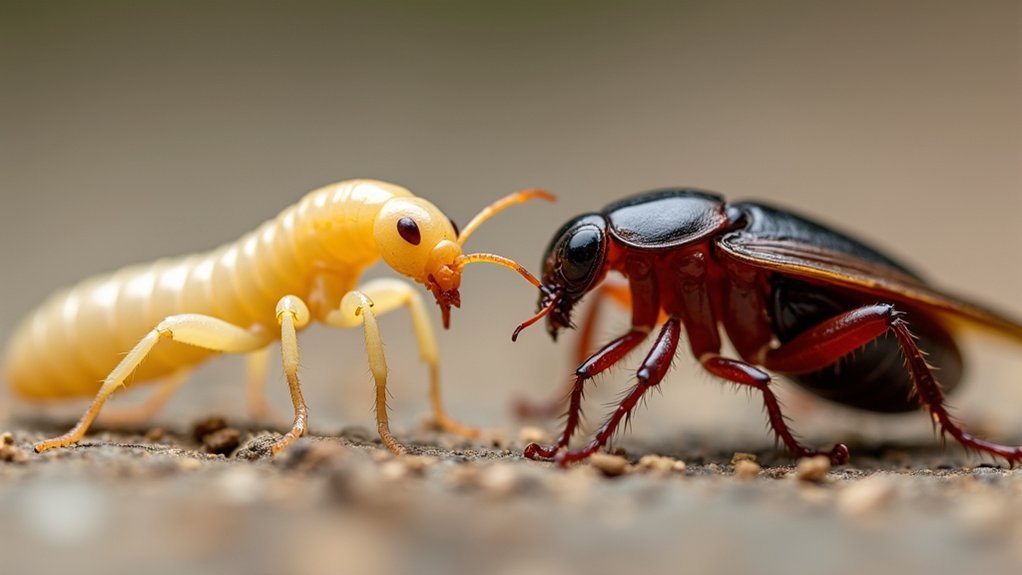
Three main differences set termites apart from roaches: body shape, head and antennae, and the colony castes they produce. You’ll notice these traits quickly once you know what to check.
- Body shape: You’ll see a cylindrical, column-like termite body, while a roach looks flattened and oval.
- Antennae: Termites have short, beadlike or threadlike antennae; roaches sport long, whip-like ones swept backward.
- Workers: You’ll find them pale, soft-bodied, and usually under an inch, unlike harder, shinier, darker roaches.
- Soldiers: Their enlarged heads and powerful mandibles may look roach-like, but you won’t mistake their form.
- Wings: Only reproductive termites have wings, two equal pairs of translucent membranes, and they shed them after mating.
Polymorphism explains the biggest difference. One termite species produces several body forms, each suited to a colony job, so you can’t picture a single “termite look” the way you can picture a roach.
Castes also differ greatly.
What Makes Termites “Social Cockroaches”?
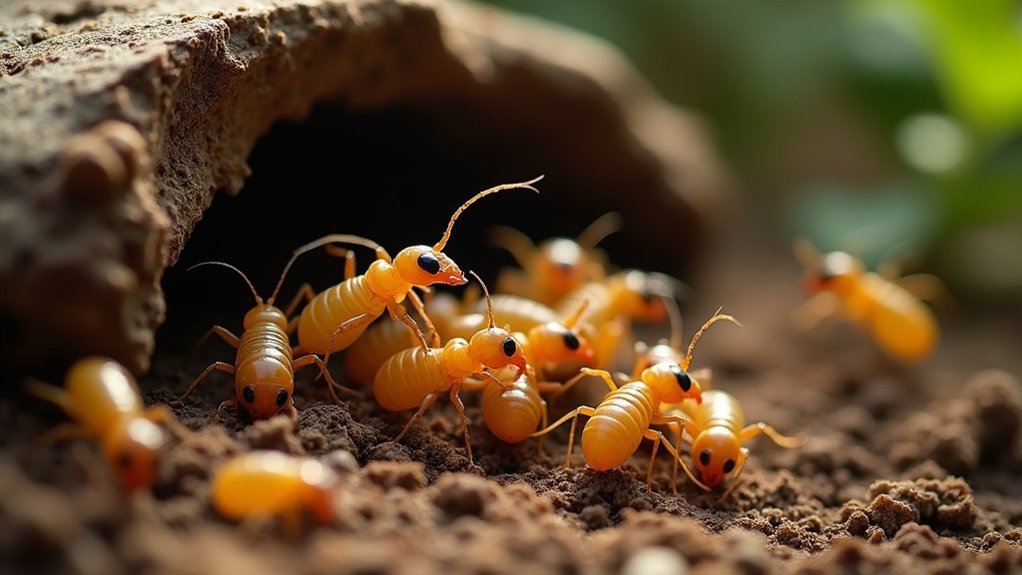
Because modern genetic evidence places termites inside Blattodea, the same order as cockroaches, researchers now call them “social cockroaches.”
You might expect termites to sit in their own order, and scientists once agreed, filing them under Isoptera. Phylogenetic evidence overturned that classification. Termites descend from cockroach ancestors, and their closest relatives are wood-feeding, social cockroaches related to Cryptocercus. Eusociality evolved inside the cockroach family tree, not outside it.
Eusociality is what sets termites apart. You’ll find a queen and king, plus nonreproductive workers and soldiers.
Workers forage, build tunnels, and feed the young, while soldiers defend the nest. Most cockroaches don’t form comparable permanent colonies.
Still, you can spot the shared heritage. Termites and cockroaches both groom, share food, care for brood, burrow, follow trails, and signal through vibrations.
These behaviors likely reflect inherited social tendencies, not a completely new termite-only system. Termites simply elaborated on that foundation.
Frequently Asked Questions
Can Termites and Cockroaches Interbreed or Produce Offspring Together?
No, you won’t find termites and cockroaches interbreeding or producing offspring together. Though termites evolved from cockroach ancestors, they’ve diverged for 150 million years, and you can’t treat them as cross-fertile species. Nobody’s documented hybrids.
Do Cockroaches Cause the Same Structural Damage to Homes as Termites?
No, cockroaches don’t cause the same structural damage. Termites eat wood in your beams, floors, and studs from inside, while roaches contaminate your food and surfaces. You’ll worry about health with roaches, structure with termites.
Are Ants and Termites Related, Given Their Similar Colonies?
No, they aren’t closely related. You’re seeing convergent evolution: ants descended from predatory wasps, while termites evolved from wood-feeding cockroaches. Their similar colonies developed completely independently, so you’ll actually find ecological look-alikes, not close cousins.
Do the Same Pest Control Methods Work on Both Termites and Cockroaches?
Not entirely. You’ll use shared steps, like inspection, exclusion, and monitoring, but you can’t rely on one approach. Termites need soil treatments or bait systems, while you’ll control cockroaches with gel baits, sprays, and cleanliness.
Are Mantids Also Related to Termites and Cockroaches?
Yes, mantids are related to both. You’ll find all three in the superorder Dictyoptera, where they share ancestry. Mantids usually sit as the sister group to cockroaches and termites, but you shouldn’t call them cockroaches.
Conclusion
You’ve just learned that termites aren’t a separate group after all. They’re cockroaches that evolved into social, wood-munching colony builders. When you spot a termite mound or a scurrying roach, you’ll know they share a common ancestor. DNA evidence, shared gut microbes, and close relatives like *Cryptocercus* prove it. So next time someone asks, you can confidently say it: termites are cockroaches, and you’ve got the science to back it up.