
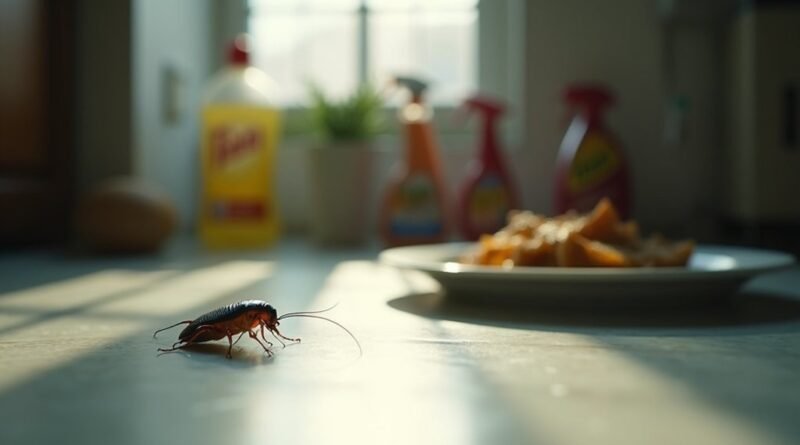
Does Killing a Cockroach Attract More? Debunking the Myth
No, you won’t attract more cockroaches by killing one. That’s a myth. You’re simply noticing roaches that were already hiding in nearby cracks, drains, and cabinets. Studies suggest up to 10 unseen roaches live for every one you spot. Warmth, moisture, food, and pheromone trails keep them clustered, and a crushed carcass doesn’t change that. Its odor might linger, though. Stick around, and you’ll learn exactly how to handle the aftermath and prevent more visitors.
Key Takeaways
- Killing a cockroach does not reliably attract others; the belief that a crushed roach calls in more is largely a myth.
- Seeing more roaches usually signals an existing infestation, since studies suggest up to 10 unseen roaches for every visible one.
- Disturbing one roach can flush out others from nearby cracks, drains, and cabinets, creating the impression that killing attracted them.
- Roaches cluster where warmth, moisture, food, and shelter overlap, and aggregation pheromones in feces and secretions reinforce those sites.
- Experts disagree on whether a crushed roach’s odor attracts or repels others, so clean the area, check for egg cases, and seal food.
Does Killing a Cockroach Attract More?
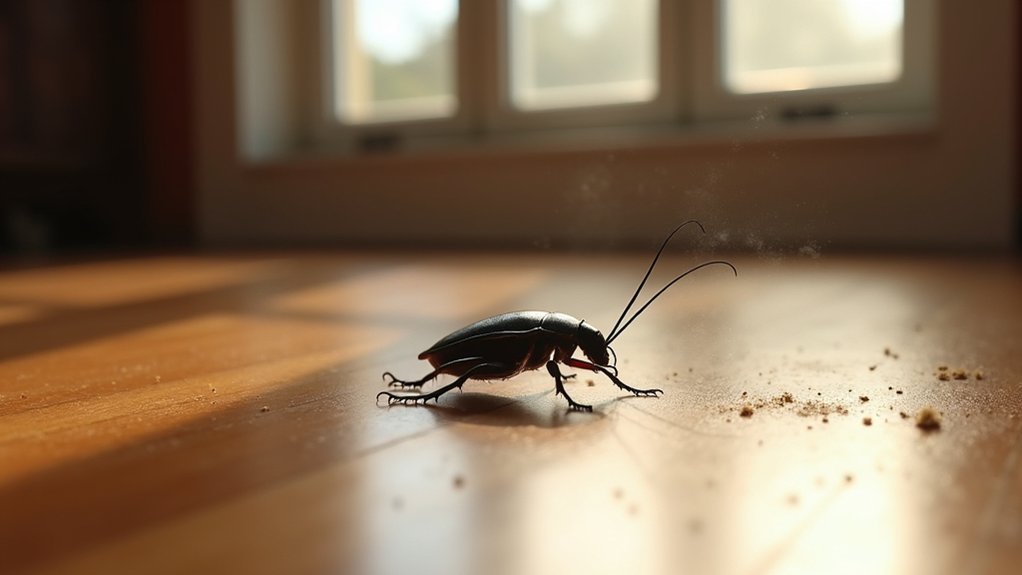
Why does it feel like stomping one cockroach brings out a dozen more? It’s mostly a myth. Killing a cockroach doesn’t reliably call in others, and a single crushed roach won’t trigger a large influx.
Stomping one cockroach doesn’t summon a dozen more. It’s mostly a myth, and a single crushed roach won’t trigger a large influx.
What you’re seeing is usually an existing infestation. Roaches already hide in cracks, drains, cabinets, and wall voids near where you struck. Studies suggest there can be 10 or more unseen roaches for every one you actually see. Your commotion disturbs them, so they become more visible. They also gather there because the spot offers food, water, and shelter, and old pheromone trails remain after you remove one insect.
Chemistry doesn’t change much. Dead roaches release cues like oleic acid. Some sources say these cues draw roaches to investigate, while others say they repel or disperse them.
Either way, the effect is limited and short-lived, and it’s not a house-wide beacon. Clean up the carcass and residue, because other pests may scavenge it and the mess can add odor.
Why Do More Cockroaches Appear After You Kill One?
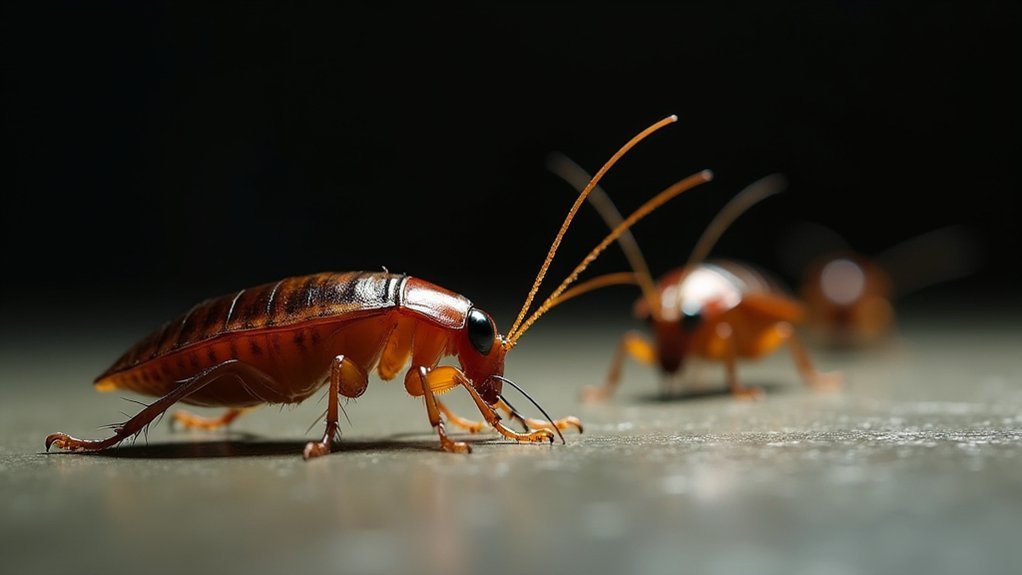
When you kill one cockroach and see more minutes later, it’s easy to blame the kill, but the real cause is usually the habitat.
Cockroaches gather where warmth, moisture, food, and shelter exist, and aggregation pheromones in feces, saliva, and body secretions reinforce those sites. Killing one roach doesn’t erase those trails. Fecal deposits keep attracting roaches and encourage them to stay.
Dead roaches don’t summon others, either. A carcass releases oleic acid and related death cues that often work as warnings, so living roaches may avoid it. One crushed body releases too little odor to create a major attraction event.
What you’re seeing is an existing population. Roaches hide in wall voids, under appliances, and behind cabinets, and you can flush others out when you disturb one. Squashing a female also doesn’t scatter viable eggs, because an ootheca that is crushed along with her is destroyed.
Night activity also makes simultaneous sightings more likely. Focus on finding harborage, food, moisture, and entry points instead of the carcass.
What Makes Cockroaches Cluster in One Spot?
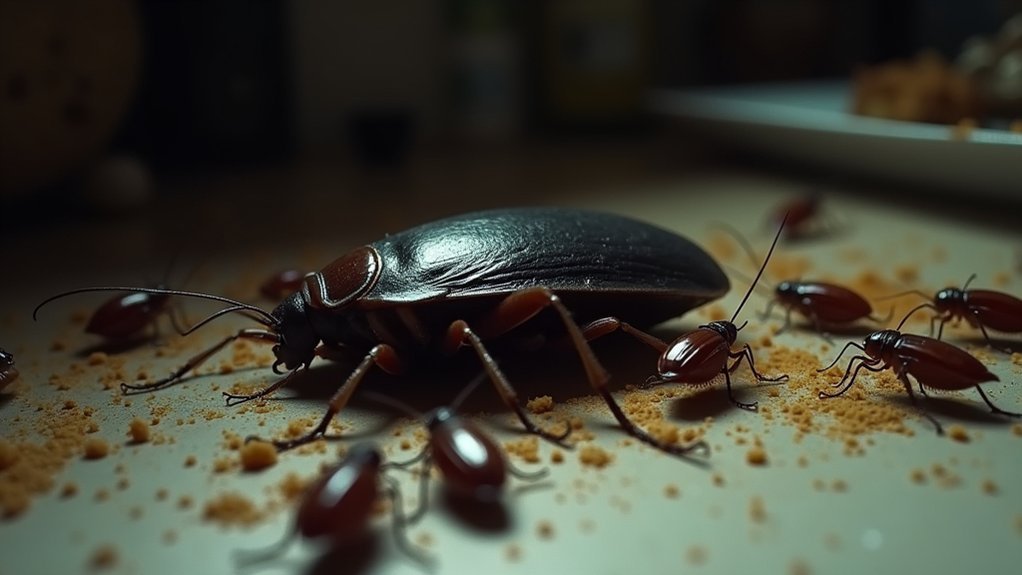
Those sightings aren’t random, because roaches pick spots and then stack up in them. Feces can carry an aggregation pheromone, so you’re seeing a chemical recruitment signal at work. Established resting sites hold stronger traces, and more roaches settle where others already live. During the day, roaches hide in dark, sheltered places and become active at night.
| Factor | Why it attracts |
|---|---|
| Darkness and tight cracks | Shelter reduces light and disturbance |
| Warmth and humidity | Sites suit long-term occupation |
| Food and water nearby | Clusters stay anchored near resources |
Moisture matters too. Dry conditions push roaches to huddle tightly, and a group creates a small humid pocket that reduces water loss. That’s why kitchens, bathrooms, and utility areas, where warmth and moisture overlap, become hotspots.
Feedback locks the pattern in. Chemical cues, shelter, and resources reinforce the same spot, and larger groups change local humidity, which draws even more roaches. The strongest clusters form where darkness, warmth, moisture, and pheromones overlap. Check those areas first.
Does a Crushed Cockroach Release a Scent?
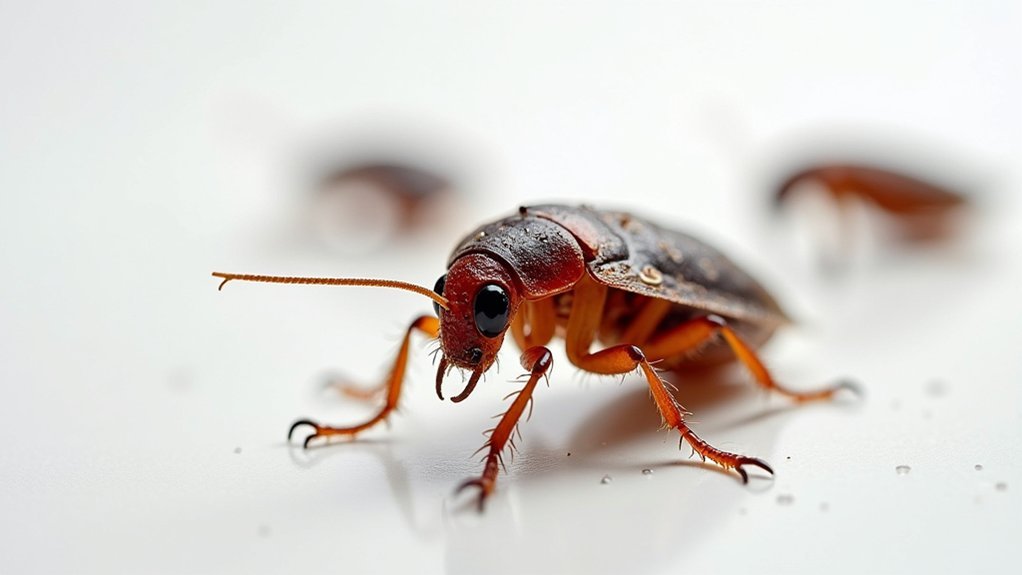
Yes, a crushed cockroach can release a noticeable odor, and you’ll usually smell it as musty, oily, or ammonia-like. Crushing ruptures the body, so gland secretions, bodily fluids, and gut contents meet the air. That exposure intensifies volatile compounds like benzaldehyde and indole.
Bacteria on the exoskeleton and in the gut can make the smell fouler as tissues decompose. You’ll notice the odor more if residue soaks into porous surfaces like fabric, wood, or grout. Strength varies by species, diet, and environment. Crushing a roach can also release a milky white liquid along with a death stench.
Does that smell attract more roaches? Sources disagree. Some pest-control sites say crushed roaches draw others, while others point out that dead roaches emit oleic acid, which repels them.
Food residue, moisture, and shelter attract roaches far more reliably than one corpse does.
What Should You Do After Killing a Cockroach?
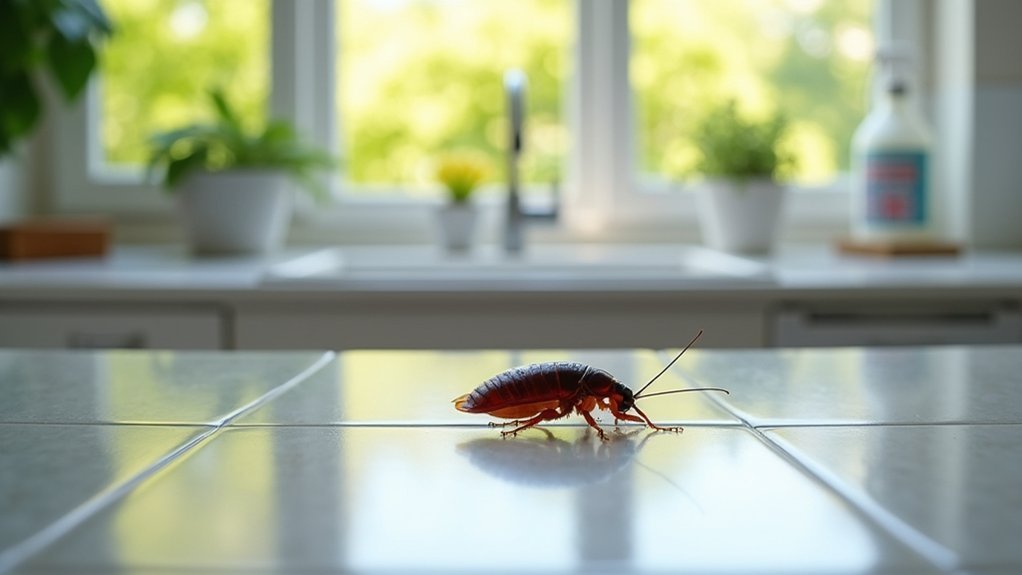
Killing the roach is only half the job; what you do next determines whether you’ve actually solved the problem. Wear gloves or grab the carcass with a paper towel, then check nearby for egg cases, droppings, or shed skins. Seal everything in a plastic bag and carry it straight to an outdoor trash bin. Don’t leave it in the kitchen garbage, where pests can reach it.
Next, wash the area with soap and water, then apply a disinfectant. Wipe countertops, floors, baseboards, and any surface the roach crossed, and follow the product’s contact time. Wash dishes, utensils, and cookware it may have touched in hot, soapy water. Dead roaches can carry allergens and bacteria, so cleaning every surface they touched is important for protecting your household’s health.
Then look for more. Inspect under appliances, behind furniture, and inside cabinets, and vacuum the cracks where debris collects.
Store food in sealed containers, wipe up crumbs, and fix leaks. If you keep spotting roaches, you’re likely dealing with a larger infestation.
Frequently Asked Questions
Can Cockroaches Smell Dead Roaches From Far Away?
Not really. Cockroaches can detect decomposition odors nearby, but you shouldn’t expect them to sense a dead roach from far away. Research doesn’t support long-distance detection, and you’ll see roaches because an infestation already exists.
Is It Better to Flush or Trash a Dead Cockroach?
Trash it. You’ll want to pick up the dead cockroach with a paper towel, seal it in a bag, and toss it outdoors. Flushing doesn’t help sanitation, and you’ll still need to clean the surface.
Do Different Cockroach Species React Differently to Dead Roaches?
Yes, they do. You’ll find German cockroaches often scavenge dead roaches, while American cockroach nymphs reportedly avoid them. You shouldn’t expect one universal reaction, because food scarcity, shelter, and crowding also change how roaches respond.
Are Cockroach Baits More Effective Than Spraying for Infestations?
Yes, baits beat sprays for most infestations. You’ll get better control because roaches eat the bait, carry it back to their hiding spots, and spread it through the colony. Sprays knock down visible roaches temporarily.
How Long Do Cockroach Pheromone Trails Last on Surfaces?
Cockroach pheromone trails typically last 60–72 hours in lab tests, and you’ll find they can linger longer indoors. Porous surfaces, grease, and debris preserve them, so you shouldn’t assume a quick wipe’s fully removed everything.
Conclusion
Killing a cockroach won’t summon an army of relatives, but it doesn’t mean you’re off the hook. You’re likely seeing more roaches because they’ve already settled nearby, drawn by food, water, and shelter. Clean up the body right away, since crushed roaches can quickly spread bacteria and even eggs. Then seal cracks, wipe up crumbs, and fix leaks. If you’re still spotting them regularly, you’ll want to call a pest professional before the problem grows.