
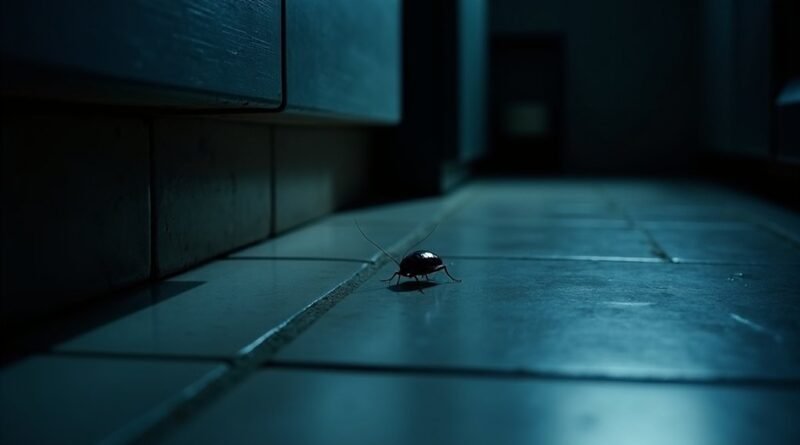
I Saw One Cockroach at Night, Should I Be Worried?
One cockroach at night doesn’t mean you’ve got an infestation, but you shouldn’t ignore it. Roaches scavenge after dark, so you’ll often spot them then. Check for droppings, egg cases, shed skins, or a musty smell, especially in your kitchen and bathroom. Repeat sightings suggest a growing population. Seal cracks, clean up spills, and fix leaks right away. Next, you’ll find out how to tell a stray from a scout and when to call pros.
Key Takeaways
- One cockroach at night doesn’t confirm an infestation, since roaches are nocturnal and scavenge mostly between midnight and 4:00 AM, but it shouldn’t be ignored.
- Check for droppings resembling coffee grounds, egg cases, shed skins, or a musty odor, especially in kitchens, bathrooms, and near sinks.
- A lone roach near an entry point with no waste evidence is likely a stray, while repeated sightings near food or damp areas suggest scouts.
- Cockroaches can trigger allergies and asthma and contaminate food with bacteria like Salmonella, so acting early is worthwhile.
- Seal cracks, fix leaks, store food airtight, and place sticky traps; call pest control if you see daytime roaches, multiple roaches, or signs spreading.
Should You Worry About One Cockroach at Night?
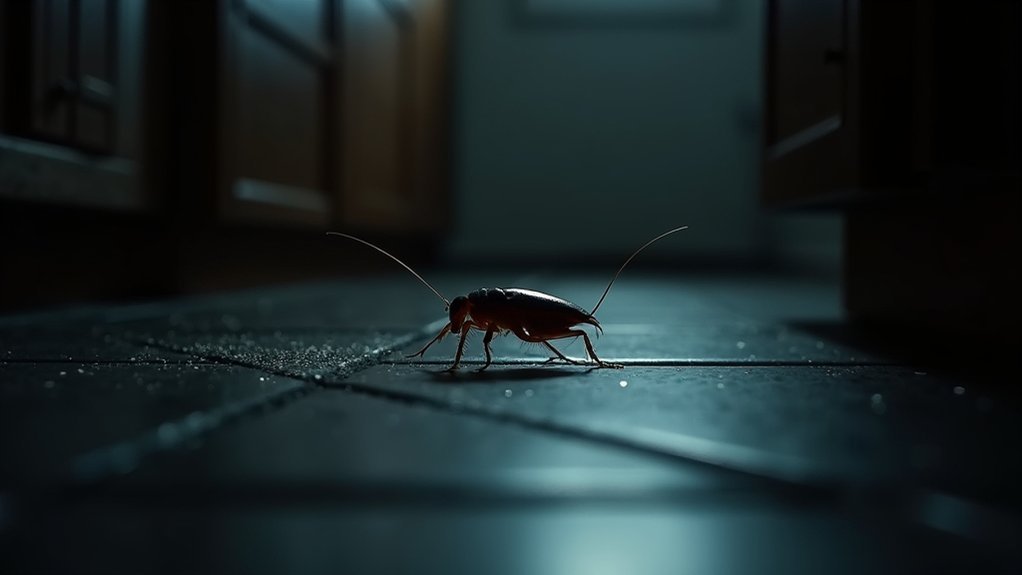
Why does one cockroach at night feel like such a bad sign? You’ve probably heard that where there’s one, there are many. That’s not automatically true. One sighting doesn’t confirm an infestation, but it doesn’t rule one out either. Roaches are commonly active after dark, so a nighttime sighting alarms less than a daytime one. A lone roach can simply be a wanderer, especially when you find no other signs.
Context matters more than the clock. Worry more if you see droppings, egg cases, shed skins, or a musty, oily odor. Location counts too. A roach in the kitchen or bathroom, near sinks, cabinets, or appliances, deserves closer inspection than one near an exterior door or garage.
Repeated sightings change the picture. If you spot more roaches over days or weeks, or see any in daylight, you’re likely dealing with an established population rather than a one-time visitor. If you’re unsure, a professional inspection is the fastest way to find out what that cockroach really means.
Why Do Cockroaches Come Out at Night?
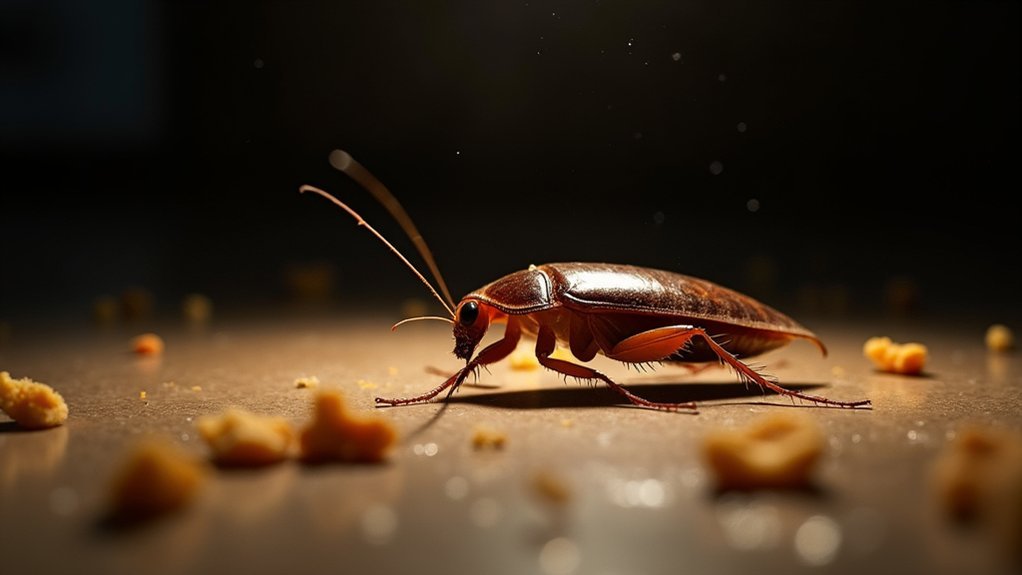
When you spot a cockroach at night, you’re seeing behavior that’s driven by two main needs.
First, darkness protects them from predators and people, so they’ve evolved to stay hidden in cracks and wall voids until the lights go out.
Once you’re asleep and the house is quiet, they’ll head out to scavenge for crumbs, grease, pet food, and water. Activity typically peaks between midnight and 4:00 AM, when conditions are safest for them to venture out.
Nocturnal Survival Instincts
Because cockroaches are primarily nocturnal, you’ll usually spot them after dark, when their activity peaks. This isn’t random wandering. It’s a survival instinct built over generations.
Here’s what drives it:
- Predator avoidance: Darkness hides them from birds, reptiles, and you, so they slip past danger unseen.
- Light panic: Flip on a switch, and they bolt for cover because bright light feels deadly to them.
- Comfort: Cooler, humid nights protect their bodies from dehydration and heat stress.
- Quiet freedom: While you sleep, they explore and search for mates without interference.
During the day, they hide in cracks and crevices. Natural selection rewarded roaches that balanced daytime concealment with nighttime activity, so you’re watching a well-rehearsed routine. Their internal circadian rhythm also nudges them to become active once darkness falls.
That’s why one nighttime sighting feels unsettling, yet expected.
Nighttime Food and Water Hunts
Once the lights go out and the house goes quiet, cockroaches leave their hiding spots to hunt for food and water. Crumbs, grease, pet food, and trash all attract them, and they don’t need much to keep going. Your kitchen offers easy targets: spills, residue, and gaps around appliances. Cockroaches are omnivorous scavengers, so almost any food can become a meal for them.
Water matters more, though. German cockroaches can survive about 12 days without water, but about 42 days on water alone. So leaks, condensation, and standing water can draw them more than crumbs do.
Check sinks, bathroom plumbing, drains, crawl spaces, pantries, and pet feeding stations.
Roaches feed briefly, then retreat through wall voids and cabinet gaps near plumbing before daylight. That’s why you might spot one when you walk into a dark kitchen at night.
Why Does One Cockroach Still Matter?
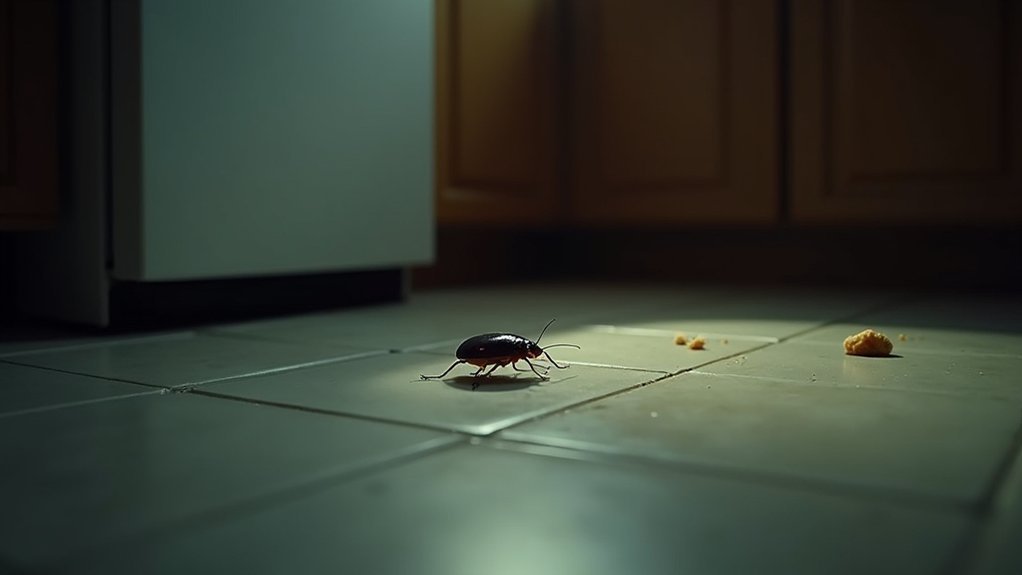
A single cockroach mightn’t mean you’ve got an infestation, but it’s rarely as harmless as it looks. Roaches hide in cracks, cabinets, and behind appliances, so the one you saw likely has company nearby. Here’s what’s at stake:
One cockroach may not mean an infestation, but it’s rarely harmless, and it likely has company hiding nearby.
- Your lungs: Proteins in cockroach feces, saliva, and body parts trigger allergies and asthma, and they’re linked to wheezing, missed school days, and unscheduled medical visits.
- Your food: Roaches carry E. coli and Salmonella, and even brief contact with your countertops, pantry items, or utensils can contaminate them.
- Your home’s air: Allergens linger in dust and on surfaces long after the roach disappears.
- Your peace of mind: A small hidden population can grow quickly, and you won’t see it until it’s already established.
Don’t ignore it. Check under sinks and behind appliances for droppings, egg cases, and shed skins. Cockroach allergy affects 17% to 41% of individuals in the U.S., so even a single sighting is worth taking seriously. Early action stops a small problem from growing.
Is That One Cockroach a Stray or a Scout?
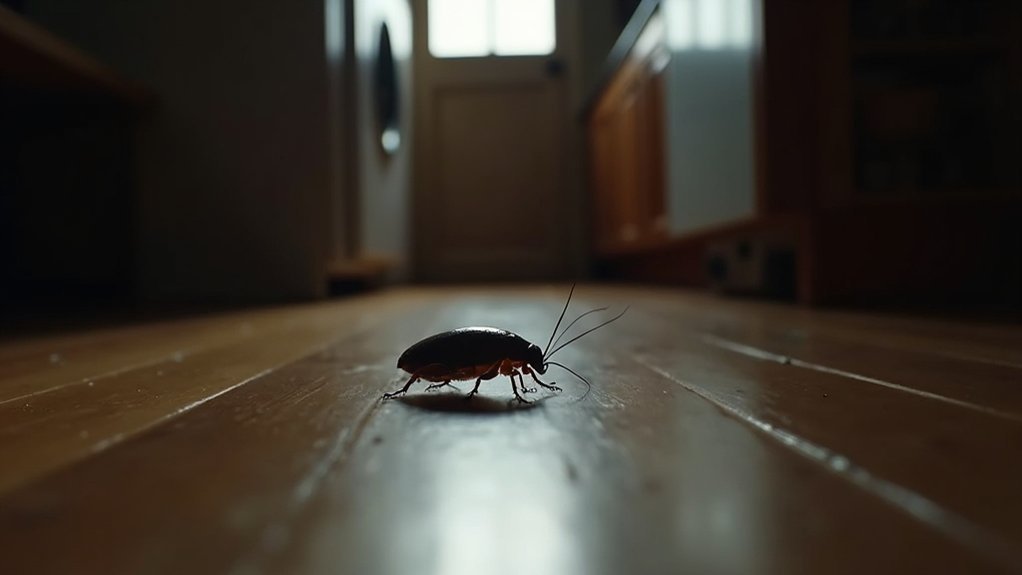
Stray or scout: that’s the question to ask when one roach crosses your kitchen floor after dark. A stray wandered in from outdoors, a delivery, a neighboring unit, or a pipe. You’ll usually see it once, near an entry point, with no droppings, egg cases, or odor trails. If it finds no food, water, or shelter, it’ll often leave.
A scout behaves differently. It searches for food, water, or shelter, then may return, and roaches follow aggregation cues like odors and pheromones to promising harborages.
You’re more likely dealing with a scout if you spot it near the kitchen, bathroom, drains, appliances, or damp cracks.
Don’t ignore a stray, either. Most pest roaches live in groups, and they hide in cracks you can’t see, so one visible roach may represent a small fraction of the population.
Watch the next several days. Repeated sightings make the scout explanation likelier.
What Signs Make One Cockroach More Alarming?
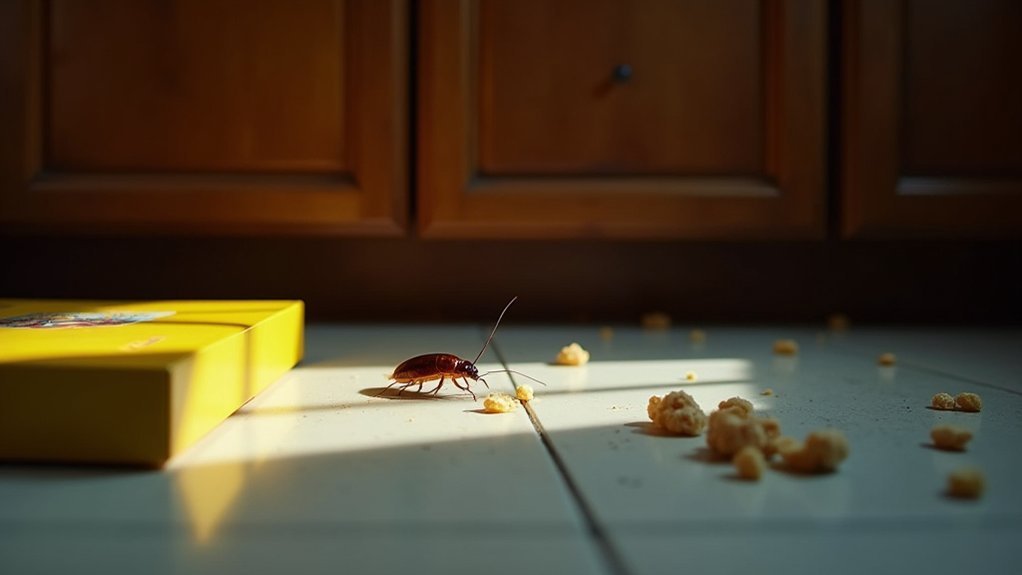
How do you know when one roach means more than one roach? Look for evidence beyond the sighting itself. The roach you saw may be a scout, and these signs show whether it’s part of something bigger.
One roach is rarely just one roach. Look past the sighting for signs of something bigger hiding nearby.
- Droppings that look like coffee grounds or black pepper. You’ll find them near baseboards, sinks, or appliances, proof that roaches are living and feeding where you cook.
- Egg cases, shed skins, or nymphs. They mean roaches are breeding in your home, and the babies are already hiding in your cabinets.
- A musty, oily odor under your sink. It’s an unsettling sign that a hidden colony may be nesting inches from your food.
- Daylight sightings. When roaches abandon the dark, crowding may be forcing them out, and you’re likely facing a larger infestation.
Repeated sightings after cleaning, or roaches in several rooms, make the threat even clearer.
Don’t wait; inspect your kitchen tonight.
Where Should You Inspect After One Cockroach?
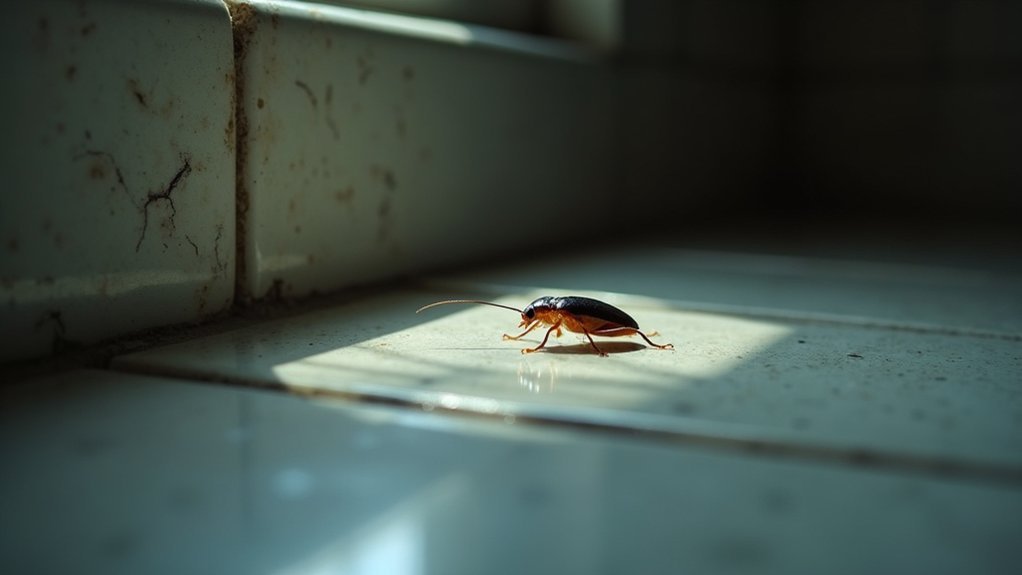
Once you’ve spotted the signs, you’ll want to know where to look. Start close to the original sighting, then check adjacent rooms. Grab a bright flashlight and inspect dark, secluded areas near food, warmth, and moisture.
In the kitchen, check under the sink around plumbing penetrations, inside cabinet corners and hinge areas, and along baseboards. Pull out the refrigerator, stove, and dishwasher to inspect hidden gaps behind and beneath them.
Don’t skip trash containers and food-storage areas.
In bathrooms, look under sinks, behind toilets, and around tubs, showers, drains, and pipe openings. Inspect cracked tile.
Warm utility zones matter. Check around water heaters, HVAC equipment, laundry machines, breaker panels, and outlets.
Search storage areas: cardboard boxes, pantry items, closets, basements, garages, and spaces under beds or behind furniture. Focus on cracks 3/8 inch or smaller, wall seams, and pipe entry points, because roaches use them as harborage routes.
Can Sticky Traps Show If More Are Hiding?
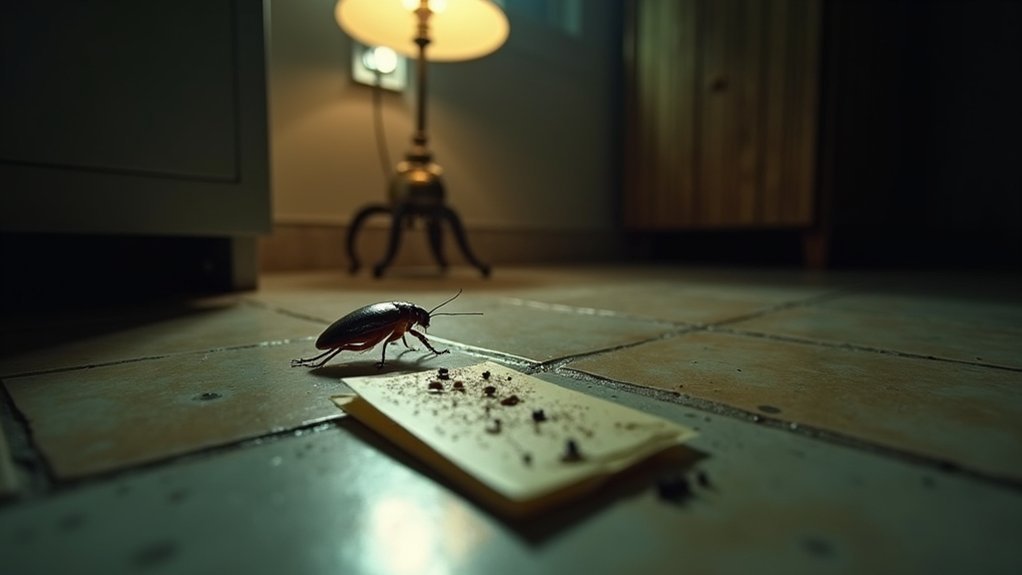
Yes, they can, and they’re one of the best tools for the job. Sticky traps catch roaches moving between hiding and feeding spots, so they reveal activity you’d never see directly.
Place traps along walls, corners, and baseboards, not in open floor areas. Try under sinks, behind the stove and refrigerator, and near trash cans. Leave them for 24 to 48 hours before you read the results.
Here’s what the catches can tell you:
- A single roach in one trap often means more are hiding nearby, and that’s unsettling.
- Nymphs mean they’re breeding in your home right now.
- Rising counts show your control efforts aren’t working yet.
- Catches in several areas mean the problem has spread.
Record each trap’s location and date, and keep traps in the same spots. Keep monitoring even after sightings stop, because traps can expose rebounds.
How Do You Cut Off Food, Water, and Entry?
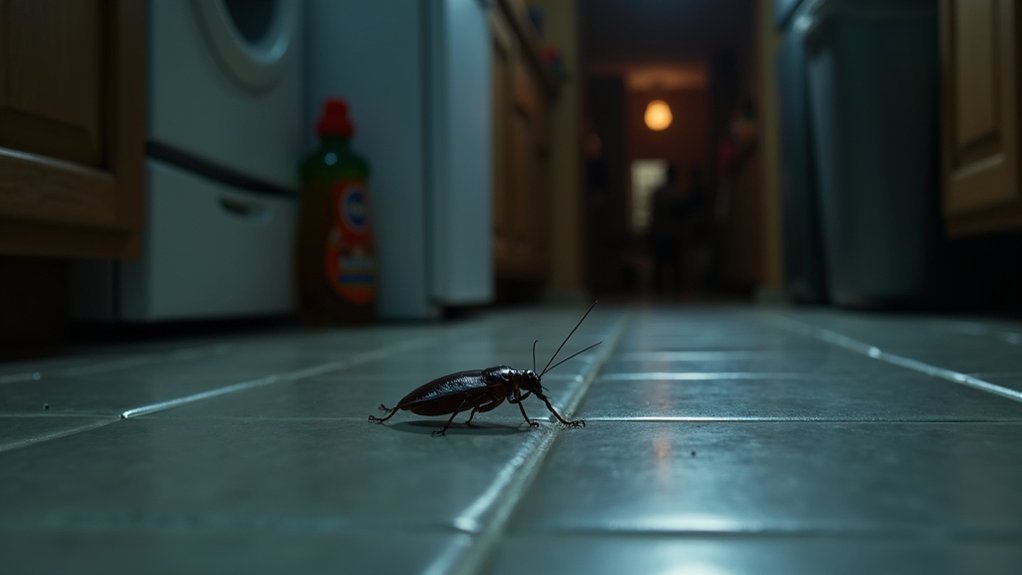
Once you’ve confirmed roaches are around, your next step is to take away what draws them in: food, water, and easy access.
Start by storing food in airtight containers, wiping up spills and crumbs, and fixing leaks so they’ve got nothing to eat or drink.
Then seal the cracks, gaps, and utility openings they use to get inside, since roaches exploit even the smallest entry points.
Eliminate Food and Water
Because cockroaches feed on the same things you do, sanitation is your strongest defense, and it starts with the kitchen. Store food in airtight containers, wipe up spills immediately, and don’t leave dirty dishes out overnight. Then cut off water, because roaches need it too.
Picture these moments, then act:
- Wipe crumbs and grease from counters, stoves, and under appliances before bed, so nothing’s waiting for a midnight visitor.
- Dry your sink and counters, and fix every drip, so roaches can’t drink while your family sleeps.
- Take out the trash before lights-out, and use tight-fitting lids, so nothing tempts them near your kids’ snacks.
- Remove cardboard boxes, paper bags, and newspapers, so roaches can’t hide inside your pantry.
Every clean surface protects your home.
Seal Entry Points
Clean counters and dry sinks take away the reason roaches come inside, but they won’t stop the ones already looking for a way in. Walk your exterior perimeter and seal any crack about 1/8 inch or larger in the foundation, siding, and stoop. Use exterior-grade caulk for small gaps and patch material for larger damage.
| Entry Point | Fix |
|---|---|
| Exterior doors | Install door sweeps and weatherstripping |
| Pipes and conduit | Fill gaps with caulk, foam, or steel wool |
| Vents and drains | Screen openings tightly |
Seal around plumbing penetrations under sinks, outlets, and switch plates, especially in shared walls, since roaches travel through wall voids. Repair torn window screens, and check dryer and attic vents for intact mesh. Recheck sealed areas often, because small failures reopen paths.
How Long Should You Watch After One Cockroach?
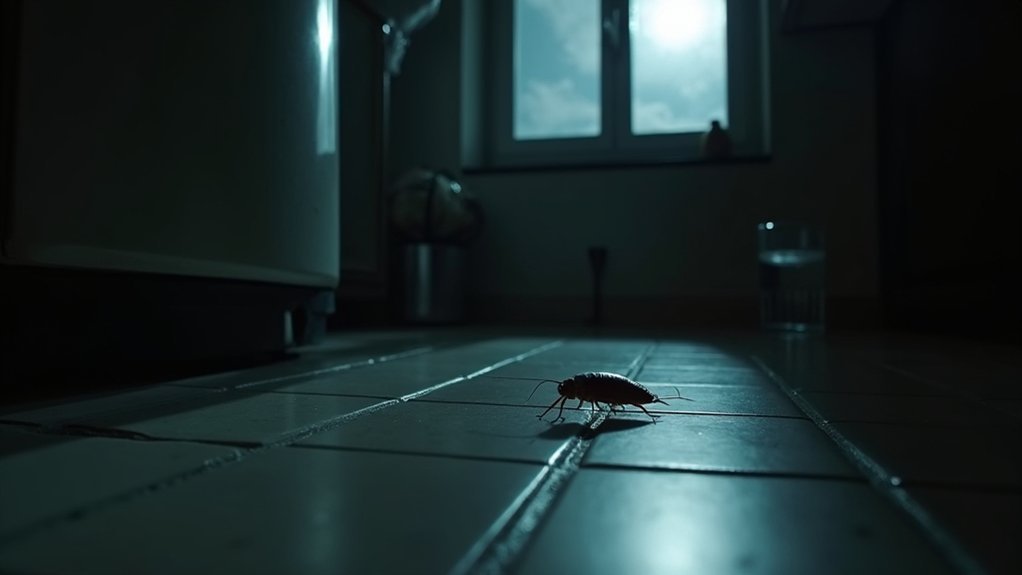
How long should you keep watch after spotting a single cockroach? Give it one to two weeks. A lone night sighting might be a stray, but a short window helps you tell a one-off from repeated activity. Infestations can take weeks or even months to become obvious, so don’t relax too soon.
During that time, notice what you’d hate to discover:
- Roaches scattering when you flip on the kitchen light at night.
- Even one roach crawling across your counter in daylight.
- Droppings like coffee grounds or black pepper hiding under your sink.
- Egg cases tucked behind your pantry shelves, proof they’re breeding.
Sightings on multiple nights in a row matter more than the first one. A sudden jump from one roach to several matters even more.
Check kitchens, bathrooms, appliances, and baseboards, and note your pet’s food bowl if it’s disturbed overnight. Then act fast if evidence appears.
When Should You Call a Pest Controller?
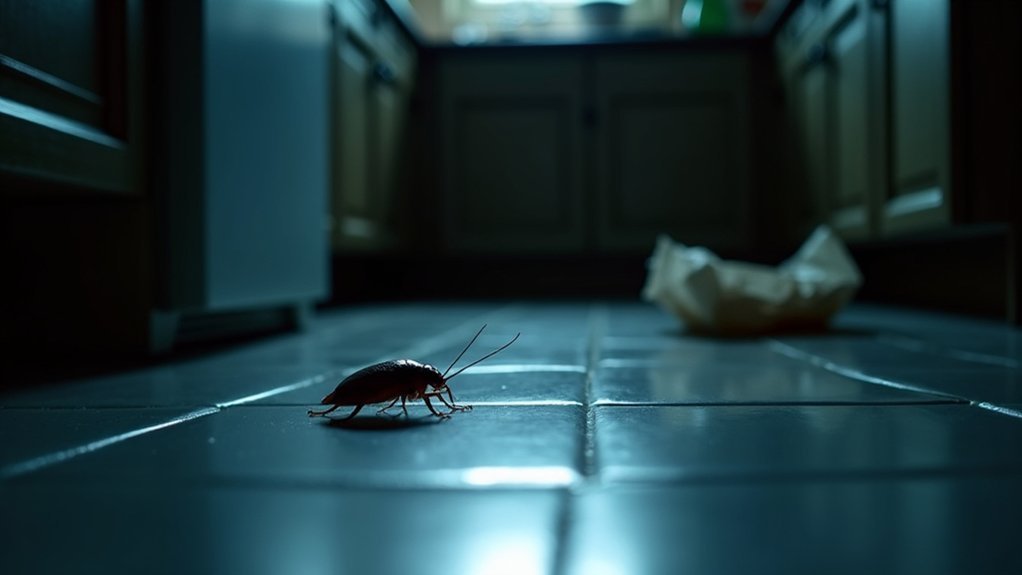
If your watch period turns up any of those warning signs, it’s time to call a pest controller. Don’t wait for the problem to grow larger.
Call immediately if you see a cockroach in daylight, since roaches are nocturnal. Call if you spot more than one roach, even occasionally. Call when you find droppings, egg cases, or shed skins anywhere indoors; they signal active breeding.
Also call if you notice a musty odor, smear marks, or damaged food packaging alongside roach activity.
Escalate quickly if asthma, allergies, or food safety worry you. Roach allergens and germs contaminate surfaces and trigger attacks.
Don’t rely on store-bought sprays and traps if sightings continue or spread. Signs in several rooms, or droppings that persist after cleaning and baiting, point to a hidden population.
A professional inspection locates harborages you can’t reach, and integrated pest management combines inspection, targeted treatment, and prevention.
Frequently Asked Questions
Can Cockroaches Bite People or Spread Disease in the Home?
Yes, they can, though bites are rare. You’ll mostly face contamination risk, since cockroaches spread germs like salmonella and E. coli onto your food, surfaces, and pet bowls. Wash any bite with soap and water.
Do Cockroaches Hitchhike Into Homes on Grocery Bags or Boxes?
Yes, they do. You can carry cockroaches, nymphs, or egg cases home in grocery bags and cardboard boxes, since seams hide them. Don’t store boxes; unpack promptly, and inspect deliveries before you bring them inside.
Are Cockroaches Dangerous to Children, Pets, or People With Asthma?
Yes, they can be dangerous for kids and people with asthma, since roach allergens trigger attacks and hospital visits. Your pets usually aren’t at much risk, but you’ll want to watch for harmful insecticide exposure.
Can I Safely Use Bait Gels or Sprays Myself?
Yes, you can use bait gels safely if you follow the label exactly. Place small spots in cracks and crevices, away from kids, pets, and food. Don’t spray over bait, and wash your hands afterward.
Will Cockroaches Go Away on Their Own Without Treatment?
No, they usually won’t leave on their own. If you don’t remove food, water, and hiding spots, they’ll keep breeding. You’ll need to clean, seal cracks, fix leaks, and use baits or traps right away.
Conclusion
One cockroach at night doesn’t always mean you’ve got an infestation, but you shouldn’t ignore it. Set sticky traps, clean up crumbs, fix leaks, and seal gaps where roaches could sneak in. Then watch for new sightings over the next couple of weeks. If you’re catching more roaches, spotting droppings, or seeing them in daylight, don’t wait. Call a pest controller, and you’ll stop a small problem before it grows.