
Can Cockroaches Drown? What Happens When They Get Wet
Yes, cockroaches can drown, but you’ll need to keep them fully submerged for 30 to 40 minutes. They close their spiracles, trap air, and slow their metabolism, so a quick dunk won’t kill them. Cold water helps them last longer, while hot water causes severe burns. You can’t count on drowning to control an infestation. Cutting off their water works faster than removing food, so keep going and learn how to dry out your home.
Key Takeaways
- Cockroaches can drown, but they usually need 30 to 40 minutes of continuous submersion because they can close their spiracles and trap air.
- Cockroaches breathe through spiracles, and water blocking them causes suffocation, while slowed metabolism of up to 72% helps them last longer.
- Cold water prolongs survival by slowing metabolism, while warm water raises oxygen demand and shortens it; German cockroaches last about 15 minutes in cold water.
- Brief splashes only stress cockroaches, prolonged soaking causes exhaustion and a weakened exoskeleton, and hot or boiling water causes severe burns.
- Drowning is unreliable for pest control, so fix leaks, remove standing water, and keep humidity below 50% to dehydrate roaches within 7 to 12 days.
Can Cockroaches Drown in Water?
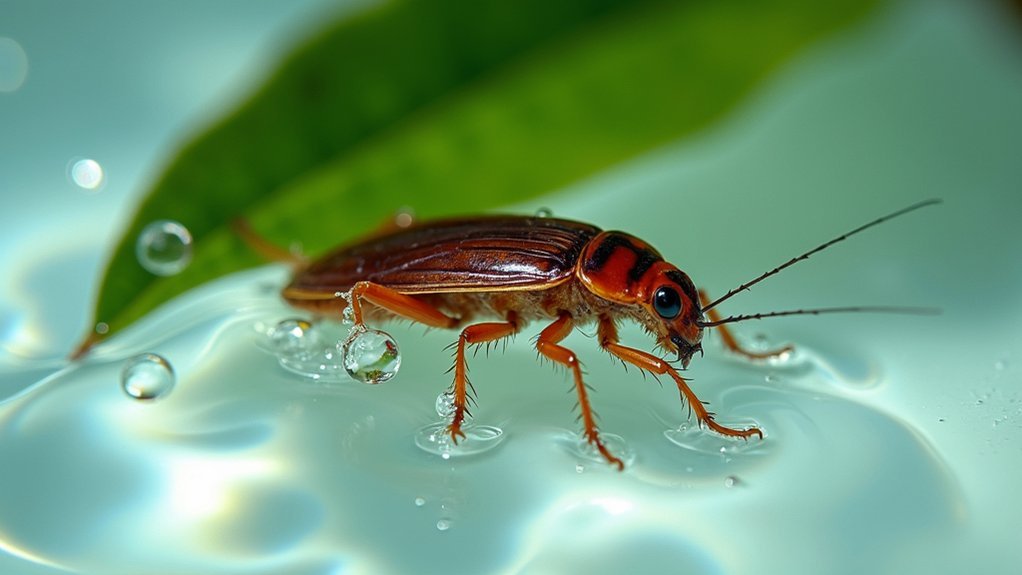
Cockroaches can drown, but it doesn’t happen as quickly as you’d expect. Water kills them only when it fully submerges them and they can’t reach air for long enough.
Cockroaches breathe through spiracles on their bodies, not through their mouths. When you submerge one, water blocks those spiracles and prevents normal gas exchange. The cockroach then dies from suffocation, or hypoxia.
Cockroaches breathe through spiracles on their bodies, not their mouths, so submersion blocks gas exchange and leads to death by suffocation.
Spiracles can close to limit water entry, which delays oxygen deprivation. Some sources report survival underwater for about 30 to 40 minutes. Cold water and species differences can change that timing. A brief dunk usually won’t kill a cockroach. Prolonged immersion is what leads to drowning.
If you’re trying to drown one, keep it fully submerged and don’t let it climb out. Smooth containers make escape harder than textured household surfaces do. Soap also helps, because it reduces surface tension and makes escape more difficult. Cockroaches can also float using their legs and trap air with tiny leg hairs, which helps them stay buoyant and avoid sinking.
Time matters.
How Long Can Cockroaches Survive Underwater?
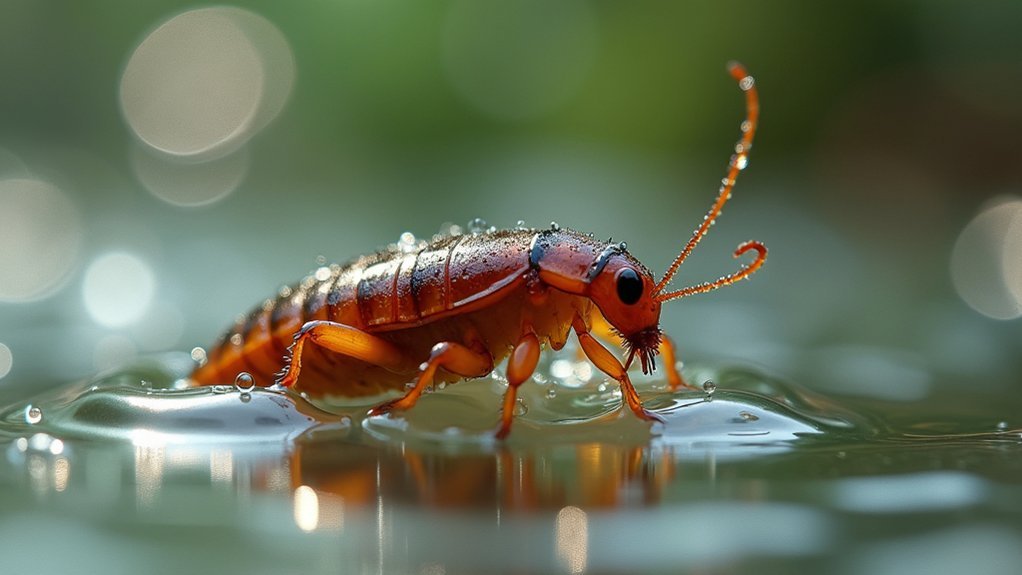
The timing is what surprises most people, because a submerged cockroach can hold out far longer than you’d expect. Most cockroaches survive underwater for about 30 to 40 minutes before oxygen deprivation turns fatal.
They can’t extract oxygen from water, so you’re watching a countdown to oxygen failure, not an aquatic adaptation. To keep water out, a submerged roach will close its spiracles, the small openings on its thorax that lead to its breathing tubes.
Species and conditions change the number. German cockroaches last about 15 minutes in cold water, while larger American cockroaches often reach the upper end of that range.
Temperature matters most: cold water slows metabolism and extends survival, but warm water raises oxygen demand and shortens it.
Claims of an hour or more usually involve special conditions.
In one study, an unprotected cockroach suffocated within about 2 minutes, while one wearing an experimental diving suit stayed active for 2 to 3 hours.
That suit supplied external oxygen and sealed out water, so it doesn’t reflect natural ability.
Does Getting Wet Actually Hurt Cockroaches?
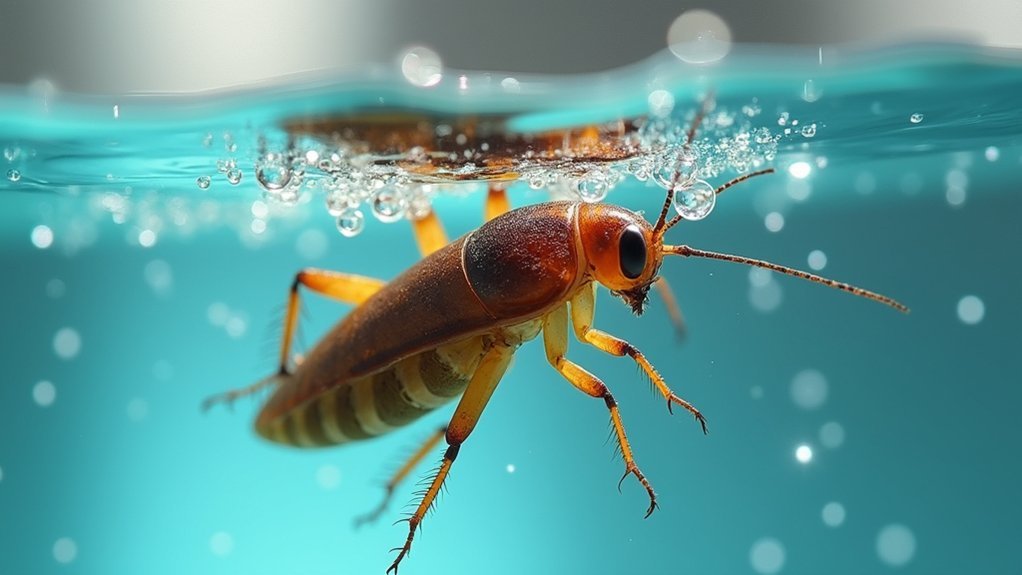
Does a little water actually hurt a cockroach? Not automatically, but it can cause real stress. If you splash one, you’ll likely injure it rather than kill it. Prolonged soaking does more damage because water limits movement, weakens the outer body covering, and exhausts the insect as it struggles.
Heat changes everything. Boiling water burns and damages tissue almost instantly, while room-temperature water is far less harmful. Even so, water that a cockroach has fallen into can carry harmful pathogens such as Salmonella, E. coli, and Shigella, so it should never be used for drinking.
| Exposure | Effect | Severity |
|---|---|---|
| Quick splash | Brief stress, possible injury | Low |
| Prolonged soaking | Exhaustion, weakened exoskeleton | Moderate |
| Hot or boiling water | Burns, rapid tissue damage | High |
Damp surroundings create other problems. Standing moisture encourages mold and microbes, which can irritate tissue and cause infection-like problems in captive roaches. Still, you shouldn’t expect moisture alone to solve an infestation. Cockroaches need water to survive, so moisture-rich areas keep them active.
Wetness is stressful and potentially harmful, especially when prolonged or combined with heat.
How Do Cockroaches Breathe While Submerged?
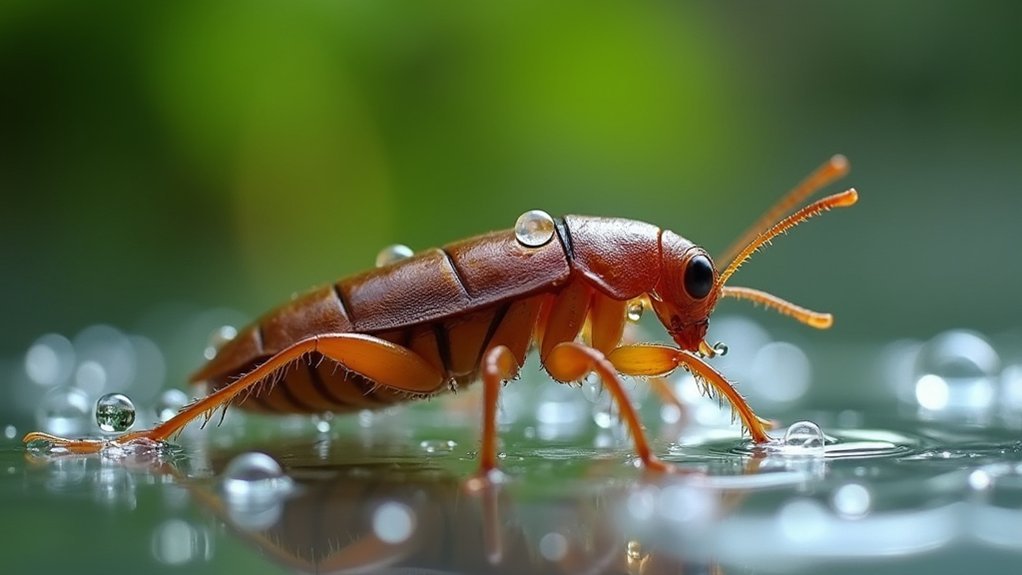
You might assume cockroaches breathe underwater, but they don’t pull oxygen from the water at all. They rely on spiracles, small openings along the body that feed air into a network of tracheae, and they can seal those openings to hold their breath while submerged. This ability suits insects that occupy diverse habitats, including leaf litter, rotting wood, and even aquatic locales near water surfaces.
Here’s how that airflow works, why closing the spiracles matters, and how a slower metabolism stretches the limited oxygen they’ve left.
Spiracles and Airflow
Because cockroaches don’t have lungs, they breathe through 10 pairs of small openings called spiracles, with two pairs on the thorax and eight on the abdomen. Each spiracle works as an entry and exit point for gases.
| Stage | What happens | Where |
|---|---|---|
| Entry | Air enters spiracles | Thorax and abdomen |
| Delivery | Tracheae branch into tracheoles | Tissues, muscles, brain |
Air flows through tracheae, air-filled tubes that branch into tiny tracheoles. Oxygen diffuses straight into cells, while carbon dioxide exits along the same path. Rhythmic abdominal pumping pushes air in through some spiracles and out through others, boosting oxygen delivery when your cockroach runs. Because the circulating haemolymph plays no role in oxygen transport, gas exchange depends entirely on this tracheal network rather than on blood.
That’s why submersion doesn’t suffocate cockroaches instantly: their spiracles and tracheae, not lungs, handle breathing. Still, oxygen delivery fails once air stops reaching spiracles.
Closing Spiracles Underwater
When a cockroach goes underwater, it doesn’t switch to some other way of breathing; it shuts its spiracles instead. Muscles control these small openings along the thorax and abdomen, so you’re watching active valve control, not passive leakage.
Once the spiracles seal tightly, water can’t reach the tracheae, the internal air tubes that carry oxygen. Some sources call this “holding breath,” and it’s the roach’s key defense. Gills or any water-based system play no role.
Don’t expect it to last, though. The sealed system buys it roughly 30 to 40 minutes, though estimates run as short as 15 and vary by species and conditions.
If water floods the tracheae, oxygen intake stops. Eventually, the roach runs out of oxygen and drowns if submersion continues.
Slowed Metabolism Underwater
Sealing the spiracles is only half the story, because a cockroach also has to make its trapped air last. When you submerge one, it slips into a low-oxygen, low-energy state that cuts its oxygen demand.
One summary reports a 72% drop in oxygen consumption after five minutes in American cockroaches. That slowdown stretches the limited air inside the tracheal system, so you shouldn’t expect an instant drowning.
Water temperature matters here. Cooler water slows metabolism further and extends survival, while warmer water raises demand and shortens it.
Still, the slowdown can’t create new oxygen. Trapped carbon dioxide can’t escape easily either, which stresses the insect. Most larger species last about 30 to 40 minutes, and German cockroaches often manage only 15 to 20 minutes.
Does Cold Water Help Cockroaches Last Longer?
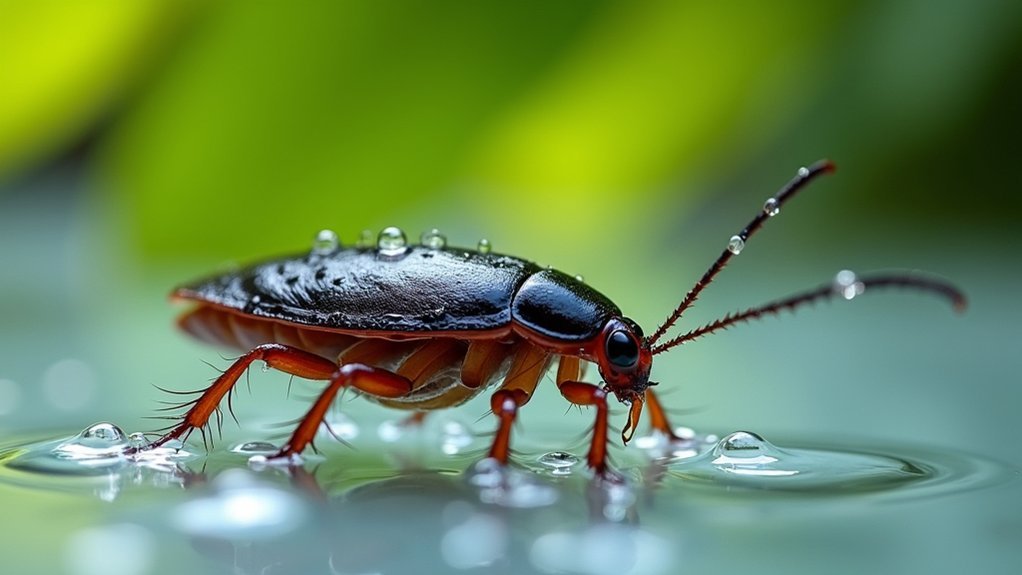
Does cold water give cockroaches extra staying power? Slightly, but it won’t save them. Cold water slows a roach’s metabolism, so it uses oxygen more slowly and lasts a bit longer before suffocating.
German cockroaches typically survive about 15 minutes in cold tap water, and submerged roaches overall often last 30 to 40 minutes.
Don’t mistake that for a reliable control method. Roaches close their spiracles to block water, and air trapped around their bodies can extend survival further. If you’re dunking one briefly, you won’t kill it. Only prolonged, full submersion works.
Temperature matters in the other direction too. Warm water shortens survival time, so heat works better than cold. Ordinary cold tap water isn’t a real threat. Freezing conditions, not simply cold ones, make cold lethal.
Can Cockroaches Climb Out of Toilets and Drains?
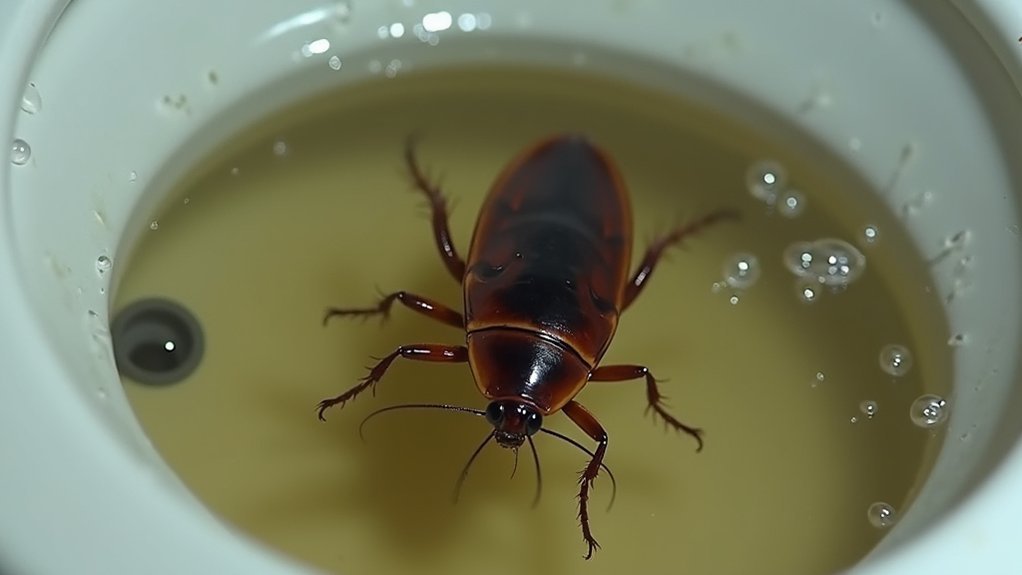
Surviving underwater is one thing, but getting out of the plumbing is another, and roaches can manage it under the right conditions.
Roaches climb wet vertical pipe surfaces, squeeze through narrow gaps, and hold their breath for up to 40 minutes. Still, you’re far likelier to find them coming from drains than toilets.
Roaches climb wet pipes, squeeze through tight gaps, and hold their breath for 40 minutes, yet drains are far likelier culprits than toilets.
Picture how it happens:
- A dry trap in an unused sink, tub, or floor drain loses its water barrier.
- A roach climbs the damp pipe wall, gripping tiny flaws for traction.
- It slips through cracked pipes, loose covers, or unsealed gaps.
- It emerges at night, when you’re least likely to notice.
Toilets rarely serve as the entry point because the water seal blocks movement. A toilet you rarely use loses that protection as its trap water evaporates, so flush it regularly and keep the lid closed.
Tape-test your drains overnight, then seal gaps you find.
Is Drowning a Reliable Way to Kill Cockroaches?
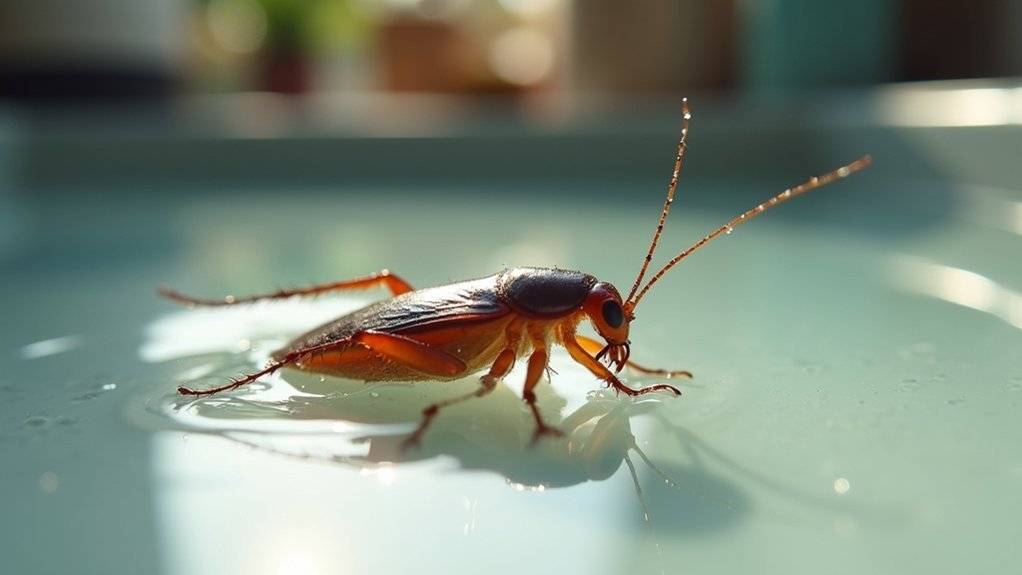
You might think flushing a roach or dunking it in a bucket settles the problem, but drowning only works after 30 to 40 minutes or more of uninterrupted submersion.
Roaches can close their spiracles, climb out, or shrug off a short soak, so you’ll often end up with a temporarily stunned pest instead of a dead one.
You’ll get better results by controlling the moisture that draws roaches in, so let’s look at why drowning falls short and which water-focused methods work better.
Drowning Limitations and Risks
Although drowning sounds like a simple fix, it’s not a reliable way to kill cockroaches. You’re fighting an insect that seals its spiracles and uses little oxygen underwater.
Picture what happens:
- You submerge a roach, and it survives 30 to 40 minutes, or 15 to 20 minutes for German roaches in colder water.
- It looks inactive, but it may still have oxygen reserves, so you might discard a living roach.
- Warm water shortens survival, but cold water slows metabolism and extends it.
- In sinks or tubs, roaches climb surfaces and escape before they die.
In a smooth, sealed container, you may need several hours of submersion for near-certain death.
Drowning won’t control multiple roaches quickly, so don’t rely on it.
Better Moisture Control Methods
Since drowning won’t reliably kill roaches, you’ll get better results by cutting off the water they need to live. Start by fixing dripping faucets, leaking pipes, and faulty gaskets promptly, ideally within 24 hours. Check under sinks, around faucet bases, and behind toilets for hidden leaks.
Next, remove standing water. Dry sinks, tubs, showers, and countertops after use, and empty pet dishes at night. Drain plant saucers, and empty drip trays and air-conditioning condensation containers often. Wipe or insulate condensation on pipes and under refrigerators.
Finally, lower humidity. Run dehumidifiers in basements and damp rooms, use exhaust fans in kitchens and bathrooms, and keep humidity below 50% when possible. Cover drains with fine mesh screens, and correct drainage so water doesn’t pool near foundations.
Does Cutting Off Water Kill Cockroaches Faster?
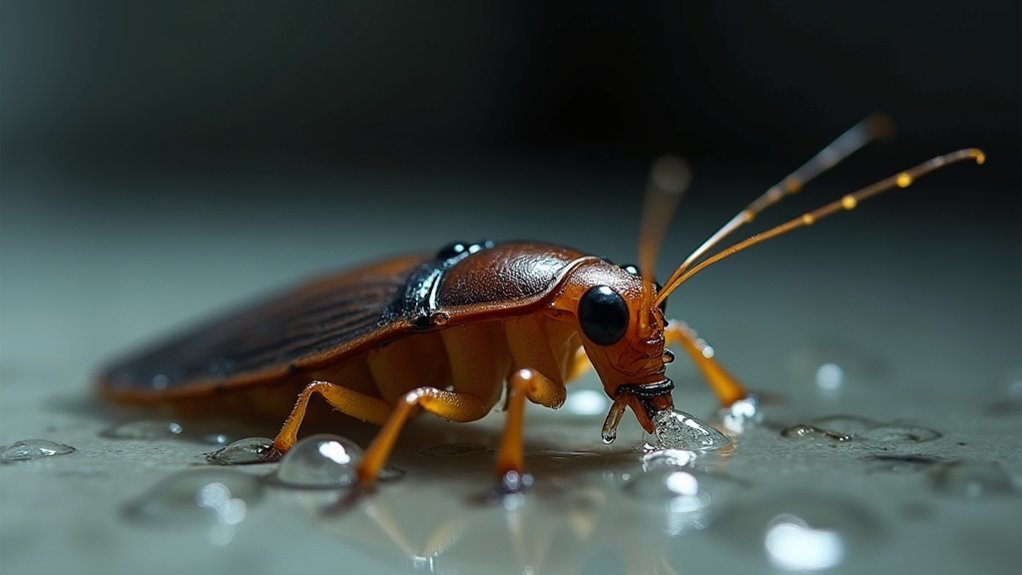
Why does water matter more than food when you’re trying to wipe out roaches? Because cockroaches can survive weeks without food, but dehydration kills them in roughly 7 to 12 days.
Cutting off water works faster, and here’s how it plays out:
- Water escapes: Roaches lose moisture through breathing and body surfaces, and the exoskeleton can’t stop it completely.
- Dehydration weakens them: Movement, feeding, and normal body function decline quickly.
- Death follows: German cockroaches often die in about 12 days without water, and some indoor roaches die in about a week.
- Food loss lags: Starvation alone rarely delivers quick control.
How Do You Remove Moisture Cockroaches Rely On?
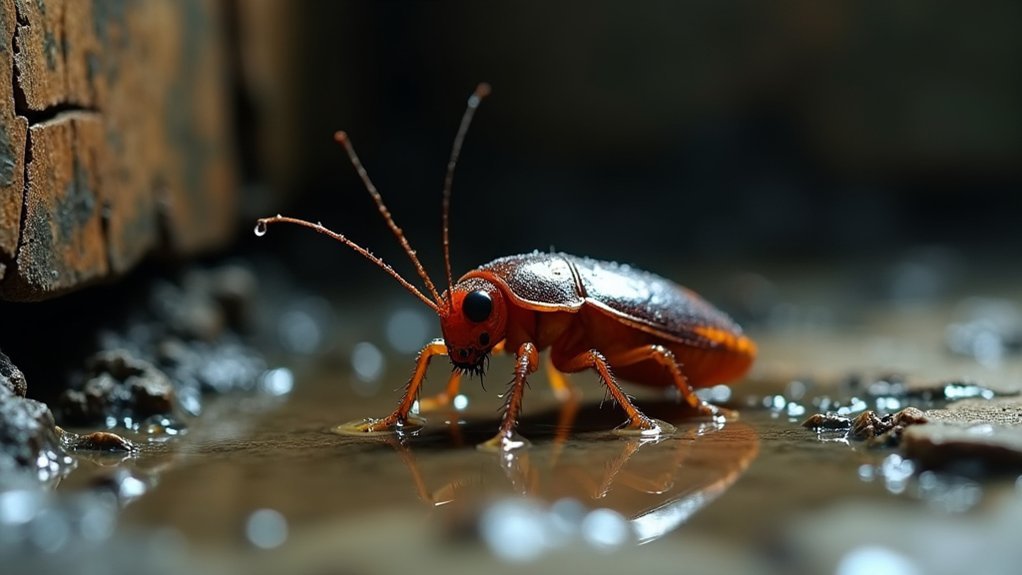
If you want to remove the moisture cockroaches rely on, start with leaks and standing water, since those give them the easiest access.
Patch leaks under sinks and around fixtures, and repair dripping faucets and running toilets right away. Dry sinks, tubs, and counters after use, and don’t leave standing water out overnight.
Next, lower indoor humidity. Run bathroom fans during showers and for 15 to 20 minutes afterward, and use a dehumidifier in basements, bathrooms, and laundry areas.
Lower indoor humidity by running bathroom fans during showers and 15 to 20 minutes afterward, and by using dehumidifiers in basements, bathrooms, and laundry areas.
Aim for humidity below 50% to 60%.
Don’t overlook hidden condensation. Wipe moisture from refrigerator bottoms, pipes, and under-sink spaces, and insulate cold-water pipes so they don’t sweat.
Empty pet water dishes at night, cover aquariums with tight-fitting lids, and rinse and invert glasses and cans.
Wring out sponges, rags, and towels instead of leaving them piled overnight. Seal gaps around sinks, tubs, and pipes, and repair worn grout.
Frequently Asked Questions
Do Cockroaches Float on Water After They Die?
Yes, dead cockroaches often float, especially when trapped air stays inside their bodies. You’ll notice some sink as air escapes and water fills them, so you can’t rely on floating to tell whether one’s dead.
Does Soapy Water Kill Cockroaches Faster Than Plain Water?
Yes, soapy water kills cockroaches much faster. It cuts surface tension and clogs their breathing pores, so you’ll see results within minutes if you coat them fully. Plain water won’t do that, since roaches can usually escape before drowning.
Can Cockroaches Survive Being Flushed Down a Toilet?
Yes, cockroaches can survive flushing. They hold their breath up to 40 minutes, and air pockets in pipes help them too. You shouldn’t count on flushing to kill them, because they might crawl back up.
Do Baby Cockroaches Drown More Easily Than Adults?
No. You won’t find strong evidence that nymphs drown faster than adults, since they breathe through the same spiracles. You’ll see soap, water temperature, and species matter far more than age when you’re submerging them.
Can Cockroaches Sense Water Before They Get Wet?
Yes, cockroaches can sense water-related cues before they get wet. You’ll find their antennae detect humidity through moist and dry cells, so they’re able to follow damp air toward leaks, though they can’t spot puddles.
Conclusion
Cockroaches can survive underwater far longer than you’d expect, so drowning isn’t a reliable way to get rid of them. You’ll get better results by cutting off what they need most: moisture. Fix leaky pipes, wipe down sinks every night, and dry out damp areas. Seal gaps around drains, too. When you take away their water, you’ll weaken the infestation faster than any flood ever could, and you’ll keep your home much less inviting.