
Best DIY Cockroach Treatments That Actually Work at Home
For DIY roach control that actually works, start with sugar-and-baking-soda bait in small lids near activity. Use boric acid mixes or syrup pastes (thin smears) in cracks for stronger results. Pair fast-kill gel baits with IGRs to break the life cycle. Map hotspots with sticky traps. Keep it dry: fix leaks, seal gaps, and clean crumbs. Skip ultrasonic gadgets as a primary tool. Add light diatomaceous earth in dry voids. There’s a simple plan that ties it all together.
Key Takeaways
- Use boric acid bait (1 part boric acid to 3–5 parts sugar/cornmeal) in thin dustings along cracks and hidden harborages.
- Place homemade sugar and baking soda bait in small lids near activity; refresh when it dries for steady kills.
- Apply gel baits (e.g., indoxacarb) as pea-sized dots in crevices and pair with an IGR to break the life cycle.
- Use flushing aerosols for quick knockdown in hot spots, then vacuum and follow with baits for sustained control.
- Reduce water and access: fix leaks, dry sinks, seal cracks, add door sweeps, and declutter to remove harborage.
Homemade Sugar and Baking Soda Bait
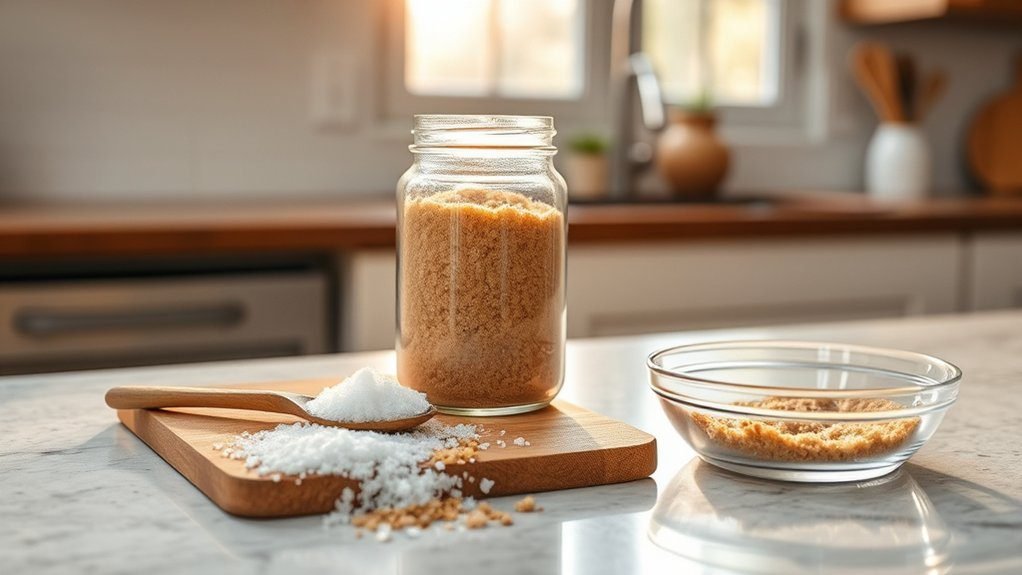
Even if you’re wary of harsh chemicals, you can knock back roaches with a simple sugar and baking soda bait. This method is pet-safe and environmentally friendly compared to chemical pesticides.
Mix equal parts baking soda and sugar—about 1–2 tablespoons each—for a small batch. Sugar lures roaches; baking soda reacts with acids in their gut, releasing carbon dioxide that builds internal pressure and kills them. Keep the 50/50 ratio to balance taste and lethality. You can swap in powdered sugar for a finer texture, or add a bit of peanut butter or flour to boost attractiveness.
Place the bait in bottle caps, small lids, or on cardboard under sinks, behind refrigerators, along baseboards, and near toilets—where you see activity or entry points. Spread thinly or in small clumps. Refresh it when it dries or crusts.
For certain species, use jars or stations with petroleum jelly on the rim to trap them. Expect results in days, though heavy infestations need broader strategies.
DIY Borax and Boric Acid Bait Mixes
While both powders look similar on a shelf, boric acid and borax aren’t interchangeable, and you’ll get faster, more reliable roach control with boric acid baits. IPM stepwise control recommends pairing boric acid baits with sanitation, exclusion, and monitoring for best results.
Boric acid (H3BO3) is chemically different from borax (sodium tetraborate) and adheres better to roaches, boosting ingestion during grooming. It delivers strong residual control with minimal resistance, killing by ingestion and, secondarily, by contact as particles cling to legs and bodies.
Boric acid sticks to roaches, boosting ingestion and residual control with minimal resistance.
Mix low-concentration boric acid baits to keep them palatable. Aim for about 1 part boric acid to 3–5 parts food attractant by volume; in liquid-style baits, 0.5–2% boric acid drives rapid declines, while higher levels can repel. Use sugar or cornmeal as attractants, and add a neutral filler like flour to balance texture.
Apply thin dustings or small bait placements along cracks, crevices, behind appliances, and other travel routes. Keep dust dry and target hidden harborages.
Monitor hotspots, refresh as needed, and remember eggs won’t be affected, so repeat applications.
Boric Acid Paste Baits With Syrup
You’ve seen how low-dose boric acid outperforms borax in dry baits; paste baits with syrup push that advantage further by boosting feeding and spread.
At 0.5–2% in solution blended with sugars (fructose, glucose, maltose, or sucrose), boric acid becomes highly palatable. Syrup masks bitterness and keeps roaches feeding long enough to ingest a lethal dose and transfer residues through grooming. In humid Mid-Atlantic summers, remember that humidity reduces effectiveness, so place baits in dry, undisturbed voids for best results.
In tests, sugar–borate mixes around 0.4% reached LT90 in three days or less.
Mix roughly 1 part boric acid to 3–5 parts syrup by volume for delayed, non-repellent kill. Aim for a tacky, not runny, paste; excess moisture reduces adherence and performance.
Apply thin smears or pea-sized spots along cracks, harborages, and runways. Use syringes or puffer tips for precise placement in voids and to avoid visible white residues that can trigger avoidance.
Keep baits dry, uncontaminated by grease or cleaners, and out of children’s and pets’ reach.
Insect Growth Regulators for Lasting Control
Because cockroaches can rebound fast, insect growth regulators (IGRs) give you lasting control by breaking their life cycle instead of just knocking adults down. These compounds mimic hormones and disrupt molting and metamorphosis, so nymphs never become reproductive adults.
Juvenile hormone analogues like methoprene, hydroprene, and pyriproxyfen keep young stages juvenile; chitin synthesis inhibitors block exoskeleton formation, causing lethal molts. IGRs also reduce egg viability, cutting future hatch rates. They can be used alongside conventional insecticides for dual-action control.
Expect delayed results. Adults won’t die right away, and population drop can take 4–6 months as existing adults age out. Some adults or “adultoids” may persist but remain sterile or malformed, showing twisted wings or darkened bodies.
Field performance varies by species and conditions, so monitor with sticky traps and reapply as labels direct.
Choose formats that fit your space: aerosols, sprays, or crack-and-crevice applications. IGRs deliver long residual control, resist typical insecticide resistance pathways, and provide steady suppression with fewer re-treatments.
Combining Gel Baits With IGRS
Pair gel baits with IGRs so you hit adults fast and quietly shut down nymph molting and egg production.
Place pea-size bait dots in cracks and cabinets while applying IGR spray separately to development sites, keeping sprays off bait and ventilating after.
Check weekly, refresh bait, and practice safe handling so your maintenance stays effective and resistant roaches don’t rebound.
For best results, also focus on sanitation by storing food in sealed containers and cleaning crumbs and spills promptly.
How IGRs Disrupt Life Cycle
While gel baits knock down active adults fast, adding insect growth regulators (IGRs) breaks the roach life cycle so the infestation can’t rebound.
IGRs hit the immature stages: juvenile hormone mimics like pyriproxyfen and (S)-hydroprene trick nymphs into “staying young,” so they never become fertile adults. Chitin synthesis inhibitors block exoskeleton formation during molts, causing death or leaving deformed, sterile adults.
This disruption stops population growth: exposed nymphs fail to molt or emerge unable to reproduce, so no viable adults or eggs follow. Meanwhile, gel baits quickly thin current adults, easing pressure.
IGRs keep working for weeks to months, suppressing late hatchlings and survivors, and they’re low-repellency, so roaches contact them.
Because IGRs target development, not nerves, they help manage resistance and drive long-term colony collapse.
Placement for Maximum Impact
Two simple placement rules release the power of gel baits plus IGRs: keep them close, and keep them separate.
Put multiple pea-sized bait dots every two feet near harborages—cracks, crevices, under appliances, and inside cabinets. Keep them accessible to roaches but out of reach of kids and pets. Don’t place bait on recently sprayed surfaces.
Layer vertically. Place bait higher where roaches forage—upper cabinet edges, counters, around sinks and drawers.
Apply IGRs lower—baseboards, behind cabinets, and under appliances. Treat cracks and crevices near, but not on, bait so palatability isn’t reduced. Never overlap sprays and bait.
Reinspect often and refresh dried or eaten bait.
Combination gels like Advion Trio add IGRs to the killing agent, suppressing molting and reproduction and helping manage resistance for deeper, longer control.
Safe, Ongoing Maintenance
Even after the first knockdown, you’ll keep roaches suppressed by pairing gel baits for quick kills with IGRs to break the life cycle.
Use gel in cracks, crevices, and near droppings; place pea-sized dots where roaches hide. Refresh bait every 2–3 weeks so it stays attractive.
Apply IGR sprays or point sources along baseboards, under appliances, and behind cabinets, but don’t spray bait—keep them separated so neither contaminates the other.
Choose indoxacarb gels for fast ingestion kills and add IGRs like novaluron or pyriproxyfen to stop molting and reproduction.
Advion Trio bundles indoxacarb with both IGRs for multi-stage control and resistance management. Rotate baits and keep IGRs in play about every 3 weeks.
Used as directed, these options are safe for homes with pets and kids.
Quick Knockdown With Flushing Aerosols
Use flushing aerosols when you need fast knockdown of exposed roaches in active harborages, not as a standalone solution.
You’ll target fecal-spotted cracks, voids, and aggregations with short, directed bursts, then follow with vacuuming to remove incapacitated insects.
Ventilate well, keep kids and pets out, avoid food surfaces, and let residues settle before reentry.
When to Use
When you need fast results, reach for a flushing aerosol to knock down visible roaches and drive hidden ones into the open. Use it during an initial assessment to expose activity in cracks, crevices, and under appliances. It’s ideal for localized hot spots and for rapidly reducing numbers before you deploy longer-term tools like baits or dusts. Expect quick knockdown from pyrethrins with PBO, but minimal residual.
| Best Time | Why It Works |
|---|---|
| Spot infestations | Concentrates knockdown where roaches cluster |
| Population surge | Fast reduction within 1–3 days |
| Pre-baiting | Flushes roaches to contact baits later |
| With vacuuming | Drives roaches into direct removal |
| Before residuals | Clears space for dusts to reach |
Aim short bursts at harborages—baseboards, appliance edges, and gaps—so roaches move into traps or kill zones. Combine with follow-up tactics for lasting control.
Safe Application Steps
You’ve seen how flushing aerosols shine for fast knockdown; now apply them safely and precisely. Clear pets, food, and covered aquariums; have all residents, especially kids and those with asthma, out for 2–4 hours. Clean kitchens and baths to remove grease and crumbs. Wear gloves, open windows, and read the label—dose, distance, and reentry times matter.
1) Target precisely: aim short bursts 12–18 inches into cracks, crevices, along baseboards, behind and under stoves, fridges, dishwashers, and near plumbing. Avoid open surfaces like countertops and floors.
2) Time it right: treat in early evening when roaches are active; use aerosols to flush them toward accessible areas for baiting.
3) Finish safely: ventilate, let areas dry, don’t clean near baits for days, remove dead roaches, wash up, and reapply only if activity returns.
Ultrasonic Repellers as a Complement
Although ultrasonic repellers sound appealing as a chemical-free fix, treat them as a minor add-on—not a solution.
Lab setups show certain frequencies (35–40 kHz) can repel some German cockroaches and 40–75 kHz can be lethal within days, with males more affected than females. But those results don’t hold in homes.
In real rooms, devices rarely emit precise, consistent frequencies or sufficient intensity. Sound can’t penetrate walls, cabinets, or deep cracks—exactly where roaches live.
Ultrasonic devices lack consistent power, and sound won’t reach the hidden cracks roaches occupy.
Cockroaches also habituate quickly, so any early disruption fades. Studies repeatedly find no meaningful, lasting reduction in activity, breeding, or nest survival.
Relying on repellers alone risks letting an infestation grow while you wait.
If you still want to try one, use it only as a complement in a single room, near known travel routes, and alongside proven methods like sanitation, sealing entry points, and targeted baits or sprays.
Monitor results and be ready to pivot if you see no improvement.
Sticky Traps for Monitoring and Capture
Two simple cardboard-and-glue traps can reveal far more about a cockroach problem than you’d expect. Use sticky traps to monitor, not eradicate. They snag small roaches—especially German cockroaches—as they follow nightly highways along walls and into warm, moist spots. You don’t need bait if you place traps where feces specks, smears, or shed skins mark active paths.
1) Place precisely:
- Along wall edges, corners, and under sinks.
- Near water: pet bowls, leaky faucets, fridge drip trays.
- In kitchens, pantries, bathrooms, behind stoves and refrigerators.
2) Read the results:
- Count weekly to gauge severity and trends.
- Map catches to locate nests and entry points.
- Shift traps to hot zones and add more where counts spike.
3) Know the limits:
- Traps capture only a fraction; breeding outpaces catch.
- Attractants can help, but placement matters more.
- Use them as non-toxic, pet-safe diagnostics to guide your next steps.
Diatomaceous Earth for Dry Applications
You’ll use food-grade diatomaceous earth (DE) because it kills roaches by scraping their waxy coating, causing dehydration they can’t resist.
Apply a thin, even dusting in dry hotspots—cracks, crevices, behind appliances, under sinks, and along baseboards.
Keep it dry and light; heavy piles or moisture reduce effectiveness.
How DE Works
Even without chemicals, diatomaceous earth (DE) kills roaches by physical damage that leads to dehydration. When a roach walks through DE, the microscopic sharp edges scrape its exoskeleton and absorb the waxy lipids. That cuticular disruption spikes water loss, so the insect desiccates and dies. DE isn’t a neurotoxin; it works only through contact or ingestion, so exposure matters.
1) Expect a slower kill. Most roaches die over several days to a week, with longer exposure increasing mortality and no resistance issues.
2) Keep it dry. Moisture clumps DE and reduces abrasion, while undisturbed dust keeps working as roaches revisit.
3) Use light dust. A thin layer encourages crossing; heavy piles can repel. Food‑grade DE is low‑toxicity, but wear a mask and goggles during application.
Where to Apply
Knowing DE works only on contact, placement matters as much as product choice. Lay a thin, flour-like dusting inside kitchen cabinets, along baseboards, and under sinks to intercept travel paths.
Target cracks and crevices near ovens, refrigerators, and dishwashers, and dust under and behind appliances where roaches harbor. Keep surfaces dry; moisture kills DE’s effectiveness.
Create a 1–2 inch barrier along baseboards in infested rooms. Ring door thresholds, window sills, and other entry points, focusing where you see roaches moving.
Use a duster or paintbrush to tuck DE into tight edges, then reapply after cleaning or moisture.
Skip wall voids; roaches often avoid DE inside them. Instead, dust accessible crevice edges.
In bathrooms, treat only dry areas—behind toilets and baseboards—and integrate other methods.
Sanitation and Sealing to Prevent Reinfestation
While baits and sprays knock numbers down, sanitation and sealing keep roaches from roaring back. Cut food, water, and shelter and you’ll starve survivors and block newcomers. Each night, vacuum kitchen floors, wipe counters with disinfectant, and don’t leave dishes or uncovered food out. Clean spills under and behind appliances. Store human and pet food in airtight containers; lift pet bowls at night.
1) Eliminate moisture: Fix leaking faucets and pipes, dry sinks and tubs, cover drains overnight, vent bathrooms outdoors, and dry or wash sponges, rags, and toothbrushes. Remove or dry pet water dishes at night.
2) Exclude entry: Caulk cracks around pipes, outlets, vents, and walls; add door sweeps and weather stripping; seal thresholds and porch cracks; close gaps in cupboards, moldings, and fixtures. In heavy infestations, tape appliance and electronics openings.
3) Remove harborage: Declutter, trash cardboard, tidy pantry shelves, seal recyclables, trim vegetation, and avoid outdoor debris piles. Inspect, vacuum, and steam regularly.
Frequently Asked Questions
Are DIY Cockroach Treatments Safe for Aquariums or Reptile Enclosures?
No, most DIY roach treatments aren’t safe near aquariums or reptile enclosures. Avoid sprays, foggers, and borax baits. Use sealed glue traps outside enclosures, manual removal, and strict cleanliness. Consult IPM pros if infestations persist.
How Long Until I See Fewer Roaches After Starting DIY Methods?
You’ll usually see fewer roaches within a week; activity may spike first. Expect 70–80% drops in 1–3 weeks with well-placed baits. Full eradication often takes 4–8+ weeks, requiring sanitation, follow-up treatments, and bait rotation, especially for German cockroaches.
Can I Use DIY Treatments in Rental Units Without Landlord Approval?
No. In rentals, you generally can’t apply DIY pesticides without landlord approval or licensed applicators. Notify the landlord in writing, document everything, request prompt professional treatment, and follow lease terms. If ignored, explore repair-and-deduct or legal remedies per local law.
What Signs Indicate I Need a Professional Exterminator Instead?
You need a pro when you see daytime roaches, many droppings, egg cases, shed skins, musty odors, health reactions, spreading rooms or units, DIY failures, or complex entry points. Pros use growth regulators, residuals, and exclusion.
Will DIY Treatments Affect Indoor Air Quality or Allergies?
Yes. Some DIY sprays and foggers linger, worsening indoor air and allergies. You’ll minimize risks by using IPM: seal entry points, reduce moisture, deploy baits and sticky traps, and thoroughly clean allergen-laden dust after eliminating roaches.
Conclusion
You’ve got practical, proven tools to knock roaches back and keep them out. Use sugar-baking soda or borax/boric acid baits, paste baits with syrup, and pair gel baits with IGRs for lasting control. Add sticky traps to monitor, diatomaceous earth for dry spots, and ultrasonic units as light support. Most importantly, clean relentlessly, remove food and water, and seal entry points. Rotate methods, refresh baits, and track results—you’ll break the cycle and reclaim your home.
