
Cockroach Bites vs Ant Bites: What Bit You?
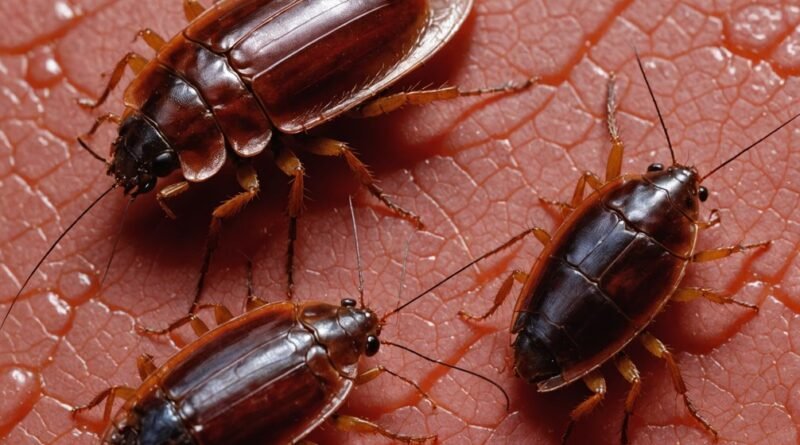
To identify if you’ve got a cockroach or ant bite, check the pattern and symptoms. Cockroach bites are isolated with mild itching and swelling, often appearing in heavily infested areas. Ant bites usually come in clusters, causing sharp pain, itching, and red welts. Fire ant stings can even form blisters. Look for ant trails or roach droppings to find the source. Want more insights on recognizing and managing these bites?

Key Takeaways
- Cockroach bites are rare, isolated, and larger than mosquito bites, often occurring after waking in heavily infested areas.
- Ant bites appear as multiple red pimples or welts, often with sharp stinging, occurring during outdoor activities on exposed skin.
- Cockroach infestations show signs like droppings, odors, and egg cases in warm areas, while ant nests have visible trails and dirt mounds.
- Ant bites cause intense itching and burning, while cockroach bites result in mild irritation and minor discomfort.
- Severe allergic reactions to cockroach exposure include breathing difficulties and facial swelling, requiring urgent medical care.
How to Quickly Identify Your Bite
Sure, here’s the revised content with an added sentence and brackets:
Wondering how to tell if you’ve been bitten by a cockroach or an ant? Focus on the bite’s shape, size, and pattern.
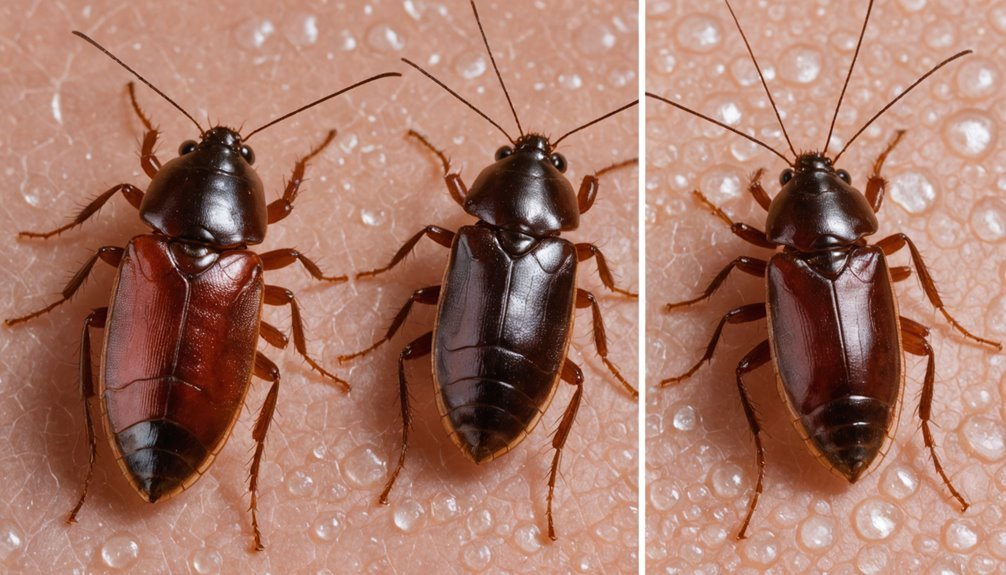
Cockroach bites often appear as small, red, raised bumps, about 1–4 mm wide, and are typically isolated. In contrast, ant bites resemble a small red pimple or sharp pinch mark, possibly appearing as multiple marks from repeated contact. Cockroach bites are uncommon and usually associated with severe infestations.
Cockroach bites are small, red, and isolated, while ant bites look like red pimples or multiple sharp marks.
Check the bite location. Cockroach bites usually target hands, feet, or areas like around the mouth. Ant bites often occur on exposed skin during outdoor activities.
Timing helps too. Cockroach bites typically appear after waking, while ant bites are linked to outdoor contact.
Examine your surroundings for signs like droppings or ant mounds to further distinguish between the two.
Immediate Reactions and Symptoms
Identifying the culprit of your bite is just the first step; understanding the immediate reactions and symptoms that follow is equally important.
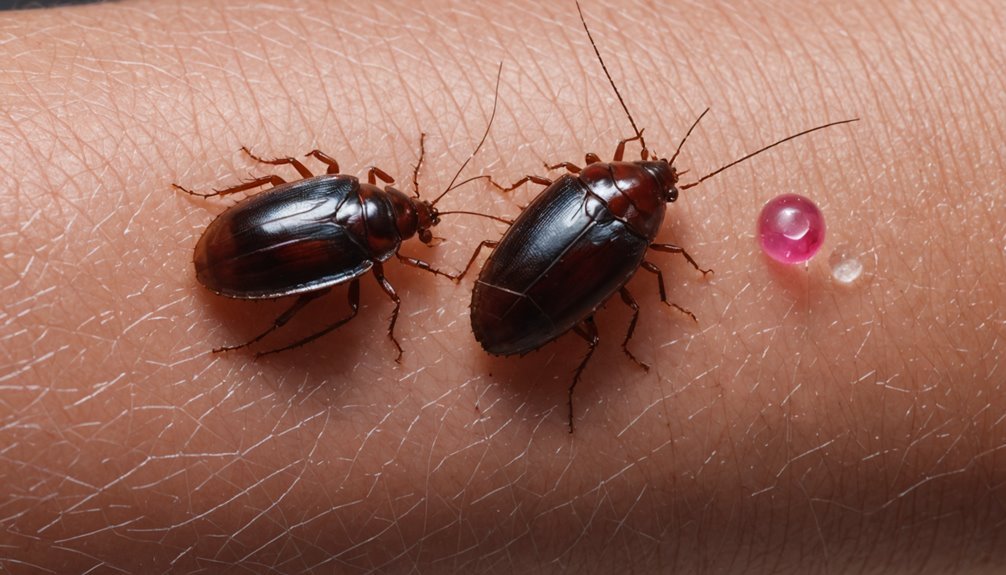
Cockroach bites often result in a small red bump, larger and more irritated than a mosquito bite, causing itching, swelling, and pain. If you’ve got sensitive skin, expect inflammation soon after.
Ant bites, on the other hand, typically cause localized redness and a small welt, with burning or stinging pain that shifts to itching. Some ant species might leave multiple small bumps.
Cockroaches are more likely to bite in heavily infested areas where food is scarce. Persistent swelling or spreading redness in either case can signal infection. Both bites can be tender, and scratching increases the risk of infection.
Keep an eye out for severe symptoms like hives or breathing difficulty.
Ant and Cockroach Behavior Explained
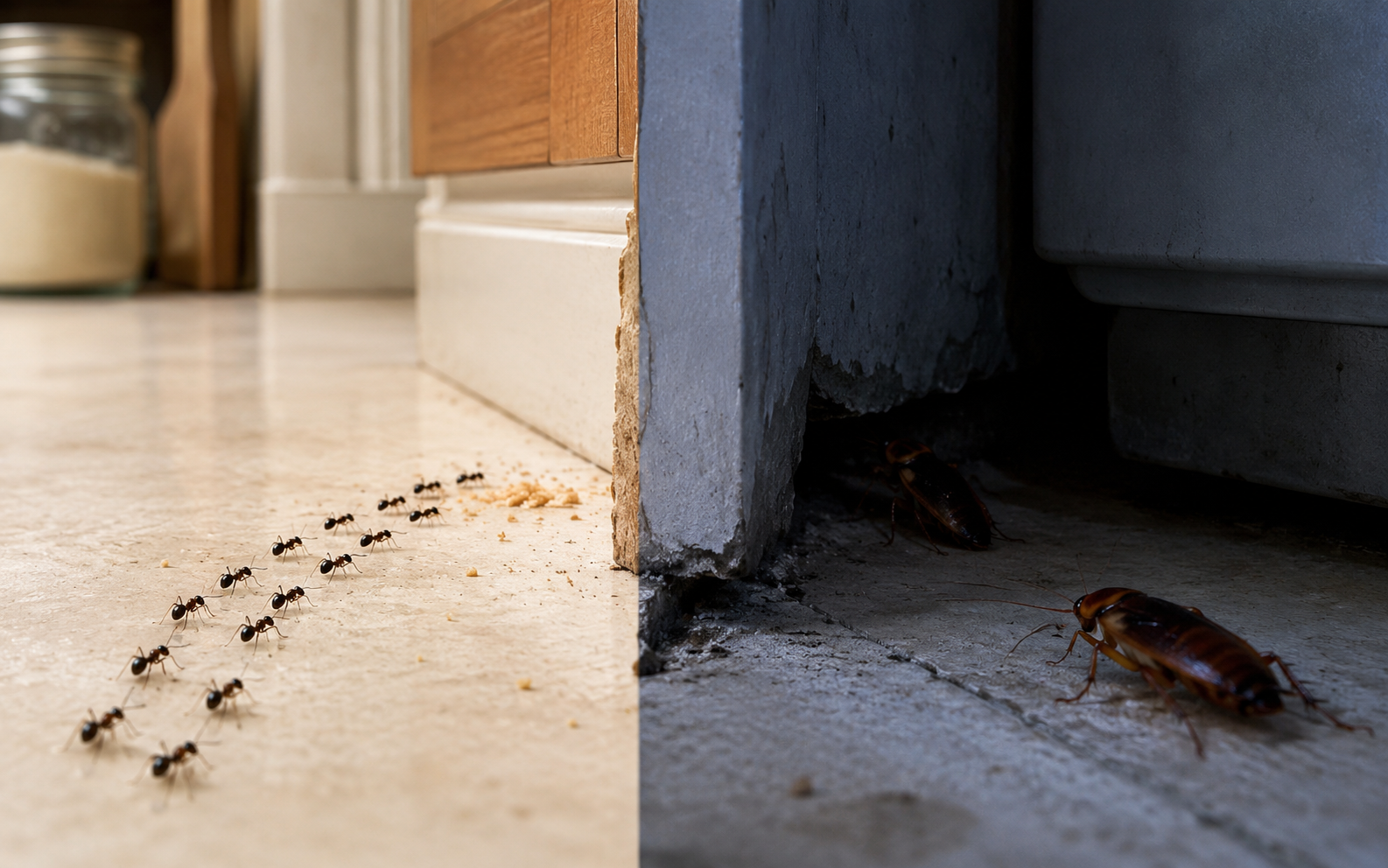
While ants and cockroaches often inhabit the same spaces, their behaviors reveal distinct patterns shaped by their needs. Cockroaches prefer dark, damp areas like behind appliances, while ants follow trails to transport food back to their colonies.
Both are opportunistic scavengers, but they avoid direct conflict due to differing activity times cockroaches at night and ants during the day. Roaches are larger and can easily escape from ants, allowing for coexistence without much direct conflict.
Ants might exploit cockroaches as a food source, particularly if they’re dead or weakened. This behavior is species-dependent; red imported fire ants, Argentine ants, and others may prey on roaches.
Ant trails indicate colony activity, while roaches leave behind droppings and odors. Shared environments lead to indirect competition rather than consistent predation, with both seeking food, water, and shelter.
How Ant Bites Feel vs. Cockroach Bites
Ever wondered how ant bites differ from cockroach bites? If an ant bites you, expect an immediate, sharp burning or stinging sensation, followed by intense itching and a red welt. This discomfort can last 4 to 6 hours.
Fire ants add to the misery with painful, pus-filled blisters that linger for days. Cockroach bites, on the other hand, are usually mild, causing minor skin irritation without the dramatic symptoms of ant bites.
Ant bites often need cold compresses and antihistamines to relieve itching, while cockroach bites rarely require such attention. If itching becomes severe, antihistamines or hydrocortisone cream can help.
Always avoid scratching, as it can worsen irritation or lead to infection, especially with ant bites.
Where Bites Commonly Appear
When it comes to where bites commonly appear, cockroaches have a preference for exposed skin. You might find bites on your face, hands, and feet areas that are often uncovered while you sleep.
The face, especially around the mouth and lips, is a frequent target. Your hands and fingers, including the skin around your fingernails, are also common sites, particularly if the skin is calloused.
Feet, with their exposed toes and calloused skin, are another favored spot for these unwelcome visitors.
During the night, your skin becomes more accessible, increasing the likelihood of bites. Cockroaches target areas like eyelashes and other exposed facial features, taking advantage of any opportunity to feed when food sources are scarce.
Stay aware of these common bite locations to identify potential issues.
Identifying Bite Sources: Ant Nests or Roach Infestations?
When you’re trying to figure out whether bites are from ants or roaches, look for specific clues around your home.
Ant nests often reveal themselves through visible trails, dirt mounds, or wood damage, while roach infestations are usually marked by droppings, musty odors, and hiding spots in warm, moist areas.
Inspecting these signs carefully can help pinpoint the true source of the problem.
Ant Nest Indicators
Ant nests can be tricky to locate, but spotting certain indicators makes it easier to identify them as the source of bites. Look for visible ant trails along walls, baseboards, and near moisture-rich areas like kitchens and sinks. These trails often lead directly to a nest.
Outdoors, check for small volcano-shaped mounds in pavement cracks or soil disturbances near sidewalks and garden beds.
Indoors, fine sawdust or wood shavings hint at carpenter ants, while small piles of dirt suggest excavation. Discarded ant wings or dead ants near windows signal swarm activity.
Moisture-damaged wood and faint rustling sounds inside walls also point to hidden nests. By observing these signs, you can determine if ants are the culprits behind your bites.
Roach Infestation Signs
While determining whether bites are from ants or a roach infestation, look for specific signs of cockroach activity.
Roach infestations often reveal themselves through clear indicators you can’t miss:
- Droppings: Look for pepper-like specks or coffee-ground dust along shelf edges, cabinet corners, and baseboards.
- Shed Skins: Find cast exoskeletons in hidden spots, signaling active growth and regular hiding.
- Egg Cases: Spot oothecae in appliance motors, under furniture, or inside stored boxes.
- Smears and Odor: Notice dark brown smear marks and a musty odor near wall-floor junctions and travel paths.
Spotting multiple signs, especially during the day, suggests a significant infestation.
Check warm, dark areas like kitchens and bathrooms for evidence.
Environmental Clue Assessment
Identifying whether bites are from ants or a cockroach infestation involves recognizing environmental clues linked to each pest.
Ants often enter through soil-contact points like foundation cracks, with trails leading from outdoor nests to kitchens or pet-food areas. Look for repeated ant movement along the same path and activity near soil, mulch, or damp wood.
Small soil mounds and loose dirt suggest ant nests near lawns or flower beds. Ants cluster around sugary spills or crumbs, often disappearing into cracks, which indicates foraging behavior.
In contrast, roach infestations are marked by droppings, egg casings, and musty odors, often found in dark, moist areas like under sinks or inside cabinets.
Spotting these signs helps differentiate between ant and cockroach sources.
Treatment and Care for Bites
When treating cockroach or ant bites, start by promptly cleaning the affected area with soap and water to remove dirt and bacteria.
Use mild soap with lukewarm water, and pat the skin dry with a clean towel.
To manage swelling and itchiness, here’s what you can do:
- Cold Compress: Apply a cold compress for 10–15 minutes every few hours to reduce swelling.
- Topical Treatments: Use antiseptic cream or hydrocortisone to lower infection risk and soothe itch.
- Oral Relief: Take antihistamines or pain relievers like ibuprofen for discomfort.
- Protection: Keep nails short, avoid scratching, and cover the bite with a bandage.
Monitor healing closely and maintain hygiene for best results.
When to Seek Medical Attention
If you experience signs of a severe allergic reaction like trouble breathing or facial swelling after a bug bite, seek emergency care immediately.
Watch for signs of infection, such as increased redness, warmth, or pus, and consult a doctor if these symptoms appear.
Don’t ignore worsening symptoms, especially if they affect high-risk areas like the face or throat.
Signs of Infection
While it might be tempting to dismiss a bite as just a minor annoyance, it’s crucial to recognize the signs of infection that warrant medical attention.
Watch for these key indicators:
- Redness extending beyond the bite site: If you notice the redness spreading, it could signal infection.
- Swelling increasing in size daily: Persistent swelling may indicate an immune response to bacteria.
- Warmth felt at touch point: Heat around the bite suggests inflammation and potential bacterial colonization.
- Pus or yellow fluid discharge: This is a clear sign of infection, often requiring medical intervention.
If these symptoms worsen, don’t hesitate to contact a healthcare professional to prevent further complications like tissue damage or systemic infection.
Severe Allergic Reactions
Experiencing a severe allergic reaction to cockroach exposure can be alarming, especially since anaphylaxis is a major concern.
If you encounter trouble breathing, swelling of the face or throat, hives, or dizziness after cockroach exposure, seek immediate medical attention. These symptoms suggest a potentially life-threatening reaction.
Cockroach allergens, like saliva and droppings, can provoke serious allergy and asthma symptoms. Rapid worsening of these signs requires urgent care.
Ordinary cockroach bites usually cause minor redness and swelling. However, systemic reactions indicate something more serious.
Reducing exposure to cockroaches is essential in managing allergies. For those with asthma, bronchodilators might be necessary.
Always be vigilant for severe symptoms, and don’t hesitate to get emergency help if they occur.
Frequently Asked Questions
Can Pets Be Bitten by Ants or Cockroaches?
Yes, your pets can be bitten by ants, causing pain, swelling, and irritation. Cockroach bites are less common but possible. Monitor your pet for signs of discomfort, and seek veterinary care if symptoms worsen or persist.
How Can I Prevent Ant or Cockroach Bites Indoors?
Seal entry points and store food in airtight containers to prevent ant or cockroach bites. Clean regularly and fix leaks to eliminate moisture. Use natural repellents like peppermint oil to disrupt scent trails and deter pests.
Do Certain Seasons Increase the Likelihood of Bites?
Yes, warmer months increase bite likelihood. Cockroaches are more active in spring and summer, while ants are defensive in heat or rain. Prevent bites by controlling moisture, sealing entry points, and maintaining cleanliness indoors.
Are Children More Susceptible to Bites Than Adults?
Yes, children are more susceptible to bites than adults. They spend more time on the floor and outdoors, increasing exposure. Their skin sensitivity and smaller size can make reactions appear larger and more inflamed.
Can Diet Influence the Likelihood of Being Bitten?
Diet doesn’t influence the likelihood of being bitten by cockroaches or ants. Bites happen more due to exposure and disturbance. Focus on controlling infestations, avoiding nests, and wearing protective clothing to minimize risk.
Conclusion
In identifying bites, focus on immediate reactions, symptoms, and where they appear. Ant bites usually sting and swell, often near nests, while cockroach bites are rare but can happen in infestations, often causing redness. Treat bites with care, using antihistamines or topical creams. If you experience severe reactions, seek medical attention promptly. Understanding the behavior of ants and cockroaches helps prevent future bites. Stay vigilant, and you’ll manage these pests effectively.
