
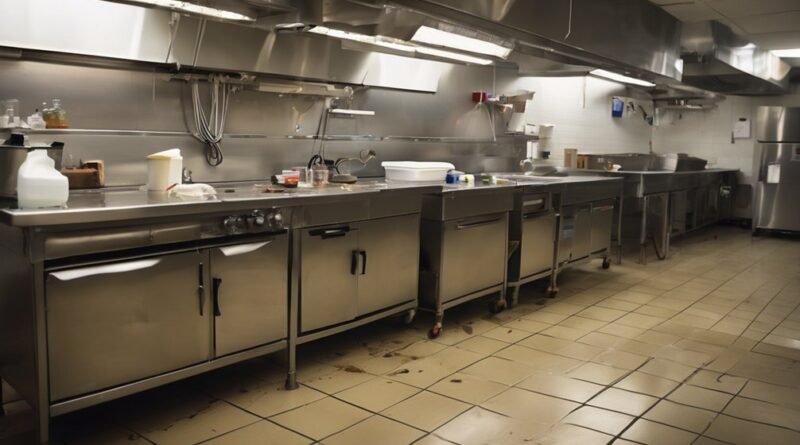
Cockroach Control for Businesses & Institutions
Cockroaches in a business setting create risks that go well beyond inconvenience — they threaten health, brand reputation, and regulatory compliance simultaneously. 78.4% of restaurants report at least one cockroach sighting annually without structured control measures in place, and commercial kitchens with regular cockroach treatments experience 85.3% fewer health inspection violations than those relying on reactive pest control alone. An Integrated Pest Management approach combining tight sanitation, vigilant monitoring, targeted chemical treatments, and regular professional service is the industry standard for commercial cockroach control. This guide covers identifying cockroach infestations in business environments, the key species to watch, health risks and compliance obligations, chemical treatments, IPM strategies, employee training, and how to budget for professional pest control services that protect your bottom line.
Key Takeaways
- Implement Integrated Pest Management: prioritize sanitation, exclusion, and monitoring to remove food, water, and harborage sources before deploying chemical treatments.
- Identify cockroach species — German, American, and peridomestic — to tailor treatment locations, bait selection, and follow-up schedules to the specific pest driving your infestation.
- Deploy sticky monitors near warm, moist hotspots; analyze counts weekly to locate nests and guide targeted interventions rather than broad spray applications.
- Rotate multiple gel baits every 90 to 120 days, pairing fast-acting formulations with IGRs; keep sprays and dusts physically separate from bait placements to prevent bait aversion.
- Businesses investing in integrated pest management see a 42.9% decrease in customer complaints related to pests compared to reactive treatment programs.
- Maintain compliance: document all treatments, verify licensed providers, and set service frequency by risk level to prevent violations and the costly business disruptions that follow.
Why Cockroach Control Matters in Commercial and Institutional Settings
Even when cockroaches aren’t visible, they jeopardize health, compliance, and your bottom line in commercial and institutional environments. They carry pathogens including Salmonella, E. coli, Listeria, and other bacteria on their bodies and in droppings — contaminating food, equipment, surfaces, and stored ingredients throughout your facility. Their droppings and shed skins trigger allergies and worsen asthma in employees and customers, creating ongoing occupational health risks, especially in restaurants, food processing facilities, and healthcare settings where vulnerable populations are present. Over 92.6% of businesses that implement proactive cockroach control maintain pest-free environments throughout the year — a dramatic contrast to the 78.4% of restaurants that report cockroach sightings annually without structured control programs.
Effective cockroach control prevents foodborne illnesses, contamination incidents, and helps businesses meet the health and safety regulations designed to protect public health and maintain operating licenses. Restaurant cockroach control follows the same foundational principles as all commercial settings but with tighter regulatory requirements and zero tolerance from health inspectors.
The regulatory and financial consequences of cockroach infestations extend well beyond the cost of treatment. Health codes require pest-free premises in all food handling, healthcare, and educational facilities — violations result in fines, mandatory temporary closures, mandatory professional extermination before reopening, and lasting reputational damage that drives customer loss and negative reviews. Operationally, infestations erode employee morale, productivity, and attendance as allergens and pathogens drive healthcare costs and absenteeism. Training staff on sanitation and preventive practices supports uninterrupted operations and occupational safety compliance. In food service and manufacturing environments, robust year-round pest control programs are required to maintain food safety audits, third-party certifications, and product quality standards.
Identifying Cockroach Infestations in Business Environments
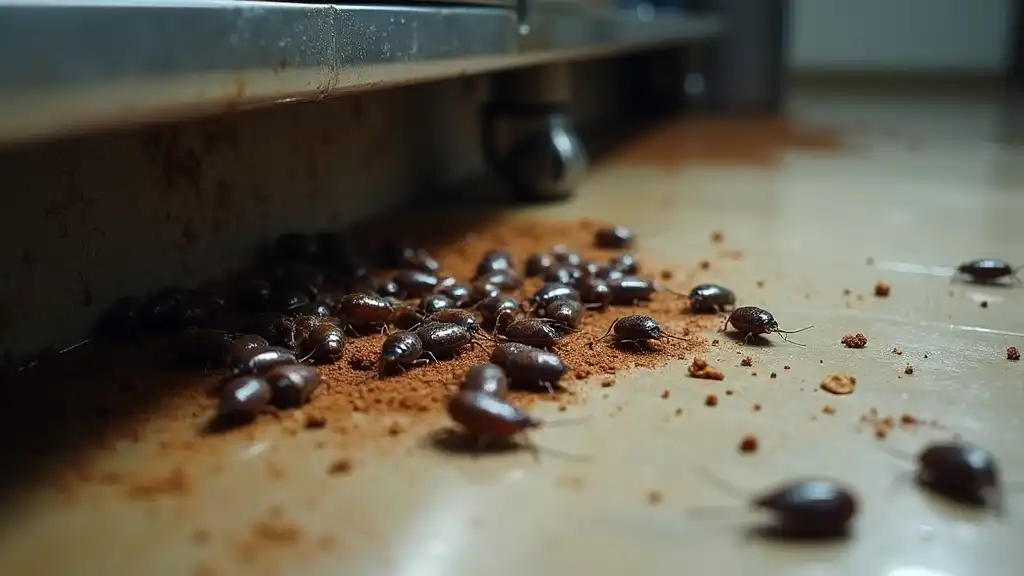
Early detection is the most important factor in limiting the scope and cost of cockroach infestations in commercial settings. The same signs that indicate infestation in residential settings appear in businesses — but the consequences of missing them are significantly greater when customers, health inspectors, and regulatory compliance are involved.
Signs of Cockroach Infestation in Commercial Settings
The primary signs of a cockroach infestation in a business include dark droppings resembling coffee grounds or cylindrical ridged pellets near food preparation areas, storage rooms, and along baseboards; a persistent musty oily odor in enclosed spaces near drains, sinks, and equipment; light-brown oval egg cases (oothecae) tucked inside cabinet gaps, behind appliances, and in wall voids; translucent shed skins in corners and under equipment indicating active nymph development; greasy smear marks along walls and baseboards from regular cockroach travel routes; and daytime sightings of live cockroaches — the most serious sign, indicating an overcrowded, severe infestation. Any employee reporting a cockroach sighting during business hours should trigger an immediate inspection response, not a wait-and-see approach. Effective cockroach control reduces infestation rates by approximately 63.7% within six months when implemented correctly — early detection determines how quickly that result can be achieved.
Commercial Inspection Hotspots
In commercial kitchens and food service facilities, the highest-risk inspection areas are behind and beneath refrigerators, stoves, dishwashers, and food prep equipment; inside cabinet bases and drawer tracks; around floor drains and sink plumbing; in dry goods storage rooms; and along wall-floor junctions near heat sources. In office buildings and retail environments, focus inspection on break rooms, kitchen areas, restrooms, janitorial closets, and any areas with food storage. In manufacturing and industrial facilities, inspect around machinery bases, production line equipment, drains in wet processing areas, and loading dock areas where incoming materials may introduce cockroaches. Use a flashlight and mirror during inspections to probe harborage zones not visible to the naked eye — most cockroach activity in commercial settings occurs in inaccessible spaces behind and beneath equipment that are never cleaned during routine sanitation.
Key Species to Watch: German, American, and Peridomestic Cockroaches
While cockroaches share common health risks and control principles, managing them effectively in commercial settings requires identifying which species are present. German, American, and peridomestic species each have distinct behaviors, preferred harborage environments, and lifecycle timelines that determine the most effective treatment approach for each infestation type. Accurate cockroach species identification is the foundation of effective commercial pest control.
German Cockroach: The Primary Commercial Pest
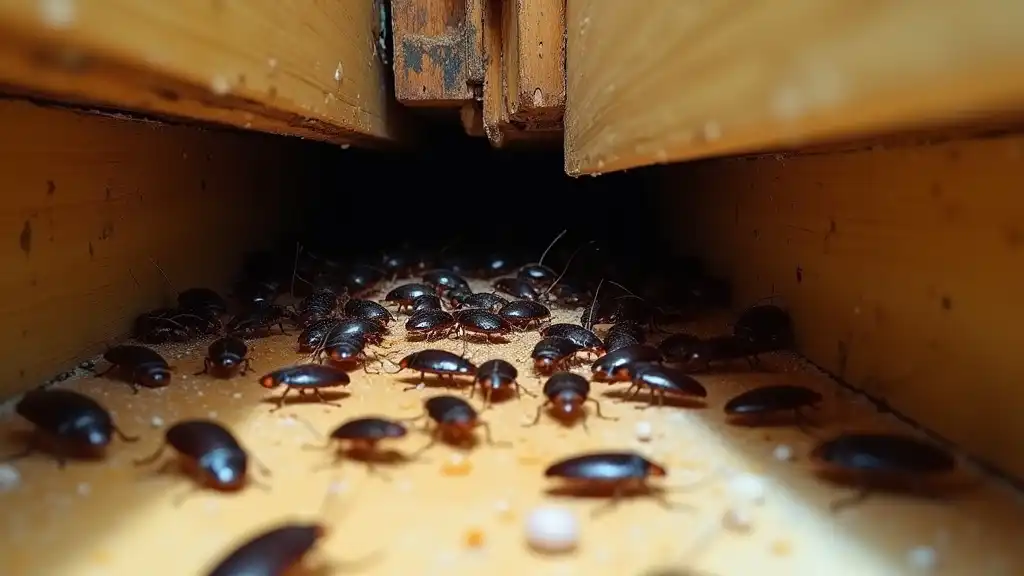
German cockroaches are small — 0.5 to 0.625 inches — tan with two parallel black stripes behind the head, and breed faster than any other indoor cockroach species. Females carry oothecae containing 20 to 50 embryos; eggs hatch in approximately 28 days under optimal conditions, and nymphs reach adulthood in as little as 60 days. A single female and her descendants can produce thousands of offspring within six months under ideal commercial kitchen conditions. German cockroaches concentrate in warm, humid interior spaces — kitchens, bathrooms, tight cracks near stoves, refrigerators, and sinks — and breed exclusively indoors, making complete eradication within the facility the only effective strategy. Their droppings and shed skins are primary sources of cockroach allergens that trigger allergies and asthma in employees and customers. German cockroach infestations require gel bait and IGR treatment combined with rigorous sanitation — this species cannot be controlled by sanitation alone once a colony is established.
American Cockroach: The Sewer Invader
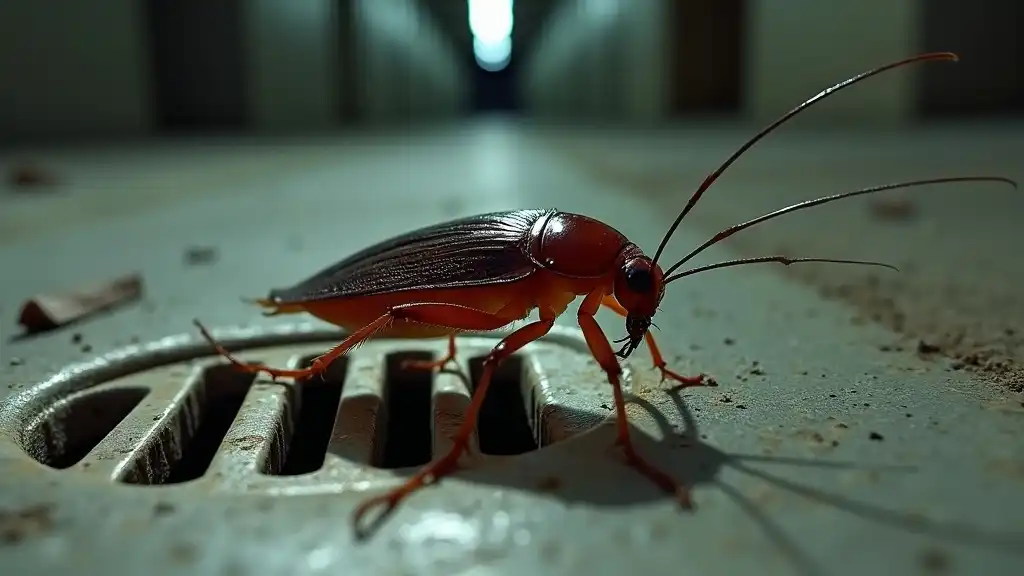
American cockroaches are larger — 1.5 to 2 inches — reddish-brown with a yellowish figure-eight marking behind the head. They favor damp, dark areas in basements, boiler rooms, floor drains, and sewers, and enter commercial buildings through utility penetrations, floor drains, and loading dock gaps. American cockroaches develop more slowly than German cockroaches — eggs hatch in approximately six weeks, and adulthood takes up to a year — but their sewer-connected entry routes mean structural exclusion of drains and pipe penetrations is as critical as chemical treatment. In warm temperatures, American cockroaches can fly short distances, allowing entry through open doors and loading dock areas. Their presence in a commercial facility often indicates structural gaps that require sealing as a primary control measure alongside chemical treatment.
Peridomestic Species: Outdoor Reservoirs
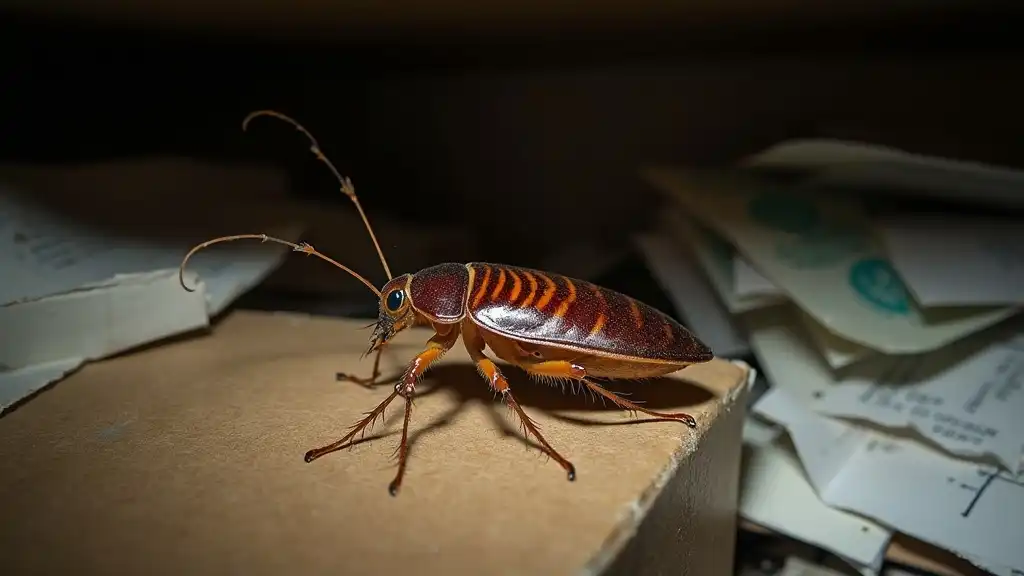
Peridomestic cockroach species including brown-banded cockroaches, Turkestan cockroaches, and smokybrown cockroaches act as outdoor reservoirs that colonize landscaping, mulch beds, dumpster areas, and utility zones adjacent to commercial buildings, creating ongoing infestation pressure from the building exterior. Brown-banded cockroaches prefer drier indoor environments including offices, storage rooms, and areas with electronics — their egg cases are glued to walls, ceilings, and furniture rather than deposited near moisture sources, requiring broader inspection coverage than kitchen-focused species. Turkestan cockroaches are increasingly common in southwestern US commercial properties and prefer outdoor harborage near utility meters, water boxes, and landscape irrigation equipment. Managing peridomestic species requires exterior perimeter treatment and landscape management alongside interior control programs.
Health Risks Associated with Cockroaches in Business Settings
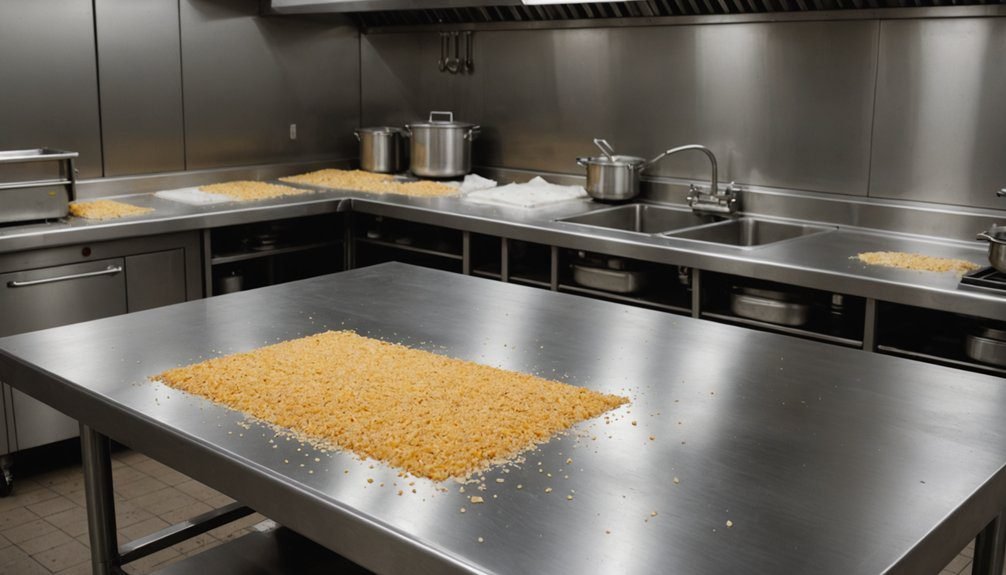
The health risks cockroaches create in business environments are more severe than in residential settings because of the scale of food handling, the number of people exposed, and the legal obligations that apply to commercial operations. Cockroaches spread bacteria including Salmonella, E. coli, Listeria, and Staphylococcus by crawling from sewage, garbage, and decaying matter to food preparation surfaces, stored ingredients, dishes, and utensils. A single cockroach traversing a prep surface can contaminate dozens of meals before any visible sign of infestation is detected — making proactive control rather than reactive response the only viable commercial strategy.
Beyond foodborne illness risk, cockroach allergens — from droppings, shed skins, saliva, and body parts — accumulate in commercial spaces and trigger allergic reactions and asthma attacks in employees and customers. Long-term staff working in cockroach-infested commercial kitchens face elevated respiratory sensitization risks and increased healthcare costs that affect productivity and worker compensation claims. Understanding the full scope of cockroach health risks and treatment options is essential for making informed decisions about commercial pest control investment levels.
Integrated Pest Management: Sanitation, Monitoring, and Targeted Treatments
Integrated Pest Management replaces reactive chemical spraying with a systematic program that addresses the root conditions driving infestation before deploying targeted chemical treatments. Over 92.6% of businesses implementing proactive cockroach control maintain pest-free environments year-round — IPM is the methodology behind these results. You start by tightening sanitation and exclusion, then establish monitoring to understand where activity is concentrated, then deploy targeted treatments at confirmed harborage points.
Sanitation and Exclusion
Start with two fundamentals: sanitation removes what attracts cockroaches, and exclusion blocks how they enter. Enforce daily cleaning to remove crumbs, grease, and food residues — especially in kitchens, prep lines, dining areas, and break rooms. Fix all plumbing leaks immediately, dry mops nightly, and keep storage and utility rooms consistently dry. Use sealed liners and tight-lidded trash receptacles, position waste stations away from building entries, and empty garbage multiple times per service period during peak hours. Declutter thoroughly — eliminate stacked cardboard boxes, unused equipment, and clutter under and behind active equipment, all of which provide primary harborage for German cockroach colonies.
Then harden the building structure. Seal all cracks, utility gaps, and wall and floor penetrations with commercial-grade silicone caulk. Install door sweeps and weather stripping on all exterior doors, add screened vents, and use metal flashing at confirmed cockroach travel routes. Seal all pipe penetrations through floors, walls, and ceilings — these are primary movement corridors allowing cockroaches to spread between floors and building sections in multi-story commercial facilities. Train all staff so sanitation practices actively support structural exclusion and reduce the pesticide applications required for ongoing control. See our guide to professional cockroach treatment options for a complete comparison of commercial treatment methods and their costs.
Monitoring and Mapping
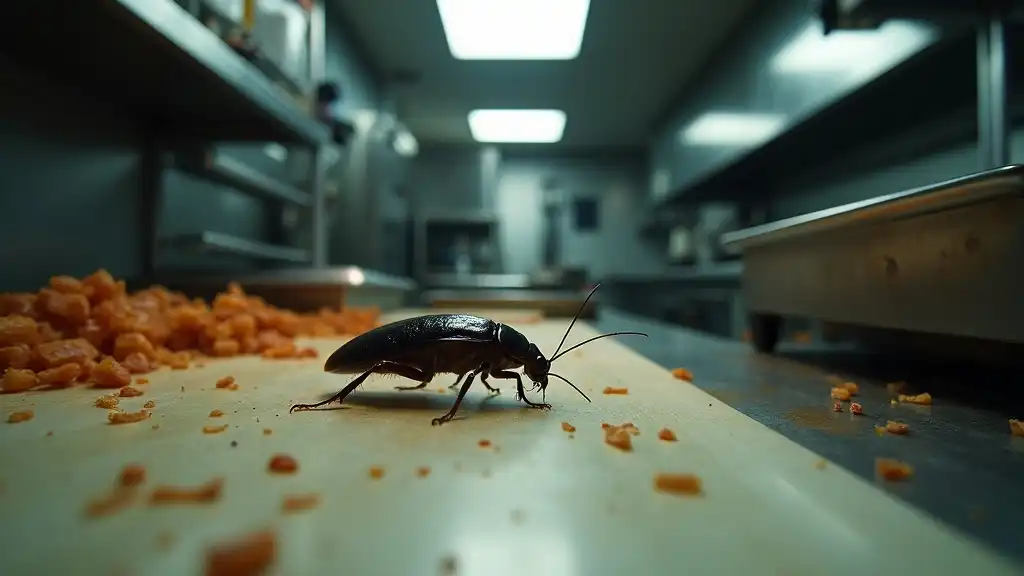
With sanitation and exclusion in place, systematic monitoring reveals where cockroaches persist and how populations are trending. Place sticky monitoring traps along walls, in corners, and at structural junctions in all high-risk areas: behind refrigerators and stoves, in food storerooms, inside cabinet bases, near floor drains, in laundry rooms, custodial closets, electrical rooms, and staff lounges. Prioritize warm spots near ovens, junction boxes, and dishwashing stations where German cockroach populations concentrate at highest density. Bait monitors with food attractants or aggregation pheromones to improve capture rates. Number and date each trap, map every placement location, and record captures weekly for the first two to four weeks of a new program. Analyze trends: rising counts signal missed harborage or treatment failures; population decline across multiple consecutive counts confirms program effectiveness. Rising nymph counts specifically indicate active breeding within 5 to 10 feet of the capture trap, which directs targeted bait placement to the correct location.
Targeted Bait Rotations
Rotate gel baits every 90 to 120 days to align treatment timing with cockroach generational turnover and prevent the resistance and bait aversion that make infestations progressively harder to control over time. Switch active ingredients and IRAC mode of action with each rotation — nervous system disruptors, mitochondrial inhibitors, and insect growth regulators represent distinct IRAC classes that should be cycled sequentially. Run two baits with distinct modes of action simultaneously to disrupt both resistance development and associative learning that drives bait aversion in established German cockroach populations. Pair fast-acting knockdown baits with IGR-containing formulations to suppress reproduction in surviving nymphs while adults are being eliminated — this combination approach prevents population rebound between professional service visits.
| Rotation Principle | Action Required | Why It Matters |
|---|---|---|
| Timing | Rotate every 90 to 120 days | Aligns with German cockroach generational turnover |
| Mode of action diversity | Alternate IRAC chemical classes | Prevents cross-resistance development |
| Matrix variety | Avoid glucose-based matrices if aversion suspected | Overcomes bait aversion in established populations |
| Dual approach | Deploy two distinct bait formulations simultaneously | Maximizes coverage across aversion variants |
| IGR integration | Pair knockdown bait with IGR-containing formulation | Suppresses reproduction while adults are eliminated |
Apply gel baits sparingly in cracks, crevices, and behind equipment — never on open surfaces. Place bait stations in cabinets, under sinks, near appliances, and along confirmed roach travel routes identified by monitoring trap data. Never spray near bait placements — repellent residues from sprays drive cockroaches away from baits, dramatically reducing effectiveness. Maintain sanitation, monitor with glue boards continuously, and reapply baits promptly when consumption or trap counts indicate ongoing activity.
Chemical Treatments and Pesticides for Commercial Cockroach Control
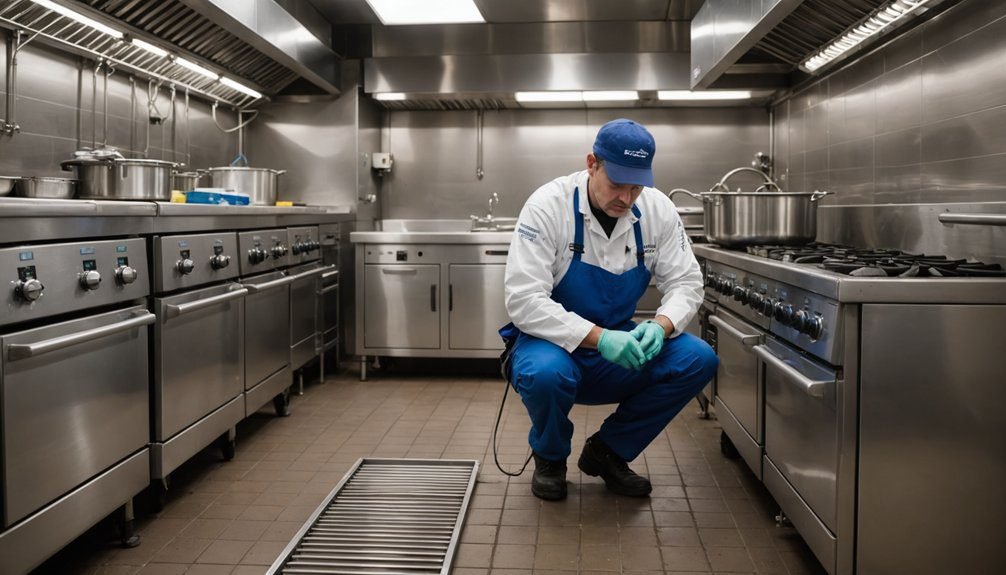
Chemical treatment in commercial settings requires a different product selection and application approach than residential control — food safety regulations, employee and customer exposure concerns, and the scale of treatment areas all influence which chemicals are appropriate and how they must be applied. All pesticide applications in commercial food handling, healthcare, and institutional facilities must comply with EPA label requirements and applicable state and local regulations governing commercial pesticide use.
Commercial-Grade Gel Baits
Commercial-grade gel baits are the primary chemical treatment tool for cockroach control in business environments. Products including Advion, Maxforce, Vendetta, and Avert are applied in small precise amounts directly inside cracks, crevices, cabinet hinges, and wall voids using professional bait guns — keeping active ingredient placement away from food contact surfaces, customer areas, and employee workspaces. Commercial formulations use active ingredients including indoxacarb, fipronil, abamectin, and thiamethoxam at concentrations significantly higher than consumer products, delivering faster and more complete colony-level kill. Indoxacarb gel treatments achieve 88 to 100% mortality in German cockroach populations within 3 to 7 days when applied by experienced technicians in correctly identified harborage locations. Always rotate active ingredients and IRAC classes between service visits to prevent resistance development in established commercial cockroach populations.
Insect Growth Regulators (IGRs) in Commercial Settings
IGRs are essential components of commercial cockroach control programs, particularly for facilities with recurring German cockroach infestations. Products containing hydroprene, methoprene, or pyriproxyfen disrupt juvenile hormone signaling, preventing nymphs from maturing into reproductive adults and causing adults exposed during egg production to lay non-viable oothecae. IGRs do not provide rapid knockdown but produce sustained population suppression over 60 to 90 days per application — bridging the interval between professional service visits. They are low-toxicity and can be applied as aerosol formulations inside wall voids and structural harborage zones in commercial settings with minimal exposure concerns for staff and customers when applied per label.
Residual Sprays and Dust Formulations
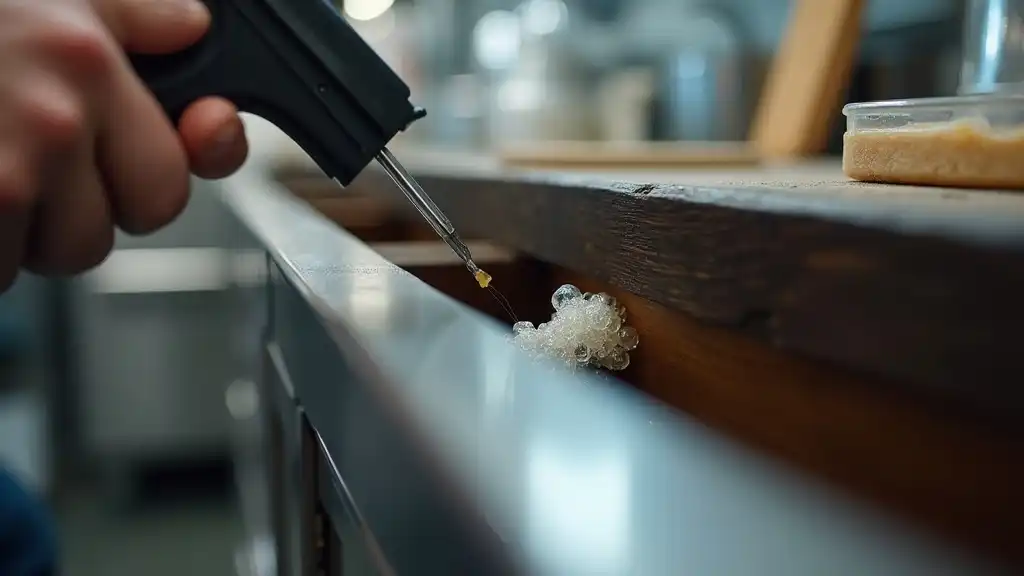
Residual insecticide sprays and dust formulations have specific complementary roles in commercial cockroach control programs. Boric acid dust and diatomaceous earth applied inside wall voids, under equipment bases, and in crawl spaces provide long-term passive control without ongoing reapplication requirements. Pyrethroid-based residual sprays applied to non-food exterior perimeters, utility areas, and non-occupied structural spaces provide knockdown of peridomestic species attempting entry. Critical rule: never apply residual sprays in the same locations as gel bait placements — spray residues repel cockroaches from bait stations, negating the primary treatment tool. Reserve sprays for locations where baiting is not possible and apply them per label using commercial-grade application equipment that allows precise delivery to targeted surfaces.
Professional Tools and Monitoring Tactics
Smart monitoring traps are the data foundation of effective commercial cockroach control. Commercial-grade dual-entry adhesive monitors with aggregation pheromone or food-based lures capture adults, nymphs, and occasionally oothecae without chemical exposure concerns in customer or food preparation areas. Discreet low-profile designs protect brand standards in customer-facing areas while still providing accurate population data. Place traps along walls, under shelves, inside cabinet bases, behind equipment, and near machinery using consistent placement locations that allow trend analysis between service visits. Label each unit with date, location, and technician initials to chart population trends over time, identify emerging harborage zones, and verify that sanitation and structural exclusion fixes are producing results. Year-round monitoring detects seasonal population rebounds before they become visible infestations — providing the early warning that allows targeted intervention rather than emergency treatment.
Employee Training and Awareness

The most sophisticated commercial pest control program fails without staff who execute it correctly every shift. Employee training is not a one-time event — it is an ongoing operational standard that requires role-specific content, regular reinforcement, and clear reporting protocols that make pest sightings immediately actionable.
Core Training Content by Role
Kitchen and food service staff need training on cockroach biology and lifecycle to understand why rapid infestation growth makes immediate reporting critical. Cover sanitation protocols specifically tied to cockroach prevention: removing food debris after every service period, cleaning behind and beneath all equipment weekly, managing waste correctly, and storing dry goods in sealed containers rather than original cardboard packaging. Facilities and maintenance staff need training on structural exclusion — identifying, logging, and reporting all gaps, cracks, and moisture issues as part of their daily operational rounds. Management and supervisory staff need training on what constitutes a reportable pest sighting, how to document it, and who to contact to ensure same-day professional response when needed. All staff should be able to identify the primary signs of cockroach infestation — droppings, smear marks, egg cases, shed skins, and musty odor — so that early evidence is never dismissed as routine kitchen residue.
Reporting Protocols and Response Procedures
Establish written reporting protocols that specify exactly what employees should do when they observe cockroach signs or sightings. The protocol should require immediate notification to the designated pest control coordinator, documentation of the sighting time, location, and evidence type with a photograph if possible, removal of food from the immediately affected area, and contact with your licensed pest control provider for same-day inspection if live roaches are seen during operating hours. Train staff never to apply consumer-grade sprays in response to sightings — aerosol treatments scatter cockroaches into walls and voids, contaminate food surfaces, and interfere with professional baiting programs. Clear, documented reporting protocols also protect businesses from liability by demonstrating that management responded promptly and appropriately to every pest sighting report.
Hiring Professional Pest Control Services
Professional pest control services are not optional for commercial cockroach control in food service, healthcare, educational, or high-traffic retail settings — they are a legal and operational requirement. Commercial kitchens with regular professional cockroach treatments experience 85.3% fewer health inspection violations than those relying on in-house or consumer-grade control. Selecting the right provider for your specific industry requires evaluation criteria beyond price and availability.
When selecting a commercial pest control provider, require that the company holds current state commercial pesticide applicator licenses, has documented experience with your specific facility type and industry, uses IPM-based programs rather than scheduled broadcast spray treatments, provides detailed written service reports after every visit including products applied, application locations, EPA registration numbers, and technician license numbers, and is prepared to comply with your industry’s specific regulatory requirements for pesticide documentation and notification. Interview prospective providers about their bait rotation protocols, monitoring data reporting, and response procedures for emergency sightings — providers who default to scheduled spray calendars rather than data-driven targeted applications are not appropriate for commercial food handling or healthcare environments.
Compliance, Health Risks, and Reducing Liability
Align your commercial cockroach control program with health, safety, and documentation standards before deploying any treatment — compliance documentation protects you from regulatory action and demonstrates due diligence if a customer or employee complaint leads to legal action. Verify all providers’ commercial pesticide applicator licenses, require certified pesticide handlers for all applications, and conduct risk assessments for both pest activity and chemical application before service visits. Maintain PPE availability in treated areas, post required signage after applications, brief staff on re-entry intervals, and implement chemical notification procedures required by state regulations — particularly in food service, healthcare, and educational settings where zero-tolerance standards frequently apply.
Keep complete records: treatment plans, pesticide use logs with product names and EPA registration numbers, monitoring data and trap counts, equipment and product safety data sheets (SDS), and documented inspection findings and corrective actions. Digitize all service reports for accuracy and audit readiness. Map all bait station locations and document each placement, application date, and reapplication or removal date. Report any pesticide incidents or spills immediately and disclose application amounts and locations as required by your state pesticide regulations and facility operating license conditions.
Budgeting and ROI: Service Frequency, Resistance Management, and Long-Term Savings
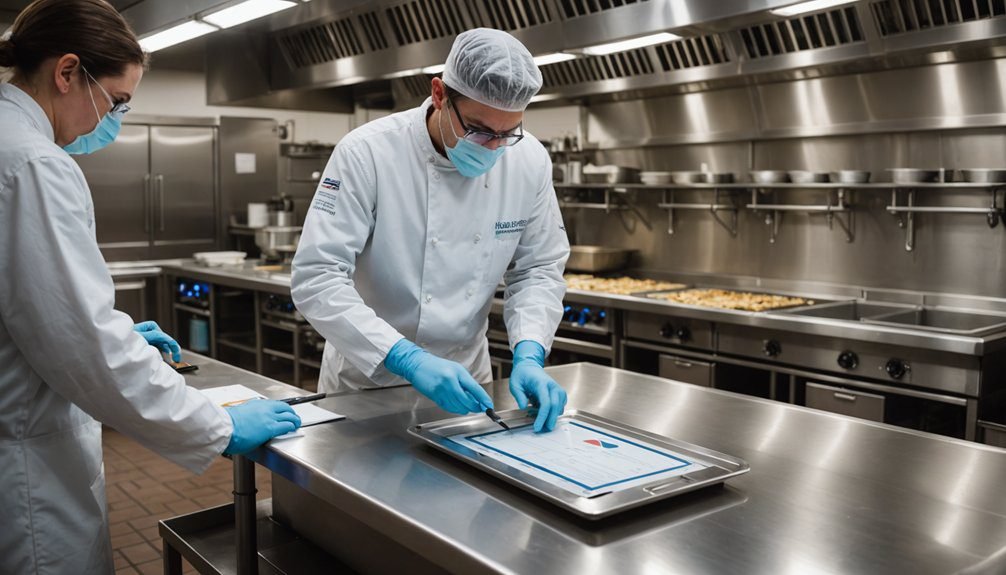
Tie service frequency to risk level before setting a pest control budget — spending uniformly across all facilities regardless of infestation pressure wastes resources in low-risk locations while underinvesting in high-risk ones. Schedule quarterly services for low-risk or seasonal facilities with solid prevention programs and no history of infestation; increase to monthly or biweekly for food service operations, dense urban locations, humid climate facilities, or any location with a recent infestation. Book service consistently on a defined schedule to disrupt cockroach breeding cycles — irregular reactive treatment allows populations to rebound between visits.
| Risk Level | Typical Frequency | Budget Rationale |
|---|---|---|
| Low (office, retail) | Quarterly | Maintains control at lowest steady cost |
| Moderate (mixed-use, storage) | Every 6 to 8 weeks | Balances infestation pressure with prevention cost |
| High (food service, urban, humid) | Monthly to biweekly | Prevents outbreaks and health code violations |
| Post-infestation recovery | Intensive, then taper over 90 days | Stops rebound, protects reputation during recovery |
Control resistance to protect program ROI. Rotate chemical classes, combine gel baits with IGRs and heat treatments where appropriate, and adjust the program based on monitoring data rather than fixed calendars. Work with IPM-focused providers who document treatment efficacy with monitoring data and pivot tactics when results plateau. Preventive programs reduce health code citations, customer churn from negative reviews, property damage from large infestations, and operational downtime — all costs that dwarf routine professional service fees. The 42.9% decrease in pest-related customer complaints reported by businesses implementing IPM represents a direct bottom-line benefit that far exceeds the incremental cost of systematic monitoring and targeted treatment over reactive spray programs.
Frequently Asked Questions About Cockroach Control for Businesses
How do I prevent cockroaches in my business?
Preventing cockroaches in a business requires eliminating the three conditions that sustain infestations: food access, moisture, and harborage. Enforce daily sanitation in all food preparation, storage, and waste areas. Fix all plumbing leaks immediately and keep surfaces dry. Seal all structural gaps including cracks in walls, floors, pipe penetrations, door gaps, and window frames. Store all food in airtight containers and manage waste in sealed, regularly emptied receptacles. Implement a systematic monitoring program with sticky traps in high-risk areas to detect early activity before populations establish. Over 92.6% of businesses implementing proactive control programs maintain pest-free environments year-round.
How often should businesses schedule cockroach treatments?
Service frequency should be determined by risk level. Food service, healthcare, and high-traffic urban locations should schedule monthly to biweekly professional service. Moderate-risk facilities including mixed-use commercial and warehouse properties typically require service every 6 to 8 weeks. Low-risk office and retail locations can maintain quarterly professional service with strong in-house sanitation and monitoring programs. During or immediately following an active infestation, intensive weekly or biweekly service is required until monitoring data confirms population elimination, after which the program can taper to maintenance frequency.
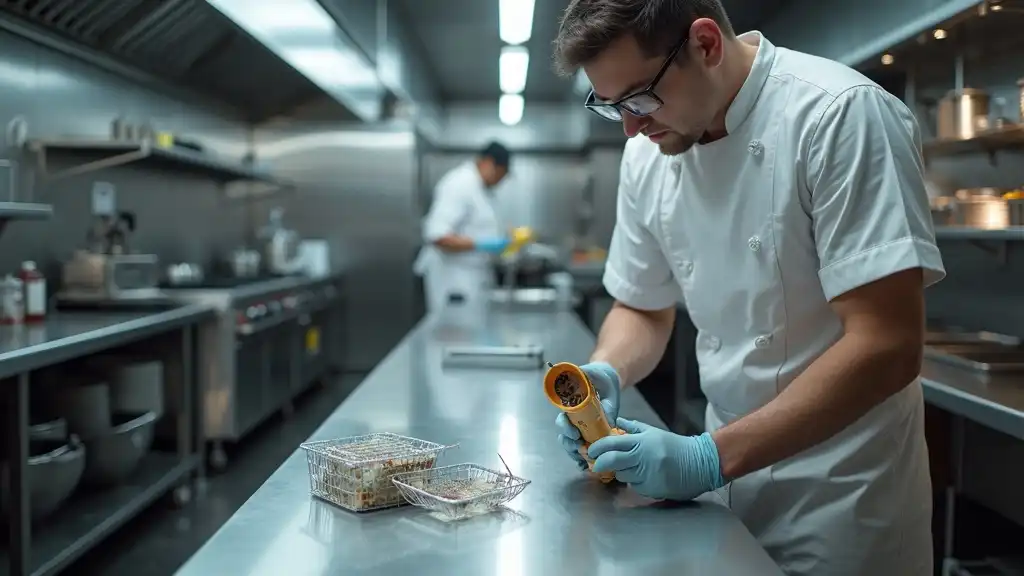
Can cockroaches impact business health inspections?
Yes — cockroach findings during health inspections are classified as critical violations in most jurisdictions, meaning they can result in mandatory immediate closure, required professional extermination before reopening, significant fines, and permanent damage to your public inspection record. Commercial kitchens with regular professional cockroach treatments experience 85.3% fewer health inspection violations than those relying on reactive pest control. A documented IPM program with treatment records, monitoring logs, and corrective action documentation is the strongest defense against regulatory action when pest evidence is found during an inspection.
What are common signs of a cockroach infestation in businesses?
Signs of a cockroach infestation in a business setting include dark droppings resembling coffee grounds near food storage and prep areas, a musty oily odor near drains and enclosed equipment spaces, egg cases found in cabinet gaps and wall voids, translucent shed skins under equipment, smear marks along baseboards and walls, and any daytime sightings of live cockroaches — the most serious sign indicating severe overcrowding. Any employee report of a cockroach sighting during operating hours should trigger an immediate inspection and same-day contact with your licensed pest control provider.
How reliable are DIY solutions for business cockroach control?
DIY cockroach control is not appropriate for commercial food handling, healthcare, or high-traffic retail environments for several reasons. Consumer-grade products lack the active ingredient concentrations needed to effectively address established commercial infestations. DIY application lacks the precision equipment needed to deliver treatments into wall voids, pipe chases, and structural harborage zones where commercial cockroach colonies establish. DIY programs do not produce the regulatory documentation required by health departments and food safety auditors. For commercial settings, professional licensed pest control services are a legal and operational requirement — not an upgrade over DIY. For low-risk office environments, maintaining strong sanitation and monitoring programs alongside quarterly professional service is the appropriate commercial approach.
Are there regulations for pest control in businesses?
Yes — commercial pest control in businesses is subject to federal, state, and local regulations that are significantly more stringent than residential requirements. All pesticide applications in commercial food handling facilities must comply with FIFRA requirements and applicable state regulations, including use of EPA-registered products applied by licensed commercial applicators. Food service operations are subject to FDA Food Code requirements mandating pest-free facilities and documented pest control programs. Healthcare facilities face additional Joint Commission and CMS requirements for pest control documentation and notification. Manufacturing facilities subject to third-party food safety audits including SQF, BRC, and FSSC 22000 must maintain complete pest control records as a certification requirement. Verify that your pest control provider holds the appropriate commercial applicator licenses for your state and facility type before signing any service contract.
{
“@context”: “https://schema.org”,
“@type”: “FAQPage”,
“mainEntity”: [
{
“@type”: “Question”,
“name”: “How do I prevent cockroaches in my business?”,
“acceptedAnswer”: {
“@type”: “Answer”,
“text”: “Preventing cockroaches in a business requires eliminating food access, moisture, and harborage. Enforce daily sanitation in food preparation and storage areas. Fix all plumbing leaks immediately. Seal structural gaps including cracks, pipe penetrations, and door gaps. Store food in airtight containers and manage waste in sealed receptacles. Implement systematic monitoring with sticky traps in high-risk areas. Over 92.6% of businesses implementing proactive control programs maintain pest-free environments year-round.”
}
},
{
“@type”: “Question”,
“name”: “How often should businesses schedule cockroach treatments?”,
“acceptedAnswer”: {
“@type”: “Answer”,
“text”: “Food service, healthcare, and high-traffic urban locations should schedule monthly to biweekly professional service. Moderate-risk facilities typically require service every 6 to 8 weeks. Low-risk office and retail locations can maintain quarterly professional service with strong sanitation and monitoring. During active infestations, intensive weekly service is required until monitoring data confirms elimination. Businesses investing in integrated pest management see a 42.9% decrease in customer pest complaints.”
}
},
{
“@type”: “Question”,
“name”: “Can cockroaches impact business health inspections?”,
“acceptedAnswer”: {
“@type”: “Answer”,
“text”: “Yes. Cockroach findings during health inspections are critical violations that can result in mandatory closure, required professional extermination before reopening, fines, and permanent damage to public inspection records. Commercial kitchens with regular professional cockroach treatments experience 85.3% fewer health inspection violations. A documented IPM program with treatment records and monitoring logs is the strongest defense against regulatory action.”
}
},
{
“@type”: “Question”,
“name”: “What are common signs of a cockroach infestation in businesses?”,
“acceptedAnswer”: {
“@type”: “Answer”,
“text”: “Signs include dark droppings resembling coffee grounds near food storage and prep areas, a musty oily odor near drains and equipment, egg cases in cabinet gaps and wall voids, translucent shed skins under equipment, smear marks along baseboards, and daytime sightings of live cockroaches. Any employee report of a sighting during operating hours should trigger immediate inspection and same-day contact with a licensed pest control provider.”
}
},
{
“@type”: “Question”,
“name”: “Are there regulations for pest control in businesses?”,
“acceptedAnswer”: {
“@type”: “Answer”,
“text”: “Yes. Commercial pest control is subject to federal, state, and local regulations more stringent than residential requirements. All applications in food handling facilities must comply with FIFRA and state regulations using EPA-registered products applied by licensed commercial applicators. Food service operations must meet FDA Food Code requirements. Manufacturing facilities subject to food safety audits must maintain complete pest control records as a certification requirement.”
}
},
{
“@type”: “Question”,
“name”: “How do businesses identify a cockroach problem early?”,
“acceptedAnswer”: {
“@type”: “Answer”,
“text”: “Early detection requires systematic monitoring with sticky traps placed in high-risk areas — behind refrigerators, inside cabinet bases, near floor drains, and in storage rooms. Check traps weekly and log capture counts by location and life stage. Train all employees to recognize and immediately report signs including droppings, smear marks, egg cases, shed skins, and musty odor. Effective cockroach control reduces infestation rates by approximately 63.7% within six months when started early.”
}
}
]
}
