
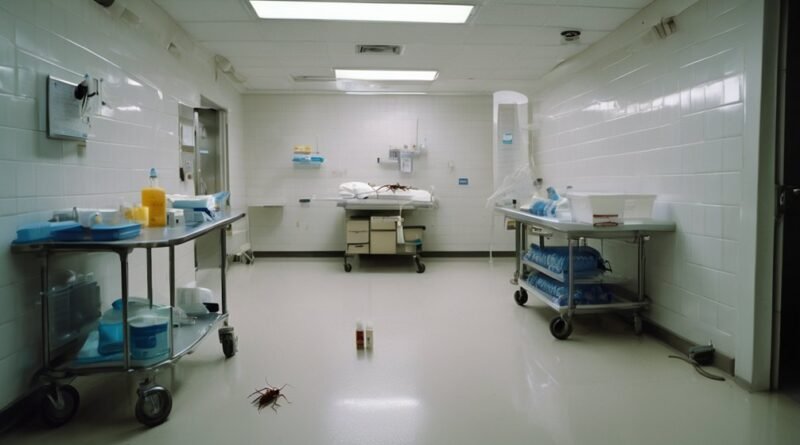
Cockroach Risks in Hospitals & Healthcare Facilities
Cockroaches in hospitals and healthcare facilities create risks that go far beyond the standard pest control concern. They mechanically spread pathogens like E. coli, Klebsiella pneumoniae, and Pseudomonas aeruginosa from drains, waste rooms, and food preparation areas directly into patient zones — and approximately 28.7% of hospitals report cockroach infestations annually. Warm, humid clinical environments help them thrive, and up to 96.6% of cockroaches collected in hospital settings carry diverse bacterial loads, frequently including multidrug-resistant strains that complicate treatment and extend patient stays. Their allergens trigger asthma and allergic reactions in vulnerable patients and staff. This guide covers the common cockroach species found in hospitals, the diseases they spread, how they contaminate medical equipment and patient areas, where infestations originate, how to detect their presence, and the specific IPM and sanitation protocols that protect patient safety and regulatory compliance.
Key Takeaways
- Cockroaches mechanically spread pathogens including E. coli, Pseudomonas aeruginosa, and Klebsiella pneumoniae across wards and kitchens, increasing healthcare-associated infection risk at every contact point.
- Up to 96.6% of cockroaches collected in hospital environments carry diverse bacterial loads, often including multidrug-resistant strains, complicating antibiotic treatment and prolonging patient stays.
- Fecal contamination of surfaces and food service areas creates fecal-oral transmission routes, including for enteric pathogens, Salmonella, and norovirus.
- Cockroach contamination increases the risk of antibiotic-resistant infections by approximately 18.3% in healthcare settings — a direct patient safety and treatment cost consequence.
- Cockroach allergens from feces, shed skins, and body fragments trigger asthma and allergic reactions in sensitized patients and staff, adding morbidity in already vulnerable patient populations.
- Around 62% of hospital staff report spotting cockroaches in patient areas at least once a month — making systematic surveillance and rapid-response pest management a clinical infection control priority.
Common Cockroach Species in Hospitals

Accurate species identification in hospital environments determines the most effective surveillance placement, treatment approach, and structural exclusion priorities. Two primary species are responsible for the majority of cockroach infestations in healthcare facilities — German and American cockroaches — with peridomestic species creating additional pressure from building exteriors and utility areas.
German Cockroach: The Primary Hospital Pest
The German cockroach (Blattella germanica) is the most common and most medically significant cockroach species in hospital environments. Tan with two dark parallel stripes behind the head and measuring approximately 0.5 inches, German cockroaches breed exclusively indoors and concentrate in warm, humid spaces near food and moisture — hospital kitchens, cafeterias, break rooms, dirty utility rooms, and equipment storage areas. Their rapid breeding cycle — completing the lifecycle in as little as 60 days with a single female producing up to 400 offspring in her lifetime — means small infestations become large established colonies before routine visual inspections detect them. German cockroaches are the primary carrier of multidrug-resistant bacteria in hospital settings, with their droppings and shed skins generating cockroach allergens that accumulate in patient rooms, waiting areas, and clinical workspaces.
American Cockroach: The Sewer Vector
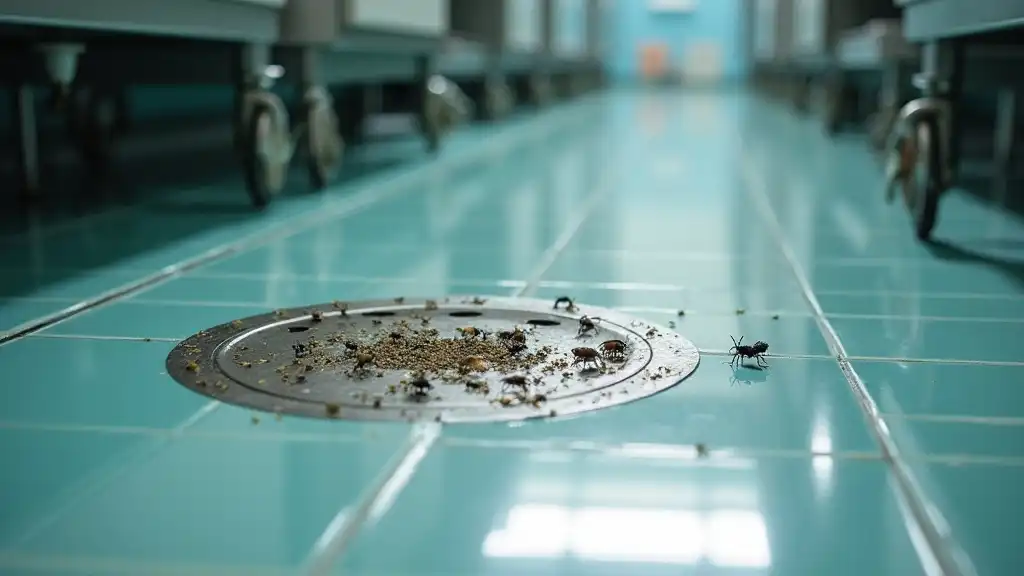
American cockroaches (Periplaneta americana) are reddish-brown, 1.5 to 2 inches long, and enter hospital buildings through floor drains, sewer connections, pipe penetrations, and loading dock gaps — traveling from sewage infrastructure directly into food preparation areas, basement utility spaces, and service corridors. Their sewer-connected entry routes mean they carry a particularly high load of enteric pathogens including Salmonella, E. coli, and norovirus picked up from sewage environments before contact with hospital surfaces. American cockroaches are common in hospital basement areas, boiler rooms, laundry facilities, and dishwashing areas — any location with significant moisture and proximity to drainage infrastructure.
Cockroaches as Vectors in Healthcare-Associated Infections
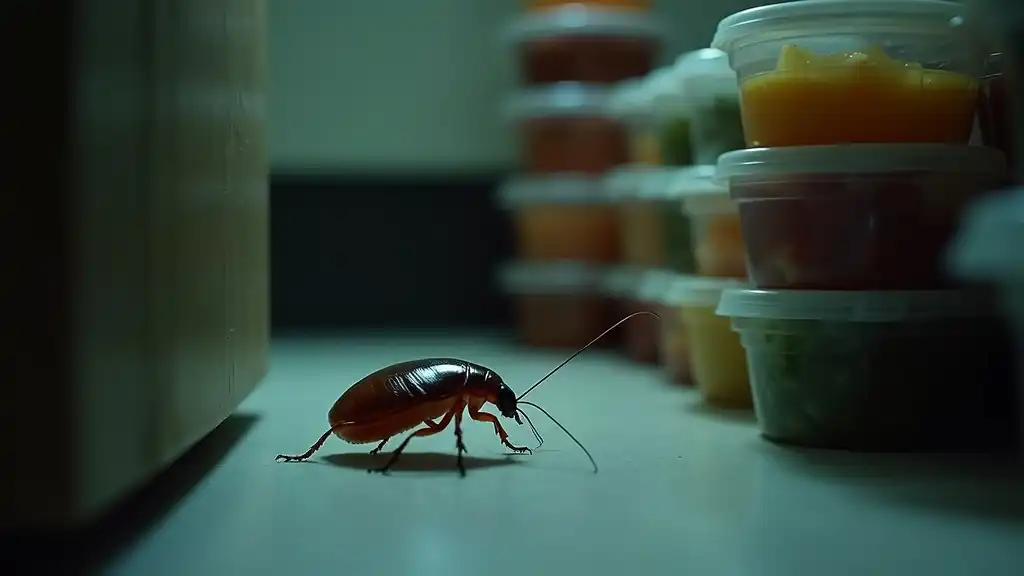
Even when cockroaches are not visible, they drive healthcare-associated infections (HAIs) by mechanically ferrying pathogens across wards and equipment during nocturnal foraging activity. 15.4% of hospital-acquired infections may be linked to pest presence including cockroaches — a conservative estimate given that cockroach involvement in HAI outbreaks is systematically underreported due to the difficulty of linking pest activity to specific infection cases without genetic typing of isolates.
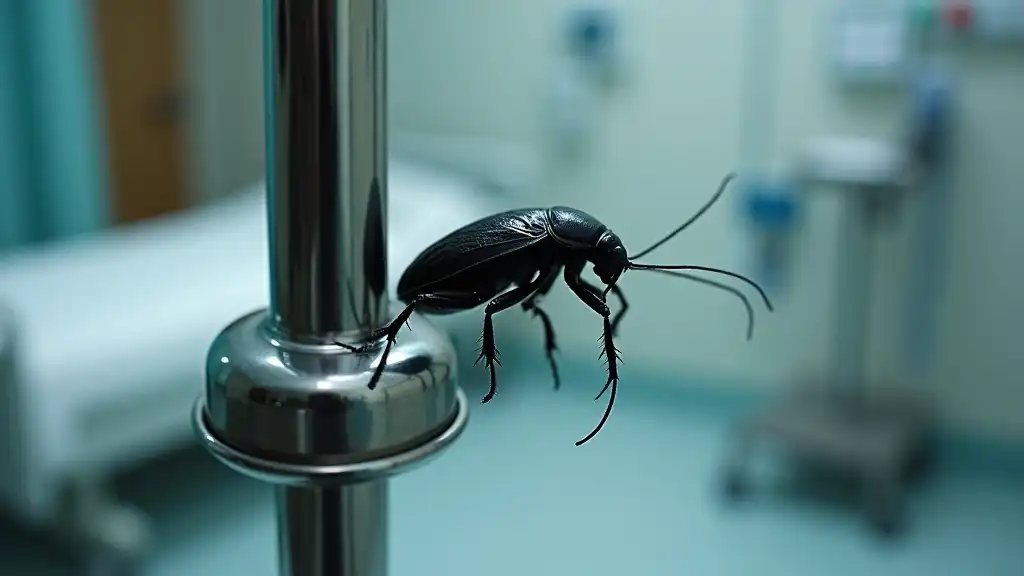
The contamination mechanism is direct and continuous: cockroaches pick up pathogenic organisms on their bodies, legs, and in their digestive tracts as they crawl through sewage, waste areas, drains, and contaminated floor surfaces, then deposit those organisms onto bed rails, patient monitors, IV stands, medical carts, food preparation surfaces, and countertops. They also defecate on clinical surfaces, creating fecal-oral exposure routes in patient care and food service areas that persist until surfaces are cleaned. In one documented ICU outbreak, cockroach isolates matched patient isolates of multidrug-resistant Enterobacter cloacae — genetic typing confirmed cockroaches as the transmission reservoir and pest control intervention halted transmission.
Cockroach movements through hospital buildings undermine routine cleaning by recontaminating surfaces between sanitation rounds. Both adult cockroaches and nymphs spread medically important microbes across multiple rooms in a single night, with nymphs frequently carrying higher intestinal pathogen loads than adults — a fact that alters transmission dynamics and means controlling visible adult populations is insufficient without addressing the full colony population in harborage sites.
Bacterial Load and Antibiotic Resistance Found on Hospital Cockroaches
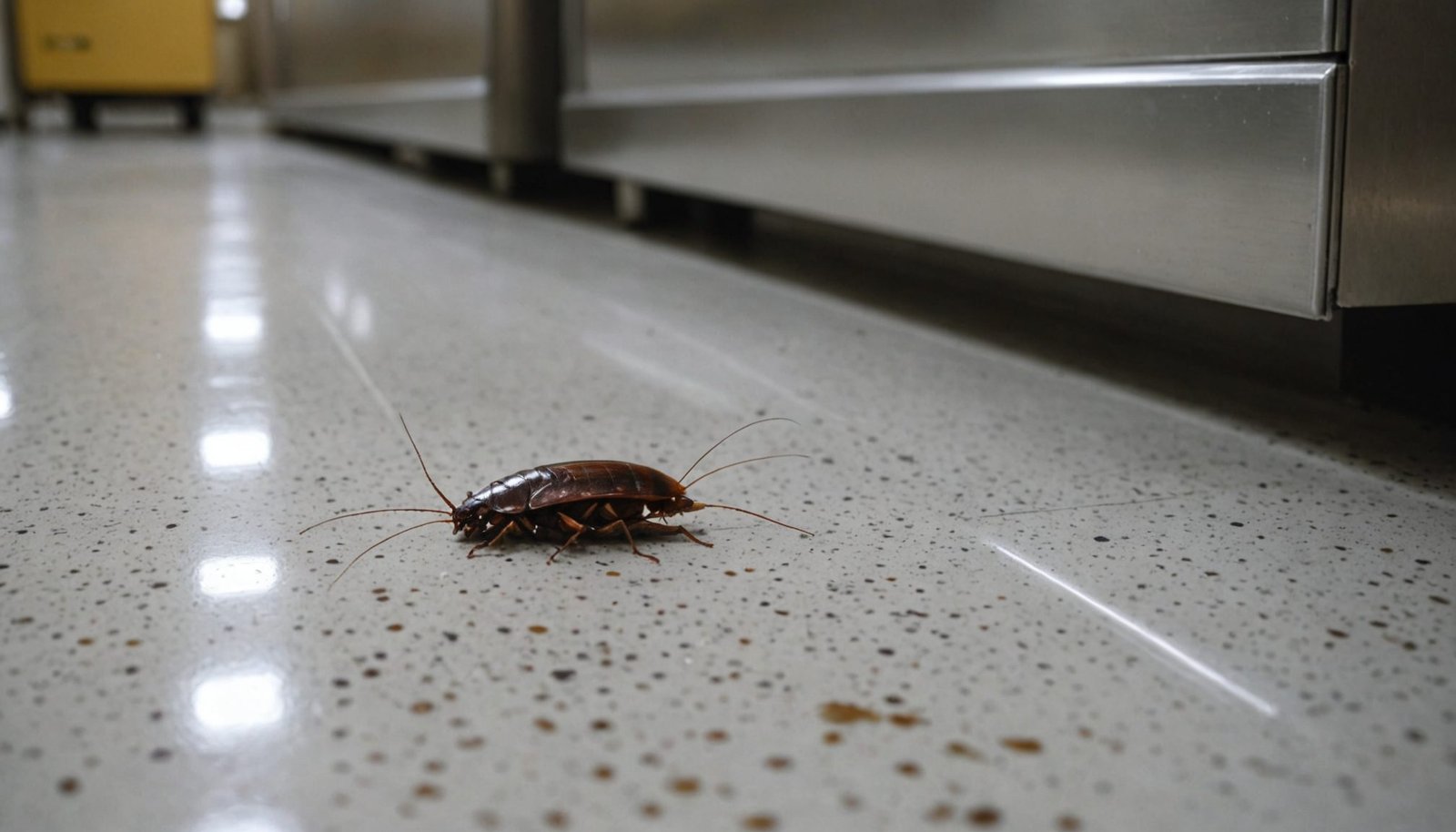
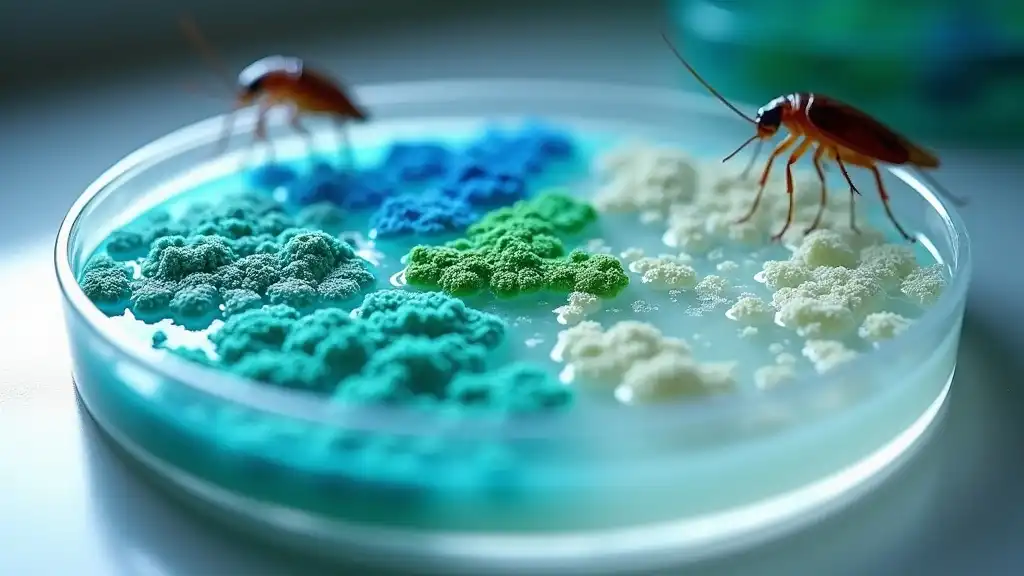
Cockroaches do not simply carry a few opportunistic bacteria — they harbor heavy, diverse bacterial loads with clinically significant resistance profiles. In hospital settings, approximately 96.6% of collected cockroaches are contaminated, often carrying up to a dozen bacterial species from 10 or more genera simultaneously. Cockroaches can carry over 33 types of harmful bacteria in hospital environments, including Bacillus, coagulase-negative Staphylococci, Escherichia coli, Pseudomonas aeruginosa, Staphylococcus aureus, and Klebsiella pneumoniae. The external body surfaces of cockroaches carry more human-relevant bacteria than their internal microbiomes — meaning surface contact with cockroach-contaminated environments is the primary transmission risk, particularly in intensive care and neonatal units where patient immune defenses are most compromised.
Antibiotic Resistance Profiles
The antibiotic resistance profiles of bacteria carried by hospital cockroaches represent a direct clinical threat to treatment options. Isolates from hospital cockroaches commonly resist cefotaxime, ampicillin, cephalothin, and kanamycin. Drug-resistant Pseudomonas aeruginosa, MRSA-potential Staphylococcus aureus, and Klebsiella pneumoniae with extended-spectrum beta-lactamase activity have all been recovered from hospital cockroaches in published studies. Warm, humid indoor hospital conditions boost bacterial loads on cockroach surfaces and extend bacterial survival, enabling cockroaches to serve simultaneously as reservoirs for multidrug-resistant organisms and as conduits spreading those resistance genes throughout hospital environments through horizontal transmission among cockroach populations and from cockroaches to clinical surfaces and patients. Cockroach contamination increases the risk of antibiotic-resistant infections by approximately 18.3% in healthcare settings — a clinically meaningful elevation in treatment complexity and cost.
What Diseases Do Cockroaches Spread in Hospitals?
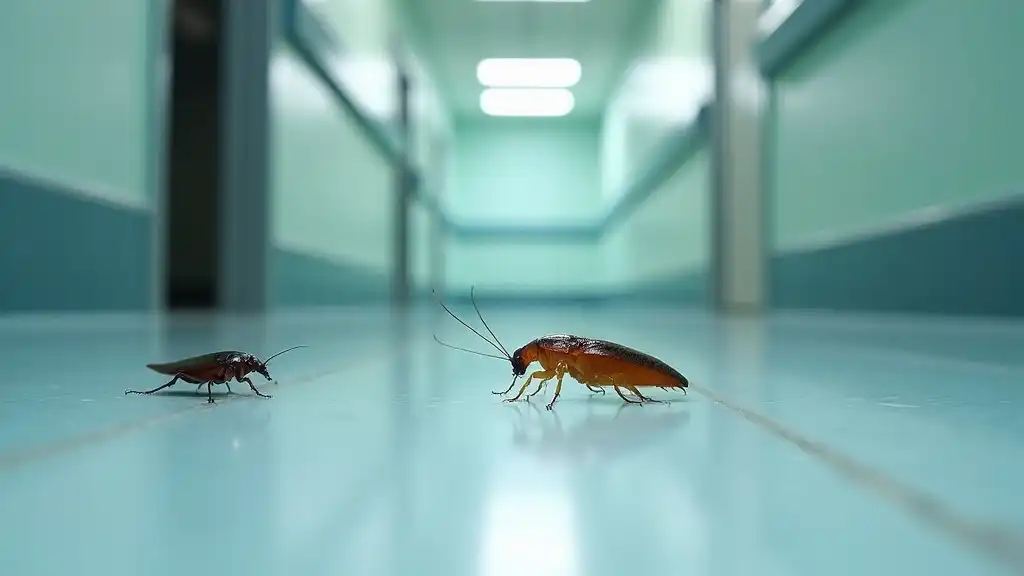
Cockroaches are confirmed disease vectors carrying pathogens that cause healthcare-associated infections, foodborne illness, and gastrointestinal disease outbreaks in hospital patient and staff populations. The primary diseases and pathogens spread by cockroaches in hospital settings include:
Enteric Pathogens and Gastrointestinal Infections
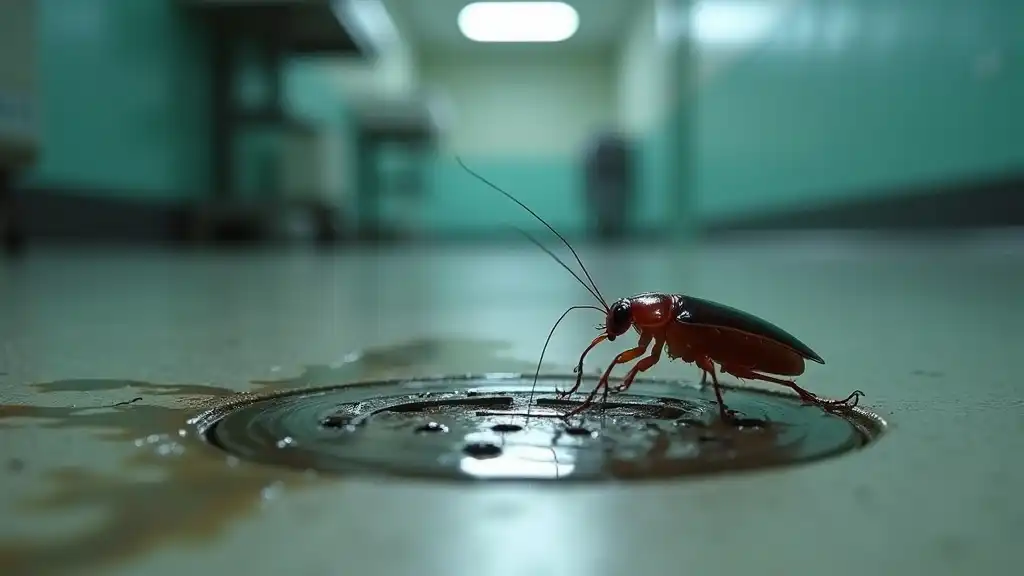
Evidence from multiple hospital studies shows sapovirus, norovirus, Shiga toxin-producing Escherichia coli, Blastocystis hominis, Salmonella species, and enteroviruses in cockroach digestive tracts recovered from hospital kitchen and clinical areas. These pathogens can persist in cockroach hindguts for weeks, with fecal shedding occurring over successive days — enabling repeated contamination cycles from a single infected cockroach. Approximately one in five monitoring traps placed in hospital kitchen and food service areas detect intestinal pathogens, making food preparation and dining areas the highest-risk zones for enteric disease transmission. In hospital catering areas with higher cockroach infestation levels, diarrheal outbreaks among patients and staff become a direct operational and clinical risk that damages institutional trust and requires complex outbreak investigation responses.
Healthcare-Associated Infection Pathogens
Beyond gastrointestinal pathogens, cockroaches in hospital wards carry organisms responsible for some of the most serious healthcare-associated infections — including carbapenem-resistant Klebsiella pneumoniae, multidrug-resistant Pseudomonas aeruginosa, and methicillin-resistant Staphylococcus aureus (MRSA). These organisms are mechanically transferred to high-touch clinical surfaces — bed rails, call buttons, IV tubing connections, and monitor controls — where they persist until environmental cleaning removes them. In immunocompromised patients, transplant recipients, neonates, and ICU patients with invasive devices, exposure to these pathogens creates infection risks with mortality rates and treatment costs far exceeding the cost of comprehensive hospital pest management programs.
Contamination of Medical Equipment and Patient Areas
Cockroach contamination of medical equipment represents a distinct infection control challenge because standard disinfection protocols target visible contamination on surfaces — they do not account for the microscopic bacterial residue deposited by cockroach leg contact, fecal droppings, or body contact across equipment surfaces during nighttime foraging. Surfaces contaminated by cockroach contact include:
- Bed rails and call button controls in patient rooms
- IV stand surfaces and infusion pump controls
- Patient monitor touchscreens and equipment carts
- Medication dispensing surfaces and pharmaceutical storage areas
- Surgical instrument storage areas and sterilization department surfaces
- Food service equipment including trays, utensils, and serving counters in hospital cafeterias
- Nurses’ station countertops and chart storage areas
Cockroach contact with surgical instruments is a specific concern that can compromise sterility of stored instruments even after sterilization when cockroach access to sterile storage areas is not controlled. Any clinical area where cockroach access has been confirmed should be treated as potentially contaminated across all surface categories, not limited to the specific surfaces where cockroach evidence is visually detected.
Cockroach Infestation Sources in Hospitals
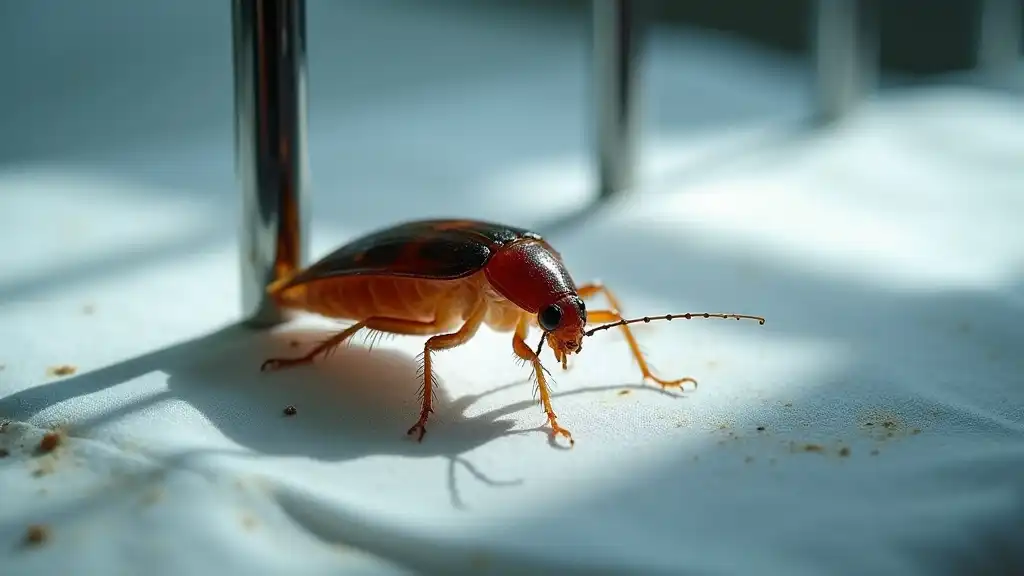
Understanding how cockroaches enter and establish in hospital buildings is essential for designing effective structural exclusion and surveillance programs. The primary infestation sources in healthcare facilities differ from residential settings due to the scale of the building, the complexity of infrastructure systems, and the volume of incoming goods.
Primary Hospital Entry Points
American cockroaches enter hospitals primarily through floor drains connected to sewer infrastructure, pipe penetrations through floors and walls, loading dock gaps, and gaps around utility entries. German cockroaches most commonly enter through incoming deliveries — food and supply shipments, cardboard boxes, equipment packages, and patient belongings — and spread between hospital sections through wall voids, electrical conduit runs, plumbing chases, and pipe penetrations. Visitors and patients admitted from infested residences can introduce cockroach eggs and nymphs on personal belongings including luggage, clothing, and personal care items. Hospital construction and renovation activity disrupts existing cockroach harborage zones, driving populations into new areas of the building and creating temporary elevated infestation pressure in adjacent clinical spaces.
High-Risk Hospital Areas for Cockroach Harborage
The highest-risk areas for cockroach harborage in hospital buildings are food preparation and catering facilities, dishwashing areas, break rooms and staff lounges with food storage, dirty utility rooms, laundry facilities, equipment storage areas with cardboard packaging, maintenance and boiler rooms, and basement utility spaces near plumbing and drainage infrastructure. Patient rooms and clinical areas become secondary harborage zones when infestations from kitchen and utility areas are not controlled — cockroaches follow temperature and moisture gradients from primary harborage sites through building infrastructure into clinical spaces during nighttime foraging activity.
Impact on Patient Safety and Clinical Outcomes
The patient safety implications of cockroach infestations in hospitals extend through multiple clinical pathways simultaneously — direct pathogen transmission, antibiotic resistance amplification, allergen exposure, and the operational disruptions that accompany infestation management and outbreak investigation.
During documented ICU outbreaks where cockroaches were confirmed as transmission vectors, colonization rates among admitted patients approached one in five admissions — dramatically extending the exposure window and complicating infection control responses across entire ward populations. Extended lengths of stay driven by HAIs associated with cockroach-transmitted pathogens represent direct cost consequences: multidrug-resistant Klebsiella pneumoniae infections extend hospital stays by an average of 7 to 14 days, with treatment costs per case significantly exceeding those of susceptible organism infections. The 18.3% elevation in antibiotic-resistant infection risk associated with cockroach contamination in healthcare settings translates to measurable clinical burden at the institutional level when infestation is allowed to persist without systematic control.
Allergy and Asthma Risks From Cockroach Allergens in Hospitals
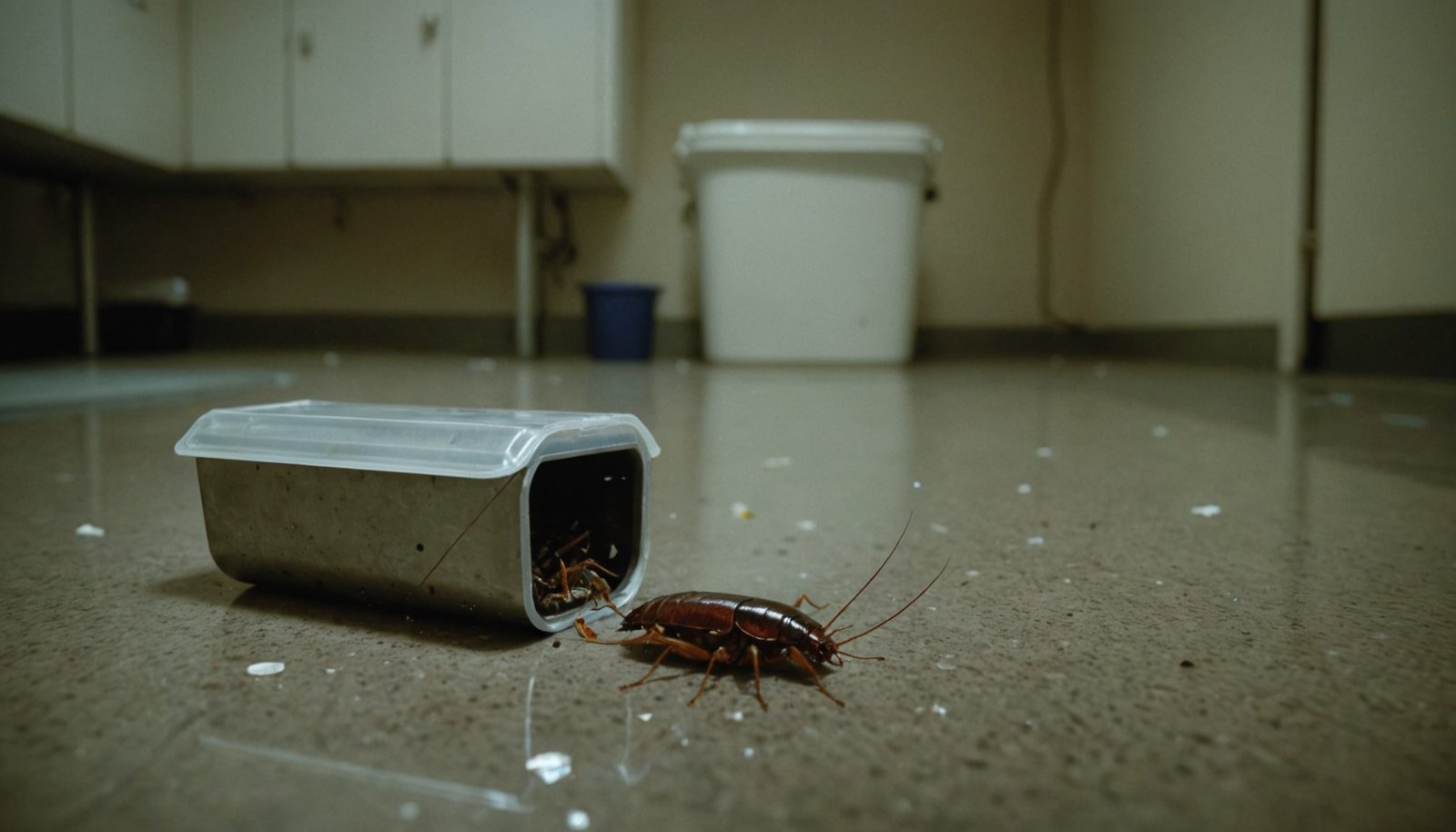
Beyond infectious disease risk, cockroach allergens pose a pervasive, measurable clinical risk in hospital environments — particularly for patients with pre-existing asthma, respiratory disease, or allergic conditions who are already receiving treatment for conditions that cockroach allergen exposure can worsen. Approximately 26.1% of Americans show cockroach sensitization, meaning a substantial proportion of admitted patients arrive with pre-existing sensitization that makes them vulnerable to allergen-triggered respiratory deterioration during their hospital stay.
Cockroach allergen proteins from feces, saliva, shed skins, eggs, and body parts accumulate in hospital dust on patient room floors, soft furnishings, mattresses, and ventilation systems. High bedroom allergen levels above 8.0 U/g can raise hospitalization risk 3.7-fold in sensitized children — meaning hospitals that allow cockroach allergen accumulation in pediatric wards are directly worsening outcomes in their most vulnerable patient population. The full scope of diseases linked to cockroaches includes both infectious and immunological pathways that compound in hospital environments.
For hospital staff, particularly those working extended shifts in infested environments, chronic cockroach allergen exposure contributes to occupational sensitization, respiratory symptoms, and long-term asthma development — creating occupational health liability and workforce impacts beyond the immediate patient care concerns. Integrating cockroach allergen dust sampling into patient room monitoring programs provides data to prioritize environmental intervention in the highest-risk clinical areas.
Methods for Detecting Cockroach Presence in Hospitals
Systematic surveillance using multiple detection methods provides the most accurate picture of cockroach activity in hospital settings. Relying solely on visual sightings substantially underestimates infestation levels because cockroaches are nocturnal and spend the majority of their time in harborage zones inaccessible to visual inspection during routine cleaning rounds. Around 62% of hospital staff report spotting cockroaches in patient areas at least once a month — suggesting that visual sighting reports from staff represent only a fraction of actual activity.
Monitoring Traps and Inspection Techniques
Sticky glue monitoring traps placed systematically in kitchens, break rooms, utility rooms, patient room floors, and storage areas provide quantitative population data that guides targeted treatment and tracks program effectiveness over time. Place traps along walls, in corners, inside cabinet bases, near floor drains, and behind appliances in all high-risk zones. Number and date each trap, record capture counts weekly, and log the life stages captured — high nymph counts indicate active nearby breeding and direct treatment to within 5 to 10 feet of the capture location. Traps should be inspected by trained staff on a defined weekly schedule, with findings logged and reported to infection control and facilities management as part of the hospital’s routine environmental monitoring program. Professional pest control technicians should conduct monthly comprehensive inspections of all high-risk areas using flashlights and mirrors to probe harborage zones — including wall voids, equipment bases, and ceiling void access points — that routine maintenance staff do not inspect during standard rounds.
Staff Reporting Protocols
Structured staff reporting protocols are essential for capturing the real-time sighting data that monitoring traps miss between scheduled inspection intervals. Train all hospital staff — including cleaning staff, food service employees, nursing staff, and facilities maintenance — to immediately report any cockroach sighting, evidence of droppings, or detection of musty cockroach odor to the designated infection control and facilities management contact. Written reporting should document the time, exact location, life stage (adult or nymph), and any associated evidence (droppings, egg cases, shed skins). Any sighting in a patient care area, food preparation area, or sterile supply zone should trigger immediate escalation and same-day professional pest control response, not a scheduled next-visit inspection.
Effective Pest Control Strategies for Healthcare Facilities
Pest control in hospital and healthcare settings requires approaches that are safe for immunocompromised patients, compatible with infection control requirements, and capable of achieving population elimination rather than simple population reduction. The same broad-spectrum spray approaches that create unacceptable chemical exposure risks in food service settings are even more inappropriate in clinical environments where patient health is already compromised.
IPM Protocols for Hospital Settings
Integrated Pest Management is the universally recommended approach for cockroach control in healthcare facilities and is required by Joint Commission standards and CMS Conditions of Participation for accredited hospitals. Hospital IPM programs prioritize structural exclusion and sanitation as primary interventions, with chemical treatments limited to targeted gel bait and Insect Growth Regulator applications in harborage zones physically separated from patient contact areas. Gel baits applied inside cracks, wall voids, cabinet bases, and equipment gaps using precision bait guns deliver treatment exactly where cockroaches harbor without creating surface residues in patient care areas. IGR formulations including hydroprene disrupt nymph maturation and break the breeding cycle in harborage zones, sustaining population suppression between professional service visits without chemical exposure concerns in clinical areas. All pest control product applications in hospital environments must use EPA-registered products applied by licensed commercial applicators with documented hospital or healthcare facility experience — never consumer-grade products applied by facility maintenance staff without pesticide applicator licensing.
Safe Chemical Treatments in Clinical Environments
The primary chemical tools appropriate for hospital cockroach control are gel baits applied in inaccessible harborage locations, IGR aerosol formulations in wall voids and structural spaces, and boric acid dust in non-clinical utility and mechanical spaces. Residual pyrethroid spray applications must be restricted to non-patient areas including exterior perimeters, loading docks, mechanical rooms, and utility spaces — never applied in patient rooms, clinical corridors, food preparation areas, or any space with patient contact. All chemical applications require written treatment records including the product name, EPA registration number, application location, application date, and licensed applicator name and license number — these records are required for Joint Commission accreditation and CMS compliance inspections. Scheduled service visits should occur during periods of minimum patient and staff activity, and treated areas must meet label-specified re-entry intervals before patient or staff access resumes.
Hospital Sanitation and Prevention Practices
Sanitation in hospital settings serves both infection control and pest prevention goals simultaneously — the same practices that reduce HAI risk from environmental contamination also remove the food residues, moisture, and harborage conditions that sustain cockroach populations. The key distinction between standard commercial sanitation and healthcare-facility sanitation is that hospital protocols must achieve true pathogen reduction, not simply visual cleanliness.
Food Service and Kitchen Sanitation
Hospital catering and food service areas require the most intensive sanitation focus for cockroach prevention because they represent the primary harborage environment for German cockroaches in most healthcare facilities. Deep-clean all food preparation equipment, including underneath and behind all appliances, at minimum weekly — not just the surface-level cleaning that occurs between meal services. Eliminate all cardboard box storage in kitchen areas immediately — transfer all supplies to sealed plastic containers upon delivery inspection. Seal all floor drain covers with fine-mesh screens to prevent American cockroach entry from sewer infrastructure. Fix all plumbing leaks within 24 hours of detection. Store all food in sealed airtight containers and remove all waste in sealed bags to exterior dumpsters daily, not just at the end of service. Train all food service employees on the connection between food storage, waste management, and cockroach infestation risk — and establish clear reporting protocols for any evidence of cockroach activity discovered during kitchen preparation or cleaning.
Structural Exclusion in Healthcare Buildings
Structural exclusion in hospital buildings requires a systematic audit of all potential cockroach entry routes across the entire building envelope, not just food service and utility areas. Seal all pipe penetrations through floors and walls with commercial-grade silicone caulk or steel wool and caulk for larger penetrations. Install and maintain fine-mesh screens on all floor drain openings in patient care areas, kitchens, and utility spaces. Audit all loading dock door seals and install door sweeps on all exterior service doors. Seal wall void access points that allow cockroach movement between floors and building sections. Maintain positive pressure ventilation in sterile supply and high-care clinical areas to prevent pest infiltration through air handling systems. Document all structural repair actions as part of the hospital’s integrated pest management compliance records.

Staff Training and Reporting Protocols
Hospital cockroach control programs fail when staff do not have the knowledge and clear protocols needed to support surveillance and rapid response. Training content should be role-specific and integrated into standard onboarding and annual competency refreshers for all staff categories — not limited to facilities management.
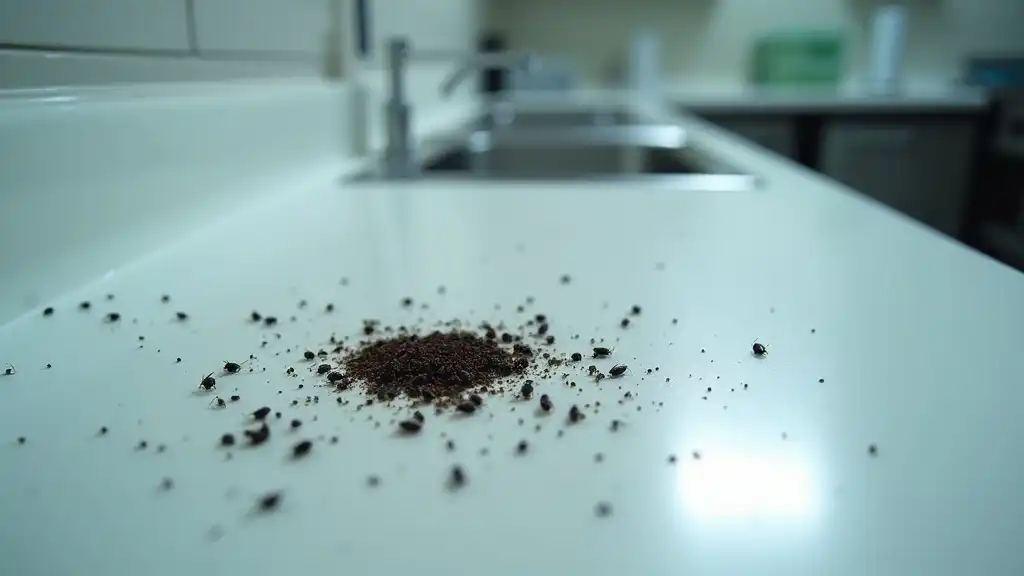
Cleaning and environmental services staff need training to recognize cockroach evidence during their regular cleaning rounds — droppings that resemble coffee grounds or black pepper near food preparation areas and storage rooms, shed skins in dark corners and under equipment, egg cases in cabinet bases, and the musty oily odor that characterizes active cockroach infestations. Food service staff need training on delivery inspection protocols for incoming goods, correct food and waste storage practices, and immediate reporting responsibilities when evidence is discovered during food preparation. Nursing and clinical staff need training to recognize that any cockroach sighting in a patient care area is an infection control event requiring immediate reporting — not a routine maintenance issue to note at the end of the shift. All staff should know the designated reporting contact for pest sightings and understand that prompt reporting directly protects patient safety.
Compliance Requirements and Regulatory Framework
Hospital cockroach control programs operate within a regulatory framework that includes Joint Commission Environment of Care standards, CMS Conditions of Participation, state health department licensing requirements, and for facilities handling food service, applicable FDA Food Code requirements. Joint Commission EC.02.06.01 requires hospitals to maintain a safe, functional, and supportive environment — an environment with an active cockroach infestation does not meet this standard and creates accreditation risk in addition to patient safety risk.
Maintain complete documentation of your hospital IPM program including the written IPM plan, all service contracts with licensed providers, individual service reports for every professional visit, monitoring trap count logs, staff training records, and all incident reports related to pest sightings in patient care areas. This documentation is reviewed during Joint Commission surveys and CMS certification inspections. Hospitals that demonstrate a proactive, documented, systematically executed pest control program consistently receive more favorable regulatory outcomes than those responding reactively to confirmed sightings without a documented program.
Frequently Asked Questions About Cockroach Risks in Hospitals

Why are cockroaches a risk in hospitals?
Cockroaches are a serious risk in hospitals because they mechanically spread pathogens including E. coli, Klebsiella pneumoniae, Pseudomonas aeruginosa, Salmonella, and norovirus from sewage, waste areas, and drains directly onto clinical surfaces and food preparation equipment. Up to 96.6% of cockroaches collected in hospital settings carry diverse bacterial loads, frequently including multidrug-resistant strains. Cockroach contamination increases antibiotic-resistant infection risk by approximately 18.3% in healthcare settings and drives healthcare-associated infections in immunocompromised patients, ICU patients, and neonates who have the least capacity to withstand additional infectious challenges.
What diseases do cockroaches spread in hospitals?
Cockroaches in hospitals spread gastrointestinal pathogens including Salmonella, E. coli, and norovirus through fecal contamination of food service areas, and healthcare-associated infection pathogens including multidrug-resistant Klebsiella pneumoniae, Pseudomonas aeruginosa, and Staphylococcus aureus through surface contamination in clinical areas. In documented ICU outbreaks, genetic typing confirmed identical strains on cockroaches and patients with multidrug-resistant Enterobacter cloacae. Studies show 15.4% of hospital-acquired infections may be linked to pest presence including cockroaches.
Are cockroaches common in hospital environments?
Yes — approximately 28.7% of hospitals report cockroach infestations annually, and around 62% of hospital staff admit to spotting cockroaches in patient areas at least once a month. German cockroaches are the most common species in hospital food service and clinical areas. American cockroaches enter through sewer-connected drainage infrastructure. The actual prevalence is likely higher than reported figures because cockroaches are nocturnal and systematic surveillance programs are not universally implemented.
What areas of hospitals attract cockroaches most?
The highest-risk areas for cockroach activity in hospitals are food preparation and catering kitchens, dishwashing areas, break rooms and staff lounges with food storage, dirty utility rooms, laundry facilities, equipment and supply storage areas with cardboard packaging, basement mechanical and boiler rooms, and any area with plumbing leaks or persistent moisture. Patient rooms become secondary infestation areas when kitchen and utility infestations are not controlled. About one in five monitoring traps placed in hospital kitchen and food service areas detect intestinal pathogens carried by cockroaches.
How do hospitals prevent cockroach infestations?
Hospital cockroach prevention requires an integrated program combining structural exclusion (sealing pipe penetrations, floor drains, and door gaps), rigorous food service sanitation (eliminating cardboard, sealing food, removing waste daily), systematic monitoring (sticky traps with weekly counts in all high-risk areas), rapid-response professional treatment using gel baits and IGRs in harborage zones, staff training on recognition and reporting, and complete compliance documentation. IPM-based programs that address root conditions rather than relying on reactive chemical application are required by Joint Commission standards and CMS Conditions of Participation.
What protocols should hospital staff follow if they spot a cockroach?

Any hospital staff member spotting a cockroach or cockroach evidence — droppings, egg cases, shed skins, or musty odor — should immediately report the sighting to the designated infection control and facilities management contact, document the time, exact location, and life stage (adult or nymph), and not apply any consumer-grade spray treatments. Any sighting in a patient care area, food preparation area, or sterile supply zone should trigger escalation for same-day professional pest control response. Clinical staff should treat any cockroach-contaminated surface as potentially carrying pathogens requiring standard environmental disinfection protocols until professional assessment is completed.
{
“@context”: “https://schema.org”,
“@type”: “FAQPage”,
“mainEntity”: [
{
“@type”: “Question”,
“name”: “Why are cockroaches a risk in hospitals?”,
“acceptedAnswer”: {
“@type”: “Answer”,
“text”: “Cockroaches mechanically spread pathogens including E. coli, Klebsiella pneumoniae, Pseudomonas aeruginosa, Salmonella, and norovirus from sewage and waste areas onto clinical surfaces and food preparation equipment. Up to 96.6% of cockroaches in hospital settings carry diverse bacterial loads, frequently including multidrug-resistant strains. Cockroach contamination increases antibiotic-resistant infection risk by approximately 18.3% in healthcare settings and 15.4% of hospital-acquired infections may be linked to pest presence.”
}
},
{
“@type”: “Question”,
“name”: “What diseases do cockroaches spread in hospitals?”,
“acceptedAnswer”: {
“@type”: “Answer”,
“text”: “Cockroaches in hospitals spread Salmonella, E. coli, norovirus, multidrug-resistant Klebsiella pneumoniae, Pseudomonas aeruginosa, and Staphylococcus aureus. In documented ICU outbreaks, genetic typing confirmed identical strains on cockroaches and patients with multidrug-resistant Enterobacter cloacae. Cockroaches can carry over 33 types of harmful bacteria found in hospital environments.”
}
},
{
“@type”: “Question”,
“name”: “Are cockroaches common in hospital environments?”,
“acceptedAnswer”: {
“@type”: “Answer”,
“text”: “Yes. Approximately 28.7% of hospitals report cockroach infestations annually and around 62% of hospital staff admit to spotting cockroaches in patient areas at least once a month. German cockroaches are the most common hospital species. The actual prevalence is likely higher than reported figures because cockroaches are nocturnal and systematic surveillance is not universally implemented.”
}
},
{
“@type”: “Question”,
“name”: “What areas of hospitals attract cockroaches most?”,
“acceptedAnswer”: {
“@type”: “Answer”,
“text”: “The highest-risk areas are food preparation kitchens, dishwashing areas, break rooms with food storage, dirty utility rooms, laundry facilities, equipment storage areas with cardboard, basement mechanical rooms, and areas with plumbing leaks. About one in five monitoring traps placed in hospital kitchen and food service areas detect intestinal pathogens carried by cockroaches.”
}
},
{
“@type”: “Question”,
“name”: “How do hospitals prevent cockroach infestations?”,
“acceptedAnswer”: {
“@type”: “Answer”,
“text”: “Hospital prevention requires structural exclusion (sealing pipe penetrations, floor drains, door gaps), rigorous food service sanitation, systematic monitoring with sticky traps in high-risk areas, professional gel bait and IGR treatments in harborage zones, staff training on recognition and reporting, and compliance documentation. IPM-based programs are required by Joint Commission standards and CMS Conditions of Participation.”
}
},
{
“@type”: “Question”,
“name”: “What protocols should hospital staff follow if they spot a cockroach?”,
“acceptedAnswer”: {
“@type”: “Answer”,
“text”: “Staff should immediately report the sighting to infection control and facilities management, document the time, exact location, and life stage, and not apply consumer-grade spray treatments. Any sighting in a patient care area, food preparation area, or sterile supply zone should trigger same-day professional pest control response. Treat any cockroach-contaminated surface as requiring standard environmental disinfection protocols.”
}
}
]
}
