
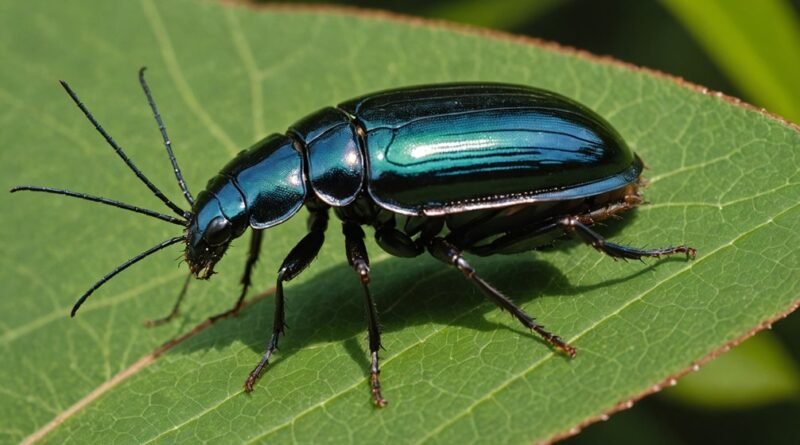
Cockroach Vs Beetle: Key Differences in Appearance and Behavior
You can tell cockroaches from beetles by body shape, movement, and shell. Cockroaches have flat, narrow, soft-looking bodies with long, twitchy antennae and very fast, darting movements. Beetles look thicker and rounder, with a hard, shell-like back, shorter antennae, and steadier crawling. Roach wings lie flat and smooth, while beetle wing covers form a dome that lifts for flight. Their lifecycles, hiding spots, and home damage also differ, and that’s where things start to get interesting.
Key Takeaways
- Cockroaches have flat, narrow bodies with hidden heads and long, twitchy antennae; beetles are thicker, rounder, with visible heads and shorter antennae.
- Cockroaches show mostly tan to reddish-brown colors, while beetles display a wider color range and more varied markings.
- Cockroaches’ wings lie flat and smooth against the body; beetles’ hard wing covers form a dome-like shell that lifts before flight.
- Cockroaches move very quickly with rapid, erratic dashes; most beetles crawl more slowly and steadily, relying on their hard shells for protection.
- Cockroaches have three life stages and rapidly infest homes; beetles have four stages, with larvae often causing hidden damage to wood, fabric, or stored food.
Cockroach vs Beetle: Quick ID and What to Do
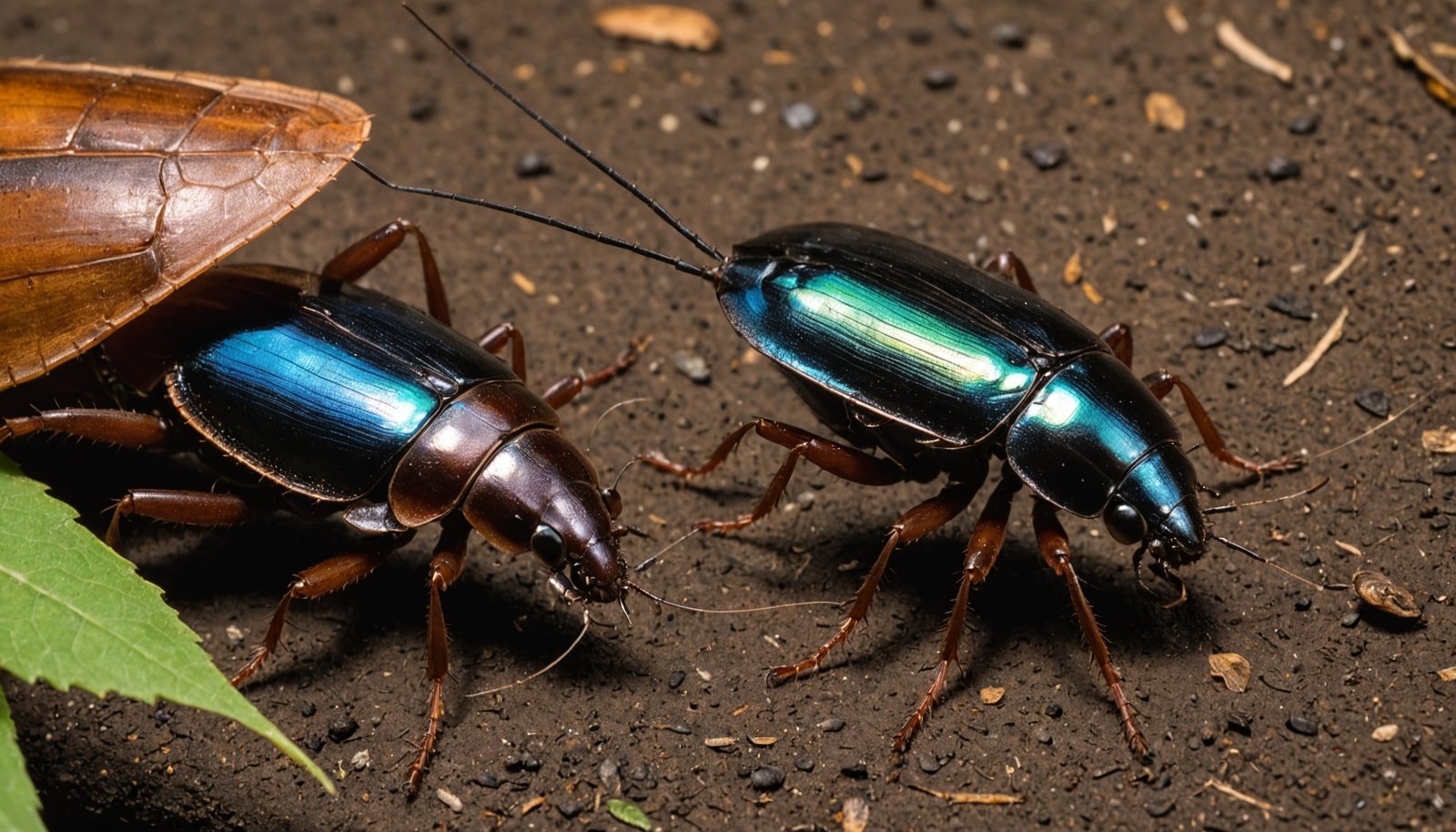
Although cockroaches and beetles can look similar at a glance, a few quick checks help you tell them apart and decide what to do next. For fast cockroach identification, look for a hidden head tucked under a helmet‑like shield and very long, constantly twitching antennae. Those sensory adaptations help roaches detect food, water, and danger, so they usually dart into dark gaps. Cockroaches also spread disease and trigger allergies, while ground beetles pose no health risks and cannot breed indoors.
Beetle characteristics differ: the head sticks out with a clear neck‑like gap, and antennae stay short to medium and move less. Their movement strategies are slower and more deliberate, or in ground beetles, quick but straight toward shelter.
If you see rapid, erratic scuttling at night, you’re likely dealing with roaches and should consider pest control, since their habitat preferences favor indoor breeding. Watch for infestation signs such as droppings, egg cases, and musty odor. Beetles rarely sustain indoor lifecycles, though some species can damage stored items.
Body Shape and Color: Flat Roaches vs Round Beetles
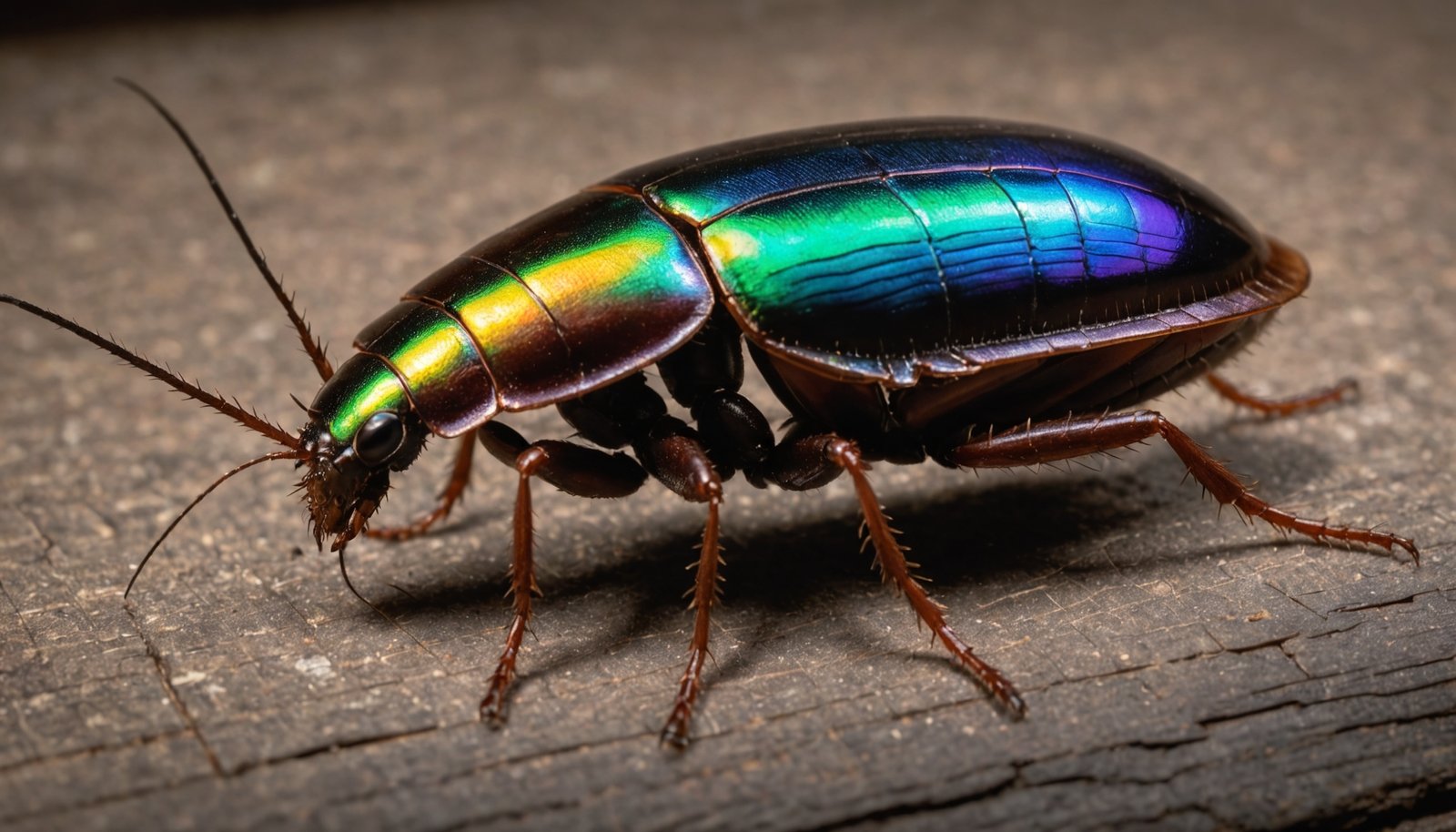
When you compare roaches to beetles, start by looking at the overall body profile—cockroaches stay flat and narrow, while beetles look thicker and rounder. You’ll also notice big differences in color and markings, from the roach’s mostly brown tones to the beetle’s harder, often brighter, patterned shell. Pay attention to how the head and thorax connect too, because a roach’s head hides under a shield-like pronotum, while a beetle’s head juts out clearly from the front. In motion, cockroaches are usually much faster than beetles, using their speed difference to quickly dash away when disturbed.
Overall Body Profile
Body shape is one of the quickest ways to tell cockroaches and beetles apart at a glance. When you’re looking at overall body profile, you’re really seeing body adaptations tied to each insect’s survival strategies. Cockroaches have a flattened, narrow, ovoid outline that forms a smooth line from head through thorax to abdomen. This low, oval profile lets them slide into thin cracks, then sprint away with little clearance. Because they can carry over 30 bacterial species, that streamlined body helps them quickly move between food, water, and hiding spots in kitchens and bathrooms.
Beetles, in contrast, usually look bulkier and more cylindrical or dome‑shaped. Their thicker abdomen and hardened exoskeleton give them a compact, armored profile. The head stands out more clearly from the thorax, and the wing covers meet in a straight line down the back, reinforcing that sturdy, rounded form.
Color And Markings
After you get a feel for their overall shape, color and markings give you another quick way to separate flat roaches from rounder beetles. Roaches usually stay in the tan-to-reddish-brown range, from light German cockroaches with two dark stripes to mahogany American or smokybrown roaches, and glossy dark Oriental roaches. Beetles swing much wider in color patterns, from jet-black ground beetles to metallic blue-green forms and multicolored carpet beetles. Because cockroach color helps identify specific species and their typical habitats, noticing whether you’re seeing light brown, reddish-brown, or nearly black individuals can also hint at where they’re nesting and what conditions they prefer.
| Feature | What you’ll notice |
|---|---|
| Overall tone | Roaches: browns; Beetles: any color |
| Surface | Roaches: leathery; Beetles: hard, shell‑like |
| Markings | Roaches: simple bands or uniform; Beetles: varied patches and spots |
| Wing line | Roaches: overlapping; Beetles: straight seam |
| Use in species identification | Roaches: subtle; Beetles: often dramatic |
Head And Thorax Shape
Although color helps at a glance, the shapes of the head and thorax give you an even more reliable way to tell cockroaches from beetles. A cockroach’s head shape blends smoothly into its thorax structure, with no clear gap. The pronotum forms a shield over the head, hiding many sensory organs, while long antennae sweep ahead in constant antenna movement. On a beetle, you’ll see a distinct break between head and thorax. The head’s smaller, set off from a thicker, rounded thorax. Beetle antennae stay shorter and often end in clubs or beads, moving less dramatically. Cockroaches look flat and oval with spiky, outstretched legs, while beetles appear sturdier, with compact legs and a more cylindrical, armored body. Unlike beetles with a hard, protective shell, cockroaches have a more flexible, papery exterior that offers less rigid armor.
Head and Antennae: Fast Cockroach vs Beetle Cues
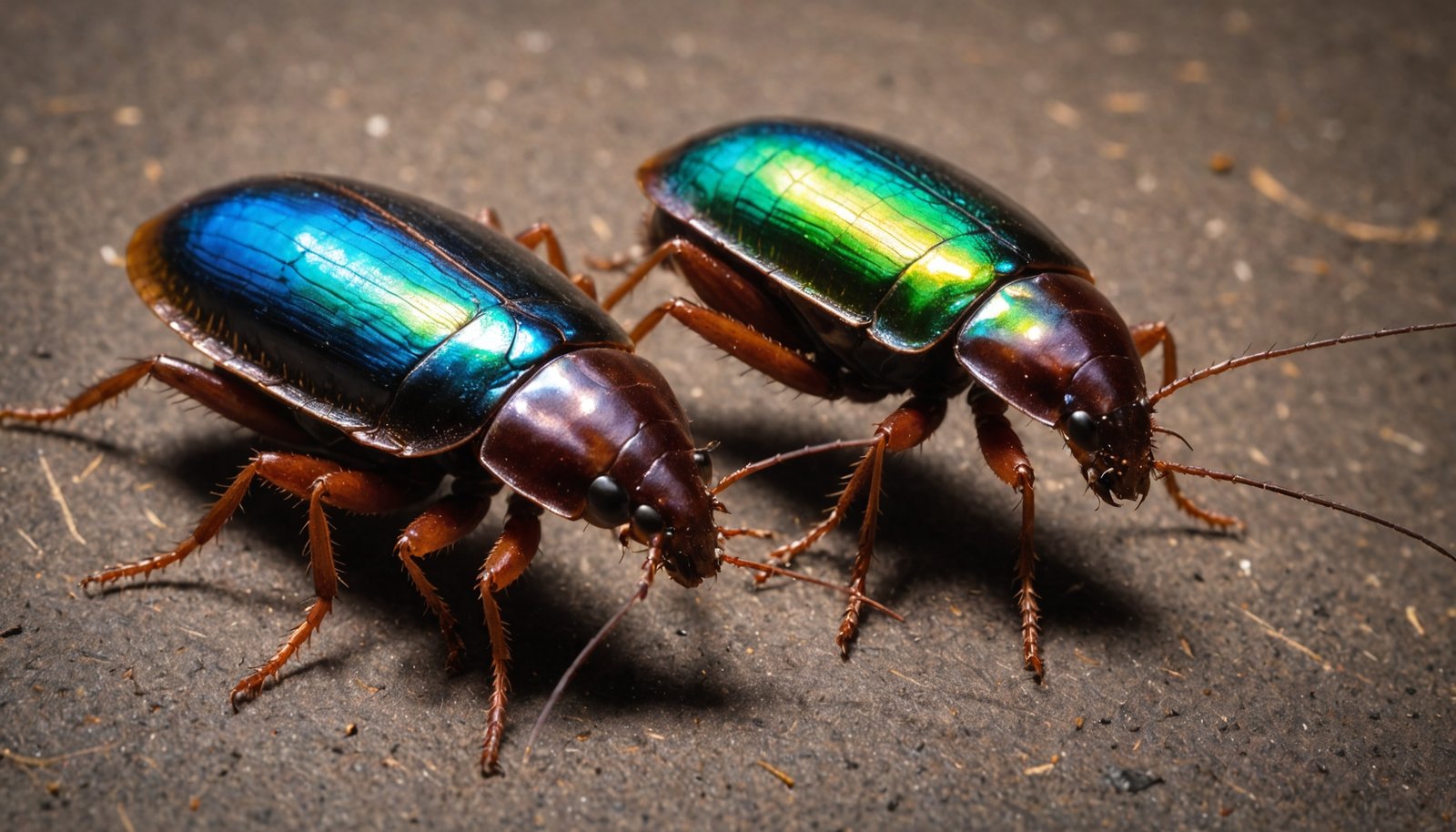
Look first at the head and antennae, and you’ll spot some of the quickest cues separating a fast cockroach from a beetle. For identification tips, start with head visibility: a cockroach’s head tucks under a smooth pronotum shield, so from above you barely see it. A beetle’s head, by contrast, juts forward with a visible “neck” gap and pincer-like mouthparts.
Next, check antennae sensitivity and environmental detection. Cockroach antennae are extremely long and thin, often matching or exceeding body length, and they sweep constantly. That nonstop motion reveals high antennae sensitivity as the roach scans for food, danger, and escape routes.
Beetles usually carry short to medium antennae that move less and vary in shape by species. Those shorter antennae, plus the protruding head, match steadier movement patterns: beetles often walk in straighter lines, while roaches, guided by those long feelers and shielded heads, dart and change direction abruptly.
Wings and Flight: Roach Tegmina vs Beetle Elytra
When you compare wings, cockroaches and beetles advertise their identities with two very different forewing designs: leathery tegmina in roaches versus hardened elytra in beetles. You’ll notice this wing structure difference immediately. Cockroach tegmina feel flexible and leathery, lying flat and smooth over the back. Beetle elytra look and feel like armor, forming a dome-like shell that’s often grooved, textured, or patterned.
Both tegmina and elytra protect the delicate hindwings underneath, but they do it in distinct ways. Tegmina act like a tough raincoat, offering camouflage and modest shielding. Elytra behave more like a rigid shield, guarding the hindwings and much of the underside like an extra exoskeleton.
Flight mechanics also separate the two. Roach tegmina contribute some aerodynamic shaping but don’t flap much; the hindwings do the real work. Beetles must first lift and open the elytra, then unfold and rapidly beat their hindwings to fly.
Legs and Movement: How Cockroaches vs Beetles Move
As you compare cockroaches and beetles, you’ll notice that their leg structure and spines set up very different movement styles. Cockroaches use their long, spiny legs for explosive speed, agility, and quick escapes into cracks. Beetles, with shorter, sturdier legs, trade that raw speed for slower, steadier crawling that suits a more grounded lifestyle.
Leg Structure And Spines
Although cockroaches and beetles both walk on six legs, their leg structure and spines reveal very different movement strategies. When you look closely at a cockroach, you’ll see long, slender legs extending from thorax and abdomen—leg adaptations that boost gripping and surface access. Dense, sharp hair‑like spines cover all six legs, serving a key grooming function and helping the insect cling to smooth materials. These features highlight evolutionary traits tuned for flexible, varied environments.
Beetles, in contrast, carry shorter legs held closer to the body. Their legs thicken near the base and show extra bends, improving stability on soil or leaf litter and enhancing habitat suitability. Most lack the cockroach’s hard, outward spines, though some species develop modest leg spines.
Speed, Agility, And Escape
Even with similar six-legged builds, cockroaches and beetles move with radically different priorities: cockroaches specialize in speed and instant escape, while most beetles trade quick sprints for steady, armored persistence. When you look at a speed comparison, American cockroaches hit about 3.4 mph and can cover 5 feet in a second, consistently outrunning most beetles in ground tests. Tiger beetles prove an exception, sprinting up to roughly 5.5 mph, but you’ll rarely see that level of speed across beetles in general.
Cockroach escape strategies depend on rapid, reflexive dashes into the nearest crack, guided by long antennae and triggered the instant lights flip on. Beetles usually stay slower and deliberate, trusting hard shells and firm grip over fast retreats.
Size: Tiny Beetles vs Thumb-Sized Roaches
Size alone often gives away whether you’re looking at a beetle or a cockroach. When you make a quick size comparison, most tiny beetles you see skittering on the floor are under ¼ inch, while common indoor cockroaches usually look thumb‑sized by comparison. Even “tiny cockroaches” like German roaches still reach about ½ inch, noticeably larger than many small beetles in indoor habitats.
American and Oriental cockroaches often dwarf household beetles: Americans stretch up to 2 inches, rivaling some giant beetles such as giant water beetles, but their bodies look longer, flatter, and oilier. Ground beetles overlap roaches at 1 inch, yet their compact, hardened shells and shorter antennae create clear visual distinctions.
These size patterns support quick pest identification and hint at behavior patterns: roaches favor tight kitchen or bathroom hiding spots, while most beetles you spot indoors likely wandered in from outside, not settled in.
Lifecycle and Metamorphosis: How Roaches vs Beetles Spread
While cockroaches and beetles can look similar at a glance, the way they grow and spread inside your home is very different. Roaches follow three Metamorphosis stages—egg, nymph, adult—so Nymph development happens fast. Each Egg case holds many embryos, and rapid Reproductive cycles push Infestation speed, especially with German cockroaches. Nymphs look like tiny adults, molt quickly, and soon start breeding, multiplying what you’re already seeing.
Beetles change more slowly but often create greater long‑term Damage potential. Their four Metamorphosis stages—egg, larva, pupa, adult—mean long Larval environments where “grubs” stay hidden and feeding. Many larvae live in wood, fabrics, or stored food, causing quiet destruction.
| Cockroaches | Beetles |
|---|---|
| Visible nymphs, quick Nymph development | Hidden larvae in varied Larval environments |
| Egg case clusters, rapid Infestation speed | Scattered eggs, slow but deep spread |
| Obvious adults, fewer Hidden signs early | Adults appear only after major Hidden signs |
Behavior and Habitats Around Your Home
Knowing how roaches and beetles grow is only half the battle—you also need to know where they spend their time and how they behave around your home. Both groups share strong nocturnal habits, but roaches usually move faster, darting from light into cracks, while most beetles walk more slowly or take flight when disturbed. If you see roaches in daylight, you’re likely dealing with a heavy presence.
Their indoor preferences differ. Roaches cluster in warm, moist shelter locations—kitchens, bathrooms, basements, around toilets, sinks, and pipes. Beetles spread out: carpet beetles in closets and under furniture, grain beetles in pantries, and ground beetles near doors, windows, and porches.
Feeding patterns also help you tell them apart. Roaches scavenge crumbs, grease, garbage, and decaying matter. Beetles target fabrics, wool, stored grains, or other insects. Most beetles arrive through outdoor entry—from gardens, woodpiles, or plants—which shapes your long‑term pest control strategy.
Home Impact and Control Tips for Roaches vs Beetles
Because roaches and beetles harm your home in very different ways, you’ll want to identify which you’re dealing with before choosing a control plan. Roaches mainly threaten food safety and air quality: they stain surfaces, leave lingering odors, chew packaging, and contaminate kitchens with bacteria that worsen asthma and allergies. Beetles focus on your belongings and structure—carpet beetle larvae eat fabrics, while wood‑boring species quietly cause structural damage over years.
Watch key infestation signs so you react fast:
- Roaches: oily odor, droppings, smear marks, and daytime sightings near food or water
- Carpet beetles: bare patches on wool, lint-like larvae, tiny oval adults near windows
- Wood-boring beetles: small exit holes, powdery frass, soft or blistered wood
- Ground beetles: occasional harmless wanderers you can release outdoors
Use strict cleaning strategies, moisture control, sealing cracks, and targeted treatments as core pest prevention to limit health impacts and property loss.
Frequently Asked Questions
Can Cockroaches and Beetles Transmit Different Diseases to Humans and Pets?
Yes, they can transmit different diseases to humans and pets. You face broad disease transmission from cockroaches, including bacteria and worms, while beetles mainly spread zoonotic enteric parasites, so you must prioritize strong sanitation and targeted pest control.
Do Cockroaches or Beetles Cause More Long-Term Structural Damage to Homes?
Beetles cause more long-term structural damage to homes. You’ll see deeper structural damage from wood-boring larvae, while cockroaches mainly create surface contamination. Infestation severity with beetles grows slowly but compromises floors, beams, and furniture integrity over many years.
Are There Any Beneficial Beetles That People Often Mistake for Cockroaches?
Yes, you often mistake ground beetles and June bugs for cockroaches. When you correctly identify these beneficial species, you protect natural pest control, avoid unnecessary pesticides, and focus treatment only on true cockroach infestations.
How Do Seasonal Changes Affect Cockroach Versus Beetle Infestations Indoors?
You’ll see cockroach infestations surge in warm, humid spring and when they seek indoor warmth in autumn, showing strong seasonal behavior. Beetles show steadier, year‑round indoor preferences, shifting slightly with humidity, basements, and damp structural areas.
Which Is Harder to Eliminate Permanently From a Home: Cockroaches or Beetles?
Cockroaches are harder to eliminate permanently. You’ll need layered residential strategies and professional pest control because German roaches breed explosively, hide in tiny cracks, and quickly reinvade, while most beetle problems respond better to thorough cleaning and targeted treatments.
Conclusion
Now you can quickly tell cockroaches from beetles by shape, wings, movement, and behavior. When you spot one, pause and check those key traits before you react. Roaches usually signal a sanitation or moisture problem, while most beetles are occasional invaders or harmless outdoor guests. Use that ID to choose the right control strategy, fix what’s attracting them, and protect your home with targeted, not panicked, action.
