
Do Cockroaches Make Noise? Sounds That Signal an Infestation
Yes, cockroaches do make noise, and you can often hear them if an infestation is building. You might notice faint scratching, rustling like dry leaves, or soft clicking behind walls, cabinets, or around pipes, especially at night. Larger roaches sound heavier, and activity often peaks from dusk to 2 a.m. If these subtle sounds come with musty odors or specks near vents, you’re likely dealing with roaches—and the next sections explain what that really means.
Key Takeaways
- Cockroaches do make noise, usually faint rustling, scratching, or light tapping that’s easiest to hear at night when the house is quiet.
- Most sounds come from movement—roaches squeezing through cracks, behind walls, in cabinets, or along pipes and vents, not from vocalizing.
- Infestation noises often resemble dry leaves rustling, with increased activity and sound between dusk and about 2 a.m. due to their nocturnal habits.
- Growing infestations may be signaled by more frequent scratching, flurries of tiny taps from hatching egg cases, and louder rustling from larger roach species.
- If you hear these subtle noises along with musty odors, droppings, egg cases, or visible roaches, it strongly indicates an active infestation needing control.
What Cockroach Noises Sound Like at Home
When your home is quiet at night, cockroach noises can range from faint pitter-patter footsteps to soft chirps or hisses, depending on the species and how many are present. You’ll rely on careful sound identification, because different roaches and infestation levels produce different noise patterns. Most household species stay relatively quiet, but you may still notice light, rapid taps as they move across cabinets, walls, or behind appliances.
Some less-common species add another layer of pest behavior: mild chirping or hissing. You might hear these sounds from inside walls, basements, or attics, especially when lights are off and the house is still. These noises are often most noticeable behind kitchen cabinets and around appliances where cockroaches like to hide. These vocalizations grow louder and more frequent during mating periods, signaling that roaches are actively breeding.
As humidity, warmth, and darkness increase, so does overall sound intensity, giving you subtle audio clues about where roaches are hiding and how severe the infestation might be.
Scratching and Rustling Cockroach Sounds
Although cockroaches stay hidden, their scratching and rustling often give them away in a quiet house at night. You’ll usually hear faint scratching patterns inside walls, behind kitchen cabinets, or under sinks as they squeeze through tight gaps or climb over cardboard, paper, and insulation. Larger roaches moving in groups can sound surprisingly loud, especially in basements or around warm appliances like refrigerators. Because cockroaches are nocturnal, these sounds are most noticeable late at night when the house is otherwise quiet.
Rustling behaviors reveal active foraging. Roaches scuttle across floors and shelves with a soft patter that can resemble dry leaves. When they flee from a sudden light, that sound turns into quick, sharp rustling. Inside wall voids, egg cases add more noise: 20–40 nymphs can hatch at once, creating a brief flurry of tiny taps and scratches.
| Location | Likely Sound Type | What It Suggests |
|---|---|---|
| Behind cabinets | Scratching, rustling | Night foraging |
| Under sinks | Scratching | Moisture + food particles |
| Basements | Rustling | Hidden clutter activity |
| Near appliances | Rhythmic rustling | Warmth attracting roaches |
| Inside wall voids | Fine scratching | Egg cases hatching |
Clicking, Chirping, and Other Roach Noises
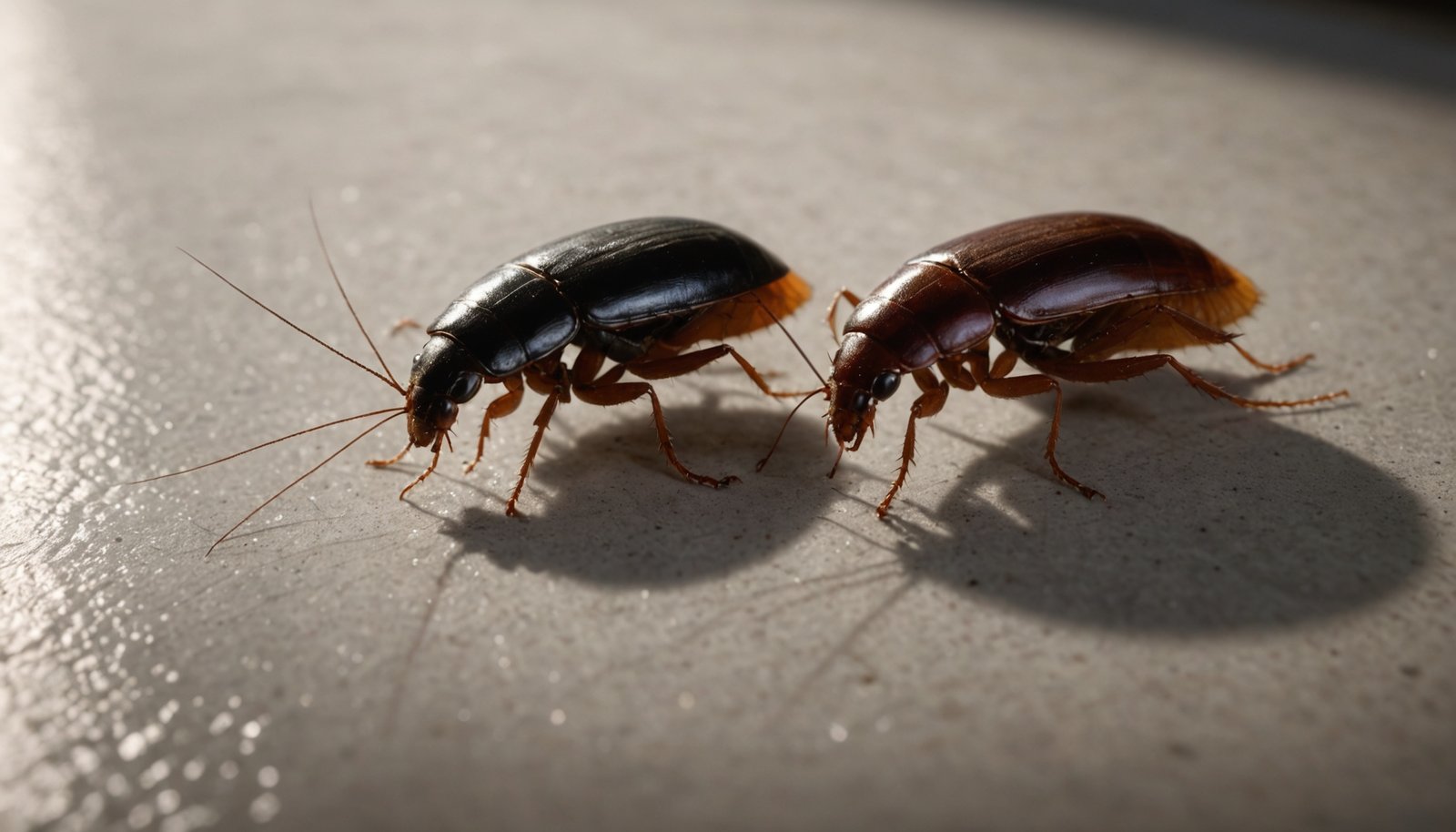
Ever wonder if cockroaches actually “talk” to each other? Some species do, using faint clicking sounds and soft chirps. These noises come from stridulation mechanics—roaches rub specialized body parts together to communicate. You might never hear it, but it matters a lot to them. While they’re vocal in their own way, cockroaches also leave physical evidence like droppings, egg cases, and a musty smell that can be easier for humans to notice than their sounds.
Certain roaches, like Nauphoeta cinerea, produce gentle clicking sounds during courtship, then ramp them up if a female doesn’t respond. Other species, such as Leucophaea maderae and Megaloblatta, use similar stridulation mechanics as warning or communication signals, though they’re usually too quiet for human ears.
Chirping signals work the same way: males may chirp at females or rival males, but the tone and volume differ from crickets and are extremely soft. Then there are hissing behaviors. Madagascar hissing cockroaches force air through spiracles to intimidate rivals, react when disturbed, and advertise themselves during mating.
Why Cockroach Noises Are Worse at Night
You’re most likely to notice cockroach noises at night because that’s when their activity naturally peaks. While you sleep, they’re busy scurrying, climbing, and foraging through your kitchen, bathroom, and walls. In a quiet house with background sounds gone, even light rustling or skittering suddenly becomes hard to ignore. Their nocturnal activity means that repeated late‑night scuttling over several nights can be an early warning sign of a growing infestation.
Nocturnal Activity Peaks
When the house finally goes quiet at night, cockroaches are just hitting their stride, which is why their rustling and skittering sounds seem so much worse after dark. Their nocturnal behavior isn’t random; it follows a precise internal clock that pushes them to move, feed, and mate when it’s darkest. You’ll hear more noise as their scavenging patterns ramp up in the hours after lights go off. This internal timing is driven by a circadian rhythm that evolved to keep them safest and most efficient in low-light conditions.
At night, roaches:
- Hit peak movement from dusk through roughly 11 p.m.–2 a.m.
- Follow a circadian rhythm that keeps them active in darkness
- Extend foraging when infestations are dense and food is scarce
- Spend the day in near-immobile “rest” states, then burst into motion
- Avoid light, which directly suppresses their locomotion
Quiet Houses Amplify Sounds
As the usual hum of daily life dies down, the silence in your home actually turns cockroaches into louder houseguests. With TVs off, traffic muted, and appliances quiet, your sound detection sharpens. Rustling in cabinets, faint scratching in walls, or soft scurrying across the floor suddenly cuts through the stillness.
Your nighttime ambient awareness makes tiny movements easier to notice. Wall voids, cabinet corners, and tight crevices act like mini amplifiers, projecting noises you’d never catch during the day.
| Time of Day | Background Noise Level | What You’re Likely to Hear |
|---|---|---|
| Morning | High | Almost nothing |
| Evening | Moderate | Occasional rustling |
| Late Night | Low | Scratching, scurrying, clicks |
That quiet house may be why you finally realize an infestation’s underway.
Where Cockroach Sounds Come From in Your Home
When you hear faint scratching or rustling at night, it often comes from hidden spots like walls, voids, vents, and the spaces around kitchen appliances. Roaches also use bathrooms, drains, and pipes as moist highways, so sounds from these areas can signal active pathways into your home. Understanding which structures and rooms carry these noises helps you narrow down where an infestation’s really hiding.
Walls, Voids, And Vents
Few places amplify cockroach noises more than the hidden spaces in your walls, voids, and air vents. When you hear faint rustling that sounds like dry leaves, you’re often listening to roaches moving through ductwork or wall cavities. At night, their skittering and scratching echo through these hollow spaces, especially where gaps, cracked seals, or faulty seams let them slip inside.
You’ll often notice signs around vent covers and along walls. Careful vent maintenance and basic pest prevention make a big difference, because roaches thrive where you don’t look often.
- Nighttime rustling or scratching from vents or walls
- Musty, oily odors blowing from registers
- Black specks or egg casings near vent openings
- Roaches emerging from wall gaps
- Worsening allergies when HVAC runs
Kitchens And Hidden Appliances
Kitchens act like amplifiers for cockroach noise, especially around the warm, dark gaps behind and beneath your appliances. When you hear faint ticking, rustling, or scrambling at night, it often comes from these hidden zones. Heat from refrigerators, stoves, and dishwashers keeps roaches active and breeding, while crumbs, grease, and spills fuel them.
Poor kitchen cleanliness lets food particles accumulate in cracks around stove bases, under refrigerators, and beside dishwashers. Even tiny leaks or condensation under sinks or behind units create humid pockets where eggs and nymphs thrive. Tight spaces between cabinets and appliances give roaches cover to move, mate, and feed with little disturbance. Consistent appliance maintenance—fixing leaks, cleaning coils, and pulling units out to vacuum—reduces both noise and infestation risk.
Bathrooms, Drains, And Pipes
Although kitchens get most of the blame, bathrooms, drains, and pipes are just as likely to be the source of cockroach sounds in your home. Roaches slip through dry, unused drains and cracked pipes, then rustle and scratch as they move behind walls and under cabinets. You may hear faint noises from the tub, sink, or floor drain, especially at night when they’re most active.
Listen and look for:
- Soft scratching from inside drain pipes
- Rustling behind bathroom walls or cabinets
- Roaches emerging from shower or sink drains
- Musty, oily odors coming from pipes or under-sink spaces
- Sounds around known leaks or damp spots
Consistent drain maintenance, prompt pipe repairs, hot-water flushing, and strict moisture control greatly reduce drain-based infestations.
How to Tell Roach Noises From Other Pests
Ever wonder if that faint rustling at night comes from roaches or something bigger? A quick roach behavior and pest comparison helps you narrow it down. Roach sounds are subtle: think dry leaves rustling, soft scratching on paper or cardboard, or a light shuffle as they dart across cabinets and behind appliances. You’ll often hear this in kitchens, bathrooms, and walls late at night when the house is quiet.
Rodents usually sound heavier and louder. Mice and rats gnaw, so you’ll notice steady chewing, thumps, and occasional squeaks or squeals—true vocal noises roaches don’t make. Rodents also produce more obvious scurrying with weighty footfalls.
Roaches rarely chirp or hiss indoors, and when they do, it’s faint and brief compared to crickets or larger insects. Instead, listen for intermittent, whisper-soft movement, sometimes paired with a musty odor. That combination often points to roaches rather than other pests.
What to Do If You Think You Hear Roaches
When you suspect that faint rustling really is roaches, don’t ignore it—confirm and act quickly. Start with how to investigate the source: listen at night in a quiet room and pinpoint whether scratching, clicking, or soft pattering comes from walls, floors, or behind appliances. Then move from sound to solid evidence.
Use this quick plan:
- Check high‑risk spots: under sinks, behind kitchen cabinets, around refrigerators, dishwashers, and plumbing lines.
- Look for signs of infestation: pepper‑like droppings, rice‑sized pellets, shed skins, and brown egg cases in dark corners.
- Note odors: a musty, oily, or pungent smell often means a growing population inside walls or cabinets.
- Clean and control immediately: remove crumbs and water, declutter, seal gaps, and place baits or sticky traps in hotspots.
- Call a professional if noises, droppings, or odors persist; hidden colonies reproduce fast and need targeted treatment.
Frequently Asked Questions
Can I Use Smartphone Apps or Devices to Detect Cockroach Noises?
You can try apps, but current sound detection and noise identification for cockroaches isn’t scientifically reliable. App effectiveness remains unproven, so you’d treat them as experimental tools, not primary pest control or confirmed infestation detectors.
Do Different Cockroach Species Make Different Types or Volumes of Sounds?
Yes, different cockroach species make distinct types and volumes of sounds. You’ll notice varying sound frequency, communication methods, and intensities, influenced by species identification and habitat differences, especially in hissing versus stridulating cockroaches.
Can Cockroach Noise Levels Indicate How Severe My Infestation Is?
Yes, noise levels can show severity. When you hear frequent nocturnal scurrying, rustling, or hissing, that cockroach communication often signals high population density and strong infestation indicators, meaning you likely need prompt professional pest control.
Are There Building or Environmental Factors That Amplify Cockroach Sounds?
Yes, you’ll hear more when hard building materials, gaps in sound insulation, and wire-mesh or hollow floors reflect and transmit their acoustic properties, while low environmental noise and stable temperatures make subtle hisses and movements stand out.
Is It Possible to Prevent Roaches by Changing Nighttime Household Noise Levels?
You can’t prevent roaches just by changing nighttime household noise levels. Instead, use noise reduction and soundproofing techniques for comfort, but focus your nighttime habits on sanitation, moisture control, and sealing entry points in the household environment.
Conclusion
When you know what cockroaches sound like, you don’t have to rely on just spotting one to realize there’s a problem. If you’re hearing scratching, rustling, or faint chirps at night—especially in kitchens, bathrooms, or walls—you shouldn’t ignore it. Trust your ears, investigate quickly, and cut off food, water, and hiding spots. When in doubt, call a professional so you can stop the infestation early and get your home quiet again.
