
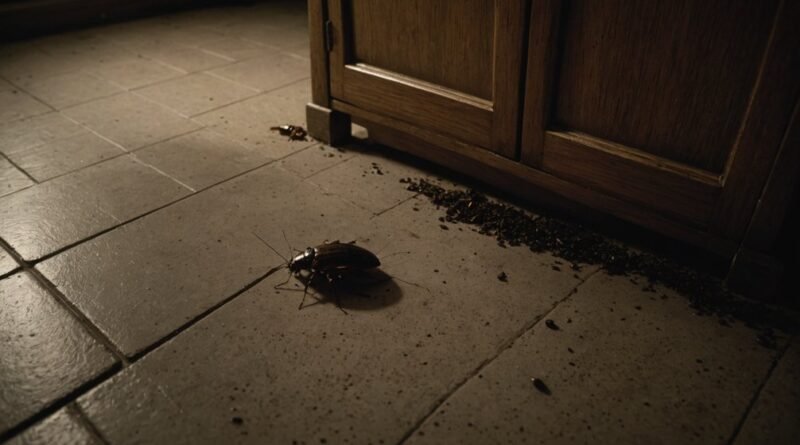
Early Signs of a Cockroach Infestation, How to Identify Activity Quickly
Spot early cockroach activity by scanning kitchens and bathrooms for fast-moving adults, especially in daylight. Look for fresh, pepper-like droppings along baseboards, moist and dark when new, and smear trails on common routes. Check under sinks, behind appliances, near drains and pipes, and in furniture. Notice musty, oily odors, rustling at night, and quick skitters when lights flip on. Use sticky traps to confirm. Poor sanitation and building cracks raise risk. Here’s how to pinpoint and act fast.
Key Takeaways
- Spot fast-moving brown or black roaches, especially in daylight, which signals overcrowding and a serious infestation.
- Look for pepper-like droppings along baseboards, corners, and under sinks; fresh droppings are moist and dark.
- Check common hiding spots: inside cabinets, behind appliances, around drains, and under bathroom/kitchen sinks.
- Notice musty, oily odors and nighttime skittering when lights turn on, indicating active colonies.
- Use sticky traps near suspected travel routes and food sources to confirm activity quickly.
Visual Clues: Live Roaches, Droppings, Skins, and Egg Cases
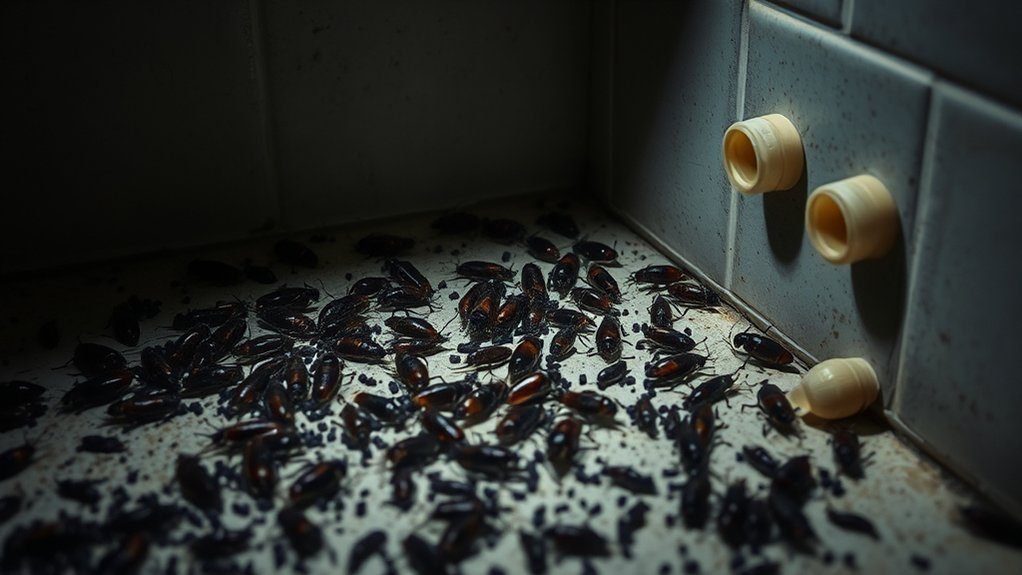
Silence at night can give roaches away. If you spot fast-moving, brown or black adults after dark, you’re likely dealing with an infestation.
Seeing them in daylight usually means it’s severe—overcrowding pushes them out. Don’t dismiss a single sighting; roaches travel in groups, so one implies more. Live roaches alongside dead ones or molted skins confirm active activity.
Scan for droppings—tiny black specks that look like pepper, coffee grounds, or pellets—along baseboards, corners, and travel paths. Early detection and immediate action help prevent an established colony that requires professional intervention.
Fresh droppings look moist and dark; older ones are dry and crumbly, helping you gauge activity. Dense clusters suggest a nearby nest and a heavier problem.
Look for shed skins—paper-thin, translucent shells—inside cupboards, drawers, and near plumbing.
Multiple skins signal growing nymphs and a progressing infestation.
Finally, check for egg cases (oothecae): brown, capsule-shaped casings in cracks, behind appliances, under furniture, or near leaks.
Even one confirms active breeding and escalating risk.
Where They Hide: Kitchens, Bathrooms, and Other Hotspots
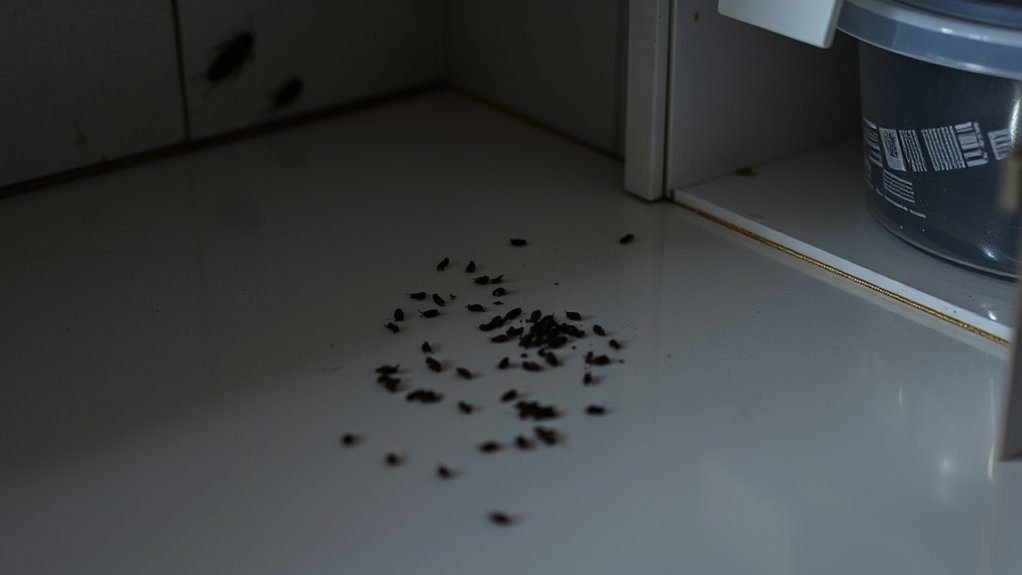
Although roaches can turn up anywhere, they cluster where warmth, moisture, and food converge—making kitchens and bathrooms prime real estate.
Roaches flock to warmth, moisture, and food—so kitchens and bathrooms become prime hotspots.
In kitchens, check inside cabinets, around open packages, and the dark zones behind and under refrigerators, ovens, microwaves, toasters, and coffee makers. Look beneath sinks and along plumbing where heat and humidity linger. Scan cracks in walls, floors, and cabinetry—they love tight, undisturbed seams. Roaches often hide under sinks, so inspect these warm, damp zones carefully for droppings and crevices.
Bathrooms offer constant moisture and easy meals from residues and paper waste. Inspect under sinks, inside vanity cabinets, behind toilets, and inside wall voids. Leaky pipes, clogged drains, and damp laundry piles amplify attraction.
Don’t overlook plumbing networks. Roaches travel through sink and floor drains, shower drains, and shared pipes in multi-unit buildings. Basements and utility rooms with humid pipe runs are common harborage.
Furniture and storage also hide activity—under couches and beds, between cushions, in cardboard boxes, and along baseboards and wallpaper edges.
- Check warm, tight spaces first
- Prioritize damp, low-traffic areas
- Follow plumbing lines and drains
Reading the Evidence in Droppings and Smear Marks
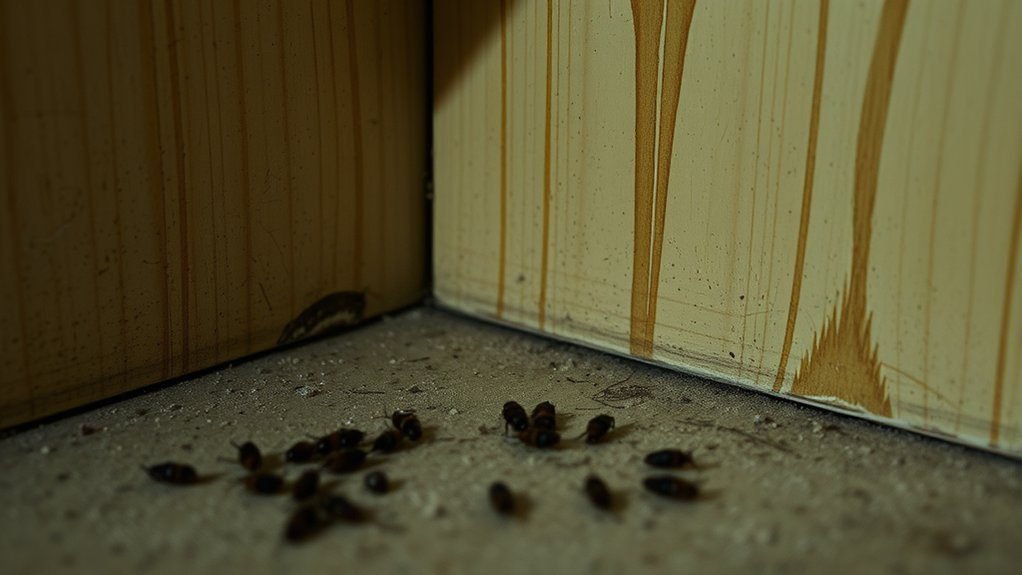
Once you’ve checked the usual hideouts, confirm what’s moving in by reading what they leave behind. Look for droppings clustered near cracks, behind appliances, and inside cabinets. Small roaches leave pepper-like specks; larger species drop cylindrical pellets that can approach an inch. Fresh droppings look darker and moist, sometimes shiny, and may smear; older ones dry and lighten slightly but don’t crumble like mouse droppings. Distinct lengthwise ridges help you distinguish them from smooth mouse feces. Fresh droppings indicate recent activity and should prompt quick cleanup and baiting based on the health risks roaches pose.
Smear marks—dark brown to black stains from feces mixed with oils and moisture—often trace travel routes along baseboards and cabinet edges, especially in humid spots. Heavier smearing or larger droppings piles usually signals a longer or denser infestation. Clean, then recheck: new droppings mean active roaches; no new evidence suggests control is working. Always handle cleanup with disposable gloves and contain debris to limit allergen spread.
| Evidence | What it shows | What to do |
|---|---|---|
| Fresh, dark, moist droppings | Active presence | Clean, monitor daily |
| Dry, lighter droppings | Older activity | Inspect nearby harborage |
| Linear smear marks | Common routes | Place baits along paths |
Nocturnal Behaviors, Odors, and Other Activity Signals
When the house goes quiet and lights dim, roaches switch on: their circadian clock drives peak foraging and mate-seeking around midnight, then keeps them tucked into tight, dark gaps by day. They are nocturnal, so daytime sightings can indicate a significant infestation.
You’ll notice quick skitters when you flip on a light; that rapid escape is a classic light-triggered response. Nighttime rustling in walls, cabinets, or behind appliances also points to movement along cracks, pipes, and vents.
If you find crumbs disturbed or food partly eaten by morning, they likely fed while you slept.
A musty, oily odor suggests aggregation. Sex pheromones peak at night, drawing roaches to warm, humid niches (German roaches) or cool, damp zones (Oriental roaches).
Flashlight checks after dark often reveal activity that daytime inspections miss.
- Listen for faint skittering after midnight near kitchens and bathrooms.
- Sniff out musty, oily odors around baseboards, cupboards, and under sinks.
- Scan with a flashlight along wall edges, appliance backs, and vent lines.
Risk Factors, DIY Monitoring, and When to Call a Pro
Nighttime skitters and musty odors tell you roaches are active; next, focus on what lets them gain ground and how to track them early. Risk climbs with poor sanitation, lax pest control, and improper food storage.
Older buildings with cracks, leaks, or broken plumbing invite harborage. Multi-family, high-density, and lower-income housing—especially in underinvested urban areas—faces higher pressure and allergen exposure. Restaurants and kitchens with food access also amplify risk. Cockroach allergens are linked to increased asthma, and early exposure in children can trigger symptoms, making allergen exposure a key health concern.
Monitor now. Place sticky traps along walls, behind appliances, and in dark corners. Night-check with a flashlight under sinks and at baseboards for live insects, pepper-like droppings, cast skins, and dark, capsule-shaped egg cases.
Inspect kitchens daily for contamination.
Call a pro if traps catch multiple roaches, droppings appear widely, or egg cases show up in several spots. If DIY cleanup doesn’t cut activity, or asthma and allergies worsen, escalate.
Infestations across rooms or multi-unit buildings, rapid breeders like German roaches, or suspected resistance demand professional treatment.
Frequently Asked Questions
Are Cockroaches Dangerous to Pets or Aquarium Fish?
Yes. Cockroaches threaten pets and aquarium fish. Your pets can suffer allergies, infections, or illness from contaminated dishes or eating roaches. Fish risk chemical poisoning during treatments; cover tanks, monitor behavior and water, and consult pest pros for aquarium-safe methods.
Can Roaches Hitchhike Home on Groceries or Packages?
Yes. Roaches can hitchhike on groceries, cardboard, bags, and small appliances, especially German cockroaches. You should inspect packages, reduce clutter, seal gaps, store food airtight, and isolate secondhand items. Educate household members and monitor kitchens and breakrooms.
Do Essential Oils Actually Repel Cockroaches Effectively?
Yes, they can, but results vary by oil and species. You’ll get strong repellency from citrus hystrix, peppermint, clove, oregano, and catnip; eucalyptus is moderate. Oils dissipate fast—use sustained-release gels, reapply often, and combine with sanitation and baits.
Will Ultrasonic Pest Repellers Deter Cockroaches?
No. You’ll see little to no deterrence in homes. Lab-only effects require precise, intense frequencies consumer units don’t deliver. Range is short, obstacles block sound, and roaches habituate. Use sanitation, exclusion, baits, and targeted insecticides instead.
How Long Do Cockroach Eggs Survive Without the Mother?
They survive for weeks to months without the mother. You’re dealing with oothecae that protect embryos. Depending on species and warmth, eggs hatch in about 24–80 days, often after treatments, so you’ll need follow-up control to break cycles.
Conclusion
You’ve got the tools to spot roaches early and act fast. Trust what you see: live insects, pepper-like droppings, shed skins, and egg cases. Check kitchens, bathrooms, and warm cracks, and watch for nocturnal scurrying, musky odors, and smear marks. Use sticky traps and flashlight inspections to confirm activity. Reduce food, water, and clutter to cut risks. If signs persist or spread quickly, don’t wait—call a licensed pro to stop the infestation before it grows.
