
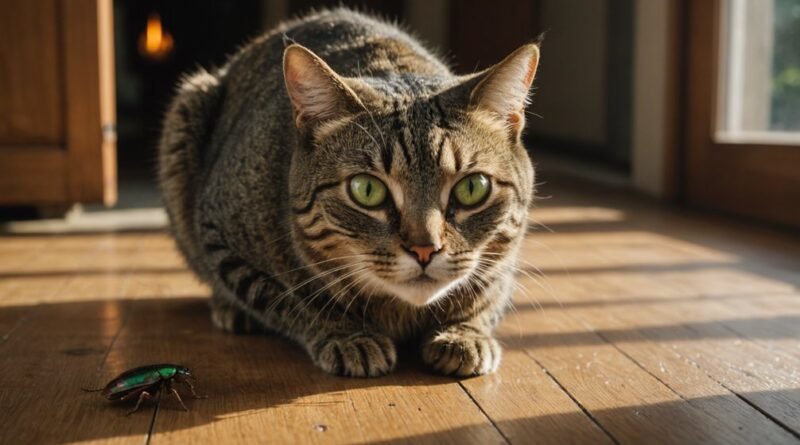
Are Cockroaches Dangerous for Pets, What Owners Should Know
Yes, cockroaches are dangerous for pets. They spread bacteria including Salmonella and E. coli by contaminating food and water bowls, and pets that eat roaches risk vomiting, diarrhea, choking, and intestinal blockage. Allergens from droppings and shed skins trigger coughing, wheezing, and itchy skin in sensitive dogs and cats. Young, elderly, and immune-compromised animals face the highest risk from cockroach exposure.
Around 27.9% of households with pets experience cockroach infestations annually, and over 42.3% of veterinarians have treated animals for illnesses possibly related to cockroach-borne bacteria. Understanding the specific ways roaches harm pets, what symptoms to watch for, and how to prevent exposure makes a real difference in protecting your animals at home.
Key Takeaways
Here is a quick summary of the key points this guide covers:
- Cockroaches contaminate pet food and water with Salmonella, E. coli, and other pathogens, causing vomiting, diarrhea, and serious gastrointestinal illness.
- Eating roaches poses choking and intestinal blockage risks, especially for small dogs, cats, and elderly or young pets.
- Allergens from roach droppings and shed skins trigger itchy skin, coughing, and asthma-like symptoms in sensitive animals.
- Watch for sudden gastrointestinal upset, itching, coughing, wheezing, tremors, or appetite changes and seek veterinarian care if symptoms persist.
- Prevent exposure by sealing pet food, cleaning feeding areas, fixing leaks, reducing clutter, and using pet-safe pest control treatments when needed.
Cockroach Habits and Why Pets Are at Risk
Understanding how cockroaches behave inside a house explains why they pose such a consistent risk to pets. Roaches are nocturnal, emerging at night to forage across kitchen floors, counters, and surfaces. They travel between drains, trash areas, and pet feeding stations along the same routes every night, depositing bacteria and fecal matter across every surface they touch.
Cockroaches are omnivores and will feed on pet food left in bowls, kibble stored in unsealed bags, and water left overnight in pet dishes. Their ability to flatten their bodies means they access gaps, cracks, and storage areas that appear secure to humans. A cockroach infestation in the kitchen means contamination of the pet feeding area is almost certain, even when roaches are not visibly present during feeding times. Dogs and cats that hunt or play with roaches face additional direct exposure through ingestion, skin contact, and bites that the average homeowner does not anticipate as a health risk.
Health Risks Cockroaches Pose to Pets
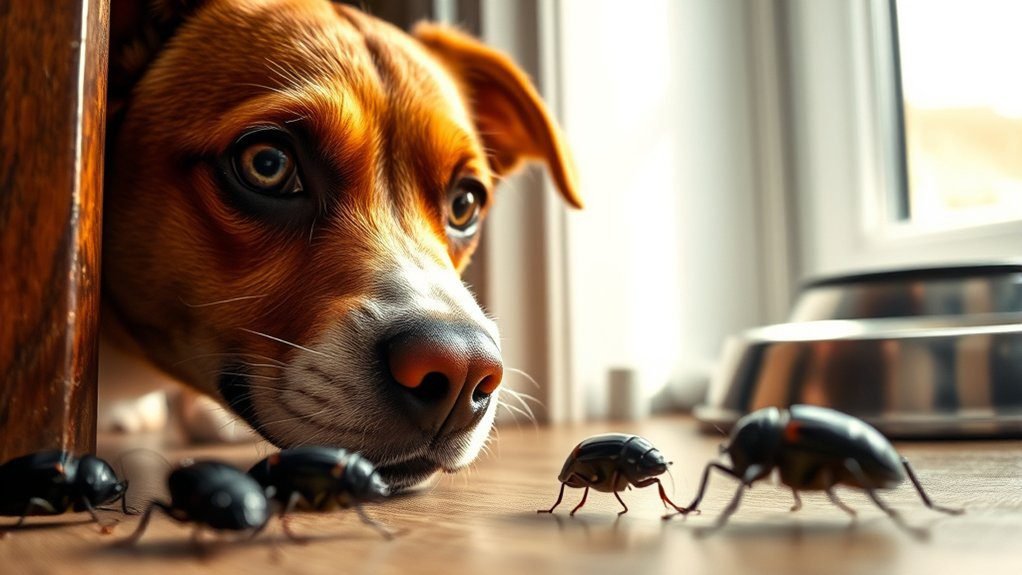
Even when cockroaches are rarely seen, they quietly threaten pet health through multiple routes simultaneously. They carry pathogenic bacteria that contaminate food and water bowls as they forage across kitchen floors and surfaces. If your dog or cat eats tainted kibble or the roach itself, the risk of vomiting, diarrhea, and gastrointestinal illness rises significantly. The danger is highest for young animals with developing immune systems, elderly pets, and animals already dealing with health conditions that compromise their ability to fight infection.
Cockroaches create physical hazards beyond bacterial contamination. Small dogs and cats can choke on a swallowed roach, and whole insects may cause intestinal blockage requiring veterinary intervention. Bites from roaches are rare but documented, particularly during heavy infestations where insect populations compete for resources. These bites can cause skin irritation and open sores that invite secondary bacterial infections if left untreated. Constant pest activity in living areas also creates chronic stress for some animals, leading to appetite changes, restlessness, and avoidance of certain rooms, which may aggravate existing health conditions over time.
Which Pets Face the Highest Risk
Not all pets are equally vulnerable to cockroach-related health problems. Species, breed, age, and existing health status all influence how severely a cockroach infestation affects an individual animal.
- Dogs that forage, hunt, or scavenge actively face higher ingestion risk than more passive animals. Brachycephalic breeds such as Bulldogs, Pugs, and Boxers also have compromised respiratory function that makes them more vulnerable to allergen-triggered breathing problems.
- Cats that hunt insects and carry them indoors face repeated direct exposure. Allergy-prone breeds including Siamese and Sphynx cats show greater sensitivity to cockroach allergens and may develop skin and respiratory reactions more readily than other types.
- Birds and reptiles face species-specific risks. Birds have highly sensitive respiratory systems and show pronounced reactions to airborne allergens from roach droppings and shed skins. Reptiles risk parasite ingestion and pathogen transfer when they eat cockroaches from infested environments rather than clean feeder colonies.
- Young, elderly, and immune-compromised animals across all species face the highest risk from any cockroach-borne pathogen because their ability to mount an effective immune response is limited.
Allergens From Roaches and How They Affect Pet Health
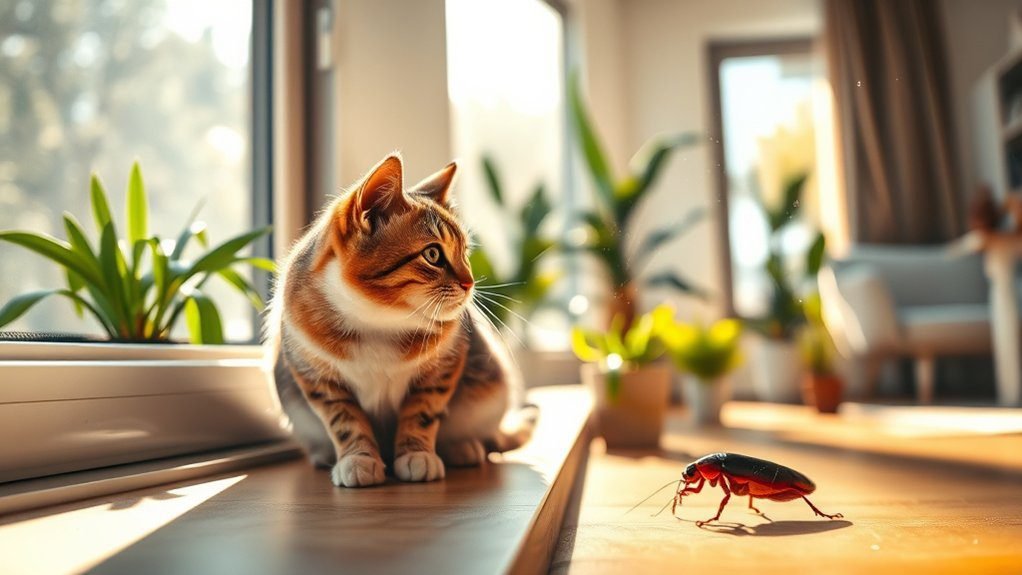
Cockroach allergens settle into dust, bedding, carpets, and floors where pets spend most of their time. These proteins, found in roach droppings, shed exoskeleton skins, and body parts, accumulate in the environment over time and trigger reactions even when live roaches are no longer present. Approximately 18.7% of pet owners report their animals showing allergic reactions linked to cockroach exposure, though the actual rate is likely higher since cockroach allergens are rarely identified as the cause without specific veterinarian testing.
Dogs and cats with respiratory sensitivities develop coughing, sneezing, wheezing, and labored breathing from ongoing allergen exposure in the home environment. Chronic contact drives itchy, inflamed skin, particularly in animals with pre-existing dermatitis or flea allergies where the immune response is already sensitized. Persistent scratching from skin irritation opens pathways for secondary bacterial infections that require separate treatment. Pets may also pick up bacteria directly by sniffing or licking contaminated surfaces, floors, and cracks where cockroach droppings accumulate.
Recognizing Allergen-Related Symptoms in Pets
Cockroach allergen reactions in pets can be easy to mistake for seasonal allergies or other environmental sensitivities. These patterns help distinguish cockroach-related reactions from other causes:
- Symptoms that worsen indoors, particularly in the kitchen and areas near pet feeding stations
- Flare-ups tied to specific rooms, surfaces, or bedding where allergen deposits are highest
- Coughing and wheezing that intensifies at night when roach activity peaks
- Itching, hot spots, rashes, and hair loss from repeated scratching in the same locations
- Symptoms that improve when the pet is removed from the home environment for several days
Disease Transmission and Food and Water Contamination

Cockroaches carry up to 15 different types of harmful pathogens affecting pets, acting as mechanical vectors that pick up germs in unsanitary areas and deposit them on bowls, kibble, water dishes, and preparation surfaces. About a quarter of microbes isolated from roaches are food-borne pathogens, including E. coli O157:H7, Staphylococcus aureus, Bacillus, and Salmonella. Their feces, saliva, and shed body parts spread contamination across every surface they contact, with viable pathogens persisting in excreta for days after deposit.
Roaches in kitchens and feeding zones carry intestinal bacteria, viruses, and parasites like Sarcocystis that threaten pets through ingestion. Campylobacter jejuni has been documented near food preparation sites. The primary route of illness is contaminated food and water that pets ingest during normal feeding. Prevention and early management of any cockroach infestation in the home is the most reliable way to interrupt this contamination cycle before it causes illness in dogs, cats, or other household animals. For a full breakdown of the diseases cockroaches spread and how transmission occurs, the cockroach health risks and safety concerns guide covers documented disease links in detail.
Toxicity of Cockroach Baits and Insecticides Around Pets
Pest control treatments for cockroach infestations introduce a second category of risk for pets that is often overlooked until an accidental exposure occurs. Only 12.4% of pet-related toxic exposures involve cockroach pesticides according to recent data, but the consequences when exposure does happen can be serious, particularly for small dogs and cats.
Over-the-counter sprays and foggers pose the highest risk because they disperse active ingredients across open surfaces, floors, and air that pets contact directly. Residue on floors is of particular concern for cats that groom their paws after walking through treated areas, and for small dogs that stay close to floor surfaces throughout the day. Airborne insecticides and foggers are especially dangerous for birds and reptiles with sensitive respiratory systems, and should never be used in homes with these animals present.
Safer Pest Control Choices for Pet Owners
The safest pest control approach for households with pets prioritizes targeted, low-toxicity methods placed in inaccessible locations rather than broadcast treatments that spread chemicals across shared living spaces:
- Gel bait stations placed inside cabinets, behind appliances, and under sinks where pets cannot access them directly
- Sticky traps positioned along walls and in enclosed areas away from pet movement paths
- Boric acid dust applied inside wall voids, in sealed crevices, and behind fixtures where pets do not travel
- Diatomaceous earth along baseboards and under furniture in areas where pets have minimal floor contact
- Professional pest control services using low-toxicity, pet-safe formulations with targeted application equipment that minimizes surface residue
Always follow product label instructions precisely, ensure treated areas are fully dry before allowing pet access, and ventilate rooms thoroughly after any insecticide application. If you are uncertain whether a product or treatment is safe for your specific animals, a veterinarian or licensed pest control service can advise on appropriate options for your household.
Behavioral and Physical Signs Your Pet May Be Exposed
Cockroach exposure produces symptoms that overlap with many common conditions, which is why identifying the pattern matters as much as identifying individual signs. Sudden changes in gut health, skin condition, breathing, and behavior following roach infestation activity are the most reliable indicators.
Watch for vomiting, diarrhea, or a sudden drop in appetite after your pet scavenges, hunts, or forages in infested areas. Abdominal tenderness, shivering, and lethargy can follow ingestion of contaminated food or roaches carrying toxic substances. Skin redness, itchiness, rash, and hot spots suggest contact with allergens or bait products. Respiratory signs including sneezing, coughing, and wheezing are red flags particularly in dogs and cats with asthma or pre-existing respiratory conditions.
- Vomiting, diarrhea, and belly tenderness after bug-chasing or floor-sniffing
- Itchy, inflamed skin with nonstop scratching or licking
- Coughing, wheezing, watery eyes, and a runny or stuffy nose
- Tremors, poor coordination, or intense shivering after possible pesticide ingestion
- Behavior shifts including anxiety, agitation, unusual sleep patterns, or altered appetite
Act quickly if coughing or wheezing escalates, if tremors appear, or if vomiting and diarrhea persist beyond 24 hours. These signs warrant prompt veterinarian care rather than a wait-and-see approach, especially for young or elderly animals whose condition can deteriorate faster than that of healthy adults.
Prevention and Safe Pest Control for Pet Owners
The most effective protection for pets combines removing what attracts cockroaches with treating any active infestation before it reaches the feeding and sleeping areas where animals spend most of their time. Good sanitation, moisture control, and physical exclusion reduce cockroach pressure in the home without chemical risk to animals.
Clean pet feeding areas promptly after every meal, pick up leftovers immediately, and store kibble in sealed airtight containers rather than in original bags that roaches can chew through. Take out trash regularly and use bins with tight-fitting lids. Fix all plumbing leaks, lower indoor humidity in bathrooms and kitchens, and seal cracks around doors, windows, pipes, and entry points along baseboards. Vacuum and declutter regularly to reduce harborage spots where roaches nest and breed undisturbed near pet areas.
Wash pet bedding and toys in hot water regularly to reduce allergen accumulation. Clean floors with pet-safe disinfectants, ventilate well, and consider a HEPA air purifier in rooms where allergic or asthmatic pets spend the most time. Consult your veterinarian if your pet shows recurring symptoms that may be linked to cockroach allergen exposure, as allergy testing and management plans are available for sensitive dogs and cats.
For early detection before a cockroach infestation becomes established near pet areas, the early signs of a cockroach infestation guide covers what to look for before visible roaches appear. Understanding which cockroach species is present also helps target both treatment and prevention correctly, and the German vs American cockroach comparison guide covers the key identification differences between the two most common house species.
Frequently Asked Questions
Can my dog or cat get sick from eating a cockroach?
Yes. Cockroaches carry bacteria including Salmonella and E. coli on their bodies and in their digestive systems. A dog or cat that eats a roach can experience vomiting, diarrhea, and gastrointestinal distress as a result. In most healthy adult pets, one ingestion event causes mild and self-limiting illness. Repeated ingestion or exposure to heavily contaminated roaches from infested areas poses a higher risk, particularly for young animals, elderly pets, and those with compromised immune systems.
What are the signs that my pet has been affected by cockroaches?
The most common signs are sudden gastrointestinal upset including vomiting and diarrhea, itching and inflamed skin, coughing and wheezing, watery eyes, and behavioral changes including increased anxiety or appetite loss. In cases of pesticide ingestion, tremors, poor coordination, and excessive drooling may appear. Symptoms that worsen in specific rooms or at night, when roach activity peaks, are a strong indicator that cockroach exposure rather than another cause is responsible.
Are cockroach baits and traps safe around pets?
Most gel baits and sticky traps are low risk for pets when placed correctly in inaccessible locations such as inside cabinets, behind appliances, and in wall-level crevices. The risk increases when baits are placed on open floors, in food bowls, or in areas where pets graze. Avoid foggers, airborne sprays, and broadcast insecticides in homes with birds, reptiles, or small animals with respiratory sensitivities. When in doubt, use a professional pest control service that uses pet-safe formulations and can advise on safe re-entry times after treatment.
How do I know if my pet has cockroach allergies?
Cockroach allergy in pets presents as recurring itching, skin inflammation, hair loss, coughing, sneezing, or wheezing that does not resolve with standard allergy treatments. Symptoms that worsen indoors, particularly in kitchen and feeding areas, and improve when the pet is away from home are characteristic patterns. A veterinarian can perform allergy testing to confirm cockroach allergen sensitivity and recommend a management plan including both medical treatment and environmental control measures to reduce allergen levels in the home.
What should I do if I think my pet ingested cockroach poison?
Contact a veterinarian or animal poison control center immediately. Bring the product label or take a photo of it to give the vet exact information about the active ingredient and concentration. Signs of pesticide ingestion in pets include drooling, vomiting, tremors, poor coordination, seizures, and labored breathing. Do not induce vomiting unless specifically instructed to do so by a veterinarian, as this can worsen outcomes with certain chemicals. Fast veterinarian assessment is the safest response to any suspected pesticide exposure.
How can I control cockroaches safely in a home with pets?
The safest approach uses non-chemical methods first: thorough sanitation, sealed food storage, fixing moisture sources, and sealing entry points and cracks. When treatment is needed, use gel baits and sticky traps placed in inaccessible areas rather than sprays or foggers that leave surface residue. Boric acid in sealed wall voids and diatomaceous earth along undisturbed baseboards are effective options with low toxicity to pets when applied correctly. A professional pest control service using integrated pest management and pet-safe formulations provides the most complete treatment with the least risk to household animals.
{
“@context”: “https://schema.org”,
“@type”: “FAQPage”,
“mainEntity”: [
{
“@type”: “Question”,
“name”: “Can my dog or cat get sick from eating a cockroach?”,
“acceptedAnswer”: {
“@type”: “Answer”,
“text”: “Yes. Cockroaches carry bacteria including Salmonella and E. coli on their bodies and in their digestive systems. A dog or cat that eats a roach can experience vomiting, diarrhea, and gastrointestinal distress. In most healthy adult pets, one ingestion event causes mild and self-limiting illness. Repeated ingestion or exposure to heavily contaminated roaches poses a higher risk, particularly for young animals, elderly pets, and those with compromised immune systems.”
}
},
{
“@type”: “Question”,
“name”: “What are the signs that my pet has been affected by cockroaches?”,
“acceptedAnswer”: {
“@type”: “Answer”,
“text”: “The most common signs are sudden gastrointestinal upset including vomiting and diarrhea, itching and inflamed skin, coughing and wheezing, watery eyes, and behavioral changes including increased anxiety or appetite loss. In cases of pesticide ingestion, tremors, poor coordination, and excessive drooling may appear. Symptoms that worsen in specific rooms or at night, when roach activity peaks, are a strong indicator that cockroach exposure rather than another cause is responsible.”
}
},
{
“@type”: “Question”,
“name”: “Are cockroach baits and traps safe around pets?”,
“acceptedAnswer”: {
“@type”: “Answer”,
“text”: “Most gel baits and sticky traps are low risk for pets when placed correctly in inaccessible locations such as inside cabinets, behind appliances, and in wall-level crevices. The risk increases when baits are placed on open floors or in areas where pets graze. Avoid foggers, airborne sprays, and broadcast insecticides in homes with birds, reptiles, or small animals with respiratory sensitivities. When in doubt, use a professional pest control service that uses pet-safe formulations and can advise on safe re-entry times after treatment.”
}
},
{
“@type”: “Question”,
“name”: “How do I know if my pet has cockroach allergies?”,
“acceptedAnswer”: {
“@type”: “Answer”,
“text”: “Cockroach allergy in pets presents as recurring itching, skin inflammation, hair loss, coughing, sneezing, or wheezing that does not resolve with standard allergy treatments. Symptoms that worsen indoors, particularly in kitchen and feeding areas, and improve when the pet is away from home are characteristic patterns. A veterinarian can perform allergy testing to confirm cockroach allergen sensitivity and recommend a management plan including both medical treatment and environmental control measures.”
}
},
{
“@type”: “Question”,
“name”: “What should I do if I think my pet ingested cockroach poison?”,
“acceptedAnswer”: {
“@type”: “Answer”,
“text”: “Contact a veterinarian or animal poison control center immediately. Bring the product label or take a photo of it to give the vet exact information about the active ingredient and concentration. Signs of pesticide ingestion in pets include drooling, vomiting, tremors, poor coordination, seizures, and labored breathing. Do not induce vomiting unless specifically instructed to do so by a veterinarian, as this can worsen outcomes with certain chemicals.”
}
},
{
“@type”: “Question”,
“name”: “How can I control cockroaches safely in a home with pets?”,
“acceptedAnswer”: {
“@type”: “Answer”,
“text”: “The safest approach uses non-chemical methods first: thorough sanitation, sealed food storage, fixing moisture sources, and sealing entry points and cracks. When treatment is needed, use gel baits and sticky traps placed in inaccessible areas rather than sprays or foggers that leave surface residue. Boric acid in sealed wall voids and diatomaceous earth along undisturbed baseboards are effective options with low toxicity to pets when applied correctly. A professional pest control service using integrated pest management and pet-safe formulations provides the most complete treatment with the least risk to household animals.”
}
}
]
}
