
How Many Legs Does a Cockroach Have? Anatomy and Body Parts Explained
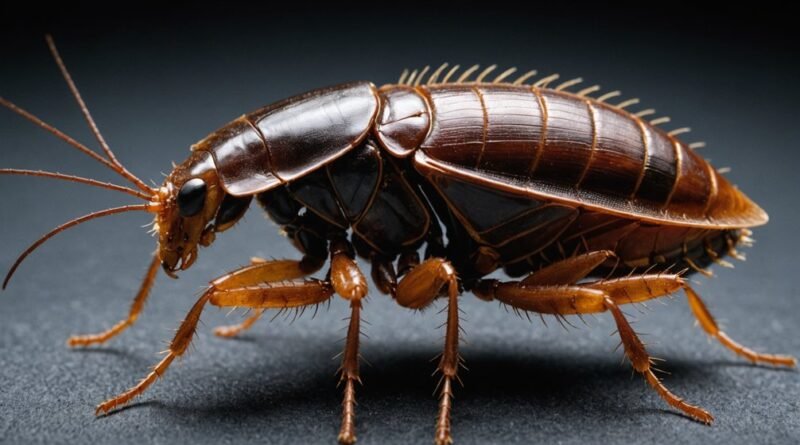
A cockroach has six legs, arranged as three pairs attached to its three-part thorax. You’ll see a front, middle, and hind pair, each built from segments called coxa, trochanter, femur, tibia, and tarsus. Claws, pads, and spines on the legs give strong grip, fast running, and climbing power. These work with the abdomen’s spiracles and cerci, plus the eyes and antennae, to keep roaches agile, stable, and hard to catch, as you’re about to discover.
Key Takeaways
- Cockroaches have six legs, arranged as three pairs, characteristic of all adult and nymph stages.
- All six legs attach to the thorax, with one pair on each segment: prothorax, mesothorax, and metathorax.
- Each leg has five main segments: coxa, trochanter, femur, tibia, and tarsus ending in claws and pads.
- Front, middle, and hind legs differ in size and function, handling steering, climbing, and powerful running propulsion.
- The head, thorax, and abdomen house eyes, antennae, muscles, spiracles, and cerci that coordinate movement, respiration, and rapid escape.
Cockroach Leg Count: The Quick Answer
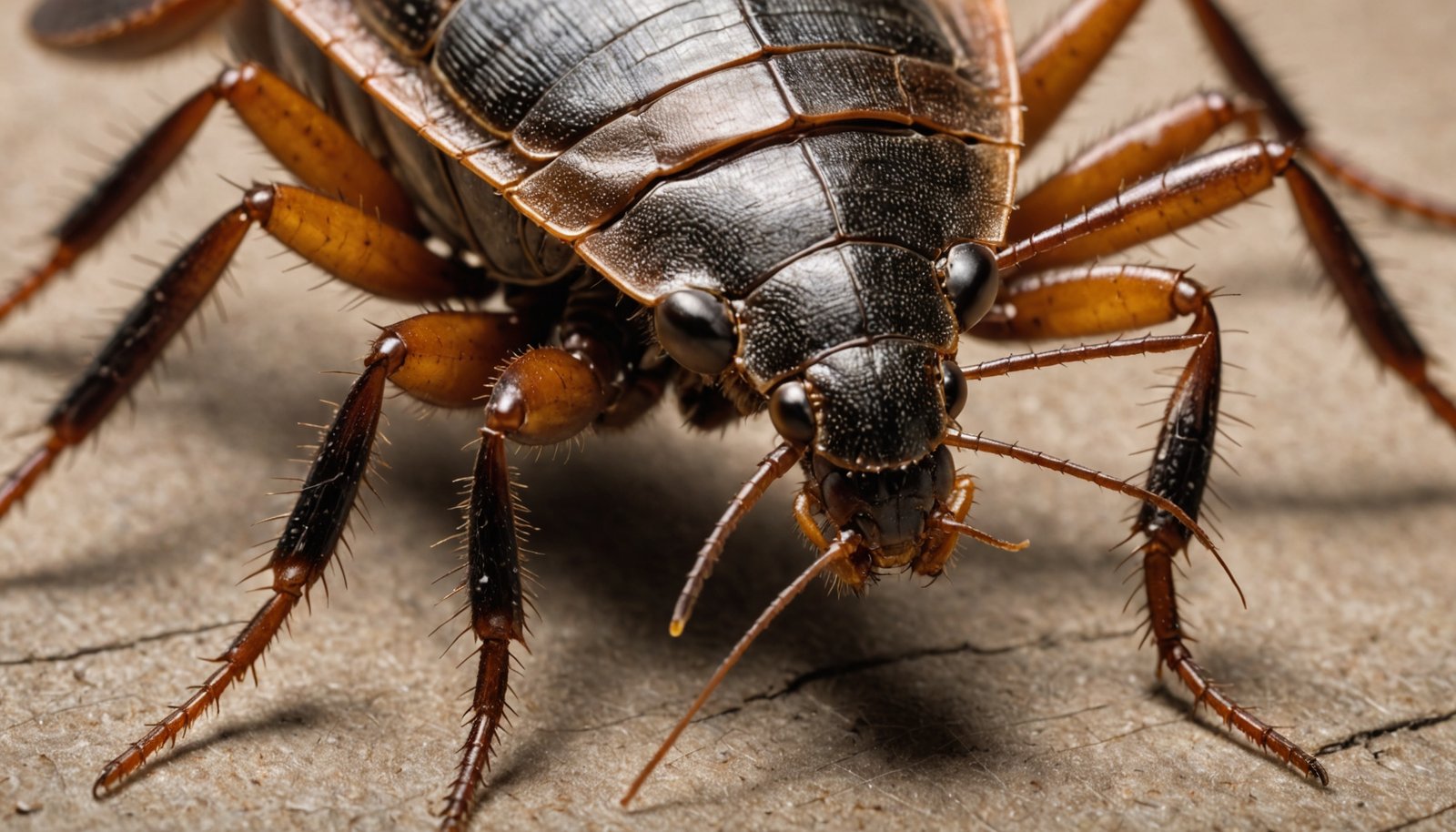
Cockroaches have six legs, a standard feature of insects in the order Blattodea. When you look at any adult cockroach—whether German, American, or another common species—you’ll always find three pairs of legs. This leg count doesn’t change as the insect grows; it stays fixed at six throughout its life. Even cockroach nymphs, which lack wings, always have the same six legs as adults.]
Each pair’s design reflects specific leg adaptations that help the insect move and survive. The shorter front legs help with fine control and quick adjustments. The middle pair helps balance speed and stability. The long, powerful hind legs provide the main thrust, letting a cockroach sprint up to three miles per hour—about 50 body lengths per second.
All six legs contribute important sensory functions. Spines, hairs, and pads on the leg surfaces detect texture, obstacles, and vibrations, helping the cockroach navigate rough terrain, cling to smooth surfaces, and react almost instantly to threats.
Cockroach Body Regions and Leg Attachment
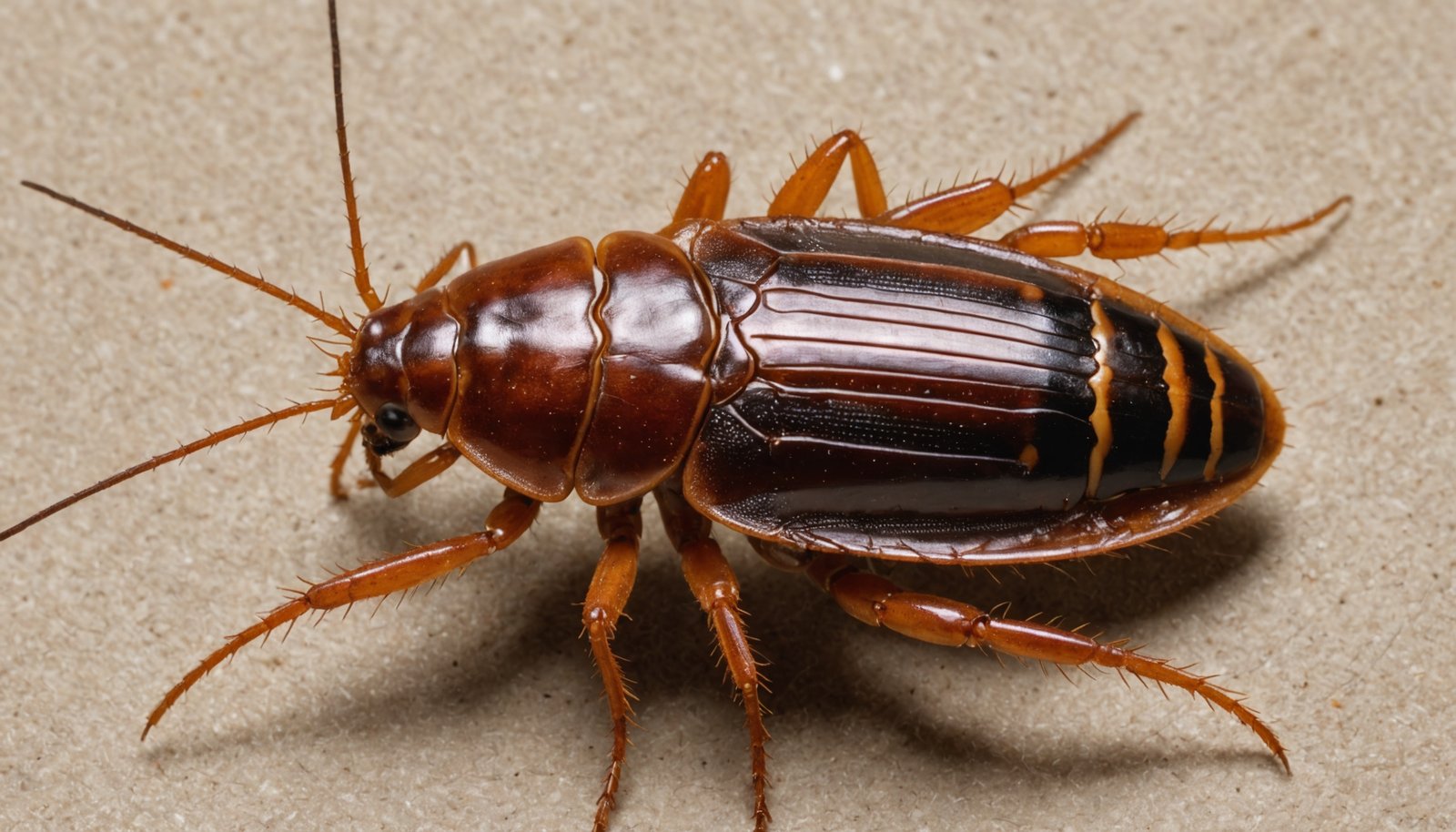
You’ve counted six legs, but now you need to see where they actually attach on the cockroach’s body. You’ll break the body into its three main regions—head, thorax, and abdomen—and focus on the thorax as the central hub for all six legs. By understanding how each leg anchors to the thoracic segments, you’ll see how structure supports the cockroach’s fast, coordinated movement. Each of the three thoracic segments bears a pair of legs, giving the cockroach its total of six.
Three Main Body Regions
Although a cockroach may look like a simple flattened bug at first glance, its body is clearly divided into three main regions—head, thorax, and abdomen—and all six legs attach to the thorax. When you examine the head structure, you’ll notice a triangular capsule packed with sensory organs: large compound eyes, long antennae, and strong mouthparts. Behind it, precise thorax segmentation (prothorax, mesothorax, metathorax) supports leg adaptation, giving each pair of legs a sturdy base while also anchoring the wings. Cockroaches are abundant worldwide, thriving in many environments but especially in warm tropical and subtropical regions.
The abdomen forms the largest region, with obvious segments and protective exoskeleton features. Here you’ll find most internal and reproductive organs, plus cerci that provide important auditory capabilities. Dark body coloration and waxy plates help the cockroach stay protected and hidden.
Thorax As Leg Hub
Serving as the insect’s locomotion center, the thorax functions as a compact hub where all six cockroach legs attach and operate. You can think of thorax functionality as a three-part system: prothorax, mesothorax, and metathorax, each bearing one pair of increasingly larger legs that power fast running. Inside, robust muscles drive both legs and wings. As part of the arthropod body plan, cockroaches possess a segmented body with jointed appendages and a molted exoskeleton.
At each segment, leg articulation begins with the coxa, the flattened base that locks into pleurites and midline sternites (prosternum, mesosternum, metasternum). From there, the trochanter, femur, tibia, and long tarsus extend outward. Dicondylic joints keep movement mostly in one plane, while coxal and sternal muscles lift, lower, and retract the legs. Flexible sclerites and membranes let cockroaches maneuver through tight crevices.
Cockroach Thorax Segments and Leg Pairs
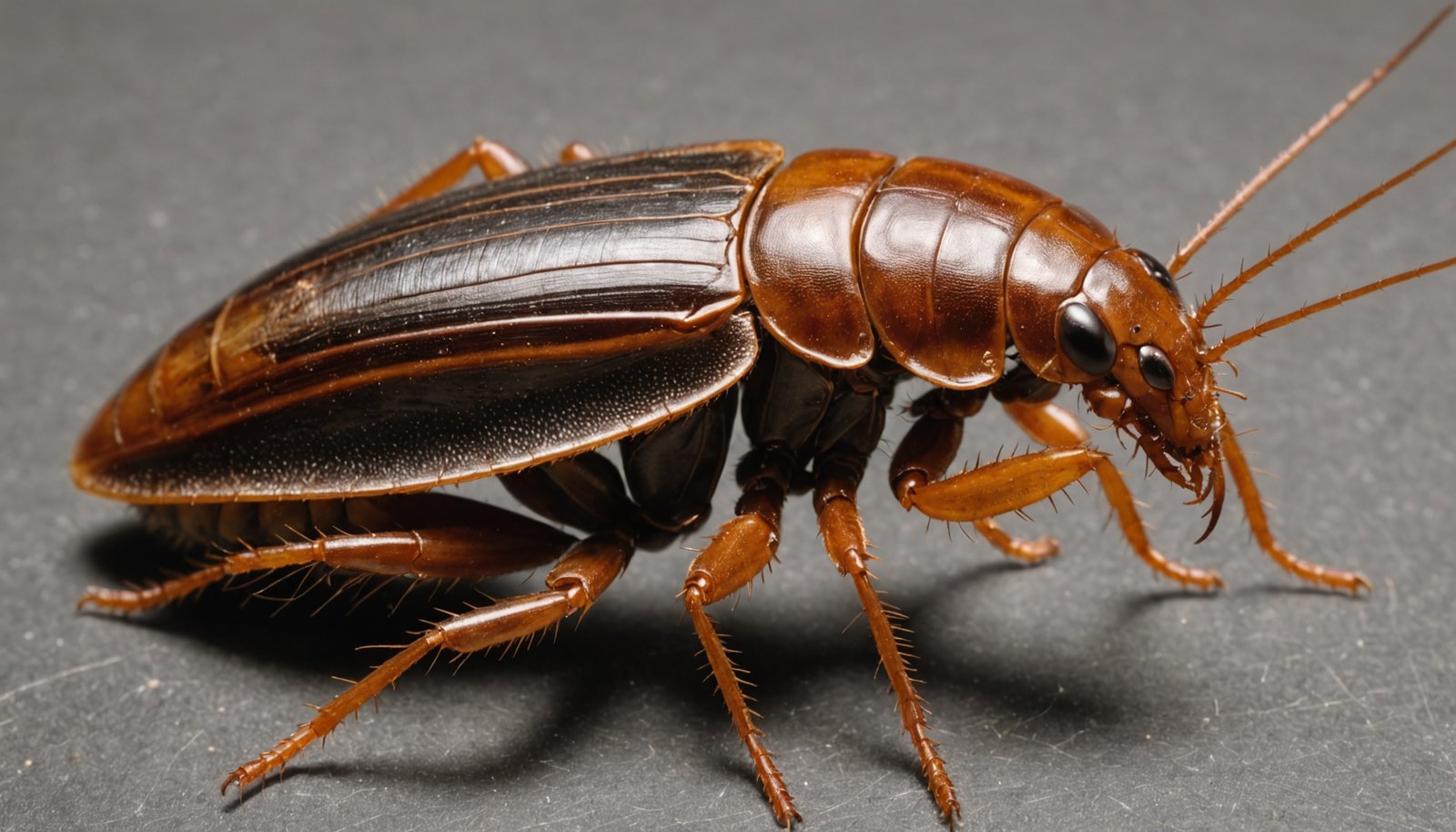
Three distinct thoracic segments—prothorax, mesothorax, and metathorax—each bear a single pair of walking legs, giving the cockroach its characteristic three pairs of cursorial legs. When you look at thoracic segmentation, you’re really seeing how leg morphology and body armor fit together. Every segment has a dorsal tergite, lateral pleurites, and a ventral sternite, all braced around one leg pair. These thoracic segments lie just anterior to the abdomen, whose ten segments contain spiracles that open to the tracheal system for gas exchange.
In the prothorax, the tergite forms the shield‑like pronotum, while the small prothoracic legs attach ventrally and help with careful steering and sensing the ground. The mesothorax follows with a larger leg pair and the second spiracles; its mesonotum sits hidden under the forewings. The metathorax, with the third spiracles, bears the largest, most powerful legs for rapid running. From below, you’d see the coxae crowding the sternites so much that they visually dominate each segment, emphasizing how thoroughly the thorax is built for walking.
Parts of a Cockroach Leg (Coxa to Tarsus)
As you move from the cockroach’s thorax down each leg, you’ll meet a series of specialized segments: coxa, trochanter, femur, tibia, and tarsus. You’ll see how the broad coxa anchors the leg, the sturdy femur and tibia power movement, and the multi-part tarsus grips surfaces. By understanding each segment’s structure and function, you can see how six legs work together to make a cockroach so fast and agile.
Major Leg Segments
A cockroach leg looks simple at a glance, but it’s built from five major segments that work together like a compact machine: coxa, trochanter, femur, tibia, and tarsus. When you focus on leg joint mechanics, you see how each piece shapes insect locomotion strategies, from quick sprints to agile climbing.
The coxa is the short, broad base that anchors the leg to the thorax, packed with sensory hairs. Next, the tiny trochanter acts like an elbow, letting the leg pivot in multiple directions.
| Segment | Relative Size | Simple Analogy |
|---|---|---|
| Femur | Thick, longest part | Thigh |
| Tibia | Long, narrow lever | Shin |
| Tarsus | Multi-part “foot” | Toes + claws |
Finally, the multi-jointed tarsus ends in claws and pads for gripping surfaces.
Structure and Functions
Although every cockroach leg follows the same basic plan, each segment from coxa to tarsus performs a distinct job that keeps the insect stable, fast, and agile. You can think of the coxa as the sturdy base: it anchors the leg to the thorax, bears sensory hairs, and restricts motion to a controlled plane. The tiny trochanter then acts as the pivot that lets the femur tuck and rotate.
Next, the femur houses powerful muscles and spines, driving rapid running and jumping—vital leg adaptation for escape. The tibia works like a rigid lever, bristling with spines that add traction. Finally, the multi-part tarsus, with pads, pulvilli, and claws, grips surfaces and enhances sensory function so the roach can react instantly.
Claws, Spines, and Sensory Hairs on Cockroach Legs
While a cockroach’s six legs look simple at a glance, each one bristles with claws, spines, and sensory hairs that turn it into a highly specialized tool for movement and perception. When you examine claw functionality, you see two sharp, terminal claws at the end of tarsomere 5. They sit between soft pulvilli, giving precise adhesion and grip on rough, irregular surfaces. This arrangement reflects leg evolution toward stable contact without sacrificing agility.
To understand spine purpose, look at the femur and tibia. These segments carry stout spines that stiffen the leg, protect it, and support powerful, lever-like extension. They distribute along the limb to resist stress and prevent bending.
Sensory adaptation appears most clearly in the hairs. Dense hairs on the coxa monitor nearby objects, while bristles on the tarsus and its five tarsomeres detect texture and chemicals, amplifying touch and guiding accurate foot placement.
How Cockroaches Use Their Legs to Move and Climb
Cockroaches turn their six legs into a finely tuned, high-speed walking machine, coordinating them in a double tripod gait that keeps the body stable even at a full sprint. You see leg coordination in action when one tripod (left fore, right middle, left hind) swings forward while the other tripod (right fore, left middle, right hind) supports the body. The middle legs pivot and fine-tune balance, so at least three legs always contact the ground, even on rough surfaces.
During rapid running, the hind legs take over propulsion. At top speeds, a roach can briefly shift to four- or even two-legged running, with the hind legs supplying the explosive push that creates short aerial phases.
For climbing techniques, the middle legs first rotate at the thorax-coxa joint to lift the front of the body over an obstacle. Then the hind legs extend, driving the insect upward and forward, while sensory feedback boosts climbing force.
Abdomen, Spiracles, and Cerci That Support Movement
Even beyond their six legs, a cockroach’s abdomen, spiracles, and cerci quietly power and protect its movement. You see ten clear abdominal segments, each built from tough plates (terga, sterna, pleura) that flex yet shield soft tissues. This abdominal segmentation lets the body bend as the roach runs, slips into cracks, or lifts its body to climb.
Along the sides, ten pairs of spiracles drive gas exchange. Their valves and bristles fine‑tune spiracle function, giving respiratory adaptations that keep oxygen flowing to leg muscles without losing too much water—critical for long sprints.
| Feature | Role in Movement | Notable Point |
|---|---|---|
| Abdominal plates | Flex and protect | Broader in females |
| Spiracles | Supply oxygen | Eight pairs on abdomen |
| Tracheae | Carry gases to tissues | Support sustained running |
| Cerci | Sense air disturbances | Boost predator avoidance |
| Anal styles | Aid balance (males only) | Show clear gender differences |
At the tail end, cerci sensitivity lets a roach bolt away the instant air shifts behind it.
How Cockroach Eyes, Antennae, and Legs Work Together
Three major sense organs—eyes, antennae, and legs—operate as a single guidance system that keeps a cockroach fast, stable, and hard to catch. When you look at its compound eye, you’re seeing thousands of ommatidia feeding continuous movement detection into the brain. This mosaic view, refined by the ocelli role in sensing overall light, drives visual coordination so the legs place quickly and accurately, even in dim rooms.
Antennae function as long, flexible probes for environmental navigation. They sample air currents, vibrations, and surfaces before the legs commit, so each step already “knows” what’s ahead. Touch and wind direction on the antennae fine-tune leg adjustments mid-stride, maintaining locomotion stability during turns or sudden stops.
All this relies on dense sensory integration. Neural pathways link retinula cells, ocellar interneurons, and antennal mechanoreceptors directly to leg motor centers, forming rapid feedback loops that synchronize vision, touch, and motion.
Why Cockroach Legs Make Them Hard to Kill
Although they look flimsy at a glance, a cockroach’s legs are engineered for survival, turning its whole body into a sprinting, climbing, and dodging machine that’s frustratingly hard to kill. Each leg segment, loaded with muscles and traction spines, gives the roach extreme leg agility and power, so it can dart away before you finish your swing.
You’re not just dealing with speed, though. Those jointed legs constantly collect sensory feedback from the ground, while cerci sense air movement behind them. That sensitivity, combined with precise joint flexibility, triggers instant escape responses the moment you approach.
Climbing adaptations add another layer of annoyance. Adhesive pads and claws work together like built-in climbing gear, letting roaches scale walls and disappear into cracks. Even if you injure one, their regeneration mechanisms can gradually restore damaged leg parts, and their muscular endurance lets them keep running on the remaining legs.
Frequently Asked Questions
Do Cockroach Legs Grow Back if They Are Damaged or Lost?
Yes, they can. You’ll see cockroach leg regeneration mainly in younger stages; after an autotomy-type loss, they regrow legs during molts, slightly delaying molting, making their injury recovery surprisingly effective compared with simple cut or crush damage.
How Do Cockroach Legs Differ Between Males and Females, if at All?
You won’t see real differences; male and female cockroach legs share the same number, structure, and basic function. Any leg length variation reflects slight sexual dimorphism in overall body size, not specialized or additional leg features.
Can Cockroaches Survive With Fewer Than Six Legs, and for How Long?
Yes, they can; you’ll see cockroaches survive long-term with fewer than six legs. They rely on survival strategies like compensating with remaining limbs, and nymphs use leg regeneration during molts, often living normal lifespans despite leg loss.
Are Cockroach Leg Structures Similar to Those of Other Common Household Insects?
Yes, you’ll find cockroach leg structures closely match ants, houseflies, and bed bugs. When you do an insect comparison, you see shared segments and similar leg adaptations for walking, clinging, traction, and surface adhesion.
How Do Cockroach Legs Influence the Spread of Germs and Household Contamination?
Cockroach legs heavily influence germ transmission because their spines, hairs, and sticky pads pick up bacteria and fecal particles, then deposit them on food, dishes, and surfaces, so you must prioritize strict household hygiene to reduce risks.
Conclusion
Now that you know a cockroach has six legs and how each segment works, you can see why it’s so fast, agile, and hard to catch. Its legs, claws, spines, and sensory hairs all work with the eyes, antennae, abdomen, and cerci to keep it moving and alert. When you spot one darting away, you’re watching a perfectly tuned survival machine built for climbing, dodging, and escaping.
