
How to Read a Creatine Label: What the Numbers Actually Mean
Start with the Supplement Facts panel, and find the creatine line under Amount per Serving. You’ll usually see 5 g of creatine monohydrate. Don’t confuse that with the scoop size, since scoops vary. Check the ingredient name, and scan Other Ingredients for fillers like maltodextrin. If you don’t see a %DV, don’t worry, because creatine doesn’t have one. Keep going, and you’ll learn how to convert capsules and tablets into grams, plus spot label tricks.
Key Takeaways
- Check the Supplement Facts panel’s “Amount per Serving” column for the creatine line, since serving size and creatine content are different numbers.
- Most servings list 5 g (5,000 mg) of creatine monohydrate, though some products use 3.6 g or 6 g, so don’t assume.
- Scoop, capsule, and tablet counts only describe the serving; divide total grams by the number of units to find the dose per unit.
- Confirm the ingredient reads “Creatine Monohydrate” with an amount beside it; “micronized” and brand names like PharmaPure still mean monohydrate.
- A missing %DV just means no Daily Value exists, while the Other Ingredients line shows fillers like maltodextrin and warns against proprietary blends.
Find the Creatine Grams Per Serving
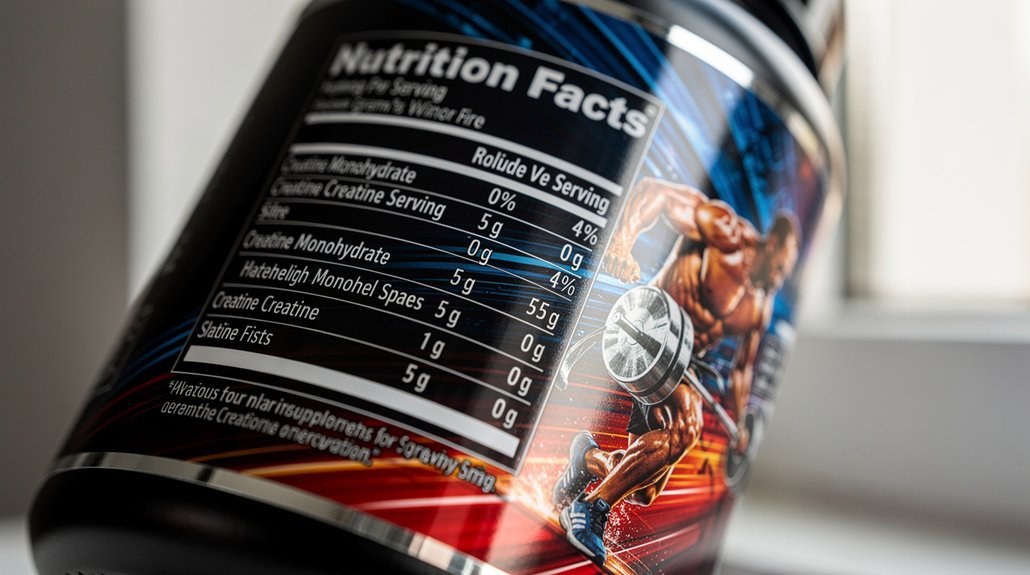
How much creatine are you actually getting per serving? Skip the front of the package and go straight to the Supplement Facts panel.
Find the Amount per Serving column, then look for the creatine line. Most labels list Creatine Monohydrate at 5 g, and you’ll often see it written as 5,000 mg. Both mean the same thing. Some products deliver other amounts, though, so don’t assume.
Most labels list creatine monohydrate at 5 g, often written as 5,000 mg. Both mean the same thing, but some products differ, so don’t assume.
Don’t confuse serving size with creatine content. On a creatine-only product, they usually match: Serving Size 5 Gram(s) [1 Scoop] delivers 5 g.
But a stick pack might weigh 5.15 g, and a five-tablet serving still totals 5 g of creatine. Capsules can list just 3 g per serving. Household measures like 1 tsp [5g] describe the portion, not the creatine itself, so compare both lines.
Always check the creatine line’s unit, whether grams or milligrams; 1,000 mg equals exactly 1 g.
Convert Scoops, Capsules, and Tablets to Grams
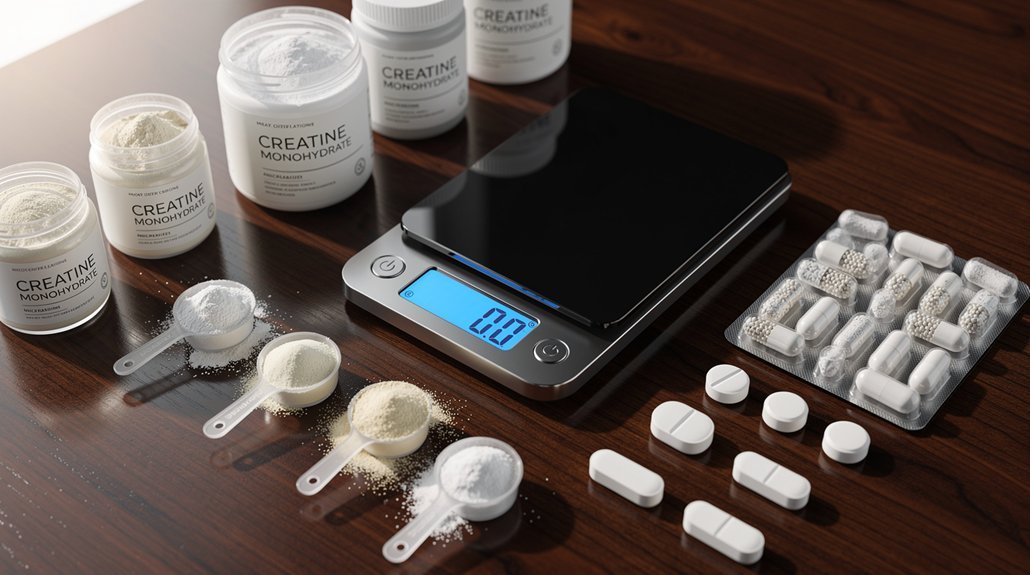
Once you’ve found the grams per serving, you can convert any scoop, capsule, or tablet count into grams with one step: divide the serving’s total grams by the number of units in that serving.
Scoops vary by manufacturer, so don’t assume one scoop equals 5 g. Some products use 2.5 g scoops, with two scoops making 5 g. Others list 8 g per scoop because the formula includes additional ingredients. Trust the Supplement Facts serving size.
Capsules often require several pills. If a label lists 2.5 g per two-capsule serving, each capsule holds 1.25 g. A 1 g capsule lets you dose by count. To reach a target, divide it by grams per capsule: 5 g divided by 1.25 g means four capsules.
Tablets are usually simpler. One label lists 5 tablets as a 5 g serving; another lists 1 g per tablet. A lemon-flavored product, for example, lists a 3-tablet serving as providing 3 grams of creatine, so each tablet equals 1 g. Always check the serving panel.
Check That Your Creatine Is Monohydrate
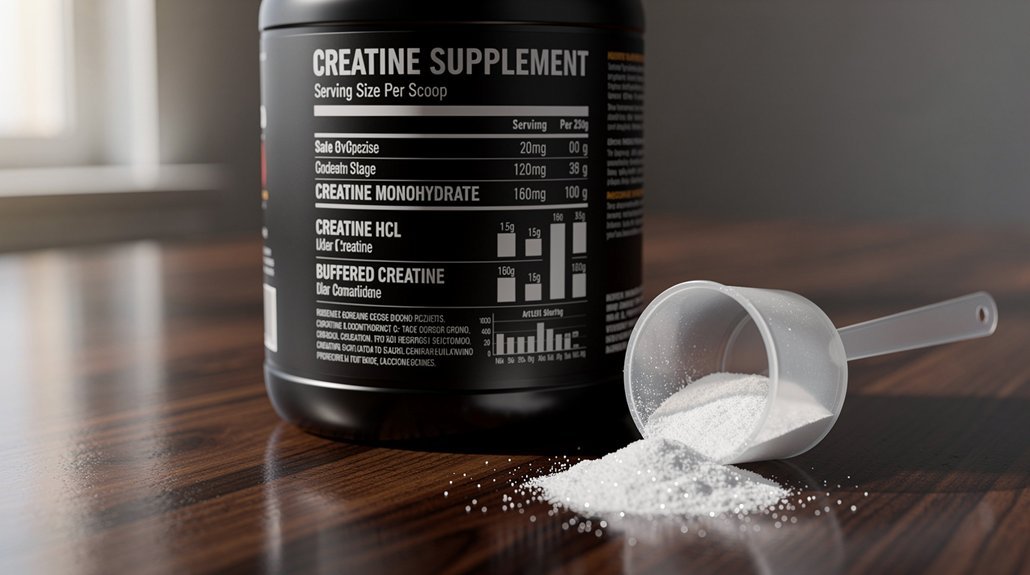
Knowing how many grams you’re getting only helps if the ingredient is the right one, so read the name on the Supplement Facts panel next. Look for “Creatine Monohydrate,” which often appears as the single active ingredient.
These variations still mean monohydrate:
- Micronized: “Creatine Monohydrate, Micronized” describes particle size, not a different type.
- Branded or pure wording: “PharmaPure” or “HPLC Pure” still identifies the monohydrate form.
- Testing claims: “NSF Certified for Sport” or “third-party tested” builds confidence, but doesn’t replace the ingredient line.
Be skeptical when you see a different creatine name instead of monohydrate, extra branded wording that obscures the main ingredient, or multiple active ingredients. Those labels aren’t plain monohydrate.
Don’t let a marketing term like “activated” stand in for a clear monohydrate listing, either. Also, check that the panel shows an amount next to the name. A missing amount deserves extra scrutiny before you buy.
Spot Fillers and Additives on Creatine Labels
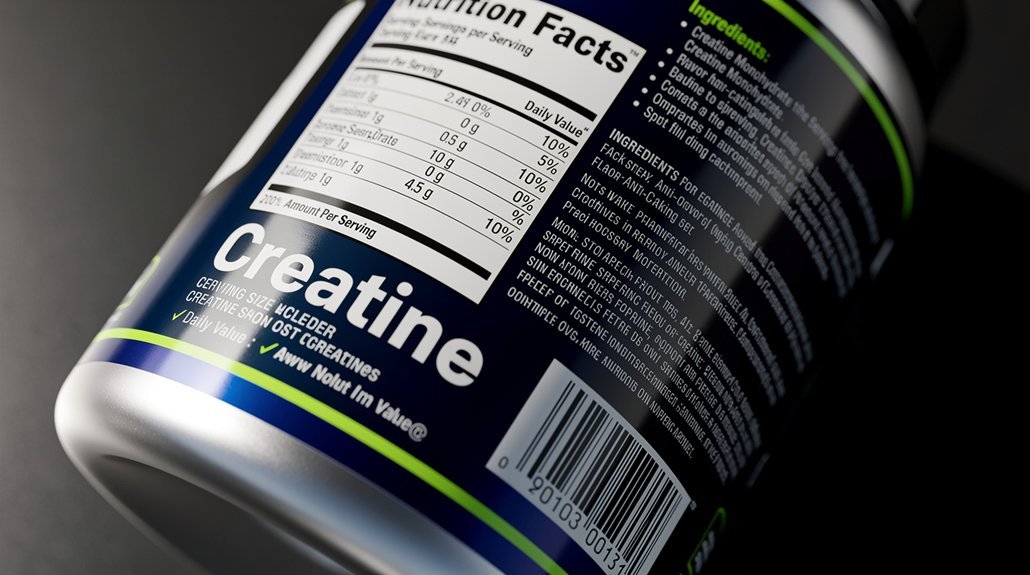
After you’ve confirmed the ingredient is creatine monohydrate, scan the rest of the panel and the “Other Ingredients” line for anything that isn’t creatine. Unflavored powders often list only creatine monohydrate, while flavored versions usually add sweeteners, dyes, acids, and flavoring agents. A shorter list usually signals a cleaner product. Nutricost Creatine Monohydrate, for example, is free from artificial additives, fillers, and preservatives.
Watch for fillers like maltodextrin, dextrose, fructose, and inulin. They add scoop volume or improve texture and mixability, but they don’t improve creatine’s effect. Sucralose, acesulfame potassium, citric acid, and artificial colors make creatine taste better without increasing the creatine per serving.
Silicon dioxide and calcium silicate prevent clumping, while magnesium stearate and stearic acid show up in capsules and tablets; they help manufacturing, not performance.
Be wary of “proprietary blend” or “matrix” wording, since it hides ingredient amounts. Taurine or glutamine has mixed evidence. Artificial sweeteners, dyes, and fillers can cause bloating or digestive upset for some.
Don’t Worry About a Missing %DV
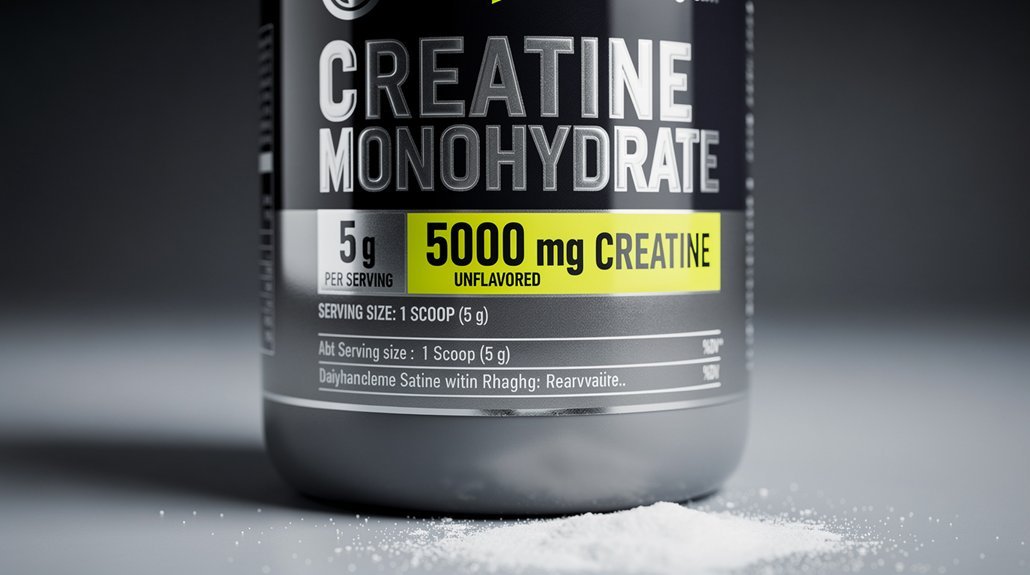
You’ve checked the ingredient and the extras, so you might notice one more oddity: creatine usually has a dash or an asterisk where the %DV should be.
Don’t worry. That’s normal.
The Office of Dietary Supplements reserves %DV for nutrients with an established Daily Value, and creatine doesn’t have one.
Here’s what that means:
- The label still lists the creatine amount per serving, commonly 3.6 g, 5 g, or 6 g.
- Other nutrients on the same panel, like carbohydrates, can still show a %DV.
- The missing number reflects labeling rules, not a product defect.
Frequently Asked Questions
How Should Creatine Be Stored to Keep It Fresh?
Store your creatine in a cool, dry cupboard at room temperature, around 15–25°C. Keep the lid tightly sealed, since moisture’s the main enemy. Don’t leave it in cars or gym bags; shield it from sunlight.
Does Creatine Powder Expire, and How Do I Read the Date?
Yes, creatine expires, but it’s stable, so you’ll usually use it well past the date. Check for “EXP,” “Best By,” or “MFG” labels, and don’t toss it unless you notice moisture, discoloration, or odd smells.
What Do Third-Party Testing Seals on Creatine Labels Mean?
They mean an outside organization has independently checked the product, so you’re not relying only on the brand’s claims. Seals like NSF Certified for Sport verify ingredients, contaminants, and banned substances, but don’t guarantee results.
How Much Creatine Should I Take Each Day?
You should take 3–5 grams of creatine monohydrate daily. If you’d like faster results, you can load 20 grams daily for five to seven days first, but you don’t have to; steady dosing works too.
Is a Loading Phase Necessary for Creatine to Work?
No, you don’t need a loading phase. You’ll still saturate your muscles by taking 3 to 5 grams daily for about four weeks. Loading just speeds things up, and your long-term results won’t really differ.
Conclusion
Now you know what to look for. Check the grams per serving first, then convert any scoops, capsules, or tablets into real numbers. Make sure you’re buying creatine monohydrate, and skim the ingredient list for fillers you don’t need. Don’t let a missing %DV worry you, either. With these steps, you can compare products confidently, skip the marketing hype, and choose a creatine supplement that actually delivers what you’re paying for.