
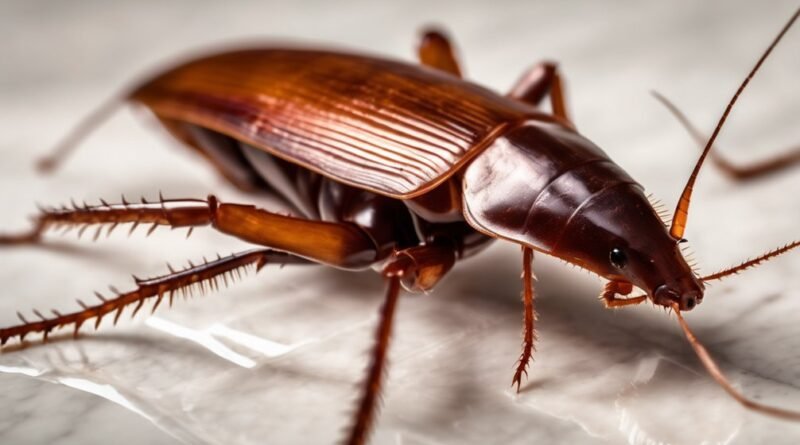
What Does a Cockroach Look Like?
You’ve seen them skitter across floors, but would you recognize one up close? In this guide, you’ll get a quick definition, key facts, and common myths — plus why it all matters for your home‘s health. We’ll detail how different cockroach species look, from their anatomy and color to their size and wing structure, how to spot nymphs, and what separates males from females. You’ll also learn the subtle signs of an infestation most people miss. Ready to identify what’s hiding in plain sight?
Key Takeaways
- Cockroaches are flat, oval, reddish-brown insects with six spiny legs, long antennae, and often wings; nymphs are smaller, paler, and wingless.
- Sizes vary widely: German roaches ~½ inch, American 1.5–2 inches, Oriental up to 1¼ inches, Pennsylvania wood cockroach ~20 mm.
- Not all roaches fly; many glide or run quickly, and even headless roaches survive only briefly before dying of thirst.
- Signs of infestation include nighttime sightings, daytime activity in severe cases, pepper-like droppings, shed skins, and a musty, oily odor.
- Early, species-specific identification reduces health risks and improves control, since cockroaches reproduce rapidly and can thrive even in clean homes.
- Understanding cockroach anatomy, lifecycle, and diet helps you choose the right products, baits, and insecticides for your specific situation.
Quick Definition
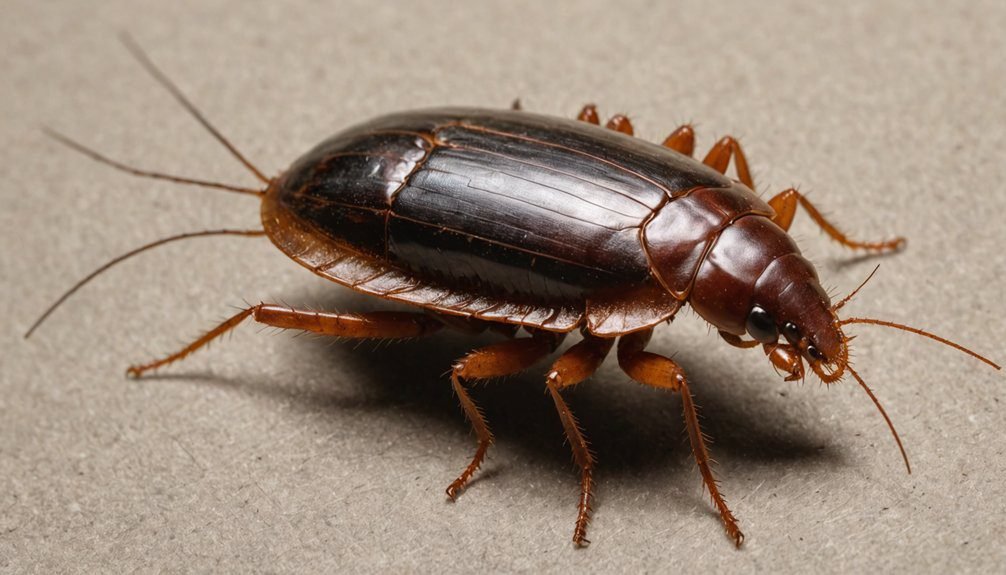
A cockroach is a flat, oval-shaped insect, usually reddish-brown, ranging from about ¾ inch to 3 inches in length. When you picture what a cockroach looks like, think sleek, low-profile, and built for speed. Most cockroaches appear reddish-brown, though some, like Oriental cockroaches, can look nearly black. Their anatomy is purpose-built for survival in dense urban environments — buildings, sewers, kitchens, crawl spaces, and everywhere in between.
You’ll spot six long, spiny legs that help them sprint and climb across floors, walls, and even ceilings. Their antennae are long and alert, constantly scanning. Many species have wings that lie flat against the bodies; some can glide or fly short distances, but many don’t. Their hard, shield-like exoskeleton protects them and keeps their shape streamlined. If you’re unsure, focus on the oval body, fast legs, folded wings, and glossy, armored surface. Additionally, cockroaches are known for their remarkable resilience, with effective management strategies being essential for controlling their populations in urban environments.
Key Facts
You’ll see cockroaches across thousands of species, from small German cockroaches to larger American cockroaches reaching about 2 inches. Most look reddish-brown with long, flattened oval bodies, though males and females can differ in size and wings. They’re tough survivors, able to go weeks with little food and even live briefly without a head. Their diet is remarkably flexible — cockroaches will consume food scraps, cardboard boxes, paper, debris, glue, and nearly any organic material, which is why they establish so easily in homes, restaurants, and commercial buildings. Cockroaches are known for their wide range of adaptations that allow them to thrive in various environments.
Species and Sizes
From tiny household pests to giant tropical species, cockroaches span a remarkable size and color range. When you compare cockroach species, size is the easiest cue. German cockroaches stay small at about 1/2 inch, while American cockroaches often reach 1.5 to 2 inches. Oriental cockroaches run larger than Germans, and Pennsylvania wood cockroach averages about 20 mm. Brown-banded cockroaches are compact, roughly 1/2 inch. The Australian cockroach is another common outdoor species — similar in appearance to the American but with distinctive yellow markings along the backs of its wings.
Scale up globally and you’ll find record-breakers: a South American titan can grow to six inches. In cities, American cockroaches are among the most common and conspicuous insects in sewers, basements, and utility spaces. Knowing these size ranges helps you judge infestation risks, plan traps or baits accurately, and distinguish occasional outdoor visitors from home-invading pests. Understanding the common species of cockroaches in your area can help identify potential risks and control measures.
Distinctive Colors
Size tells part of the story, but color sharpens identification. You’ll notice cockroaches span distinctive colors that help you sort species quickly. Most look reddish-brown, but some, like the Oriental cockroach, verge on black. The German cockroach runs light brown or caramel with two dark parallel stripes on its back. The American cockroach appears dark brown to reddish-brown and may show a yellowish figure-8 on the thorax. The Australian cockroach has a similar reddish-brown base color but with yellow streaks along the backs of its wings — useful for telling these two species apart.
Freshly molted roaches can look ghostly white before darkening, so don’t mistake them for a different species. Use color cues to match species to habitats and target control. Additionally, the Nebraska entomology experts emphasize the importance of recognizing these colors for effective pest management.
- Reddish-brown majority vs. nearly black Oriental cockroach
- Light caramel German cockroach with twin dorsal stripes
- American cockroach: reddish-brown, yellowish figure-8 thoracic mark
- Australian cockroach: similar to American but with yellow markings on backs of wings
Notable Abilities
Although they look ordinary at a glance, cockroaches pack survival feats that make them hard to beat. Across cockroach species, their notable abilities explain why infestations escalate fast. They can live for a week without a head, breathing through body openings — a feature of their decentralized anatomy. They also hold their breath for up to 40 minutes, slipping through wet drains and surviving underwater traps. Speed seals the deal: adults sprint up to three miles per hour, and a one-day-old nymph runs nearly as fast. German cockroaches mature in about 36 days, fueling explosive growth. Cockroaches are also nocturnal by nature — a behavioral adaptation that makes them harder to detect until populations are already large. Cockroaches are also known to trigger asthma and allergies, particularly in urban populations.
| Ability | What it means for you | Emotional punch |
|---|---|---|
| Headless survival | Traps fail post-injury | Unsettling resilience |
| 40-min breath hold | Water won’t stop them | Dread of drains |
| 3 mph sprint | Hard to catch | Frustrating chase |
| Rapid maturity | Swift outbreaks | Urgency to act |
| Fast newborns | Instant mobility | No safe window |
Common Myths
You’ve probably heard that all roaches can fly, headless roaches live forever, and clean homes are safe. In reality, many species can’t fly; a headless roach lasts about a week without water, and even spotless kitchens attract them if food and moisture are available. Let’s clear up these myths so you know what really matters.
All Roaches Can Fly
One common myth says all roaches can fly, but that’s not true. You’ll see wings on some types of cockroaches, yet many don’t use them for flight. German and Oriental roaches rarely fly; in some species, females lack wings entirely. The American cockroach can glide short distances, but it usually runs fast. Even winged species prefer sprinting and only take to the air when threatened — technically making them poor fliers rather than true fliers. Knowing this helps you identify what you’re seeing and respond effectively.
- German and Oriental roaches: typically non-fliers; quick runners
- American roach: short glides only; escape by speed and agility
- Most “flying” sightings: brief, threat-triggered glides, not true flight
Headless Roaches Immortal
Despite the wild rumor that headless roaches live forever, they don’t. Thanks to an open circulatory system and breathing pores along the body, a headless cockroach can still take in oxygen and circulate hemolymph without a brain directing every action. However, survival is brief. Without a mouth to drink, it dies of thirst — usually within a week. During that time, it can respond to touch and wander because its nervous system is decentralized, allowing basic reflexes to continue. That eerie persistence reflects remarkable anatomy shaped over millions of years, not endless life.
Clean Homes Are Safe
Although a spotless kitchen feels like armor, a clean home isn’t cockroach-proof. Roaches chase food, moisture, and warmth — conditions you’ll find in most kitchens and bathrooms. Even if you scrub daily, crumbs, pet bowls, and damp sinks can fuel a cockroach infestation. They slip in through hairline cracks, vents, and plumbing penetrations, then breed fast; German cockroaches can mature in about 36 days, turning a few into many. Even cardboard boxes brought in from outside can introduce eggs or nymphs into a previously clean space.
- Seal entry points: caulk gaps, repair screens, and install door sweeps.
- Deny resources: fix leaks, dry sinks nightly, store food in sealed containers airtight, and empty trash.
- Monitor and act: set sticky traps, inspect under appliances, and use targeted baits.
Physical Characteristics
Sleek and low to the ground, a cockroach has a long, oval, flattened body that typically measures from about ¾ inch to 3 inches in length, depending on the species. You’ll usually notice a reddish-brown sheen, though some, like the nearly black Oriental type, look darker. The German cockroach is the most common indoor species you might spot in kitchens, bathrooms, and crawl spaces.
The anatomy of a cockroach includes a distinct head, thorax, and abdomen. The thorax bears the six spiny legs and, in winged species, the wings. The abdomen houses their digestive organs — part of the flexible diet system that lets them consume almost anything. Count six long, spiny legs built for speed. Pads on their tarsi help them grip and climb walls or even ceilings. Many roaches carry wings folded flat against the backs, but flight varies — some don’t fly at all, and certain females lack wings entirely.
Cockroach nymphs resemble smaller adults. They’re paler, wingless, and darken as they molt through several stages before reaching full size and coloration. Unlike beetles and other insects that undergo complete metamorphosis, cockroach nymphs follow incomplete metamorphosis — gradually developing through instars without a pupal stage.
Species Differences
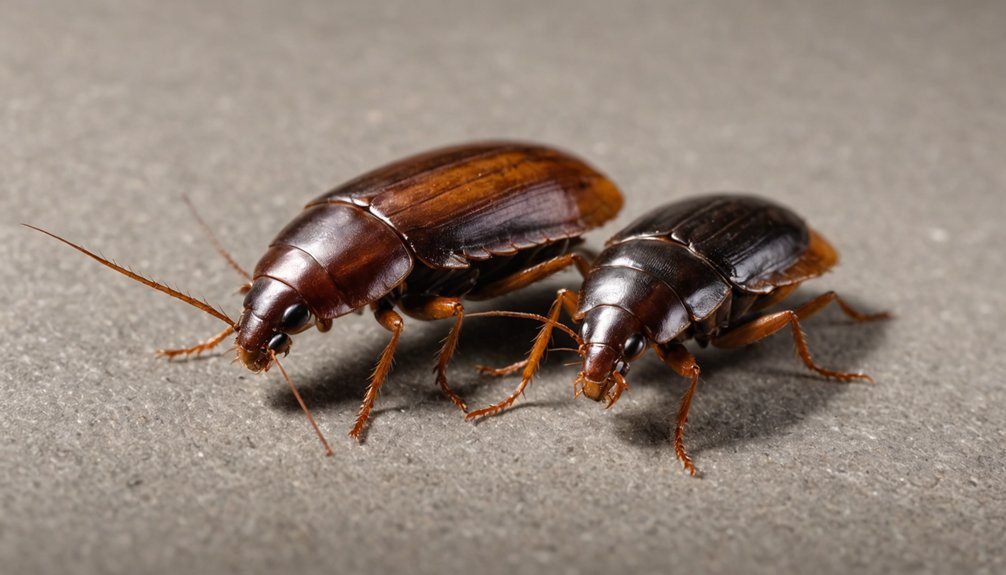
Beyond those shared features, species differ in size, color, and behavior you can spot at a glance. When you compare different cockroach species, you’ll notice German cockroaches are tiny — about 13–16 mm — light brown with two dark stripes, and they favor sweet, floury foods. Oriental cockroaches run larger, nearly black, and stick to damp spots like basements and drains. American cockroaches reach about 40 mm, look reddish-brown, and can glide short distances. Pennsylvania wood cockroach stays around 20 mm; tan males appear outdoors more than inside, often near vegetation, debris, and cardboard boxes left outside.
- German cockroaches: 13–16 mm, light brown, striped; drawn to sweets, often indoors
- Oriental: up to 1¼ inches, nearly black; thrives in cool, damp areas
- American: ~40 mm, reddish-brown; occasional short flights, often in warm, moist sites
- Wood cockroach: ~20 mm, tan; prefers outdoor habitats with vegetation and debris
- Australian cockroach: similar to American in size and color, but with yellow markings on wing backs; often found near plants and in crawl spaces
Life Stages and Nymphs
While adults get most of the attention, a cockroach spends much of its lifecycle as a nymph — smaller, pale, and wingless versions of the adult. You’ll spot cockroach nymphs hugging cracks and shadowed edges, where their light color and compact bodies help them blend in. As they develop, they molt several times, each shed revealing a darker, larger stage that looks increasingly adult. The lifecycle from egg to adult varies by species and temperature — German cockroaches complete it in as little as 36 days, while American and Oriental cockroaches take months to over a year.
German cockroaches stand out for speed: their nymphs can reach adulthood in about 36 days under ideal conditions. As wings form late (in species that have them), you shouldn’t expect flight from cockroach nymphs. Watch for gradual darkening, lengthening antennae, and tougher exoskeleton after each molt.
| Stage cue | What you’ll notice |
|---|---|
| Early nymph | Pale, tiny, no wings |
| Mid nymph | Darker, larger, quick |
| Late nymph | Nearly adult size, wing pads |
Male Vs Female
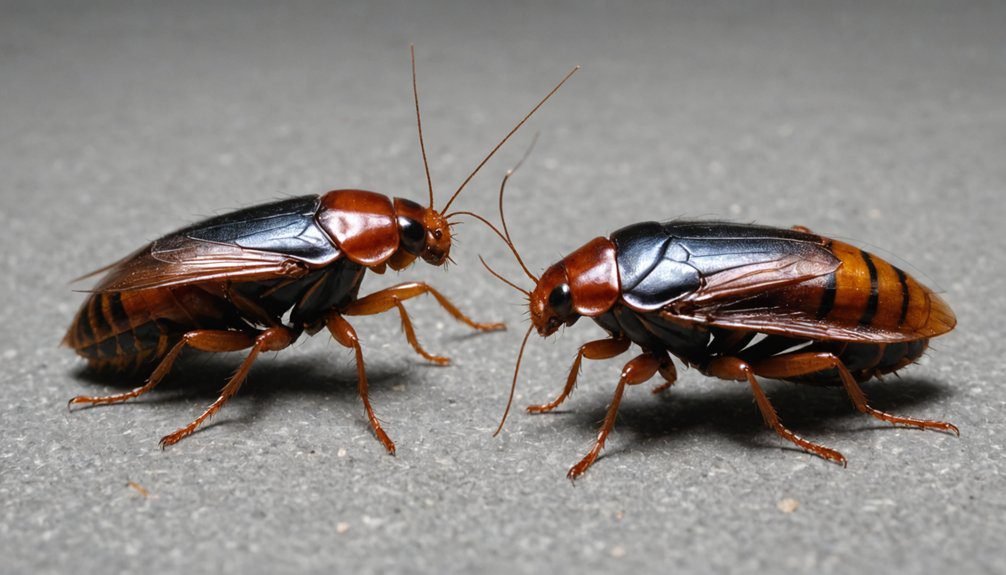
Although both sexes share the same flattened, long-antennaed profile, males and females differ in size, build, and wings. When you compare male vs female cockroaches, you’ll notice sexual dimorphism right away. Males are typically under 1 inch, slimmer, and more agile. Females often exceed 1 inch and look sturdier, with a fuller abdomen that contributes to their heavier appearance. In species like the German cockroach, males have wings that cover the abdomen, while females may have short wings or none at all.
Females also have a reproductive edge: they can store sperm and remain fertile after a single mating, producing multiple egg cases throughout their lifetime. Their anatomy includes a broader abdomen built to carry eggs — a visual difference you can use to distinguish sexes in species like the Oriental cockroach, where females are noticeably wider than males at the backs.
- Size: males smaller, females larger and bulkier
- Wings: males winged; females reduced or wingless (species-dependent)
- Reproduction: females store sperm, prolonged fertility
Signs of an Infestation
Three clues can quickly confirm a cockroach problem: what you see, what you smell, and what they leave behind. Start by scanning kitchens, bathrooms, and damp areas. Spotting fast movers at night is common — these nocturnal insects become most active after dark; seeing them in daylight often signals a severe infestation. Look for pepper-like droppings along baseboards, inside cabinets, and near appliances. These specks collect where roaches feed and travel.
Check for shed skins from molting cockroach nymphs around cracks, under sinks, and behind refrigerators. Find oval, dark-brown ootheca (egg cases) in hidden, warm crevices — clear proof of active reproduction. Eggs hatch in 14–60 days depending on temperature and species, so finding egg cases means a new generation is already underway. A musty, oily odor that lingers or intensifies points to large numbers.
Also check: surfaces near plumbing for grease smears, containers in spaces like pantries and cabinets for gnaw marks, and sewers or crawl spaces for activity if you have American or Oriental cockroaches. Furniture brought in secondhand and cardboard boxes from outside are common sources of new infestations — always inspect these before bringing them inside.
If these signs of an infestation show up repeatedly, document locations and consider professional pest control to pinpoint sources and plan treatment.
Why It Matters
One clear reason it matters is your health: recognizing cockroaches early helps you prevent exposure to over 30 bacteria and parasites they can carry. When you can identify what a cockroach looks like — and how it behaves — you act faster, reducing the spread and avoiding a growing cockroach infestation. Quick recognition also keeps your home hygienic, especially in kitchens and bathrooms where pathogens thrive.
Knowing species differences guides targeted control, so you don’t waste time or money on the wrong products, baits, or insecticides. You’ll also separate roaches from look-alikes — beetles, water bugs, and the brown cockroach are all commonly misidentified. And because roaches reproduce rapidly, especially German cockroaches, early action stops small problems from becoming outbreaks.
- Reduce health risks through early detection
- Apply species-specific control strategies
- Prevent rapid reproduction and wider spread
- Distinguish cockroaches from beetles, water bugs, and other bugs
Conclusion
You’ve now got a clear picture of what cockroaches look like, how species differ, and which myths to ignore. Use those details — body shape, color, wings, and nymph traits — to spot them fast. Watch for signs like droppings, egg cases, musty odors, and smear marks on surfaces near food and plumbing. Early detection lets you act quickly, reduce risks, and keep your space clean. If activity persists, don’t wait — seal entry points, remove food and moisture, check furniture and cardboard boxes for hitchhiking bugs, and call a professional for targeted control.
