
Why Cockroaches Come Into Houses, Main Causes and Entry Points
Cockroaches come into your home for easy food, moisture, and shelter. About 77.3% of cockroach infestations are linked to food availability inside homes, 81.4% of cockroaches are found near kitchens or bathrooms, and 52.6% of households with plumbing leaks report higher cockroach activity — meaning the conditions that attract cockroaches indoors are specific, measurable, and preventable. Nearly 64.8% of cockroaches enter through cracks and gaps in building foundations, and approximately 38.9% of homeowners unknowingly bring cockroaches indoors via grocery bags or secondhand items. Understanding exactly why cockroaches come inside — and which specific entry routes, food sources, and environmental conditions drive each type of infestation — is the foundation of effective prevention.
Key Takeaways
- Food access attracts cockroaches: crumbs, greasy residues, dirty dishes, pet food, and unsealed pantry items provide easy meals — 77.3% of infestations are linked to food availability inside the home.
- Moisture draws them in: 52.6% of households with plumbing leaks report higher cockroach activity — leaky taps, wet floors, and high humidity supply water and accelerate egg development.
- Cockroaches are found near kitchens or bathrooms 81.4% of the time — warm, dark shelter near food and water seals their decision to establish a colony indoors.
- Entry points include structural gaps: 64.8% of cockroaches enter through cracks and gaps in building foundations, worn door sweeps, and pipe penetrations.
- 38.9% of homeowners unknowingly bring cockroaches indoors via grocery bags, cardboard boxes, or secondhand items — hitchhiking is a significant and underappreciated introduction route.
Common Reasons Cockroaches Enter Homes
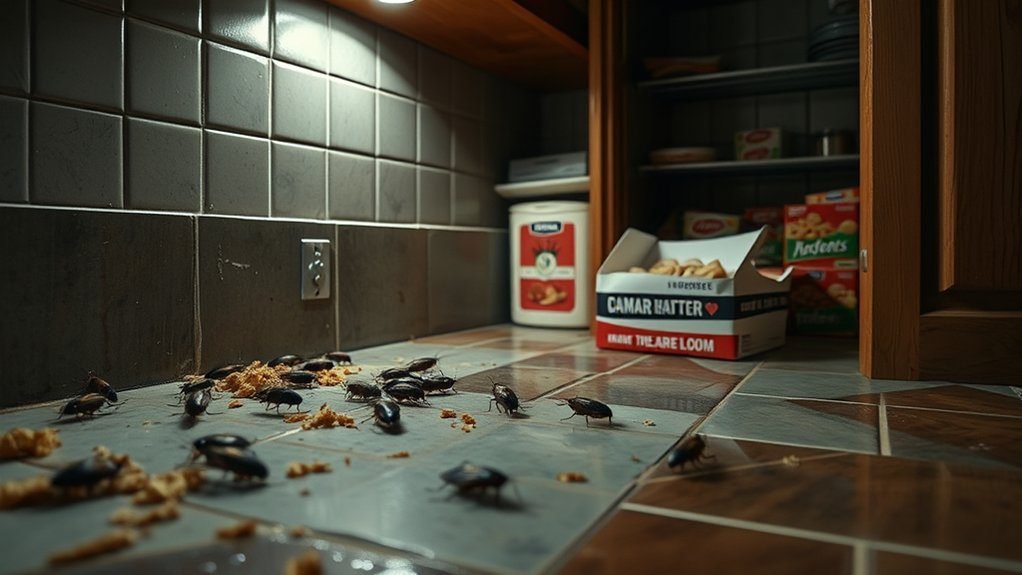
Three everyday factors draw cockroaches indoors: food, moisture, and shelter. Cockroaches are not opportunistic in a random sense — they follow specific environmental cues that signal the presence of these three resources, making the conditions inside homes predictably attractive to specific species. Understanding which factor is driving an infestation determines which prevention measure has the highest impact.
You attract cockroaches when crumbs, greasy residues, and dirty dishes linger in the kitchen. Cockroaches scavenge almost any organic matter — pizza-box oils, stovetop splatter, sweets, starches, cereals, bread, and pet food. German cockroaches favor sugary, starchy, and greasy items, while Oriental and brown-banded species will feed on wallpaper glue, fabrics, soap, paper, hair, and organic debris that most homeowners don’t associate with food sources. 77.3% of cockroach infestations are directly linked to food availability inside the home — making food management the single highest-priority prevention action. Moisture keeps them thriving: leaky taps, wet floors, bathroom sinks, and humid basements or crawl spaces become reliable water sources. Pet water bowls and spills near food double the attraction by combining food and water in a single location. Shelter close to food and water completes the equation — warm, dark, cluttered spots behind appliances, in cabinets, and in cardboard and laundry piles provide the harborage cockroaches need to rest, breed, and avoid disturbance. See our complete guide to what attracts cockroaches for a detailed breakdown of each attractant category.
Food Sources That Attract Cockroaches Indoors
Food availability drives 77.3% of residential cockroach infestations — a figure that reflects how many infestation sources trace back to food management failures rather than structural vulnerabilities. The most common food attractants that bring cockroaches into houses include:
- Crumbs and food debris on kitchen counters, floors, stovetop surfaces, and inside cabinets — particularly in the gap between stoves and countertops and beneath and behind appliances where routine cleaning does not reach
- Greasy cooking residue on stovetop surfaces, range hoods, and the inside walls of ovens — one of the most powerful and persistent cockroach attractants in any kitchen
- Dirty dishes left in the sink overnight, providing a readily available meal during nocturnal foraging
- Pet food left in bowls after feeding — both the food itself and the bowl residue attract cockroaches from considerable distances
- Dry goods stored in original thin packaging including pasta, rice, sugar, cereal, and flour — cockroaches chew through plastic bags and cardboard boxes to access these food sources
- Unsealed garbage in kitchen bins without tight-fitting lids — organic waste odors attract cockroaches from outdoors and from adjacent rooms
- Groceries and cardboard boxes carried indoors — 38.9% of homeowners unknowingly introduce cockroaches through shopping bags, delivery boxes, and secondhand furniture that contain egg cases or nymphs picked up during storage or transport
The cardboard box introduction route is particularly significant because most homeowners don’t inspect incoming packages before placing them in storage areas. German cockroaches deposit egg cases inside corrugated cardboard channels, allowing entire colonies to be transported from infested warehouses, grocery stores, or delivery vehicles directly into homes. Inspect all incoming cardboard boxes before bringing them inside, and dispose of cardboard immediately after unpacking rather than storing it.
Water and Moisture Attraction
52.6% of households with plumbing leaks report higher cockroach activity — and cockroaches die within 48 to 72 hours without water access, making moisture the most survival-critical resource they seek indoors. Any home with unrepaired plumbing leaks, high indoor humidity, or persistent standing water creates the moisture conditions that allow cockroach populations to establish and grow regardless of food management improvements.
Primary moisture sources that attract cockroaches into houses include leaking pipes and dripping faucets under kitchen and bathroom sinks, condensation on cold water pipes particularly in summer, standing water in dish drying racks and sinks, wet dish sponges and cloths left near the sink, moisture accumulation under refrigerators and dishwashers, humid basements and crawl spaces with inadequate ventilation, bathroom floor and wall grout with moisture intrusion, and HVAC drip pans that accumulate standing water between cleaning intervals. American cockroaches specifically favor moist environments and use floor drains and sewer connections as entry and water source points simultaneously — 81.4% of all cockroach activity is concentrated near kitchens and bathrooms precisely because these rooms contain the highest density of moisture sources in residential buildings.
Warmth and Shelter Seeking Behavior
Cockroaches thrive at temperatures between 70 and 85°F — making the climate-controlled interior of a residential home significantly more attractive than outdoor environments during cooler months. Warm, dark harborage near food and water is the final factor that converts cockroach exploration of a home into permanent colony establishment. 81.4% of cockroach activity concentrates near kitchens and bathrooms because these rooms combine all three resources — food, moisture, and the warmth generated by appliance motors, hot water pipes, and cooking activity — in close proximity to stable dark harborage behind and beneath large appliances.
The specific shelter locations cockroaches seek inside houses include the space behind and beneath refrigerators where motor heat creates a consistently warm zone, inside cabinet bases near kitchen plumbing, wall voids adjacent to hot water pipes, the gap between the stove and countertop or adjacent cabinetry, inside electrical boxes and junction panels where warmth from wiring is consistent, behind loose wallpaper and wall panels in kitchen and bathroom areas, inside stacked cardboard boxes in storage areas, and beneath furniture in rooms adjacent to kitchens and bathrooms. Warm electronics including televisions, cable boxes, and gaming consoles also attract cockroaches — the combination of warmth from internal components and the dark enclosed spaces inside electronic housings creates ideal resting conditions away from kitchens when population density drives individuals into secondary harborage areas.
Entry Points for Cockroaches
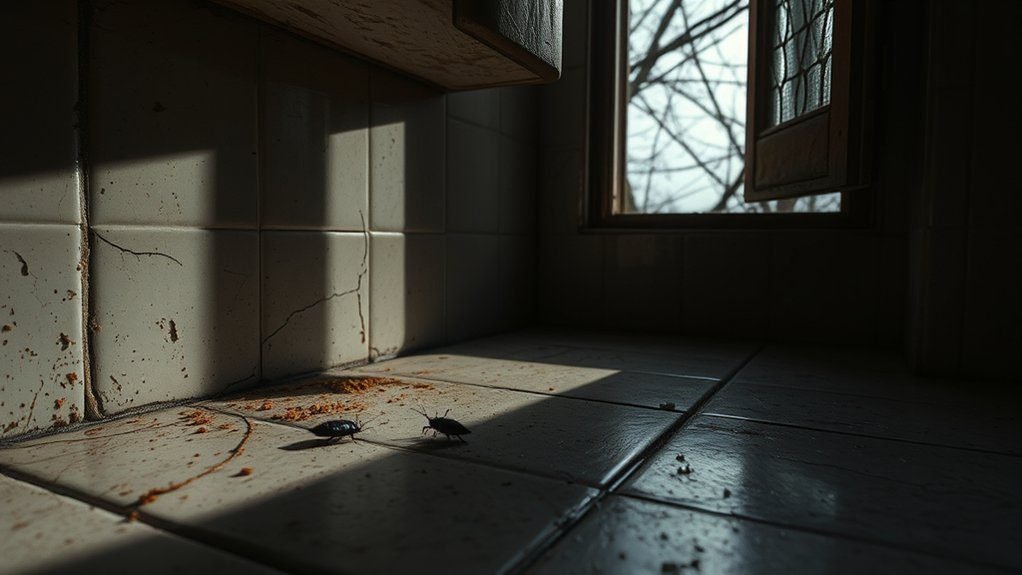
Even with a clean kitchen, cockroaches slip inside through tiny structural gaps you barely notice — they flatten their bodies and squeeze through cracks as thin as 1.6 millimeters. 64.8% of cockroaches enter through cracks and gaps in building foundations and the structural junctions where different building materials meet. Hairline fractures in foundations, gaps where materials join at different expansion rates, and debris-hidden crevices give cockroaches daytime shelter and nighttime access simultaneously.
Structural Gaps and Foundation Cracks
Foundation cracks are the primary structural entry route for peridomestic cockroach species including American and Oriental cockroaches, which establish outdoor populations near the building foundation before migrating indoors through structural gaps. Inspect foundation walls, particularly at basement level, for hairline cracks along mortar joints, gaps at the sill plate where the foundation meets the framing, and openings around sump pump penetrations. Seal all identified gaps with silicone caulk in moisture-exposed areas and acrylic latex caulk in dry indoor locations. Around doors and windows, worn weatherstripping, loose door sweeps, and torn window screens become open entry routes — cockroaches are nocturnal and exploit these openings after dark when human activity is minimal. Replace worn weatherstripping, fit door sweeps flush against thresholds, and repair all torn or missing window screens.
Utility Penetrations and Pipe Gaps
Openings around plumbing, electrical conduits, and cable lines — particularly under sinks, behind appliances, and in laundry rooms — form reliable cockroach pathways between the building exterior and interior living spaces. These penetrations are consistently present in every kitchen and bathroom and consistently left unsealed after plumbing and electrical installation. Seal all pipe penetrations through walls and floors with expanding foam or silicone caulk. Cover kitchen vents, exhaust fans, and dryer exhausts with fine-mesh screens that block cockroach access without restricting airflow. In multi-unit buildings, shared walls, duct chases, and pipe runs allow cockroaches to travel between apartments — seal around all shared utility penetrations and coordinate pest control programs across affected units to prevent reinfestation from adjacent spaces.
Seasonal Patterns of Cockroach Infestation
Cockroach activity in homes follows predictable seasonal patterns driven by outdoor temperature changes, reproductive cycle timing, and the availability of outdoor vs. indoor resources. Understanding these seasonal shifts allows homeowners to time prevention measures for maximum impact.
Spring and Summer Activity
Spring and summer represent peak cockroach reproduction periods. Warmer outdoor temperatures accelerate German cockroach breeding cycles — nymphs complete development to reproductive adults in as little as 60 days during warm summer conditions, compared to significantly longer cycles during cooler months. For indoor German cockroach infestations, this means existing colonies grow fastest during summer regardless of outdoor temperature, because the heated interior maintains optimal conditions year-round. Outdoor species including American and Oriental cockroaches increase foraging activity as outdoor temperatures rise above 70°F, leading to more frequent entry attempts through structural gaps. Spring rainfall drives outdoor cockroach populations to seek dry shelter and pushes them toward building foundations and interior entry routes. Summer humidity — particularly in humid climate regions — creates the high indoor moisture conditions that boost cockroach survival rates and reproductive success. Prevention measures should be intensified in late spring before peak summer breeding activity reaches its highest rate.
Fall and Winter Migration
Fall represents the most significant seasonal entry risk for peridomestic cockroach species. As outdoor temperatures drop below 55°F in autumn, American cockroaches, Oriental cockroaches, and smokybrown cockroaches that spent spring and summer in outdoor harborage — mulch beds, leaf litter, woodpiles, and utility areas — migrate toward building foundations and enter structures through cracks, gaps, and pipe penetrations before temperatures fall below their survival threshold. This seasonal migration creates infestation spikes in homes that had no cockroach activity through warmer months. Structural exclusion work performed in late summer, before temperatures trigger migration, provides the highest return on sealing investment. Winter slows cockroach movement but does not eliminate established indoor populations — German cockroaches continue breeding at full pace in heated indoor environments regardless of outdoor temperature, while American cockroaches concentrate near heat sources including water heaters, furnaces, and basement heating infrastructure.
Signs of Cockroach Infestation Inside the House
Recognizing the early signs that cockroaches have entered your home allows you to act before a small introduction grows into an established breeding colony. The primary signs of cockroach infestation to look for in houses include:
- Droppings: Dark specks resembling black pepper or coffee grounds near kitchen cabinets, baseboards, and under appliances. Larger cylindrical pellets near floor drains and basement walls indicate American cockroach activity.
- Smear marks: Greasy dark streaks along baseboards, walls near floor level, and cabinet edges formed by body oils deposited along regular travel routes.
- Egg cases (oothecae): Small, oval capsules measuring 5 to 8mm found in cabinet corners, behind appliances, and inside cardboard storage. Finding egg cases confirms active breeding.
- Shed skins: Translucent hollow exoskeleton castings near harborage zones, indicating active nymph development and a growing population.
- Musty oily odor: A distinctive chemical smell intensifying in enclosed spaces like under-sink cabinets and behind appliances — caused by aggregation pheromones released by established colonies.
- Daytime sightings: Seeing live cockroaches during daylight hours indicates severe overcrowding in harborage zones — cockroaches are nocturnal and only become visible by day when populations exceed available hiding places.
- Damage to packaging: Chew holes in food packaging, grocery bags, and cardboard boxes confirm active cockroach foraging in food storage areas.
Finding any of these signs warrants immediate action — place sticky monitoring traps in the affected area overnight to quantify activity levels, then implement targeted treatment based on the capture results.
Environmental and Housing Factors That Increase Risk
While structural gaps and food management are the primary drivers of cockroach entry, certain housing types and environmental conditions create elevated baseline infestation risk that requires more intensive prevention effort. Warm climate regions maintain outdoor cockroach populations year-round without the winter temperature suppression that limits outdoor species in cooler climates — meaning continuous infestation pressure rather than seasonal surges. Dense urban environments allow cockroach populations to persist in shared building infrastructure, dumpster areas, and transit of goods between infested and uninfested locations at a frequency that rural and suburban settings don’t experience. Multi-unit housing creates a unique infestation dynamic where cockroaches travel between units through shared wall voids, plumbing chases, and electrical conduit runs — a single heavily infested unit can sustain infestation pressure in adjacent units indefinitely without coordinated treatment across the entire building. Maintenance choices tip the balance: unrepaired leaks, unsealed gaps, and accumulated storage in basements and storage areas create the specific environmental conditions that convert occasional cockroach exploration into permanent colony establishment.
Sanitation and Behavior Patterns That Fuel Infestations
You fuel cockroach problems when you leave food residue and dirty dishes in the kitchen. Clutter — especially cardboard and paper — gives cockroaches hidden harborage near food sources. Moisture from leaks, standing water, and damp rooms keeps them thriving and breeding. German cockroaches reproduce rapidly — a single female and her descendants can produce thousands of offspring within six months under ideal kitchen conditions.
Kitchen Hygiene Lapses
Even small lapses in kitchen hygiene can tip a home from occasional cockroach sightings to a full infestation. Cockroaches zero in on crumbs, grease, and sticky spills left on counters, floors, and stovetops. Dirty dishes left overnight become feeding stations. Unsealed trash and food containers supply steady calories, while pet bowls left out add a readily accessible food source during nocturnal foraging hours. Moisture from dripping faucets, leaking pipes, and damp zones under sinks keeps cockroaches hydrated and actively breeding. Missed cleanups under appliances let food particles persist for extended periods, fueling population growth and spreading pathogens to food preparation surfaces. Wipe spills and crumbs immediately, degrease stovetops nightly, wash or rinse dishes before bed, store all food in sealed containers, empty and seal trash daily, and fix plumbing leaks within 24 hours of detection.
Clutter and Harborage
Clutter turns dark, undisturbed spaces into safe shelters where cockroaches rest, breed, and avoid both visual inspection and pest control treatments. Cardboard boxes and paper stacks near doors, garages, and utility penetrations give cockroaches instant cover as they enter. Inside, established populations pack into wall voids, cabinet interiors, drawer slides, appliance motors, electrical boxes, and behind loose wallpaper. Furniture stored in basements and garages provides harborage that allows yard-originating and outdoor cockroach populations to establish indoor bridgehead colonies before migrating into living areas. Cardboard boxes are particularly problematic because cockroaches consume the starchy glue in corrugated cardboard and deposit egg cases inside box channels — 38.9% of homeowners unknowingly introduce cockroaches through these materials. Reduce clutter, eliminate cardboard storage, and replace paper and cardboard with sealed plastic containers to break the harborage conditions that sustain breeding populations.
Moisture and Leaks
When moisture lingers, cockroaches follow. Activity concentrates near dripping pipes, damp basements, steamy bathrooms, and laundry rooms where humidity spikes and floor drains remain wet. Leaks under sinks, around toilets, and in HVAC drip pans create reliable water sources and breeding hotspots, especially for German and American cockroaches. High humidity accelerates egg development — populations surge in persistently damp zones particularly after spring rains and during summer peak humidity. Fix leaking pipes, faucets, and toilets promptly, insulate sweating pipes, repair HVAC drip pans, ventilate bathrooms and laundry rooms, and seal wall, floor, and utility penetrations to eliminate the moisture conditions that sustain established colonies.
Effective Control and Removal Methods
Once cockroaches have entered your home, prevention measures alone are insufficient to eliminate the established population — targeted treatment is required alongside sanitation and exclusion improvements. The most effective residential cockroach control sequence combines monitoring to quantify activity, gel bait targeted to confirmed harborage zones, IGR deployment to disrupt reproduction, structural exclusion to block reinfestation, and follow-up monitoring to verify elimination. American cockroach infestations require specific exterior perimeter treatment and floor drain sealing in addition to interior gel bait programs, because their entry route from outdoor harborage continues to drive reinfestation if not addressed structurally.
Place sticky monitoring traps along walls in kitchens, bathrooms, and storage areas overnight to quantify activity levels and identify harborage zones — the traps with the highest capture counts are within 5 to 10 feet of the active nest. Deploy gel baits inside cabinet bases, behind appliances, and along baseboards at confirmed activity locations. Rotate bait active ingredients every 90 days to prevent resistance and bait aversion. Add IGR products including hydroprene or pyriproxyfen to disrupt nymph development and suppress reproduction in the harborage zone, extending population suppression between treatment applications. Cockroaches reaching bedrooms indicate a severe established infestation that requires professional assessment — daytime sightings in any room other than the kitchen should be treated as a signal to escalate from DIY to professional control. Call a licensed pest control provider when monitoring traps confirm activity across multiple rooms, when egg cases or shed skins confirm active breeding, or when any DIY treatment program fails to reduce monitoring trap counts within 14 days.
Practical Prevention Strategies to Block Entry
Although cockroaches can squeeze through tiny gaps, you can block most entry routes with targeted structural fixes combined with consistent sanitation and moisture management. Replace worn weatherstripping and add door sweeps to close ground-level entry gaps. Seal small cracks around door and window frames with silicone caulk, and repair or replace damaged window screens. Seal all utility penetrations where pipes, cables, and lines enter with expanding foam or silicone caulk. Fit fine mesh over vents, chimneys, and exhaust openings. Inspect the foundation regularly and fill cracks and wall-floor junctions with durable sealants. Store food in sealed hard-sided containers, empty trash daily in sealed bags, remove pet food bowls overnight, and eliminate cardboard storage from kitchens and storage areas. Fix all plumbing leaks within 24 hours and reduce indoor humidity to below 50% using exhaust fans and dehumidifiers in kitchens, bathrooms, and basement areas.
Frequently Asked Questions About Why Cockroaches Come Into Houses
Why do cockroaches come into houses?
Cockroaches come into houses for three fundamental resources: food, water, and shelter. 77.3% of infestations are linked to food availability inside the home, 52.6% of households with plumbing leaks report higher cockroach activity, and 81.4% of cockroach activity concentrates near kitchens and bathrooms where food and moisture are most concentrated. They enter through structural gaps in foundations (64.8% of entry routes), worn door sweeps, pipe penetrations, and on incoming grocery bags and cardboard boxes (38.9% of introductions).
Can moisture bring cockroaches inside?
Yes — moisture is as critical to cockroach survival as food, and cockroaches die within 48 to 72 hours without water. 52.6% of households with plumbing leaks report higher cockroach activity. Leaky taps, dripping pipes, standing water in dish racks and sinks, condensation on cold water pipes, humid basements, and bathroom moisture all attract cockroaches and support colony establishment and reproduction. Fixing all plumbing leaks promptly and maintaining indoor humidity below 50% are among the most impactful prevention measures available.
Are certain seasons worse for cockroach entry?
Yes. Fall is the highest-risk season for peridomestic cockroach entry — as outdoor temperatures drop below 55°F, American and Oriental cockroaches that spent summer in outdoor harborage migrate toward building foundations and enter through structural gaps. Summer is the peak reproduction season for German cockroaches established indoors, meaning existing indoor infestations grow fastest during warm months. Spring rainfall pushes outdoor populations toward building foundations. Structural exclusion should be completed in late summer before fall migration season for maximum effectiveness.
Can cockroaches enter my home in grocery bags?
Yes — approximately 38.9% of homeowners unknowingly introduce cockroaches through grocery bags, cardboard delivery boxes, or secondhand furniture and appliances. Cockroach egg cases are deposited inside corrugated cardboard channels, allowing entire populations to travel from infested warehouses or stores directly into homes. Inspect all incoming cardboard before bringing it inside, dispose of cardboard immediately after unpacking rather than storing it, and inspect secondhand furniture for droppings, egg cases, and shed skins before placing it in living areas.
Can cockroaches infest electronics or household appliances?
Yes. Cockroaches infest warm, dark electronics and appliances including televisions, gaming consoles, microwaves, and refrigerator motor housings — drawn by the consistent warmth from internal components, the dark enclosed space inside the housing, and proximity to kitchen food sources. They chew wires, contaminate components with feces and body oils, and spread allergens throughout the interior of the device. Clean regularly around and behind electronics, seal gaps between electronics and adjacent surfaces, and use gel baits near confirmed electronic harborage rather than sprays that can damage components.
Do outdoor yard conditions affect indoor cockroach activity?
Yes — outdoor harborage zones adjacent to the building create continuous infestation pressure that drives repeated indoor cockroach entry regardless of interior prevention measures. Mulch beds against foundation walls, leaf litter near the building perimeter, woodpiles, outdoor garbage storage, and dense ground cover plants adjacent to the foundation all support outdoor cockroach populations that migrate indoors seasonally. Maintain a 6 to 12 inch gravel or bare soil clearance at the foundation perimeter, relocate woodpiles and outdoor storage away from the building, seal outdoor garbage bins, and trim vegetation away from exterior walls to reduce the outdoor population pressure driving indoor infestation.
{
“@context”: “https://schema.org”,
“@type”: “FAQPage”,
“mainEntity”: [
{
“@type”: “Question”,
“name”: “Why do cockroaches come into houses?”,
“acceptedAnswer”: {
“@type”: “Answer”,
“text”: “Cockroaches come into houses for food, water, and shelter. 77.3% of infestations are linked to food availability inside the home, 52.6% of households with plumbing leaks report higher cockroach activity, and 81.4% of cockroach activity concentrates near kitchens and bathrooms. They enter through foundation cracks (64.8% of entry routes), worn door sweeps, pipe penetrations, and on incoming grocery bags and cardboard boxes (38.9% of introductions).”
}
},
{
“@type”: “Question”,
“name”: “Can moisture bring cockroaches inside?”,
“acceptedAnswer”: {
“@type”: “Answer”,
“text”: “Yes. Cockroaches die within 48 to 72 hours without water and actively seek moisture indoors. 52.6% of households with plumbing leaks report higher cockroach activity. Leaky taps, dripping pipes, standing water in sinks, condensation on pipes, humid basements, and bathroom moisture all attract cockroaches and support colony establishment. Fixing leaks promptly and maintaining indoor humidity below 50% are among the most impactful prevention measures.”
}
},
{
“@type”: “Question”,
“name”: “Are certain seasons worse for cockroach entry?”,
“acceptedAnswer”: {
“@type”: “Answer”,
“text”: “Yes. Fall is highest-risk for peridomestic entry — as temperatures drop below 55°F, American and Oriental cockroaches migrate from outdoor harborage into buildings through structural gaps. Summer is peak reproduction season for established German cockroach colonies indoors. Spring rainfall pushes outdoor populations toward foundations. Structural exclusion completed in late summer before fall migration provides the highest prevention impact.”
}
},
{
“@type”: “Question”,
“name”: “Can cockroaches enter my home in grocery bags?”,
“acceptedAnswer”: {
“@type”: “Answer”,
“text”: “Yes. Approximately 38.9% of homeowners unknowingly introduce cockroaches through grocery bags, cardboard delivery boxes, or secondhand items. Cockroach egg cases are deposited inside corrugated cardboard, allowing populations to travel from infested stores directly into homes. Inspect all incoming cardboard before bringing it inside and dispose of it immediately after unpacking.”
}
},
{
“@type”: “Question”,
“name”: “Do outdoor yard conditions affect indoor cockroach activity?”,
“acceptedAnswer”: {
“@type”: “Answer”,
“text”: “Yes. Mulch beds against foundations, leaf litter, woodpiles, outdoor garbage storage, and dense ground cover plants support outdoor cockroach populations that migrate indoors seasonally. Maintain a 6 to 12 inch gravel clearance at the foundation perimeter, relocate woodpiles away from the building, seal outdoor garbage bins, and trim vegetation away from exterior walls to reduce outdoor infestation pressure.”
}
},
{
“@type”: “Question”,
“name”: “Can cockroaches infest electronics or household appliances?”,
“acceptedAnswer”: {
“@type”: “Answer”,
“text”: “Yes. Cockroaches infest televisions, gaming consoles, microwaves, and refrigerator motor housings — drawn by warmth from internal components and the dark enclosed space inside the housing. They chew wires, contaminate components, and spread allergens throughout the device interior. Use gel baits near confirmed electronic harborage rather than sprays that can damage components.”
}
}
]
}
