
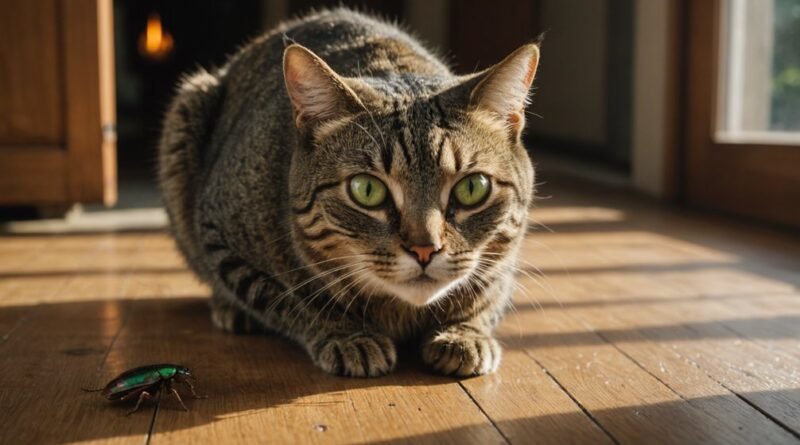
Are Cockroaches Dangerous for Pets, What Owners Should Know
Yes—roaches can harm your pets. They spread bacteria like Salmonella and E. coli, contaminating food and water, and eating roaches can cause vomiting or diarrhea. Young, elderly, or immune‑compromised pets face higher risks. Allergens from droppings and shed parts can trigger coughing, wheezing, and itchy skin. Roaches also pose choking and blockage hazards. Clean feeding areas, seal kibble, fix leaks, reduce clutter, and use pet‑safe pest control. Recognize symptoms early and act fast—there’s more that helps you protect them.
Key Takeaways
- Cockroaches can contaminate pet food and water with Salmonella, E. coli, and other pathogens, causing vomiting, diarrhea, and serious gastrointestinal illness.
- Eating cockroaches poses choking and intestinal blockage risks, especially for small, young, or elderly pets.
- Roach allergens from droppings and shed skins can trigger itchy skin, coughing, and asthma-like symptoms in sensitive pets.
- Watch for red flags: sudden GI upset, itching, coughing, wheezing, anxiety, or appetite changes; seek veterinary care if symptoms persist.
- Prevent exposure by sealing food, cleaning feeding areas, fixing leaks, reducing clutter, and using pet-safe, low-toxicity pest control when needed.
Health Risks Cockroaches Pose to Pets
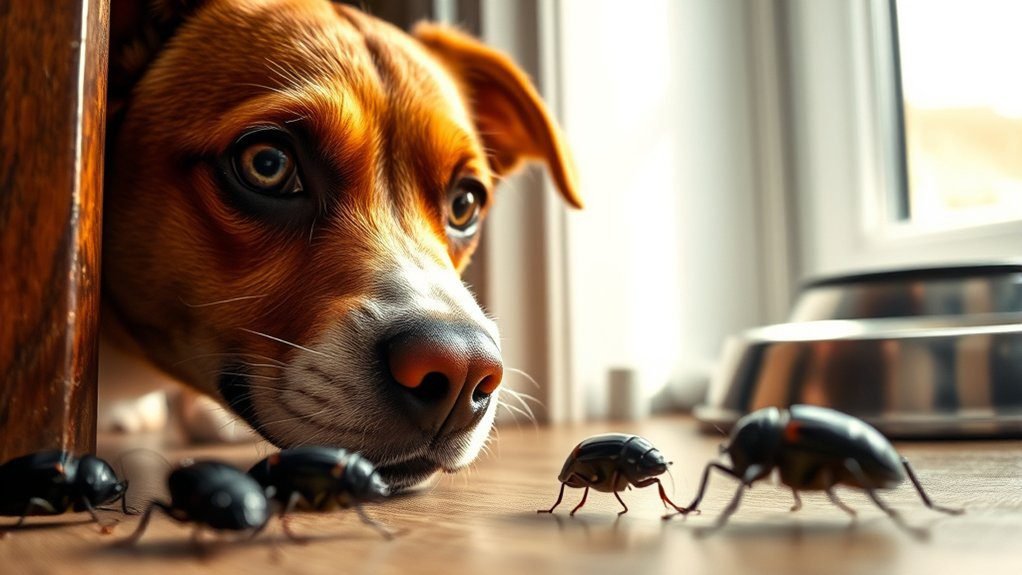
Even if you don’t see them often, cockroaches can quietly threaten your pet’s health. They carry pathogenic bacteria like Salmonella and E. coli, contaminating food and water bowls as they scuttle across kitchen floors and counters. Effective pest control is crucial for pet health and safety.
Cockroaches quietly endanger pets, spreading Salmonella and E. coli onto food and water bowls.
If your pet eats tainted kibble—or the roaches themselves—you risk vomiting, diarrhea, and other gastrointestinal illness. The danger rises for young, elderly, or immune-compromised pets, since cockroach feces and debris can worsen infections.
Roaches also create physical hazards. Small pets can choke on a swallowed cockroach, and whole insects may cause intestinal blockages.
In heavy infestations, roaches may bite or feed on irritated skin, prompting scratching, open sores, and secondary infections that need veterinary care. Constant pest activity can trigger stress, leading to appetite changes, restlessness, or avoidance of certain areas, which may aggravate chronic conditions.
Because these risks are recognized but underreported, you should treat any cockroach presence as a meaningful health concern for your pets.
Allergens From Roaches and How They Affect Pet Health
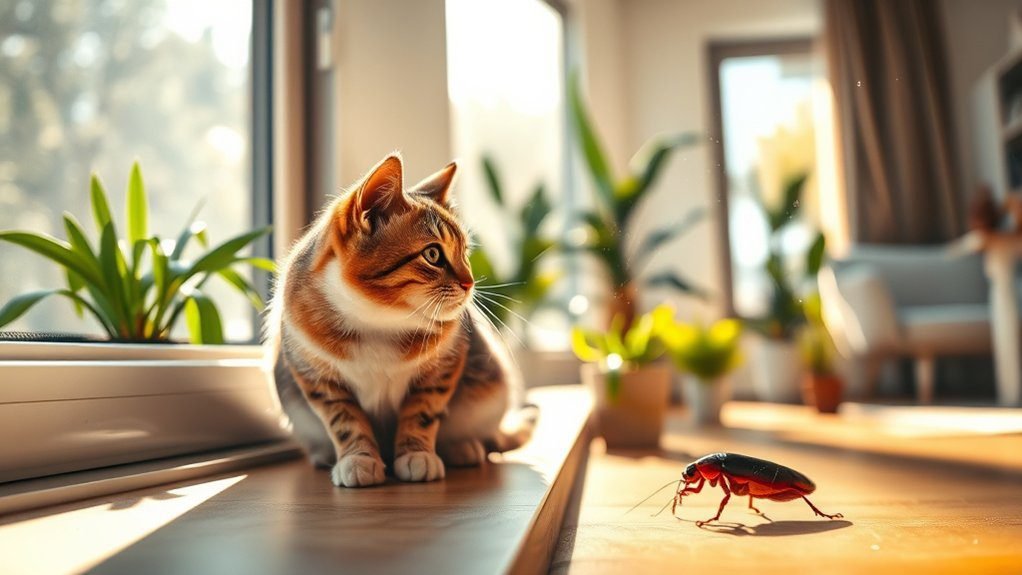
Although you mightn’t see them, cockroach allergens in your home can steadily inflame your pet’s airways and skin. These proteins—found in roach droppings, shed skins, and body parts—settle into dust, bedding, and carpets where your pet spends time. Pets may also pick up bacteria from cockroach droppings by sniffing or licking contaminated areas.
If your dog or cat has respiratory sensitivities, exposure can irritate airways, worsen asthma-like symptoms, and trigger coughing, sneezing, or labored breathing. Chronic contact also drives itchy, inflamed skin, especially in pets with existing dermatitis or flea allergies, and persistent scratching can invite secondary infections.
- Notice frequent coughing, wheezing, or sneezing indoors.
- Watch for itching, rashes, hot spots, or hair loss from scratching.
- Track flare-ups tied to specific rooms, bedding, or seasons.
- Reduce allergen load by cleaning dust, washing pet bedding, and vacuuming with HEPA filtration.
- Seek veterinary guidance for diagnostics and treatment plans.
Lowering cockroach populations and allergen levels helps protect your pet’s breathing and skin health.
Disease Transmission and Food/Water Contamination

While you might think they’re just a nuisance, cockroaches can contaminate pet food and water with a wide range of pathogens that make animals sick. About a quarter of microbes isolated from roaches are food-borne pathogens, including E. coli O157:H7, Staphylococcus aureus, Bacillus, and Salmonella. They act as mechanical vectors, picking up germs in unsanitary areas and depositing them on bowls, kibble, and water.
Cockroaches contaminate pet food and water, spreading E. coli, Salmonella, Staph, and other dangerous pathogens.
Their feces, saliva, and shed body parts spread contamination, and viable pathogens can persist in excreta for days.
Roaches in kitchens and feeding zones carry intestinal pathogens—bacteria, viruses, and parasites like Sarcocystis—that threaten pets through ingestion. Hepatitis A transmission is plausible where fecal contact occurs, and Campylobacter jejuni has been documented near food prep sites. Pets may also be exposed to heartworm risk from mosquitoes that roaches attract by contaminating damp areas, highlighting the importance of overall pest prevention.
Infestation control has correlated with a 70% drop in hepatitis A in one study area, underscoring prevention. Bites are rare but can cause irritation and secondary infection. Ultimately, contaminated food and water are the primary route to illness.
Behavioral and Physical Signs Your Pet May Be Exposed
Because cockroach exposure can look like many other issues, focus on sudden changes in your pet’s gut, skin, breathing, and behavior.
Watch for vomiting, diarrhea, or a sudden drop in appetite after your pet scavenges or hunts. Abdominal pain, shivering, or lethargy can follow ingestion of contaminated bugs or poisons. Skin redness, itchiness, or rash suggests contact with allergens or baits. Respiratory signs—sneezing, coughing, wheezing—are red flags, especially if your pet has asthma. Ongoing exposure from allergens on bedding or toys can keep symptoms flaring. Roaches can carry Salmonella and other pathogens that may cause gastrointestinal or systemic illness in pets.
- Vomiting, diarrhea, and belly tenderness after bug-chasing or floor-sniffing
- Itchy, inflamed skin and nonstop scratching or licking
- Coughing, wheezing, watery eyes, and a runny or stuffy nose
- Tremors, ataxia, or intense shivering after possible poison ingestion
- Behavior shifts: anxiety, agitation, unusual sleep, or altered appetite
Act quickly if coughing or wheezing escalates, if tremors appear, or if vomiting and diarrhea persist—those warrant prompt veterinary care.
Prevention and Safe Pest Control Strategies for Pet Owners
Even before you reach for pesticides, cut off what roaches need: food, water, and entry.
Before pesticides, starve roaches: remove food, fix water sources, and seal entry points.
Clean pet feeding areas promptly, pick up leftovers, and store kibble in sealed containers. Take out trash regularly and keep bins closed. Fix leaks, lower indoor humidity, and seal cracks around doors, windows, and baseboards.
Prioritize nonchemical tactics first: vacuum, declutter, and sanitize. Infestation size correlates with higher allergen levels, so early action helps reduce exposure for pets.
If you need controls, choose pet-safe baits and sticky traps over broad sprays. Skip foggers and any airborne insecticides, especially around animals with respiratory issues.
When using insecticides, place them in pet-inaccessible spots—behind appliances, under sinks, or inside wall voids—and follow labels. Consider professional services that use low-toxicity, pet-friendly methods.
Monitor early and often. Inspect at night, set sticky monitors along suspected routes, and watch for pet scratching or licking that suggests allergens.
Wash bedding and toys in hot water, clean floors with pet-safe disinfectants, ventilate well, and use HEPA air purifiers. Consult your vet for allergic or asthmatic pets.
Frequently Asked Questions
Can Cockroach Infestations Affect Exotic Pets Like Reptiles or Birds Differently?
Yes. You’ll see reptiles risk parasite and pathogen ingestion, stress, and toxicity from contaminated roaches; birds suffer pronounced respiratory reactions to allergens, feed contamination, infections, stress, and toxicosis. Use clean feeder roaches, strict hygiene, and prompt, pet-safe pest control.
Are Certain Dog or Cat Breeds More Sensitive to Cockroach Exposure?
Yes. You’ll see greater sensitivity in brachycephalic and allergy-prone breeds—Bulldogs, Pugs, Boxers, Siamese, Sphynx. Watch for itching, swelling, dermatitis, cough, or GI upset. Limit exposure, use pet-safe control, and contact your vet if symptoms persist.
How Can Renters Address Landlord Responsibilities for Cockroach Control With Pets?
Report roaches immediately, document everything, and request an IPM plan. Note your pets and ask for pet-safe treatments and notice. If the landlord delays, escalate to housing authorities, cite habitability laws and deadlines, and consider rent remedies per local statutes.
Do Seasonal Changes Increase Cockroach Risks for Indoor Pets?
Yes. Warm, humid seasons spike cockroach activity, breeding, and indoor invasions, increasing your pet’s exposure to allergens, pathogens, and pesticides. Winter keeps infestations indoors. Seal entry points, fix leaks, manage food, clean feeding areas, and coordinate year‑round pet‑safe treatments.
What Documentation Helps a Vet Assess Cockroach-Related Pet Illnesses?
You should document symptoms, onset and progression, exposure details, pesticide use, environment, behavior changes, ingestion events, essential signs, and lab results. Include allergen tests, fecal exams, cultures, medications given, and timelines. Share photos, videos, and contact information.
Conclusion
Keeping roaches away protects your pets’ health and comfort. You now know the risks: allergens that trigger itching or asthma, pathogens that contaminate food and water, and subtle behavior changes that signal exposure. Act early—seal entry points, store food securely, fix leaks, and clean regularly. Choose pet-safe baits and traps, and work with vets and pest pros when needed. Stay observant, trust your instincts, and prioritize prevention so your pets can breathe easier and stay healthy at home.
