
How Cockroaches Contaminate Food and Surfaces, Prevention and Clean-Up
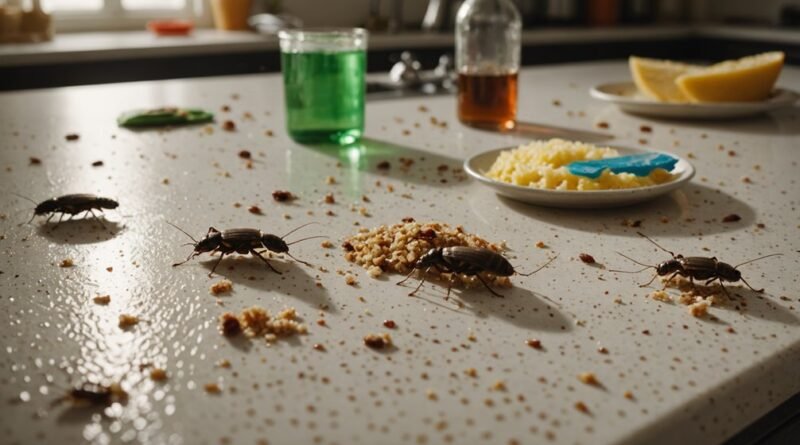
Cockroaches contaminate food and surfaces by mechanically transferring Salmonella, E. coli, Staphylococcus, and other bacteria from garbage, drains, and sewers onto countertops, utensils, dishes, and food packaging through their legs, body contact, feces, and regurgitated saliva. They do not need to bite or sting to create a health hazard. The contamination occurs invisibly during overnight foraging, and the droppings and shed skins they leave behind also trigger asthma and allergic reactions in exposed people.
Key Takeaways
Cockroach food and surface contamination operates through three simultaneous pathways. Understanding all three is what makes prevention and cleaning more effective.
- Cockroaches transfer bacteria mechanically through their legs, exoskeletons, and body contact after moving through sewers, garbage, and organic debris.
- Their feces deposited during foraging carry Salmonella, E. coli, parasite eggs, and allergen proteins that persist on surfaces for days.
- Regurgitated saliva and digestive fluids inoculate food directly with bacteria, making contaminated food hazardous even after cooking in some cases.
- Cockroach droppings, shed skins, and body fragments trigger asthma and allergic reactions; sensitized children face up to 3.4 times higher hospitalization rates.
- Integrated Pest Management combining sanitation, exclusion, gel baiting, and monitoring reduces contamination risk more effectively than spray-only approaches.
Pathogens Cockroaches Carry and Transmit

Cockroaches carry a wide range of disease-causing pathogens on their exoskeletons and internally in their digestive systems. The bacteria most commonly associated with cockroach contamination events are Salmonella species, which cause salmonellosis with diarrhea, fever, and abdominal cramps within 12 to 72 hours of ingestion. Staphylococcus aureus presents a particularly serious food safety hazard because the heat-stable toxins it produces survive cooking temperatures, meaning food contaminated by cockroaches before cooking can still cause food poisoning after being heated.
E. coli strains including Shiga toxin-producing O157:H7 cause severe gastrointestinal illness with bloody diarrhea and dehydration risk. Listeria monocytogenes, carried by cockroaches in some documented cases, is especially dangerous for pregnant women, newborns, elderly people, and immunocompromised individuals because it can cause systemic infection. Campylobacter jejuni is one of the leading causes of bacterial diarrhea in the United States and has been isolated from cockroach specimens. Streptococcus species found on cockroach bodies can also cause intestinal infections in exposed humans.
Viral, Parasitic, and Allergen Hazards
Beyond bacteria, cockroaches transmit viruses and parasites through the same mechanical contact and fecal deposition routes. Norovirus and rotavirus have been detected on cockroach exoskeletons and in gut specimens from infested food service environments. Hepatitis A virus has been linked to cockroach mechanical transmission with documented declines in outbreak rates following cockroach control programs. Poliovirus and Salmonella Typhi, the agent of typhoid fever, have been isolated from cockroach specimens in multiple studies.
Parasitic hazards include Cryptosporidium, Giardia, Blastocystis hominis, and multiple helminth species. Parasite eggs and cysts adhere to cockroach exoskeletons during movement through contaminated areas and are deposited on food preparation surfaces and food packaging during foraging. Some parasitic organisms also survive gut passage and are shed in viable form in feces.
Allergen Contamination From Cockroach Bodies
Cockroach feces, saliva, shed skins, and body parts release allergen proteins that trigger asthma and allergic reactions in sensitized individuals independently of any infectious pathogen. These allergen particles become embedded in household dust on floors, countertops, and food preparation surfaces, then become airborne during routine activities like vacuuming, sweeping, and moving items in kitchen cabinets.
Children sensitized to cockroach allergens suffer more frequent asthma attacks, poorer lung function, 3.4 times more hospitalizations, and 78 percent more unscheduled medical visits compared to non-sensitized children in similar housing. Dead cockroaches and dried droppings continue releasing allergen particles after the insect is no longer alive, meaning the allergen hazard persists even after an infestation is controlled without active surface remediation.
How Cockroaches Spread Contaminants to Food and Surfaces
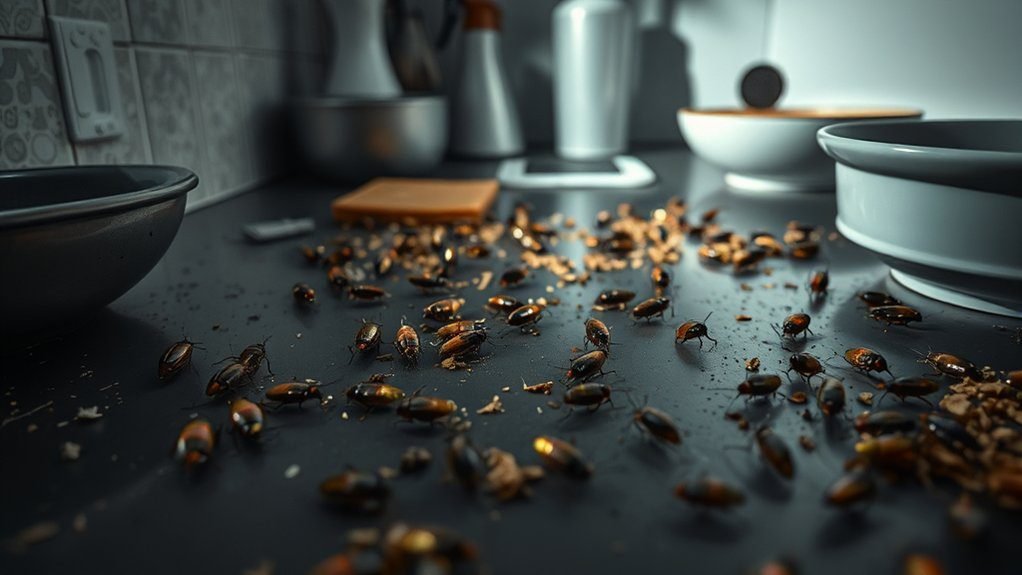
Three distinct behaviors drive cockroach contamination of food and surfaces. Each pathway operates simultaneously in infested kitchens, and understanding each one clarifies why comprehensive prevention addresses all three rather than focusing on a single route.
The first pathway is mechanical transfer through body contact. Cockroaches walk through garbage, sewers, drains, and fecal matter, then cross food preparation surfaces, dishes, utensils, and uncovered food. Bacteria clinging to their legs, abdomens, and spined body surfaces transfer to every surface they contact. No bite or sting is required. The transfer is instantaneous and leaves no visible evidence.
Fecal Deposition as a Contamination Route
The second pathway is fecal contamination. Cockroaches defecate continuously during foraging, depositing small dark droppings that resemble ground black pepper on every surface they spend time on. These droppings carry viable Salmonella, E. coli, parasite eggs, and allergen proteins. Salmonella deposited in cockroach feces remains viable on surfaces for 3 to 20 days under typical indoor conditions. Warm, humid kitchen environments extend bacterial survival, while cooler or drier conditions shorten it.
- Fecal particles deposited on countertops and food packaging transfer bacteria directly to hands and food during meal preparation
- Droppings in cabinet interiors contaminate dishes, utensils, and food storage containers without direct cockroach contact with those items
- Feces deposited inside packaging seams and on the outside of food containers contaminate hands during normal grocery handling
- Cockroach feces also carry aggregation pheromones that attract other colony members to the same location, concentrating contamination in high-activity zones
Regurgitation and Saliva Contamination
The third pathway is regurgitation during feeding. Cockroaches regurgitate digestive fluids and saliva while eating, inoculating food directly with bacteria from their gut. This route introduces bacteria into the interior of soft or moist food items rather than only on surfaces, making the contamination harder to remove by washing or rinsing. Staphylococcus toxins produced through this route pose particular risk because the toxins are heat-stable and are not eliminated by cooking the contaminated food.
High-Risk Environments and Signs of Cockroach Infestation
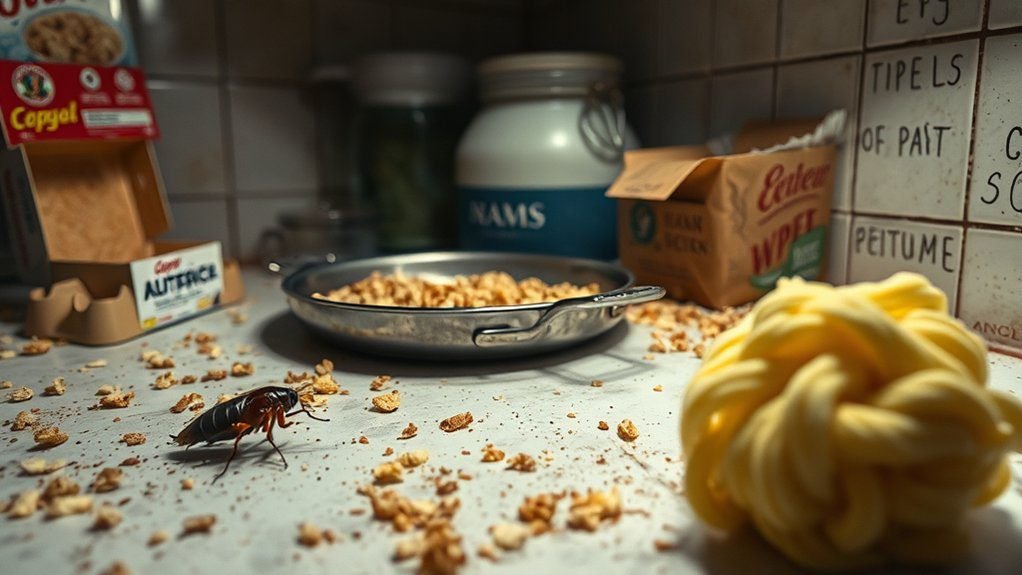
Kitchens carry the highest contamination risk because they concentrate food, moisture, and warmth in one location. Cockroaches establish harborage inside kitchen cabinet bases, behind stoves and refrigerators, under sinks near pipe penetrations, and in wall voids adjacent to heat sources. German cockroaches are the primary kitchen species in most U.S. homes; American cockroaches (Periplaneta americana) are more common in basements, sewers, and utility rooms from which they access kitchens through drain connections.
Other high-risk environments include restaurants and food service buildings where cockroach presence alongside food preparation creates direct contamination pathways to a large number of people. Studies of food service environments find cockroaches in approximately one in five sticky traps, with kitchen and catering areas consistently showing the highest capture rates and pathogen loads. Shared multi-unit buildings where cockroaches move between units through wall voids and plumbing chases create persistent infestation pressure even when individual units are treated.
Early Signs of Cockroach Infestation to Recognize
Early identification of infestation signs allows treatment before contamination becomes widespread. Recognizing these indicators in kitchens and other high-risk areas reduces the window of exposure.
- Pepper-like droppings along wall edges, inside cabinet bases, behind appliances, and on cabinet shelves; German cockroach droppings are very small while American cockroach droppings are larger and cylindrical
- Egg cases attached to the undersides of shelves, inside cabinet hinges, and in gaps behind appliances; German cockroach egg capsules are dark brown and small while American cockroach capsules are larger and reddish-brown
- Shed skins from molting nymphs near harborage zones, particularly in drawer tracks, under sinks, and inside cabinet bases
- Musty or oily odor detectable in kitchen cabinet interiors or bathroom vanities, caused by pheromones and body secretions from large populations
- Night sightings near sinks, stoves, and baseboards; daytime sightings in open areas indicate a population large enough that overcrowding is forcing roaches out during daylight hours
- Sticky trap captures; place traps flush to walls inside cabinet bases, beneath refrigerators, and under sinks and check counts at 24 to 48 hours to establish baseline activity levels
Prevention Strategies and Integrated Pest Management
Preventing cockroach food and surface contamination requires addressing the conditions that attract and sustain cockroaches alongside the pest population itself. Sanitation removes the food and moisture resources cockroaches depend on. Exclusion blocks the entry routes they use to access kitchens from wall voids, sewers, and neighboring units. Monitoring tracks population levels and guides where control measures need to be intensified.
Store all food, pet food, and food scraps in sealed airtight containers. Wipe countertops, stovetops, and food preparation surfaces daily to remove grease and debris. Wash dishes after every meal rather than leaving them overnight. Empty indoor trash into outdoor bins with tight-fitting lids nightly. Fix all water leaks and dry sinks, countertops, and bathroom fixtures before bed to eliminate the moisture cockroaches require for survival.
Exclusion and Habitat Modification
- Seal cracks along baseboards, around pipe penetrations under sinks, and at gaps behind appliances using silicone caulk or expanding foam
- Install door sweeps on exterior doors and repair damaged window screens to block entry from outdoors
- Remove cardboard boxes and paper clutter from kitchens and storage areas since cockroaches use cardboard as harborage and food
- Declutter storage areas beneath sinks and inside kitchen cabinet bases to eliminate the dark, undisturbed spaces cockroaches prefer for harborage
- Manage exterior woodpiles, leaf debris, and vegetation near the building foundation that provide outdoor harborage adjacent to entry points
Targeted Pest Control Methods
Gel baits and bait stations placed inside cabinet bases, behind appliances, and around pipe penetrations deliver the most effective colony-level population reduction while keeping active ingredients confined to areas away from food preparation surfaces. Add insect growth regulators in harborage zones to suppress nymph development across multiple generations. Apply boric acid or silica gel dusts lightly in dry wall voids and under-appliance spaces as a complementary treatment. Avoid insecticide sprays on or near food preparation surfaces, food storage areas, and dishes. Professional cockroach extermination is warranted when home IPM does not produce consistent population decline within four weeks.
Cleaning and Disinfection After Cockroach Contamination
Cleaning after cockroach contamination requires a two-step approach: physical removal of droppings, debris, and dead roaches before disinfection, followed by chemical disinfection to kill residual bacteria on cleaned surfaces. Skipping the physical removal step and applying disinfectant directly over visible contamination is less effective because organic matter reduces the efficacy of most disinfectants.
Wear gloves and a dust mask before beginning. Vacuum droppings, egg capsules, shed skins, and dead roaches from cracks, crevices, cabinet interiors, and under-appliance areas using a crevice tool attachment. Move appliances and furniture to reach hidden contaminated zones. Empty the vacuum canister immediately into a sealed bag and place it in an outdoor bin to prevent allergen resuspension indoors.
Disinfection Procedures for Food Contact Surfaces
- Wash all countertops, food preparation surfaces, and cabinet shelf interiors with hot soapy water before applying any disinfectant
- Apply a bleach solution (one tablespoon bleach per gallon of water) or a hospital-grade disinfectant to cleaned surfaces and allow the required contact time before rinsing
- Wash all dishes, utensils, and cookware that may have been contacted by cockroaches in hot soapy water before use
- Steam clean or machine wash children’s toys, bedding, and floor mats in hot water to eliminate allergens and residual bacteria
- Disinfect trash bins inside and out; sanitize the area around and beneath the bin which accumulates food residue and cockroach feces
- Discard any food in packaging that shows signs of cockroach damage including chewing marks or droppings inside the packaging
After completing cleaning and disinfection, apply gel baits in the harborage areas disturbed during the process and replace any sticky monitoring traps that were moved or contaminated during cleaning.
Frequently Asked Questions
Are Cockroach Allergies Linked to Asthma Symptoms Worsening?
Yes. Cockroach allergen sensitization is one of the strongest predictors of asthma morbidity in inner-city children and adults living in high-infestation homes. Early-life exposure increases the risk of developing persistent wheeze that can progress to asthma. Once sensitized, cockroach allergen exposure triggers airway inflammation and bronchoconstriction that worsens asthma control, increases rescue inhaler use, and raises emergency department visit and hospitalization rates. Reducing home cockroach allergen levels through IPM, surface cleaning, and allergen-proof bedding encasements produces measurable improvements in asthma symptoms in intervention studies.
Do Cockroaches Develop Resistance to Common Household Insecticides?
Yes. German cockroaches in particular develop physiological and behavioral resistance to insecticides rapidly, within just a few generations of consistent exposure to the same active ingredient. Populations exposed to pyrethroids frequently develop cross-resistance to multiple insecticide classes, reducing the effectiveness of product rotation when the modes of action are similar. Behavioral resistance, where cockroaches learn to avoid bait matrices associated with negative outcomes, also develops with repeated exposure to the same gel formulation. IPM programs that rotate bait active ingredients, combine baiting with IGRs and sanitation, and avoid relying on any single insecticide class produce more durable control than spray-only approaches.
Can Cockroach Infestations Affect Restaurant Inspection Scores or Closures?
Yes. Cockroach presence in kitchens, food storage areas, and food preparation spaces is classified as a critical or major violation in most food safety inspection systems, resulting in significant score reductions. Repeated violations or documented evidence of cockroaches in direct contact with food or food contact surfaces can trigger mandatory re-inspection and temporary closure orders until the operator provides documented evidence of effective pest control and corrective action. Restaurants with cockroach violations also face increased liability risk for foodborne illness claims linked to the infestation period.
What Legal Obligations Do Landlords Have for Pest Control?
Landlords in most U.S. jurisdictions have a legal obligation to maintain rental properties in habitable condition, which includes providing pest-free living environments. This obligation generally requires prompt response to tenant-reported cockroach infestations, professional extermination using licensed pest control services, and structural repairs including gap sealing and leak repair that address the conditions enabling the infestation. Landlords must give proper notice before entering to perform pest control work. When tenants are determined to have caused an infestation through unsanitary practices, lease terms may permit cost shifting to the tenant, but this requires documented evidence and should be handled according to local housing law.
Are Natural Predators Effective for Long-Term Cockroach Control?
Natural predators including certain spider species and parasitic wasps can reduce cockroach populations partially in specific environments, but they do not provide adequate control as a standalone strategy in residential kitchens or food service buildings. Studies show predator-based approaches typically achieve around 40 percent population reduction rather than the near-elimination required to meaningfully reduce food contamination and allergen burden. Natural predators are most useful as a component of an IPM plan that also includes gel baiting, sticky trap monitoring, sanitation, and exclusion. Avoid broad-spectrum insecticide applications that would eliminate beneficial predator populations while also undermining the effectiveness of baiting programs.
{
“@context”: “https://schema.org”,
“@type”: “FAQPage”,
“mainEntity”: [
{
“@type”: “Question”,
“name”: “Are Cockroach Allergies Linked to Asthma Symptoms Worsening?”,
“acceptedAnswer”: {
“@type”: “Answer”,
“text”: “Yes. Cockroach allergen sensitization is one of the strongest predictors of asthma morbidity in inner-city children and adults living in high-infestation homes. Once sensitized, cockroach allergen exposure triggers airway inflammation and bronchoconstriction that worsens asthma control, increases rescue inhaler use, and raises emergency department visit and hospitalization rates. Reducing home cockroach allergen levels through IPM, surface cleaning, and allergen-proof bedding encasements produces measurable improvements in asthma symptoms in intervention studies.”
}
},
{
“@type”: “Question”,
“name”: “Do Cockroaches Develop Resistance to Common Household Insecticides?”,
“acceptedAnswer”: {
“@type”: “Answer”,
“text”: “Yes. German cockroaches develop physiological and behavioral resistance to insecticides rapidly, within just a few generations of consistent exposure to the same active ingredient. Populations exposed to pyrethroids frequently develop cross-resistance to multiple insecticide classes. Behavioral resistance, where cockroaches learn to avoid bait matrices, also develops with repeated exposure to the same gel formulation. IPM programs that rotate bait active ingredients, combine baiting with IGRs and sanitation, and avoid relying on any single insecticide class produce more durable control than spray-only approaches.”
}
},
{
“@type”: “Question”,
“name”: “Can Cockroach Infestations Affect Restaurant Inspection Scores or Closures?”,
“acceptedAnswer”: {
“@type”: “Answer”,
“text”: “Yes. Cockroach presence in kitchens, food storage areas, and food preparation spaces is classified as a critical or major violation in most food safety inspection systems, resulting in significant score reductions. Repeated violations or documented evidence of cockroaches in direct contact with food or food contact surfaces can trigger mandatory re-inspection and temporary closure orders until the operator provides documented evidence of effective pest control and corrective action.”
}
},
{
“@type”: “Question”,
“name”: “What Legal Obligations Do Landlords Have for Pest Control?”,
“acceptedAnswer”: {
“@type”: “Answer”,
“text”: “Landlords in most U.S. jurisdictions have a legal obligation to maintain rental properties in habitable condition, which includes providing pest-free living environments. This obligation generally requires prompt response to tenant-reported cockroach infestations, professional extermination using licensed pest control services, and structural repairs including gap sealing and leak repair that address the conditions enabling the infestation. When tenants are determined to have caused an infestation through unsanitary practices, lease terms may permit cost shifting to the tenant, but this requires documented evidence and should be handled according to local housing law.”
}
},
{
“@type”: “Question”,
“name”: “Are Natural Predators Effective for Long-Term Cockroach Control?”,
“acceptedAnswer”: {
“@type”: “Answer”,
“text”: “Natural predators can reduce cockroach populations partially in specific environments but do not provide adequate control as a standalone strategy in residential kitchens or food service buildings. Studies show predator-based approaches typically achieve around 40 percent population reduction rather than the near-elimination required to meaningfully reduce food contamination and allergen burden. Natural predators are most useful as a component of an IPM plan that also includes gel baiting, sticky trap monitoring, sanitation, and exclusion.”
}
}
]
}
