
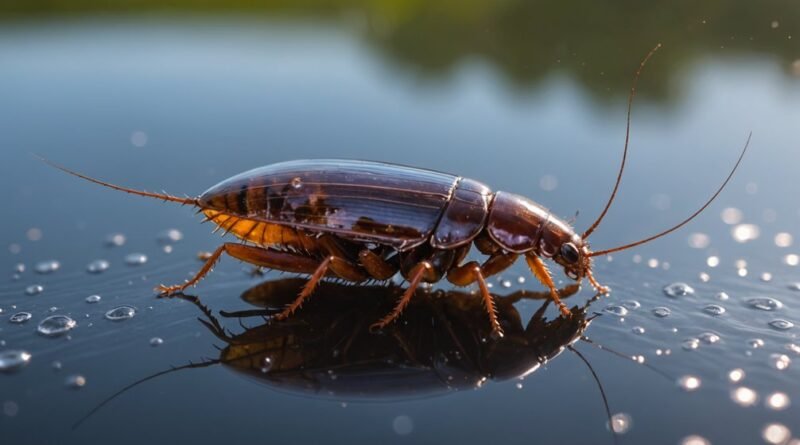
Can Cockroaches Swim? Surprising Facts Explained
Cockroaches can’t truly swim, but they’re surprisingly good at surviving in water. Instead of swimming, they paddle with their legs and float using trapped air pockets. Their tiny leg hairs help them stay buoyant, and they can hold their breath for up to 40 minutes by closing their spiracles to block water. Some species even survive drain submersion for several minutes. There’s a lot more to these resilient pests than meets the eye.
Key Takeaways
- Cockroaches cannot truly swim; instead, they float and paddle using their legs to create forward motion through water.
- Tiny hairs on their legs trap air pockets, aiding buoyancy and helping them stay afloat during water exposure.
- Cockroaches breathe through spiracles, which close during submersion, allowing them to hold their breath for up to 40 minutes.
- Most species survive 30–40 minutes underwater, with cold water conditions extending their survival time significantly.
- Despite limited swimming ability, cockroaches can navigate drains and sewer systems to enter homes through plumbing.
Can Cockroaches Actually Swim?
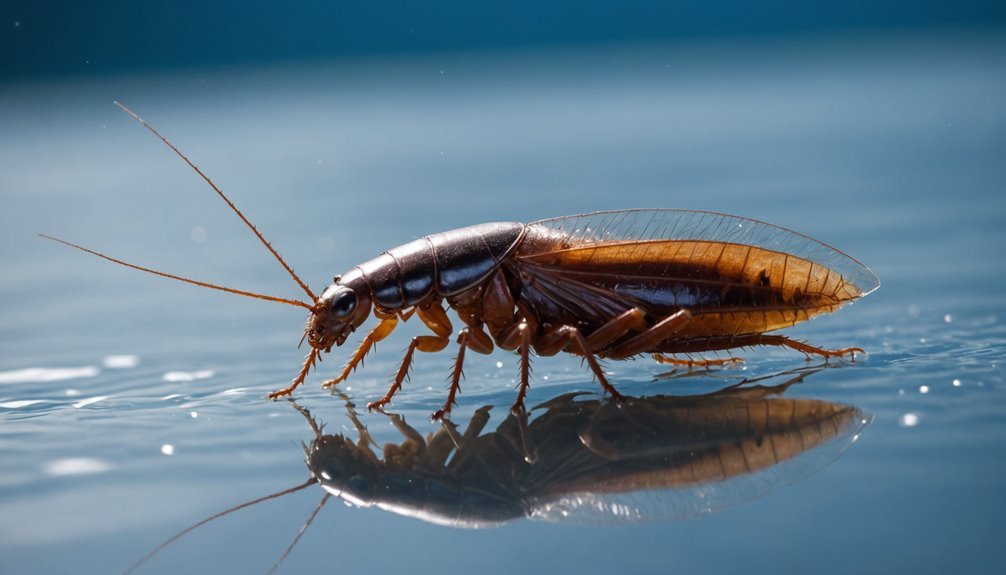
When you watch a cockroach scramble across a wet surface, you might assume it can swim, but the truth is more nuanced. Cockroaches don’t swim in the conventional sense. What you’re actually seeing is floating or surface paddling, not the coordinated aquatic movement you’d expect from water-dwelling species.
Pest-control sources often use “can swim” loosely, which creates confusion. The more accurate description is that cockroaches can survive and move in water briefly. That’s a meaningful distinction. No source classifies cockroaches as aquatic animals with fish-like swimming mechanics.
What they do have is a strong resistance to submersion. They can hold their breath for up to 40 minutes, navigate sewers, and persist in wet environments like drains and basements. They achieve this by closing their spiracles to prevent water from entering their respiratory system.
How Cockroaches Move Through Water
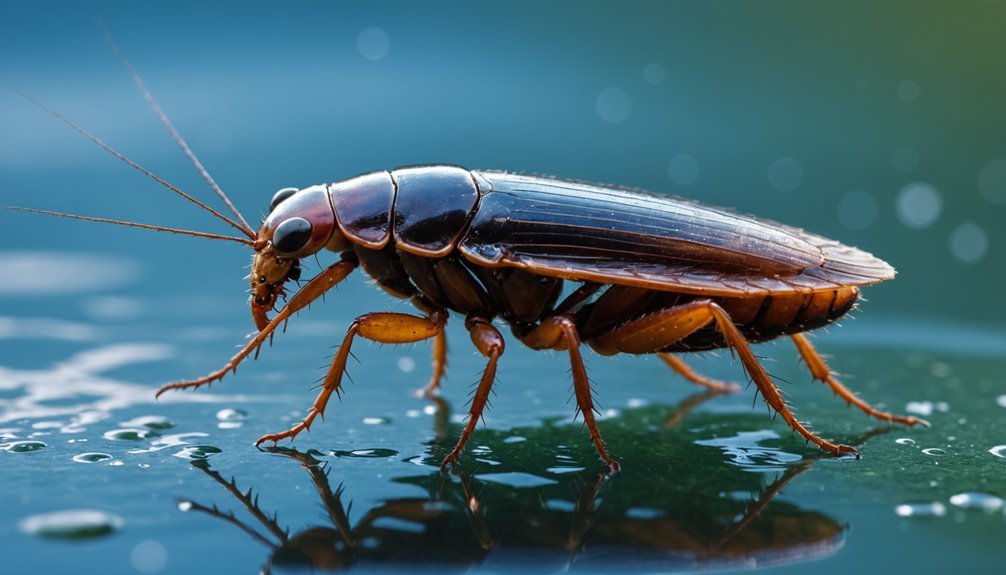
If you’ve ever watched a cockroach cross a puddle, you’ve seen leg-driven propulsion in action, not true swimming. Cockroaches move through water by rowing and paddling their legs, creating forward motion rather than swimming in any technical sense. You’d describe the result as skittering or sailing across the surface.
Their long, dexterous legs spread weight across a wider contact area, improving stability while they move. Tiny leg hairs trap air pockets, and their low body weight allows surface tension to assist flotation. The combination of buoyancy and leg propulsion keeps them moving without efficient aquatic locomotion.
Tiny leg hairs trap air pockets while surface tension and low body weight work together to keep cockroaches afloat.
Trapped air within their body structures also contributes to staying afloat. So what you’re actually watching isn’t swimming — it’s a cockroach exploiting surface tension, trapped air, and rapid leg movement simultaneously.
The motion resembles swimming visually, but the underlying mechanics are entirely different from how aquatic animals move through water. Cockroaches instinctively generate a paddling motion with their legs as a survival response when they find themselves in water.
How Long Before a Cockroach Actually Drowns?
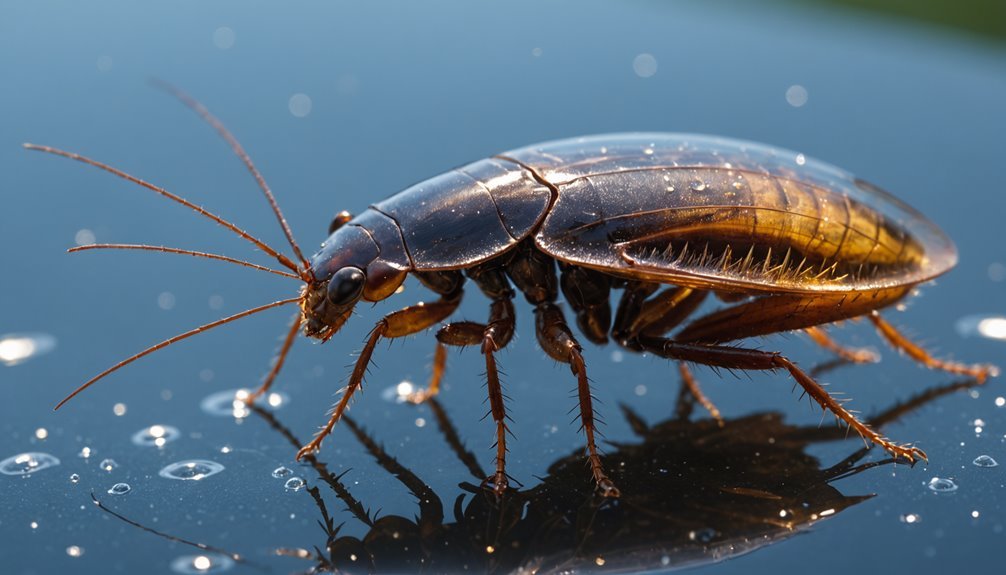
If you’re expecting water to kill a cockroach in seconds, you’ll be disappointed.
Cockroaches breathe through spiracles along their bodies rather than through their mouths, letting them stay submerged for up to 40 minutes before oxygen deprivation becomes fatal.
Once submersion stretches into several hours, though, death becomes nearly certain. Sealing tracheal openings allows cockroaches to close off their breathing passages and prevent water from entering their respiratory system.
Drowning Timeline Explained
Most people assume a cockroach dropped in water will drown quickly, but that’s not what happens. Cockroaches can hold their breath and survive underwater far longer than you’d expect.
| Species | Survival Time Underwater |
|---|---|
| American Cockroach | Many minutes; can exit drains after submersion |
| German Cockroach | ~15 minutes in cold water |
| General Range | 30–40 minutes across multiple sources |
| Drowning Threshold | Beyond 30–40 minutes of sustained submersion |
Water temperature also changes the outcome. German cockroaches die faster in warm water than in cold tap water, so temperature isn’t irrelevant. You can’t count on a quick drown either way. Brief water contact won’t kill them—only prolonged submersion eventually does.
Cockroaches don’t breathe through their mouths, which is a big part of why water affects them so differently than it does most insects. They take in oxygen through spiracles on their thorax, small openings they can close to keep water from entering their respiratory system during submersion.
Spiracles Delay Death
What keeps a cockroach alive underwater isn’t luck—it’s spiracles. These tiny openings run along a cockroach’s body and connect directly to its respiratory system. When submerged, it seals them shut, blocking water entry and cutting oxygen demand to a minimum.
That simple action buys serious time. A cockroach can hold its breath for up to 40 minutes by keeping its spiracles closed. Most species survive 30 to 40 minutes underwater before conditions become fatal. Some can push beyond that under the right circumstances.
But you shouldn’t mistake endurance for immunity. Spiracles delay death—they don’t prevent it. Extended submersion eventually overwhelms even this defense. This resilience comes from a creature that has existed since the Carboniferous era, over 280 million years ago.
What you’re seeing is temporary resistance, not a cockroach built for permanent aquatic life.
When Submersion Becomes Fatal
Drowning a cockroach takes longer than most people expect. If you’re hoping a quick dunk finishes the job, it won’t. These insects hold out far longer than their size suggests.
Here’s what the survival window actually looks like:
- Most cockroaches survive 30–40 minutes underwater before facing serious risk.
- German cockroaches can live 15 minutes in cold tap water specifically.
- Warm water kills faster than cold, so temperature matters.
- Extended submersion lasting several hours becomes increasingly lethal.
- No single drowning time applies to every species.
You’re not dealing with a fragile insect here. Survival times shift depending on species, water temperature, and conditions. What kills one roach faster might give another plenty of time to escape.
Why Cockroaches Don’t Drown Immediately
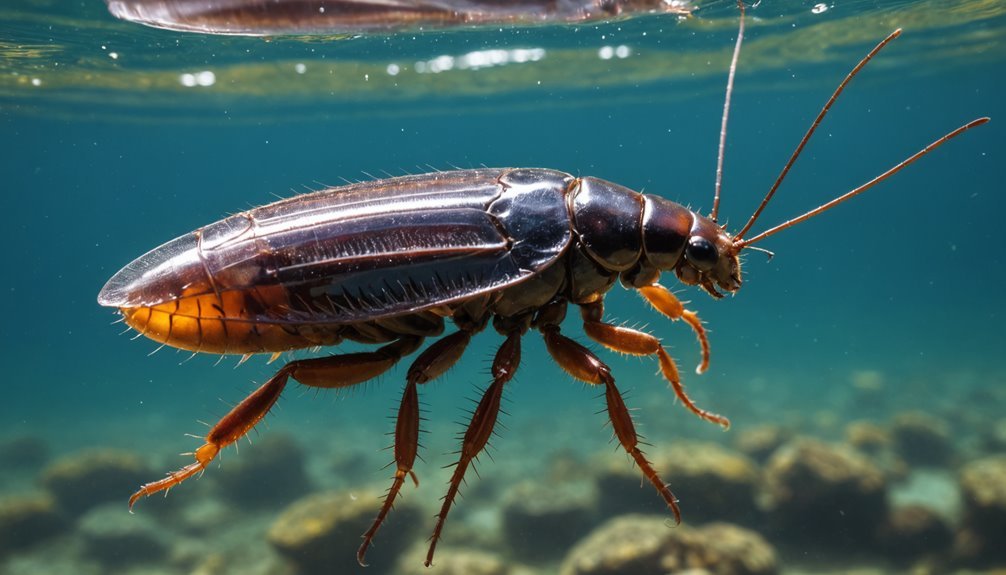
When a cockroach hits the water, its spiracles close to block water from entering the respiratory tubes, buying it critical time.
That trapped air also keeps the cockroach buoyant, so it floats rather than sinking straight to the bottom.
On top of that, cockroaches have a naturally low oxygen demand, meaning they don’t burn through their limited air supply as quickly as you might expect.
Spiracles Block Water
Unlike mammals, cockroaches don’t breathe through a mouth or nose—they pull air in through tiny openings called spiracles, which are paired external vents connected to a network of tubes called tracheae.
These spiracles stay closed most of the time, opening only when oxygen or carbon dioxide exchange is necessary. That closure does two critical things at once:
- Blocks water from flooding the tracheal system
- Reduces respiratory water vapor loss considerably
- Allows breath-holding for up to seven minutes or longer
- Limits the need for constant air exchange underwater
- Supports short-term submersion survival without respiratory failure
Research confirms spiracle closure cuts water loss dramatically, with a pooled effect of −3.27 ± 0.88 (p < 0.0001).
Water conservation drives this behavior—drowning resistance is simply a useful side effect.
Trapped Air Buoys
One key reason cockroaches don’t drown immediately is trapped air. When a cockroach hits water, air pockets inside its body and respiratory tubes make it less dense than water, so it floats rather than sinks.
You’re fundamentally watching buoyancy in action, not swimming.
That trapped air acts as a temporary oxygen reserve, buying the roach roughly 30 minutes underwater before it drowns. Some species push that window even further under cold water.
So if you’ve flushed a roach expecting quick results, don’t count on it. The air reserve keeps it alive long enough to potentially escape if it reaches a dry surface.
Full submersion without any oxygen access is what eventually overcomes this advantage, but it takes longer than most people expect.
Low Oxygen Needs
Cockroaches breathe through tiny openings called spiracles, and their oxygen demand is remarkably low compared to most animals. They can even survive in environments with as little as 1% oxygen.
When submerged, they don’t panic and burn through their oxygen reserves. Instead, their physiology works in their favor:
- Spiracles close to limit oxygen loss
- Breathing slows or stops for five to seven minutes
- Metabolic demand drops when oxygen supply falls
- Oxygen delivery matches need rather than running constantly
- Anoxic survival lets them endure temporary oxygen restriction
This tight regulation buys them time underwater without immediate collapse.
You’re not dealing with a fragile insect here. Cockroaches treat low oxygen as a manageable condition rather than a crisis.
Do Cockroaches Even Breathe Through Their Mouths?
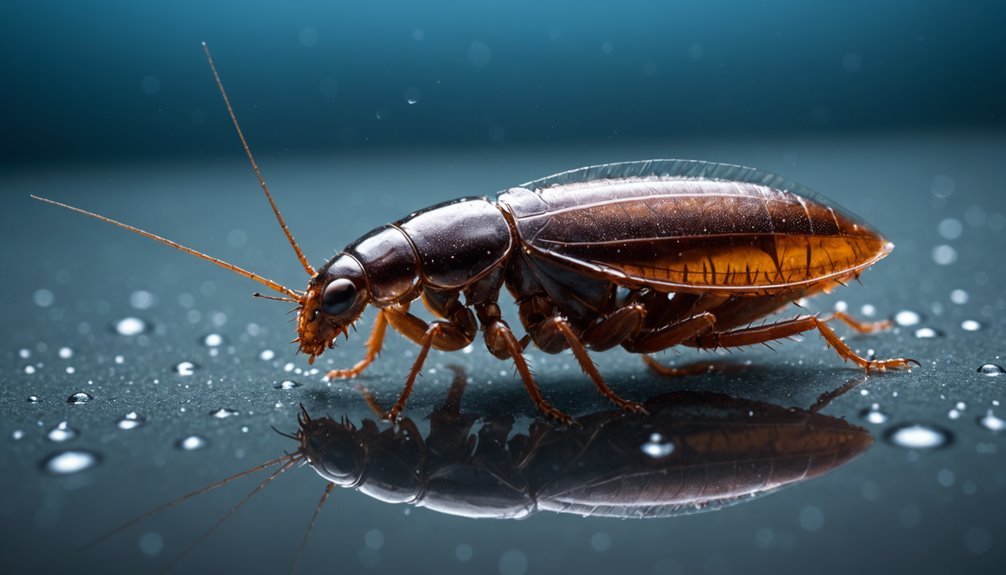
When you think about breathing, you probably picture air moving in through a nose or mouth — but that model doesn’t apply to cockroaches at all. They breathe through spiracles, small valve-like openings along their thorax and abdomen. These connect to a network of tubes called tracheae, which deliver oxygen directly to tissues without lungs or blood-based transport.
Spiracles stay closed most of the time to reduce water loss, opening only when gas exchange is needed.
| Spiracle State | Action | Purpose |
|---|---|---|
| Closed | Valves sealed shut | Minimize water loss |
| Flutter | Rapid open/close cycles | Partial gas exchange |
| Open | Fully open | Active oxygen intake or CO₂ release |
Thoracic spiracles typically handle inhalation while abdominal spiracles push air out during exhalation, creating a mostly unidirectional airflow. The mouth plays no role — it’s strictly for feeding.
Which Cockroaches Are Most Commonly Found Near Water?
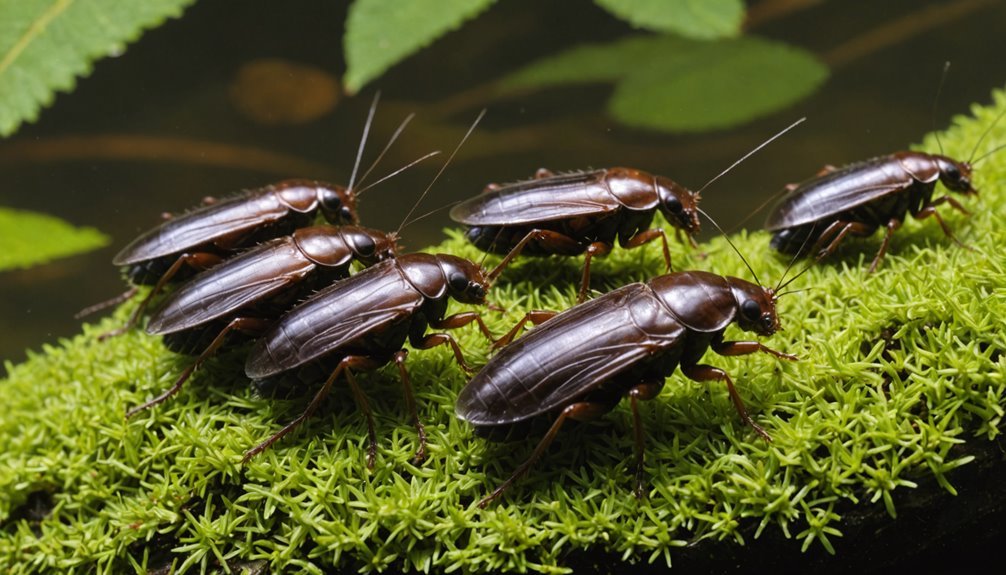
If you’ve ever spotted a cockroach near a drain or damp basement, you’ve likely encountered one of the water-loving species.
The American cockroach and Oriental cockroach top the list, since both thrive in sewers, drains, and high-humidity spaces that keep them close to steady moisture.
You’ll often find these drain and sewer dwellers moving indoors through pipes and floor drains, which puts them in direct contact with the water sources inside your home.
Water-Loving Cockroach Species
Not all cockroaches are drawn to wet environments equally — some species have a far stronger association with moisture than others.
Here’s what you’re most likely dealing with when damp areas attract roaches:
- Oriental cockroach: the classic “waterbug,” thriving in cool, dark, damp basements and crawl spaces.
- American cockroach: prefers warm, wet infrastructure like sewers, boiler rooms, and steam tunnels.
- Brown-banded cockroach: occasionally grouped with water-loving species, but its moisture connection is weaker.
- German cockroach: not water-dependent, but gravitates toward humid kitchens and bathrooms.
- Wood cockroach: found near moist outdoor areas and often carried inside on firewood.
If you’re spotting roaches near moisture, you’re most likely dealing with Oriental or American cockroaches — both thrive wherever dampness and organic debris overlap.
Drain and Sewer Dwellers
Some cockroach species don’t just prefer damp environments — they’ve made drains and sewers their primary habitat. The American cockroach is one of the most frequently encountered species in sewers and drains, often traveling through pipes directly into your home.
The Oriental cockroach, commonly called the “waterbug,” thrives in drains, basements, and crawlspaces where cool moisture persists. In certain regions, the Turkestan cockroach has also established itself in sewer systems and other outdoor moisture-prone areas.
The Smokybrown cockroach occasionally turns up in municipal sewers, water meter boxes, and garages.
Even the German cockroach, while less of a sewer dweller, gravitates toward warm, humid areas near water — particularly kitchens and bathrooms. Wherever moisture collects in your infrastructure, cockroaches are likely to follow.
Can Cockroaches Come Up Through Your Drains?
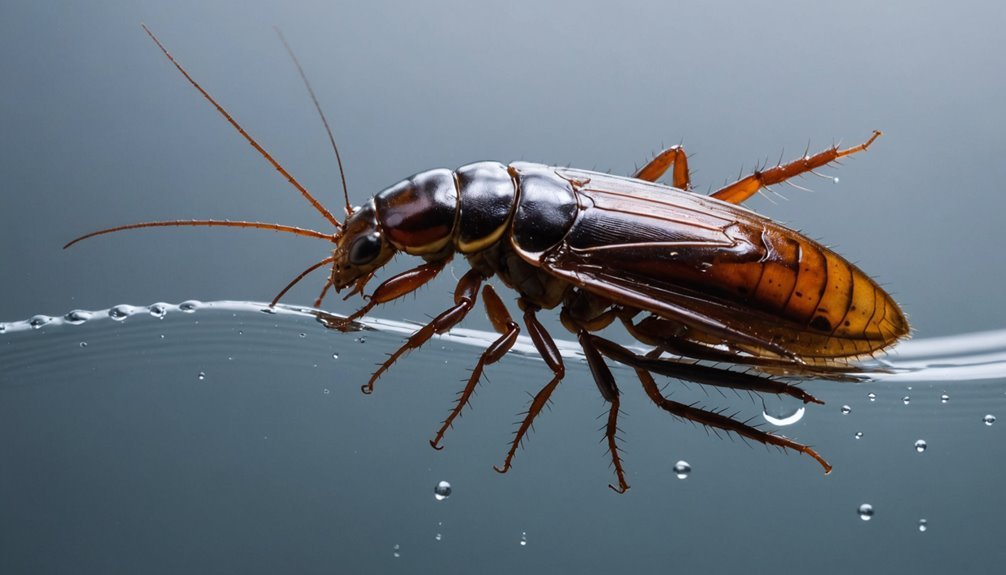
Cockroaches can absolutely come up through your drains. Sewer-dwelling species travel through connected pipe networks and surface at sinks or showers, especially in multi-unit buildings where plumbing links neighboring units.
A working drain trap creates a water seal that blocks them, but a missing, damaged, or dry trap gives them a clear path inside.
Certain conditions make your drains more inviting:
- Food residue and organic buildup inside pipes
- Leaky faucets and standing water near sink areas
- Moisture, condensation, and damp surfaces around drains
- Broken sewer lines creating direct access from outside
- Garbage cans stored under sinks adding nearby food and moisture
To stop them, cover drains at night with a stopper or screen, fix leaks, clean drains regularly, and seal pipe gaps with caulk or steel wool.
Drain sightings often signal a broader plumbing access problem, not just one entry point.
Why Water Alone Won’t Kill a Cockroach
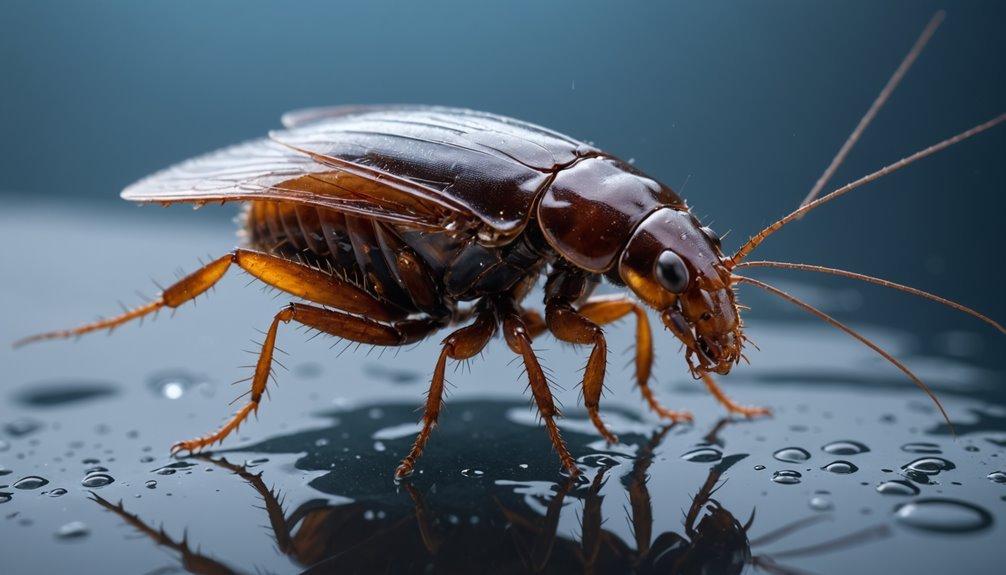
Water alone won’t kill a cockroach, no matter how much you pour on one. Cockroaches can survive underwater for about 30 minutes, hold their breath for extended periods, and reemerge fully functional after submersion.
Wetting one may slow it down briefly, but don’t expect it to die. Cockroaches are also strong swimmers that can float and climb nearby surfaces to escape. Water simply doesn’t trap them long enough to cause any real harm.
The bigger problem is mechanism. Plain water doesn’t block a cockroach’s ability to breathe the way soap or detergent can. Surfactants disrupt the insect’s respiratory system, making soapy water far more effective than plain water.
Clean water introduces no toxins and leaves no residual effect once it dries. If you want results, use water for cleaning infested areas instead, and pair it with a broader pest-management approach.
Why Damp Conditions Make Your Home a Cockroach Target
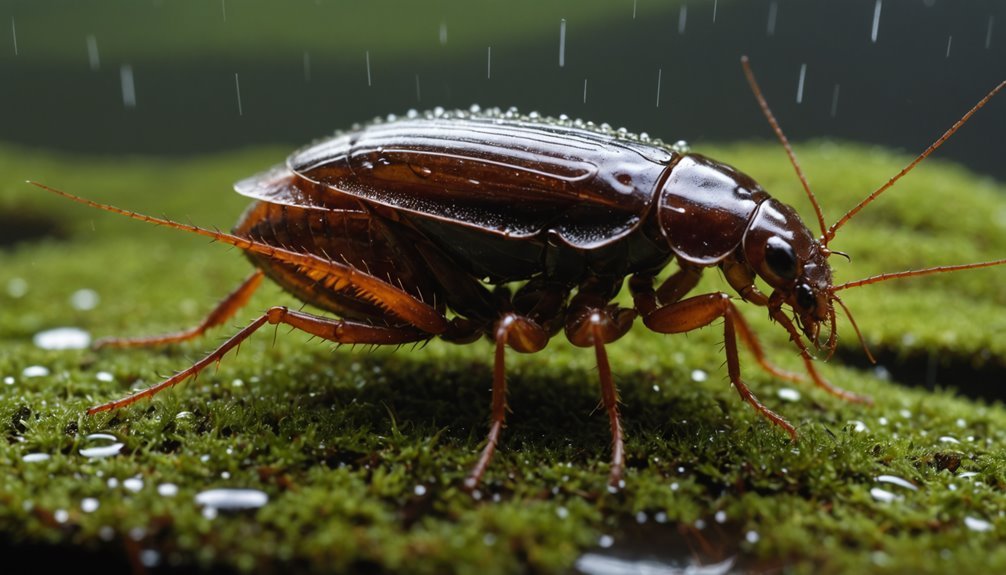
While plain water won’t threaten a cockroach, the moisture inside your home is a different story. Damp conditions create ideal breeding and harborage environments that draw cockroaches deeper into your living spaces.
When indoor humidity climbs above 60%, you’re practically rolling out the welcome mat. Cockroaches thrive where warmth, darkness, and moisture combine, and your home likely has several of those zones already.
When humidity tops 60%, your home stops being yours — it becomes prime cockroach territory.
Here’s what makes damp areas so attractive to them:
- Leaky pipes and condensation create persistent moisture zones near walls and cabinets.
- Humidity above 60%–80% reduces desiccation stress, letting roaches move freely.
- Damp cardboard and storage materials add harborage opportunities near food sources.
- Crawl spaces and basements act as population reservoirs that feed into living areas.
- Fungi and organic debris accumulate in wet zones, giving roaches a food supply.
Controlling moisture directly reduces the conditions cockroaches depend on to survive indoors.
How to Eliminate the Moisture That Draws Cockroaches In
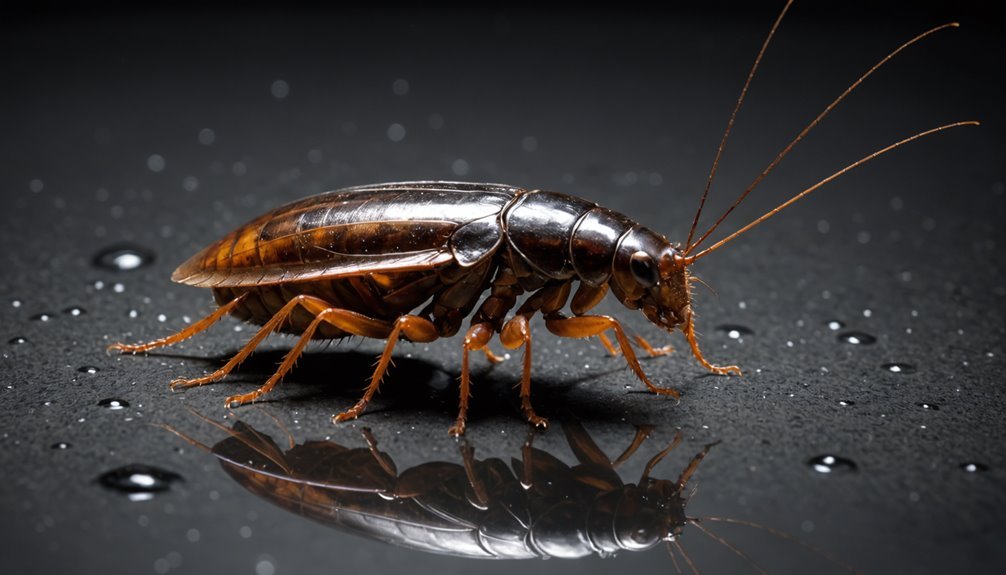
Reducing moisture is one of the most direct steps you can take to make your home less hospitable to cockroaches. Fix leaks in faucets, pipes, sinks, tubs, and appliances as soon as you find them, and recheck repaired areas since small leaks often return.
Keep indoor humidity below 50% using dehumidifiers, fans, or air conditioning, especially in basements, crawlspaces, and laundry rooms.
After showering, cooking, or doing laundry, ventilate those rooms to push moisture out. Wipe down sinks, tubs, and counters after use, and don’t leave standing water overnight in pet bowls, dishes, or containers.
Hang wet towels and bath mats up to dry instead of leaving them on the floor.
Seal gaps around pipes, windows, and doors so humid air can’t enter wall voids. Inspect beneath cabinets and behind appliances regularly for trapped moisture, and clear gutters so water doesn’t pool near your foundation.
Frequently Asked Questions
Can Cockroaches Survive Being Flushed Down a Toilet?
Yes, cockroaches can survive being flushed down your toilet! They’ll close their spiracles and hold their breath for up to 40 minutes, so flushing isn’t a reliable way to kill them.
Do Cockroaches Purposely Seek Out Water to Travel Through?
No, cockroaches don’t purposely seek out water to travel through. They’re attracted to moisture, warmth, and food debris, so you’ll find them using damp areas like leaky pipes and drains as opportunistic pathways.
Can Cockroaches Swim Well Enough to Escape a Bucket of Water?
Cockroaches can’t swim well, but they’ll float and paddle long enough to potentially escape if they can reach a bucket’s rim and climb out using their legs before drowning.
Are Cockroaches More Active During Rainy or Flooding Conditions?
Yes, you’ll notice more cockroaches during rainy or flooding conditions. Rain displaces them from outdoor shelters, while flooding pushes them into drier spaces, driving them through drains, pipes, and cracks directly into your home.
Can Cockroaches Spread Bacteria or Disease Through Contaminated Water?
Yes, cockroaches can spread bacteria through contaminated water. They carry pathogens like Salmonella and E. coli, depositing them via feces and saliva. If you drink or contact that water, you’re at risk for gastrointestinal illness.
Conclusion
Now you know that cockroaches can’t truly swim, but they’re surprisingly capable in water. They’ll use leg movements to stay afloat, hold their breath for extended periods, and even travel through your pipes. Don’t assume a little water will solve your cockroach problem—it won’t. Your best defense is eliminating the moisture and damp conditions that attract them in the first place.
