
Cockroach Egg Cases, Hatch Time, Appearance and Early Stage Development
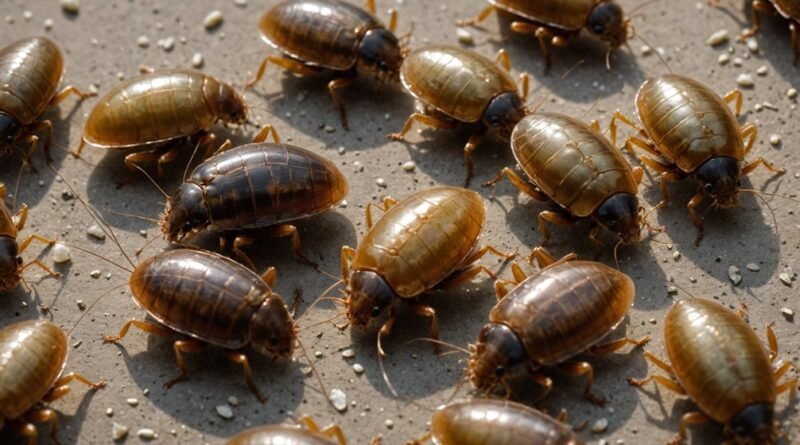
Cockroach egg cases, called oothecae, are hardened protein capsules that contain and protect rows of cockroach eggs until they hatch. Each ootheca holds between 10 and 50 eggs depending on the species. German cockroach oothecae are tan, small, and carried by the female until hatching. American cockroach oothecae are dark brown, larger, and deposited in hidden moist locations. Hatching takes 20 to 60 days depending on temperature and humidity conditions. Finding egg cases during an inspection is often the most reliable early indicator of an active infestation.
Key Takeaways
Understanding cockroach egg cases helps you identify infestations earlier, target treatments more precisely, and prevent hatch cycles from sustaining populations.
- Oothecae are hardened protein pouches with internal compartments that protect developing eggs from predators, desiccation, and temperature extremes.
- German cockroach oothecae are tan, small (6 to 9 mm), hold 30 to 50 eggs, and are carried by the female until just before hatching.
- American cockroach oothecae are dark brown, approximately 8 mm, hold 14 to 16 eggs, and are glued in hidden moist locations rather than carried.
- Hatch time ranges from 20 to 60 days, with warmer temperatures and higher humidity accelerating development and improving hatch success rates.
- Empty oothecae with open slits at one end, tiny wingless nymphs nearby, and pepper-like droppings clustered in crevices are reliable signs of an active breeding infestation.
What Is an Ootheca and How It Protects Cockroach Eggs
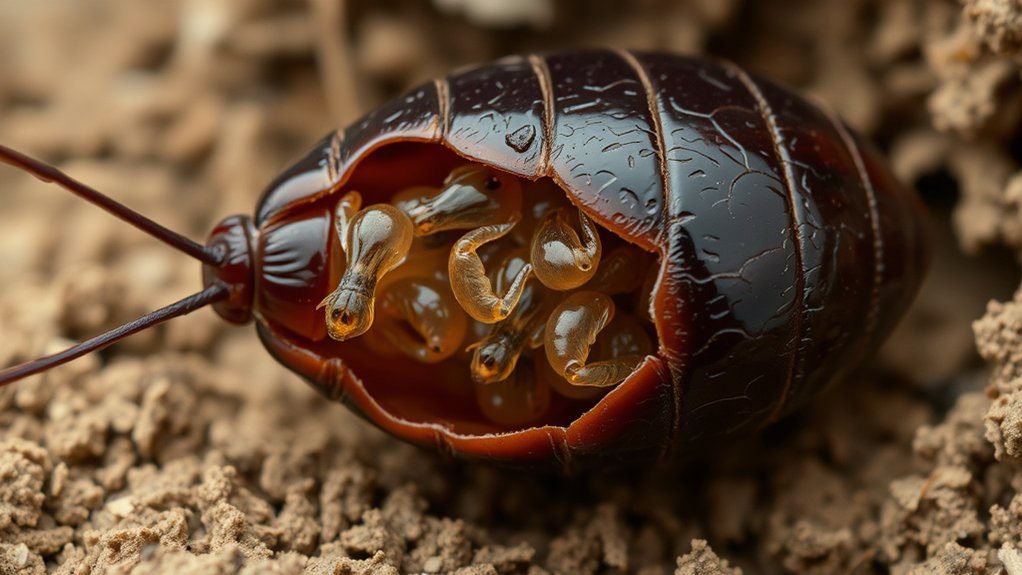
An ootheca is the protective egg case that cockroaches produce to shield developing embryos from the environment. The case is formed from secretions of glands in the female reproductive tract that harden rapidly after laying, creating a tough, waxy casing that resists mechanical damage, desiccation, and microbial penetration. Inside the ootheca, eggs are arranged in one or two rows within individual compartments, each separated from the others by internal walls that create the characteristic ridged exterior.
The protein chemistry of the ootheca shell makes it remarkably durable. The hardening process involves sclerotization, the same biological process that hardens insect exoskeletons, producing a barrier that protects against temperature swings, predators, and common household cleaning chemicals. Despite this toughness, the ootheca still allows gas exchange through zipper-like crests along the outer edge, ensuring developing embryos receive adequate oxygen throughout incubation.
Where Females Place Oothecae
Female cockroaches either carry their oothecae or deposit them in protected harborage, depending on species. German cockroach females carry the ootheca attached to their abdomen until just before or during hatching, which helps maintain stable temperature and humidity conditions during incubation. American, Oriental, and brown-banded cockroach females deposit their oothecae in dark, sheltered locations and use secretions to glue them to surfaces.
- German cockroach females are rarely seen without the ootheca attached; if you see a female with a tan capsule protruding from her abdomen, hatching is days to hours away
- American cockroach females carry the ootheca briefly then deposit it near food and moisture sources, often behind water heaters, inside basement walls, and near drains
- Brown-banded cockroach females glue their oothecae to the undersides of furniture, inside cabinet drawers, behind pictures on walls, and in other elevated indoor locations
- Oriental cockroach females deposit oothecae in sheltered areas with access to moisture and organic debris
Species Differences in Cockroach Egg Cases
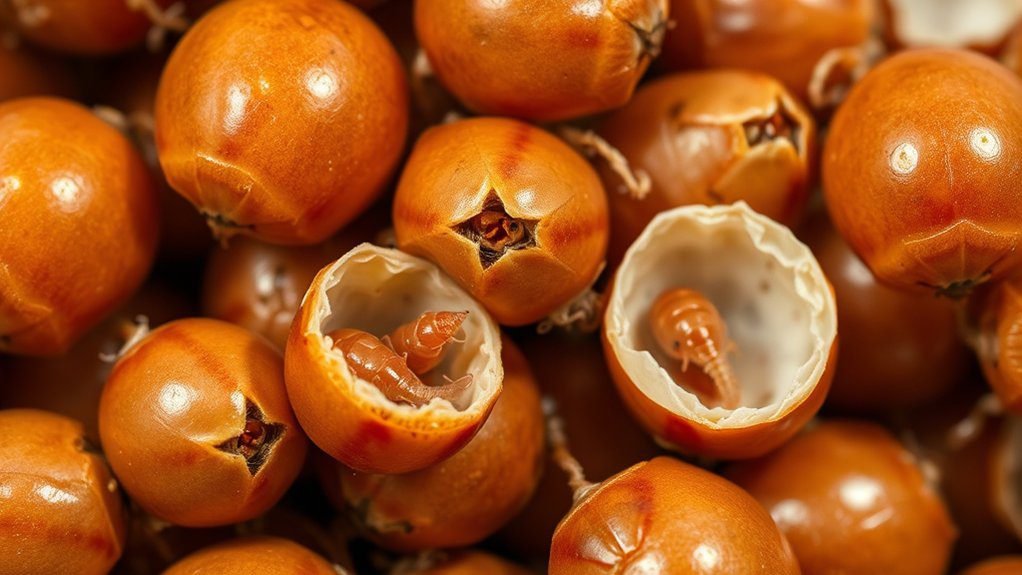
The four most common pest cockroach species produce oothecae with distinct differences in size, color, egg count, carrying behavior, and lifetime production. These differences directly affect how quickly an infestation grows and how effectively different control treatments address the reproductive cycle.
German Cockroach Egg Cases
German cockroach oothecae are tan to light brown with a purse-like shape and bumpy ridge along the top edge. They are small, measuring 6 to 9 millimeters in length, but are densely packed with 30 to 50 eggs, making them the highest-egg-count ootheca of common pest species. A single German cockroach female produces approximately 4 to 8 oothecae during her lifetime, each taking about 20 to 30 days to hatch indoors. The female carrying behavior means that finding a German cockroach female with an ootheca is a direct indication of an active breeding colony, not just a wandering individual.
American Cockroach Egg Cases
American cockroach oothecae are dark brown to nearly black, approximately 8 millimeters long, and contain 14 to 16 eggs each. Females produce approximately 9 to 10 oothecae over their lifetime on average, though some females produce up to 90 cases under ideal conditions. The cases are deposited in moist, protected locations near food sources and moisture. Common deposition sites include kitchen cabinet bases, basement wall crevices, behind water heaters, and near drain access points. Hatch time averages about 44 days at typical indoor temperatures.
Oriental Cockroach Egg Cases
Oriental cockroach oothecae are reddish-brown to nearly black, slightly inflated in appearance, and measure 8 to 10 millimeters. They contain approximately 16 eggs and take roughly 6 to 8 weeks to hatch, making them the slowest-developing common pest species. Oriental cockroaches are most common in damp, cool basement environments, crawl spaces, and drain areas, and their oothecae are found in similarly damp, sheltered locations. Females produce 1 to 18 oothecae over their lifetime, with an average closer to the lower end of that range.
Brown-Banded Cockroach Egg Cases
Brown-banded cockroach oothecae are smaller than other pest species, approximately 5 millimeters, with 10 to 18 eggs each. Unlike the other species that prefer kitchen and bathroom environments, brown-banded cockroaches glue their oothecae in elevated indoor locations including the undersides of furniture, inside electrical appliances, behind wall decorations, and in bedroom furniture. This placement pattern means infestations can go undetected longer because inspections focused on kitchens and bathrooms may miss the primary egg deposition zones entirely. Females produce up to 20 oothecae over their lifetime.
| Species | Color | Size | Eggs per Case | Hatch Time |
|---|---|---|---|---|
| German | Tan to light brown | 6 to 9 mm | 30 to 50 | 20 to 30 days |
| American | Dark brown to black | 8 mm | 14 to 16 | 44 days average |
| Oriental | Reddish-brown to black | 8 to 10 mm | 16 | 6 to 8 weeks |
| Brown-banded | Light to tan | 5 mm | 10 to 18 | 24 to 38 days |
Hatch Time and Factors That Influence Development
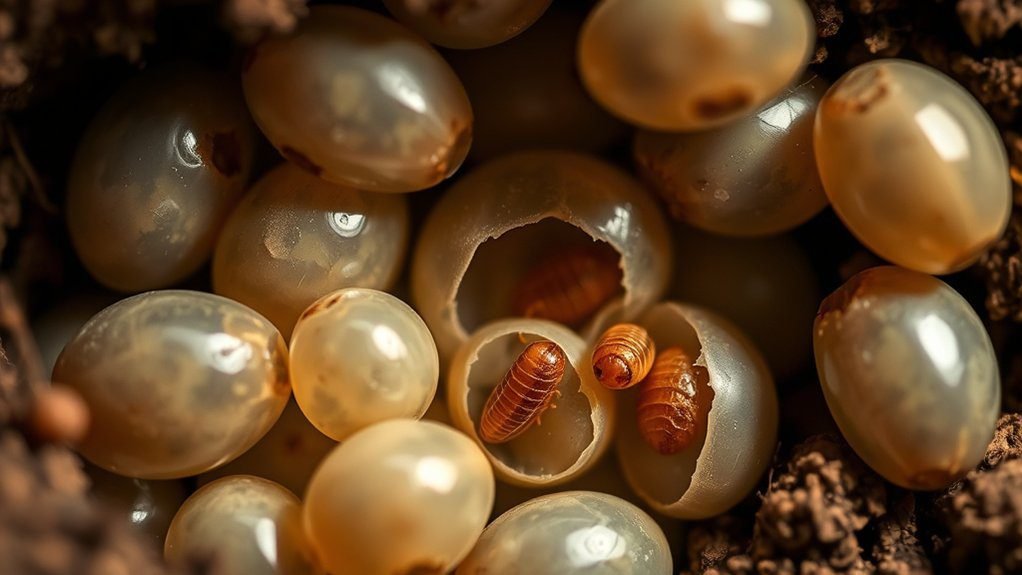
Cockroach eggs generally hatch in 20 to 60 days under typical indoor conditions, but temperature and humidity have a significant effect on both the speed and success rate of development. At temperatures between 75 and 85 degrees Fahrenheit with humidity above 70 percent, development accelerates and hatch success increases. Cooler, drier conditions slow hatching and increase embryo mortality, which is why controlling indoor humidity is a component of cockroach infestation management, not just comfort.
The practical implication for treatment timing is important. Insecticide applications that kill adult cockroaches do not necessarily kill eggs inside intact oothecae. The protective protein shell resists penetration by many contact insecticides. This means a treatment that appears to have eliminated the adult population can still produce a new generation of nymphs 3 to 6 weeks after the initial treatment if oothecae in harborage zones were not directly contacted or removed.
Why Standard Insecticides Often Miss Egg Cases
- Contact sprays that kill adults on surface contact cannot penetrate the hardened ootheca shell to reach developing embryos
- Residual insecticide deposits on surfaces do not affect eggs inside deposited oothecae because the embryos are sealed inside the case
- Insect growth regulators applied to surfaces can affect nymphs immediately after hatching before they reach safe harborage, making timing relative to expected hatch date important
- Physical removal or crushing of discovered oothecae during inspection eliminates the eggs within more reliably than chemical exposure alone
- Heat treatment above 49 degrees Celsius penetrates the ootheca and kills developing embryos, explaining why heat treatment achieves more complete reproductive cycle elimination than spray-based programs
What Cockroach Eggs Look Like Inside the Case
Inside the ootheca, eggs are arranged in one or two neat rows within individual compartments. The eggs are small, bean-shaped, and change color as development progresses. Early-stage eggs are pale or translucent. As embryos develop, the internal color deepens through brown tones toward dark brown or nearly black in fully developed nymphs preparing to hatch. Near hatch time, the ootheca shell becomes slightly more opaque and in some cases faintly reveals the outlines of nymphs inside.
Newly hatched nymphs are initially nearly colorless or pale gray and darken within hours to their characteristic species coloration. They hatch simultaneously with nestmates from the same ootheca in a rapid group emergence.
Where to Find Cockroach Egg Cases During Inspection
Knowing where each species deposits its oothecae turns a general inspection into a targeted search. Finding egg cases confirms active breeding and indicates the population is established in a harborage zone, not just transiting through the area.
For German cockroaches, search inside cabinet bases along the back wall, inside cabinet hinges and drawer tracks, behind the refrigerator motor cover, inside dishwasher frame crevices, and under sinks near pipe penetrations. German cockroach oothecae may also be found on the female herself during inspection.
For American cockroaches, focus on basement walls and floor edges near drains, behind and beneath water heaters, in crawl space areas near slab penetrations, inside utility room wall voids, and along the edges of floor drains in kitchens and bathrooms.
For brown-banded cockroaches, check the undersides of furniture, inside electronics like radios and microwaves, behind wall decorations and picture frames, inside bedroom nightstands, and in closet walls rather than kitchen areas.
How to Confirm an Active vs Old Infestation From Egg Cases
The condition of discovered oothecae provides direct evidence of whether an infestation is currently active or historical.
- Fresh, intact oothecae with no opening slit at the hinge end indicate eggs are still developing and hatching has not yet occurred
- Empty oothecae with a clean opening slit along the hinge ridge confirm recent hatching; check the area carefully for nymphs and fresh droppings
- Pale, slightly deflated, and dusty oothecae suggest older deposition that may predate the current inspection period; compare against fresh droppings to determine whether the colony is still active
- Clusters of multiple oothecae in the same location indicate a consistently used harborage zone and a more established breeding colony than single cases suggest
Finding and Eliminating Cockroach Egg Cases
Removing discovered oothecae during inspection and treatment is an essential step that chemical-only programs often overlook. Getting rid of cockroach eggs and nests effectively requires physical removal alongside chemical treatment rather than relying on insecticide penetration of intact oothecae.
Use a flashlight and inspection mirror to search all confirmed harborage zones systematically. When you find an ootheca, vacuum it up immediately using a crevice tool attachment and seal the vacuum bag in a plastic bag for disposal outdoors. Crush any oothecae that are manually accessible before bagging. Do not leave discovered egg cases in place hoping that the chemical treatment already applied will kill the developing embryos.
After removing oothecae, apply insect growth regulator treatments to the harborage zones. IGRs affect newly hatched nymphs as they emerge from any cases that were not located during the inspection, preventing them from reaching reproductive maturity. Gel baits placed in the same harborage zones intercept emerging nymphs and any adults that return to the area, completing the treatment layering that addresses all lifecycle stages simultaneously.
Frequently Asked Questions
Where Are Oothecae Commonly Found Inside Homes?
German cockroach egg cases are most commonly found inside kitchen cabinet bases, behind appliances, inside cabinet hinges and drawer tracks, and under sinks near plumbing penetrations. American cockroach oothecae concentrate in basement areas, near floor drains, behind water heaters, and in crawl spaces. Brown-banded cockroach cases are typically glued in elevated indoor locations including furniture undersides, inside electronic appliances, and in bedroom areas rather than kitchens and bathrooms. Any warm, dark, sheltered location near moisture and food debris is a potential deposition site for any species.
How Do I Safely Dispose of a Cockroach Ootheca?
Wear disposable gloves before handling. Vacuum the ootheca using a crevice tool attachment if possible, then immediately seal the vacuum bag in a plastic bag and dispose of it in an outdoor bin. If you handle it directly, place it in a sealed plastic bag, crush it inside the bag to kill developing embryos, and dispose of it in an outdoor bin. Do not compost cockroach egg cases. Wash hands thoroughly after handling any cockroach material. Apply insect growth regulator to the area where the ootheca was found to address any nymphs that may hatch from cases you did not locate.
Do Household Pesticides Penetrate Unhatched Oothecae?
Most contact insecticides do not penetrate intact oothecae reliably enough to kill developing embryos. The hardened protein shell resists chemical penetration that would easily affect adult cockroaches on exposed surfaces. Insect growth regulators applied in harborage zones affect nymphs after they hatch and emerge from the case rather than killing embryos before hatch. Heat treatment sustained above 49 degrees Celsius is the most reliable method for killing embryos inside intact cases. Physical removal and crushing during inspection eliminates egg cases more reliably than relying on insecticide penetration.
Can Oothecae Survive Freezing or Heat Treatments?
No. Sustained temperatures below approximately negative 9 degrees Celsius kill embryos through protein denaturation and ice crystal formation. Sustained heat above 49 to 50 degrees Celsius achieves the same result by denaturing the proteins required for embryo development. Professional heat treatment programs that raise interior temperatures to 120 to 140 degrees Fahrenheit and maintain them for 60 to 90 minutes are effective at killing cockroach oothecae in all harborage zones, including inside wall voids and beneath floors where physical removal is impractical.
What Signs Indicate an Ootheca Has Already Hatched?
A hatched ootheca has a clean opening slit along the hinge ridge where nymphs pushed through during emergence. The shell appears pale, lighter in color than a fresh unhatched case, and may be slightly deflated. Look for tiny wingless nymphs nearby that are pale gray and darkening to species color over the first few hours after emergence. Fresh pepper-like droppings clustered in the same location as empty oothecae confirm recent hatching and active colony presence. Multiple empty cases in the same location indicate a sustained, well-established harborage that has been supporting repeated breeding cycles.
{
“@context”: “https://schema.org”,
“@type”: “FAQPage”,
“mainEntity”: [
{
“@type”: “Question”,
“name”: “Where Are Cockroach Oothecae Commonly Found Inside Homes?”,
“acceptedAnswer”: {
“@type”: “Answer”,
“text”: “German cockroach egg cases are most commonly found inside kitchen cabinet bases, behind appliances, inside cabinet hinges and drawer tracks, and under sinks near plumbing penetrations. American cockroach oothecae concentrate in basement areas, near floor drains, behind water heaters, and in crawl spaces. Brown-banded cockroach cases are typically glued in elevated indoor locations including furniture undersides, inside electronic appliances, and in bedroom areas rather than kitchens and bathrooms. Any warm, dark, sheltered location near moisture and food debris is a potential deposition site for any species.”
}
},
{
“@type”: “Question”,
“name”: “How Do I Safely Dispose of a Cockroach Ootheca?”,
“acceptedAnswer”: {
“@type”: “Answer”,
“text”: “Wear disposable gloves before handling. Vacuum the ootheca using a crevice tool attachment if possible, then immediately seal the vacuum bag in a plastic bag and dispose of it in an outdoor bin. If you handle it directly, place it in a sealed plastic bag, crush it inside the bag to kill developing embryos, and dispose of it in an outdoor bin. Do not compost cockroach egg cases. Wash hands thoroughly after handling any cockroach material. Apply insect growth regulator to the area where the ootheca was found to address any nymphs that may hatch from cases you did not locate.”
}
},
{
“@type”: “Question”,
“name”: “Do Household Pesticides Penetrate Unhatched Cockroach Oothecae?”,
“acceptedAnswer”: {
“@type”: “Answer”,
“text”: “Most contact insecticides do not penetrate intact oothecae reliably enough to kill developing embryos. The hardened protein shell resists chemical penetration that would easily affect adult cockroaches on exposed surfaces. Insect growth regulators applied in harborage zones affect nymphs after they hatch and emerge from the case rather than killing embryos before hatch. Heat treatment sustained above 49 degrees Celsius is the most reliable method for killing embryos inside intact cases. Physical removal and crushing during inspection eliminates egg cases more reliably than relying on insecticide penetration.”
}
},
{
“@type”: “Question”,
“name”: “Can Cockroach Oothecae Survive Freezing or Heat Treatments?”,
“acceptedAnswer”: {
“@type”: “Answer”,
“text”: “No. Sustained temperatures below approximately negative 9 degrees Celsius kill embryos through protein denaturation and ice crystal formation. Sustained heat above 49 to 50 degrees Celsius achieves the same result by denaturing the proteins required for embryo development. Professional heat treatment programs that raise interior temperatures to 120 to 140 degrees Fahrenheit and maintain them for 60 to 90 minutes are effective at killing cockroach oothecae in all harborage zones, including inside wall voids and beneath floors where physical removal is impractical.”
}
},
{
“@type”: “Question”,
“name”: “What Signs Indicate a Cockroach Ootheca Has Already Hatched?”,
“acceptedAnswer”: {
“@type”: “Answer”,
“text”: “A hatched ootheca has a clean opening slit along the hinge ridge where nymphs pushed through during emergence. The shell appears pale, lighter in color than a fresh unhatched case, and may be slightly deflated. Look for tiny wingless nymphs nearby that are pale gray and darkening to species color over the first few hours after emergence. Fresh pepper-like droppings clustered in the same location as empty oothecae confirm recent hatching and active colony presence.”
}
}
]
}
