
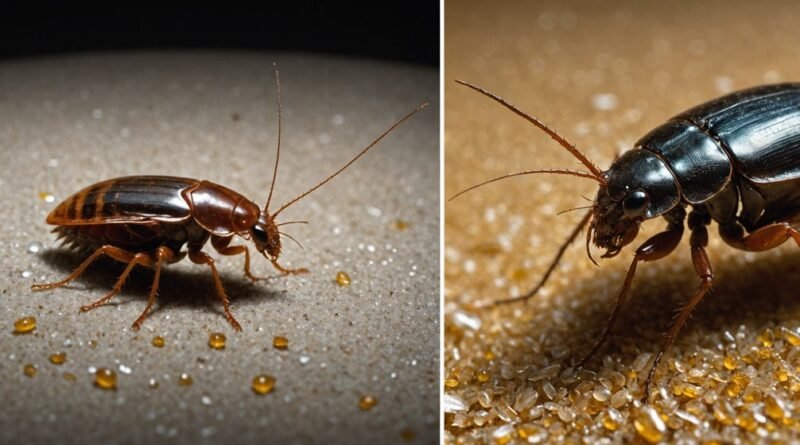
Cockroach Allergy vs Dust Mite Allergy
If you’re dealing with cockroach or dust mite allergies, you’re not alone. Both can cause sneezing and breathing issues, but dust mites thrive in bedrooms, while cockroaches prefer kitchens. They can worsen asthma, and managing exposure is key. For dust mites, focus on bedroom cleaning and humidity control. For cockroaches, prioritize kitchen sanitation. Effective strategies help reduce these allergens’ impacts, and you can discover more to tailor solutions to your home and lifestyle.
Key Takeaways
- Both allergies cause respiratory symptoms like wheezing, but cockroach allergy leads to higher asthma morbidity in urban areas.
- Dust mites thrive in warm, humid environments, while cockroaches are common in kitchens due to food and moisture.
- Skin prick tests quickly diagnose both allergies, measuring IGE-mediated responses.
- Co-sensitization is common, with overlapping symptoms such as sneezing and nasal congestion.
- Management involves reducing exposure: dust mites with bedding barriers, cockroaches with pest control.
What Are Dust Mite and Cockroach Allergies?
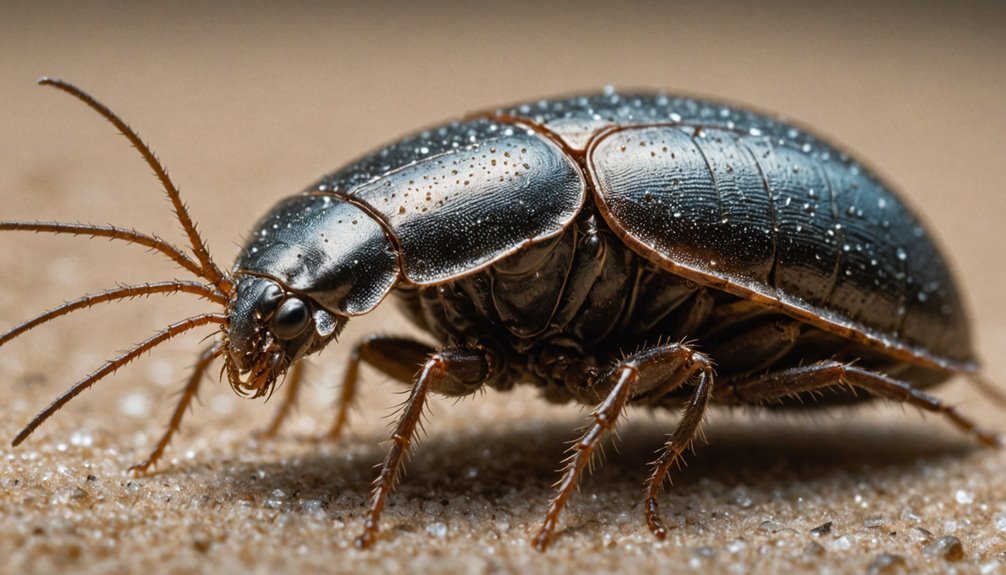
Dust mite and cockroach allergies can greatly impact your daily life.
Dust mite allergy is an IGE-mediated type 1 hypersensitivity, often referred to as house dust allergy. It’s not the dust itself but the tiny bugs living in it that cause the reaction. These allergens, mainly from dust mite droppings, become airborne, and when inhaled, they trigger inflammation. Proteins like Der p 1 and Der p 2 are key culprits. Dust mites thrive in warm, humid indoor environments, commonly found in mattresses, pillows, and carpets
. In industrialized areas, 1 in 4 people may be affected by dust mite allergy, highlighting its prevalence. Managing this allergy involves reducing exposure with strategies like hot-water washing of bedding and using mite-proof encasings. Diagnosis relies on allergy evaluation, focusing on reducing allergen exposure rather than visible dust.
Common Symptoms and Triggers

When it comes to cockroach allergies, understanding the common symptoms and triggers can help you manage your reactions effectively. You might experience coughing, nasal congestion, sneezing, and a runny nose. Itchy, red, or watery eyes and an itchy nose, mouth, or throat are also common.
Respiratory symptoms like wheezing, chest tightness, and difficulty breathing often overlap with asthma. Postnasal drip and trouble sleeping might occur due to upper-airway irritation. Cockroach allergens, including saliva, feces, and shedding body parts, can significantly trigger allergies and asthma in sensitive individuals.
Triggers include cockroach saliva, feces, and shedding body parts, which can become airborne and inhaled. Visible cockroach presence, indoor disturbance of dust, and poor cleaning conditions can worsen symptoms.
Moisture, clutter, and food residue increase allergen persistence, making it essential to address these factors for effective management.
Comparing Allergen Hotspots: Bedrooms vs. Kitchens
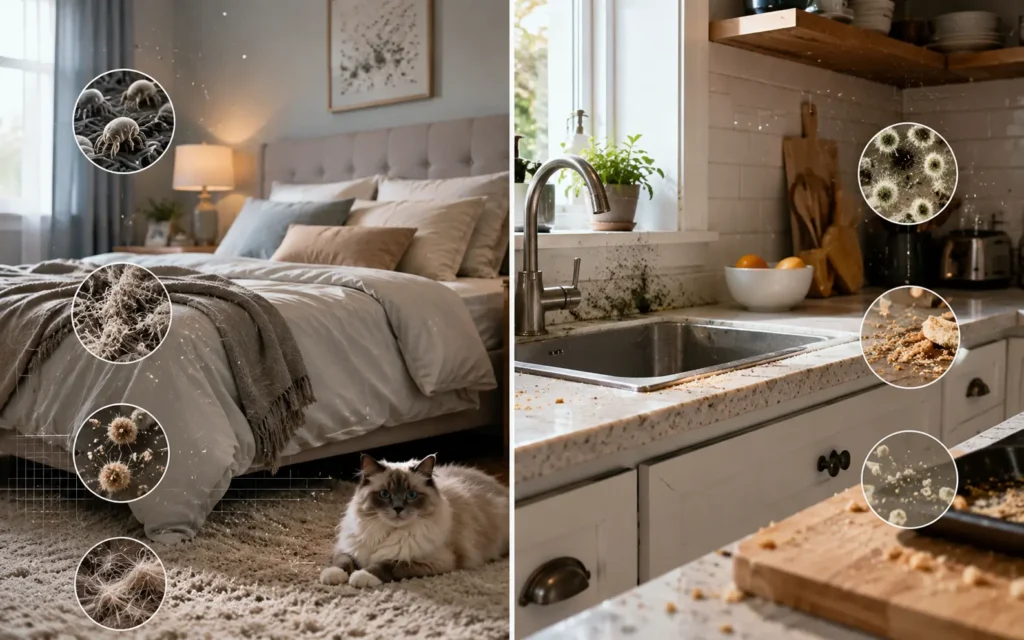
Understanding the symptoms and triggers of cockroach allergies prepares you to tackle allergen hotspots in your home. Bedrooms and kitchens are key areas to focus on. In bedrooms, dust mites thrive in mattresses, bedding, and carpets. Control measures include using mattress encasings and washing bedding weekly in hot water. Interestingly, studies on dust mite proteins have helped in understanding allergy development and therapy design.
Kitchens, on the other hand, are hotspots for cockroach allergens found in food and water-rich environments. Keep kitchens clean by storing food in sealed containers and fixing leaks.
Here’s a quick comparison:
| Bedrooms (Dust Mites) | Kitchens (Cockroaches) |
|---|---|
| Mattresses and bedding | Food and water sources |
| Weekly hot-water washing | Clean, sealed storage |
| Humidity control below 50% | Fix leaks and reduce clutter |
| Remove carpets and curtains | Regular cleaning routines |
How to Diagnose These Allergies
To diagnose cockroach and dust mite allergies, start by reviewing your symptom history and exposure patterns to identify potential triggers.
Allergy testing, including skin prick tests and specific IgE blood tests, can confirm sensitization to these allergens.
Work with an allergist to analyze your symptoms and test results, helping distinguish between these common indoor allergies.
Allergy Testing Methods
Diagnosing cockroach and dust mite allergies involves several effective testing methods. Start with a thorough symptom history and physical examination. Skin prick testing (SPT) is the primary method, providing quick results by introducing allergens into your skin to check for reactions. For cockroach allergies, SPT detects sensitivity effectively. In dust mite allergies, it’s favored for its simplicity and precision.
Specific IgE blood tests, like ImmunoCAP and ELISA, are alternatives when skin testing isn’t feasible. They measure antibodies against allergens, offering additional insights.
| Test Type | Use Case |
|---|---|
| Skin Prick Test | First-line, quick, cost-effective |
| Specific IgE | Useful when skin testing isn’t possible |
| ImmunoCAP | Quantifies allergen-specific IgE |
| ELISA | Alternative for precise IgE measurement |
Both testing methods require careful interpretation to confirm sensitization.
Exposure Patterns Analysis
When diagnosing cockroach and dust mite allergies, analyzing exposure patterns is essential for accurate identification.
Cockroach allergen exposure often spikes with visible infestations and recent activity, particularly in kitchens or basements. You’ll notice symptoms intensify in these damp, cluttered areas.
Dust mite exposure, however, is more persistent and linked to fabric-heavy spaces like bedrooms. Here, allergens accumulate in bedding and carpets, regardless of visible mites.
For cockroach allergy, assess Bla g 1 and Bla g 2 levels; these rise with increased sightings and recent roach activity.
Dust mite exposure focuses on consistent dust reservoirs rather than pest sightings. Document housing conditions and specific exposure areas to help distinguish between the two allergens effectively.
Symptom Identification Tips
Although identifying the right allergy might seem challenging, understanding symptom patterns can offer clarity.
Both cockroach and dust mite allergies share symptoms like sneezing and nasal congestion, but there are clues to help differentiate them. If symptoms worsen in kitchens or basements, suspect cockroach allergy especially if you see droppings or cockroaches. Chronic coughing, wheezing, and infections can also indicate cockroach exposure.
In contrast, dust mite allergies often peak in bedrooms, with symptoms strongest on waking. Persistent symptoms tied to bedding and upholstery suggest dust mites.
To confirm, doctors may use skin prick or specific IgE blood tests. Tracking where and when symptoms occur, like whether they worsen on waking or in certain rooms, can guide you toward the right diagnosis.
Asthma and Respiratory Impacts Compared
You’re likely to find both cockroach and dust mite allergens lurking indoors, making them major triggers for asthma.
Cockroach allergens often lead to greater asthma morbidity, especially in urban and low-income areas, while dust mite exposure also contributes considerably to respiratory issues.
Sensitization to these allergens can worsen symptoms, with overlapping effects that include persistent wheezing and difficulty breathing.
Greater Asthma Morbidity
Despite the significant role dust mites play in asthma, cockroach allergies often lead to greater asthma morbidity, especially in urban settings. Studies reveal that cockroach exposure and sensitization substantially increase asthma severity, particularly among inner-city children. You’ll find that hospitalization and emergency visit rates are particularly higher for those with cockroach allergies compared to dust mites.
| Factor | Cockroach Allergy | Dust Mite Allergy |
|---|---|---|
| Hospitalization Rate | Higher | Lower |
| Symptom Severity | More severe | Less severe |
| Asthma Burden | Greater in urban | Less in urban |
The combination of sensitization and exposure is a strong driver of asthma in low-income settings. Symptoms like coughing and wheezing are often worse, leading to poor asthma control year-round.
Indoor Allergen Triggers
Understanding how indoor allergens impact asthma and respiratory health is essential, especially when comparing cockroach and dust mite exposures.
Dust mites thrive in warm, humid spaces like bedding and carpets, leading to continuous exposure. Cockroach allergens, however, are concentrated in kitchens and areas with food debris, creating localized exposure risks.
Both allergens can worsen asthma and respiratory symptoms by causing allergic rhinitis and breathing difficulties.
To reduce dust mite exposure, maintain humidity between 30%-50%.
Cockroach control requires sanitation, sealing entry points, and leak repairs.
House dust levels help predict sensitization risk, with high dust mite exposure linked to increased asthma morbidity.
Reducing indoor allergens through these measures can lessen respiratory burden and improve health outcomes for those affected.
Sensitization and Symptom Overlap
When comparing cockroach and dust mite allergies, it’s important to reflect on their overlapping sensitization and respiratory impacts. Both allergens can greatly contribute to asthma morbidity.
Sensitization often overlaps, with co-sensitization appearing in various studies. Cockroach allergens, particularly in urban settings, can exacerbate asthma more severely than dust mites. Exposure to dust mites, even at low levels, remains a considerable risk factor for sensitization.
- Asthma Symptoms: Both allergens trigger wheezing, cough, and shortness of breath.
- Upper-Airway Impact: Sneezing, runny nose, and congestion are common with both.
- Cross-Reactivity: Cockroach allergy may cross-react with mites and other arthropods.
- Exposure Levels: High cockroach exposure shows a stronger link to asthma than dust mites.
Understanding these overlaps helps manage symptoms effectively.
Management and Prevention Strategies
Effectively managing cockroach and dust mite allergies requires a proactive approach in both prevention and control.
For cockroach allergies, focus on source elimination and integrated pest management. Remove infestations and keep food areas spotless. Store food and garbage in sealed containers, fix leaks, and reduce moisture. Use baits and traps instead of sprays.
Regularly vacuum and mop to reduce allergens, deep-clean after extermination, and eliminate clutter.
For dust mite allergies, control humidity and use bedding barriers. Keep humidity below 50%, encase mattresses, and wash bedding weekly in hot water.
Replace dust-mite-friendly materials with synthetic options. Opt for hard flooring, reduce fabric items, and use vacuums with HEPA filters.
Medical control like antihistamines can also help manage symptoms.
Choosing Allergy Control Strategies for Your Home
Whether you’re dealing with cockroach or dust mite allergies, choosing the right control strategies for your home is essential. Tackling these allergens requires targeted actions where exposure is highest.
For dust mites, focus on bedrooms and soft furnishings. Cockroach control emphasizes kitchens and moisture-prone areas. Here’s how you can manage both:
- Reduce Humidity: Keep indoor humidity between 30% to 50% to limit dust mites and deter cockroaches.
- Use Allergen Covers: Invest in zippered covers for mattresses and pillows to block dust mites.
- Sanitize and Seal: Regularly clean kitchens and bathrooms, and seal cracks to prevent cockroach entry.
- Declutter: Minimize dust reservoirs by reducing clutter and using hard flooring instead of carpets.
These steps help create a healthier home environment.
Conclusion: Tailoring Solutions to Your Environment
Although managing allergies can be challenging, tailoring solutions to your environment maximizes effectiveness. Focus on your home’s specific needs.
For dust mites, prioritize bedrooms by using allergen-proof covers and washing bedding weekly in hot water. Replace heavy fabrics with hard surfaces and maintain low humidity levels, ideally between 30% and 50%.
If cockroaches are the issue, concentrate on kitchens and bathrooms. Seal food, manage garbage, and eliminate crumbs. Seal entry points to prevent infestation and use traps if needed. Professional pest control might be necessary for persistent problems.
Humidity reduction benefits both allergies, so consider dehumidifiers and air conditioning. Ventilation helps reduce allergens throughout your home.
Frequently Asked Questions
Can Pets Influence Dust Mite or Cockroach Allergies?
Pets can influence dust mite allergies by altering indoor allergen conditions, but they don’t impact cockroach allergies. Keep pets out of bedrooms, wash pet bedding, and use HEPA filters to manage allergen exposure effectively.
Are There Natural Remedies for Managing These Allergies?
You can manage these allergies naturally by reducing exposure. For cockroaches, clean and seal entry points. For dust mites, control humidity and use mite-proof bedding. Remember, these methods reduce allergens but don’t cure allergies.
Do Seasonal Changes Affect Dust Mite or Cockroach Allergen Levels?
Seasonal changes impact dust mite allergens, peaking in late autumn with higher humidity. Cockroach allergens aren’t as seasonally driven, relying more on indoor conditions. Keep humidity stable to manage dust mites effectively.
Can Lifestyle Changes Reduce Allergy Symptoms Effectively?
Yes, you can reduce allergy symptoms effectively with lifestyle changes. Focus on cleaning, reducing moisture, sealing entry points, and using dust-proof covers. Combine multiple strategies for better results, and consider professional help if needed.
Is There a Genetic Predisposition to These Allergies?
Yes, there’s a genetic predisposition to both allergies. Your inherited immune traits can increase susceptibility. Genetic factors modify risk, but allergen exposure determines if sensitization becomes clinically relevant. It’s a mix of genes and environment.
Conclusion
In tackling cockroach and dust mite allergies, focus on your environment. Identify if your symptoms flare up more in the bedroom or kitchen, and target those areas. Regular cleaning, using allergen-proof covers, and reducing humidity can help. Consult with an allergist for personalized advice. By understanding your specific triggers and implementing tailored strategies, you can greatly improve your quality of life. Take control of your surroundings and breathe easier every day.
