
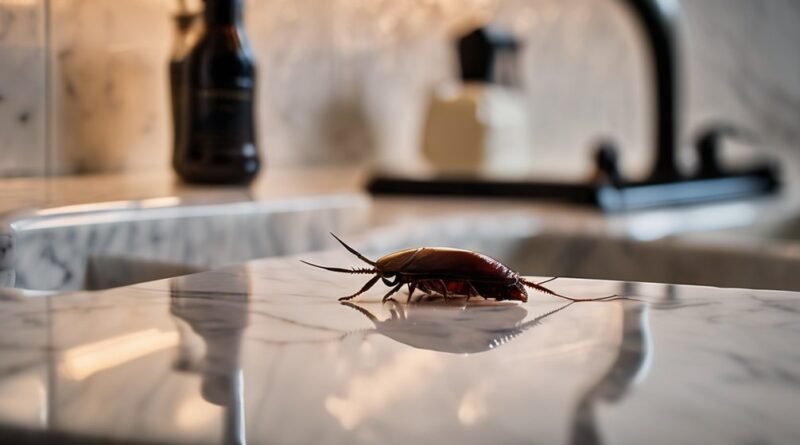
Cockroach Infestations in Hotels & Hospitality Businesses
Cockroach infestations in hotels start with warm, humid spaces, food scraps, and gaps around doors, walls, and plumbing. Spot pepper-like droppings, egg cases, shed skins, musty odors, and smears near beds, bathrooms, and kitchens. Roaches trigger asthma, spread pathogens, and erode guest trust. Fines, closures, lawsuits, and remediation costs escalate fast. Act with strict cleaning, sealed entry points, and an IPM plan using baits, traps, and routine inspections. You’ll see exactly how to prevent, detect, and respond effectively next.
Common Causes and Entry Points in Hotels
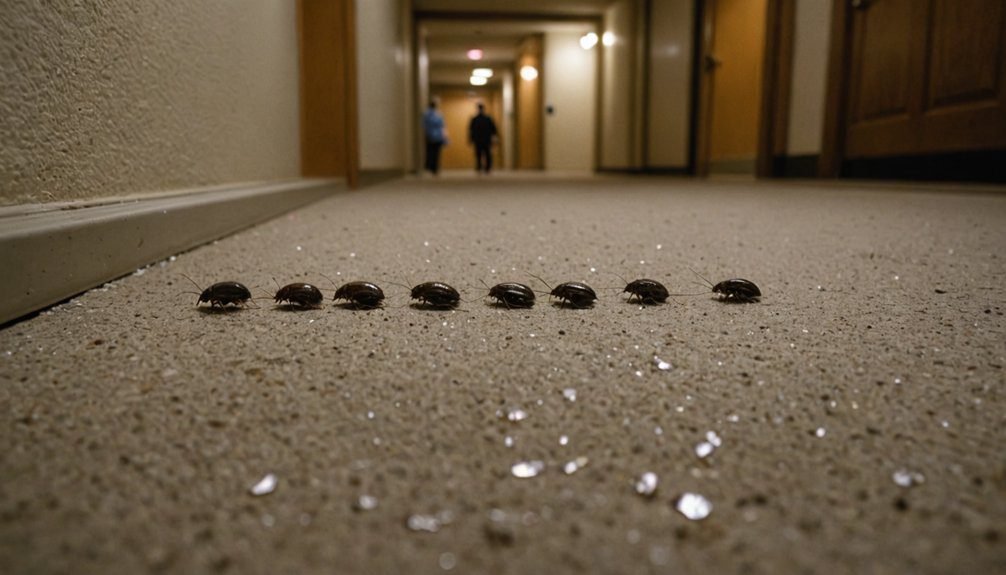
Although cockroaches thrive anywhere with food, water, and shelter, hotels uniquely amplify those essentials through warm, humid interiors, abundant food handling, and constant activity.
You operate in conditions that favor entry and survival: kitchens, dining areas, and bathrooms hold elevated heat and moisture, while coastal or subtropical locations keep infestations active year‑round. Plumbing leaks and poor drainage increase moisture and draw roaches closer. Staff should receive routine training to recognize signs of cockroaches and related pests because housekeeping practices directly influence infestation risks.
They enter through cracks in walls, floors, and ceilings; unsealed doorways and windows; plumbing penetrations; utility conduits; and electrical channels.
Loading docks, delivery bays, and waste rooms with gaps or poor sealing act as highways.
Food access accelerates problems: crumbs, spills, buffet leftovers, uncovered bins, and residue near sinks or dishwashers.
Inadequate cleaning, failed caulking, and lax grease traps compound risk. High turnover, staff movement, and infested deliveries introduce more.
Identifying Signs and Typical Hiding Spots
Knowing where roaches slip in and thrive helps you spot them fast. Scan guest rooms for small, pepper-like droppings, light-brown egg cases, and shedded skins. A musty, oily odor or dark smears on walls also signal activity. Guests should report infestations immediately to hotel management if any signs are found.
Spot roaches fast: look for pepper-like droppings, egg cases, shed skins, musty odors, and smears.
Focus on tight, warm, and damp spots: mattress seams, headboards, baseboards, and gaps in wooden furniture. Check behind outlets and inside electronics that give off heat.
- Bedrooms: look under mattresses, inside bed frames and headboards, behind upholstered furniture, along baseboards, and within cracks of cabinetry and wood joints.
- Bathrooms: inspect under sinks, behind toilets, around tub and shower bases, inside drains and pipe chases, and behind loose tiles or wallpaper.
- Kitchens: search inside/beneath cabinets and counters, behind/under refrigerators and microwaves, near open food and pet dishes, and under sinks or plumbing cavities.
Health Risks and Safety Concerns for Guests and Staff
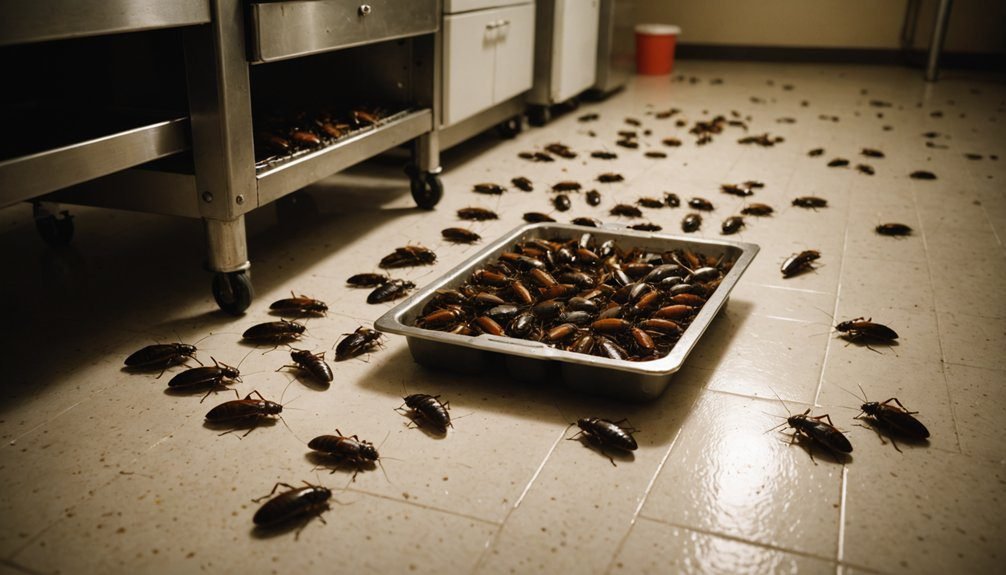
Even a few roaches in a hotel can create real health and safety risks for guests and staff. Their saliva, feces, and shed body parts break down into potent allergens that can trigger asthma and allergic reactions.
You’ll see wheezing, coughing, and breathing difficulty, especially in children and anyone with respiratory conditions. Allergens linger in the air and on surfaces, so exposure continues long after sightings. Continuous exposure can cause chronic issues for employees working in infested areas. Early detection and professional pest control are crucial because roaches hide in warm, humid voids and spread quickly in commercial settings.
Roaches also spread pathogens like Salmonella and other bacteria by crawling over utensils, prep areas, and stored food, leading to nausea, vomiting, and diarrhea.
Sightings cause anxiety, disgust, and complaints, undermining trust and morale. Health inspectors can impose immediate penalties for violations, and repeat findings escalate consequences.
Staff face elevated infection risks without proper protection.
Financial, Legal, and Operational Consequences
Because cockroach infestations hit your bottom line from multiple angles, you’ll face immediate costs and long-term fallout. Expect thousands in fines for health code violations, escalating with severity or repeats. Hotels across all segments face similar risks, as bed bugs are a concern for properties of all luxury levels, underscoring that pest threats are not limited to budget accommodations.
Remediation isn’t cheap either—deep cleaning, certified pest services, and replacing contaminated goods quickly add up. Forced closures interrupt operations, cancel reservations and events, and drain revenue. Even after reopening, reputational damage suppresses bookings and inflates marketing spend to rebuild trust.
- Legal exposure grows: lawsuits over illness or distress average over $17,000 per incident, and repeat violations risk license suspension or closure.
- Operations strain: repeated inspections, staff training, and documentation divert resources and reduce productivity.
- Assets suffer: roaches damage wiring, furniture, and appliances, triggering repairs, safety risks, and delays—while suppliers require tighter controls to prevent reintroduction.
Prevention, Control Measures, and Integrated Pest Management
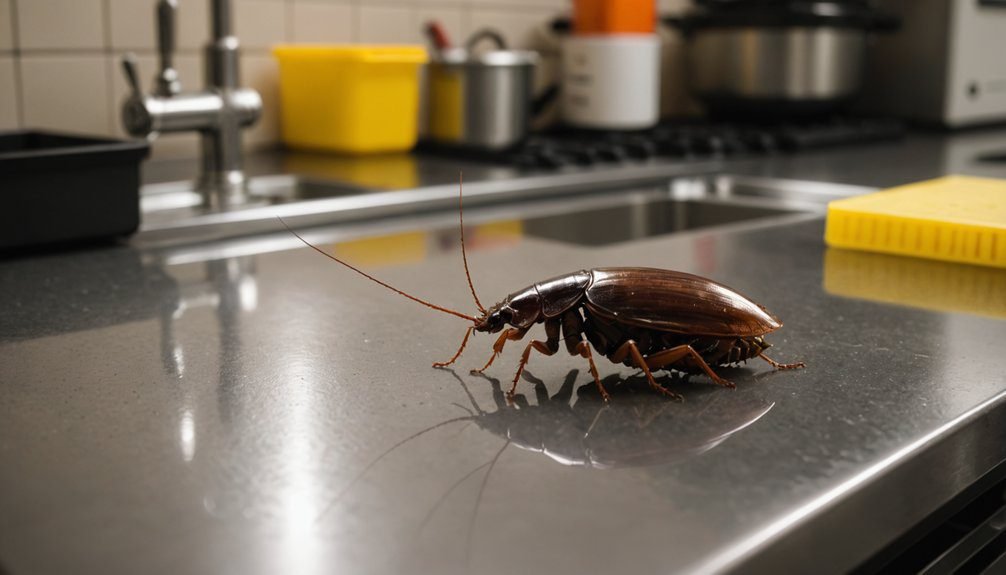
Those costs and risks only recede when you stop infestations before they start and respond fast when activity appears.
Inspect guest rooms before check‑in for droppings or skins. Enforce strict cleaning: vacuum, sweep, mop, and wipe residues. Store all food sealed; never leave snacks out. Manage waste with sealed bags and frequent disposal. Seal cracks, door sweeps, window gaps, and plumbing penetrations.
Deploy control tools precisely: gel baits, mechanical traps, insect growth regulators, and selective pesticides under expert guidance. Place bait stations in kitchens, dumpsters, and service corridors. Schedule routine treatments to prevent rebound. For properties opting for self-management, choose insecticides thoughtfully—gel baits for targeted use, sprays for broad coverage, and powders for hidden areas—and follow label directions to ensure tenant safety.
Strengthen sanitation: remove crumbs and spills, control moisture with ventilation and leak repairs, declutter, use sealed containers, and maintain refrigeration.
Build an IPM program: frequent inspections, professional assessments, combined chemical and environmental controls, continuous monitoring, and staff training.
Frequently Asked Questions
How Should Hotels Communicate Infestations to Guests Without Alarming Them?
Start with calm, transparent language: acknowledge the issue, affirm guest safety, and state that certified professionals are resolving it.
Explain what guests can expect next—timelines, room moves, or discreet compensation. Use neutral wording, avoid graphic details, and communicate privately.
Train staff to respond empathetically, answer questions, and escalate reports quickly.
Provide simple prevention tips and note ongoing monitoring.
Follow up with updates to reinforce trust and show your proactive commitment.
What Guest Compensation Policies Are Appropriate After a Cockroach Sighting?
Offer practical, discretionary remedies, not automatic cash refunds. You prioritize swift remediation, move the guest immediately, and consider an upgrade, discount, or future stay credit.
Reserve substantial compensation for repeated sightings or verified infestation. Tie offers to documented pest-control actions to deter abuse.
Explain policies upfront in booking terms, respond promptly, and log everything. Aim to retain goodwill with service recovery, not payouts, unless conditions became genuinely uninhabitable or your negligence is evident.
Can Pets in Pet-Friendly Rooms Increase Cockroach Risks?
Yes—pets can raise cockroach risks. You introduce extra food sources via crumbs, spilled treats, and uncovered pet food.
Water bowls and damp bedding boost humidity, helping roaches thrive. Hair, dander, and trapped residues in carpets and upholstery create organic matter and microhabitats.
To reduce risk, store food in sealed containers, clean bowls daily, vacuum and launder hot, seal gaps, and inspect pet gear. Increase monitoring and target under-furniture resting spots.
How Long Do Post-Treatment Rooms Need to Remain Out of Service?
Plan for 24 hours minimum, longer depending on treatment.
For sprays, keep rooms closed until residues dry—typically 24 hours—then ventilate before cleaning.
For baits and dusts, you can often reopen sooner but avoid mopping treated zones for several days.
For fumigation, expect 2–3 days including prep, aeration, and clearance.
Follow your exterminator’s schedule for follow-ups over weeks.
Sequence rooms, monitor with traps, and maintain sanitation while insect growth regulators work 3–4 weeks.
What Eco-Friendly Treatment Options Are Effective for Boutique Hotels?
You’ve got several effective eco-friendly options.
Use heat treatment to kill all life stages and sanitize odors without pesticides.
Deploy IPM: targeted gel baits, crack-and-crevice traps, and sanitation upgrades.
Add botanical-based or growth-regulator treatments to cut chemicals further.
Install eco-friendly monitors for early detection and focused responses.
Customize plans to your layout, train staff, and document results for EPA/FDA compliance.
Regular evaluations keep treatments minimal, discreet, and guest-safe while preventing re-infestation.
Conclusion
You can’t treat cockroach control as an afterthought. When you understand how they enter, where they hide, and the risks they pose, you’re better equipped to act fast and protect guests, staff, and your brand. Prioritize sanitation, seal entry points, and train teams to spot early signs. Partner with a licensed pest professional and implement integrated pest management for ongoing prevention. Do that, and you’ll reduce infestations, limit liability, and keep your property compliant, profitable, and guest-ready.
