
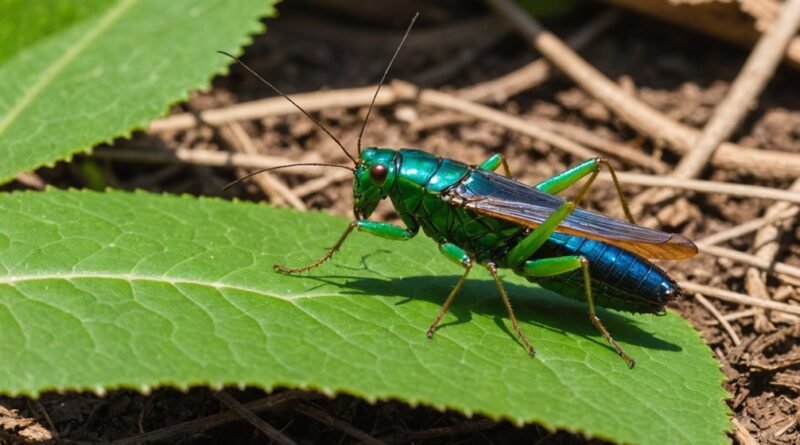
Cricket vs Cockroach: How to Tell Them Apart in 3 Seconds
You can tell a cricket from a cockroach the moment one moves crickets jump, cockroaches scuttle. Crickets have rounded, matte bodies with enlarged hind legs, while cockroaches are flat, glossy, and built for speed. Crickets chirp at night; cockroaches stay mostly silent. Cockroaches invade your home and carry serious health risks, while crickets are largely harmless outdoor insects. There’s plenty more to uncover about these two very different bugs.
Cricket vs Cockroach: How to Tell Them Apart
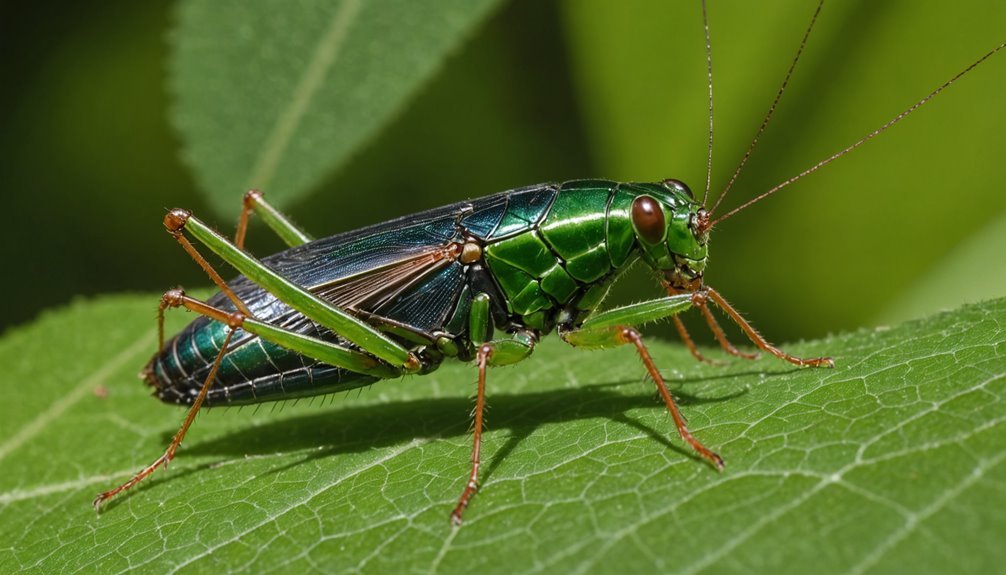
At a glance, crickets and cockroaches can look surprisingly similar, but a few key differences make them easier to tell apart.
Start with sound if you hear chirping, it’s almost certainly a cricket. Cockroaches stay silent, producing only faint rustling sounds.
Next, watch how it moves. Crickets jump when threatened using their enlarged hind legs, while cockroaches scuttle fast and squeeze into tight spaces.
Body shape matters too. Cockroaches tend to be flatter with a glossy exoskeleton, while crickets look more rounded with a matte finish.
Antennae can help, but both insects have long ones, so don’t rely on that alone.
Combining sound, movement, sheen, and body profile gives you the clearest, most reliable identification. Crickets are typically yellowish-brown or black, while cockroach coloring varies depending on the species.
What Do Body Shape and Legs Tell You Right Away?
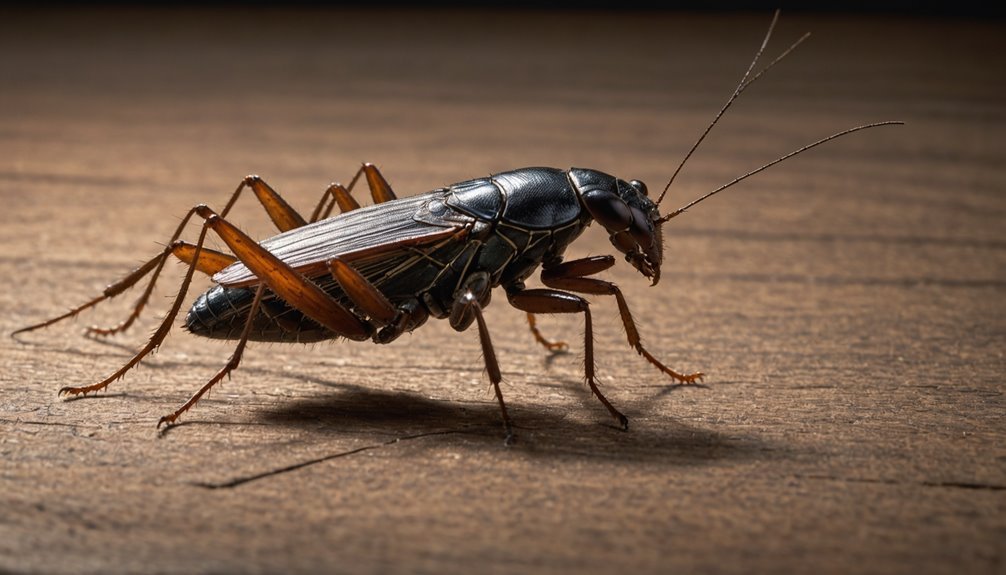
When you look at a cricket and a cockroach side by side, the body shape difference is immediate. Cockroaches are flat, broad, and low to the ground, while crickets stand taller with a rounded, slightly humped build.
Their legs tell an equally clear story.
Their legs reveal everything one built to scurry, the other coiled and ready to launch.
Here’s what to look for:
- Cockroach legs are six equal-length limbs with spiny textures built for rapid scurrying into cracks.
- Cricket hind legs are visibly enlarged, arched, and smooth, designed to store energy for jumping.
- Cockroach legs stay close to the body, partially hidden beneath their wings.
- Cricket rear legs extend outward prominently, making them easy to spot even in dim light.
These two features alone let you identify each insect instantly without needing a closer look. Crickets belong to the order Orthoptera, which also includes grasshoppers and locusts, while cockroaches fall under an entirely separate classification.
Do Crickets or Cockroaches Make Noise?
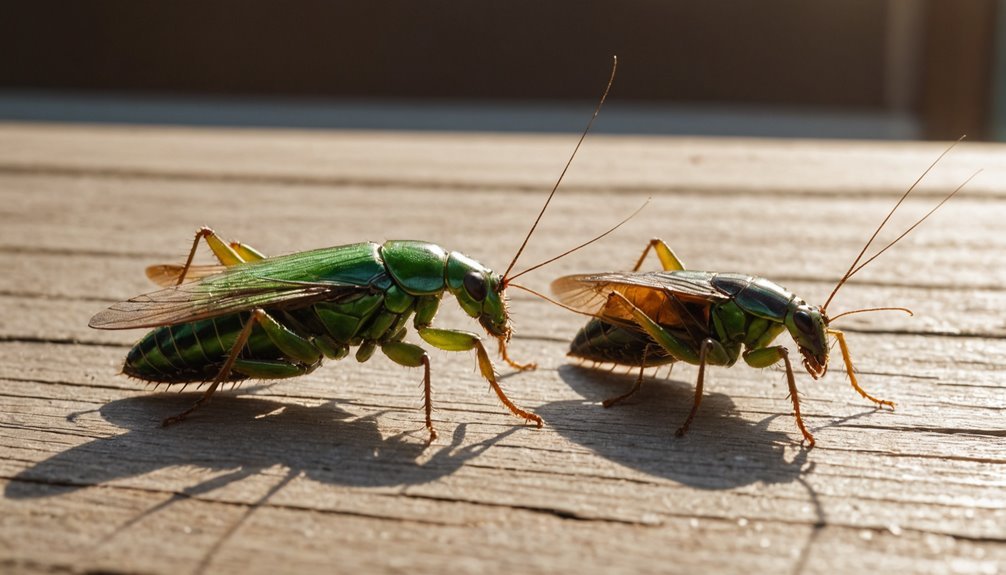
If you’ve ever heard a rhythmic chirping at night, you were almost certainly listening to a male cricket rubbing its forewings together in a process called stridulation.
Crickets produce this sound deliberately to attract mates, defend territory, or signal courtship, making them one of the most acoustically active insects you’ll encounter.
Cockroaches, by contrast, don’t produce that kind of regular, recognizable noise, so sound alone can quickly tell you which insect you’re dealing with. Notably, only adult male crickets are capable of producing these sounds, as females lack the necessary file and scraper structures to do so.
Cricket Chirping Explained
That distinctive chirping sound you hear on a warm summer night comes from crickets, not cockroaches. Male crickets produce it through stridulation, rubbing specialized wing parts together rather than using vocal cords.
Here’s what’s actually happening:
- One wing carries a file covered in tiny ridges; the other has a scraper that drags across it.
- Rapid wing movement creates vibrations that become the chirp you recognize.
- Males chirp mainly to attract females, defend territory, and court nearby mates.
- Chirp rate rises with temperature, which is the basis of Dolbear’s law.
Nights feel louder with cricket song because reduced background noise lets their calls travel farther, making mating communication more effective across longer distances. Specialized neural networks in the cricket’s nervous system control the precise timing and rhythm of each chirp.
Cockroach Noise Behavior
Unlike crickets, most cockroaches you’ll encounter in your home are nearly silent creatures. German, American, and Oriental cockroaches lack specialized stridulatory organs, so you’ll only notice faint clicking or rustling sounds during movement.
The Madagascar hissing cockroach is the exception, expelling air through thoracic breathing holes to produce a clearly audible hiss used for mating, dominance, and defense.
| Sound Type | Cause |
|---|---|
| Hissing | Air expelled through thorax |
| Clicking | Exoskeleton rubbing during movement |
| Chirping | Stridulation during courtship |
Stridulation does occur in some wild species, where males rub their pronotum against costal veins to chirp during courtship. However, these sounds are faint and easily masked by everyday environmental noise inside your home. Instead of relying on sound, most household cockroaches depend on pheromones for communication, making them far more difficult to detect by ear alone.
Where You Find Them Says a Lot
If you spot a cricket, you’ll most likely find it outside in grassy areas, forests, or near woodpiles, where it naturally thrives.
Cockroaches, on the other hand, you’ll almost always catch hiding indoors in warm, dark, damp spaces like kitchens and bathrooms.
Where each insect lives tells you a lot about how serious a problem you’re actually dealing with.
Cricket Outdoor Habitat Preferences
Where you find crickets outdoors tells you a lot about what they need to survive. They’re not random about location they gravitate toward environments that offer moisture, cover, and minimal human disturbance.
If you spot crickets regularly in a spot, that area likely checks several key boxes:
- Dense vegetation like tall grasses, leaf litter, or bushes for shelter and food
- Moist or humid conditions near water bodies, wetlands, or shaded ground
- High shelter density from rocks, logs, and low-growing plant structures
- Low human activity in rural, semi-natural, or undisturbed landscapes
Fields, meadows, wooded edges, and grasslands are their most common outdoor haunts.
The more a habitat combines these features, the more likely you’ll find crickets thriving there.
Cockroach Indoor Hiding Tendencies
Cockroaches don’t hide randomly they cluster in spots that offer heat, moisture, darkness, and minimal disturbance. You’ll find them behind refrigerators, stoves, and dishwashers, inside cabinet corners, and around under-sink plumbing where warmth and humidity concentrate.
They’ll squeeze into cracks as small as 1/16 inch, exploit wall voids, and slip behind outlet plates and baseboards.
Appliances draw them in too. Motor housings in refrigerators and ovens, along with electronics like TVs and game consoles, provide the warmth they seek.
Cluttered areas stacked boxes, folded bags, piles of paper give them layered cover that goes undisturbed for long periods.
Wherever you find heat, moisture, and shelter overlapping indoors, you’re likely looking at active cockroach territory.
Which Is Actually More Dangerous to Your Health: Cricket or Cockroach?
When it comes to actual health risks, cockroaches win the dangerous pest title by a wide margin.
They’re not just a nuisance they actively threaten your health in multiple ways:
- Disease transmission: Cockroaches carry Salmonella, E. coli, fungi, viruses, and parasites onto your food and kitchen surfaces.
- Allergens: Their droppings, saliva, and shed body parts trigger allergic reactions and worsen asthma symptoms.
- Air quality: Cockroach fragments accumulate in bedding, carpets, and furniture, degrading the air you breathe daily.
- Food contamination: After crawling through sewage and garbage, they deposit pathogens directly onto your prepared food.
Crickets, by comparison, pose minimal risk.
Crickets are largely harmless houseguests, carrying none of the serious health risks that make cockroaches so dangerous.
You might experience minor irritation, but they’re not linked to disease outbreaks or serious allergic responses.
Cockroaches are the clear health threat.
Signs You Have an Infestation (Not Just One Bug)
Finding one cockroach doesn’t mean you’re dealing with an isolated visitor. Cockroaches leave behind multiple warning signs that point to a real infestation.
Watch for small black droppings resembling pepper or coffee grounds in kitchens, bathrooms, and along baseboards. Larger cylindrical droppings signal bigger species. Fresh droppings scattered across multiple spots confirm ongoing activity.
Look for brown, capsule-shaped egg cases hidden in dark corners, cracks, and behind furniture. Each case can produce up to 30 nymphs.
You might also notice greasy smears along baseboards, a musty odor in confined spaces, or shed skins in hiding zones.
If you’re seeing live roaches during daylight, chewed packaging, or multiple signs concentrated in one area, you’re not dealing with a single stray bug.
Cricket vs Cockroach: Which Is Harder to Get Rid Of?
Both pests are unwelcome, but they’re not equally difficult to eliminate. Cockroaches are significantly harder to get rid of than crickets, and here’s why that matters for you:
- Cockroaches reproduce rapidly, so partial treatments allow populations to rebound fast.
- Cockroaches hide in tiny cracks and crevices, making full exposure nearly impossible without targeted methods.
- Cockroaches often resist pesticides, meaning a single product rarely solves the problem.
- Crickets typically enter as isolated intruders, not entrenched colonies, making DIY traps and exclusion usually sufficient.
A few crickets in your home signal a manageable problem. A few cockroaches often mean a larger hidden population exists.
Cockroach control demands baits, sanitation, and harborage targeting, while cricket control is usually simpler and faster.
How to Keep Crickets and Cockroaches Out of Your Home
Keeping crickets and cockroaches out starts with cutting off what draws them in: entry points, moisture, food, and shelter. Caulk foundation cracks and replace worn weatherstripping to seal gaps around doors and windows. Fix leaking pipes, use dehumidifiers in damp basements, and eliminate standing water inside and outside your home.
Keep your space tidy by vacuuming regularly, storing food in sealed containers, and clearing clutter off floors. Outside, mow your lawn short, trim shrubs away from the house, and move woodpiles at least 15 to 20 feet from exterior walls.
For active problems, place sticky traps near suspected hiding spots, apply diatomaceous earth along baseboards, and create a treated perimeter around your foundation.
Switch to yellow sodium-vapor or motion-activated lighting to reduce insect attraction at night.
Frequently Asked Questions
Can Crickets and Cockroaches Interbreed or Live in the Same Colony?
You can’t breed crickets and cockroaches together they’re from completely different insect orders, making interbreeding biologically impossible. While you can house them together short-term, they’ll compete for food and space, so separate colonies are strongly recommended.
Do Crickets or Cockroaches Have Any Natural Predators Indoors?
Both pests have indoor predators you should know about. Cats actively hunt crickets, while spiders and lizards’ll prey on cockroaches. However, you can’t rely solely on predators sealing cracks and reducing moisture work far better.
Are Crickets or Cockroaches More Active During Specific Seasons?
Crickets are more seasonally active you’ll notice them most during warm summer nights. Cockroaches, however, stay consistently active year-round indoors, so you’ll encounter them in any season as long as warmth and moisture remain.
Can Crickets or Cockroaches Survive Without Food for Long Periods?
Cockroaches outlast crickets in food deprivation by a wide margin. You’ll find cockroaches surviving weeks to months without food, while crickets typically last only days to about two weeks before declining rapidly.
Do Crickets or Cockroaches Cause Damage to Furniture or Clothing?
Crickets can chew your clothing, fabrics, and furniture, especially when they’re soiled with food or sweat. Cockroaches typically don’t chew these items but can stain and contaminate your belongings instead.
Conclusion
Now that you know the differences between crickets and cockroaches, you’re better equipped to handle whichever pest you’re dealing with. Whether it’s a chirping cricket or a scurrying cockroach, don’t ignore the signs of an infestation. Act quickly, seal up entry points, and eliminate moisture and food sources. If things get out of hand, you’ve always got the option of calling a professional exterminator to take care of the problem for good.
