
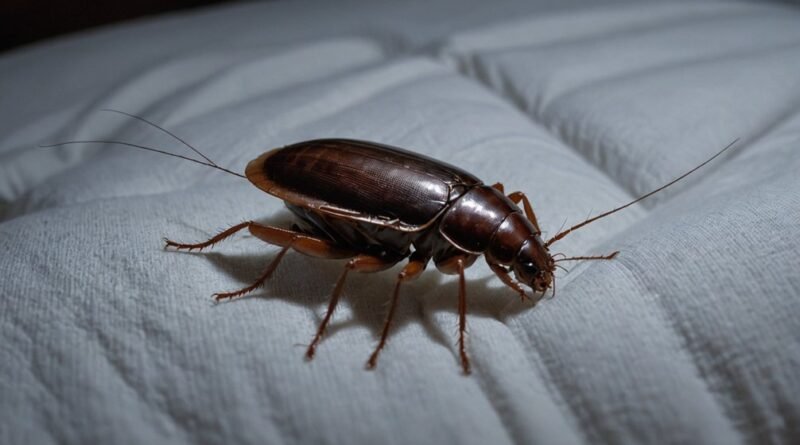
Found a Cockroach on Your Bed While Sleeping? Here Is What It Means
Finding a cockroach on your bed while sleeping means your bedroom has become part of their nightly foraging territory. They’re drawn in by food crumbs, sweat, body heat, and moisture — all things your sleeping space naturally provides. It doesn’t always confirm a full infestation, but it’s a serious warning sign you shouldn’t ignore. One pregnant female can quickly establish a colony. Keep scrolling to uncover exactly what’s happening and how to stop it.
Key Takeaways
- Finding a cockroach on your bed signals active nearby pest activity, often attracted by food crumbs, sweat, or moisture in your sleeping area.
- A single cockroach doesn’t confirm a full infestation but warns of potential risk, especially if it’s a pregnant female.
- Cockroaches are drawn to beds by body heat, sweat, skin flakes, and food crumbs, making sleeping areas prime foraging spots.
- Contact with cockroaches can trigger allergic reactions, asthma flare-ups, and respiratory issues, making immediate action critically important.
- Daytime sightings of cockroaches are strong indicators of a serious, growing infestation requiring urgent elimination and preventive measures.
What Finding a Cockroach on Your Bed Actually Signals
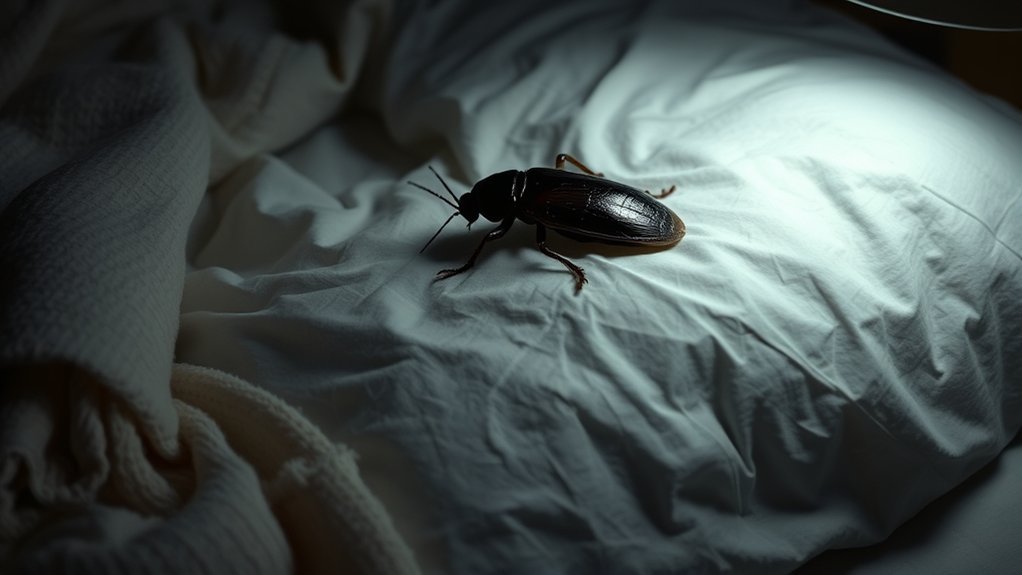
Finding a cockroach on your bed isn’t a random event—it’s a signal that something in your bedroom environment is actively supporting pest activity. Cockroaches don’t wander into sleeping areas without a reason. Their presence points to food residue, available moisture, or nearby harborage that’s making your bedroom habitable for them.
Food crumbs, spills, or sticky traces on your bedding or nightstand can draw them in. Sweat, spilled drinks, or even a water cup on your nightstand can satisfy their moisture needs. Clutter, cardboard, furniture gaps, or wall cracks near your bed give them places to hide.
If you’re seeing cockroaches repeatedly, especially during the day, that’s a stronger warning sign. Daytime sightings suggest the infestation is growing or that hiding spots are being disrupted.
A single cockroach on your bed still means conditions nearby are supporting their survival, movement, or reproduction. Their body parts, saliva, and feces contain potent allergens that pose health risks even when only one roach has been detected.
Is One Cockroach on Your Bed Worth Worrying About?
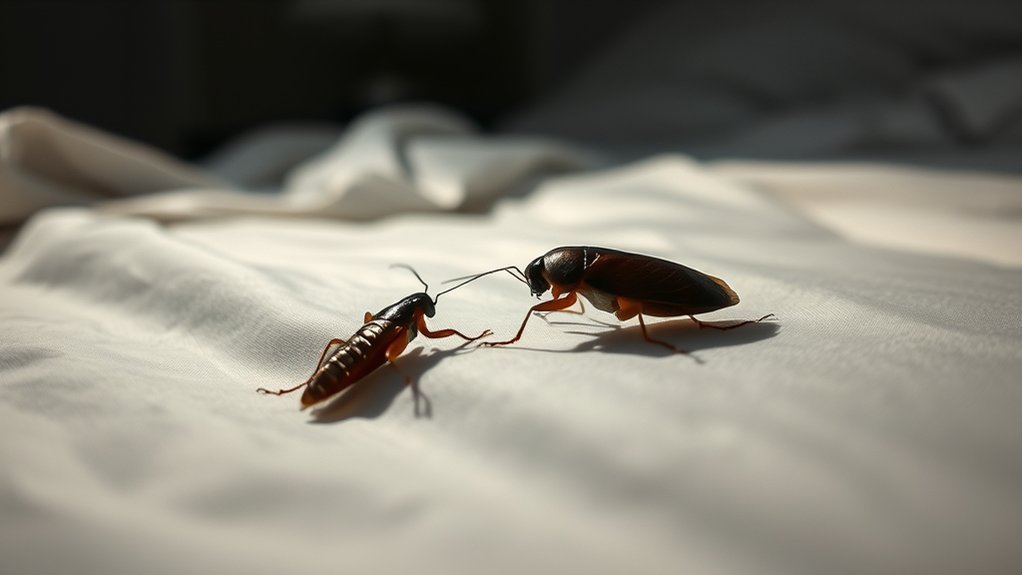
How much should one cockroach on your bed actually concern you? Enough to act, but not enough to panic. The distinction matters because your response should be proportionate and practical.
Here’s what one cockroach on your bed realistically means:
- It’s a warning sign, not a confirmed infestation. A single sighting suggests possible hidden activity nearby, especially nymphs, droppings, or entry gaps in your bedroom.
- The location raises the concern level. Your bed is a skin-contact surface, meaning you’re exposed to bacteria, allergens, and shed skins even from one roach.
- One pregnant female can establish a colony. Ignoring the sighting entirely carries real risk because cockroaches reproduce fast.
Your immediate priority should be washing your bedding, inspecting the surrounding area, and placing sticky traps.
Wash your bedding, inspect the surrounding area, and set sticky traps to catch what you might be missing.
If traps reveal nymphs or additional roaches, you’re likely dealing with something beyond a stray. Cockroaches are nocturnal and secretive by nature, so a daytime or exposed-area sighting like your bed often signals that their hidden population has grown crowded enough to push them into unusual spaces.
Why Cockroaches End Up in Your Bed While You Sleep
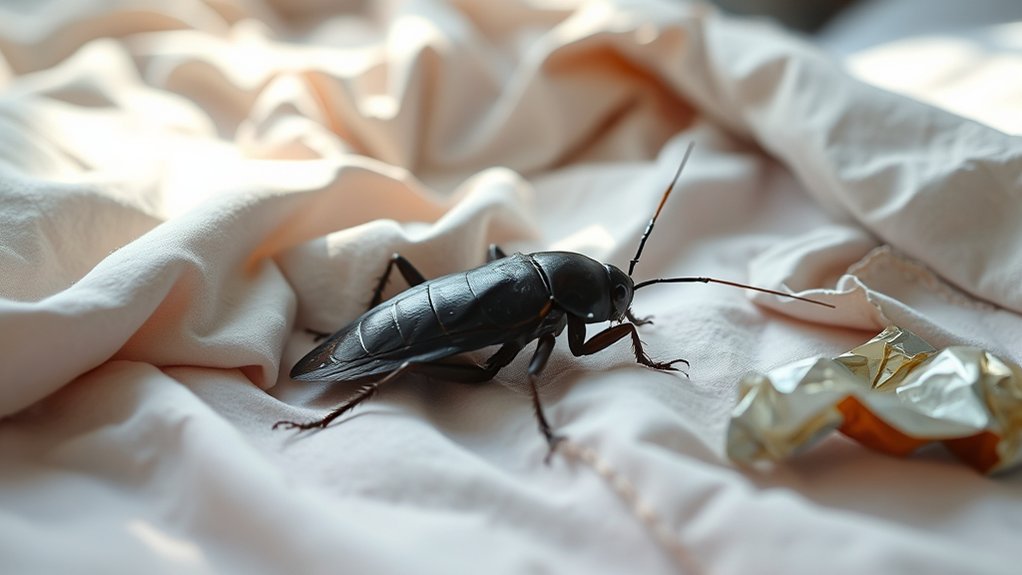
Cockroaches don’t wander into your bed by accident—they’re drawn there by specific conditions your sleeping area provides.
Food crumbs from late-night snacking, skin flakes, and sweat all create a food signal that guides roaches directly to your sleeping zone. Lingering food odors in your sheets and mattress seams reinforce that signal.
Moisture plays an equally strong role. Your sweat and drool offer a small but reliable water source, and humid, poorly ventilated bedrooms amplify the appeal.
Warmth matters too. Your body heat and the heat trapped in your mattress and bedding create a warm microenvironment that cockroaches actively seek, especially in cooler rooms.
Finally, your bed offers ideal shelter. Seams, crevices, bed frames, and under-bed clutter give roaches dark, undisturbed hiding spots.
Since they’re nocturnal, they emerge once your lights go off, making your sleeping area a convenient stop on their overnight foraging route. A cockroach spotted in your bed at night is often a sign of a wider infestation elsewhere in the home.
Signs Your Bedroom Already Has a Cockroach Infestation
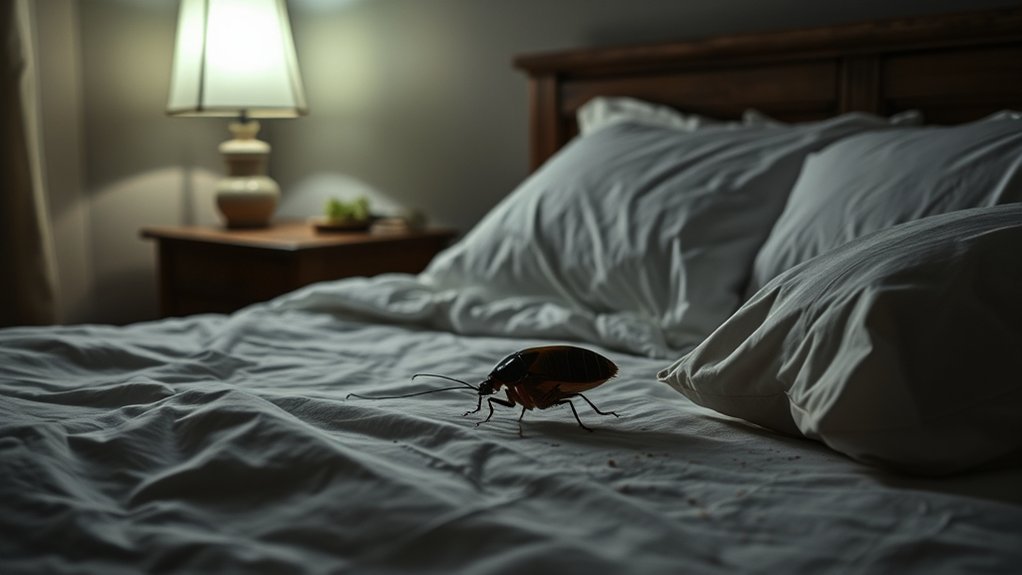
Finding one cockroach on your bed doesn’t mean it wandered in alone—your bedroom may already show signs of an established infestation.
Check baseboards, drawer corners, and under furniture for small black specks resembling pepper or coffee grounds, and look along walls and under rugs for shed skins left behind as cockroaches grow.
You should also inspect enclosed spaces like closets and wardrobes for egg cases tucked into cracks or near cardboard, and pay attention to any persistent musty or oily odor, which often signals a longer-standing problem.
Cockroaches seen moving around during the day, rather than only at night, are a strong indicator that daytime sightings point to a more serious and established infestation in your bedroom.
Droppings and Shed Skins
Droppings and shed skins are two of the most telling signs that cockroaches aren’t just passing through your bedroom—they’re living there.
Check these specific locations carefully:
- Baseboards and nightstands – Look for pepper-like specks or dark brown smear marks along edges and behind furniture.
- Drawer corners and crevices – Small black pellets collect in tight, sheltered spots where roaches travel repeatedly.
- Under rugs and near outlets – Cast skins, hollow and sometimes translucent, accumulate here as nymphs molt through growth stages.
Finding skins in multiple sizes confirms different life stages are developing indoors.
Recurring droppings in the same spots indicate an established travel route.
Both droppings and shed skins also carry allergens that can trigger asthma or allergy symptoms. Cockroaches also release pheromones and filth that produce a musty, unpleasant odor detectable in heavily infested rooms.
Odors and Egg Cases
Beyond what you can see, two more signs—odor and egg cases—can confirm that cockroaches have made your bedroom a permanent home.
A musty, oily smell that concentrates near furniture gaps, closets, or baseboards often points to an active harborage. If that odor intensifies over time, it’s consistent with a growing infestation rather than a random visitor.
Egg cases, called oothecae, are small, brown, capsule-shaped casings that confirm breeding activity. Each one can hold roughly 20–50 eggs depending on the species, so even a single case represents a serious threat.
You’ll typically find them in dark, sheltered spots like furniture cracks or storage boxes. When odor and egg cases appear together in your bedroom, you’re likely dealing with an established infestation that needs immediate attention.
What Cockroaches in Your Bedroom Do to Your Health
Having cockroaches in your bedroom isn’t just unsettling—it’s a real health risk. Their debris—shells, saliva, droppings, and body parts—contains proteins that trigger serious reactions, even when the roaches are dead.
Cockroach debris—shells, droppings, and body parts—contains proteins that trigger serious health reactions, even from dead roaches.
Here’s what you’re actually dealing with:
1. Asthma flare-ups – Cockroach allergens inflame and constrict your airways, causing wheezing, chest tightness, coughing, and difficulty breathing.
High bedroom exposure is directly linked to worse asthma morbidity and more hospitalizations.
2. Allergic reactions – You can develop itchy skin, a stuffy nose, dry eyes, and a scratchy throat.
Sensitized people react even at low allergen levels, and airborne particles spike whenever debris gets disturbed.
3. Germ exposure – Roaches crossing your bedding transfer microbial contaminants directly onto surfaces where you sleep.
Children and people with existing asthma face the greatest risk, making bedroom infestations especially dangerous for vulnerable households.
How to Keep Cockroaches Off Your Bed for Good
The health risks cockroaches bring into your bedroom are serious enough that eliminating them—and keeping them out—isn’t optional. Start by removing every food source and moisture point from the room. Pull your bed away from walls, keep bedding off the floor, and don’t let nightstands touch the frame. Seal cracks around baseboards, outlets, and window frames using caulk. Place traps and gel baits along travel routes and maintain treatment for several weeks to catch newly hatched roaches.
| Action | Purpose |
|---|---|
| Remove food and moisture | Eliminate roach attractants |
| Isolate the bed frame | Block climbing access routes |
| Declutter and vacuum regularly | Destroy hiding spots |
| Seal cracks and entry points | Prevent roaches from entering |
| Use baits and traps consistently | Target hidden populations |
Staying consistent matters most. One round of cleaning won’t hold them off permanently—ongoing habits do.
Frequently Asked Questions
Can Cockroaches Bite You While You Are Sleeping in Bed?
Yes, cockroaches can bite you while you’re sleeping, though it’s uncommon. They’re more likely to nibble on exposed skin if there’s a heavy infestation, food residue on your hands, face, or fingers.
How Quickly Can a Cockroach Infestation Spread to Other Rooms?
A cockroach infestation can spread to other rooms within days to weeks if you’ve got unsealed entry points and accessible food or moisture. German cockroaches spread the fastest, reaching new areas of your home rapidly.
Should You Throw Away Bedding After Finding a Cockroach on It?
You don’t need to throw away your bedding. Strip it, bag it, and wash everything in hot water with detergent. Dry it on high heat to kill cockroaches, eggs, and allergens effectively.
Do Cockroaches Prefer Certain Types of Beds or Mattress Materials?
Cockroaches don’t strongly prefer specific mattress materials. They’re more attracted to damaged, torn, or heavily seamed mattresses that offer hiding spots. Your bed frame, nearby clutter, and moisture matter far more than whether your mattress is foam or spring.
Can a Cockroach Crawl on You Without Waking You Up?
Yes, a cockroach can crawl on you without waking you up. During deep sleep, you’re less sensitive to light touch, and a roach’s quick, brief movement often doesn’t create enough stimulation to rouse you.
Conclusion
Finding a cockroach on your bed while sleeping isn’t something you should ignore. It’s a clear warning sign that these pests have already made themselves comfortable in your bedroom. You’ve now got the knowledge to understand why it happens, what risks it creates, and how to stop it. Take action quickly, stay consistent with prevention, and you’ll keep your sleeping space cockroach-free.
