
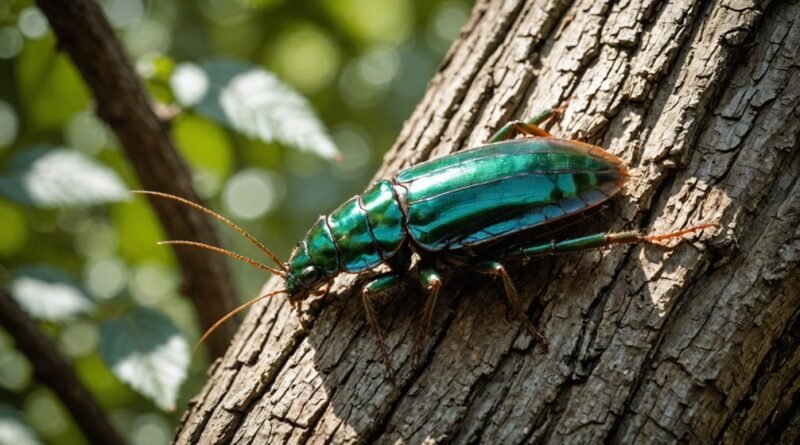
Tree Roaches: What They Are, Where They Hide, and How to Get Rid of Them
Tree roaches aren’t a single species — they’re large outdoor cockroaches, like the smoky brown or American cockroach, that live in trees, mulch, and rotting wood. They’re not trying to move in; they wander inside by accident. You can control them by removing leaf litter, fixing moisture issues, trimming vegetation, and sealing entry points. Everything you need to identify them, track them down, and push them back outside is covered ahead.
Key Takeaways
- “Tree roach” is an informal term for outdoor cockroaches, most commonly the smoky brown cockroach, living in trees, mulch, and shrubs.
- Tree roaches prefer moist, sheltered habitats like loose bark, hollow trees, leaf litter, firewood piles, and clogged gutters.
- Occasional indoor sightings usually indicate accidental entry, not infestation; look for egg cases and nymphs to confirm breeding activity.
- Reduce tree roach presence by removing organic debris, fixing moisture issues, trimming vegetation, and sealing gaps around doors and pipes.
- Seek professional help if you notice daytime sightings, egg cases, shed skins, droppings, or continued activity after DIY control efforts.
What Exactly Is a Tree Roach?
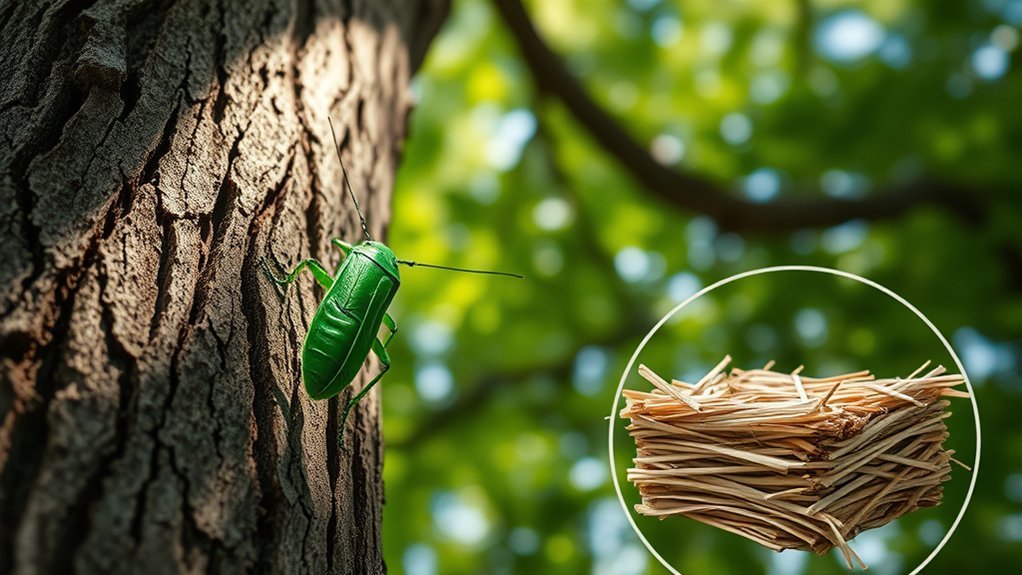
“Tree roach” isn’t a scientific classification—it’s a casual nickname for outdoor cockroaches that live in trees, shrubs, mulch, and other sheltered vegetation. The term reflects habitat preference rather than a distinct species group.
The name “tree roach” describes where these insects live—not what they are.
When people use this label, they’re most often referring to the smoky brown cockroach (*Periplaneta fuliginosa*), though some regions apply it to American cockroaches found outdoors.
Because usage varies by area, the same nickname can point to different species depending on where you live.
What these insects share is size, coloring, and lifestyle. They’re typically large cockroaches with dark brown, mahogany, or reddish-brown bodies, and they’re built for outdoor survival in moist, sheltered environments.
You’ll rarely find them establishing indoor infestations. If one turns up inside your home, it’s almost always an accidental entry rather than a sign of a deeper problem.
Knowing what you’re dealing with helps you respond correctly. American cockroaches, one of the species commonly called tree roaches, can grow 1.5 to 3 inches long and are recognized by their reddish-brown, hard-shelled bodies.
Where Tree Roaches Hide Outside
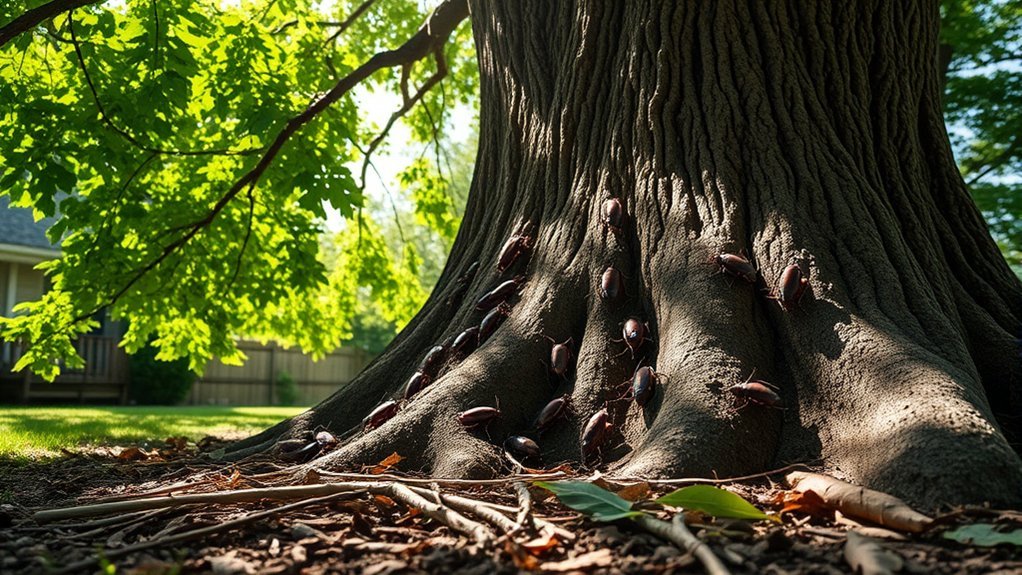
Because tree roaches are outdoor insects, they’re rarely far from the moist, sheltered spots your yard naturally provides. They gravitate toward loose tree bark, hollow trees, fallen logs, rotting stumps, and firewood piles, where crevices and decaying wood offer ideal cover.
Woodpiles stored near your home are especially problematic since they can support large populations close to your entry points.
Beyond wood, tree roaches shelter in wet mulch beds around your foundation, dense leaf litter, and thick low-growing plants like ivy. Shaded, damp ground keeps them comfortable and hidden during the day.
They also exploit structural areas you might overlook. Clogged gutters, drain pipes, storm drains, and the spaces beneath decks and sheds all provide the dark, moist conditions they need.
Compost piles and debris stacked near your yard add even more harborage options, multiplying their hiding spots considerably.
Exterior lighting can draw adult male tree roaches toward your home, increasing the chances they find their way inside through nearby doors and windows.
What’s Drawing Tree Roaches to Your Home
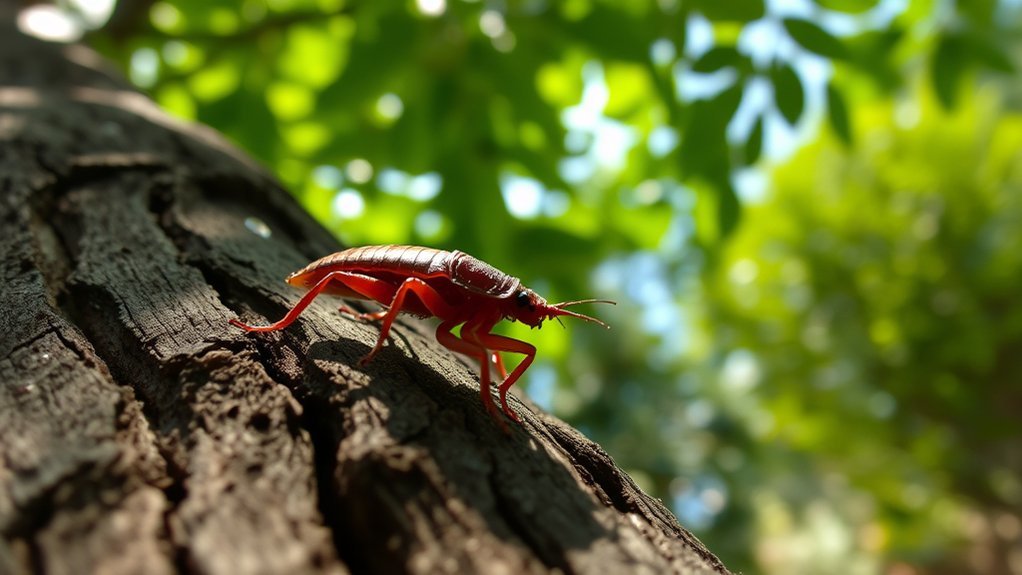
Several factors around your home can make it a target for tree roaches, and understanding them helps you address the problem at its source.
Lights, moisture, and organic debris are the three biggest draws, and they often work together to bring roaches closer to your walls and entry points.
- Outdoor lighting pulls male roaches in during mating season, and light leaking through cracks or gaps guides them directly toward entry points.
- Moisture from plumbing leaks, poor drainage, or saturated soil after rain creates ideal conditions near your foundation.
- Organic debris like leaf litter, mulch, firewood piles, and rotting wood gives roaches shelter and food right next to your home.
Once roaches are close, unsealed gaps around doors, pipes, and vents make it easy for them to get inside.
Reducing these attractants cuts off the pressure before it becomes an infestation. Switching to yellow bug lights outdoors is a simple way to make your property less visible to roaches on the move.
Signs You Have Tree Roaches, Not a House Infestation
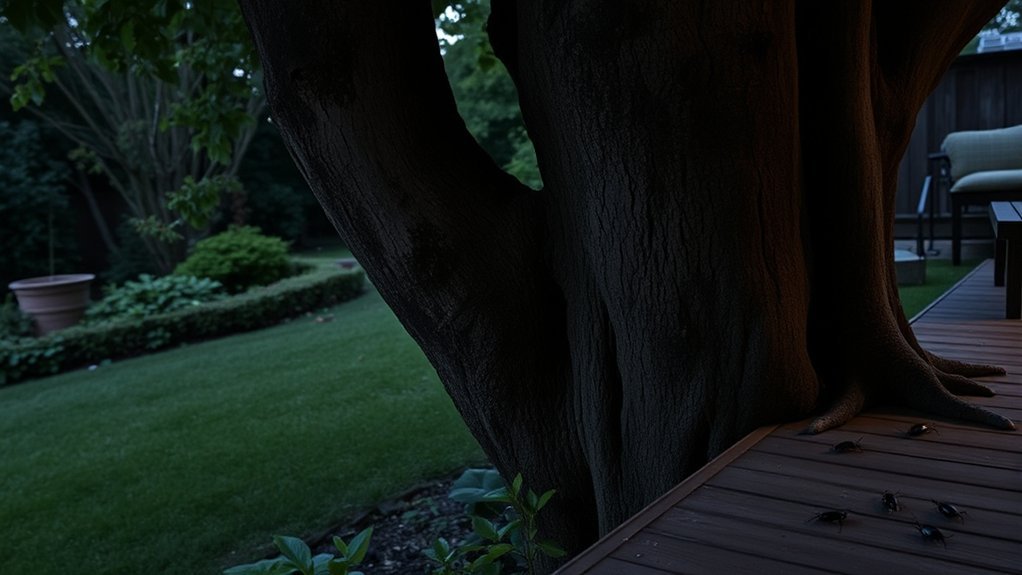
If you’re spotting roaches near your wood pile, porch light, or tree line rather than inside your kitchen or bathroom, you’re likely dealing with tree roaches instead of a house infestation.
Unlike house roaches, tree roaches tend to wander indoors alone and accidentally, showing up near windows or exterior doors before dying off within days.
The clearest sign you don’t have an infestation is the absence of indoor breeding evidence—no droppings in cabinets, no egg cases behind appliances, and no repeated sightings in food or moisture areas. Tree roaches are also most commonly spotted during late May through June, which aligns with their outdoor mating season rather than a year-round indoor problem.
Outdoor Sightings Near Trees
When you spot cockroaches near trees rather than inside your home, that pattern itself is a strong indicator you’re dealing with tree roaches and not a structural infestation.
These roaches thrive outdoors in damp, shaded zones where organic material breaks down, not in your kitchen or bathroom.
Watch for activity concentrated in these specific areas:
- Loose bark, hollow trunks, and stump cavities where roaches shelter during the day
- Mulch beds, leaf litter, and woodpiles that hold moisture and decaying organic matter
- Exterior lights, porches, and outdoor doors where flying males appear at night during warm months
If you’re seeing multiple roaches repeatedly in the same tree line or mulch bed, that points to an established outdoor harborage nearby. Unlike pest cockroaches, tree roaches do not establish indoor populations and their presence inside your home is typically temporary and accidental.
Occasional Indoor Wanderers
Finding a roach inside doesn’t automatically mean you have an infestation. Tree roaches wander indoors occasionally, especially after rain, humidity shifts, or nearby outdoor disturbances.
You’ll typically spot them near doors, windows, garages, or exterior lights rather than inside cabinets or under sinks.
A few key distinctions separate a wanderer from a breeding population. If you’re seeing a single large, dark brown roach flying toward light at night, that’s consistent with tree roach behavior.
If there are no nymphs, egg cases, or droppings in hidden areas, that’s a strong sign against infestation.
Tree roaches also tend to behave erratically indoors and often die without establishing themselves.
The pattern of your sightings matters more than any single roach you find.
No Indoor Breeding Signs
One of the clearest signs you’re dealing with tree roaches rather than a house infestation is the absence of indoor breeding evidence. True indoor infestations leave a trail. Tree roaches typically don’t reproduce inside, so you won’t find the markers of an established colony.
Watch for the absence of these key indicators:
- No egg cases near appliances, cabinets, or storage areas
- No nymphs—small, wingless juveniles—accumulating near sinks, baseboards, or hidden voids
- No colony debris such as shed skins, greasy smear marks, or fresh droppings across multiple zones
If your sightings remain limited, show no growth trend, and lack these breeding signs, you’re likely dealing with outdoor tree roaches wandering in rather than an established indoor population.
How to Identify Common Tree Roach Species
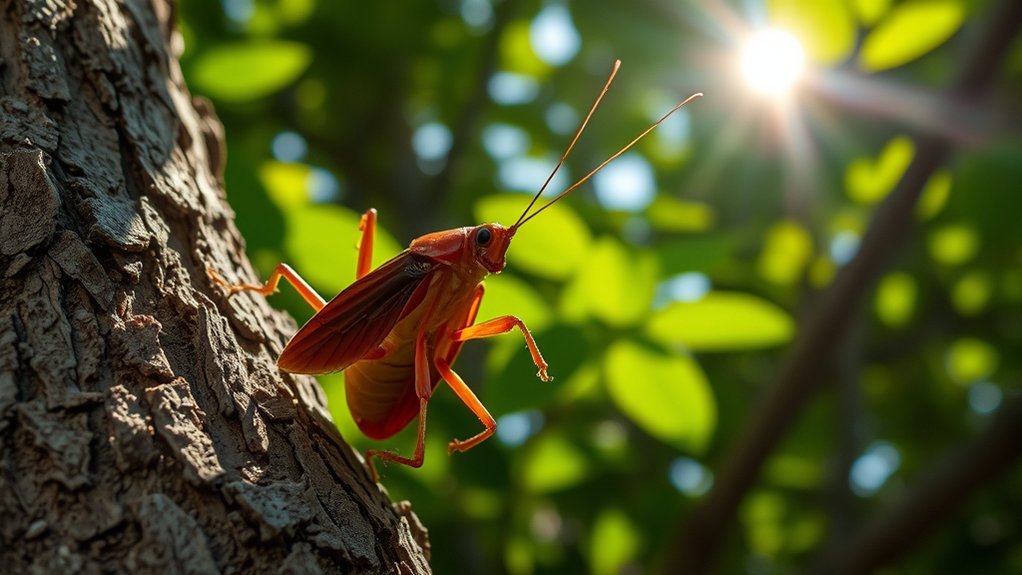
When identifying tree roaches, you’ll want to start by comparing size, color, and markings.
The American cockroach is reddish-brown with a pale yellow figure-eight pattern behind its head, while the smokybrown cockroach is uniformly dark mahogany with no light markings and measures 1 to 1.5 inches.
Wood cockroaches are noticeably smaller, ranging from 0.5 to 0.8 inches, and vary from light tan to darker brown, with adult males often showing paler edges on their wings and pronotum.
American Cockroach Traits
The American cockroach is the species you’re most likely to encounter when tree roaches find their way indoors. It’s large, reddish-brown, and typically measures 1.5 to 2 inches long with a flattened oval body.
One of its most reliable identifiers is the pale yellow band around the pronotum—the shield directly behind the head.
Look for these traits to confirm identification:
- Pronotal band: A yellowish or cream margin that separates it from the darker smokybrown cockroach
- Wings: Fully developed in adults, often extending slightly past the abdomen, especially in males
- Antennae: Long and prominent, paired with a flattened body
Nymphs are smaller, wingless, and uniformly brown, making them harder to identify before markings fully develop.
Smokybrown Cockroach Features
Smokybrown cockroaches share the same large size as American cockroaches but carry a distinctly different look—uniform, glossy, and dark from head to tail. Adults reach about 1 to 1.5 inches long and display a consistent mahogany-to-black color with no pale markings, stripes, or contrasting bands anywhere on the body.
Their pronotum stays dark throughout, which helps you rule out lookalikes quickly. Both sexes carry fully developed wings that extend past the abdomen, and they’re strong fliers often drawn to lights at night.
You’ll typically spot them outdoors near mulch, leaf litter, gutters, or roof voids rather than on floors.
Nymphs look different—they’re wingless and show a pale whitish band across the back, fading as they mature toward the adult’s uniform dark appearance.
Wood Cockroach Characteristics
Wood cockroaches are outdoor roaches tied to wooded habitats, and their overall look reflects that lifestyle—oval, flattened bodies in shades of light reddish-brown to dark brown, with long antennae and spiny legs.
The Pennsylvania wood cockroach is among the most common species you’ll encounter indoors accidentally.
Key traits that help you identify them:
- Pale stripe: A creamy or whitish stripe runs along the outer thorax edge, extending onto the wings in adult males.
- Wing length: Males have full wings and fly well; females have short, stubby wings that don’t cover the abdomen completely.
- No twin stripes: Unlike German cockroaches, wood roaches lack the two dark longitudinal back stripes.
Adult males are your most reliable identification target.
How to Get Rid of Tree Roaches Outside
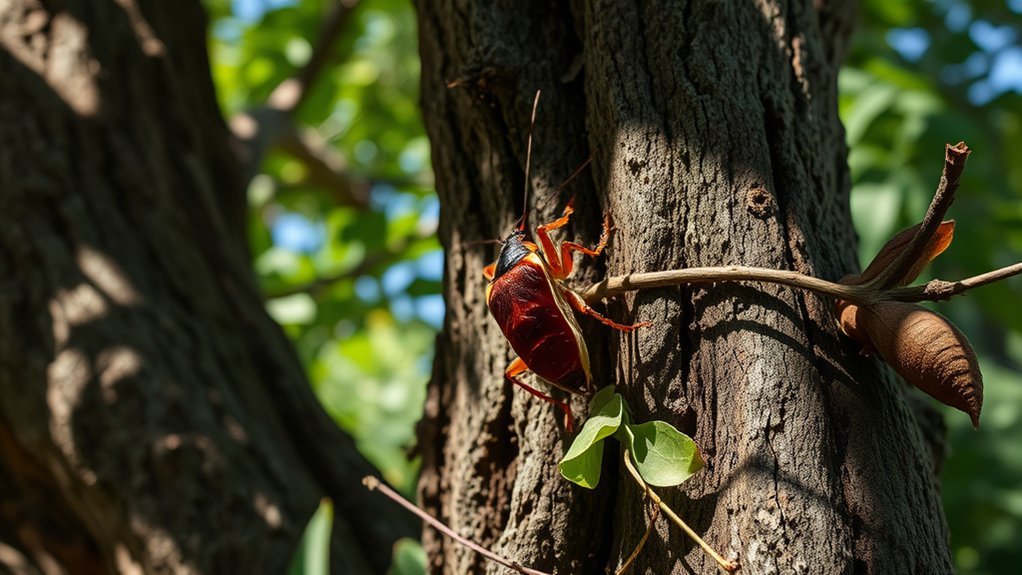
Getting rid of tree roaches outside comes down to five core strategies: cleaning up harborage, reducing moisture, trimming vegetation, applying targeted treatments, and sealing entry points before roaches move indoors.
Start by removing leaf piles, rotting wood, and dense groundcover near your foundation. Keep mulch at 2 inches, move firewood 20 feet from the structure, and fix drainage issues that leave soil wet. Trim shrubs 18 inches from the house and keep branches 3 feet from the roofline.
| Treatment Type | Target Location |
|---|---|
| Residual perimeter spray | Foundation, eaves, doors, windows |
| Outdoor bait | Mulch beds, tree bases, leaf litter |
| Diatomaceous earth | Dry hiding spots under shrubs and foliage |
Finally, seal exterior cracks, screen vents, install door sweeps, and close utility penetrations. Reassess seasonally, since vegetation regrowth and fresh leaf litter can quickly restore harborage conditions you’ve already eliminated.
How to Handle Tree Roaches That Get Inside
Finding a tree roach inside is startling, but it’s rarely cause for alarm. These insects are outdoor creatures that stumble indoors accidentally and can’t survive long without the moist, decaying habitat they need. Your house is simply too dry for them to establish a population.
When you spot one, removal is straightforward:
- Remove it immediately using a vacuum, broom, or fly swatter, then dispose of it promptly.
- Check your firewood before bringing it inside, since logs are the most common way tree roaches hitchhike in.
- Skip broad indoor treatments—an aerosol spray for a single visible roach is acceptable, but widespread interior pesticide application isn’t necessary.
If you’re seeing small roaches repeatedly in kitchens or bathrooms, that’s a different pest entirely.
For true tree roaches, focus on sealing entry points and addressing outdoor conditions near your foundation.
When to Call a Professional for Tree Roaches
Most tree roach encounters don’t require professional help—but knowing when to call one matters. If you’re seeing roaches during the day, in multiple rooms, or after repeated DIY attempts, that’s no longer a stray insect problem.
| Sign | What It Suggests |
|---|---|
| Egg cases or shed skins indoors | Active breeding, not accidental entry |
| Daytime sightings in kitchens or bathrooms | Established harborage, not wandering |
| Continued activity after exclusion work | Hidden entry points or exterior habitat issues |
Droppings, musty odors, or multiple size classes in the same area also shift the situation toward professional inspection. These signs point to a breeding population, not occasional outdoor wanderers coming inside.
Species misidentification is another reason to call. Tree roaches need different treatment than indoor pest species, and treating for the wrong one wastes time. A professional can confirm what you’re dealing with and address both interior activity and exterior conditions driving the problem.
Frequently Asked Questions
Can Tree Roaches Bite Humans or Pets if Threatened?
Yes, tree roaches can bite you or your pets if they’re threatened, but it’s very unlikely. They’d rather flee than fight. If bitten, you’ll likely see minor redness or swelling.
Do Tree Roaches Carry Diseases or Contaminate Food?
Tree roaches can carry bacteria like Salmonella and E. coli, but they’re a lower risk than indoor species. If one enters your kitchen, discard exposed food and clean all affected surfaces immediately.
Are Tree Roaches More Active During Certain Seasons or Weather Conditions?
You’ll see tree roaches most during late spring through early fall, especially on warm, humid nights. They’re also driven indoors during rainy spells or hot, dry stretches when outdoor conditions become less comfortable.
Can Tree Roaches Survive Winter in Cold Climates?
Yes, tree roaches can survive winter in cold climates if they find protected shelter like loose bark, woodpiles, or wall voids. However, prolonged deep freezes considerably reduce their chances of making it through.
Do Natural Predators Help Control Tree Roach Populations Around Homes?
Yes, natural predators can help reduce tree roach populations around your home, but they won’t eliminate an infestation. Spiders, geckos, and parasitic wasps offer background suppression, while exclusion and sanitation deliver more consistent, reliable results.
Conclusion
Tree roaches don’t have to take over your yard or sneak into your home if you stay proactive. You’ve now got the knowledge to identify them, understand what’s attracting them, and tackle the problem effectively. Start with the outdoor treatments, seal up your entry points, and don’t hesitate to call a professional when things get out of hand. With the right approach, you’ll keep these unwanted guests exactly where they belong—outside.