
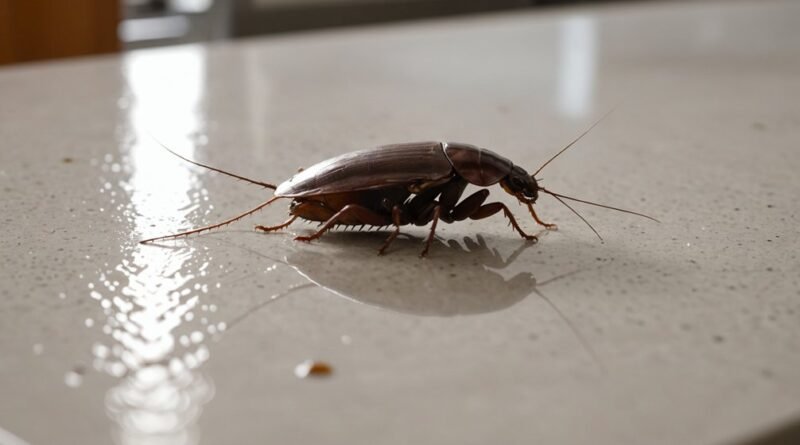
How Common Are Cockroaches in Apartments? What the Numbers Actually Show
Cockroaches are far more common in apartments than you might expect. Infestation rates range from 28% to 77% depending on building type and location. A 2022 study found 37% of apartments affected, while New York City public housing hit 76%. Urban high-rises, older buildings, and shared plumbing all drive these numbers higher. The full picture — including hidden allergens and what a real infestation looks like — gets even more eye-opening from here.
Key Takeaways
- Cockroach infestation rates in apartments range from 28% to 77%, depending on location, building type, and socioeconomic factors.
- Low-income and public housing apartments report higher infestation rates, with some buildings reaching 63% of units affected.
- German cockroaches dominate infestations, appearing in 97.8% of cockroach-positive apartments nationwide.
- Over 40% of residents in infested apartments report seeing 10 or more cockroaches daily, indicating widespread severe infestations.
- Shared walls, pipes, and voids allow cockroaches to spread rapidly, with up to 30% of populations migrating weekly between units.
How Many Apartments Actually Have Cockroaches?

Depending on where you look, somewhere between 28% and 77% of apartments have cockroaches — a range wide enough to seem contradictory until you understand what’s driving it.
Standard apartment surveys cluster in the high-20s to high-30s percent range. A Rutgers survey found cockroaches in 30% of 344 apartments. A separate national apartment-complex survey landed at 28%.
A 2022 study of 1,753 apartments across 19 buildings found cockroaches in 37% of units.
The numbers climb sharply in public and high-density urban housing. A New York City public-housing study found cockroach evidence in 76% of apartments, with 35% trapping more than 100 cockroaches per week in kitchens alone.
Inner-city apartment studies have reported rates as high as 77%. German cockroaches are the most common indoor species worldwide and are the primary driver behind infestations in multi-unit residential buildings.
Cockroach Infestation Rates in Low-Income Apartments
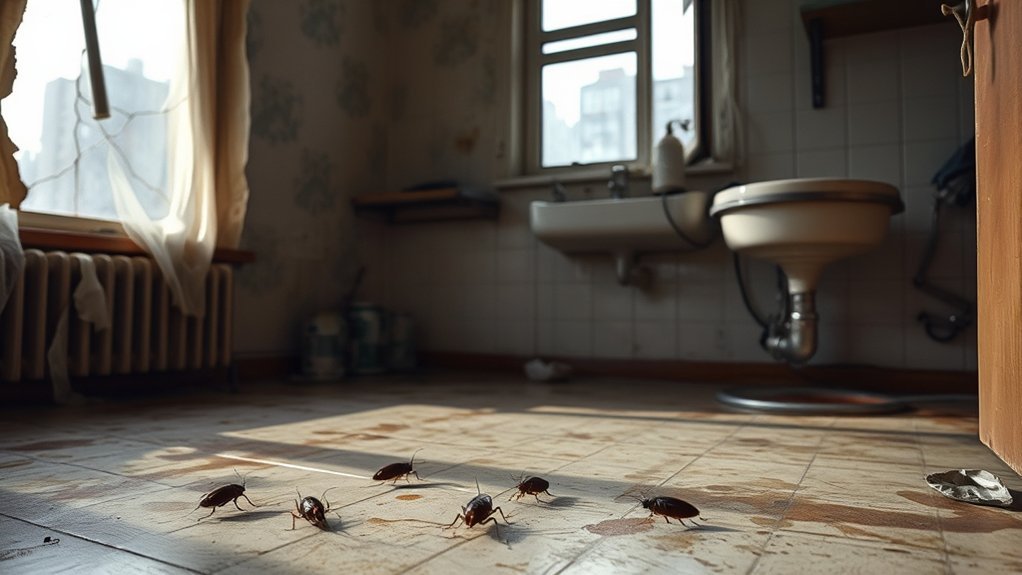
Low-income apartments consistently show higher cockroach infestation rates than general apartment surveys suggest. Across multiple studies, rates ranged from 28% to 49%, with one building reporting 63% of units affected at some point.
| Study Type | Infestation Rate | Key Detail |
|---|---|---|
| Multi-building survey | 37% | 1,753 apartments across 19 buildings |
| Low-income trapping study | 49% | Based on trap catches |
| Sampled apartment study | 30% | German cockroaches confirmed |
| Public housing inspection | 28% | Visual inspection method |
| Building-wide study | 47% baseline | 63% affected over time |
German cockroaches drive nearly all of these infestations, appearing in 97.8% of cockroach-positive apartments. You’ll find them concentrated in kitchens and bathrooms, where moisture and food are accessible.
Structural conditions amplify your risk considerably. Peeling paint raises infestation odds by 3.8 times, poor sanitation by 2.7 times, and water damage by 1.9 times — making housing quality a direct predictor of cockroach presence.
Why Apartments Attract Cockroaches More Than Single-Family Homes
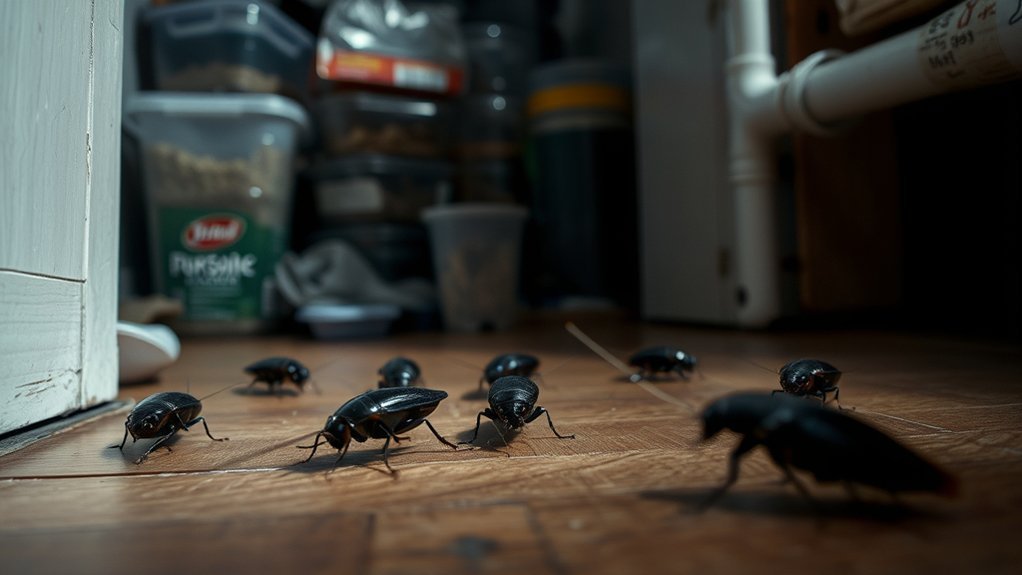
When you live in an apartment, you’re sharing more than just a building—you’re sharing walls, pipes, and structural voids that give cockroaches easy highways between units.
Dense occupancy means a single infested unit can quickly become your problem too, since roaches don’t respect lease boundaries.
Urban settings compound the risk further by surrounding your building with restaurants, waste areas, and aging infrastructure that keep cockroach populations thriving nearby. In fact, apartments have an infestation rate of 46% nationwide, making them the most cockroach-prone residential building type across the country.
Shared Walls Spread Infestations
Unlike single-family homes, apartments share walls, ceilings, and floors that connect your unit directly to your neighbors’—and cockroaches exploit every gap in that shared structure. They move through wall voids, plumbing stacks, electrical conduits, and pipe collars without restriction.
Research confirms this pattern: after coordinated building-wide treatment, correlations among infestations in wall-sharing units dropped considerably by six months and disappeared entirely by twelve months.
| Shared Pathway | Why It Matters |
|---|---|
| Plumbing penetrations | Direct routes between stacked units |
| Electrical conduits | Hidden corridors behind walls |
| Wall voids and gaps | Continuous movement across multiple units |
Treating only your apartment won’t stop reinfestation if adjacent units remain active. Sealing outlet boxes, pipe collars, and wall penetrations—combined with coordinated neighbor treatment—is what actually interrupts the spread. Studies estimate that up to 30% of a building’s cockroach population may move between apartments within a single week, making neighbor-level activity a direct threat to your unit regardless of your own hygiene.
Dense Living Enables Migration
Shared walls explain part of why cockroaches spread so easily between units—but the structure of apartment buildings as a whole makes migration even harder to stop.
Dense occupancy concentrates plumbing, electrical conduits, and utility chases into a compact space, giving cockroaches low-resistance routes throughout the entire building. When conditions in one unit change—say, after treatment—roaches don’t disappear. They relocate.
One building-level report found that up to 30% of a cockroach population can move between apartments in a single week.
Shared trash rooms, compactor areas, and kitchen-heavy layouts give roaches the food, moisture, and harborage they need to survive once they’ve migrated.
In a detached home, an infestation stays contained. In an apartment building, it rarely does. During summer months, elevated temperatures above 70°F accelerate cockroach reproduction, meaning migrating populations can establish new infestations in neighboring units far faster than residents or landlords can respond.
Urban Settings Increase Exposure
Apartment buildings sit at the center of cockroach exposure risk, and urban density is a big reason why. Studies show elevated cockroach allergen concentrations in 78% to 98% of urban homes, compared to 63% overall. High-rise apartments consistently show the highest prevalence in population-level research.
Urban apartments concentrate the conditions cockroaches need most: warmth, humidity, food access, and harborage sites. Shared plumbing creates recurring moisture, wall voids allow movement between units, and background infestation pressure across dense neighborhoods keeps reinfestation likely even after treatment.
If you live in a multiunit building, your odds of cockroach exposure are measurably higher than someone in a detached home. One study found apartments carried an odds ratio of 3.0 for infestation compared to single-family housing. Older buildings built pre-1940 and those showing signs of disrepair, such as peeling paint and active leaks, carry an even greater risk of sustained infestation.
What Heavy Infestations Actually Look Like Inside an Apartment
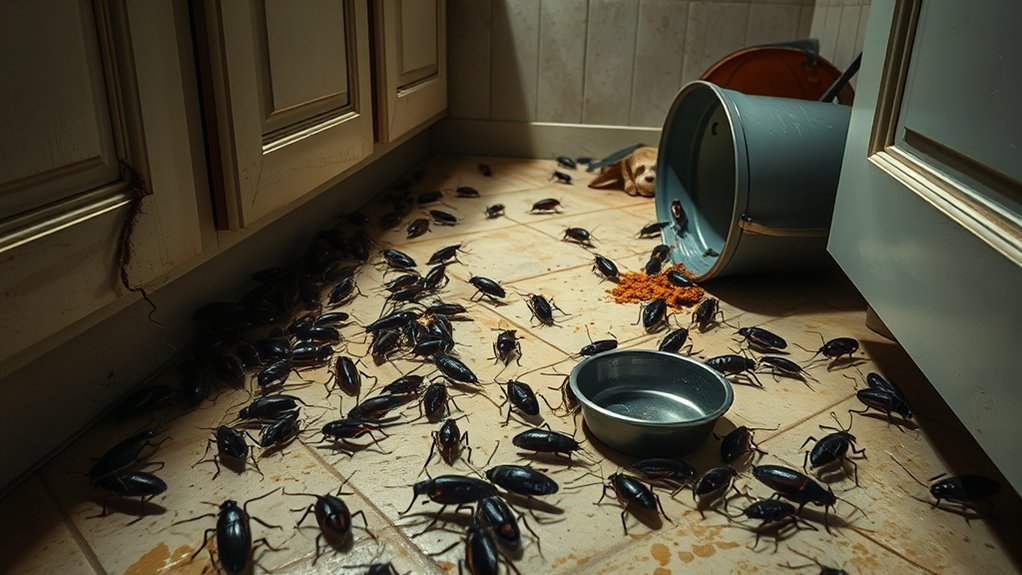
When a heavy infestation takes hold, trap counts can climb into the hundreds per night, with some apartments averaging over 130 catches per trap while the worst cases push past 500.
You’ll likely spot roaches during the day, find droppings across multiple rooms, and hear scratching in the walls after dark.
Beyond the visible signs, the hidden population builds up a reservoir of shed skins, egg cases, and allergen-laden waste that accumulates inside walls and cabinets long before you realize how serious the problem has become.
Trap Counts Per Week
Sticky trap data from apartment studies reveals just how wide the range of cockroach activity can be inside a single unit.
Researchers typically place sticky traps in kitchens for 7 to 14 days, then standardize results to weekly totals. Counts of 0–10 per week suggest light to moderate activity, while 11–50 signals a clearly established infestation.
Once you reach 51–100 per week, you’re looking at a strong infestation load with real spread risk. Above 100 per week qualifies as heavy, and it’s more common than you’d expect—one major study found 15.5% of apartments exceeding that threshold.
At the extreme end, one apartment produced a two-week catch of 1,385 cockroaches across six traps, showing just how severe these situations can get.
Daily Sighting Reports
Trap counts tell one part of the story, but what residents actually see day to day makes the scale of a heavy infestation harder to ignore.
In one apartment study, 39.1% of residents reported seeing 1–9 cockroaches daily, while 41.2% reported seeing 10 or more every single day. That’s not occasional—that’s a sustained, visible population.
Heavy infestations follow recognizable patterns.
You’ll notice multiple roaches scattering when you turn on the kitchen lights, which signals overcrowding since cockroaches are naturally nocturnal. Daytime sightings reinforce that.
Add droppings along baseboards, egg cases in cabinets, nymphs moving alongside adults, and a musty odor, and you’re looking at an active, growing colony—not a stray visitor passing through.
Hidden Allergen Reservoirs
What you see scattering across the floor is only part of the problem. Even after live cockroaches disappear, dead bodies, fecal droppings, and shed fragments keep releasing allergens into your dust and air. These particles don’t vanish on their own.
They settle into mattresses, upholstered furniture, kitchen floors, cabinet drawers, and narrow cracks around appliances. Kitchens consistently carry the heaviest allergen loads, but your bedroom isn’t safe either.
Studies have detected cockroach allergens in bedroom air and beds, not just kitchen surfaces. Clutter and poor sanitation can raise airborne allergen levels by up to 11-fold.
Holes in walls push kitchen concentrations even higher. If cleaning is incomplete, these reservoirs keep exposing you long after the infestation appears to be gone.
You Can Have Cockroach Allergen Without Seeing a Single Roach
Even if you haven’t spotted a single cockroach, allergen from their shed skin, droppings, and body parts can still be building up in your home’s dust.
Kitchen and floor dust act as long-term reservoirs, holding allergen long after roach activity has dropped.
Research shows that allergen levels in dust track cockroach counts from two months earlier, not just current activity.
Dust allergen levels reflect cockroach activity from two months ago, not what’s happening in your home right now.
So even if pest control has reduced visible roaches, your dust can still carry measurable exposure.
That said, allergen presence isn’t guaranteed everywhere.
Studies in Croatian homes found Bla g 2 undetectable in many samples, and only 4 of 30 Zagreb households had detectable Bla g 1.
Exposure varies widely between homes.
The key takeaway is that you can’t rely on visual checks alone.
Dust testing reveals hidden exposure that sightings miss, and cleaning combined with pest control is what actually reduces allergen levels over time.
Why Cockroaches Are Especially Dangerous for Asthma Sufferers
Cockroach allergens don’t just trigger sneezing—they can drive serious, recurring asthma that’s harder to control and more likely to land you in the hospital. If you’re sensitized and regularly exposed, your risk jumps considerably.
Studies show children with both positive cockroach skin tests and high bedroom exposure had the worst asthma outcomes of any group measured.
The numbers are striking. Exposure to Bla g 1 levels above 2 U/g was linked to an adjusted odds ratio of 4.2 for hospitalization. Levels above 8 U/g were tied to the highest morbidity in inner-city studies.
Beyond hospitalizations, you’re also looking at more emergency visits, more missed school days, and more nights lost to symptoms.
What makes apartments particularly risky is that allergen lingers for months after roaches are gone. You can reduce the infestation and still face ongoing exposure from residue that’s already settled into your home.
Frequently Asked Questions
Can Cockroaches Spread Illness Beyond Triggering Asthma and Allergic Reactions?
Yes, cockroaches can spread illness beyond asthma and allergies. They’ll carry bacteria like *Salmonella* and *E. coli* on their bodies, contaminating your food and surfaces, which can lead to foodborne and gastrointestinal diseases.
How Quickly Can a Small Cockroach Problem Turn Into a Full Infestation?
A small cockroach problem can explode into a full infestation within weeks. If you’ve spotted one or two German cockroaches, you’re already racing against a population that can reach thousands within just a few months.
Are Certain Apartment Types or Building Ages More Likely to Have Cockroaches?
Yes, you’re at higher risk if you live in a high-rise, multifamily building, or pre-1940 construction. Older buildings with cracked walls, leaking pipes, and poor maintenance consistently show the highest cockroach infestation rates.
What Should a Renter Do if a Landlord Ignores a Cockroach Complaint?
Document everything, send a written notice via certified mail, and set a deadline for action. If your landlord still ignores you, escalate to local code enforcement or consult a tenant-rights attorney before withholding rent.
Do Cockroach Problems Typically Get Worse During Certain Seasons of the Year?
Yes, cockroach problems do get worse in certain seasons. You’ll likely see the most activity in summer when heat and humidity spike. Spring and fall also bring increased movement, while winter concentrates them near your warm pipes and appliances.
Conclusion
Cockroaches are more common in apartments than most people realize, and you don’t need to see one to be affected. Their allergens linger in dust long after an infestation clears. If you’re renting, especially in an older or densely populated building, you’re statistically at higher risk. Don’t wait for a full-blown infestation to act — seal entry points, eliminate food sources, and report signs to your landlord immediately.
