
DIY Cockroach Inspection Checklist
A systematic cockroach inspection covers every room where food, moisture, and harborage overlap — and knowing exactly what to look for in each zone is the difference between catching an infestation early and discovering it after it has spread through multiple rooms. This checklist walks through each inspection area in the correct sequence, the specific signs to document, the monitoring tools that quantify activity levels, the structural vulnerabilities that allow reinfestation, and the safety protocols that protect you during inspection and treatment. Work through each section in order, document findings as you go, and use the results to direct targeted treatment to confirmed harborage zones rather than treating broadly.
Key Takeaways
- Empty cabinets and pull out appliances during kitchen inspection; check cracks, joints, and hollow voids for droppings, egg capsules, and smear marks — these are the primary evidence of active harborage.
- Set sticky monitoring traps along all wall-floor junctions; number and map each trap, log capture counts by location daily for the first week to identify hotspots within 5 to 10 feet.
- Seal all gaps in baseboards, walls, vents, and around plumbing penetrations; replace worn weatherstripping and door sweeps — structural exclusion prevents reinfestation after treatment.
- Eliminate all food residue, grease, crumbs, and standing water before deploying baits; sanitation is what makes gel bait programs achieve 85%+ population reduction within two weeks.
- Wear gloves and a mask during all inspection and cleaning activities; ventilate rooms before, during, and after pesticide application; keep gel baits away from open surfaces and food-contact areas.
Inspection Areas in the Kitchen
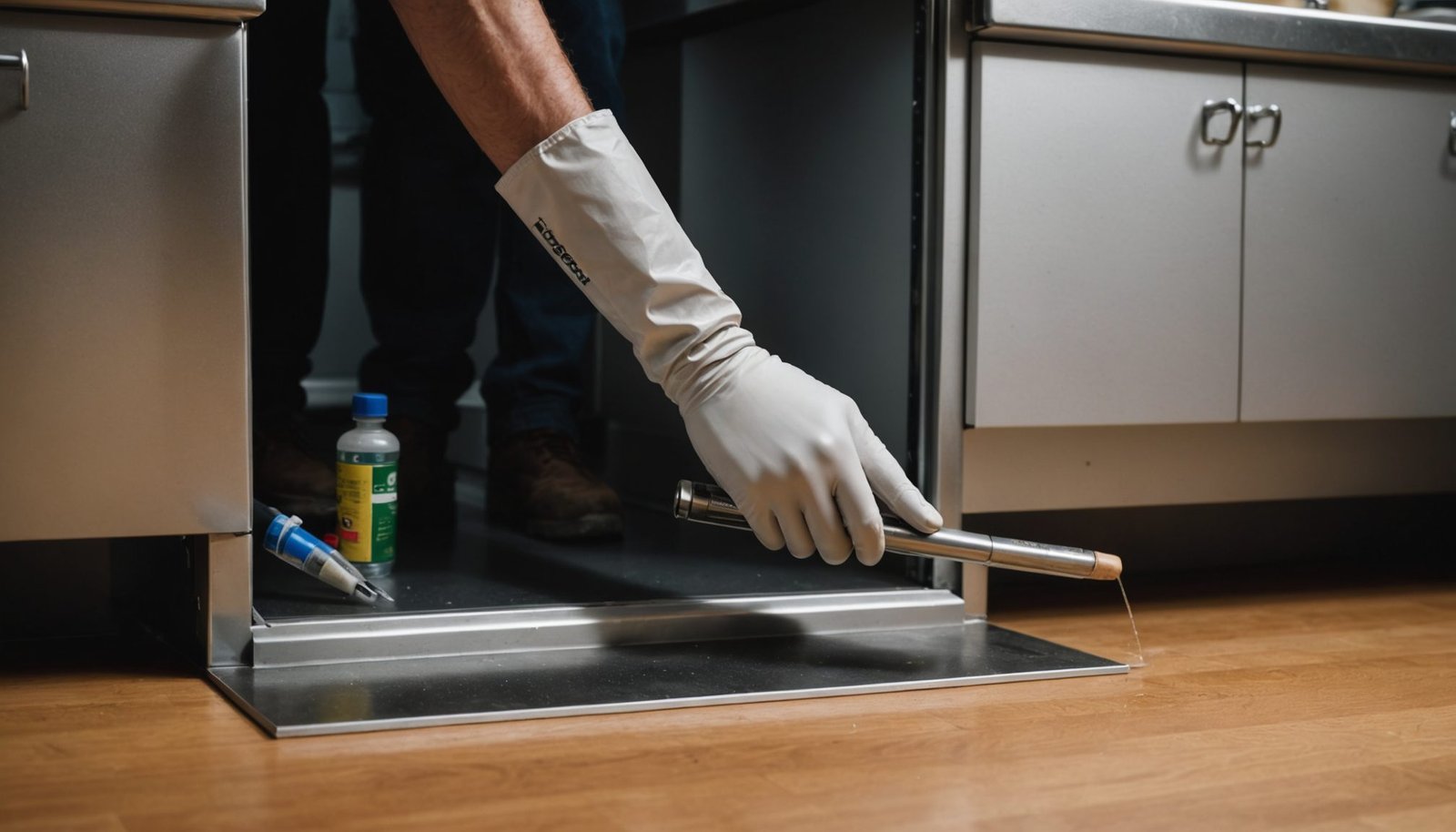
Kitchens are the primary cockroach harborage zone in most residential infestations — the combination of food residue, moisture from plumbing and dishwashing, and the warmth generated by appliance motors creates conditions that attract and sustain cockroach colonies. Start every cockroach inspection in the kitchen and be methodical: 82% of cockroaches prefer kitchen cabinets as their primary hiding location, meaning thorough kitchen inspection is where most active evidence will be found. Wear a mask if you are cockroach-allergen sensitive and keep ventilation running throughout the inspection.
Cabinets, Pantry, and Drawers
Empty all cabinets and cupboards completely, including those above and below sinks. With the contents removed, inspect every interior surface: check cracks, crevices, hinge areas, and shelf joints for the fine dark specks of cockroach droppings, light-brown oval egg cases, and shed exoskeleton skins. Use a flashlight and small mirror to illuminate the upper rear corners of deep cabinets and the interior ceiling surfaces, where cockroaches rest upside-down on horizontal surfaces between foraging sessions. Inspect all stored food packaging for chew holes, gnaw marks, or droppings inside packages — any food in contact with cockroach evidence should be discarded immediately. Remove and discard all infested cardboard, paper bags, and original food packaging from cabinet and pantry storage. Wash all cabinet interior surfaces before replacing contents, and transfer all dry goods to sealed hard-sided airtight containers. Check drawer interiors and the rear of drawer bases where food crumbs accumulate in rarely-cleaned zones.
Refrigerator, Stove, and Dishwasher
Pull out the refrigerator, stove, and dishwasher completely from their positions. The space behind and beneath each appliance is one of the highest-concentration cockroach harborage zones in the kitchen — combining motor heat, food debris from years of accumulation, and limited disturbance from routine cleaning. Scrape grease from stove burners and drip trays, clean underneath and behind each unit with a vacuum and damp cloth, and inspect hollow voids inside appliance housings. Pay particular attention to the dishwasher back panel area, refrigerator door gaskets (where warmth and moisture concentrate), and the refrigerator motor compartment at the base. Seal any gaps behind appliances where they meet the wall before pushing units back into position — these gaps are primary cockroach travel corridors between the kitchen wall void and the appliance area.
Sink Area and Under-Counter Spaces
The under-sink cabinet is the single most productive cockroach inspection location in most residential kitchens — it combines plumbing moisture, darkness, and limited cleaning access. Inspect all pipe penetrations through the cabinet floor and back wall for gaps that allow cockroach entry from wall voids below. Check the cabinet floor and interior walls for droppings, smear marks, and egg cases. Fix any plumbing leaks immediately and dry the cabinet interior — even minor condensation on cold water pipes creates a persistent moisture source. Remove all stored cleaning products and clutter from under-sink spaces to eliminate secondary harborage. Inspect the drain trap connection at the wall for gaps and seal with appropriate materials. Empty and scrub trash bins, clean bin bases and surrounding floor areas, and seal all gaps in baseboards and toe kicks throughout the kitchen perimeter.
Signs of Cockroach Infestation to Document
Cockroach evidence accumulates predictably in harborage zones — knowing what each type of sign indicates about population size, activity level, and species present allows you to assess infestation severity and prioritize treatment placement accurately. Document every piece of evidence by photograph and location during the inspection so treatment can be directed to confirmed active zones rather than general areas.
Droppings and Egg Cases
Cockroach droppings are the most common and most reliably found evidence during inspection. Small species including German and brown-banded cockroaches leave tiny dark specks resembling black pepper or coffee grounds — look for them in cabinet corners, along baseboards, behind appliances, and inside bathroom vanities. Larger species including American and Oriental cockroaches leave thicker, cylindrical ridged pellets near floor drains, basement walls, and under-sink areas. Heavy, clustered dropping accumulations in a tight area confirm active harborage — the density of dropping concentration is proportional to the size and duration of the colony present. Light brown oval egg cases (oothecae) measure approximately 5 to 8 millimeters and feel hard and leathery with a ridge along the length. Finding even a single intact ootheca near leaky pipes, refrigerator bases, food cabinets, or behind furniture confirms active breeding underway rather than simply foraging activity. German cockroaches often carry the capsule until just before hatching, depositing it in the most protected harborage location — finding a deposited German cockroach egg case means the colony is actively producing nymphs in that exact location.
Smear Marks, Shed Skins, and Odor
Dark, oily smear marks on walls, baseboards, and surfaces near moist and greasy zones form from cockroach body oils and liquefied droppings depositing along regularly used travel routes. Smear marks confirm established colony movement patterns between harborage and food sources — fresh smear marks indicate current activity within the past 24 to 48 hours. Inspect for smear marks along wall-floor junctions, around pipe penetrations, along the back edges of shelving, and at the entrance points to cabinet interior spaces. Shed skins (exoskeleton castings) found near harborage zones confirm active nymph development — cockroaches molt 5 to 7 times before reaching adulthood, depositing translucent hollow castings near resting locations. A musty, oily chemical odor that intensifies in enclosed spaces like cabinet interiors and under-sink areas confirms aggregation pheromones from an established colony — this smell often precedes visual evidence by weeks in growing infestations. Daytime sightings of live cockroaches during inspection indicate severe overcrowding, as cockroaches are nocturnal and only emerge during daylight when harborage zones are at capacity.
Monitoring Tools and Techniques
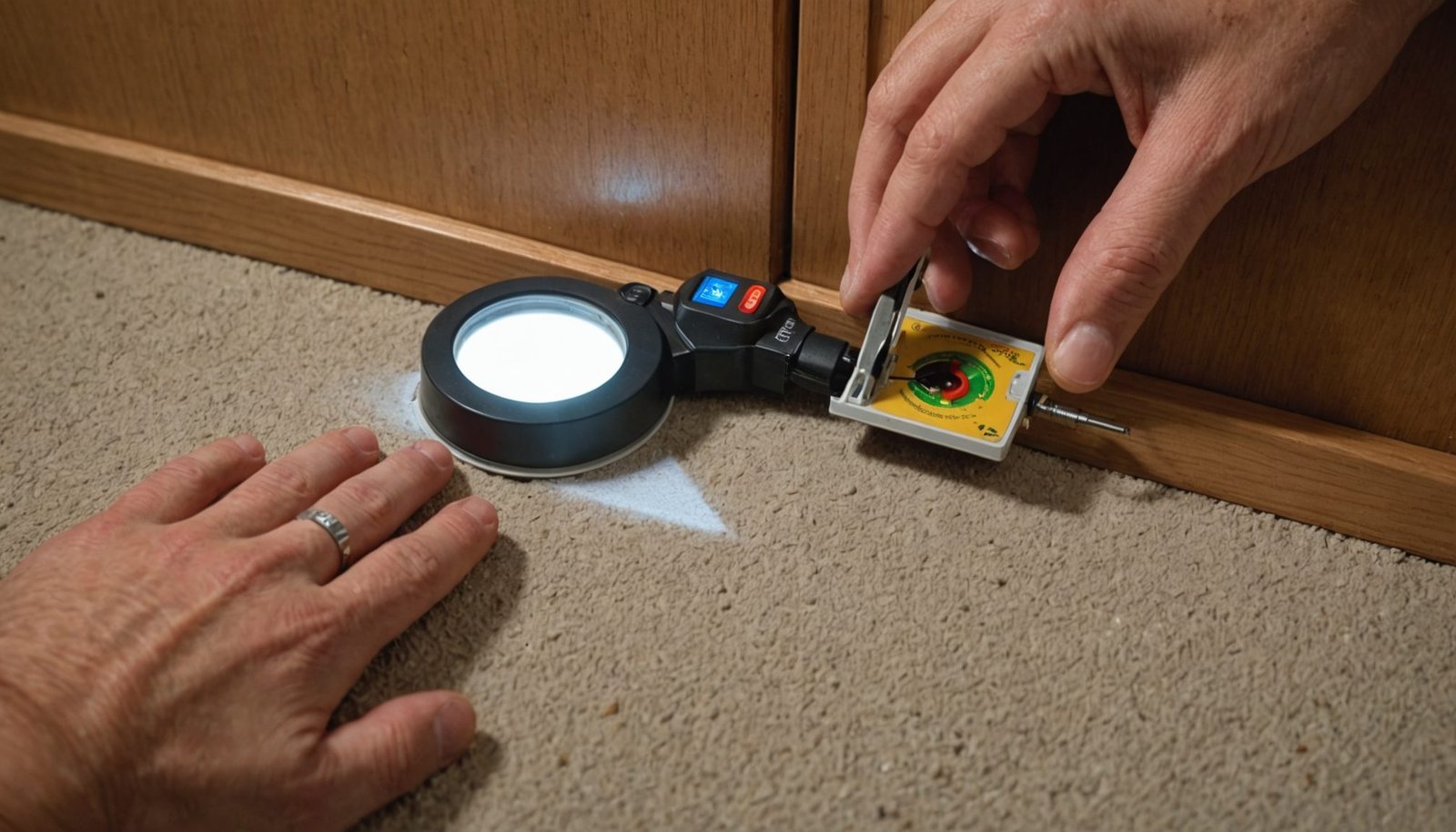
Once you have documented visual evidence from your inspection, deploy monitoring tools that quantify activity levels and pinpoint harborage zones with more precision than visual inspection alone can provide. Monitoring data directs treatment to the correct locations and tracks population reduction over time, confirming whether your control program is working or requires adjustment.
Sticky Trap Placement and Logging
Set sticky or glue board monitoring traps along all wall-floor junctions in kitchens, bathrooms, storage areas, and any room where inspection evidence was found. Position traps flat against the wall with the adhesive facing the wall-floor junction — cockroaches traveling along baseboards during nocturnal foraging naturally contact the trap surface without requiring bait. Number each trap sequentially on a hand-drawn floor plan map, recording the exact location of every trap. Check traps daily for the first week, then every 72 hours thereafter. Log the number of captures, life stages present (nymph or adult), and species identified at each numbered location. The traps with the highest capture counts are within 5 to 10 feet of the active harborage zone — use this data to direct gel bait placement to the correct locations. Seal and discard full traps wearing gloves, and replace them with fresh traps in the same numbered locations to maintain tracking continuity. See our guide to early infestation signs for additional monitoring indicators to track alongside trap counts.
Jar Traps and Flashlight Inspection
Jar traps provide an inexpensive, chemical-free supplemental monitoring option useful for early detection in low-activity areas. Lightly grease the upper interior rim of small glass jars using petroleum jelly, bait the interior with a small piece of bread soaked in beer or a commercial cockroach lure, and place in kitchens, bathrooms, and utility areas along the wall-floor junction. Cockroaches that enter the jar to access the bait cannot climb back out due to the greased rim. Check daily and replace bait when it dries. Supplement trap monitoring with systematic flashlight inspections — use a bright flashlight and a small angled mirror to examine the upper rear corners of deep cabinets, the interior of hollow appliance housings, the space behind water heater bases, and all dark crevice areas that traps cannot physically reach. Scan for live cockroaches, fresh droppings, and egg cases in locations too narrow for trap placement.
Structural and Entry Point Assessment
Structural inspection identifies the routes cockroaches use to enter your home and the hidden voids they occupy between feeding sessions — sealing confirmed entry points permanently is what prevents reinfestation after treatment eliminates the current population. Conduct structural assessment after completing evidence documentation so you can cross-reference entry point locations with the dropping and smear mark evidence from your interior inspection.
Foundation and Exterior Walls
Walk the building foundation and exterior walls systematically, flagging all cracks, gaps, and utility penetrations. Focus where the foundation meets siding or brick — this junction is the most common structural entry point for peridomestic cockroach species. Look for moisture staining near foundation breaches, which indicates both a cockroach entry route and the moisture condition that makes the breach more attractive. Inspect and seal all worn pipe entries, loose wall sections, and utility penetrations using silicone caulk for small gaps and expanding polyurethane foam for larger openings. Check all exterior doors for weatherstripping and door sweep condition — replace any worn seals that allow light to pass under or around the door frame. Inspect all window screen integrity and frame seal condition. Check pet door seals, crawl space vent screens, and attic vent covers for damage or gaps. Enter crawl spaces and attic areas specifically to note droppings, shed skins, gaps at eaves or vent openings, loose shingles, and damp insulation — these environments are primary winter harborage for American and Oriental cockroaches that migrate indoors seasonally.
Plumbing, HVAC, and Electrical Penetrations
Inspect under all sinks, around all pipe penetrations through walls and floors, and at drain openings for gaps that allow cockroach entry from below. Check for plumbing leaks and slow drainage — standing water in drain traps and moisture from leaking supply lines sustain cockroach populations in otherwise dry interior zones. Remove any cardboard, paper, or food debris stored near plumbing areas. Inspect HVAC ductwork penetrations through walls and floors for gaps around duct edges — duct chases in multi-story buildings and multi-unit buildings are primary travel routes for cockroach movement between floors. Review all electrical conduit and cable penetrations for unsealed gaps. See our complete guide to stopping cockroaches from coming back for comprehensive sealing protocols for each entry point type identified during structural assessment.
Bathroom and Secondary Room Inspection
Bathrooms are the second most common cockroach harborage zone after kitchens — 67% of cockroach infestations are found near plumbing leaks, and bathrooms contain more plumbing fixtures per square foot than any other room. Inspect vanity cabinet bases for droppings and moisture around pipe penetrations. Check behind the toilet tank, under the toilet base, around shower and tub drain surrounds, and inside exhaust vent covers. Look for smear marks along the baseboard-floor junction and around drain openings where cockroaches enter from sewer infrastructure below. In bedrooms and living areas, inspect under and behind furniture that is rarely moved, inside electronics including televisions and gaming consoles, and in any stacked paper or cardboard storage. Inspect laundry rooms behind and beneath washing machines and dryers, where warm, damp conditions from machine operation create secondary harborage. Inspect basement perimeter walls, floor drains, and any storage areas for droppings and evidence of American or Oriental cockroach activity originating from outdoor harborage. See our treatment and control guide for targeted protocols for each room type based on species identified during inspection.
Safety and Treatment Preparation
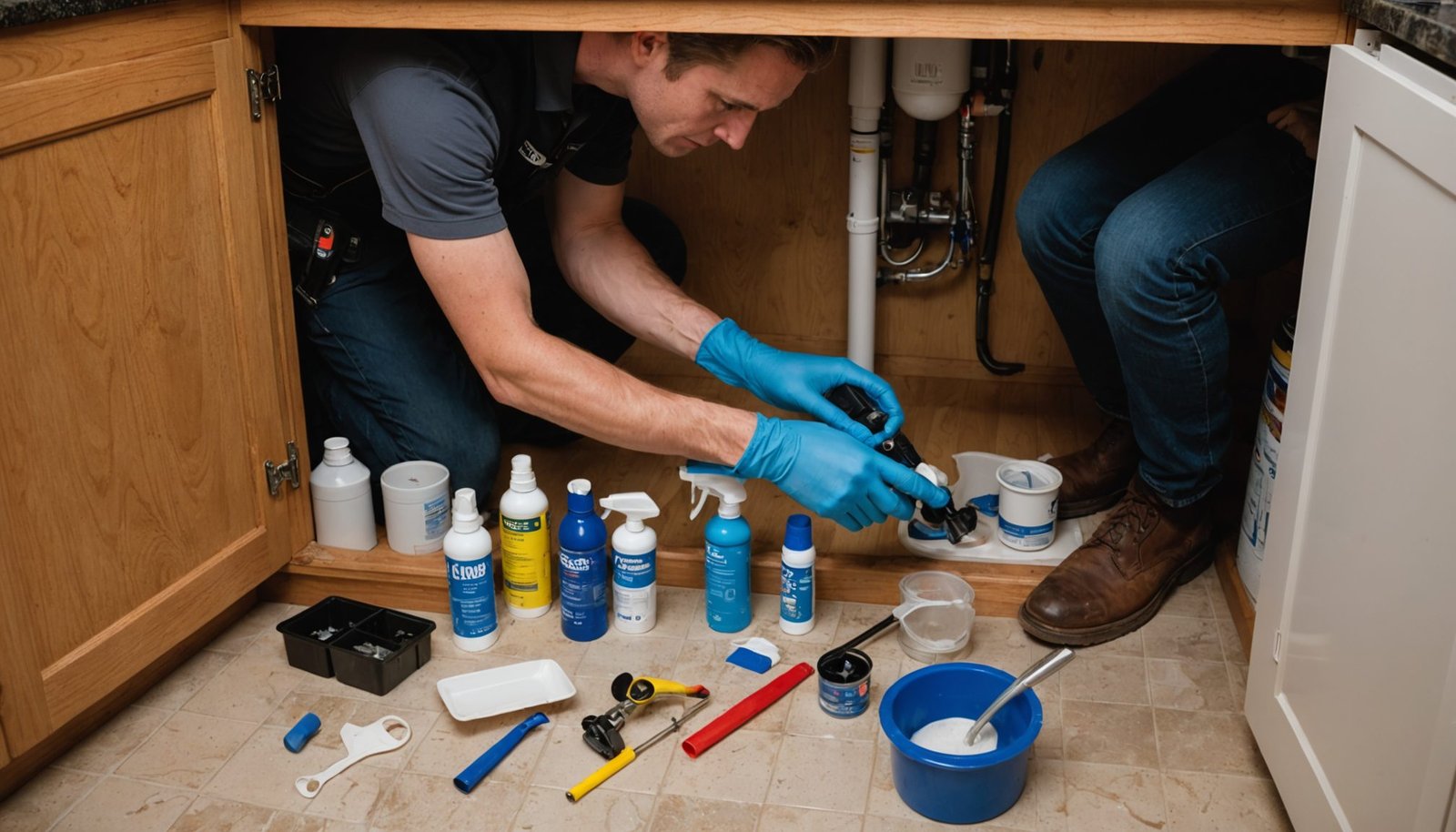
Prepare safely before deploying any treatment following the inspection. Wear disposable gloves and an N95 mask during all inspection and cleaning activities — cockroach droppings, shed skins, and body fragments contain potent allergens that can trigger asthma and allergic reactions. Use a flashlight throughout the inspection process and ventilate all rooms by opening windows and running exhaust fans before, during, and after any pesticide application.
Pre-Treatment Cleaning Protocol
Complete all sanitation work before deploying any bait or chemical treatment. Degrease all counter surfaces and stovetops, sweep and vacuum all floors under and behind appliances, store all food in sealed airtight containers, empty and seal all garbage bags, fix all identified plumbing leaks, and declutter all cardboard and paper from kitchen and storage areas. This sequence matters — cockroaches will ignore gel bait placements if competing food sources remain available, and deploying bait before sanitation wastes product and produces poor results. Schedule inspection and treatment during daylight hours when visibility is maximum and when the building can be fully assessed before placing baits in specific high-activity locations identified by monitoring data.
Bait Application and Chemical Safety
Choose low-odor, low-residue treatment options appropriate for indoor residential use. Gel baits are the preferred indoor treatment method — apply pea-sized amounts in cracks, crevices, cabinet interiors, and behind appliances rather than on open surfaces where accidental contact can occur. Keep gel bait physically separated from any residual spray application areas — spray residues repel cockroaches from bait stations, negating the primary treatment tool. Follow all label directions for the specific product used and avoid exceeding labeled application rates. Keep all chemical treatments away from food-preparation surfaces, children, and pets during and after application. Observe all required re-entry intervals before allowing children and pets back into treated rooms. After application, maintain sanitation, monitor with sticky traps weekly, and seal all structural gaps identified during the structural assessment to prevent reinfestation of the treated space.
| Inspection Step | Risk | Safety Control |
|---|---|---|
| Evidence inspection | Allergen inhalation | N95 mask, gloves, ventilation |
| Deep cleaning | Chemical and physical injury | Gloves, eye protection, ventilation |
| Bait application | Chemical exposure | Gel in cracks only, label limits, keep away from children and pets |
| Post-treatment monitoring | Premature reentry | Observe re-entry intervals, weekly trap checks |
Frequently Asked Questions About Cockroach Inspection
Where should I start a cockroach inspection?
Start in the kitchen — it is the primary harborage zone in the majority of residential cockroach infestations. Begin by emptying all cabinets and pulling out all major appliances, then work systematically through under-sink areas, the space behind and beneath the refrigerator and stove, pantry shelves, and all drawer interiors. Document all evidence by location before moving to bathrooms, storage areas, and structural entry point assessment. 82% of cockroaches are found hiding in kitchen cabinets, making thorough kitchen inspection the highest-value starting point for any residential cockroach assessment.
What signs should I look for during a cockroach inspection?
Look for dark droppings resembling black pepper or coffee grounds in cabinet corners, along baseboards, and behind appliances; light-brown oval egg cases measuring up to 8mm in protected harborage zones; dark greasy smear marks along wall-floor junctions and around pipe penetrations; translucent shed exoskeleton skins near resting areas; and a musty, oily odor intensifying in enclosed spaces like under-sink cabinets and bathroom vanities. Finding any one of these signs warrants immediate monitoring trap deployment to quantify activity before treatment begins.
How often should I inspect my home for cockroaches?
Monthly inspection of all high-risk areas — kitchen cabinets, under-sink spaces, bathroom vanities, and any storage areas with cardboard — provides the earliest detection possible for residential infestations. During active treatment, check sticky monitoring traps daily for the first week, then every 72 hours. After population elimination is confirmed by zero monitoring trap captures over four consecutive weeks, transition to monthly visual inspections and quarterly monitoring trap deployment to catch any reinfestation before it establishes.
What tools do I need for a cockroach inspection?
Essential inspection tools: a bright flashlight, a small angled mirror for examining concealed spaces, disposable gloves and an N95 mask for allergen protection, numbered sticky monitoring traps with a floor plan map for recording placement, a camera or phone for documenting evidence locations, silicone caulk and a caulk gun for sealing entry points found during structural assessment, and a bulb duster for applying boric acid dust in wall voids after inspection identifies hidden harborage.
When should I call a professional pest inspector?
Call a professional when your inspection finds evidence in more than one room, when egg cases confirm active breeding, when monitoring traps show cockroach captures after two weeks of self-treatment, when any live cockroach is spotted during daylight hours, or when musty cockroach odor is detected without a clear visual evidence source — indicating wall-void harborage that DIY inspection cannot locate. Professional inspectors use thermal imaging, precision bait placement equipment, and structural access tools that locate and treat harborage zones invisible to standard visual inspection.
