
Do Cockroaches Really Survive Nuclear Explosions?
You’ve probably heard the claim that cockroaches could survive a nuclear war, outlasting even humans in a post-apocalyptic world. While these resilient insects can withstand radiation levels that would kill most creatures, the reality isn’t as simple as urban legends suggest. The truth about their survival capabilities lies in understanding both their natural defenses and the devastating effects of nuclear weapons beyond just radiation.
Key Takeaways
- Cockroaches can survive radiation doses 150 times higher than humans but will die from extreme heat and pressure of nuclear blasts.
- While cockroaches tolerate up to 900 Grays of radiation, they cannot survive the 100,000 rads present in direct nuclear explosions.
- Cockroaches survived Hiroshima and Nagasaki only in areas with lower radiation levels, not near blast centers where temperatures were extreme.
- Flour beetles actually demonstrate better radiation resistance than cockroaches, with 10% surviving at 100,000 rads exposure.
- Popular myths about cockroach nuclear survival are oversimplified, as they would still succumb to blast effects and chemical fallout.
The Science Behind Cockroach Radiation Resistance
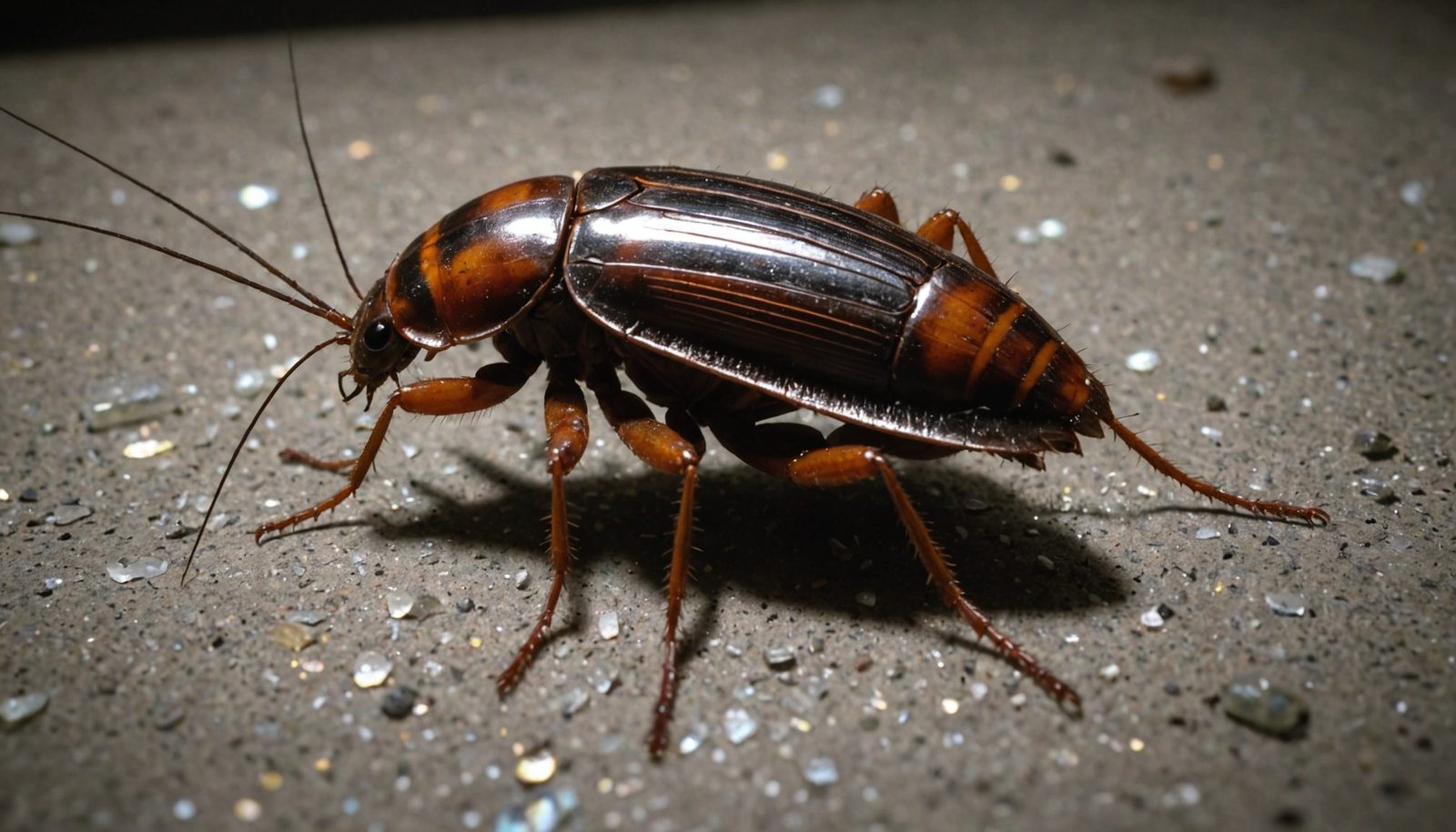
While many people believe cockroaches could survive a nuclear apocalypse, their radiation resistance isn’t quite as extreme as popular myths suggest. These insects can withstand about 900 Grays of radiation – roughly 150 times what would kill a human – but they’re not even the most radiation-resistant insects. Fruit flies and ants actually demonstrate higher tolerance levels.
You might wonder how cockroaches manage this impressive feat. It comes down to their cellular structure and DNA characteristics. Their cells contain fewer chromosomes and less DNA than mammals, providing fewer targets for radiation damage.
They’ve also developed robust DNA repair mechanisms that kick in when damage occurs. Their smaller size works in their favor too, as less radiation energy gets deposited in their bodies compared to larger organisms. They would not survive in the immediate blast zone since extreme heat from a nuclear explosion would still kill them instantly.
Mythbusting Nuclear Survival Claims
While you might’ve heard that cockroaches can survive nuclear explosions, scientific testing reveals they’re actually vulnerable to the intense heat, pressure, and high radiation levels of atomic blasts.
MythBusters experiments showed that cockroaches die at radiation doses of 100,000 rads – levels typically found near nuclear detonations – and flour beetles actually demonstrated better radiation resistance.
You’ll find that cockroaches’ reputation for nuclear survival stems more from post-WWII observations of them amid ruins rather than any special ability to withstand direct nuclear effects. Their simpler cell structure helps them endure lower radiation levels better than humans, but they’re far from invincible.
Popular Myths Vs Reality
One of the most persistent myths about cockroaches claims they’d survive a nuclear apocalypse unscathed.
While these insects can tolerate radiation doses 6-15 times higher than what would kill humans, they’re not invincible.
You might be surprised to learn that cockroaches aren’t even the most radiation-resistant insects – parasitic wasps actually show greater tolerance.
In controlled tests, only 50% of cockroaches survived 1,000 rads of radiation, and none lived through 100,000 rads.
Additionally, a nuclear blast‘s intense heat and shock waves would likely kill them instantly near ground zero.
The Mythbusters team tested German cockroaches using cobalt 60 radiation to verify their survival abilities.
The idea that cockroaches would inherit Earth after a nuclear war ignores vital factors like their dependence on human environments and the long-term ecological devastation that would affect all species.
Radiation Tolerance Limits
Three key measurements reveal the true limits of cockroach radiation resistance. The American cockroach succumbs at 67,500 rems, while the hardier German cockroach can withstand up to 105,000 rems.
Compare this to humans, who can only safely handle 5 rems in a single dose.
But don’t assume these insects are invincible. While they’re remarkably tough, radiation eventually kills them too. Their survival advantage comes from specialized cellular mechanisms – enhanced DNA repair abilities, high antioxidant levels, and slower cell cycles than mammals. The common belief that cockroaches would survive a nuclear war is a misleading narrative that oversimplifies their actual capabilities.
However, even if adult roaches survive intense radiation, their reproductive capabilities suffer dramatically. Exposed colonies struggle with reduced egg viability and impaired development, threatening their long-term survival.
You’ll find some insects, like certain fruit flies, are actually more radiation-resistant than cockroaches.
Testing Under Nuclear Conditions
Despite popular beliefs about cockroach invincibility, scientific testing reveals clear limits to their nuclear survival abilities.
While they can withstand radiation levels far beyond human tolerance, they’re not immune to a nuclear blast‘s full effects. Nuclear blasts create temperatures reaching 10 million degrees Celsius.
- You’ll find that cockroaches can survive 1,000 rads of radiation – enough to kill humans in minutes.
- At 10,000 rads, only 10% of tested cockroaches lived through the month-long exposure.
- No cockroaches survived the intense 100,000 rad exposure level.
- Flour beetles actually proved more resilient, with 10% surviving 100,000 rads.
- You won’t see cockroaches surviving direct nuclear blast impacts or shockwaves.
Most significantly, these tests don’t fully replicate real nuclear explosion conditions, which combine heat, pressure, and radiation.
The survival rates you’d see in an actual nuclear event would likely be much lower than in controlled experiments.
Understanding Radiation Dose Limits
While you’d die from an acute radiation dose of around 600 rem within a month, cockroaches can withstand doses nearly 6-15 times higher before showing lethal effects.
A cockroach’s slower cell division rate and simpler body structure let it survive radiation levels that would kill 100% of humans.
You’ll find cockroaches can endure up to 10,000 rads (100 Gy) of radiation, though this isn’t nearly as impressive as extremophiles like Deinococcus radiodurans that can survive 500 times what’s lethal to humans.
Lethal Radiation Threshold Levels
Understanding radiation dose limits starts with lethal dose (LD) measurements, which indicate how much radiation exposure would kill a specific percentage of a population within a set timeframe.
For humans, an LD 50/30 dose of 400-450 rem means half of those exposed would die within 30 days, while 1000 rem proves fatal for everyone.
- A dose of 100 rem triggers initial radiation sickness symptoms
- At 50-100 roentgens, you’ll experience predictable illness progression
- Exposure to 400 rem results in 50% mortality within a month
- A 1000 rem dose causes death within hours
- Doses above 100 mSv progressively increase your risk of fatal cancer
These thresholds help scientists understand radiation’s effects on living organisms and establish safety protocols for both workers and the public.
Survival Rate Percentages
Three key findings demonstrate cockroaches’ remarkable radiation tolerance compared to humans.
You’ll find that at 1,000 rads of radiation exposure, about half of cockroaches survive for 30 days afterward – that’s already six times higher than the lethal dose for humans.
When exposed to 10,000 rads, equivalent to the gamma rays from the Hiroshima atomic bomb, 10-20% of roaches still manage to survive a month later.
However, their resilience has limits – at 100,000 rads, the survival rate drops to zero.
While these numbers might seem impressive, they don’t tell the whole story.
Even surviving roaches may face reproductive challenges, and other factors like blast damage and resource scarcity would affect their chances in an actual nuclear event.
Comparative Human-Roach Tolerance
The stark contrast between human and cockroach radiation tolerance reveals fascinating biological differences.
While you’d suffer severe radiation sickness at just 300-600 rads, cockroaches can withstand up to 9,000 rads – that’s 15 times your tolerance level.
- Your cells start failing at 100-200 rads, leading to serious illness
- You’d face near-certain death at 1,000 rads from acute radiation syndrome
- Cockroaches keep crawling at radiation levels that would kill you instantly
- Your complex DNA structure makes you more vulnerable to radiation damage
- Your larger genome and slower cell cycles put you at a disadvantage compared to roaches
This dramatic difference stems from cockroaches’ simpler cellular structure and potentially more efficient DNA repair mechanisms, though they’re not even the most radiation-resistant insects.
Comparing Insect Species Resilience
While many people assume cockroaches would be the most radiation-resistant insects, scientific research reveals a more complex hierarchy of species resilience. In fact, flour beetles like Tribolium can withstand up to 100,000 rad, which is about ten times more radiation than cockroaches can survive.
You’ll find significant variation even within specific insect groups. Parasitoid wasps show different tolerance levels based on their embryo age, while hard-bodied insects generally fare better than soft-bodied ones.
Adult insects typically demonstrate higher resistance than larvae or eggs because they’ve more differentiated, non-dividing cells. Moths, butterflies, and beetles display varying responses to radiation sterilization without necessarily compromising their lifespans.
Real-World Nuclear Effects on Cockroaches
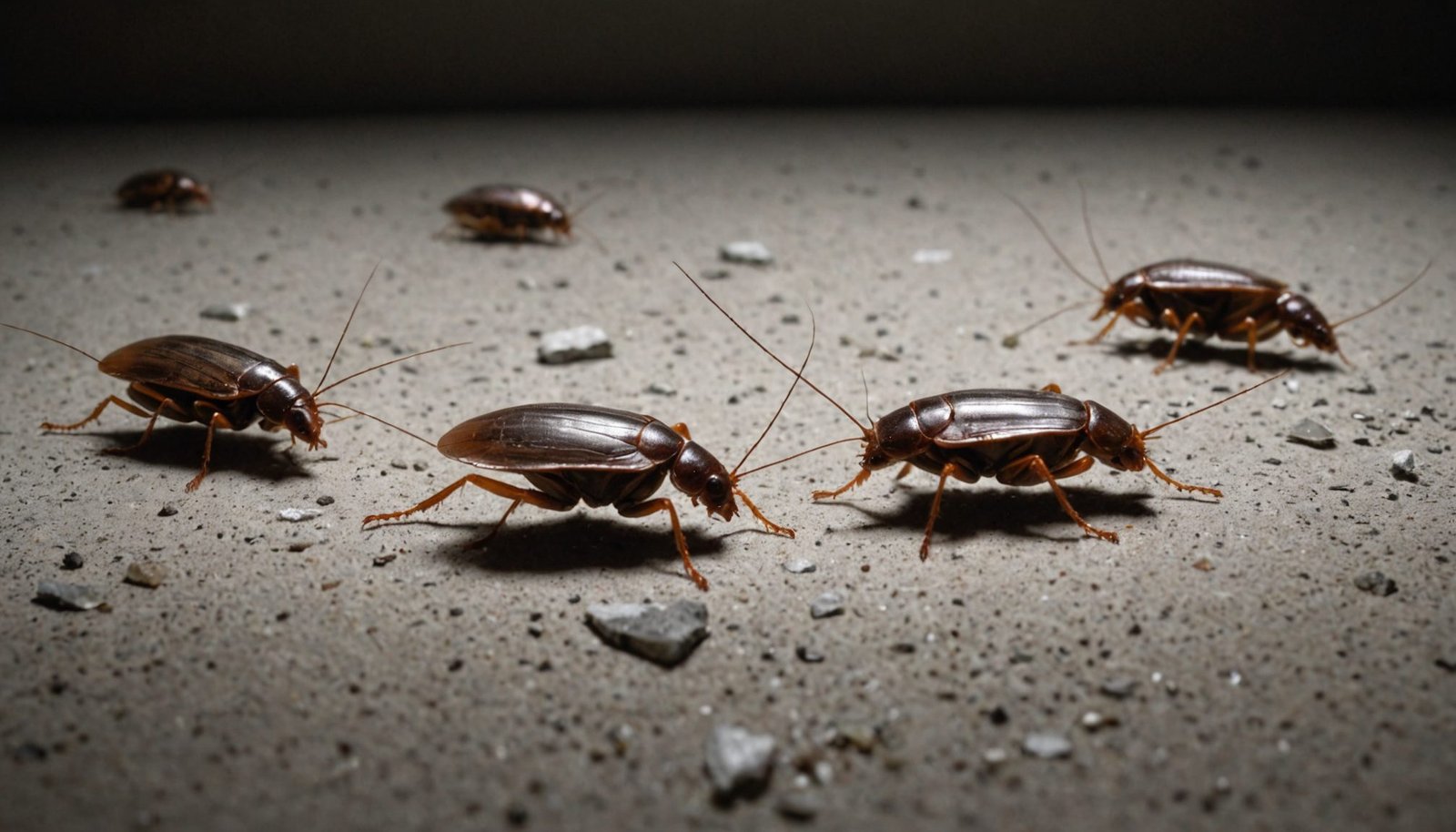
Despite their reputation for being virtually indestructible, cockroaches aren’t immune to nuclear effects. While these insects did survive in Hiroshima and Nagasaki after the 1945 atomic bombings, they were likely from areas away from ground zero, where radiation levels were lower.
- Intense heat from the nuclear fireball would instantly incinerate cockroaches near the blast center.
- Extreme radiation doses exceeding 1000 Gy would kill even the most resistant roaches.
- Massive blast waves would crush or throw cockroaches like any other creature.
- Chemical fallout would create toxic conditions affecting their survival.
- Those surviving would face severe reproductive challenges in the contaminated environment.
Laboratory tests confirm that cockroaches can’t withstand the extreme conditions at a nuclear blast’s epicenter, though they might outlast humans in areas with moderate radiation exposure.
The Future of Post-Nuclear Ecosystems
Following a nuclear catastrophe, Earth’s ecosystems face unprecedented challenges that’ll reshape life as we perceive it.
You’ll find that most terrestrial systems take 3-10 years to recover, while ocean ecosystems need decades at the surface and centuries in deeper waters.
You’ll notice dramatic shifts in food webs as plant loss affects herbivores and predators alike. The combination of habitat destruction, acid rain, and increased UV radiation from ozone depletion creates compounding stressors that’ll disrupt natural cycles.
Arctic and boreal regions will struggle particularly hard due to shortened growing seasons.
Without functioning agricultural systems, you’ll see Earth’s carrying capacity for humans plummet dramatically – natural ecosystems alone could support less than 1% of current population levels.
Conclusion
You’ll find that while cockroaches are incredibly tough creatures, they’re not the nuclear-proof superbugs many believe them to be. They can handle more radiation than humans but would still perish in an actual nuclear blast. When you consider the complete effects of a nuclear explosion – heat, pressure, and fallout – even these resilient insects would face significant survival challenges.
