
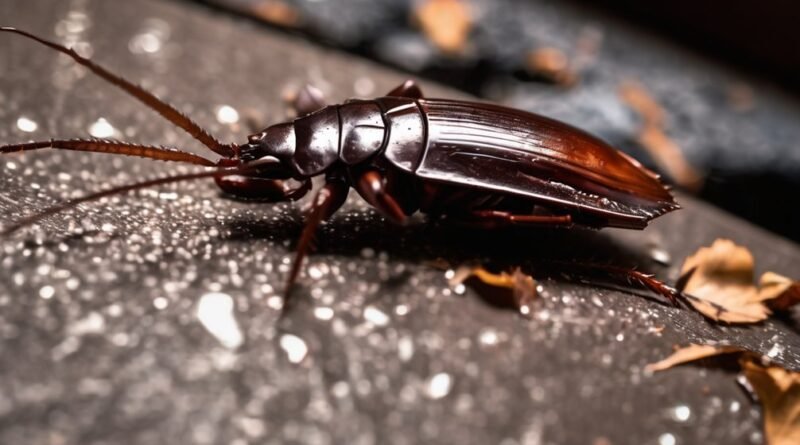
Smokybrown Cockroaches: The Southern Pest
Smokybrown cockroaches are large, uniformly mahogany-colored cockroaches measuring up to 1.5 inches long that are common throughout the southeastern United States, from Texas and Louisiana through Florida and up the Gulf Coast to North Carolina. Unlike most indoor cockroach species, they are strong fliers and primarily outdoor pests that enter homes when moisture, temperature, or harborage conditions change. Their high moisture dependency distinguishes them from German and American cockroaches and shapes every effective control strategy.
Key Takeaways
Smokybrown cockroaches differ from common indoor species in biology, behavior, and the conditions that drive them into homes. These differences determine what control methods work.
- Smokybrown cockroaches are large, uniformly dark mahogany with no markings, fully developed wings extending past the abdomen, and strong flying ability triggered by warmth and humidity.
- They require more moisture than any other common cockroach species and die quickly in dry conditions, making moisture control the most effective prevention strategy.
- They primarily live outdoors in mulch, tree holes, woodpiles, and leaf litter, entering homes through roof vents, attic gaps, and utility penetrations rather than through kitchen and bathroom routes.
- Signs of infestation include dark brown egg cases, black pepper-like droppings, brownish smear marks in damp areas, and a musty oily odor that intensifies with larger populations.
- Effective control combines moisture reduction, yard maintenance to remove outdoor harborage, entry point sealing, and perimeter insecticide application combined with bait stations.
Identifying Smokybrown Cockroaches
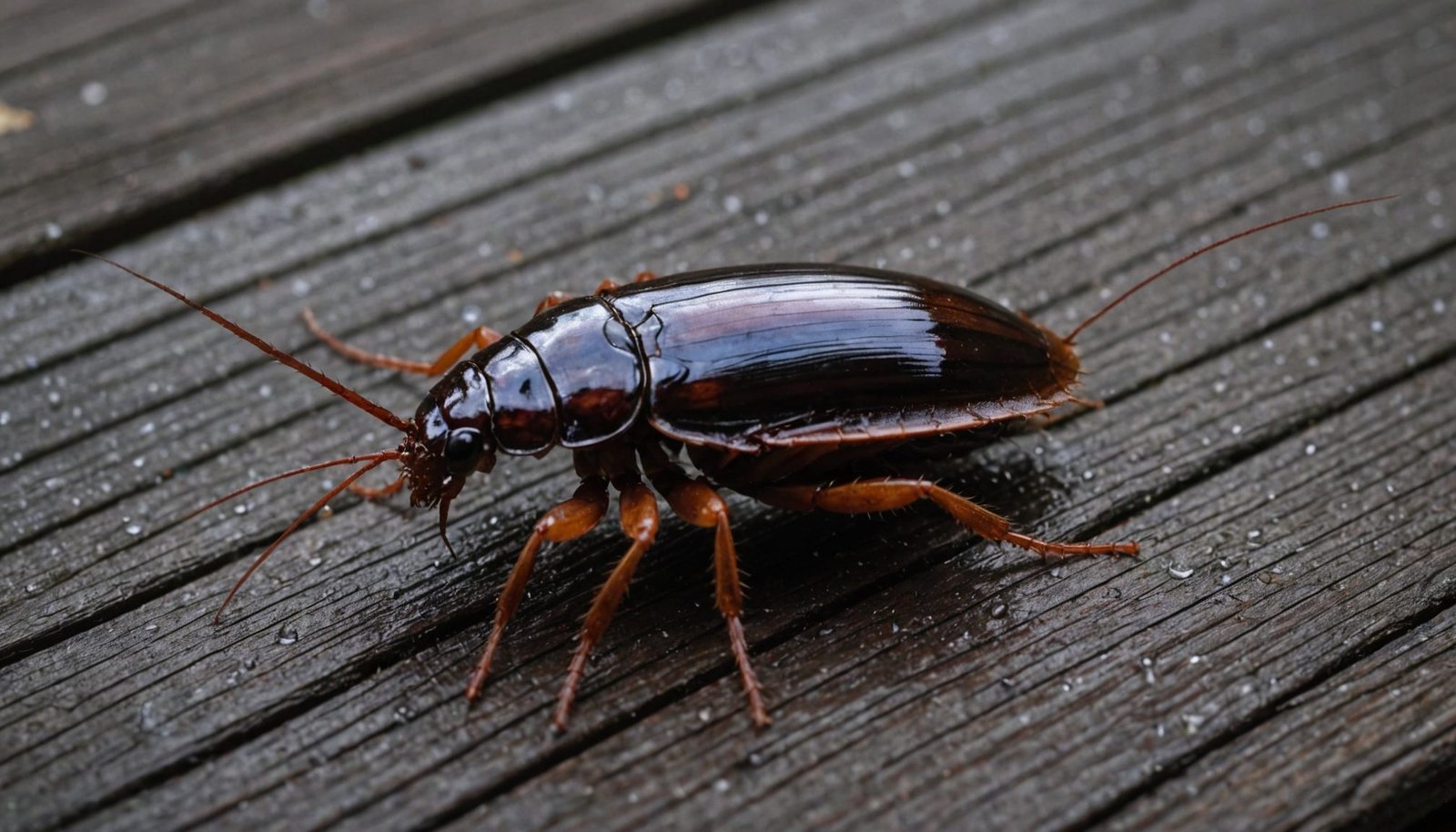
Five features make the smokybrown cockroach immediately distinguishable from other species: uniform mahogany coloration with no markings, large body size up to 1.5 inches, a glossy oval body, fully developed wings that extend noticeably past the abdomen tip, and strong flying ability that they use readily when disturbed or when seeking new harborage. The uniformly dark color without any yellow, orange, or banded markings is the most reliable single identifier. American cockroaches have a distinct yellow figure-8 pattern on the pronotum that smokybrown cockroaches completely lack. German cockroaches are significantly smaller with two parallel dark stripes on the pronotum.
Nymphs are distinctive and easy to identify once you know what to look for. Early instar smokybrown nymphs appear nearly black with two white horizontal bands across their backs. As they develop through successive molts, the white bands fade and the characteristic dark mahogany coloration develops. Their antennae are longer than their bodies, which is typical for the species and helps distinguish them from similar-sized nymph species.
Smokybrown vs American Cockroach: Key Differences
Smokybrown and American cockroaches are frequently confused because of their similar large size and reddish-brown coloration. The differences matter because they have different habitat preferences and respond to different control approaches.
- Coloration: smokybrown cockroaches are uniformly dark mahogany with no markings; American cockroaches have a yellow figure-8 pattern on the pronotum
- Size: both reach 1.5 inches, but smokybrown cockroaches are slightly smaller on average
- Wings: smokybrown wings extend past the abdomen; American cockroach wings roughly equal body length in females
- Flying behavior: smokybrown cockroaches fly readily and frequently; American cockroaches fly only rarely
- Habitat: smokybrown cockroaches are primarily outdoor tree-canopy and mulch pests; American cockroaches prefer sewer systems and basement drains
Habitat, Geographic Range, and Where They Live
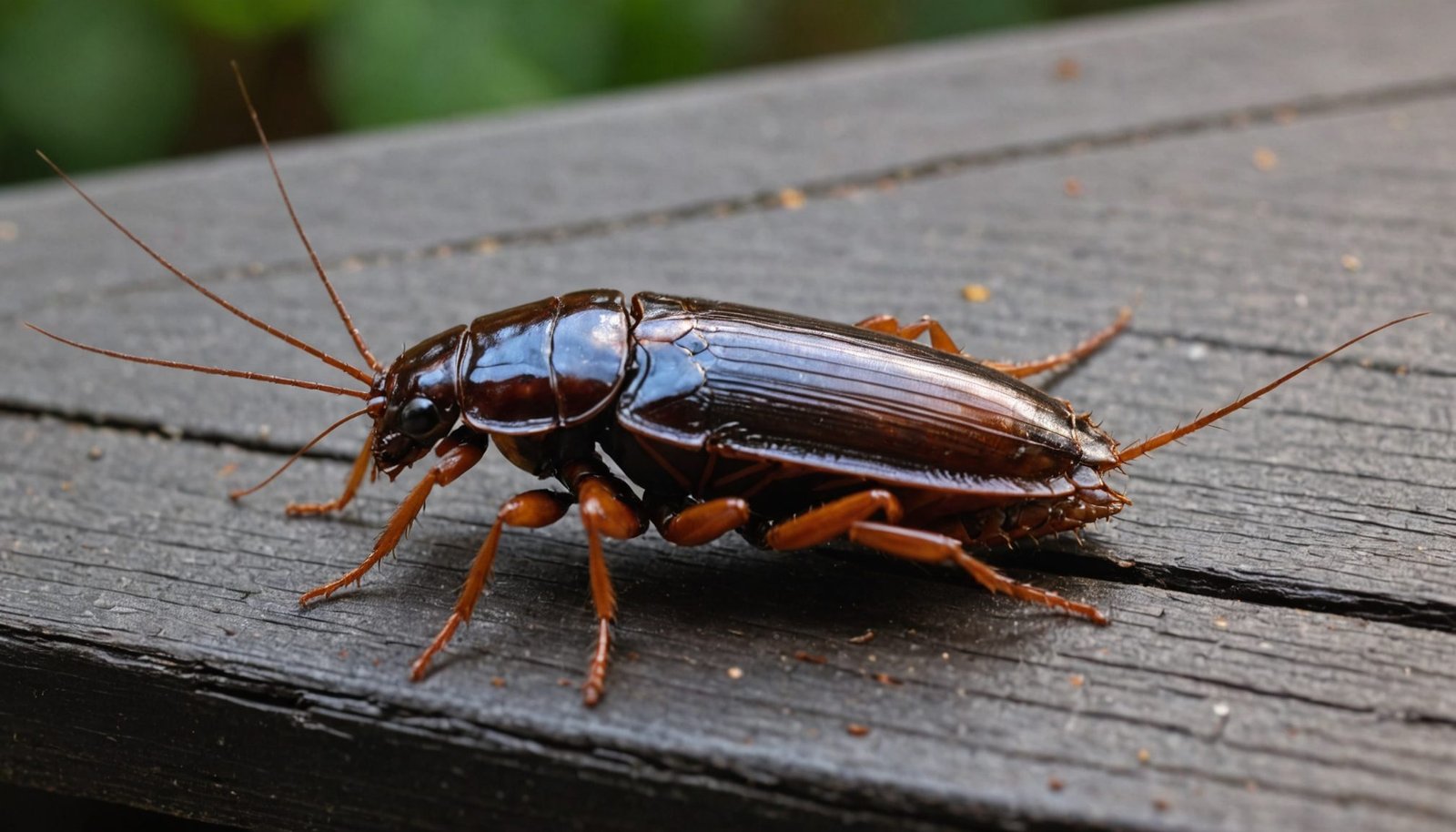
Smokybrown cockroaches are established across the southeastern United States in a range that includes Texas, Louisiana, Mississippi, Alabama, Georgia, Florida, South Carolina, and North Carolina. Populations also exist in Southern California and in tropical regions including parts of Japan, Australia, and South America. Their range is limited by moisture availability because they lose body water faster than any other common cockroach species and cannot survive in low-humidity environments without regular access to water sources.
Outdoors, they establish harborage in tree holes, tree bark crevices, mulch beds, leaf litter, woodpiles, and any protected moist space at or above ground level. Unlike American cockroaches that live in sewer systems, smokybrown cockroaches are strongly associated with the tree canopy and plant-rich environments around residential properties. Gutters collecting organic debris and standing water are a particularly significant outdoor harborage and water source adjacent to buildings.
How Smokybrown Cockroaches Enter Buildings
Their entry routes into structures differ from German and American cockroaches because they approach from above rather than from below. While American cockroaches commonly enter through floor drains and basement connections to sewer systems, smokybrown cockroaches are most often found entering through upper-building access points.
- Roof vents and attic vents with damaged, missing, or inadequately fine-mesh screens
- Gaps around roof eave edges and fascia boards where wood has deteriorated
- Window frames and door frames on upper floors where sealing has failed
- Utility penetrations including electrical conduit and plumbing where they pass through exterior walls
- Garage doors where damaged weatherstripping creates gaps at the base and sides
- Dense vegetation and tree branches that contact or overhang the roofline, providing direct access paths
Once inside, smokybrown cockroaches gravitate toward attics, crawl spaces, and upper-floor wall voids rather than kitchen and bathroom areas. They will access kitchens and bathrooms when seeking water but their primary indoor harborage tends to be higher in the building structure than German or American cockroach harborage zones.
Lifecycle and Biology
Understanding the smokybrown cockroach lifecycle helps time control measures effectively and explains why certain treatments work better for this species than others.
Females produce oothecae, the protective egg cases, that are dark brown to black and approximately 8 to 10 millimeters long. Each ootheca contains roughly 20 eggs. Females can produce up to 10 oothecae during their lifetime under favorable conditions, meaning a single female can theoretically contribute up to 200 offspring. Unlike German cockroaches that carry their ootheca attached until hatch, smokybrown cockroaches deposit their oothecae in protected harborage areas and leave them. This makes harborage zone treatment particularly important since deposited egg cases require direct insecticide contact or heat to prevent hatching.
Development, Molting, and Lifespan
Nymphs develop through multiple molting stages before reaching sexual maturity. Development time from egg to adult varies with temperature and humidity; warmer, more humid conditions accelerate development while cooler, drier conditions slow it. Adult smokybrown cockroaches can live for several months to over a year under favorable conditions. The entire lifecycle from egg to reproductive adult typically spans several months in suitable southeastern United States climates, meaning populations can build rapidly in properties with adequate outdoor harborage and moisture.
- Eggs hatch in 24 to 70 days depending on temperature and humidity conditions
- Nymphs complete 9 to 12 molts before reaching adulthood
- Adults live 3 to 18 months under typical field conditions
- Females are most likely to enter structures during breeding seasons when seeking sheltered egg deposition sites
Signs of a Smokybrown Cockroach Infestation
Recognizing smokybrown infestation signs early allows treatment before populations reach levels that are difficult to address with property-owner measures alone. The most reliable early detection method is sticky trap monitoring in attic spaces, near roof vents, and along exterior foundation walls.
Direct signs include dark brown curved egg cases approximately 8 to 10 millimeters long found in attic insulation, in eave spaces, behind exterior wall voids, and inside gutters. Black pepper-like droppings accumulate in corners and along wall edges near harborage zones. Brownish smear marks appear in consistently damp areas where cockroaches travel repeatedly. A musty, oily odor detectable in attic spaces or within wall voids near the roofline indicates a large established population.
Indirect signs include nighttime flight activity around exterior lighting, particularly toward porch lights and illuminated windows during warm humid evenings. Daytime sightings inside the home indicate a population large enough that individuals are being displaced from harborage zones by overcrowding, which signals a more serious infestation requiring immediate treatment response.
Prevention and Control of Smokybrown Cockroaches
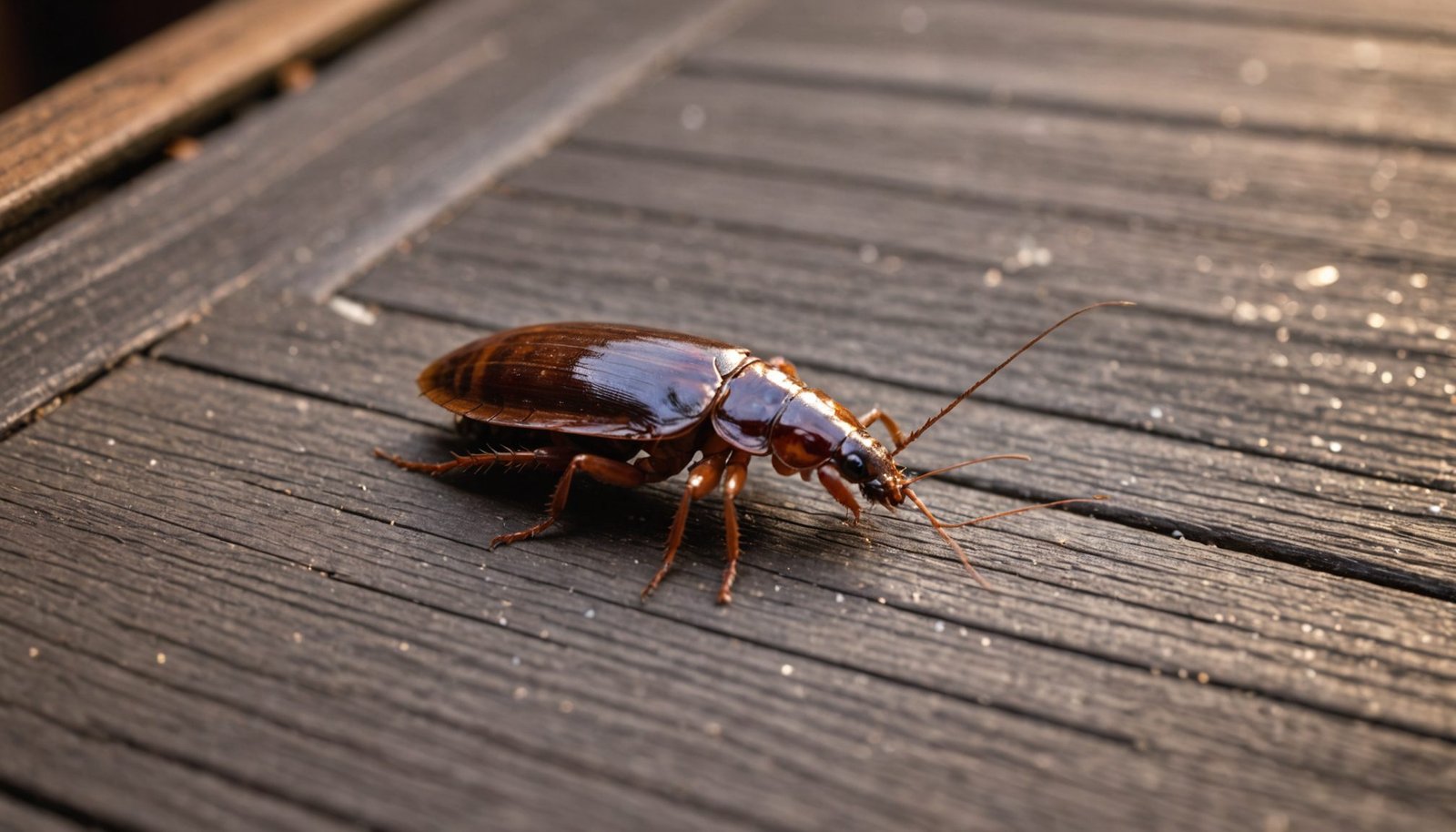
Smokybrown cockroach control requires a different emphasis than German or American cockroach control because the population pressure is primarily outdoor-based. Eliminating the outdoor harborage and moisture conditions that sustain the population is at least as important as treating inside the building, and often more so.
Moisture Control and Yard Maintenance
Since smokybrown cockroaches cannot survive without consistent moisture access, moisture reduction is the most powerful single prevention measure available. Fix all exterior water leaks and irrigation overspray that creates consistently damp soil near the foundation. Clean gutters regularly to remove the organic debris and standing water that provides both moisture and food. Use dehumidifiers in crawl spaces and attics to maintain humidity below the threshold these cockroaches require for comfortable harborage.
Yard maintenance directly reduces outdoor population levels by eliminating the habitats smokybrown cockroaches depend on.
- Move woodpiles, lumber stacks, and firewood storage at least 20 feet from the building and elevate them off the ground
- Reduce mulch depth to two inches maximum and replace wood mulch with inorganic alternatives near the foundation
- Remove leaf litter and organic debris from around the foundation and from roof gutters consistently
- Trim tree branches and dense shrubs that contact or overhang the roofline, eliminating direct access pathways
- Address any standing water in low areas of the yard that provides outdoor water sources near harborage zones
Sealing Entry Points for Smokybrown Cockroaches
Entry point sealing for smokybrown cockroaches focuses on upper-building access routes rather than ground-level gaps. Inspect the roofline, eave edges, and attic vents as the primary target areas.
Install fine-mesh screens with openings no larger than 1/16 inch over all attic vents and roof vents. Repair or replace damaged fascia boards and seal any gaps along eave edges where wood has deteriorated. Caulk all utility penetrations where electrical conduit, plumbing, and cable lines enter through exterior walls. Install door sweeps on all exterior doors including garage doors and repair any damaged weatherstripping on upper-floor windows and doors.
Insecticide and Bait Treatments for Smokybrown Cockroaches
Chemical control for smokybrown cockroaches targets both the outdoor harborage population and any individuals that have entered the building.
For outdoor perimeter treatment, bifenthrin-based liquid insecticides applied as a barrier band around the building foundation, up the exterior walls to roof height, and around outdoor harborage zones provide residual knockdown of cockroaches moving toward the building. Treat mulch beds, tree bases, and woodpile areas as secondary target zones. Reapply perimeter treatments every 8 to 12 weeks during active season.
For indoor and indoor-entry-zone treatment, bait stations containing gel bait formulations placed in attic spaces, along eave areas, and near identified entry points provide effective transfer kill. Gel baits and bait stations are particularly suitable for attic environments where broadcast sprays would create unnecessary chemical exposure risk.
Professional pest control services are typically necessary for heavy smokybrown cockroach infestations because the combination of perimeter treatment, attic treatment, and structural entry point identification requires equipment and product access beyond what most homeowners can effectively deploy.
Frequently Asked Questions
Are Smokybrown Cockroaches Dangerous to Humans?
Smokybrown cockroaches carry the same general health risks as other cockroach species through mechanical pathogen transmission. They pick up bacteria including Salmonella and E. coli in their outdoor harborage environments and deposit them on food and surfaces they contact indoors. Their droppings, shed skins, and body fragments also contain allergen proteins that can trigger asthma and allergic reactions in sensitized individuals. However, because they primarily live outdoors and enter kitchens less consistently than German cockroaches, their direct food contamination risk in most residential settings is lower than that of indoor-breeding species.
Why Do Smokybrown Cockroaches Fly Into Homes at Night?
Smokybrown cockroaches are positively phototactic, meaning they are attracted to light sources. Porch lights, illuminated windows, and exterior landscape lighting draw them from outdoor harborage toward building entry points during warm, humid evenings when they are most active. Switching exterior lighting to yellow or sodium vapor bulbs that are less attractive to insects reduces this flight-based entry behavior. Keeping interior lights near windows dimmed and using window shades in the evening also reduces the light signals that draw outdoor populations toward the building.
How Do Smokybrown Cockroaches Differ From American Cockroaches in Terms of Control?
The primary control difference is harborage target and treatment location. American cockroach control focuses on basement drains, sewer connections, and sub-floor moisture environments. Smokybrown cockroach control focuses on outdoor mulch and tree harborage, roof and attic entry points, and perimeter barrier treatments that intercept them before building entry. Moisture control is more critical for smokybrown cockroaches because they are significantly more sensitive to desiccation. Both species respond well to gel bait, but bait station placement differs: ground-level near drains for American cockroaches versus attic zones and elevated entry point areas for smokybrown cockroaches.
What Time of Year Are Smokybrown Cockroaches Most Active?
Smokybrown cockroaches are most active during warm, humid months from late spring through early fall, with peak activity in summer when nighttime temperatures remain above 68 degrees Fahrenheit. In the warmest parts of their range including south Texas and south Florida, they maintain year-round activity because temperatures rarely drop below their activity threshold. During dry spells or brief cool snaps, they increase their building entry attempts because indoor conditions provide the humidity and warmth they need. Prevention and treatment measures are most effective when implemented before peak season begins in late spring.
Can Smokybrown Cockroaches Survive Winter in Northern States?
Smokybrown cockroaches cannot survive extended cold weather and are therefore primarily established in warm, humid climates. Their northern range limit follows the line where winters are too cold and dry to support consistent outdoor survival. In transitional areas including North Carolina and coastal Virginia, some populations persist in protected microhabitats including heated buildings and south-facing structures, but they do not establish robust self-sustaining outdoor populations. Isolated individuals may be transported north in shipping containers, plants, or used furniture but rarely establish breeding populations in colder climates without access to heated structures.
