
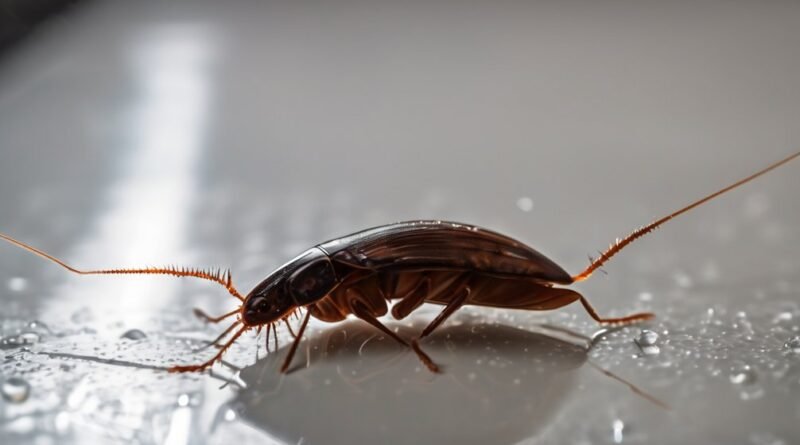
Why Are Cockroaches So Hard to Kill? The Science Behind Their Survival
Cockroaches are so hard to kill because of a combination of biological advantages that have been refined over 300 million years of evolution: a tough exoskeleton that resists crushing and chemical penetration, rapid insecticide resistance that develops within a single generation, exceptional reproductive speed, the ability to survive without food for weeks and without a head for days, and behavioral flexibility that allows them to detect and avoid threats before contact. No single factor makes them nearly indestructible; it is the combination of all these systems working together.
Key Takeaways
Understanding why cockroaches survive everything you throw at them is the first step toward choosing control methods that actually work.
- Cockroaches develop resistance to insecticides within a single generation; populations exposed to pyrethroids can become resistant to multiple chemical classes simultaneously.
- Their exoskeleton resists crushing forces up to 900 times their body weight and provides a physical barrier that slows chemical penetration.
- German cockroaches reproduce fast enough that a single female can contribute to a colony of thousands within months under ideal conditions.
- Cockroaches survive without food for up to a month and without water for one to two weeks, outlasting most disruption-based elimination attempts.
- Their sensory systems detect air pressure changes from approaching threats within milliseconds, triggering escape before physical contact occurs.
Insecticide Resistance: The Primary Reason Cockroaches Survive Treatments
The most practical reason cockroaches are hard to kill is insecticide resistance. German cockroaches in particular evolve resistance within a single generation because of their rapid reproductive cycle. When a pesticide application kills most of a colony, the surviving individuals carry the genetic traits that allowed them to survive. These survivors breed, and their offspring inherit both the resistance traits and, in some cases, cross-resistance to other chemical classes they have never even been exposed to.
Studies in Indiana and Illinois colonies found widespread resistance to multiple insecticide classes including abamectin, boric acid, and thiamethoxam in populations that had previously been exposed only to pyrethroids. This cross-resistance happens because the metabolic detoxification pathways that break down one insecticide also break down chemically unrelated compounds. The practical result is that using the same products repeatedly not only fails to eliminate the colony but actively selects for cockroaches with stronger resistance profiles.
How Cockroaches Detoxify Pesticides
Cockroaches possess several physiological mechanisms that reduce the effectiveness of chemical treatments.
- Enzymatic detoxification: metabolic enzymes in cockroach body tissues break down insecticide molecules before they reach the nervous system at lethal concentrations
- Target site insensitivity: genetic mutations alter the nerve receptor proteins that many insecticides target, reducing binding effectiveness
- Cuticular penetration resistance: the waxy epicuticle slows dermal absorption of contact insecticides, giving detoxification enzymes more time to process the chemical
- Behavioral avoidance: cockroaches in treated environments learn to avoid surfaces and bait formulations associated with negative chemical stimuli, reducing their exposure
This is why rotating active ingredients, using non-repellent formulations, and combining gel baits with insect growth regulators outperforms repeated applications of the same spray product. The resistance problem compounds over time; the more consistently a single product is used, the faster resistance develops in the local population.
Exoskeleton and Physical Resilience
Cockroaches have a multi-layered chitinous exoskeleton that combines rigidity and flexibility in a way that makes them remarkably resistant to physical damage. The outer epicuticle is coated with wax that reduces moisture loss and slows chemical penetration. The harder procuticle layer beneath provides structural strength. Sclerotized proteins cross-linking the layers create a composite material that can withstand compressive forces up to 900 times the cockroach’s body weight in some species.
This structural resilience is what allows cockroaches to survive being stepped on by a human foot in many cases. The flattened body shape distributes the compressive load rather than concentrating it on a single point, and the waxy cuticle allows the body to deform slightly and spring back. The same properties that make them hard to crush mechanically also make topical insecticide penetration slower and less efficient than it would be against insects with thinner cuticles.
Can Cockroaches Really Survive Without Their Head?
This is one of the most widely discussed cockroach survival facts and it is essentially true. Cockroaches can survive for days to weeks after decapitation because their breathing and basic body functions do not depend on the brain or the head. Their respiratory system consists of spiracles along the body sides that deliver oxygen directly to tissues without requiring centralized control from the brain. Their circulatory system does not rely on the head to pump blood; cockroaches have an open circulatory system with a dorsal vessel rather than a heart that requires head-connected neural control.
The decapitated cockroach dies eventually from dehydration because the mouth and brain are no longer present to regulate water consumption and the spiracles continue releasing moisture, but the process takes much longer than it would in a vertebrate animal. This survival capacity is not a defense against being killed but it does illustrate how redundant and decentralized their biological systems are.
Rapid Reproduction: Why Killing Some Is Never Enough
A cockroach infestation is not just a fixed number of insects to eliminate. It is a continuously reproducing colony where the population can grow faster than control measures remove individuals if the treatment approach is incomplete.
German cockroaches, the most common indoor pest species, can develop from egg to reproductive adult in 50 to 60 days under warm conditions. A single female produces approximately 4 to 8 egg cases during her lifetime, each containing 30 to 50 eggs. At population level, this means a colony of 100 cockroaches can grow to several thousand within a few months if nothing disrupts the reproductive cycle. Killing adults without addressing egg cases and nymphs through insect growth regulators and follow-up treatments leaves the population able to recover from even a substantial knockdown event.
Why Cockroach Eggs Survive Most Treatments
- The hardened protein shell of the ootheca physically blocks penetration of most contact insecticide formulations
- Residual sprays on surfaces do not affect eggs sealed inside deposited oothecae in crevices and wall voids
- Eggs deposited in locations that were not reached during treatment continue the population cycle after adults are eliminated
- German cockroach females carry the ootheca on their body until just before hatching, protecting it from surface-applied treatments during the incubation period
- Insect growth regulators that disrupt nymph development are the most effective tools for addressing the hatching population that survives initial knockdown
Survival Without Food, Water, and Oxygen
Cockroaches survive deprivation conditions that would kill most household insects within hours. Without food, cockroaches can survive for up to a month by slowing their metabolism, producing nutrients from stored body fat, and in some cases consuming paper, cardboard, glue, and other non-food organic materials that most insects cannot metabolize. Their gut microbiome, particularly the endosymbiotic bacterium Blattabacterium, helps them recycle nitrogen waste into usable amino acids, reducing their dependence on dietary protein sources.
Without water, cockroaches die faster than without food, typically within 1 to 2 weeks depending on temperature and species. This is why moisture control remains the most reliable environmental modification for reducing cockroach populations; it targets a survival threshold that cockroaches cannot evolve around because water is a biological requirement no detoxification pathway can replace.
Their respiratory system allows them to hold their breath for up to 40 minutes underwater by closing their spiracles, and to survive in low-oxygen environments that would incapacitate other insects. This respiratory flexibility is why drowning is an unreliable control method and why cockroaches can access homes through drain systems and sewer connections that would seem to present environmental barriers.
Sensory Systems and Escape Reflexes
The reason cockroaches are so difficult to swat or physically eliminate is their sensory system, not their toughness. Mechanoreceptive hairs on the cerci detect air pressure changes from approaching objects within 50 milliseconds. This detection triggers an escape response through giant interneurons that transmit signals at approximately 3 meters per second, faster than the neural transmission speeds of most vertebrates. The result is that a cockroach can be in motion and change direction before a human hand reaches the position where the cockroach was when the hand started moving.
Their compound eyes provide wide-angle vision that detects movement in nearly all directions simultaneously, and their antennae provide continuous chemical and tactile sensing of the immediate environment. This combination of sensory inputs means cockroaches are rarely surprised and rarely caught off guard in the way that makes physical elimination straightforward. It also explains why fumigants, which reach cockroaches through the air, and baits, which exploit feeding behavior rather than requiring direct contact, outperform manual elimination attempts.
What Actually Kills Cockroaches Effectively
Understanding why cockroaches are hard to kill points directly toward what works. The biology they use to survive conventional approaches has specific limitations that effective control methods exploit.
Gel baits with slow-acting active ingredients bypass resistance mechanisms by exploiting feeding behavior rather than requiring dermal penetration. The cockroach ingests the bait, returns to the harborage, and dies there, allowing the toxin to spread through feces and body contact to colony members that never directly contacted the bait. This transfer kill mechanism reaches individuals that behavioral avoidance would otherwise protect from surface treatments.
Insect growth regulators do not kill cockroaches directly but prevent surviving nymphs from reaching reproductive adulthood, attacking the reproductive rate advantage that makes populations recover from knockdown events. Rotating bait active ingredients every 2 to 3 weeks prevents resistance selection from narrowing the effective treatment options. Heat treatment above 120 degrees Fahrenheit kills all life stages including eggs inside oothecae, bypassing the chemical resistance issue entirely.
Professional pest control approaches combine these tools systematically with inspection-driven placement and follow-up scheduling that private individuals rarely maintain consistently enough on their own. Choosing the right gel bait and trap combination is the most important product decision in any home cockroach control program because product selection determines whether you are creating resistance or reducing it.
Frequently Asked Questions
Can Cockroaches Survive Being Flushed Down a Toilet?
Yes. Cockroaches can close their spiracles and hold their breath underwater for up to 40 minutes, and their ability to grip pipe surfaces means they can climb back up through plumbing. Once flushed into a drain system, cockroaches reach air pockets in sewer pipes quickly and can return to the building through the same connections. This is one of the reasons that maintaining water trap seals in floor drains and basement drains is an important exclusion measure; a dry trap gives cockroaches a direct access route from the sewer system into living spaces.
Do Cockroaches Feel Pain When Killed?
Cockroaches have a nociceptive nervous system that detects and responds to physically harmful stimuli, producing avoidance behaviors when they are injured. This is a functional equivalent of pain sensing in biological terms. Whether cockroaches experience subjective suffering in the way humans understand pain as an emotional experience is not scientifically established. Their nervous system processes damage signals and triggers protective responses, but the conscious experience of that processing, if any, is not something current research methods can assess in insects.
Why Do Cockroaches Always Appear at Night?
Cockroaches are governed by circadian rhythms that make them naturally nocturnal. Their biological clock is regulated by neuropeptide signaling that promotes activity during darkness and rest during daylight hours. Night activity reduces exposure to predators and provides foraging conditions that match their sensory capabilities, since they navigate primarily through chemical sensing and mechanoreception rather than vision. Finding cockroaches active during daylight hours is a reliable sign of overcrowding in the harborage zone that is displacing individuals into the open despite the unfavorable light conditions.
Can Cockroaches Transmit Diseases Directly Through Bites?
Cockroaches carry pathogens including Salmonella, MRSA, and Enterococcus on their bodies and in their guts, but they do not typically transmit these through biting behavior. Cockroach bites are rare because cockroaches do not seek humans as food sources. The disease risk from cockroaches comes from indirect contamination: bacteria deposited on food and food preparation surfaces through droppings, body contact, and regurgitation during foraging. Cockroach allergens from shed skins, droppings, and body parts also pose a significant health risk through airborne exposure that is independent of any biting behavior.
How Long Does a Mated Female Cockroach Continue Reproducing?
A mated German cockroach female continues producing egg cases for approximately 140 to 280 days after a single mating, producing 5 to 8 oothecae each containing 30 to 40 eggs. American cockroach females produce approximately one ootheca per month for up to 10 months. Unlike many insects that die after egg laying, cockroaches continue to reproduce throughout their adult lives, which can span one to two years. This reproductive longevity combined with the egg count per case is why a small initial infestation that goes untreated can produce a large colony within a single season.
{
“@context”: “https://schema.org”,
“@type”: “FAQPage”,
“mainEntity”: [
{
“@type”: “Question”,
“name”: “Can Cockroaches Survive Being Flushed Down a Toilet?”,
“acceptedAnswer”: {
“@type”: “Answer”,
“text”: “Yes. Cockroaches can close their spiracles and hold their breath underwater for up to 40 minutes, and their ability to grip pipe surfaces means they can climb back up through plumbing. Once flushed into a drain system, cockroaches reach air pockets in sewer pipes quickly and can return to the building through the same connections. Maintaining water trap seals in floor drains and basement drains is an important exclusion measure; a dry trap gives cockroaches a direct access route from the sewer system into living spaces.”
}
},
{
“@type”: “Question”,
“name”: “Do Cockroaches Feel Pain When Killed?”,
“acceptedAnswer”: {
“@type”: “Answer”,
“text”: “Cockroaches have a nociceptive nervous system that detects and responds to physically harmful stimuli, producing avoidance behaviors when they are injured. This is a functional equivalent of pain sensing in biological terms. Whether cockroaches experience subjective suffering in the way humans understand pain as an emotional experience is not scientifically established. Their nervous system processes damage signals and triggers protective responses, but the conscious experience of that processing, if any, is not something current research methods can assess in insects.”
}
},
{
“@type”: “Question”,
“name”: “Why Do Cockroaches Always Appear at Night?”,
“acceptedAnswer”: {
“@type”: “Answer”,
“text”: “Cockroaches are governed by circadian rhythms that make them naturally nocturnal. Their biological clock promotes activity during darkness and rest during daylight hours. Night activity reduces exposure to predators and provides foraging conditions that match their sensory capabilities. Finding cockroaches active during daylight hours is a reliable sign of overcrowding in the harborage zone that is displacing individuals into the open despite unfavorable light conditions.”
}
},
{
“@type”: “Question”,
“name”: “Can Cockroaches Transmit Diseases Directly Through Bites?”,
“acceptedAnswer”: {
“@type”: “Answer”,
“text”: “Cockroaches carry pathogens including Salmonella, MRSA, and Enterococcus on their bodies and in their guts, but they do not typically transmit these through biting behavior. Cockroach bites are rare because cockroaches do not seek humans as food sources. The disease risk from cockroaches comes from indirect contamination: bacteria deposited on food and food preparation surfaces through droppings, body contact, and regurgitation during foraging.”
}
},
{
“@type”: “Question”,
“name”: “How Long Does a Mated Female Cockroach Continue Reproducing?”,
“acceptedAnswer”: {
“@type”: “Answer”,
“text”: “A mated German cockroach female continues producing egg cases for approximately 140 to 280 days after a single mating, producing 5 to 8 oothecae each containing 30 to 40 eggs. American cockroach females produce approximately one ootheca per month for up to 10 months. Unlike many insects that die after egg laying, cockroaches continue to reproduce throughout their adult lives, which can span one to two years. This reproductive longevity combined with the egg count per case is why a small initial infestation that goes untreated can produce a large colony within a single season.”
}
}
]
}
