
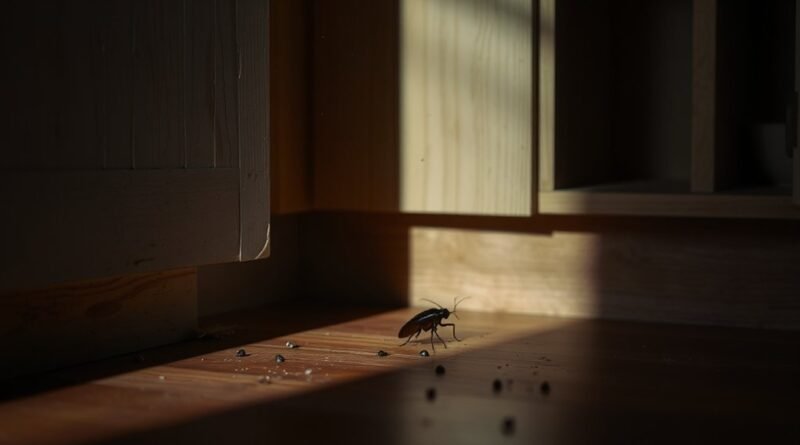
Early Signs of a Cockroach Infestation You Should Never Ignore
Spot coffee-ground specks or thicker cylindrical droppings, greasy smear marks on baseboards, and tiny oval egg capsules hidden under sinks or in cabinet cracks. Notice a musty, oily odor in humid spots. Seeing roaches by day or piles of dead parts signals overcrowding and rapid growth. These signs carry allergens and bacteria, trigger asthma, and can lead to fines and complaints. Act fast with professional control to stop escalation and protect your space—next, you’ll see exactly what to check and do.
Key Takeaways
- Pepper-like droppings or cylindrical pellets along baseboards and cabinets indicate active cockroach activity.
- Greasy, dark smear marks on walls or near humid areas show frequent roach travel paths.
- Small, oval egg capsules (oothecae) hidden in cracks, under sinks, or inside cabinets signal breeding.
- Daytime sightings of live roaches suggest an overcrowded, established infestation.
- Musty, oily odor, shed skins, and body fragments point to growing contamination and population.
Droppings That Look Like Coffee Grounds or Cylinders
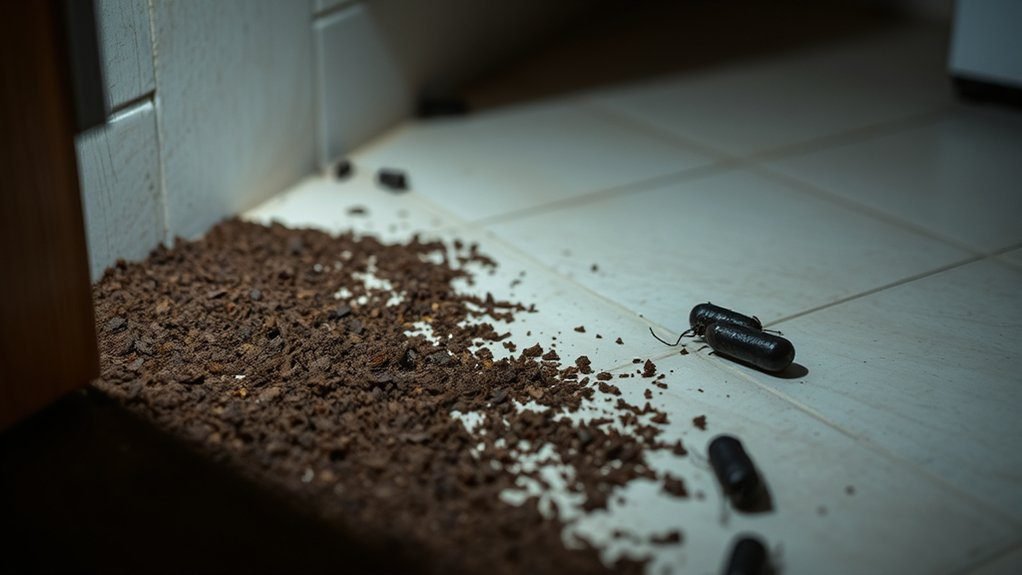
Coffee grounds on your floor mightn’t be from the kitchen—small cockroach droppings often look like coarse coffee grounds or black pepper, while larger species leave solid, dark cylinders that can be as big as a grain of rice.
Those “coffee grounds” might be roach droppings—tiny specks or rice-sized dark cylinders.
You’ll typically see dark brown to black specks from smaller roaches, sometimes speckled or as tiny stains. German roach droppings are small and often moist; brown-banded droppings are tiny, dry, and pepper-like. Cockroach droppings can trigger allergies and asthma, so cleaning them promptly helps protect sensitive individuals.
Larger species, like American, Oriental, and Smoky Brown roaches, leave thicker, cylindrical pellets, often clustered or aligned along travel paths.
Check baseboards, cabinet interiors, furniture edges, kitchens near food, bathrooms around sinks, and storage areas, crawl spaces, and basements.
Don’t mistake them for mouse pellets—mouse droppings are larger and more elongated. Clean promptly to reduce allergens, bacteria, and pheromone signals.
Smear Marks and Other Physical Traces on Surfaces

Although they can resemble ordinary grime at a glance, cockroach smear marks are greasy, dark brown to black streaks or smudges that show up where roaches travel and rest.
You’ll spot them on walls, baseboards, floor edges, and furniture, especially in humid areas. Near sinks, bathtubs, leaky pipes, and behind or under appliances, the marks cluster along edges and corners because roaches hug boundaries. They form when liquefied droppings and body oils mix with moisture, then build up along established trails. Professionals can identify cockroach species by habitat and habits to tailor treatment.
Expect them inside cupboards and drawers, in basements, and in poorly ventilated rooms.
Look closely for accompanying clues: shed skins, body fragments, clustered droppings, chew marks on packaging, and a musty, oily odor.
Treat these signs as urgent; they indicate active contamination and a growing infestation.
Egg Capsules (Oothecae) Hidden in Cracks and Crevices
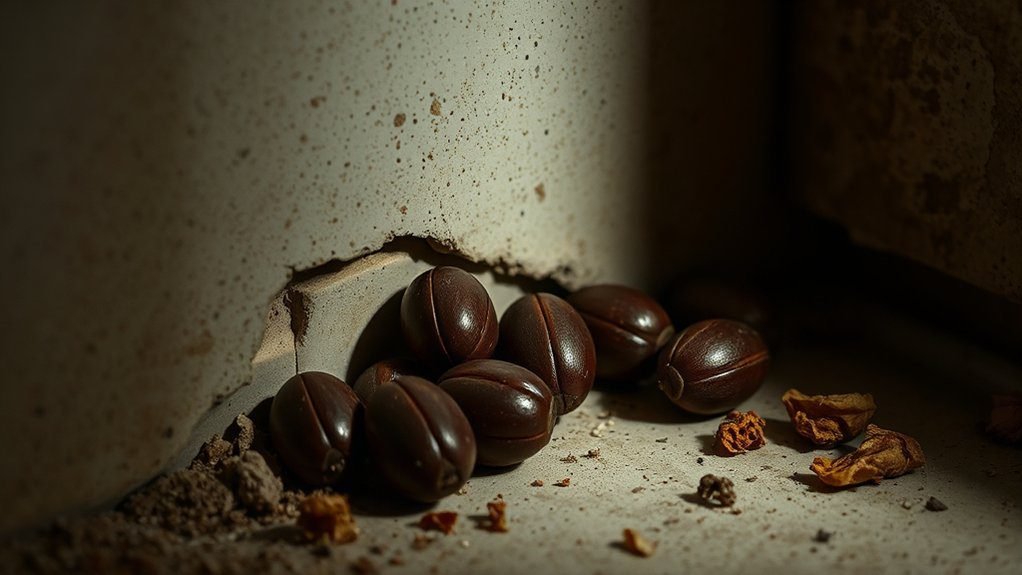
Smear marks point to where roaches travel; egg capsules show where they’re multiplying. Spotting oothecae means the infestation’s established.
Look for small, oval capsules—usually smaller than a penny—measuring about 0.06–0.18 inches (up to 8 mm). Colors range from tan to reddish, brown, or black. The shell feels hard and leathery, often with a ridge along its length.
Check cracks and crevices behind baseboards, under sinks, inside cabinets, and around appliances. German cockroaches often carry the capsule until just before hatching, then drop it in a hidden spot; theirs hold about 40 eggs. Female cockroaches lay eggs in various hidden locations such as under sinks and behind fridges.
American cockroach capsules are dark brown, around 8 mm, with up to 16 eggs. You might mistake oothecae for dried beans or seeds. Find them early, and act before populations explode.
Musty, Oily Odors That Linger in Enclosed Spaces
You notice a musty, oily smell that lingers because roaches release aggregation pheromones, cuticular hydrocarbons, and fatty acids that build up as populations grow. That scent signals active, often expanding infestations rather than old residue. You’ll find it most concentrated in enclosed, warm spots like kitchen cabinets, pantries, bathrooms, basements, and cluttered storage areas. The intensity of the smell increases with infestation size, and stronger odors can indicate larger, more established colonies.
What the Smell Signals
Even before you spot a single roach, a lingering musty, oily smell in enclosed spaces often signals they’re already there and communicating. You’re detecting aggregation pheromones—fatty, protein-laced chemicals—and VOCs from their gut bacteria. Together with cuticular hydrocarbons and volatile acids, they create that greasy, rancid-oil or burnt-hair scent. If it turns sharper, dead roaches’ oleic acid may be amplifying it.
This smell isn’t typical mildew; mold lacks the oily, metallic, sometimes soy-sauce note. As populations grow, the odor strengthens, preceding visual sightings by weeks. Fecal deposits add a musty layer, while warm, dark, and confined areas trap and intensify it. Catching this early lets you act before colonies expand and contaminate food. Odors can penetrate porous materials, causing them to linger and intensify in harborage areas over time.
| Smell Cue | What It Signals |
|---|---|
| Oily-musty | Active pheromone communication |
| Sharp, pungent | Presence of dead roaches (oleic acid) |
| Persistent, spreading | Growing population density |
Where Odors Concentrate
Think of odor like smoke—it pools where air is still and moisture lingers. You’ll notice the musty, oily smell most around sinks, dishwashers, bathrooms, basements, and crawl spaces. These humid, poorly ventilated spots trap scent, letting it build inside cabinets, drawers, wall voids, and behind appliances.
The chemistry makes it stubborn. Roach pheromones, cuticular hydrocarbons, and volatile carboxylic acids—plus gut-bacteria VOCs—create oleic, oily notes that stick to shelves, corners, and floors. Feces, body oils, and decomposing roaches reinforce the odor, even after cleaning.
Track intensity to locate activity. Pantries and kitchens often hit hardest, followed by bathrooms and laundry rooms. Odors typically start in tight, hidden areas, then spread as colonies grow. They’re stronger at night when roaches forage, giving you an early, reliable detection cue.
Daytime Sightings, Night Activity, and Dead Roaches

Daylight roaches are a red flag: these nocturnal insects shouldn’t be out unless an overcrowded infestation is pushing them from hiding.
If you spot live roaches in kitchens—under the sink, behind the fridge, or along baseboards—assume the population is established and hiding spaces are limited. Day-active roaches often look sluggish or disoriented, and seeing both nymphs and adults signals severe growth.
Confirm what’s happening after dark. Use a flashlight to scan cabinets, drains, and around appliances. The more movement you see at night, the larger the infestation. Some species scatter when you switch on lights, so observe carefully.
Dead roaches matter, too. Corpses, legs, and wings in corners or under appliances point to hotspots.
Remove them promptly to prevent odors and secondary pest issues.
Property Damage and Health Risks You Can’t Overlook
Spotting roaches by day and at night isn’t just unsettling—it signals problems that hit your property and health. You’ll see gnaw marks on paper, cardboard, and fabrics, ruining books, files, and upholstery.
Droppings and saliva stain surfaces and create persistent odors. Their movement through walls, insulation, and even electronics can compromise structure and utilities, boosting energy bills and repair costs.
Health risks are serious. Cockroach debris carries potent allergens that trigger asthma—especially in children—and worsens indoor air quality. They can spread bacteria and pathogens, raising the odds of gastrointestinal or respiratory illness.
Cockroach debris fuels asthma, degrades indoor air, and spreads bacteria that drive gastrointestinal and respiratory illness.
In homes and businesses, the economic and legal fallout adds up: contamination, cleaning, fines, code violations, and reputational harm.
Landlords and managers must act fast with professional control to meet habitability and health standards.
Frequently Asked Questions
How Can I Safely Clean Roach-Contaminated Areas Without Spreading Allergens?
Wear gloves and an N95, ventilate, and keep kids and pets away. Dampen surfaces; don’t dry sweep. Disinfect with 1:10 bleach, scrub, rinse. HEPA-vacuum cracks, empty sealed bags immediately. Sanitize after, set baits, monitor, and clean regularly.
What Preventive Home Repairs Deter Cockroaches From Entering?
Seal foundation cracks, gaps, and utility penetrations with caulk or foam. Replace weather stripping, fix screens, and repair siding. Maintain gutters, trim vegetation, and manage trash. Inside, fix leaks, ventilate, declutter, and store food airtight. Inspect yearly.
Which Foods and Storage Methods Most Reduce Cockroach Attraction?
Target roaches by denying food: store all items in airtight glass or thick plastic, refrigerate leftovers, seal trash, clean crumbs and grease immediately, don’t leave pet food or dirty dishes out, discard decaying produce, avoid cardboard storage.
Are DIY Traps Effective Versus Professional Pest Control Services?
They’re partly effective, but they don’t match professional services. You’ll catch some roaches with DIY traps, yet heavy infestations persist. Use them for monitoring and supplements; rely on pro-grade baits, targeted placement, and residual dusts for meaningful, lasting control.
How Long After Treatment Should I Expect to See Roach Activity?
You’ll see more roaches for 24–48 hours, then fewer within 1–2 weeks. Full clearing usually takes 2–8 weeks. Baits and IGRs act slower. Keep sanitation tight, remove moisture and food, set monitors, and schedule follow-ups if activity persists.
Conclusion
Spotting roach droppings, smear marks, egg capsules, and that musty odor isn’t just gross—it’s your early warning. If you’re seeing roaches in daylight, hearing night activity, or finding dead ones, the infestation’s growing. Don’t ignore the property damage and health risks. Act fast: clean thoroughly, seal entry points, reduce moisture, and set traps. When signs persist, call a professional. You’ll stop the spread, protect your home, and breathe easier knowing you caught the problem early.
