
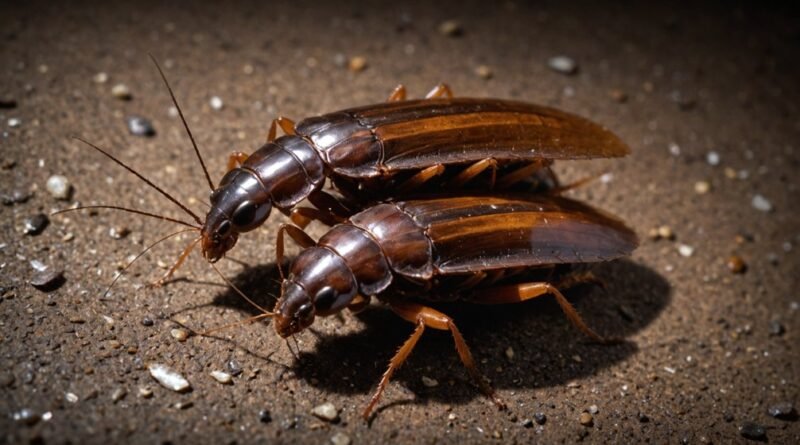
How Cockroaches Reproduce and Why It Matters for Infestation Control
Cockroaches reproduce via egg cases (oothecae) that pack 10–60 eggs; females drop or carry them until they harden. Nymphs hatch as small, wingless versions of adults and molt multiple times, maturing in weeks to months (German: 40–60 days; American: 6–12 months). Warmth, humidity, water, and food turbocharge growth and fecundity. You’ll curb infestations by removing food and moisture, sealing harborage, vacuuming oothecae, baiting adults, and using IGRs to break cycles. There’s more you can use right away.
Key Takeaways
- Cockroaches reproduce via oothecae (egg cases) holding 10–60 eggs, enabling rapid population growth if not disrupted.
- Warmer, humid environments with food and water accelerate egg production, egg viability, and nymph development.
- Species differ: German cockroaches hatch in 40–60 days; American and Oriental develop far slower, affecting control timing.
- Interrupt reproduction by removing oothecae, applying insect growth regulators, and targeting adults with baits in harborages.
- Sanitation—eliminating food, water, and shelter—reduces fecundity, stresses populations, and is essential for long-term control.
The Cockroach Life Cycle at a Glance
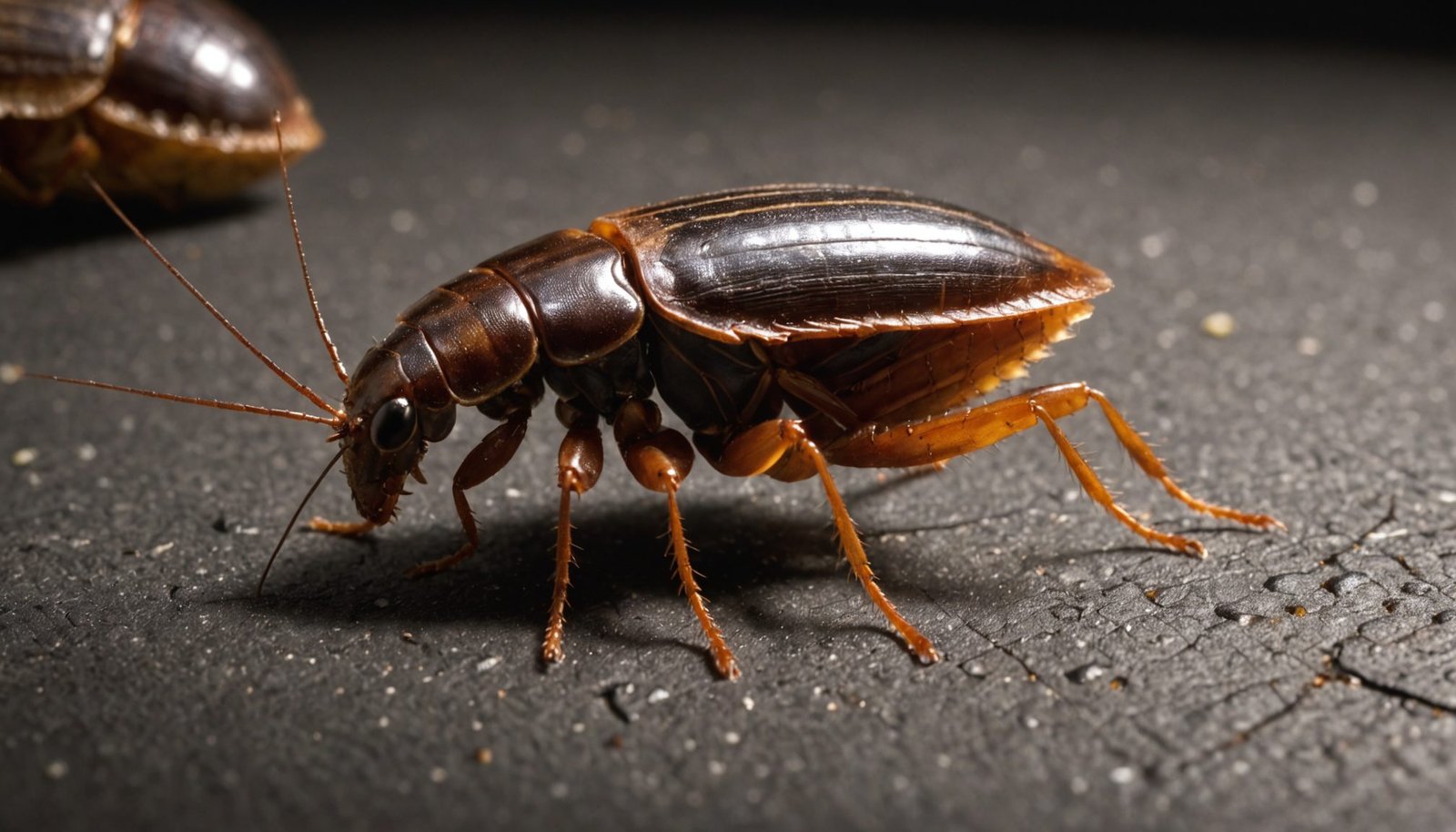
Although cockroaches seem simple, their life cycle moves through three clear stages—egg, nymph, and adult—that unfold over months to more than a year depending on species and conditions.
You’ll see incomplete metamorphosis: nymphs look like smaller, wingless adults and gradually gain features as they molt. Temperature, humidity, and food availability speed or slow every step.
As nymphs, they’re lighter in color, wingless, and shed their skins repeatedly—anywhere from 6 to 18 molts—until maturity. Development can take several months to a year, and nymphs eat the same broad diet as adults, fueling infestations.
Adults emerge fully formed with wings and reproductive capacity. Lifespans typically run six to twelve months.
Adults arrive with wings and reproductive power, living roughly six to twelve months.
Species differ: German roaches mature fast; Oriental roaches develop slowly. Understanding timing helps you plan control. Additionally, females produce oothecae that can contain 10 to 60 eggs, which accelerates population growth if not controlled.
Egg Cases (Oothecae): Formation, Placement, and Species Differences
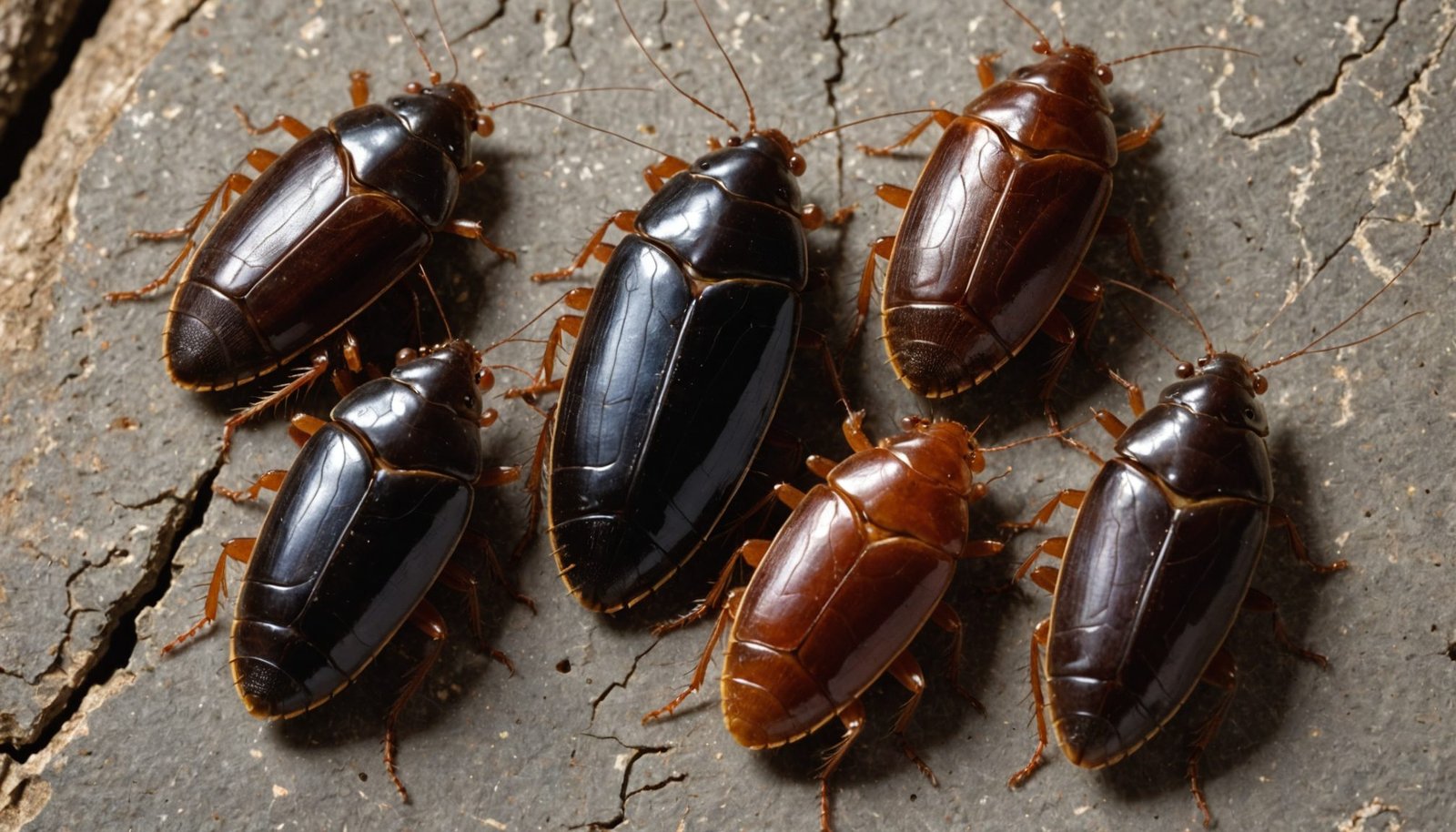
After nymphs and adults set the pace of a population, the story starts earlier—in the egg case, or ootheca, that shields every embryo. You’re looking at an oblong, semicylindrical capsule that hardens fast after oviposition. Asymmetric colleterial glands drive formation: the large left gland supplies proteins and β‑glucosides; the small right gland provides enzymes that trigger phenoloxidase tanning. Quinone crosslinking, plus calcium oxalate crystals, adds strength and microbial defense. Eliminating infestations significantly reduces allergens and improves indoor air quality.
Species place oothecae strategically. German females carry them externally until hatch, steering them into ideal microhabitats. American cockroaches drop cases in warm, dark sites; oriental cockroaches favor damp hideaways; brown‑banded females glue cases high on walls. Some species retain oothecae internally, mimicking live birth.
| Species | Eggs/Case | Typical Placement |
|---|---|---|
| German | ~30–40 | Carried externally |
| American | 14–16 | Warm, dark refuges |
| Brown‑banded | 10–18 | Affixed high surfaces |
Nymph Development: Molting Stages and Growth Timelines
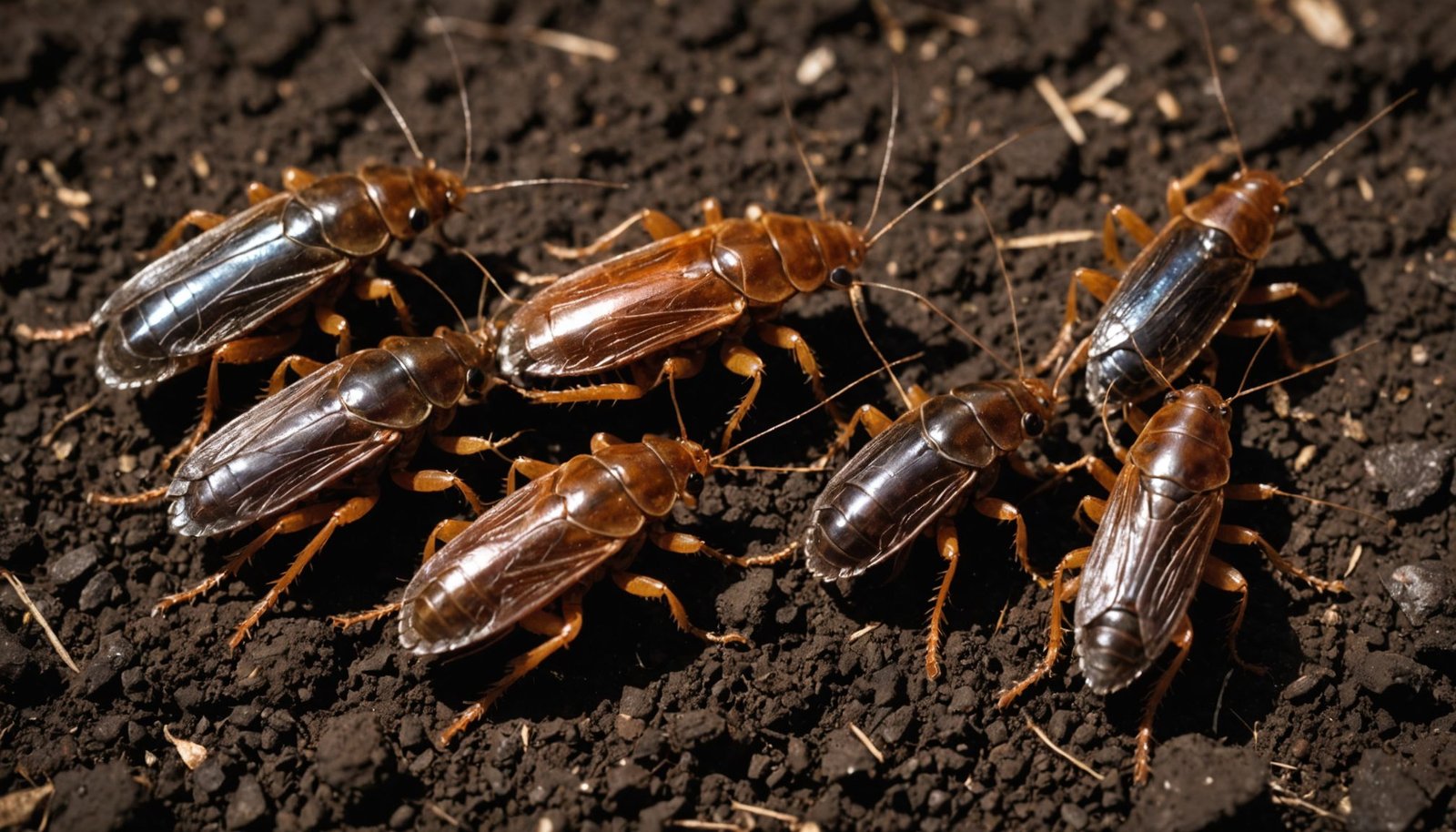
As you track nymph development, you’ll see molt counts vary by species—about 6–7 in German roaches and up to 10–13 in American roaches. Nymphs are smaller and lack wings until they reach adulthood. You can expect each molt to bring a larger, more adult-like nymph, though still wingless until the final shed. You’ll also notice growth speed hinges on conditions: warmer, humid, well-fed colonies mature quickly, while cooler, drier, crowded, or stressed settings slow molts and extend timelines.
Molt Counts by Species
Even before you see adults, molt counts and timelines tell you how fast a cockroach population can mature. You can read species by their instar numbers.
German cockroaches race through about 5–6 molts in 40–60 days, growing from roughly 3 mm to 12.5 mm before winged adulthood. Females can produce oothecae with 30–40 eggs, which accelerates population growth once nymphs mature.
Brown-banded nymphs take 5–6 months with up to 8 molts, reaching adult form in about 276 days; males can fly after the final molt.
American cockroaches stretch development, molting 10–13 times over about 6–12+ months, with a nymphal span near 600 days.
Oriental roaches are slowest, needing 7–10 molts across 300–800 days.
1) Expect pale, soft bodies right after molting, darkening within hours.
2) Molts mark progressive wing and size development.
3) Higher molt counts lengthen nymphal windows for targeted control.
Growth Speed Factors
Molt counts hint at pace, but growth speed hinges on how fast nymphs move through those stages under real conditions. Temperature, humidity, food, and crowding push timelines faster or slower, regardless of how many molts a species logs.
Keep spaces warm (75–85°F) and humid (>70%), and German cockroach nymphs can mature in about 50–60 days, sometimes within 6–31 weeks across 6–7 instars. In drier, cooler rooms, development stretches, molts delay, and mortality rises.
American roach nymphs typically need 6–12 months over 10–13 molts; Oriental roaches run similarly slow. Brown-banded nymphs mature in 80–160 days, especially in warmer, drier niches. Adult American cockroaches have a lifespan of approximately one year, and favorable conditions can extend lifespan.
After each molt, nymphs pale, then darken as the new exoskeleton hardens—an interval of vulnerability. Limited food or overcrowding slows growth, while sheltered crevices stabilize microclimates and speed cycles.
Adult Traits and Reproductive Capacity Across Common Species
While cockroach species differ in size and pace, their adult traits align tightly with how many eggs they can produce and how fast populations explode.
You’ll see female-biased size dimorphism in most pests: females are larger, heavier, and carry wider pronota, adaptations that support ootheca production and incubation. Males often trade body mass for longer antennae and wing traits that boost mate finding and copulation success. These anatomical differences map to species-level output.
1) German cockroach: 5–7 oothecae, up to 40 eggs each; short generation time (~66 days); single mating can fertilize lifetime output.
2) American cockroach: ~10 oothecae, 14–16 eggs each; slower development (6–12 months); parthenogenesis possible but less efficient.
3) Brown-banded and Oriental: 13–14 and ~8 oothecae, respectively; 14–18 or ~16 eggs; faster vs. slower nymphal timelines shape turnover.
Environmental Conditions That Accelerate or Slow Reproduction
Because cockroach biology tracks the room they live in, temperature, humidity, food, social cues, and shelter together set the pace of reproduction. Warmth around 28–30 °C speeds ootheca incubation, nymph growth, and egg production; cool rooms slow everything, and heat outside the ideal range stresses adults and lowers fertility. Humid air and ready water keep eggs viable; dry conditions lengthen development and boost mortality. Abundant, nutritious food accelerates oocyte maturation and fecundity, while scarcity delays mating and reduces eggs per case.
Crowding and social cues matter. A nearby female can trigger egg maturation via hormonal signals, but high density causes stress and delays reproduction. Shelter—tight cracks, warm appliances, or damp voids—creates stable, protective microhabitats that intensify local reproductive success.
| Condition | Effect on Reproduction |
|---|---|
| Temperature | Ideal warmth accelerates; cold slows |
| Humidity/Water | Moisture boosts survival; dryness impedes |
| Food/Social/Shelter | Nutrition, cues, refuge amplify rates |
Applying Reproductive Insights to Effective Infestation Control
Armed with how roaches reproduce, you can time control to hit the weakest links—eggs, freshly molted nymphs, and breeding adults in their harborage.
Time control to target roaches’ weakest links: eggs, fresh nymphs, and breeding adults in harborage.
Prioritize oothecae: German females often carry them until hatch, so treat adults directly and place interceptors near warm, tight crevices. American females deposit cases sooner; vacuum and discard oothecae you uncover in basements and utility rooms. Use IGRs to interrupt egg-to-nymph shifts across variable incubation windows.
1) Eggs: Target oviposition sites in cracks, behind appliances, and inside cabinetry; apply dusts or IGRs that reach protected oothecae.
2) Nymphs: Time follow-up sprays or baits after molting waves; cut food, water, and shelter so nymphs starve.
3) Adults: Bait harborage, seal entry points, and stress populations—sanitation reduces reproduction and lifespan.
Conclusion
You now understand how cockroaches reproduce—and why it matters. When you spot oothecae, nymph molts, or fast-maturing adults, you’re seeing population growth in motion. You can disrupt it. Target egg cases, break nymph development with growth regulators, and deny adults warmth, water, food, and harborage. Seal entry points, vacuum regularly, and time baits and insecticides to life stages. By aligning control with their biology, you’ll slow reproduction, shrink colonies, and prevent reinfestation.
