
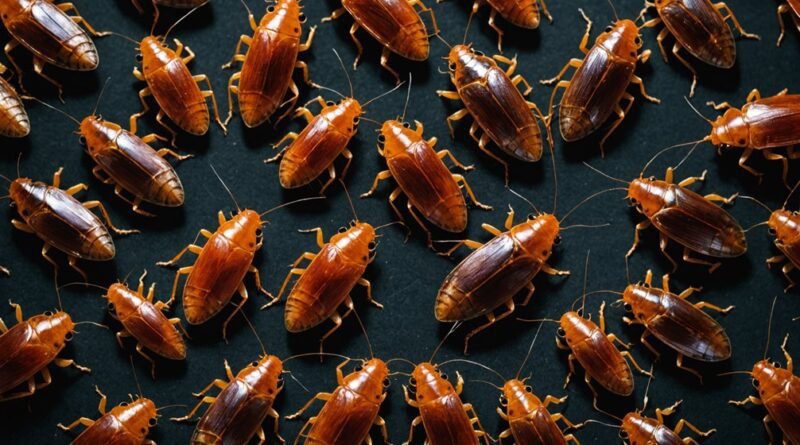
How Long Cockroaches Live, Lifespan by Species and Conditions
Most household cockroaches live months to a couple of years, depending on species and conditions. You’ll see German roaches last about 100–200 days, while American roaches can reach 1–2 years. Oriental roaches live 6 months to 1 year, and brown‑banded roaches about 100–200 days. Warmth and humidity speed growth but can shorten adult life; females often outlive males. Extremes include hissing roaches near 5 years and rhinoceros roaches over 10. Explore how temperature, moisture, and habitat shift these numbers.
Key Takeaways
- German cockroaches live 100–200 days; American cockroaches live 1–2 years; Oriental 6–18 months; Brown-banded 100–200 days.
- Large species can live much longer: Madagascar hissing up to ~5 years; Rhinoceros Cockroach over 10 years.
- Warm, humid environments speed development but often shorten adult lifespan; dryness dehydrates and reduces survival.
- Eggs incubate 3–8 weeks; nymphs molt 6–14 times before adulthood, with faster development in warmer conditions.
- Adult females typically outlive males; stable warmth and moisture increase survival and reproduction.
Lifespan at a Glance: Key Ranges by Common Species
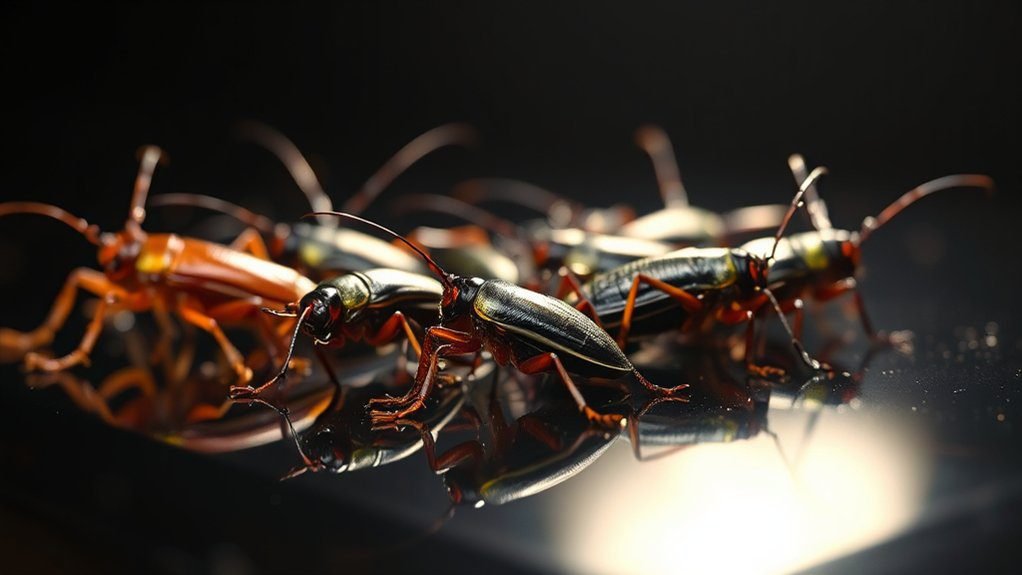
From a few months to several years, cockroach lifespans vary sharply by species and environment.
You’ll see the American cockroach live about 1 to 2 years—often 365 to 400 days in warm, humid spaces—outlasting many household roaches due to its size and slower development.
German cockroaches typically survive 100 to 200 days, but they mature fast—sometimes in 40 days—and reproduce prolifically, which offsets their short lives. Their rapid population growth is driven by oothecae that hold 30–40 eggs each.
German cockroaches live 100–200 days but mature in 40 and reproduce explosively.
Oriental cockroaches usually reach 6 months to 1 year, sometimes longer in damp areas like basements and sewers; moisture strongly shapes their longevity.
Brown-banded cockroaches live about 100 to 200 days, favor warm, drier indoor zones, and maintain populations with frequent oothecae.
Beyond common pests, Madagascar hissing cockroaches can reach about 5 years in captivity.
Florida woods cockroaches average around 1 year.
Schultesia lampyridiformis rarely exceeds 6 months.
From Egg to Adult: Stages of the Cockroach Life Cycle
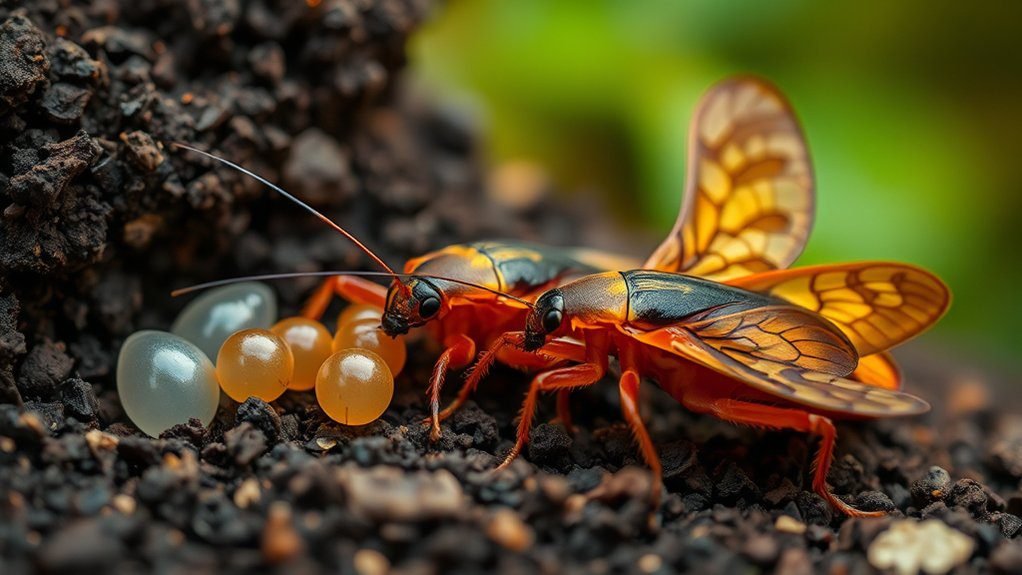
Knowing how long roaches live sets the stage for how they get there: each one starts sealed in an ootheca, hatches as a nymph, molts through several instars, and finally emerges as an adult.
You’ll find the ootheca—a protective egg case—tucked in warm, sheltered, food-rich spots. Females may carry it for hours to days, then deposit or glue it to surfaces. Female cockroaches often hide egg cases to protect them from disturbance and predators.
Egg counts vary: about 16 in Oriental, around 15 in American, and up to 40 in Brown-banded cases. Incubation spans roughly 3–8 weeks (American: 29–58 days; Oriental: ~50 days). Many females produce 6–90+ oothecae, fueling rapid growth.
Nymphs hatch wingless, pale, and quickly darken. They forage immediately and share adult diets.
Development requires 6–14 molts—about 6 in German, up to 8 in Brown-banded, and 10–13 in American—each ecdysis shedding the exoskeleton and adding traits like wing pads by the 3rd–4th instar.
Nymphal periods range from ~40 days to over two years.
After the final molt, adults mature and reproduce.
How Temperature, Humidity, and Habitat Shape Longevity
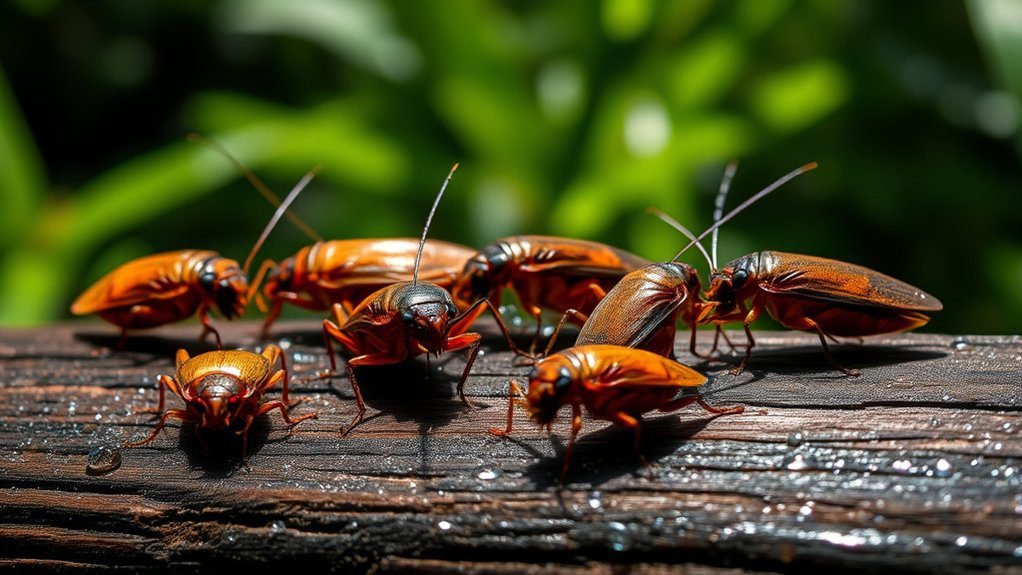
You’ll see cockroaches grow faster in warm, humid settings, but that same heat can shorten adult lifespan.
When humidity drops or temperatures swing too high or low, they lose water, stall development, and die sooner. Adults live longer than males, with adult females generally outliving males across species.
If the habitat lacks stable warmth, moisture, and shelter, stress mounts and longevity falls.
Warmth Speeds Development
When temperatures climb and humidity stays high, cockroaches speed through life. You’ll see eggs hatch sooner and nymphs molt faster as metabolism rises.
German cockroaches race from egg to adult in about 70–100 days at 25–30°C (77–86°F), their sweet spot. Brownbanded cockroaches push even harder near 80°F, boosting development and reproduction. American cockroaches move more slowly overall, yet they flourish when it’s warm and humid—typically above 82°F.
Warmth accelerates population growth because adults mature sooner and reproduce earlier. Steady indoor heat lets colonies surge, especially when humidity prevents desiccation. Their aggregation behavior concentrates individuals near food and water, accelerating development and reproduction.
But there’s a ceiling: near 37–39°C (98–102°F), prolonged exposure becomes lethal, halting development. Cooler conditions quickly drag timelines; below preferred ranges, growth slows sharply and survival falls, particularly for Germans, which struggle in the cold.
Habitat Stress Shortens Life
Warmth speeds growth, but the same forces that accelerate development can shorten lives when conditions tip outside comfort zones. Most household roaches die after prolonged heat above 120°F or any sustained freezing; near 32°F, body fluids freeze and tissues fail. Below 45°F is generally fatal, though oriental cockroaches tolerate brief near-freezing spells. In Ontario, German cockroaches are the most prevalent species, while Oriental cockroaches show better tolerance for cooler environments.
Eggs are the weak link: survival drops below 50°F, and extended exposure under 60°F causes heavy losses.
Humidity decides day-to-day survival. Low humidity dehydrates roaches, while higher moisture prolongs life and boosts reproduction. They last only about a week without water, so they crowd dark, warm, humid crevices—appliances, clutter, and damp masonry niches.
Life-stage sensitivities matter: nymphs falter with swings, adults endure more, and eggs resist brief heat. Stable, moist shelter extends adult phases; disruption shortens them.
Species Profiles: German, American, Oriental, and Brown-Banded
Although all cockroaches share the same basic life cycle, the German, American, Oriental, and brown-banded species differ sharply in pace, longevity, and habitat.
You’ll see German cockroaches race through life: nymphs mature in 2–3 months, with 6–8 molts, and adults live roughly 100–200 days. They explode in warm, humid kitchens, with females carrying oothecae holding up to 48 eggs.
American cockroaches take their time—nymphs need 6–12 months, and adults often reach 1–2 years—thriving in warm, moist urban spaces.
Oriental cockroaches favor dark, damp areas; they develop over about a year with 7–10 molts and live 6 months to 1.5 years.
Brown-banded cockroaches prefer warm, dry rooms; nymphs mature in 2–6 months, adults live 100–200 days, and females glue oothecae high on walls and furniture.
- German: fastest developer, highest indoor reproduction.
- American: longest-lived household species here.
- Oriental: moisture-dependent, slower growth.
- Brown-banded: drier habitats, oothecae placed up high.
Outliers and Extremes: Fastest and Longest-Lived Cockroaches
Even among roaches’ shared life cycle, the extremes are striking: some species sprint from nymph to adult in a few months and die within a year, while others inch along for a decade or more. You’ll see the fastest growers in unstable habitats—small-bodied roaches that mature in roughly six months, breed quickly, and turn over generations at speed. Common house pests often don’t pass a year in the wild or controlled trials.
Meanwhile, the Rhinoceros Cockroach stands at the opposite pole, living beyond 10 years and carrying the title of heaviest roach. Larger, slower species tend to favor stable environments and prolonged development; some pet-kept roaches have reportedly reached 5.5 years.
| Extreme | Example | Notable trait |
|---|---|---|
| Fastest cycle | Small pest roaches | <1-year lifespan |
| Longest-lived | Rhinoceros Cockroach | >10 years |
| Largest by size | Megaloblatta longipennis | ~9.7 cm, ~20 cm span |
| Evolutionary breadth | Jurassic to today | Diverse adaptations |
Size may track longevity, but for giants like Megaloblatta, precise lifespan data remains sparse.
Practical Takeaways for Prevention and Population Control
Knowing which roaches race through life and which linger for years matters less than cutting off what all of them need: food, water, and shelter.
Start with sanitation: wash dishes, wipe counters, and clear crumbs daily. Seal leftovers and pet food in airtight containers, empty trash often, and clean under and behind appliances. Reduce clutter to erase hiding spots.
Shut the door on entry. Caulk cracks 1/8 inch or larger, fix pipe and faucet leaks, install drain stoppers, and maintain door thresholds and window seals. Keep firewood and debris away from your foundation.
Use traps to see what’s happening. Place glue traps along walls, under sinks, and behind refrigerators; move them if they stay empty. Identify species to tailor tactics.
Favor low-risk controls. Wipe with vinegar solutions, tuck bay leaves in cabinets, and place borax or boric-acid baits where kids and pets can’t access. Maintain inspections and combine methods over time.
- Seal, dry, declutter.
- Trap, check, adjust.
- Store food tight.
- Maintain weekly.
Frequently Asked Questions
Do Cockroaches Sleep or Have Daily Activity Cycles?
Yes—you’ll see daily activity cycles and sleep-like rest. They’re mostly nocturnal, active in darkness, resting in daytime shelters. Their internal clocks persist without light cues, timing locomotion, mating, and pheromone release. Pregnancy and environment modulate these rhythms.
Can Cockroaches Live Without Their Heads, and for How Long?
Yes—you’ll find cockroaches can live headless for several days, sometimes up to about a week. They breathe through body spiracles, their ganglia run basics, and the neck seals. Eventually, they die from dehydration or starvation.
How Do Pesticides Affect Cockroach Lifespan Across Generations?
Pesticides shorten lifespan at sublethal doses, yet you drive rapid resistance. Within months, resistant roaches survive longer, reproduce more, and pass detox genes on. Cross-resistance emerges, so single-chemistry reliance backfires; rotate actives and integrate botanicals and nonchemical controls.
Do Male and Female Cockroaches Live Different Lengths of Time?
Yes—females usually outlive males. You’ll see females invest energy in producing many oothecae, which slows senescence, while males’ higher activity and mating risks shorten lifespan. For example, German females often outlast males; American females can live 1–2 years.
Can Diet Type Change Cockroach Longevity or Reproduction Rates?
Yes. You’ll see better diets extend cockroach lifespan and boost reproduction. Carbohydrates fuel survival and egg production; protein speeds development and fecundity. Poor nutrition or dehydration shortens lives, delays maturity, reduces oothecae, and slows population growth across species and environments.
Conclusion
You’ve seen how a roach’s lifespan hinges on species, environment, and life stage. When you control warmth, moisture, and access to food and harborage, you shorten lifespans and break breeding cycles. Focus on sealing entry points, reducing clutter, fixing leaks, vacuuming regularly, and deploying targeted baits or traps. Identify the species to tailor tactics—German roaches need relentless sanitation; American roaches demand exclusion. Stay consistent, monitor results, and you’ll turn a resilient infestation into a manageable, shrinking population.
