
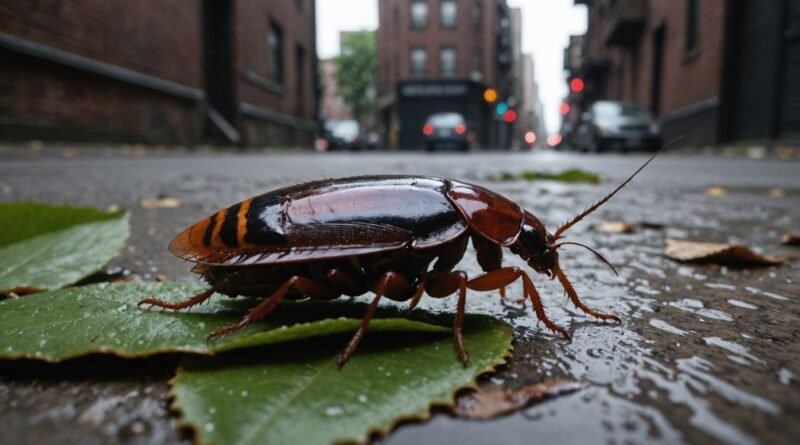
Oriental Cockroaches, Habitat Preferences and Control Strategies
Oriental cockroaches — also called water bugs or, in some regions, black beetles — are glossy, dark-brown to nearly black insects that thrive in damp, cool spots like basements, crawl spaces, sewers, and trash areas. Their appearance alone sets them apart from other roach species: slow-moving, stocky, and built for wet environments. They’re nocturnal, surge indoors after heat or rain, and rely on water more than food. A single oriental cockroach infestation can spread quickly through floor drains, plumbing, and wall voids, making early inspection and treatment essential. Seal gaps, add door sweeps, and screen vents. Fix leaks, remove standing water, and maintain strict hygiene in food prep areas. Place gel baits in cracks and stations near harborages; rotate actives and monitor with sticky traps. Keep up IPM maintenance to cut populations quickly.
Key Takeaways
- Oriental cockroaches favor moist, cool, shaded areas — sewers, crawl spaces, basements, and cluttered, damp outdoor sites near buildings.
- They enter through gaps under doors, vents, plumbing penetrations, and cracks; drought or heat often drives them indoors, triggering a sudden cockroach infestation.
- Reduce moisture: fix leaks, clear gutters, remove standing water, and maintain dry, well-ventilated basements and crawl spaces.
- Exclude and sanitize: seal cracks, add door sweeps and weather stripping, declutter, eliminate cardboard, and maintain daily hygiene in kitchen and food areas.
- Use targeted IPM: place gel baits and stations near harborages, rotate actives, monitor with traps, and avoid broadcast sprays.
- Female oriental cockroaches produce about 16 oothecae in a lifetime, each containing roughly 18 eggs — understanding their lifecycle is key to effective extermination.
Identification, Appearance, and Global Distribution
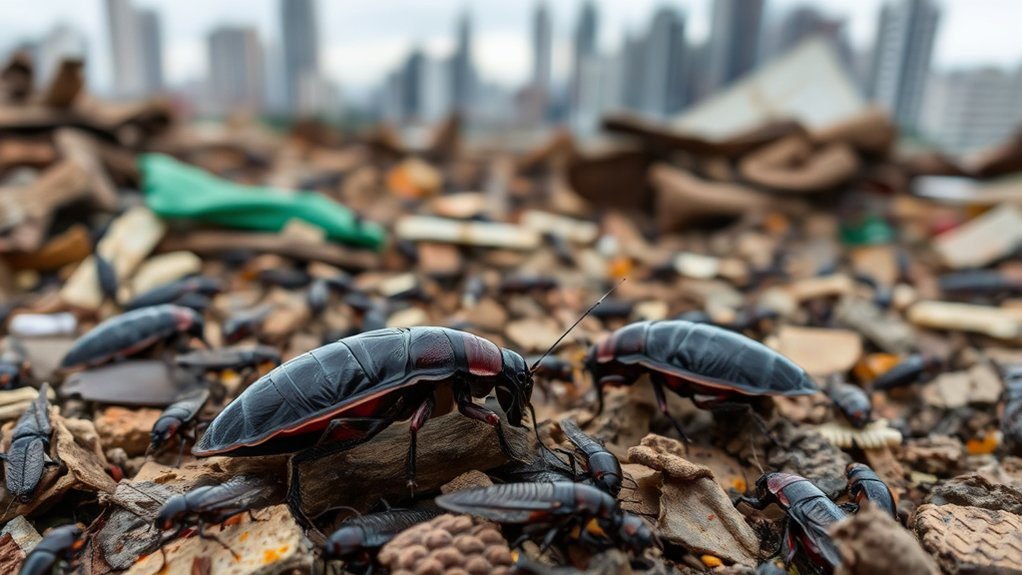
Glossy, dark-brown to nearly black and often mistaken for water bugs or even a type of black beetle, the oriental cockroach is a stocky, oval insect adapted to cool, damp places. Its appearance differs noticeably from other common roach species like the German or American cockroach, and understanding those differences is the first step in accurate identification.
You’ll recognize males at about 1 inch in length with wings covering three-quarters of the abdomen; despite the wings, they can’t fly. Females are broader, heavier, and about 1.25 inches, with only short wing pads, so they’re fully flightless. This size comparison — male vs female — is one of the clearest identification cues for this cockroach species.
Small but distinctive: dark brown to black bodies, stocky build, and non-functional wings — the classic appearance of the oriental cockroach.
Males’ narrower bodies and visible wings contrast with females’ bulkier profiles. Both sexes move slowly, stay low to the ground, and remain nocturnal, leaving dark egg capsules, fecal smears, shed skins, and a musty, oily odor as clues. These signs are key indicators of an active oriental cockroach infestation. They are considered dangerous due to the bacteria they carry, which can contaminate food and trigger asthma.
Sexual dimorphism aids ID: males show brownish, nonfunctional wings and styli between the cerci; females lack visible wings. If you spot one in daylight, expect a nearby population — daytime sightings are a reliable sign of a substantial infestation.
Globally, you’ll find this cosmopolitan species across temperate and subtropical regions in the United States, Europe, and parts of Asia, especially near human activity. Movement indoors often increases during cooler or drier periods, and numbers can surge dramatically in urban basements and crawl spaces — around 87% of reported infestations occur in exactly these locations.
Lifecycle and Reproduction
Understanding the oriental cockroach lifecycle is essential for effective extermination — targeting only adults while ignoring egg cases and nymphs guarantees the infestation will return.
The lifecycle follows three stages: egg, nymph, and adult. A female produces roughly 16 oothecae — dark reddish-brown egg capsules each containing about 18 eggs — over her lifetime. On average, that amounts to nearly 300 offspring per female, deposited in warm, sheltered locations near moisture and food sources.
Incubation takes 42–81 days depending on temperatures; cooler conditions slow development significantly. Nymphs hatch in synchronized stages, going through 7–10 molts over 6–18 months before reaching adulthood — far slower than German cockroaches, which is one key comparison point between these two common roach species. Adults live about 26 weeks on average.
Egg capsules are resistant to many insecticides, which is why extermination programs must account for all stages of the lifecycle, not just visible adults. A professional inspection that locates oothecae deposits in wall voids, floor drain surrounds, and crawl spaces is the foundation of any successful treatment plan.
Preferred Habitats Indoors and Outdoors
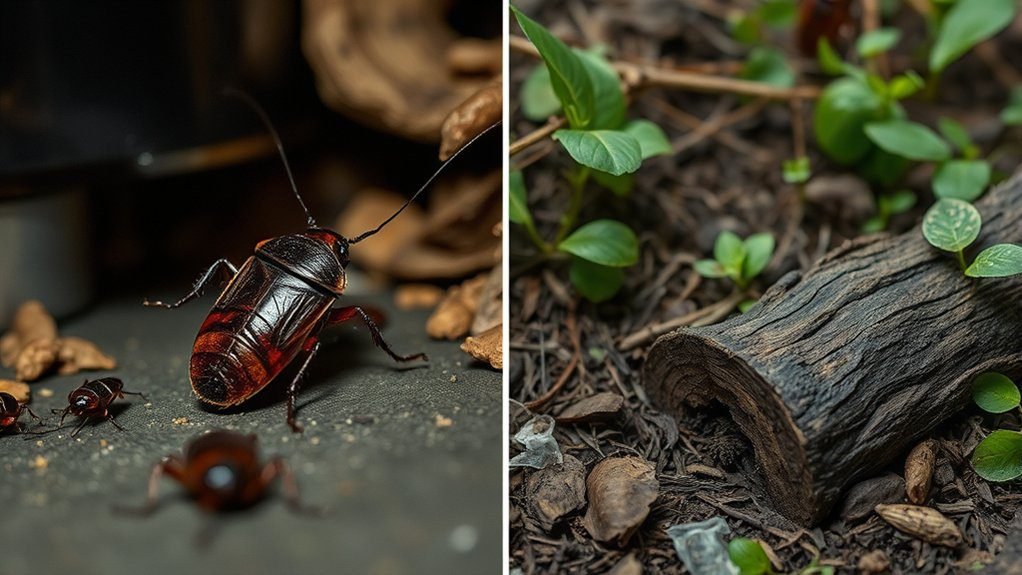
Although they’re often spotted indoors, oriental cockroaches build strongholds wherever moisture persists. Outside, you’ll find them in warm, shaded, damp spots — mulch beds, leaf litter and leaves, under stones and logs, along stone walls, and beneath debris near the foundation of a house.
They thrive in man-made wet zones such as sewers, storm drains, sewer pipes, valve pits, and abandoned cisterns, and they congregate near trash cans and garbage piles where food scraps and moisture collect. They tolerate cooler temperatures and stay active outdoors in mild, damp conditions. Adults are easy to eliminate, but their egg cases are resistant to insecticides — a critical fact for any extermination plan.
Indoors, you’ll encounter them in dark, cool, damp areas: basements, cellars, crawl spaces, and under porches. They favor locations near water — under sinks, around leaky pipes, floor drains, washing machines, refrigerators, toilets, bathtubs, radiators, and service ducts — and typically remain on lower floors. The kitchen, laundry room, and bathroom are the most common indoor hotspots.
Drought and summer heat push them inside seeking humidity. They enter through gaps under doors, cracks in siding, vents, and sewers, or ride in with packages or laundry — including food packages, boxes, and containers — then move along plumbing from foundations into living spaces anywhere moisture exists.
Behavior, Movement, and Seasonal Patterns
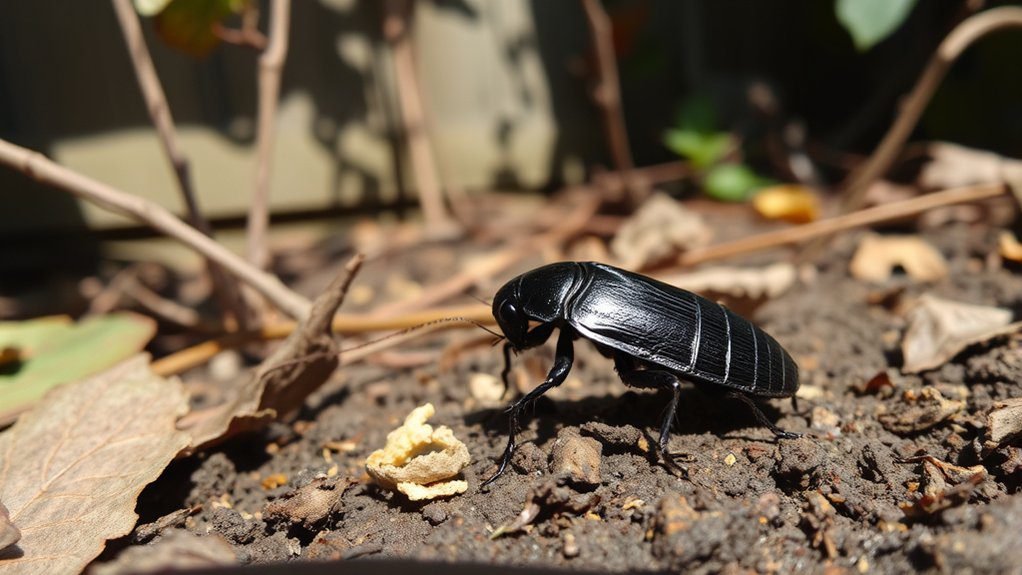
Knowing where oriental cockroaches settle helps you predict how they act: they emerge after dark, stay close to damp, low areas, and move with a slow, deliberate crawl. You’ll notice minimal daytime activity; if you see them in daylight, the infestation is likely heavy. They are often referred to as water bugs — a name that reflects their dependence on moisture more than food.
Oriental roaches lurk after dark in damp, low spots, crawling slowly — daytime sightings signal heavy infestations that warrant immediate inspection and treatment.
Males hold their bodies off the surface, while females drag their abdomens. They don’t fly — male wings don’t function for flight — and they struggle on smooth materials, preferring textured routes and ground-level corridors. When startled, they dash into nearby cracks rather than taking long, rapid flights.
Expect peak adult activity in late spring through early summer, with nymphs active from March onward. They aggregate gregariously, guided by fecal and cuticular pheromones, often along corners and edges near moisture. Seasonal shifts push them indoors after heavy rain, plumbing upsets, or drought — a key pattern for scheduling inspection and prevention treatments.
- Watch after sunset for reliable detection
- Scan baseboards, drains, and floor-level seams for signs
- Note female abdomen-drag vs. male posture
- Check corners where groups cluster
- Track spring–summer surges and indoor incursions for seasonal prevention
Signs of an Oriental Cockroach Infestation
Spotting an oriental cockroach infestation early is the most effective form of prevention. Here are the key signs to look for in your home, basement, or crawl space:
- Droppings: Small, dark deposits resembling ground pepper near harborage zones, floor drains, and under sinks
- Egg capsules: Dark reddish-brown oothecae tucked into cracks, behind pipes, or along floors near moisture
- Shed skins: Cast exoskeleton skins near molting locations, indicating active nymph development
- Musty odor: A distinctive oily, musty odor in basements, crawl spaces, or bathroom areas signals a substantial population
- Daytime sightings: Seeing an oriental cockroach in daylight is a strong sign that numbers are high enough to displace individuals from harborage
- Filth trails: Grease smears and filth deposits along baseboards and wall edges near plumbing
If you notice any of these signs, a professional inspection of your property is the recommended next step. Early treatment dramatically reduces the damage a cockroach infestation can cause to your home‘s hygiene and your family‘s health.
Diet, Water Dependence, and Survival Factors
You’ll see oriental cockroaches eat almost anything — decaying organic matter, starchy scraps, garbage, and even paper and contents of food packages when other sources are scarce. Their diet flexibility is central to their survival and makes purely food-based prevention insufficient on its own.
They can survive weeks without food but only about two weeks without water, so they cluster around damp, humid spots. When you assess risks and plan control, prioritize eliminating moisture and easy food sources to limit their survival. They prefer to hide in damp areas like basements, drains, and crawlspaces where moisture is consistently available.
Omnivorous Scavenging Habits
Scavengers by design, oriental cockroaches thrive on what most environments discard. You’ll see their omnivory in action around garbage, pet food, fermenting scraps, and starchy residues. Their diet spans animal and vegetable sources — and even leather or cloth if accessible.
At night, they move opportunistically, slipping along plumbing and low floors to reach dark, moist foraging spots. Their flexible diet lets them persist where food variety shifts, and females stash egg capsules near dependable nutrients to boost nymph survival. They can tolerate food shortages far longer than moisture gaps. In professional control programs, continuous monitoring is crucial to manage populations effectively over time.
- Garbage, crumbs, and decaying plant or animal matter
- Fermenting foods and starch-heavy wastes
- Opportunistic night foraging near plumbing routes
- Occasional consumption of leather and cloth
- Egg capsules hidden close to nutrient-rich caches for offspring survival
Critical Water Needs
Though hardy in many respects, oriental cockroaches are unusually dependent on moisture, and dehydration kills them faster than hunger. You’ll rarely see them in dry rooms unless a hidden leak or damp void is nearby. Their exoskeleton retains water poorly, so they track humidity gradients into basements, sewers, floor drains, and cool crawl spaces. Humidity above 75% is the threshold at which colonies thrive most reliably.
Even without standing water, humidity above 60% sustains colonies. Nymphs and adults need moist microhabitats to digest, molt, and reproduce; adults live about 26 weeks on average only when water’s reliable. With water, they can go roughly a month on little food; without it, they die in about two weeks. Egg capsules resist desiccation via oily coatings. Expect peak survival between 20–29°C — the temperatures at which their lifecycle advances most rapidly.
Survival Without Resources
Two resources dictate how long oriental cockroaches last between meals: food and, far more critically, water. Without food, they can stretch survival to about 30 days by slowing activity and tapping stored nutrients. Without water, they crash in roughly 14 days — which is why damp basements, sewers, mulch, and flower beds become lifelines, and why moisture control is the single most impactful prevention strategy available to homeowners.
That persistence complicates treatment when you only remove food without addressing moisture. Integrated extermination programs that target both are consistently more effective, particularly for severe oriental cockroach infestations in homes, commercial kitchens, and multi-unit buildings.
- Prioritize moisture reduction; it shortens survival fastest.
- Fix leaks, improve ventilation, and seal damp entry points.
- Limit crumbs and unsecured pet food.
- Target secluded, moist harborage zones.
- Treat adults and hidden egg cases across all lifecycle stages.
Health Risks, Disease, and Hygiene Impact
Oriental cockroaches pose real health risks to humans, people with compromised immune systems, and even family pets. They spread bacteria mechanically — picking up pathogens in sewers and depositing them on food prep surfaces, dishes, and food itself.
Documented disease risks from oriental cockroach infestations include:
- Salmonella and E. coli contamination leading to food poisoning
- Dysentery and gastroenteritis from fecal deposits on surfaces
- Transmission of viruses and protozoa via body contact with food and containers
- Allergic reactions and asthma triggered by shed skins, droppings, and filth left in spaces
The hygiene damage caused by an oriental cockroach infestation goes beyond contamination — the musty odor, visible droppings, and shed skins in a kitchen or basement create environments that are difficult and costly to restore. For humans with respiratory conditions, asthma symptoms often worsen significantly even after extermination, until allergen-laden filth and shed skins are professionally cleaned.
Physical Exclusion and Habitat Modification
Even before you consider baits or sprays, block oriental cockroaches at the source and strip away what sustains them. Prevention at the structural level is the most durable form of extermination support.
Seal cracks, holes, and gaps around foundations, doors, windows, and utility lines with durable caulk. Add tight weather stripping and door sweeps, and fit mesh screens over vents, floor drains, and windows. Target plumbing and wiring penetrations — these are the primary entry points for oriental cockroach infestations in urban buildings. Inspect seals routinely and repair anywhere weathered.
Cut food and water. Clean prep and eating areas daily to maintain basic hygiene, remove crumbs and spills, and keep pet feeding zones spotless. Fix leaks in faucets, pipes, and gutters. Eliminate standing water — clogged gutters, birdbaths, trays, and overwatered plants. Seal trash containers and store waste away from the foundation. Reduce clutter and ditch cardboard in storage areas.
Lower humidity with ventilation in basements and damp rooms. Deep clean under appliances and behind shelves; vacuum and steam to remove insects and residues. Inside, caulk baseboards and cabinets, maintain appliances, and place sticky traps near activity zones as part of ongoing inspection.
Chemical Controls and Integrated Management
You’ll get faster, cleaner results by placing cockroach baits precisely near harborages and travel routes while keeping them free from spray contamination. For an active oriental cockroach infestation, combining chemical treatment with structural prevention and hygiene improvements is the most reliable path to full extermination.
Pair those targeted bait placements with strict sanitation and exclusion — fix leaks, remove clutter, seal cracks, and tighten door sweeps — to cut food, water, and shelter. This integration reduces chemical use, slows resistance, and sustains control between retreatments.
Targeted Bait Placements
Although oriental cockroaches often roam widely, targeted bait placements work best when you put small, fresh doses where they actually hide and travel. Accurate placement during a professional inspection makes a significant difference in treatment outcomes.
Place gels (pea to peanut size) in cracks, crevices, corners, behind appliances, cabinet backs, and under sinks. Distribute many small spots so they don’t dry fast and more roaches feed. In heavy infestations, set bait stations about every six feet in basements, crawlspaces, and along perimeters — safer around kids and pets than broadcast sprays.
Use granular or dry flowables in crawlspaces, mulched beds, and near foundations. Avoid food-prep surfaces and areas hit by frequent cleaning or moisture. Inspect and refresh baits, rotate active ingredients to prevent resistance, and track activity with glue traps. Dusts like boric acid and silica are effective in wall voids and under floor drains where gels can’t reach.
- Place micro-doses at harborages
- Space stations ~6 feet
- Use gels indoors, granulars outdoors
- Rotate active ingredients to prevent resistance
- Monitor, replace, and refine locations based on trap contents
Integrated Sanitation and Exclusion
Because oriental cockroaches thrive on moisture, clutter, and easy entry points, integrate sanitation, exclusion, and targeted chemistry as a single plan. This is the information that separates effective long-term management from repeated failed treatments.
Eliminate food and water: clean spills promptly, store food sealed, fix leaks, and remove standing water. Keep areas dry and ventilated; scrub drains and cracks. Clear clutter and perimeter debris to strip harborage. Block access: seal gaps in walls, floors, foundations, doors, and windows. Install 6–12 inch gravel borders, heavy-duty door sweeps, and weather stripping. Inspect incoming goods; remove egg capsules and droppings. Maintain repairs. Add chemistry strategically: place baits, gels, and desiccant or boric dusts in harborages and voids; rotate actives; use IGRs if needed to disrupt the lifecycle at the nymph stages. Avoid broadcast sprays. Monitor with traps, document finds, reinspect, and adjust placements and exclusion continuously.
Frequently Asked Questions
Are Oriental Cockroaches Harmful to Human Health or Allergies?
Yes. Humans and people with existing respiratory conditions face real risks from pathogen contamination and allergic reactions caused by oriental cockroach infestations. They spread Salmonella, E. coli, and parasites onto food and surfaces, triggering diarrhea and food poisoning, while shed skins and feces worsen asthma, cause wheezing, rashes, and respiratory irritation. Prompt treatment and thorough hygiene restoration after extermination are both critical for health recovery.
How Do Oriental Cockroaches Differ From German Cockroaches?
In comparison, these two common roach species differ significantly in size, color, speed, wings, habitat, and reproduction. German roaches are smaller, tan with two stripes, faster, and extremely prolific — completing their lifecycle in as little as 3 months. Oriental cockroaches are larger, darker, slower, damp-area lovers, smellier, and less agile, with a lifecycle that can span up to 18 months; neither typically flies.
Do Oriental Cockroaches Carry Pathogens or Bacteria Indoors?
Yes. You risk exposure to Salmonella, E. coli, protozoa, and viruses they mechanically spread on food and surfaces. Their feces and shed skins carry allergens that trigger asthma and allergies in people of all ages. The disease risk from a sustained oriental cockroach infestation is significant and should not be underestimated. Improve sanitation, seal entries, fix leaks, and monitor.
Can Pets Attract or Be Affected by Oriental Cockroaches?
Yes. Your pets can attract them via leftover food, water bowls, and waste, and be affected by contaminated dishes, allergens, and pathogens. Clean daily, store food airtight, dry bowls, remove waste, seal entries, and use pet-safe controls. Maintaining hygiene around pet feeding areas is an often-overlooked element of prevention.
What Professional Services Are Best for Severe Infestations?
Hire licensed pest control professionals. You’ll get thorough inspections, customized IPM plans, targeted baits and residuals, IGRs to disrupt the lifecycle, perimeter treatment, exclusion and sanitation guidance, plus scheduled follow-ups with re-treatments. They’ll document results, adapt frequency, and guarantee long-term suppression — the most reliable path to full extermination of a severe oriental cockroach infestation.
Conclusion
By understanding how to identify oriental cockroaches — their appearance, lifecycle, and habits — you have the information needed to disrupt their survival at every stage. Focus on moisture control, daily hygiene, and sealing entry points to make your home, kitchen, and crawl spaces less inviting. Use targeted baits and insecticides as part of an integrated plan, not a stand-alone fix. Watch for the signs of a cockroach infestation — droppings, oothecae, shed skins, and musty odor — and act fast when you find them. Monitor regularly, adjust tactics seasonally, and don’t hesitate to call professionals for persistent infestations. With consistent effort across all three lifecycle stages, you’ll break the cycle and keep these pests out for good.
