
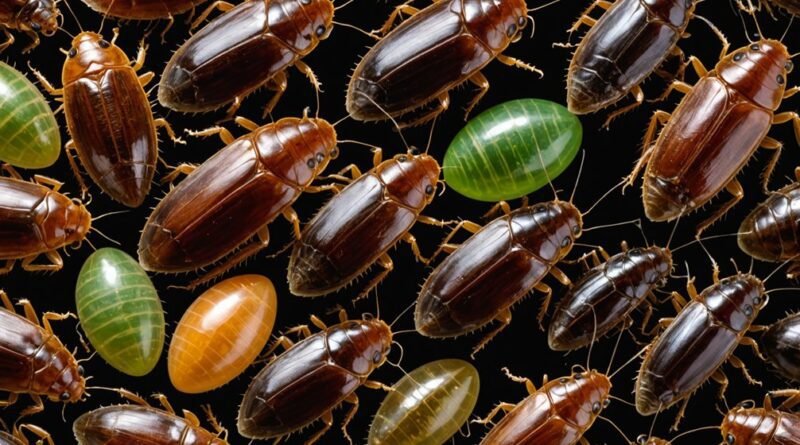
The Cockroach Life Cycle Explained (With Photos)
See how a cockroach’s life unfolds from egg to nymph to adult. You’ll spot oothecae (egg capsules) that protect embryos for 24–65 days, then nymphs that molt through instars, darkening as their shells harden. German roaches mature in ~70–100 days in warmth; American and Oriental species take longer. Adults live about a year, scavenging at night. Photos show species differences, winged adults, and how temperature and humidity speed or slow growth—stick around to discover what drives booming infestations.
Key Takeaways
- Cockroaches undergo three stages—egg (ootheca), nymph (multiple molts), and adult—lasting from about one month to over two years, depending on species and environment.
- Females form tough oothecae; German cockroaches carry them to hatching, while others deposit them in crevices for protection.
- Egg capsules hold species-specific counts: German 30–40, American 14–16, Oriental 16, brown-banded 10–18; incubation is typically 24–65 days.
- Nymphs pass through several instars, molting and darkening as their exoskeleton hardens; development accelerates in warm, humid, food-rich conditions.
- Adults live around one year; species vary in size and habitat, with German breeding fastest, American large and sometimes flying, Oriental favoring cool damp areas.
Egg Stage: Oothecae, Incubation, and Hatching
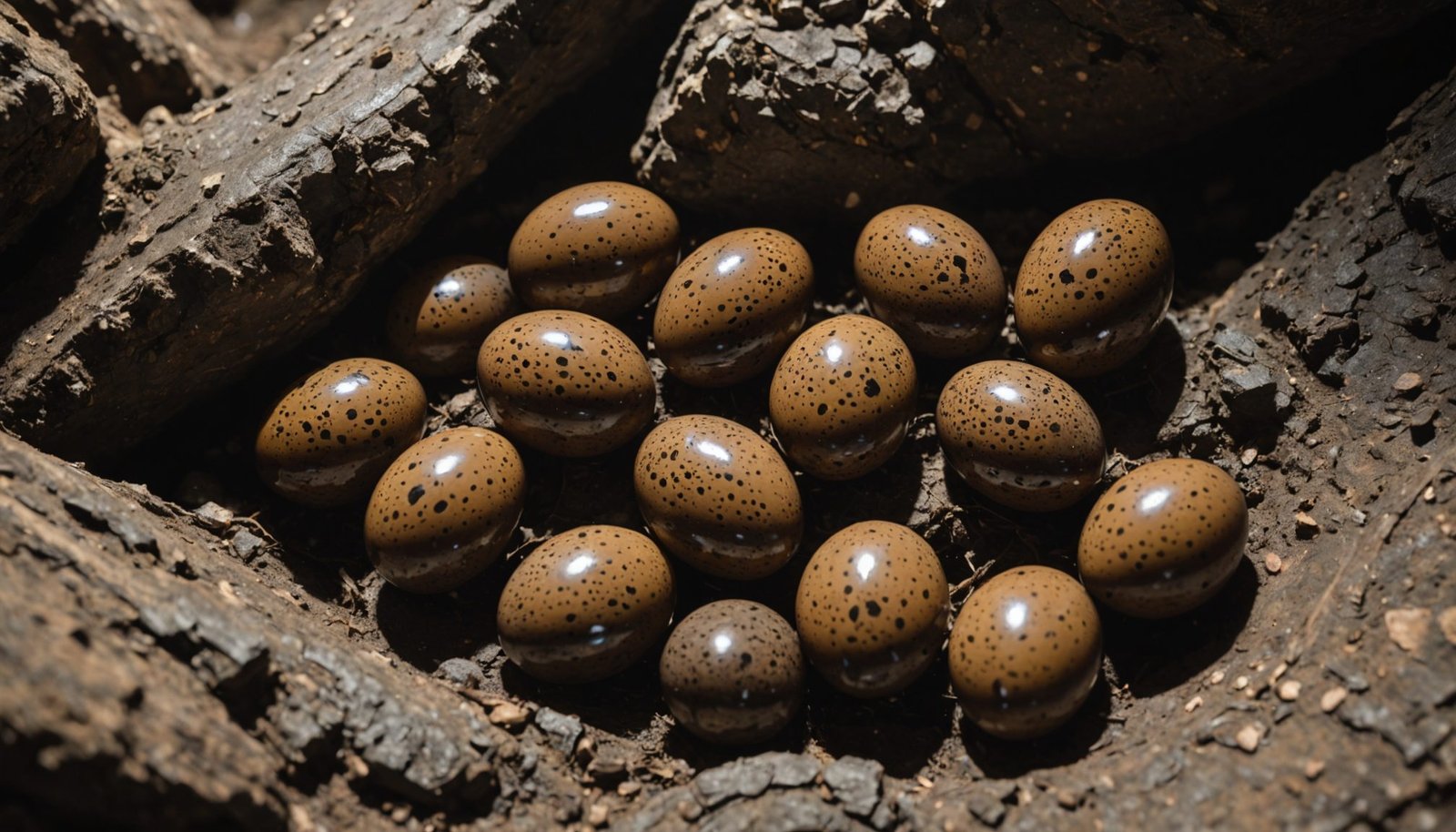
Although cockroach species differ, their egg stage revolves around the ootheca— a hardened capsule the female forms to shield developing embryos.
You’ll see this capsule built from structural proteins and tanning agents that cure into a tough shell, guarding eggs from predators, parasites, and desiccation. Females carry or cache oothecae to maintain favorable temperature and humidity, then hide them in protected crevices. German cockroaches can carry oothecae until just before or during hatching, helping maintain ideal incubation conditions.
Species vary: German cockroach oothecae hold about 30–40 eggs and measure roughly 8×3×2 mm; American cockroaches pack 14–16 eggs in a dark brown, purse-shaped case; Oriental cockroaches carry about 16; brown-banded hold 10–18.
Incubation typically lasts several weeks—roughly 24–65 days—accelerating with warmth and adequate humidity. When ready, the young chew through the shell and emerge in clusters.
Nymph Stage: Molting, Instars, and Color Changes
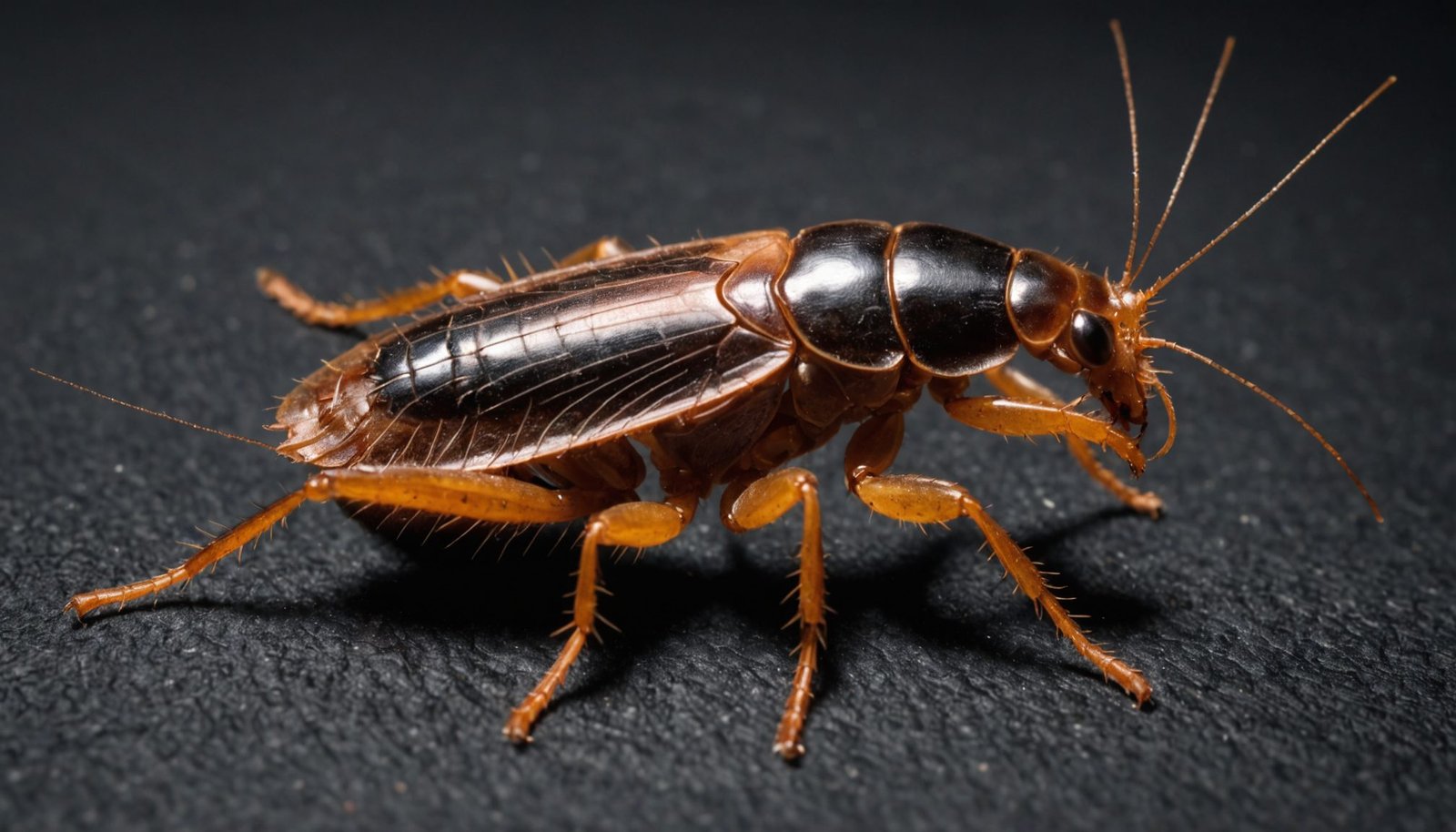
As you follow the nymph stage, you’ll see growth happen through a series of instars, each marked by a molt that increases size and adds adult-like features.
Right after a molt, you’ll notice nymphs turn soft and pale, then darken within hours as the new exoskeleton hardens.
Watching these rapid color shifts helps you track development and distinguish freshly molted nymphs from older stages.
Nymphs are smaller than adults and lack wings, gaining them only after their final molt in species where adults are winged.
Instars and Growth
From hatch to adulthood, cockroach nymphs grow through a series of molts, each one marking a new instar. You’ll see growth happen in steps: the old exoskeleton splits, a larger one forms, and the nymph advances to the next stage. Instars are those intervals between molts, when size, proportions, and internal systems develop. Cockroach nymphs are initially white right after molting and then darken to deep brown as the new exoskeleton hardens, a change that can also signal increasing asthma triggers.
Species set the pace and count. German cockroaches usually pass through 5–6 instars, American 10–13, and Oriental about 7. In warm, food‑rich conditions, nymphs progress faster; in poor conditions, they slow down. Development can take roughly 42 days in German cockroaches but stretch close to a year in Oriental ones.
With each molt, nymphs look more adultlike: legs strengthen, antennae lengthen, and the exoskeleton thickens. Temporary hiding and reduced activity accompany these vulnerable changes.
Color Shifts After Molts
Right after a molt, nymph cockroaches look startlingly pale—almost white—because their new exoskeleton is soft and unpigmented. You might hear them called “ghost roaches.”
Over the next few hours, they darken as the cuticle hardens, shifting to species-typical browns, tans, or grays. That whitening can cause misidentification as albinos or even bed bugs, but the color fades as hardening finishes.
During this vulnerable phase, nymphs hide in cracks and crevices, staying still to avoid injury and predators. As color deepens, they regain speed and resume nocturnal foraging. Their presence indicates an active breeding population that often requires professional treatment to prevent escalation.
Species cues emerge too: German nymphs darken uniformly with a lighter center, while brownbanded nymphs show two yellow-brown bands. Wing pads also darken gradually.
Finding translucent shed skins signals ongoing molting, helps age infestations, and separates instars from adults.
Adult Stage: Wings, Lifespan, and Behavior
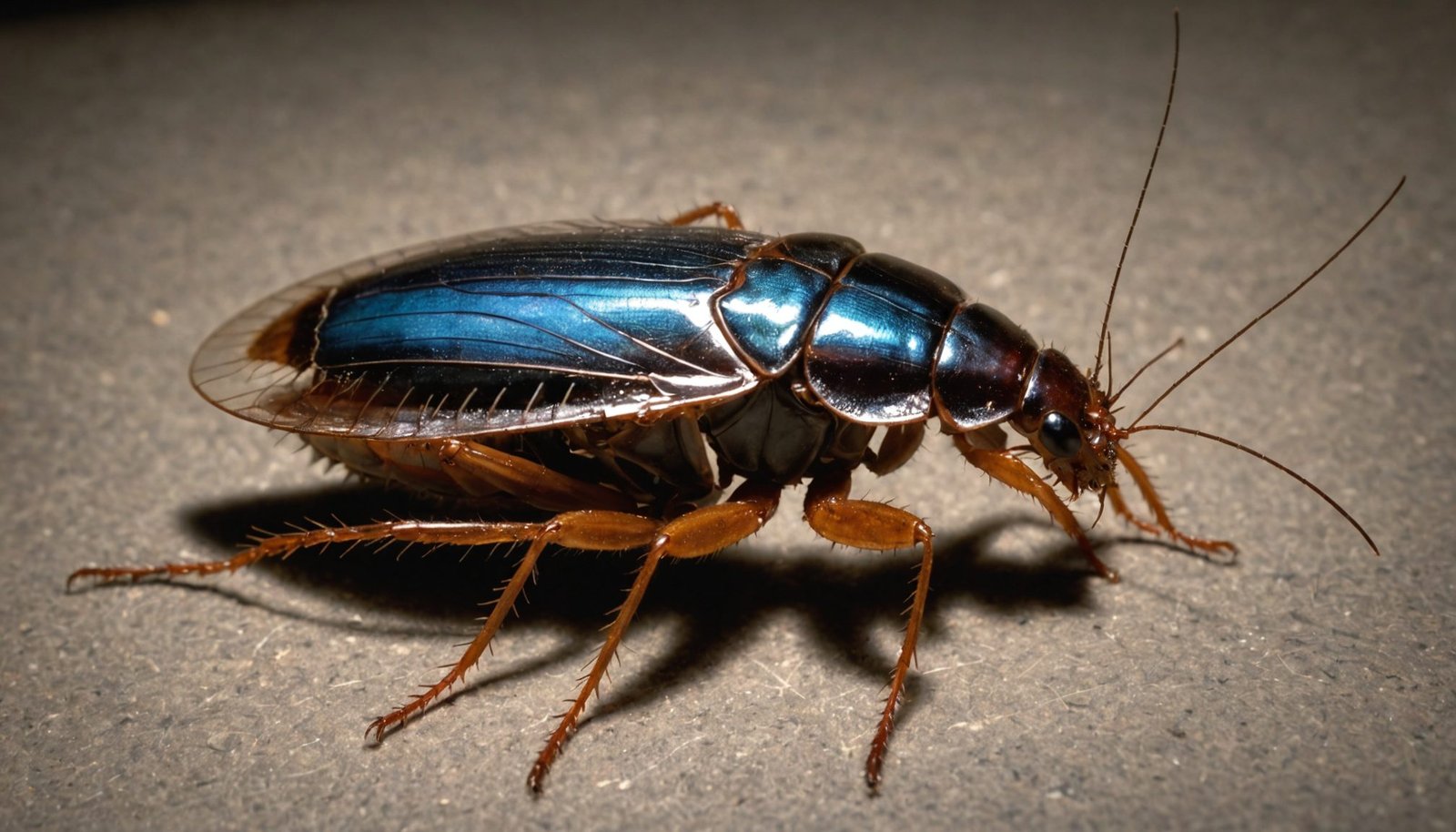
Maturity brings wings, speed, and relentless survival to adult cockroaches. You’ll see a defined head, thorax, and abdomen, with the thorax split into pro-, meso-, and metathorax—each bearing a leg for rapid escape. Most adults carry fully formed wings: leathery tegmina shield the delicate hindwings, which they rarely use for true flight. A chitinous abdominal armor protects organs while they navigate tight crevices. Adults prefer warm conditions and tropical climates, often thriving near human activity that extends their habitat range.
Adults live about a year, though temperature and resources shift that timeline. They’re nocturnal omnivores, emerging from dark, humid shelters to scavenge almost any organic matter. Females produce oothecae, usually placed two days after formation, each holding about 9–10 eggs. Their hardiness lets them endure lean periods and thrive in warm, moisture-rich spaces.
| Feature | Key Points |
|---|---|
| Wings | Tegmina protect hindwings; flight is uncommon |
| Lifespan | ~1 year; environment alters duration |
| Behavior | Nocturnal, omnivorous foraging |
| Shelter | Dark, humid cracks and crevices |
| Reproduction | Oothecae placed soon; ~9–10 eggs |
Species Snapshots: American, German, and Oriental Differences
Three household species—German, American, and Oriental cockroaches—differ in size, habitat, speed of reproduction, and flight ability, and those traits shape how you deal with them.
You’ll spot German cockroaches first in kitchens and bathrooms: small (½–⅝ inch), tan with two dark stripes, hiding tight to food and moisture. They breed explosively; females carry egg cases until hatching, so bait rotation and crack-and-crevice treatments matter.
American cockroaches are the big reddish-brown ones (about 2 inches) with pale bands on the pronotum. They roam sewers, basements, and outdoors, sometimes flying clumsily in warm, humid weather.
You’ll pair sanitation with perimeter and utility-entry sealing.
Oriental cockroaches run darker, medium-sized, and sluggish. They favor cool, damp spots—crawl spaces and drains.
Focus on moisture control, exclusion, and persistent baiting.
Timing the Life Cycle: Development Duration and Environmental Factors
You’ll see cockroach timelines swing from about a month to over two years, depending on the species.
You can expect warmer, humid conditions to speed egg incubation, nymph molts, and adult maturation, while cool or dry environments slow everything down.
As you compare species, factor in how temperature and moisture amplify or hinder their development rates.
Species-Specific Timelines
Although all cockroaches follow the same egg–nymph–adult pattern, their clocks run at different speeds shaped by species traits and environment. You’ll see striking contrasts: tiny, fast-cycling species explode in number, while larger roaches take their time. Egg cases (oothecae) also differ—German cockroaches carry 12–40 embryos, while American and Oriental cases average about 15–16.
| Species | Egg to Adult | Notes |
|---|---|---|
| German | ~103 days | 6 molts; ootheca often protrudes |
| American | ~600 days | 10–13 molts; larger body, slower |
| Brown-banded | Up to 276 days | ~12–16 eggs/case; 5–6 months nymphal |
| Oriental | 300–800 days | 7–10 molts; slower growth |
| Mixed (range) | Weeks–years | Development varies by habitat, food |
Nymphs are wingless and paler; each molt adds size and features. Adults then diverge again: American adults live about a year post-final molt; German adults live shorter but reproduce quickly; brown-banded males can fly; Oriental adults have shorter adult spans after long juvenile phases.
Temperature and Humidity Effects
When warmth meets moisture, cockroaches speed up. You’ll see eggs incubate faster and nymphs molt sooner because metabolic rates rise with temperature and high humidity boosts feeding and water balance.
German cockroaches race from egg to adult in about 70–100 days around 25–30°C; cooler rooms slow them. Drop conditions from 25°C to 20°C and species like Periplaneta americana more than double their reproductive cycle without changing egg size.
Humidity is just as critical. In dry air, even at 20–36°C, cockroaches lose weight to desiccation, reducing survival and delaying development.
Heat with low humidity stalls molting and oötheca production. Cold triggers metabolic slowdown and cryoprotective adjustments, extending timelines. After cold stress, development rebounds.
Seasonal swings shift feeding and reproduction, reshaping population peaks.
Reproduction and Population Growth: Oothecae Production and Survival
Even under modest conditions, oothecae drive cockroach reproduction and fast population growth by packaging dozens of embryos in a tough, protective case. After mating, you’ll see females form an ootheca within 3–7 days, then carry it for hours to days before tucking it into a crack or crevice.
American cockroach females produce about 6–14 cases, each with 12–16 eggs, so numbers climb quickly.
American cockroach females lay 6–14 oothecae, each holding 12–16 eggs—populations explode quickly.
You can recognize oothecae as brown to black capsules, roughly 8 mm by 3 mm, with ridged seams that split at hatching. Secretions harden and glue them to surfaces, resist heat and microbes, and shield embryos from predators and desiccation.
Incubation typically runs 24–38 days, longer in poor conditions. German cockroach females keep the case until near hatching, relocating it to ideal microhabitats to boost survival.
Conclusion
You’ve now got a clear picture of how cockroaches grow—from egg to nymph to winged adult—and how species differ in color, size, and speed. You can spot oothecae, recognize molts, and understand how temperature and humidity speed development. With that knowledge, you’ll anticipate population surges, disrupt breeding, and target the right life stages. Use prevention, sanitation, and timely treatments to break the cycle. When you act early and consistently, you’ll keep infestations from taking hold.
