
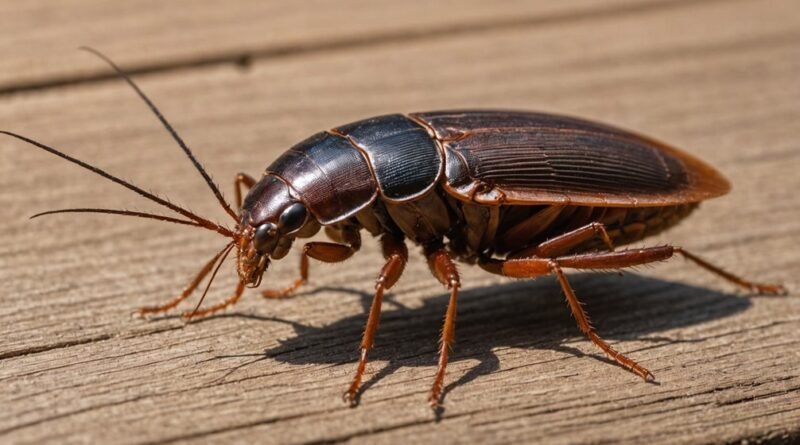
Turkestan Cockroach: Identification & Facts
The Turkestan cockroach is one of the fastest-spreading roach species in the American Southwest. You’ll recognize them by their size — about an inch long — with males appearing brownish-orange and females dark brown with cream-colored markings. They originated in Central Asia and the Middle East, first showing up in the U.S. in 1978. They thrive outdoors near moisture sources and can pose real health risks. Keep scrolling to learn everything you need to know.
Key Takeaways
- Turkestan cockroaches are 15–28 mm long; males are reddish-brown with full wings, while females are darker with cream-colored markings.
- Originally from North Africa and Central Asia, they first appeared in the U.S. in 1978 and now dominate Southern California and Texas.
- They hide in mulch, rock landscaping, irrigation boxes, and foundation cracks, preferring moist outdoor environments near homes.
- They carry harmful bacteria including salmonella, E. coli, and cholera, contaminating food surfaces and triggering allergic reactions.
- Control requires sealing entry points, eliminating moisture, applying targeted bait, and maintaining sanitation to prevent reinfestation.
How to Identify a Turkestan Cockroach
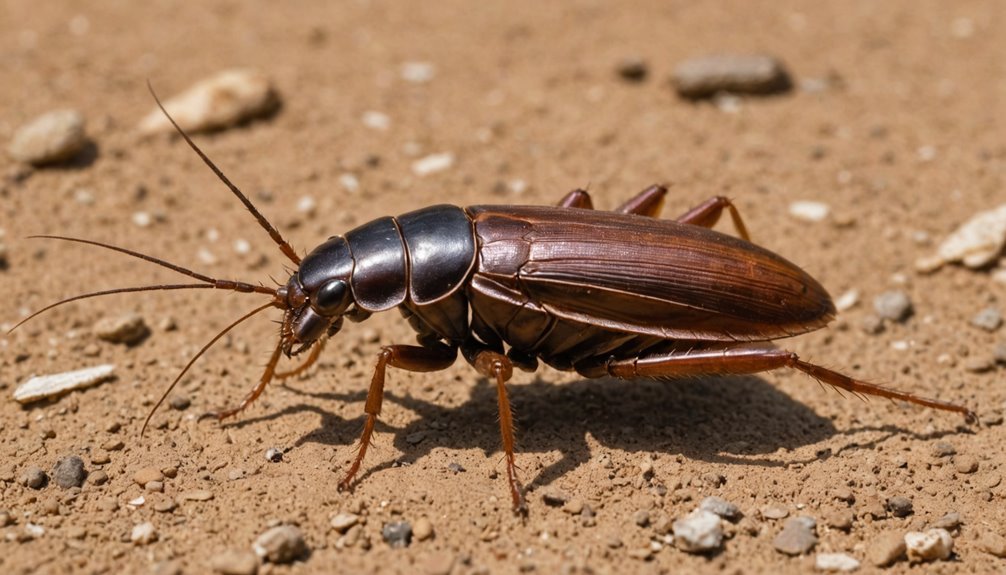
The Turkestan cockroach ranges from 15 to 28 mm long, with adults typically reaching about an inch in length. You can distinguish males and females fairly easily.
Males are slender, brownish-orange to reddish-brown, and have fully developed wings covering the abdomen. They’re capable of flying or gliding and move quickly across outdoor surfaces.
Male Turkestan cockroaches are slender, reddish-brown, and fully winged — fast-moving fliers built for outdoor life.
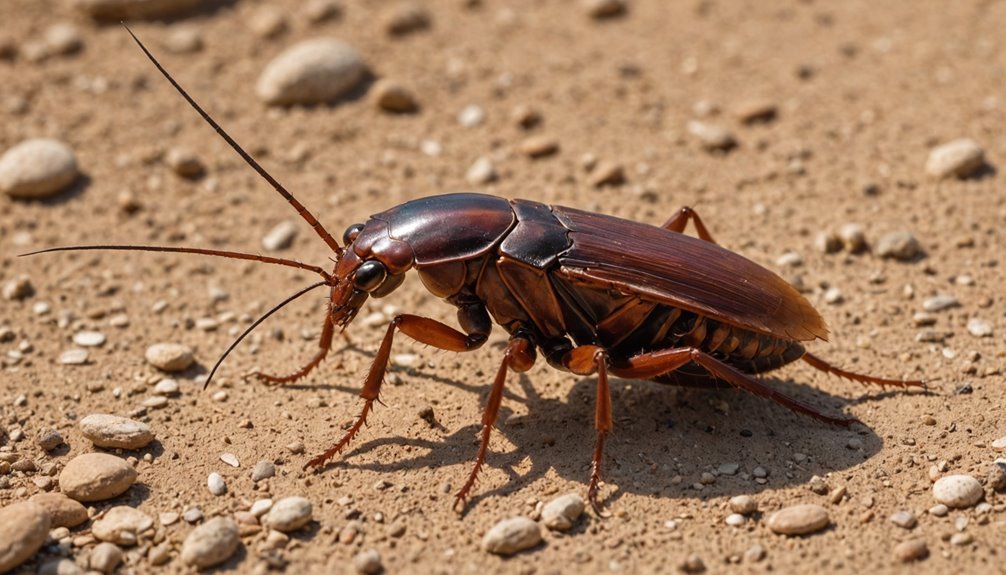
Females are larger, broader, and darker — usually dark brown to black — with distinctive cream-colored or yellowish markings along the body edges and behind the head. Females have short, rounded wing pads and can’t fly.
You might confuse this species with the Oriental cockroach, particularly females, but the cream-colored edging on female Turkestan cockroaches is a reliable distinguishing mark.
If you spot what looks like a German cockroach, check for two dark parallel lines behind the head — a feature the Turkestan cockroach lacks.
Nymphs can also help with identification, as they display a bi-colored pattern with a light brown thorax and a dark brown abdomen.
Using sticky traps gives you the best opportunity for close, accurate identification.
Where Do Turkestan Cockroaches Come From?
Now that you know what a Turkestan cockroach looks like, it helps to understand where this pest actually comes from. It’s not native to the U.S. — its origins stretch from North Africa through the Middle East and into Central Asia, covering countries like Afghanistan, Pakistan, Iran, and Uzbekistan.
The species first appeared in the U.S. in 1978 at a California military depot. Researchers believe returning military equipment from Central Asia carried the cockroach into the country. From there, it spread quickly.
Three key factors drove its expansion across the Southwest and beyond:
- Military transport introduced the species to multiple bases, including Fort Bliss in Texas.
- Human movement helped it reach Arizona, Los Angeles, and Georgia.
- Online pet trade sales greatly accelerated its spread nationwide.
Today, it’s widely established across California and other southwestern urban centers. In its native range, the species is found as far as the Caucasus Mountains and northeastern Africa, demonstrating its natural adaptability to diverse environments.
Where Are Turkestan Cockroaches Found in the U.S.?
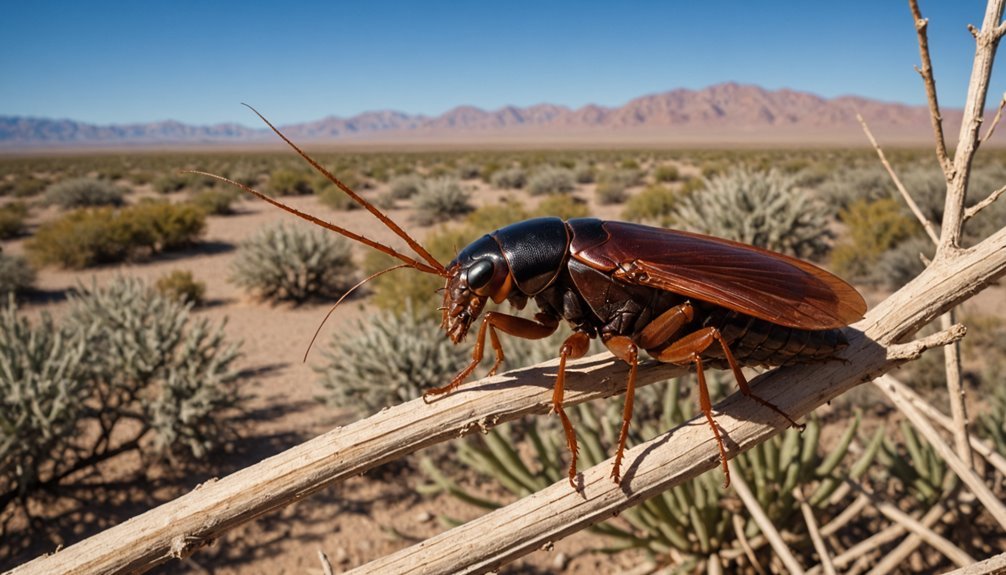
Turkestan cockroaches have firmly established themselves across the Southwest, with their strongest U.S. presence stretching from Southern California to Texas. You’ll find dense populations in California’s urban areas and desert cities like El Paso. Reports also confirm patchy populations in the Southeast and Northeast.
| Region | Key Locations | Spread Driver |
|---|---|---|
| Southern California | Urban and residential areas | Early military depot introduction |
| El Paso, Texas | Urban environments | Fort Bliss detection post-1978 |
| New Mexico | Desert southwest cities | Displacement of Oriental cockroaches |
| Georgia | Military base | Reported 2005 |
| Northeast U.S. | Scattered populations | Ongoing range expansion |
You’re most likely to encounter them outdoors in water meter boxes, sewer systems, compost piles, and pavement cracks. They thrive in urban desert habitats, favoring debris piles, wood piles, and outdoor drainage pipes over indoor spaces. Their spread across the U.S. is widely linked to military personnel returning from the Middle East during the 1970s and 1980s.
Where Do They Hide Around Your Home?
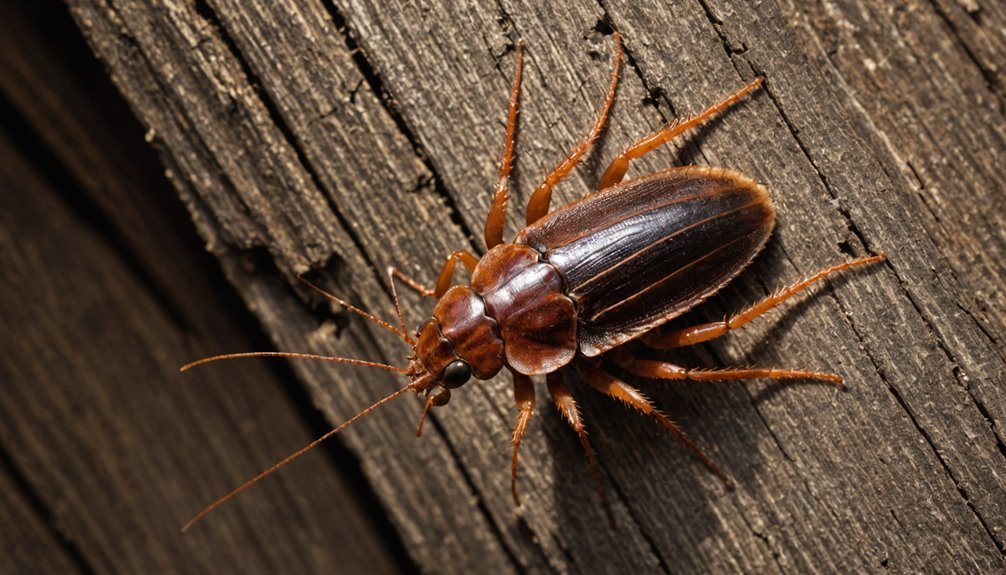
Knowing where Turkestan cockroaches hide helps you target inspections and treatments more effectively. Outside, they favor mulch beds, rock landscaping, foundation cracks, and hardscape crevices near exterior walls.
Knowing where Turkestan cockroaches hide lets you inspect smarter and treat the spots that actually matter.
They’re drawn to moisture, so check irrigation boxes, damp perimeter soil, and areas affected by plumbing or irrigation leaks. Turkestan cockroaches are primarily nocturnal, so outdoor hiding spots near light sources are especially worth monitoring after dark.
Indoors, they gravitate toward low-disturbance zones with heat or moisture:
- Kitchen areas – Look under sinks, behind appliances like refrigerators and dishwashers, and around plumbing lines where humidity stays elevated.
- Storage spaces – Cardboard boxes, cluttered closets, and furniture voids give cockroaches dark, undisturbed shelter that’s easy to overlook.
- Structural gaps – Utility penetrations, baseboard gaps, and wall-floor junctions create tight harborage sites throughout your home’s interior.
Targeting these specific zones during inspections lets you identify activity early and apply treatments where cockroaches are actually sheltering rather than guessing.
Are Turkestan Cockroaches Dangerous?
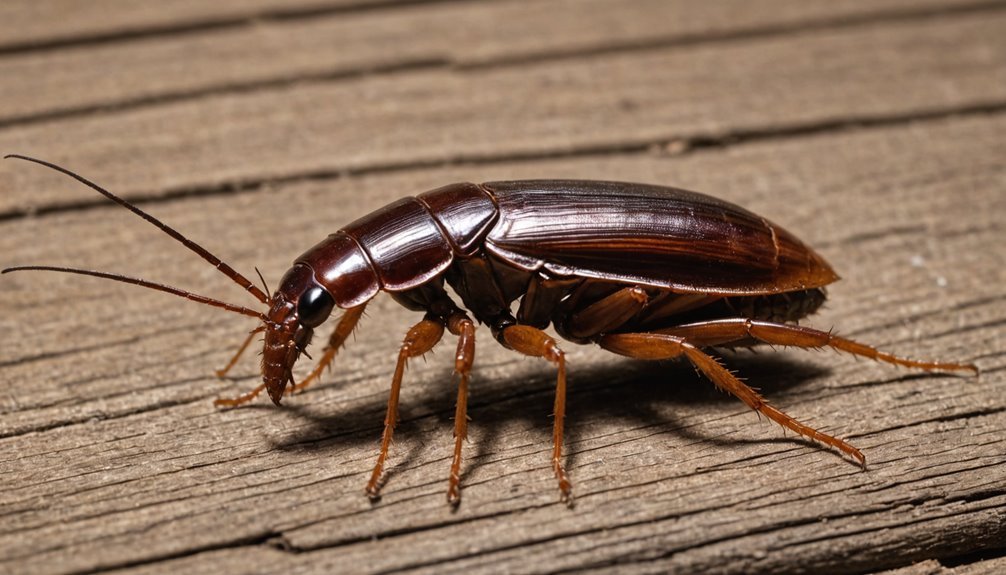
Turkestan cockroaches aren’t venomous or aggressive, but they can still put your household at risk through the bacteria and pathogens they carry on their bodies and legs.
After crawling through sewers, drains, and trash, they can contaminate your food prep surfaces and introduce disease-causing organisms linked to salmonella, typhoid fever, cholera, and E. coli.
While they don’t directly harm plants or fungi in your garden, their presence indoors signals a serious sanitation concern that you shouldn’t ignore. They are also known to be a significant source of allergens, potentially triggering severe reactions in sensitive individuals.
Bacteria and Contamination Risks
Like many cockroaches, Turkestan cockroaches are scavengers that feed on trash, rotting meat, roadkill, and other bacteria-laden material—making them capable carriers of harmful pathogens.
Once inside your home, they can spread bacteria across counters, food prep surfaces, and stored food through their bodies, legs, droppings, and saliva.
Bacteria commonly linked to these cockroaches include:
- *Salmonella* spp. – survives cockroach digestion and can cause salmonellosis
- *E. coli* – transferred during foraging across food-contact surfaces
- *Staphylococcus* and *Streptococcus* spp. – dispersed through feces and body deposits
These pathogens contribute to foodborne illness, gastroenteritis, and other infections.
Your actual risk depends on sanitation conditions and how frequently cockroaches access food or surfaces you touch.
Disease Transmission Potential
Understanding which bacteria these cockroaches carry is one thing—but knowing how dangerous they actually are to your health is another.
Turkestan cockroaches aren’t typically the direct cause of infection, but they can mechanically transfer pathogens onto surfaces you touch and food you eat. They pick up organisms from sewers and contaminated environments, then deposit them through body contact, feces, and secretions.
Your risk depends heavily on setting. In hospitals, food preparation areas, and infested homes, the threat rises considerably. Cross-contamination becomes a real concern when cockroaches reach utensils, countertops, or cooking surfaces before you do.
However, a Norwegian risk assessment found transmission risk relatively low for kept or imported specimens, suggesting exposure level and environment matter most when evaluating actual danger.
Fungi and Plant Harm
When it comes to plant damage, the Turkestan cockroach’s threat is minimal. UC Davis entomologists describe the species as fundamentally harmless to plants, and no strong evidence confirms it spreads plant-pathogenic fungi. Their outdoor preference further limits contact with garden or indoor plants.
Here’s what the evidence actually supports:
- Plant feeding — Some pest-control sites suggest it, but entomology-based sources don’t confirm routine plant damage.
- Fungal transmission — Roaches scavenge decaying matter, making incidental contamination possible, but no research establishes them as plant-disease vectors.
- Nuisance proximity — Heavy infestations near mulch, irrigation, or yard debris can increase cockroach activity around ornamental plantings without directly harming them.
Your primary concern should be sanitation, not plant destruction.
How Big Can a Turkestan Cockroach Infestation Get?
Turkestan cockroach infestations can grow surprisingly large, and the scale often catches homeowners off guard. Adults live over 600 days, each egg capsule holds around 18 eggs, and nymphs mature in roughly 222 days at warm temperatures. That cycle compounds fast.
Most infestations center outdoors in water meter boxes, irrigation systems, and hardscape cracks rather than inside your walls. You’ll typically see indoor roaches because a massive exterior population is pushing them in.
| Infestation Indicator | Common Location | What It Signals |
|---|---|---|
| Multiple adults at night | Foundations, walkways | Active nearby breeding site |
| Visible nymphs | Utility boxes, slab edges | Sustained reproduction cycle |
| Frequent indoor sightings | Kitchens, entry points | Heavy outdoor population pressure |
If you’re spotting roaches regularly near sewer access points or water meters, you’re likely dealing with a large, established colony that requires exterior treatment first.
How Do You Get Rid of Turkestan Cockroaches?
Once you know you’re dealing with a large outdoor population pushing roaches inside, you need a layered approach to actually bring it under control. Sanitation alone won’t cut it, but it reduces pressure and makes every other method more effective.
Sanitation alone won’t eliminate a large outdoor roach population — but it makes every other control method work harder.
Start with these three priorities:
1. Eliminate harborage and moisture — Clear leaf litter, woodpiles, and clutter away from your foundation.
Fix leaky irrigation, improve drainage, and replace mulch near the building with gravel.
2. Seal entry points — Caulk cracks around foundations, pipes, and vents.
Install door sweeps and repair damaged screens so roaches can’t easily move indoors.
3. Apply targeted bait — Place granular or gel bait stations near water meter boxes, hardscape crevices, and outdoor hot spots.
Use sticky traps indoors to monitor activity and pinpoint where they’re entering.
For large infestations, bring in a professional for a thorough inspection and treatment plan.
What Kills Turkestan Cockroaches Most Effectively?
You can kill Turkestan cockroaches most effectively by combining targeted chemical treatments with physical controls and ongoing prevention.
Residual insecticide sprays and strategically placed baits near harborage sites deliver the strongest chemical results, while sanitation, moisture reduction, and exclusion tackle the conditions that let populations grow.
Together, these approaches work faster and last longer than any single method on its own.
Chemical Treatments That Work
When it comes to killing Turkestan cockroaches, not all chemical treatments perform equally—and choosing the right one depends heavily on where and how you apply it.
Most residual liquid insecticides deliver 77–100% mortality within four days on wood, tile, and concrete—except Phantom and Talstar P, which never exceed 50%.
Baits outperform sprays when placed near harborage areas like irrigation boxes and hardscape crevices. Dusts work best in cracks, cold joints, and expansion joints where cockroaches shelter.
Three principles drive chemical success:
- Match the product to the surface—Temprid SC and Transport GHP perform faster on tile; Tandem outperforms both on concrete.
- Place baits near harborage, not randomly—cockroaches must find and eat them.
- Combine treatments—sprays, dusts, and IGRs work best together alongside sanitation.
Natural And Physical Methods
While chemicals can suppress Turkestan cockroach populations, physical and natural methods tackle the conditions that make infestations possible in the first place.
Start outside by removing debris, firewood stacks, leaf litter, and damp wood near your foundation. Trim shrubs away from walls and fix irrigation or plumbing leaks to cut off moisture. Replace mulch with gravel and avoid planting within a foot of the foundation.
Seal cracks in walls, foundations, and hardscape, and install door sweeps and weatherstripping to block entry. Use sticky traps near exterior doors and water meter boxes to track activity and measure results.
For natural repellents, apply peppermint oil spray to baseboards and windowsills twice weekly, or use catnip tea spray in dark recesses like closets and under furniture.
Prevention Reduces Cockroach Populations
Prevention is the most effective long-term strategy against Turkestan cockroaches, because pesticides alone won’t solve an infestation if the conditions driving it stay in place.
Three core prevention priorities work together:
- Eliminate food and moisture — seal indoor food containers, fix plumbing leaks, reduce irrigation near foundations, and clean outdoor trash areas regularly.
- Remove outdoor harborage — clear leaf litter, stored lumber, and firewood; trim shrubs; seal hardscape cracks; and keep garbage containers tightly lidded.
- Block entry points — seal cracks, install door sweeps, add weather stripping, and screen vents and pipe openings.
Each measure reinforces the others.
You’ll see the greatest results when you address all three simultaneously, since large outdoor populations will keep pushing indoors otherwise.
How Do You Keep Turkestan Cockroaches From Coming Back?
Keeping Turkestan cockroaches from coming back requires addressing the conditions that attract and shelter them in the first place. Seal cracks in your foundation, siding, and around pipes, and install door sweeps and weatherstripping to block entry points.
Store food, pet food, and trash in sealed, lidded containers, and don’t leave dirty dishes or uncovered food outside overnight.
Seal food, pet food, and trash in lidded containers, and never leave uncovered food or dirty dishes outside overnight.
Reduce moisture by fixing leaks promptly, improving drainage around your foundation, and keeping areas under sinks dry. Trim vegetation back from your home, remove leaf litter, and limit mulch near your foundation.
Check irrigation boxes and water meter boxes regularly, since these are common outdoor hiding spots.
To catch reinfestation early, place sticky traps near exterior doors and known hot spots. Recheck treated areas after one to two weeks, and use bait stations near hiding areas rather than relying on sprays alone.
Frequently Asked Questions
How Long Does It Take for Turkestan Cockroach Eggs to Hatch?
You’re looking at roughly 40–137 days for Turkestan cockroach eggs to hatch, depending on temperature. Warmer conditions speed development, while cooler environments extend it. Each ootheca contains about 16–18 eggs.
Are Turkestan Cockroaches Attracted to Light at Night?
Yes, Turkestan cockroaches are attracted to light at night, especially males since they can fly. You’ll often spot them near porch lights and illuminated windows, as nighttime lighting draws them toward your home.
How Did Turkestan Cockroaches First Arrive in the United States?
You can trace their arrival to military equipment returning from Central Asia, likely Afghanistan or the Middle East. They’ve hitched rides on U.S. military ships and gear, first appearing near Sharpe Army Depot, California, in 1978.
Can Turkestan Cockroaches Spread Plant Diseases to Your Garden?
There’s no clear evidence that Turkestan cockroaches spread plant diseases to your garden. They can contaminate surfaces by moving through sewers and trash, but experts classify them as outdoor nuisance pests, not plant-disease vectors.
How Many Eggs Can a Single Turkestan Cockroach Female Produce?
A single female can produce up to 25 egg cases in her lifetime, with about 16–17 eggs per case. That’s roughly 400–420 total eggs, though only about 82.7% of them’ll successfully hatch.
Conclusion
Turkestan cockroaches are a serious pest, but you don’t have to let them take over your home. By identifying them early, sealing entry points, and using the right treatments, you can eliminate an infestation before it spirals out of control. Stay consistent with your prevention methods, and you’ll keep these resilient insects from coming back. Don’t wait until the problem worsens—take action now to protect your home.
