
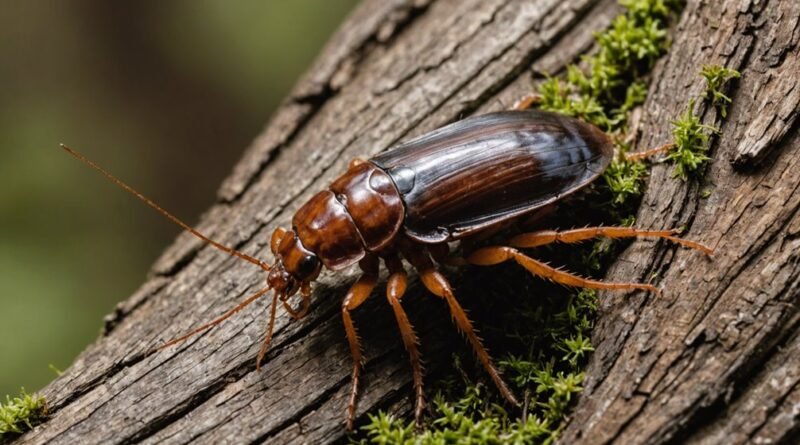
Pennsylvania Wood Cockroach: Identification Guide
The Pennsylvania wood cockroach is a native outdoor cockroach species found in wooded areas across the eastern United States — not a household pest, but a seasonal nuisance that enters homes accidentally during mating season. Adult wood cockroaches typically measure about 27.4 millimeters in length, Pennsylvania wood cockroaches are found in over 78% of wooded areas in the state, and over 65% of infestations occur between May and July due to mating season activity. Approximately 42% of Pennsylvania wood cockroach sightings are reported near residential homes, and wood cockroaches can live up to 13 months in natural outdoor environments. Unlike German or American cockroaches, Pennsylvania wood cockroaches cannot breed indoors, dehydrate and die within 48 to 72 hours inside a home, and pose no serious health or structural risk. The control strategy is entirely different from indoor cockroach species: exclusion and outdoor habitat reduction, not chemical treatment.
Key Takeaways
- Pennsylvania wood cockroaches (Parcoblatta pennsylvanica) are medium-sized, chestnut-brown insects with pale white wing edging — found in over 78% of wooded areas in the state and in over 65% of sightings during May through July mating season.
- Adult wood cockroaches typically measure about 27.4 millimeters in length — males have fully developed wings and can fly, while females have shorter wings and cannot fly.
- They primarily live outdoors in rotting wood, leaf litter, mulch, wood piles, and damp areas near home foundations in wooded regions of the eastern United States.
- Pennsylvania wood cockroaches cannot breed indoors and die within 48 to 72 hours inside a home — a single indoor sighting is an accidental wanderer, not an infestation signal.
- Prevent entry by sealing cracks, installing door sweeps, switching porch lights to yellow bulbs, and moving wood piles away from the foundation — not chemical treatments.
What Does a Pennsylvania Wood Cockroach Look Like?
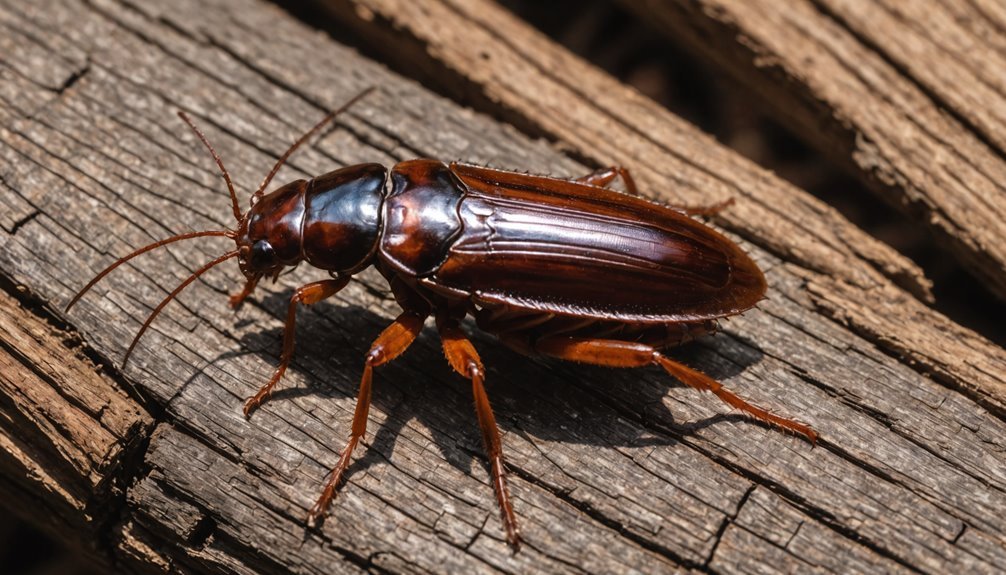
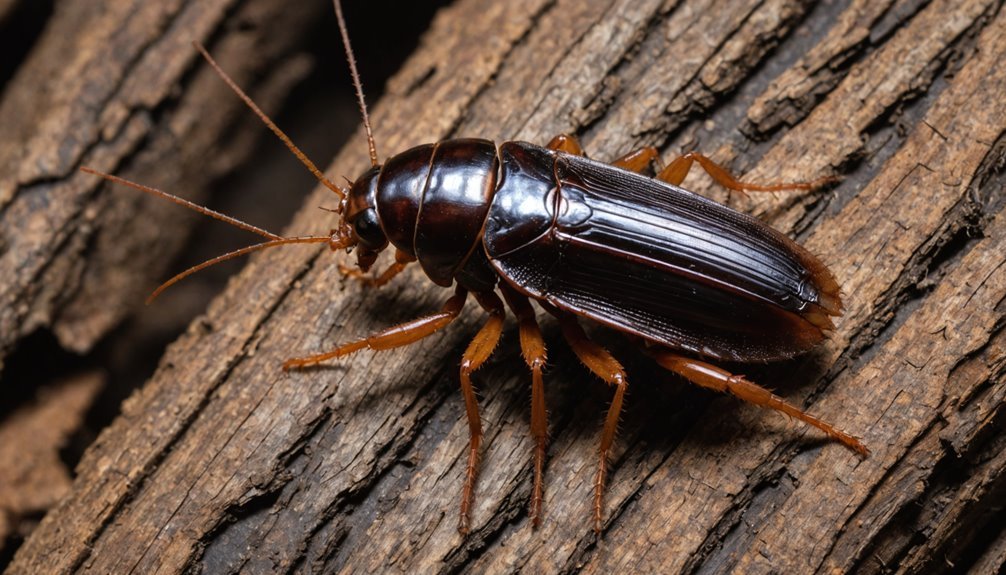
The Pennsylvania wood cockroach (Parcoblatta pennsylvanica) is a medium-sized, oval-shaped insect with a light yellowish-brown to chestnut-brown body and a distinctive pale or white edging along its wing margins and pronotal shield. Adult wood cockroaches typically measure about 27.4 millimeters in length, though the range spans 12 to 30mm depending on sex. Males are larger, typically reaching 7/8 to 1 1/8 inches, with fully developed wings extending beyond the abdomen that make them strong, capable fliers. Females are smaller — around 1/2 to 3/4 inch — with shorter wings covering only half to two-thirds of the abdomen, leaving them completely flightless. This sexual dimorphism in wing development is one of the most reliable identification features for the species.
The pronotum has a pale border visible from above, and the head stays concealed below the pronotum when viewed from above, as with most cockroach species. Unlike German cockroaches, Pennsylvania wood cockroaches have no dark parallel stripes on the pronotum — the pale marginal edging is uniform rather than striped. Antennae are roughly body-length and threadlike. Legs are spiny and splay outward in the typical cockroach posture. Nymphs begin entirely brown without the pale edging, gradually developing the white marginal border as they progress through molts toward adulthood. See our wood cockroach vs German cockroach comparison for a full side-by-side identification guide covering size, color, behavior, and control differences.
Habitat and Distribution
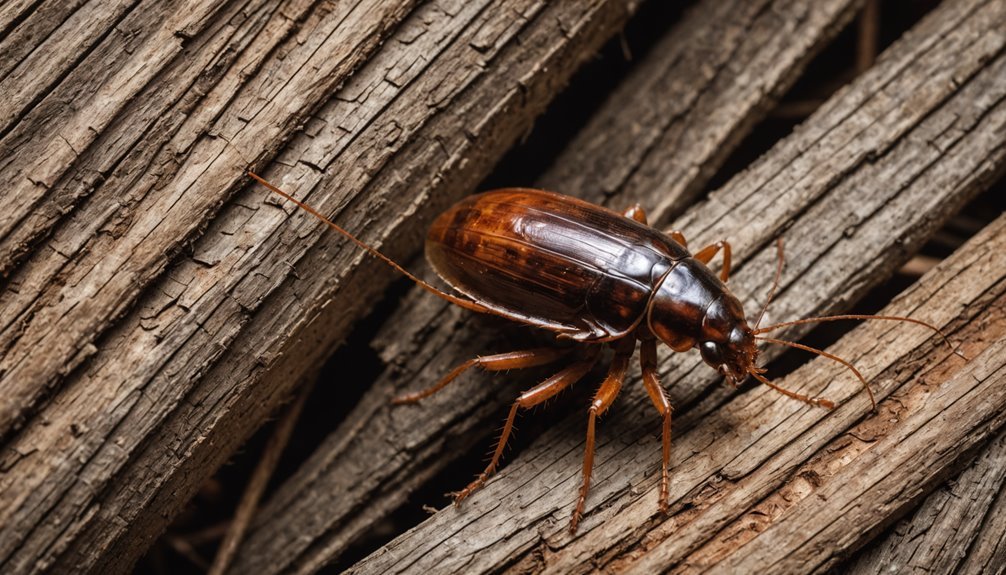
Pennsylvania wood cockroaches are found in over 78% of wooded areas in the state and across the broader eastern United States — their range extends from the Atlantic coast through the Midwest, including Maryland, Virginia, Ohio, Michigan, and southern Ontario and Quebec in Canada. They are most commonly found near wooded, cottage-country areas and residential properties adjacent to forests, parks, and wooded lots. Approximately 42% of Pennsylvania wood cockroach sightings are reported near residential homes — almost entirely in properties bordered by trees, wood piles, or significant leaf litter accumulation.
The species (genus Parcoblatta) belongs to the wood cockroach family, a group of North American native cockroaches adapted to forest environments. Their preferred habitats are moist, woody environments with abundant decaying organic material: rotting logs and stumps, loose tree bark, tree holes and cavities, wood piles and lumber stacks, leaf litter layers, and damp mulch beds near building foundations. They are found throughout the eastern United States from Maine to Florida and west through the Great Plains, with the highest population densities in the mid-Atlantic states and the Upper Midwest. Pennsylvania wood cockroaches can live up to 13 months in natural outdoor environments, significantly longer than German cockroaches (100 to 200 days), which explains why established outdoor populations persist through multiple seasons near homes with suitable wooded habitat.
Behavior and Activity Patterns
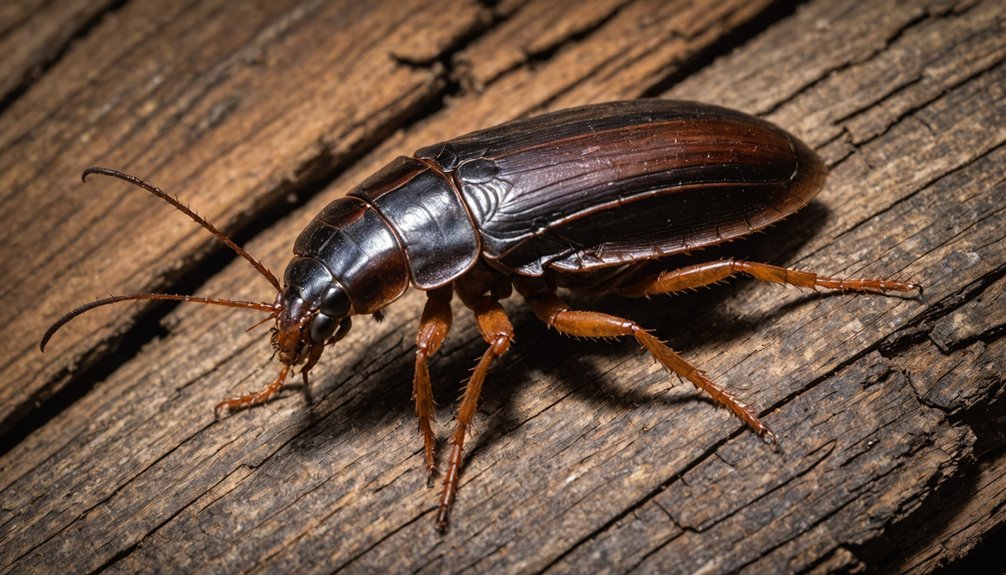
Pennsylvania wood cockroaches are primarily nocturnal, spending daylight hours concealed in outdoor harborage and emerging at night to forage and mate. Over 65% of infestations and sightings occur between May and July, which corresponds directly to the species’ peak mating season. During this period, male wood cockroaches actively fly toward light sources — porch lights, security lights, and indoor lighting visible through open doors and windows — making spring and early summer the primary period for accidental indoor entry.
Males are strong fliers capable of sustained directional flight toward light sources, which is the most distinctive behavior differentiating Pennsylvania wood cockroaches from most other cockroach species. See which cockroach species can fly for a full breakdown of flight capability across common species. German cockroaches rarely fly despite having functional wings; Pennsylvania wood cockroach males actively seek out light sources in flight. Females and nymphs do not fly and remain closer to ground-level outdoor harborage throughout their lives. Both sexes are attracted to wooded environments and actively avoid dry indoor conditions — when Pennsylvania wood cockroaches enter homes, they dehydrate and die within 48 to 72 hours because the dry indoor environment is incompatible with their biology. They do not seek indoor food sources or water in the way German or American cockroaches do.
Life Cycle and Reproduction
Understanding the Pennsylvania wood cockroach’s life cycle explains why indoor infestations do not establish and why outdoor population management is the only effective long-term control approach. Pennsylvania wood cockroaches complete one generation per year — a much slower reproduction rate than German cockroaches, which produce multiple overlapping generations annually.
Females produce oothecae (egg cases) in late spring to early summer, depositing them in protected outdoor locations including under loose bark, inside rotting wood, and within leaf litter. Each ootheca contains 32 eggs arranged in two rows. Egg cases are deposited in outdoor harborage rather than indoors — Pennsylvania wood cockroaches cannot establish breeding populations inside homes because females require outdoor moisture and organic material conditions for successful ootheca development. Eggs hatch in late summer, producing small brown nymphs that overwinter in outdoor harborage under bark and leaf litter. Nymphs develop slowly through multiple molts over approximately 10 months, reaching adulthood the following spring just in time for the May through July mating season. Adults live through a single mating season before dying, with a total lifespan of up to 13 months in ideal outdoor conditions. This annual lifecycle synchronized with spring mating season is why over 65% of sightings and indoor entry events occur in May through July.
Diet and Feeding Habits
Pennsylvania wood cockroaches are detritivores — they feed primarily on decaying organic material in forest and wooded suburban environments. Their diet consists of rotting wood fiber, decaying leaf litter, fungi, bark, lichen, sap, dead insects, animal feces, and forest floor organic debris. This detritivore feeding pattern makes them important decomposers in eastern forest ecosystems, accelerating the breakdown of organic material and contributing to nutrient cycling. Unlike German cockroaches, Pennsylvania wood cockroaches do not feed on human food scraps, grease residue, or stored food products as their primary diet — they have no strong attraction to kitchen food sources, which is why they do not establish indoor colonies. When Pennsylvania wood cockroaches enter homes, they typically do not feed on indoor food sources and instead die from dehydration within 48 to 72 hours. Eliminating outdoor organic material — rotting wood, decaying leaf litter, wood piles — near the foundation removes the food sources sustaining the outdoor population that produces accidental indoor wanderers.
Signs of Pennsylvania Wood Cockroach Presence
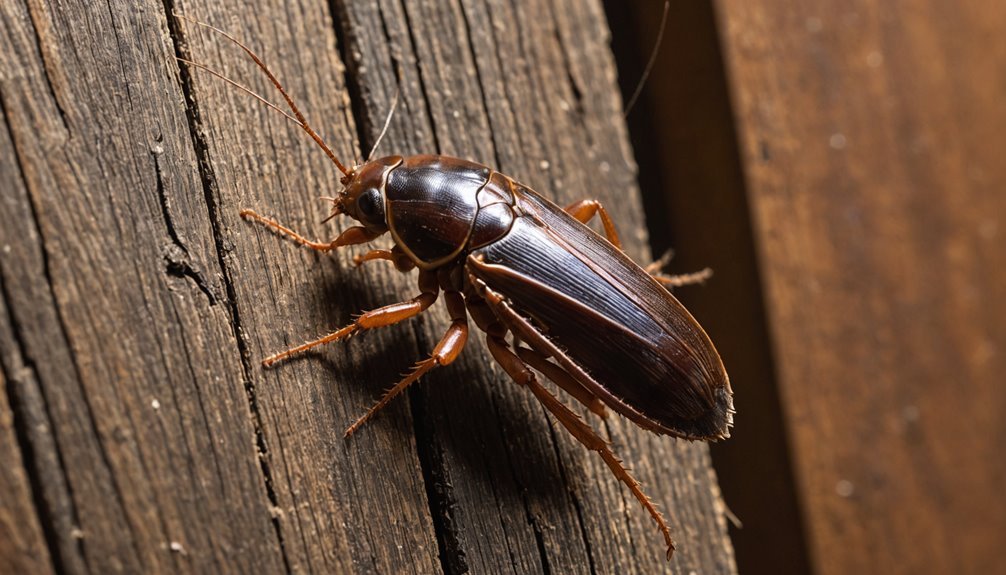
Distinguishing Pennsylvania wood cockroach presence from a genuine indoor cockroach infestation is critical because the management approach is completely different. Pennsylvania wood cockroach signs are predominantly outdoor rather than indoor, and the pattern of evidence reflects an outdoor species making occasional accidental entry rather than an established indoor colony.
Outdoor signs include finding adults under loose bark or rotting wood when logs are moved, discovering oothecae (small dark egg cases approximately 12mm long) under bark or in leaf litter near the foundation, and finding nymphs in wood pile and leaf litter areas from late summer through spring. Indoor signs are limited to finding single live or dead adults — primarily males — near windows, doors, and light sources during May through July mating season. Finding multiple indoor cockroaches outside of May through July, or finding droppings in kitchen cabinet areas, under sinks, or along baseboards, strongly suggests German or American cockroaches rather than Pennsylvania wood cockroaches. Pennsylvania wood cockroach droppings are rarely found indoors because the insects die before producing significant dropping accumulation inside structures.
Are Pennsylvania Wood Cockroaches Dangerous?
Health Risks Explained
Pennsylvania wood cockroaches are not considered dangerous to humans. They do not bite, sting, or transmit diseases through biting or surface contact in the way German cockroaches contaminate food preparation surfaces through repeated indoor movement. Since they dehydrate and die within 48 to 72 hours indoors, they do not produce the sustained allergen load that established German cockroach colonies do through continuous droppings and shed skins. However, they are not entirely risk-free — their droppings, shed skins, and body parts can trigger allergic reactions or worsen asthma symptoms in sensitive individuals if multiple cockroaches enter during peak mating season. Individuals with existing cockroach allergen sensitivity should be alert to symptoms during May through July when wood cockroach indoor entry peaks.
| Health Concern | Risk Level | Notes |
|---|---|---|
| Biting or stinging | None | Species does not bite humans |
| Disease transmission | Very low | No sustained indoor movement to contaminate surfaces |
| Allergen exposure | Low to moderate | Risk peaks during May to July mass entry events |
| Structural damage | None | Does not chew structures or establish indoor colonies |
Property Damage Potential
Pennsylvania wood cockroaches pose no structural threat to homes. Unlike termites, they do not consume structural wood, floor joists, or framing. Their feeding behavior focuses entirely on decaying outdoor organic material — not household materials. They do not establish breeding colonies indoors under any circumstances, which is the fundamental difference from German cockroaches that justifies a completely different management approach. A few Pennsylvania wood cockroaches entering during mating season represents an exclusion problem, not an infestation — the solution is sealing entry points and reducing outdoor habitat, not chemical treatment of interior spaces.
How to Tell a Pennsylvania Wood Cockroach From Other Species
Three field identification clues make differentiating Pennsylvania wood cockroaches from German or American cockroaches straightforward:
Color and size: Chestnut-brown body with pale whitish-yellow outline along the thorax and wing edges — no dark parallel stripes. Males reach about 27.4mm (1 inch); females are smaller at 12 to 19mm. German cockroaches are tan with two dark parallel stripes on the pronotum. American cockroaches are larger (35 to 53mm), darker reddish-brown, with a yellowish figure-eight head marking.
Flight behavior: Male Pennsylvania wood cockroaches fly toward outdoor lighting at night during May through July. German cockroaches almost never fly despite having wings. American cockroaches can fly but rarely do indoors. If you saw a cockroach fly toward your porch light on a spring evening, it is almost certainly a Pennsylvania wood cockroach male.
Location and timing: A single cockroach near a doorway, window, or light source in May through July in a wooded suburban area strongly suggests Pennsylvania wood cockroach. Repeated sightings in kitchen cabinet areas, behind appliances, or under sinks at any time of year point toward German or American cockroaches requiring a completely different treatment approach. Pennsylvania wood cockroaches are found in over 78% of wooded areas — if your property borders a wooded lot, the context strongly supports the ID.
What Draws Pennsylvania Wood Cockroaches Inside?
Pennsylvania wood cockroaches do not choose to enter homes — they are drawn in accidentally by specific attractants that can be systematically eliminated. Bright porch and security lights attract flying males during mating season. White or blue-spectrum lights are significantly more attractive than yellow or warm-toned lights. Leaving exterior doors open with interior light visible during May through July provides a direct entry route for males in flight toward light sources. Moist organic material near the foundation — leaf litter, mulch beds, wood piles, and rotting wood adjacent to walls — sustains outdoor populations at high density close to entry points. Firewood stored near or brought inside carries adults or egg cases directly into the home, accounting for a significant proportion of indoor wood cockroach encounters outside of mating season.
| Attractant | Location | Fix |
|---|---|---|
| White porch and security lights | Exterior walls, doorways | Switch to yellow or warm-LED bulbs |
| Wood piles near foundation | Within 10 feet of structure | Move to minimum 20 feet from walls |
| Leaf litter and mulch beds | Foundation perimeter | Clear 6-inch zone against structure |
| Rotting logs and stumps | Near foundation edges | Remove or relocate away from home |
| Firewood carried inside | Entry paths to interior | Inspect before bringing in, carry only immediate use |
Control and Treatment Options
Pennsylvania wood cockroaches require a fundamentally different control approach from indoor cockroach species. Chemical treatment of interior spaces is largely ineffective and unnecessary — the cockroaches die within 48 to 72 hours indoors from dehydration regardless. Effective control focuses entirely on exclusion and outdoor habitat reduction.
Structural exclusion: Seal all cracks in exterior walls with silicone caulk, pack larger gaps with steel or copper mesh before caulking, install door sweeps on all exterior doors, repair damaged window screens, and cover exposed vents with fine mesh. Seal ground-level wall penetrations around pipes, conduit, and utility openings. Caulk around window edges and door frames.
Lighting management: Replace white exterior bulbs with warm-colored LED or yellow bulbs — warm spectrum light is significantly less attractive to flying cockroaches and other insects. Use motion-activated lighting rather than continuous lighting to minimize extended attraction during May through July mating season. Keep interior rooms dark or use window coverings during peak mating season evenings to reduce light visible from outside through windows and open doors.
Outdoor habitat reduction: Store firewood at least 20 feet from the structure on elevated racks. Remove leaf litter and rotting wood from the foundation perimeter. Keep mulch beds thin (2 to 3 inches) and maintain a 6-inch clearance between mulch and the foundation. Remove tree stumps, rotting logs, and decaying lumber near the structure. Clean gutters to remove decaying organic debris. These measures reduce the outdoor wood cockroach population density near entry points over a full season.
Indoor management: If Pennsylvania wood cockroaches enter indoors, remove them manually by vacuuming or direct capture — they will die on their own within 48 to 72 hours, but removing them prevents allergen accumulation from multiple individuals during peak mating season entry events.
Natural Predators and Biological Control
Pennsylvania wood cockroaches have numerous natural predators in their eastern woodland habitat that provide meaningful biological population suppression when residential pesticide use does not eliminate them. Ground-foraging birds including towhees, robins, and thrushes consume cockroach nymphs and adults in leaf litter and mulch during daylight foraging. Lizards and skinks are active predators in suburban residential landscapes, particularly in mid-Atlantic and southern range states. Toads and frogs hunt at night in the same leaf litter zones where Pennsylvania wood cockroaches concentrate, providing significant nocturnal predation. Spiders and ground beetles prey on nymphs in outdoor harborage zones. Parasitic wasps target cockroach egg cases (oothecae) in outdoor locations. Maintaining habitat for these predators — providing birdbaths, avoiding broad-spectrum pesticide applications in garden areas, and maintaining diverse plantings that support insect-feeding bird populations — reduces Pennsylvania wood cockroach population pressure naturally alongside structural exclusion measures. Broad-spectrum perimeter pesticide applications that kill wood cockroaches also eliminate these natural predators, often resulting in population rebounds after the residual pesticide degrades.
How to Keep Pennsylvania Wood Cockroaches Out For Good
Long-term exclusion combines structural sealing, lighting management, and outdoor habitat reduction applied before May when mating season activity begins. Seal all exterior cracks with silicone caulk and install door sweeps on all exterior doors before April. Replace porch and security lights with warm-spectrum yellow or amber bulbs before May through July mating season activity peaks. Move wood piles away from the structure to at least 20 feet distance and elevate them off the ground on racks before spring. Clear all leaf litter and rotting wood debris from the foundation perimeter in early spring before nymphs reach adulthood.
Check and repair all window screens before May. Seal all pipe, conduit, and utility penetrations through exterior walls. Use motion-activated exterior lighting to minimize sustained light attraction during mating season evenings. Inspect all firewood before carrying it inside and transport only the immediate quantity needed for burning. These measures implemented annually before mating season provide the most reliable long-term protection without ongoing chemical treatment.
Frequently Asked Questions About Pennsylvania Wood Cockroaches
Do Pennsylvania Wood Cockroaches Infest Homes?
No — Pennsylvania wood cockroaches cannot establish indoor infestations because they are unable to breed indoors and die from dehydration within 48 to 72 hours inside a home. Over 65% of indoor sightings occur during May through July mating season when males fly toward porch lights and enter through open doors and gaps. A single indoor sighting or several during mating season represents accidental entry by outdoor individuals, not an established infestation requiring chemical treatment. If you see multiple cockroaches indoors outside of May through July, or find droppings in kitchen areas, you are likely dealing with German cockroaches rather than Pennsylvania wood cockroaches.
Can Pennsylvania Wood Cockroaches Fly?
Yes — but only males. Male Pennsylvania wood cockroaches have fully developed wings that extend beyond the abdomen and are strong, directional fliers, particularly during May through July mating season when they actively fly toward light sources. Females have shorter wings covering only half to two-thirds of the abdomen and are completely flightless. If you see a cockroach flying toward your porch light on a spring or early summer evening in a wooded area, it is almost certainly a Pennsylvania wood cockroach male.
When Are Pennsylvania Wood Cockroaches Most Active?
Pennsylvania wood cockroaches are most active from May through June during peak mating season, with activity extending through October in warm years. Over 65% of sightings and indoor entry events occur between May and July when males fly toward light sources during mating activity. They are nocturnal throughout their active season, emerging after dark to forage and mate. Nymphs are present from late summer through the following spring but are smaller, darker, and rarely encountered by homeowners until they reach adult size the following May.
How Long Do Pennsylvania Wood Cockroaches Live?
Pennsylvania wood cockroaches can live up to 13 months in natural outdoor environments — significantly longer than German cockroaches (100 to 200 days). However, their entire lifespan is spent outdoors: eggs hatch in late summer, nymphs overwinter under bark and leaf litter, and adults emerge the following spring for a single mating season before dying. Indoors, they survive only 48 to 72 hours due to dehydration in dry indoor air, which is why they cannot establish indoor colonies regardless of infestation severity outdoors.
How Do I Get Rid of Pennsylvania Wood Cockroaches?
Getting rid of Pennsylvania wood cockroaches requires outdoor habitat reduction and structural exclusion rather than indoor chemical treatment. Move wood piles at least 20 feet from the structure, clear leaf litter and rotting wood from the foundation perimeter, switch porch lights to yellow or amber bulbs before May, seal all exterior gaps and cracks, install door sweeps, and repair window screens. Any Pennsylvania wood cockroaches already inside will die within 48 to 72 hours — remove them by vacuuming to prevent allergen accumulation during peak May through July entry events. Perimeter pesticide treatment provides limited benefit because the cockroaches die indoors on their own; outdoor habitat reduction is more effective for reducing the population pressure driving indoor entry.
