
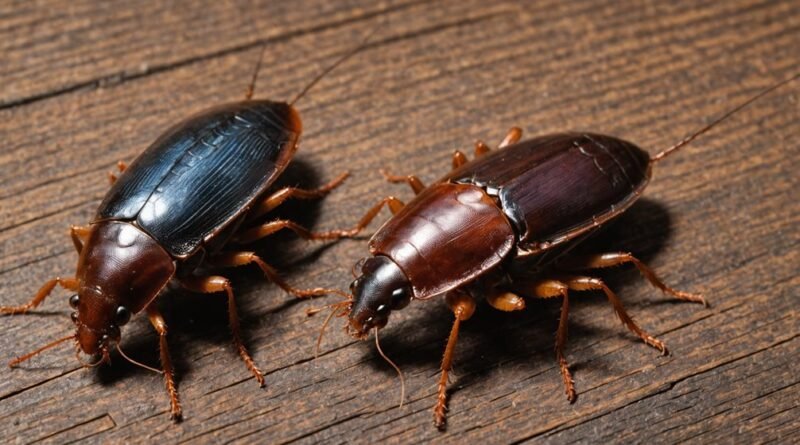
Smoky Brown Cockroach Vs American Cockroach
You can spot a smoky brown cockroach by its uniform dark mahogany-brown color, while an American cockroach has a reddish-brown body with a yellowish figure-eight pattern on its pronotum. Smoky browns are smaller, measuring 1 to 1.5 inches, and they’re strong fliers that prefer outdoor spaces. Americans grow up to 2 inches and commonly invade indoor drains and basements. Both carry serious health risks, and there’s plenty more you’ll want to know.
Key Takeaways
- Smoky brown cockroaches are uniform dark mahogany-brown, while American cockroaches are reddish-brown with a yellowish figure-eight pattern on their pronotum.
- American cockroaches are larger, measuring 1.5–2 inches, compared to smoky browns at 1–1.5 inches.
- Smoky browns are strong fliers preferring outdoor humid spaces; Americans rarely fly and thrive in damp indoor environments.
- American cockroaches commonly establish permanent indoor populations near drains and basements; smoky browns primarily invade through attic vents.
- Both species release allergens, contaminate food, and require targeted elimination strategies addressing moisture, sealing entry points, and seasonal treatments.
Smoky Brown vs. American Cockroach: How to Tell Them Apart
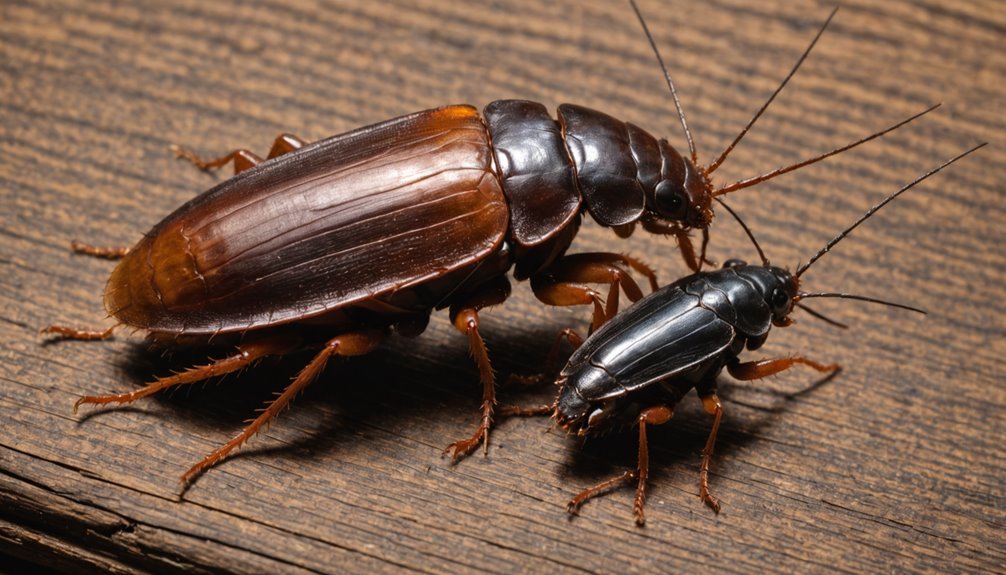
If you’re trying to tell a smoky brown cockroach apart from an American cockroach, the most reliable starting point is color.
Smoky browns are a uniform dark mahogany-brown with no contrasting markings. American cockroaches are reddish-brown and carry a distinctive yellowish figure-eight pattern on the pronotum, the plate just behind the head.
Smoky browns are uniform mahogany-brown, while American cockroaches show a telltale yellowish figure-eight pattern behind the head.
Size is your next check.
Smoky browns run about 1 to 1.5 inches, while Americans reach 1.5 to 2 inches, making them noticeably larger in adults.
Flight behavior also separates them quickly.
Smoky browns are strong fliers and actively move toward lights at night. Americans can fly, but they rarely do.
Finally, consider where you spotted it.
Smoky browns favor warm, humid outdoor spaces, while Americans are more common in damp indoor areas and sewer-connected environments. American cockroaches are also commonly known as palmetto bugs, a nickname used frequently across the southeastern United States.
Combining color, size, flight, and location gives you the clearest identification.
Where Smoky Brown and American Cockroaches Hide
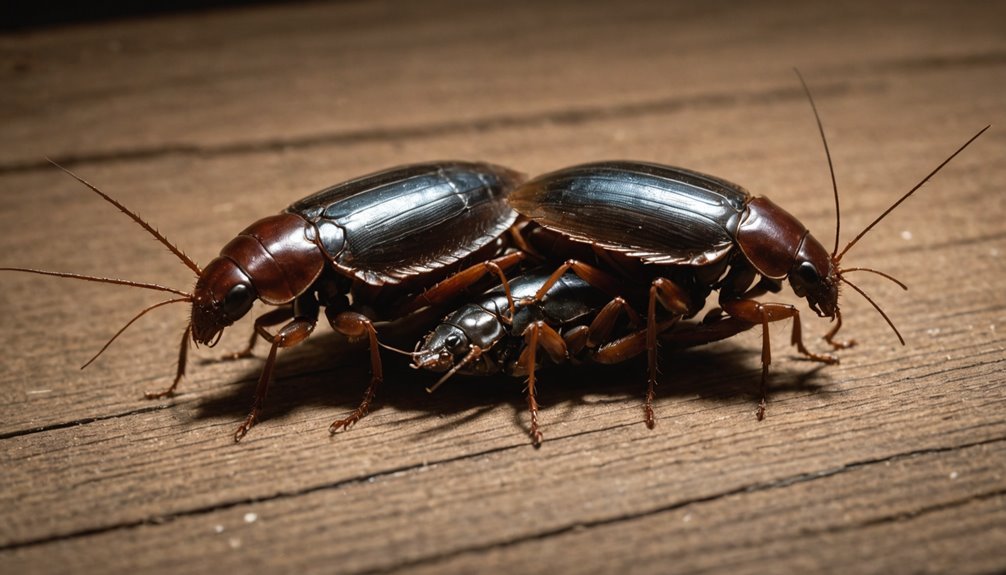
Both species gravitate toward dark, moist, sheltered spaces, but where you find them depends largely on how each one connects to its environment.
Smoky browns favor elevated harborage — tree bark, roof vents, soffits, and attics. Americans stay lower, clustering near drains, sewers, basements, and under-sink plumbing. Both exploit cracks, voids, and organic debris.
| Location | Smoky Brown | American |
|---|---|---|
| Attics & Roof Voids | Common | Rare |
| Basements & Drains | Occasional | Very Common |
| Mulch & Leaf Litter | Common | Common |
| Under Sinks & Appliances | Unlikely | Frequent |
| Tree Bark & Cavities | Frequent | Uncommon |
You’ll find droppings, shed skins, and egg cases near active harborages for either species. Grease marks along baseboards or walls signal repeated cockroach travel. Since both hide during the day, inspecting at night gives you a much clearer picture of where infestations actually concentrate. Smoky brown cockroaches are particularly susceptible to dehydration, making moist environments like tree holes, mulch beds, and moisture-prone structures critical to where they establish harborage.
Which Species Is More Likely in Your Home?
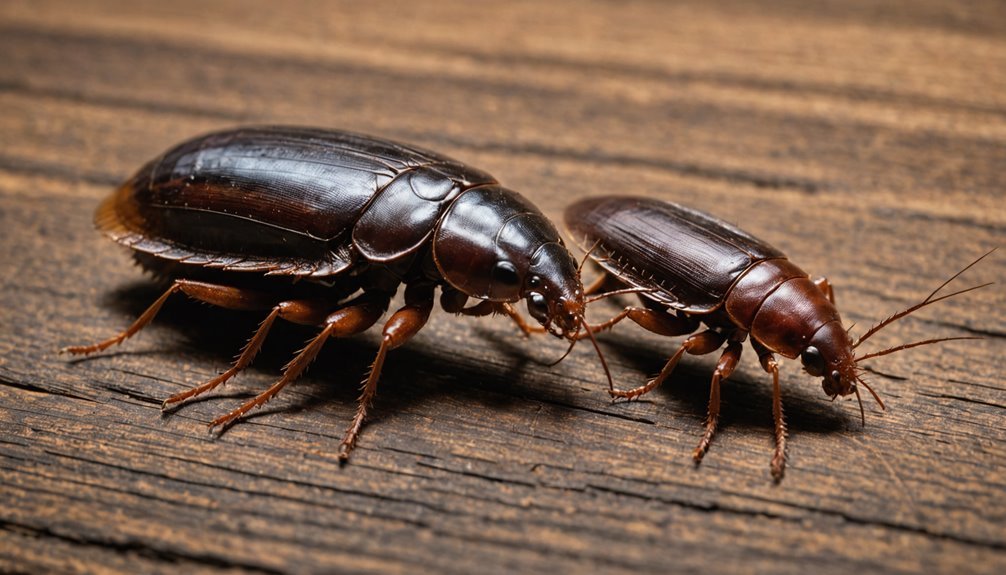
Whether you’re more likely to find an American or smoky brown cockroach inside your home comes down to where you live, how your home is built, and what conditions it offers.
American cockroaches are generally the more common indoor species. They enter through drains, utility penetrations, and ground-floor gaps, then settle in basements, crawl spaces, and areas with consistent moisture.
If you’re seeing roaches repeatedly at lower levels indoors, an American cockroach infestation is the stronger bet.
Smoky brown cockroaches are more often outdoor invaders. They’re strong fliers attracted to exterior lights and tend to enter through attic vents, soffits, and upper-level openings.
You’re more likely to encounter them if your home has open eaves, exterior clutter, or moist landscaping near the foundation.
In warm southern states, both species are common, but American cockroaches remain the more persistent indoor threat across a wider range of home environments. Unlike smoky brown cockroaches, American cockroaches can establish permanent indoor populations, making them significantly harder to eliminate once they’ve settled inside.
What Diseases and Allergens These Roaches Carry
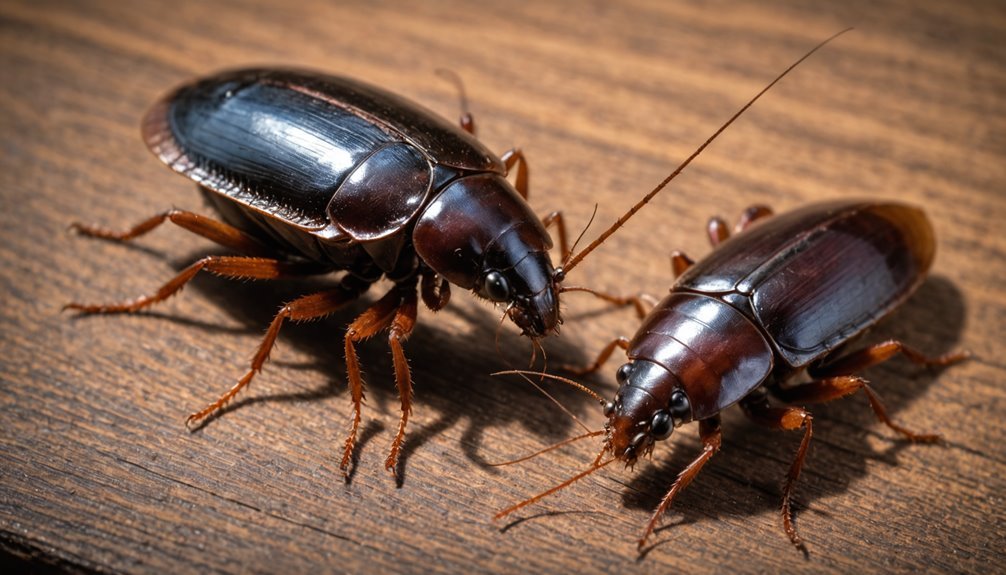
Whether you’re worried about allergies, asthma, or food contamination, both the American and smoky brown cockroach pose real health risks inside your home. Their body parts, saliva, feces, eggs, and shed cuticles all release allergens that trigger serious reactions, even after the roach is dead.
Here’s what these species carry:
- Cockroach allergens – Bla g 2 is the most significant, causing sensitization in 54–71% of affected individuals.
- Asthma triggers – Allergen exposure above 8 U/g of dust increases asthma attacks, ER visits, and hospitalizations.
- Bacteria and pathogens – Both species contaminate food and surfaces after moving through unsanitary areas.
- Parasites – Smoky brown cockroaches can feed on fecal matter, making them potential vectors for nematode parasitism.
You’ll also experience symptoms like sneezing, watery eyes, postnasal drip, sinus infections, and skin rashes from prolonged exposure. Urban inner-city homes are particularly at risk, as studies show that 50% of these households contain clinically relevant cockroach allergen levels, making them hotspots for sensitization and asthma development.
How to Get Rid of Each Species for Good
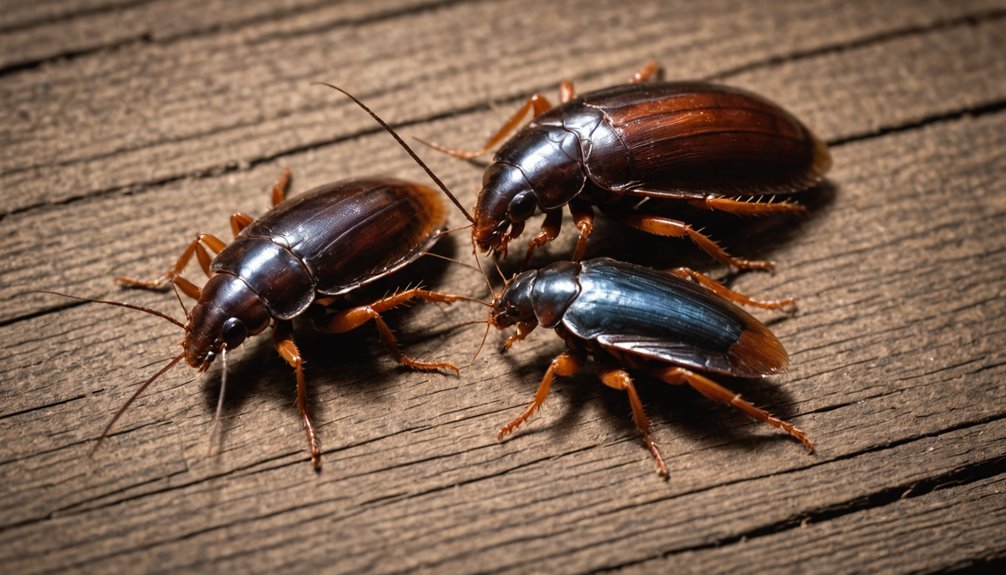
Getting rid of smoky brown and American cockroaches requires two different approaches because each species has distinct habits, entry points, and harborage preferences.
For smoky browns, start outside. Clear leaf litter, brush piles, and wood stacks away from your home. Fix moisture problems, seal every crack around windows, doors, and pipes, and apply residual perimeter sprays along rooflines and exterior gaps.
Inside, set sticky traps, use targeted baits, and eliminate food sources behind appliances and cabinets.
For American cockroaches, focus on interior moisture and sewer-connected spaces. Repair plumbing leaks, keep floor drains from drying out, and remove damp clutter from basements and crawl spaces.
Seal gaps around pipes, utility penetrations, and drains. Place gel baits along hidden travel paths near warm, moist harborage.
Both species require repeat seasonal treatments since outdoor pressure commonly drives re-infestation. Consistency is what keeps them gone long-term. Smoky brown cockroaches are especially common in southern states and thrive in warm, humid climates that support year-round outdoor populations.
Frequently Asked Questions
Are Smoky Brown Cockroaches Stronger Flyers Than American Cockroaches?
Yes, smoky brown cockroaches are stronger flyers than American cockroaches. They’ve got fully developed wings that extend beyond their bodies, and you’ll often find them flying toward lights at night.
Do Both Species Remain Active During the Day or Only at Night?
Both species are mainly nocturnal, but you can spot either one during the day. If you’re seeing them in daylight, it’s usually a warning sign of overcrowding, moisture problems, or nearby hiding spots.
Can Dead Roaches Near Drains Indicate a Hidden Infestation Nearby?
Yes, dead roaches near drains can indicate a hidden infestation nearby. If you’re finding them repeatedly, it’s a warning sign you shouldn’t ignore, especially when paired with live sightings, droppings, or musty odors.
Are American Cockroaches More Widely Distributed Than Smoky Brown Cockroaches?
Yes, American cockroaches are more widely distributed than smoky brown cockroaches. You’ll find them virtually worldwide because they’ve spread through human commerce, tolerate diverse habitats like sewers and buildings, and aren’t confined to warm, humid regional climates.
Do Smoky Brown Cockroaches Run Faster Than American Cockroaches Indoors?
You won’t find smoky brown cockroaches outrunning American cockroaches indoors. American cockroaches are faster floor runners inside buildings, while smoky browns rely more on flying to enter and move through structures.
Conclusion
Now that you know the differences between smoky brown and American cockroaches, you’re better equipped to tackle an infestation head-on. Don’t ignore the warning signs — both species carry dangerous pathogens and trigger allergies. Whether you’re sealing entry points, eliminating moisture, or using targeted treatments, you’ve got to stay consistent. If the problem’s beyond your control, don’t hesitate to call a pest control professional before things get worse.
