
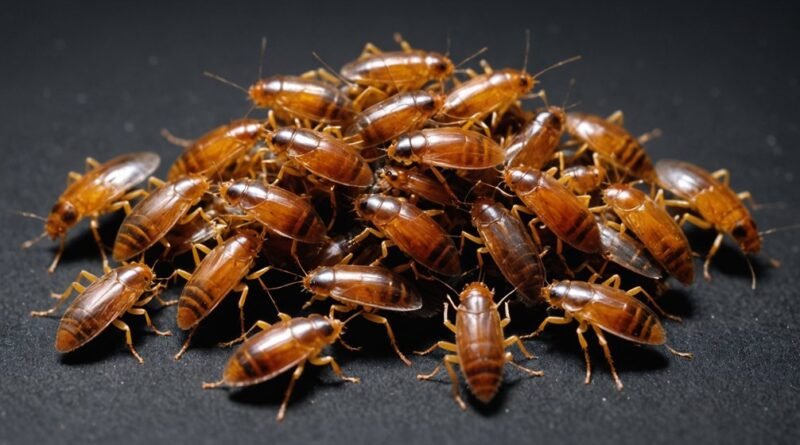
What Baby Cockroaches Look Like, Identification Guide With Photos
Baby cockroaches (nymphs) are tiny, wingless, fast, and oval with long twitching antennae and spiny legs. They hatch white, then darken within hours. German nymphs are light brown with two dark stripes; American are paler and rounder; Oriental are dark, shiny, and almost black; Brown-banded are slim with light bands; Australian show yellow spots on reddish brown. You’ll spot them in kitchen and bathroom cracks, under appliances, and near plumbing—multiple sizes mean an active infestation. Keep going to identify yours precisely.
Key Takeaways
- Baby cockroaches (nymphs) are small, wingless, fast, with oval, flattened bodies, long antennae, and six spiny legs.
- They hatch white and soft, darkening within hours; grow through multiple molts, leaving shed skins near hiding spots.
- German nymphs are light brown with two dark stripes; American are larger, pale to gray-brown; Oriental are dark, shiny, uniform brown-black.
- Brown-banded nymphs are slim with light body bands and darker heads; Australian nymphs show light yellow spots on reddish-brown bodies.
- Finding various-sized nymphs in kitchens, bathrooms, or cracks indicates active breeding nearby and a growing infestation.
Key Traits of Baby Cockroaches at a Glance
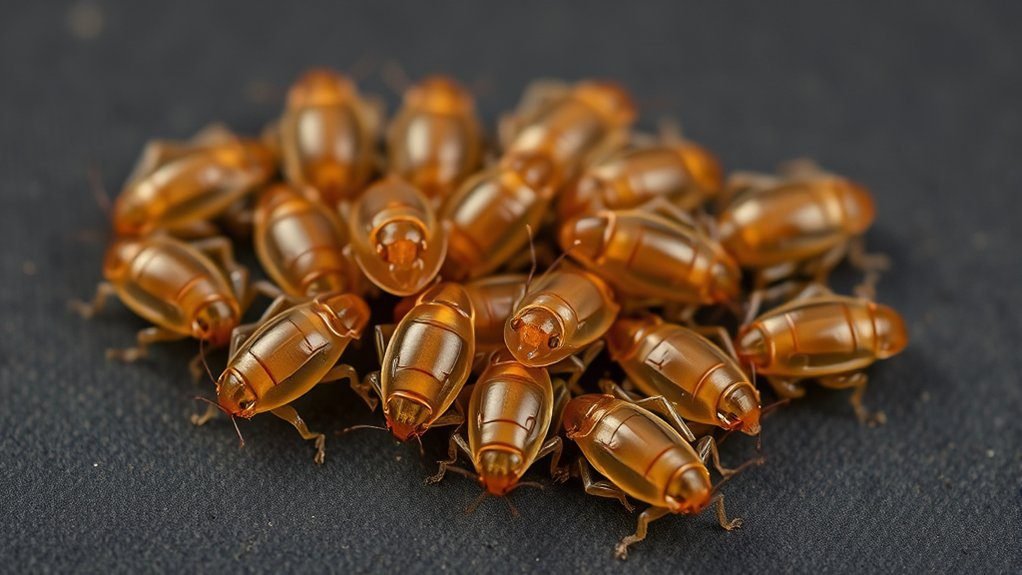
Skittering clues set baby cockroaches apart at a glance: they’re small, wingless, and fast, with oval, flattened bodies and long, twitching antennae. You’ll notice they’re lighter than adults—often pale, white, or translucent right after molting, then darkening as they harden. Their bodies look slightly rounder than adults, but still flattened for slipping into cracks.
Heads sit partly under a shield-like thorax, mouthparts point backward, and two short rear cerci act like vibration sensors. Count six spiny legs ending in tiny claws that help them climb; their compound eyes look large for their size. Expect darting, stop‑and‑go movement and quick retreats to dark, humid spots in walls, cabinets, or debris. Finding one baby often means more are nearby, since nymphs hatch in groups from egg cases.
Because they’re wingless through all nymph stages, they rely on crawling. As they molt, their color deepens and bodies elongate, gradually matching adult proportions. Growth speed hinges on temperature and conditions, and early spotting matters since nymphs often stay hidden.
Species-by-Species Nymph Identification
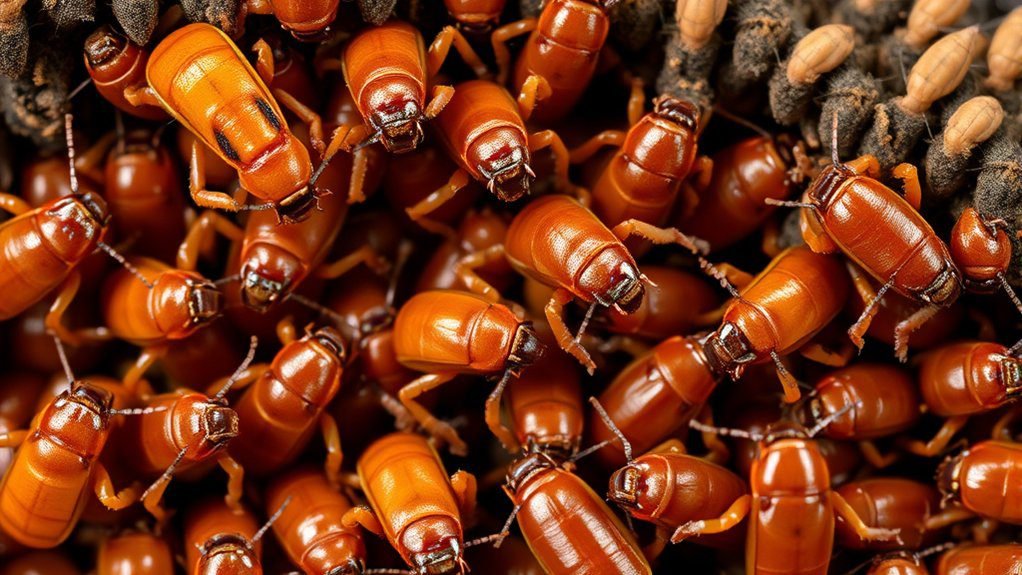
Now that you can spot baby roaches by shape and behavior, you can pin down which species you’re seeing by color patterns, size ranges, and a few telltale markings.
German nymphs stay small (about 3–12 mm), look light brown, and show two dark parallel stripes down the back; they’re oval, flattened, and fast.
German nymphs are tiny, light brown, with two dark back stripes—oval, flat, and fast
American nymphs start pale, then turn grayish-brown to reddish-brown; early instars often look subtly banded. They’re significantly larger than German nymphs at comparable ages and rounder-bodied. For accurate control, identifying species helps target where they hide and how they spread in homes.
Oriental nymphs emerge dark and shiny—brown to nearly black—with few markings and a smooth, uniform look; think solid, not banded.
Brown-banded nymphs are the slimmest, topping out near 0.5 inch, with crisp light bands crossing the body and typically darker heads.
Australian nymphs resemble Americans but keep light yellow spots on a reddish-brown body.
In all species, expect wingless, flat-bodied youngsters with six spiny legs and long, active antennae.
Growth Stages, Size, and Color Changes
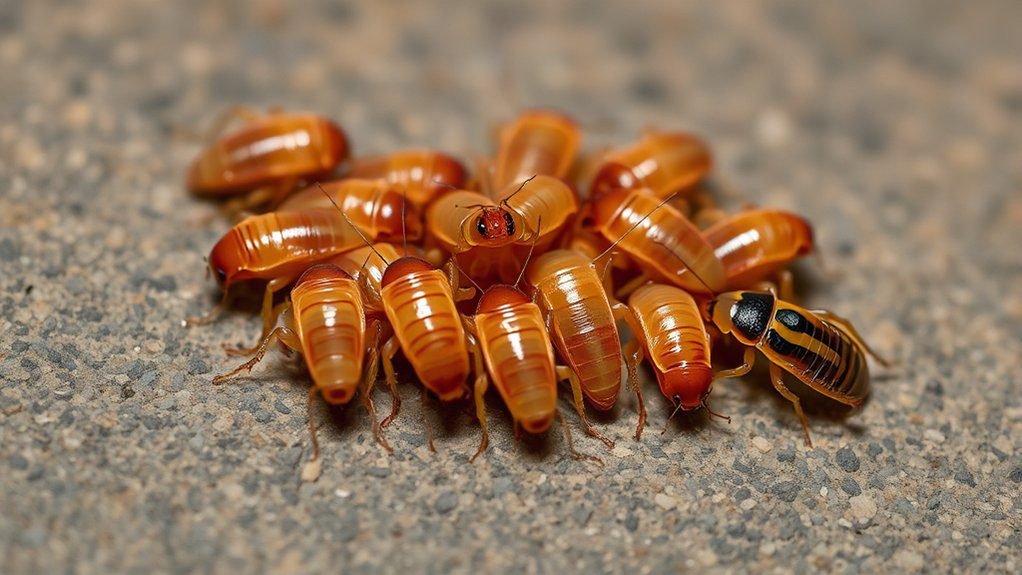
Although they all look like tiny versions of adults at a glance, baby cockroaches follow a clear pattern: they hatch white and soft, harden and darken within hours, then progress through several molts that increase size and deepen color.
You’ll see 5–13 instars depending on species, and shed skins often pile up near hiding spots. With each molt, bodies elongate, legs stay spiny and fast, antennae remain long and alert, and wings don’t appear until adulthood.
Size rises predictably. German nymphs start near 3 mm and reach adulthood in about 50–60 days. American nymphs begin around 5 mm and can grow to about 30 mm, taking 6–12 months. Free printable guides can help you act quickly once you’ve identified nymphs and their likely species.
Oriental nymphs hatch near 6 mm and top out around 12 mm. Brown-banded nymphs run smaller, roughly 1.5–10 mm.
Color shifts mark progress: German nymphs brown with dark stripes, Americans redden from gray-brown, Orientals darken to shiny black-brown, and Smoky Browns show a midsection white band before turning uniformly brown.
How to Distinguish Baby Roaches From Other Small Insects
Knowing how nymphs grow helps you spot them among other small bugs. Baby roaches have flattened, oval bodies with a hard, flat exoskeleton that lets them squeeze into tight gaps. Baby cockroaches indicate ongoing infestation and adult presence, so spotting nymphs usually means there are breeding adults nearby.
Baby roaches are flat, oval, and built to squeeze into the tiniest cracks.
Look for six long, spiny legs ending in tiny claws and two long, restless antennae. Nymphs lack wings, unlike many small insects that show wing pads or wings early. Their thorax partly shields the head, and their bodies are broad rather than cylindrical.
Watch how they move. Roach nymphs dart quickly toward dark cracks when startled, reacting to vibrations with sudden escapes. They don’t fly or jump, which separates them from fleas, leafhoppers, or tiny winged gnats.
Compared with slow movers like silverfish or carpet beetles, nymphs are faster and more evasive.
Check color and markings. Freshly hatched nymphs appear white or translucent, then darken. German nymphs show parallel dark stripes; brown-banded nymphs display two pale bands. American nymphs turn reddish-brown with less distinct markings.
Where You’ll Find Them and What Their Presence Means
Even when you don’t see adults, baby cockroaches give away where an infestation lives. You’ll spot nymphs in tight cracks about 5 mm wide, especially in kitchens and bathrooms where humidity, warmth, and darkness converge.
Check under and behind refrigerators, dishwashers, and stoves; around plumbing gaps at sinks and toilets; and inside wall voids behind backsplashes and baseboards. Basements, crawl spaces, and utility rooms harbor cooler, damp refuges for oriental and American roaches. The presence of baby cockroaches strongly suggests a breeding population nearby.
Outdoors, smoky brown and oriental nymphs hide in mulch, lawn debris, trees, and near garbage bins, then move inside through small foundation gaps—often during hot or dry spells seeking moisture in basements and bathrooms.
Finding nymphs means a breeding population is present. Multiple nymph sizes indicate ongoing reproduction and a growing problem, not a stray roach.
Species can flag issues—oriental nymphs point to moisture leaks. Expect spread through walls and plumbing, especially in multi-unit buildings. Look for shed skins, pepper-like droppings, and egg cases.
Frequently Asked Questions
Do Baby Cockroaches Bite or Pose Health Risks?
They rarely bite you, and nymphs aren’t known to target people. Still, you face health risks: they spread pathogens, contaminate food and surfaces, and trigger allergies or asthma. Treat infestations promptly, clean thoroughly, seal entry points, and store food tightly.
How Long Do Baby Cockroaches Survive Without Food?
They usually survive only several days to about two weeks without food, less than adults. You’ll see survival vary by species and temperature. Without water, they die within a week—often sooner—so drying out infested areas accelerates control.
What Attracts Baby Cockroaches Specifically?
Food crumbs, grease, moisture, warmth, and shelter attract baby cockroaches. You’ll draw nymphs with decaying organic matter, starches, sugary or fermented residues, and adult pheromones. They prefer dark cracks, clutter, humidity, and undisturbed spaces near appliances. Clean, dry, declutter.
Are Baby Cockroaches Active During the Day?
No, you rarely see them by day. They’re mostly nocturnal, hiding in cracks due to winglessness and vulnerability. You’ll spot daytime nymphs when infestations are heavy, shelters are disturbed, or warmth, humidity, and competition push them out.
Can Baby Cockroaches Climb Smooth Surfaces Like Glass?
Yes—they can. You’ll see nymphs scale glass and polished metal using tiny claws and arolia that act like suction pads. They move fast, favor edges and corners, and only struggle on extremely slick, lubricated surfaces.
Conclusion
Now you can spot baby roaches fast, tell species apart, and track their growth from pale nymph to darker instars. Use size, color, banding, and antenna length to separate them from beetles, bed bugs, and booklice. Check kitchens, bathrooms, basements, and warm gaps—seeing nymphs means an active, nearby nest. Act quickly: clean, reduce moisture and clutter, seal entry points, set sticky traps, and consider professional help. You’ve got the knowledge to tackle an infestation early.
