

Where Do Cockroaches Live? Top 10 Most Common Hiding Spots
Cockroaches live wherever they can access warmth, moisture, darkness, and food — and in 83.4% of urban buildings, at least some level of cockroach presence is reported annually. About 92.7% of cockroach infestations occur in residential kitchens, approximately 45% of cockroaches prefer dark, moist environments like basements and bathrooms, and around 27% of cockroach species thrive exclusively indoors without ever venturing outside. They are found in over 68 countries worldwide and adapt to virtually any climate where heated buildings exist. The hiding spot determines the species — knowing where cockroaches live in your home tells you which species you have and what treatment approach will actually work.
Key Takeaways
- Cockroaches live in warm, dark, moist areas near food and water — kitchens, bathrooms, basements, and wall voids are the most common indoor locations.
- About 92.7% of infestations occur in residential kitchens and 45% of cockroaches concentrate in dark, moist environments like basements and bathrooms.
- In 83.4% of urban buildings some cockroach presence is reported annually, and around 27% of species live exclusively indoors.
- Outdoor cockroaches shelter in mulch, leaf litter, woodpiles, drains, sewers, and tree hollows — entering homes through cracks, pipes, and vents.
- Location tells you species: German cockroaches concentrate in kitchens and bathrooms near moisture; American cockroaches in basements and sewers; brown-banded in dry elevated furniture and electronics.
Where Cockroaches Live Inside Your Home
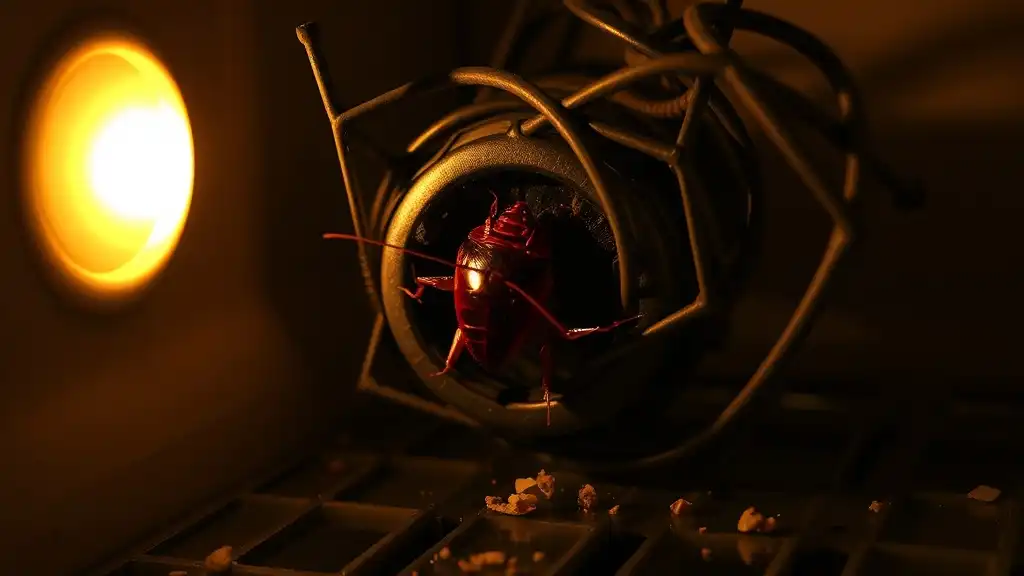
Cockroaches are nocturnal insects that spend daylight hours concealed in harborage and emerge after dark to forage. Their hiding spots follow a consistent pattern: warm, dark, tight spaces near food and water sources. About 92.7% of cockroach infestations concentrate in residential kitchens because this single room combines heat from appliances, food debris from cooking, and moisture from plumbing — the three conditions cockroaches need simultaneously. Inside a kitchen, cockroaches pack into motor housing compartments behind and beneath refrigerators, inside the narrow gap between the refrigerator and adjacent cabinetry, behind and beneath stoves and dishwashers, inside cabinet hinge crevices, under and inside toasters and microwaves, and along the wall-floor junction behind appliances where grease accumulates. These locations remain warm from motor heat, dark from appliance shadows, and consistently supplied with food particles from cooking activities.
Approximately 45% of cockroaches prefer dark, moist environments like basements and bathrooms. Bathroom cockroaches concentrate under sink cabinets near drain pipe penetrations, inside vanity cabinet bases, around toilet bases where moisture from condensation collects, inside wall voids adjacent to shower plumbing, and around any dripping fixtures or pipe leaks. Basements attract cockroaches through floor drains, cracks in foundation walls, utility entries, and the generally cooler and damper conditions that Oriental cockroaches prefer specifically. See our complete guide to cockroach hiding spots for a room-by-room inspection checklist.
Top 10 Most Common Cockroach Hiding Spots
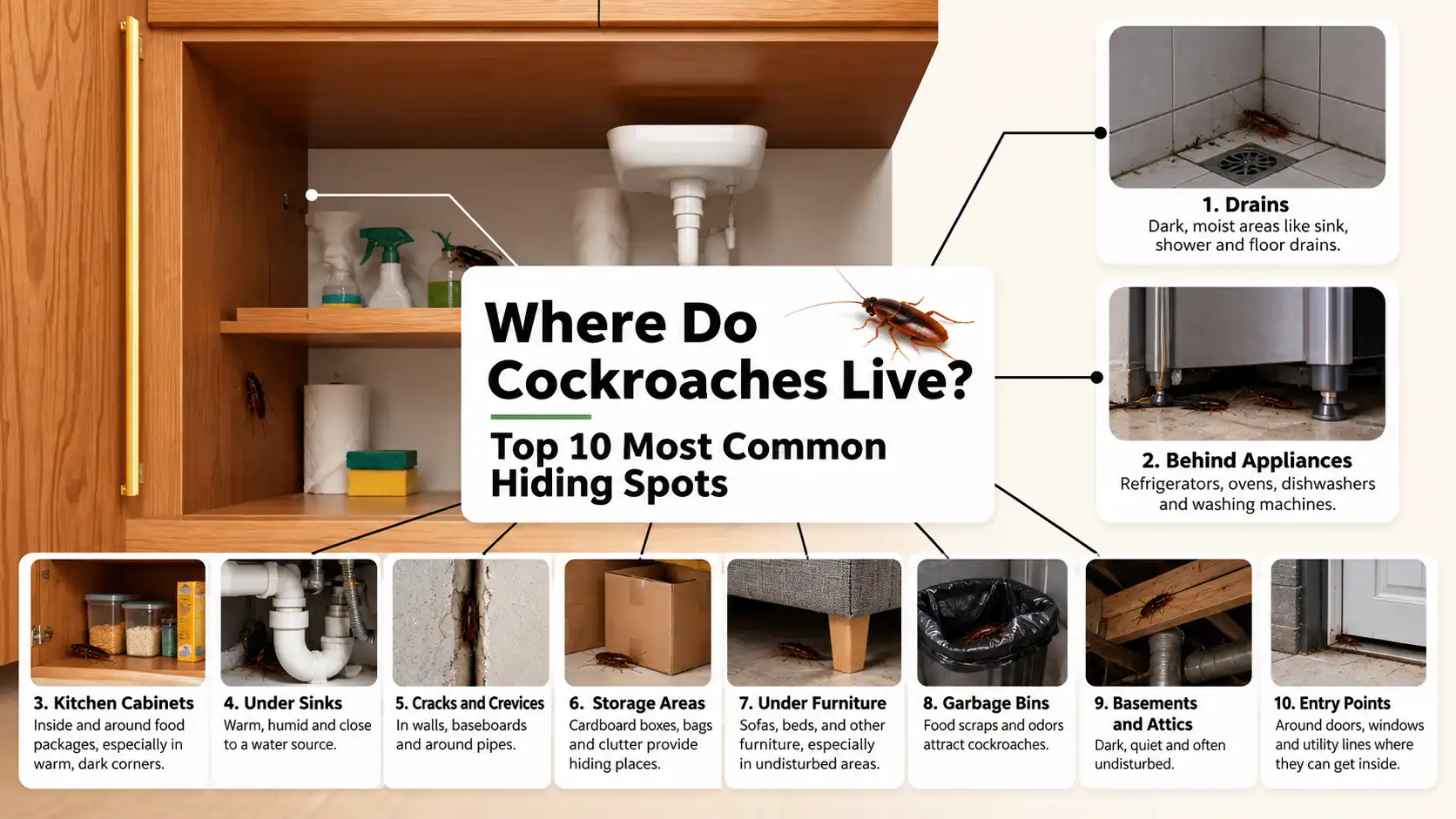
Knowing exactly where to look narrows inspection time from hours to minutes. These are the ten locations where cockroaches concentrate most consistently across all common species:
- Refrigerator motor compartment and base — motor heat and food debris make this the most common single harborage location in infested kitchens
- Under and behind stoves — grease buildup and heat create ideal conditions; check the drawer compartment and behind the back panel
- Inside cabinet hinges and door gaps — narrow, dark, and warm, often the first location to show droppings in a new infestation
- Under bathroom and kitchen sinks — pipe penetrations provide entry from wall voids; moisture from drips sustains populations near water sources
- Basement and crawl space floor drains — primary entry point for American and Oriental cockroaches from sewer infrastructure
- Wall voids adjacent to kitchens and bathrooms — hidden colony headquarters connected to multiple harborage points through pipe and electrical conduit gaps
- Inside cardboard boxes and paper stacks — cockroaches shelter and lay egg cases inside cardboard, making stored boxes a transport vehicle for infestations between buildings
- Attic and false ceiling voids — smokybrown cockroaches and American cockroaches establish in elevated building voids connected to exterior entry points
- Furniture undersides and electronics — brown-banded cockroaches specifically target these locations in warm, dry rooms away from water sources
- Garbage storage areas — indoor and outdoor garbage containers, recycling bins, and compost areas sustain outdoor populations and provide direct indoor entry if located near building entry points
Where Cockroaches Live Outside
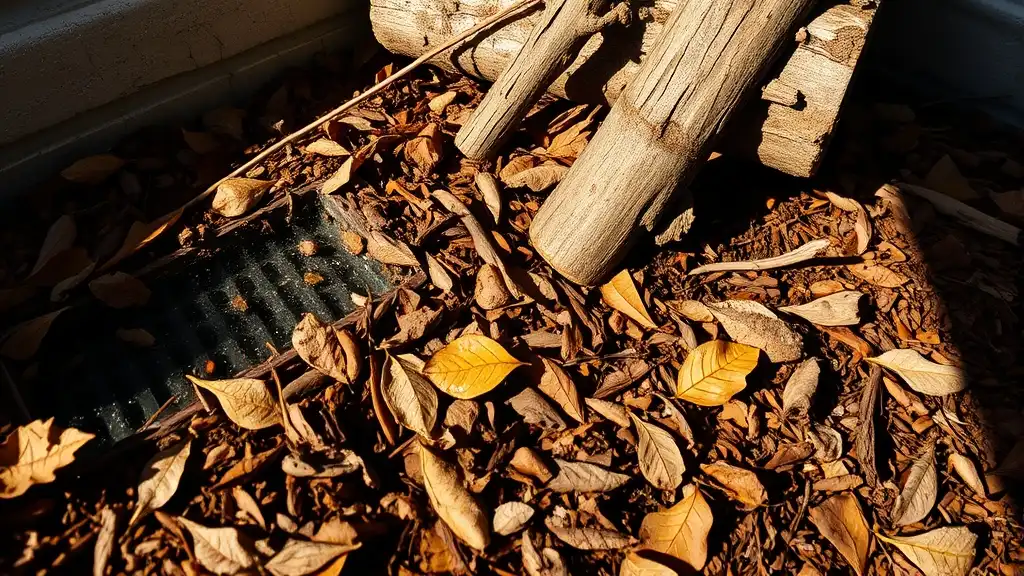
Around 27% of cockroach species live exclusively indoors, but the majority of cockroach species worldwide are outdoor insects that only enter buildings accidentally. Outdoor cockroaches concentrate in environments that provide the same core conditions as indoor harborage: warmth, moisture, darkness, and organic material for food. Mulch beds and leaf litter adjacent to building foundations sustain the highest outdoor population densities near structures — woodpiles, fallen logs, hollow trees, and loose bark provide the same conditions further from buildings. Drains, sewers, storm drain infrastructure, and utility vaults are primary outdoor harborage for American and Oriental cockroaches, which enter buildings through floor drains and plumbing penetrations rather than through structural cracks. Garbage storage areas, compost piles, and outdoor food waste containers attract outdoor cockroach populations and concentrate them near building entry points. See our full guide to outdoor cockroach species and where they shelter for species-specific outdoor habitat breakdown.
Where Different Species Live
Location is the fastest species identification tool — cockroach species are highly consistent in their habitat preferences and rarely appear in locations outside their established behavioral pattern.
| Species | Primary Indoor Location | Primary Outdoor Location | Key Requirement |
|---|---|---|---|
| German cockroach | Kitchen appliances, bathroom under sinks | Rarely found outdoors | Warmth and moisture near food |
| American cockroach | Basements, floor drains, utility rooms | Sewers, drains, mulch near structures | High moisture, cooler temperatures |
| Oriental cockroach | Basement drains, crawl spaces | Leaf litter, damp soil, drains | Cool, damp, dark environments |
| Brown-banded cockroach | Furniture, electronics, upper shelves | Rarely found outdoors | Warm, dry, elevated locations |
| Smokybrown cockroach | Attics, wall voids, upper building areas | Woodpiles, tree hollows, gutters | High humidity, wooded surroundings |
How Seasons Affect Where Cockroaches Live
Cockroach habitat preferences shift seasonally in response to outdoor temperature and humidity changes, which directly affects when indoor pressure from outdoor species peaks. Summer drives the highest indoor entry volume — outdoor populations peak, heat accelerates reproduction, and dry spells push outdoor cockroaches toward building moisture sources simultaneously. American cockroaches and smokybrown cockroaches are most commonly encountered indoors during late summer and early fall when outdoor harborage becomes dry or crowded. Winter drives outdoor species deeper into heated building infrastructure — sewer systems, utility vaults, and heated basement environments maintain their populations through cold months even in northern states. German cockroaches and brown-banded cockroaches are unaffected by seasonal variation since they live exclusively indoors year-round and maintain populations regardless of outdoor conditions. Spring brings the highest new-infestation risk from outdoor species as populations that overwintered in outdoor harborage or building perimeters expand with warming temperatures.
How Human Activity Creates Cockroach Habitat
What Attracts Cockroaches Into Buildings
Cockroaches do not enter homes randomly — they follow specific environmental signals that human activity consistently produces. Food residue on dishes, crumbs on floors, pet food left in open bowls overnight, and unsecured garbage containers all generate the chemical signals that draw cockroaches toward buildings and inside them. Moisture from leaky pipes, condensation from inadequately insulated cold water lines, and standing water in drip pans and drain trays provide the water access that cockroaches need but cannot always find outdoors. Cardboard boxes transported from infested warehouses, secondhand furniture, and grocery bags carried through infested common areas all serve as direct introduction vehicles, bypassing exterior exclusion measures entirely. In urban areas, up to 83.4% of buildings report some cockroach presence annually — not because all of those buildings have hygiene problems, but because shared plumbing infrastructure, common corridors, and adjacent building connectivity make isolation from neighboring populations extremely difficult without active management. The bacteria and allergens cockroaches produce — including Salmonella, E. coli, and the Bla g 1 and Bla g 2 proteins that trigger asthma and allergic reactions — make understanding and controlling their habitat preferences a genuine health priority rather than just a housekeeping concern.
How to Find Where Cockroaches Are Living in Your Home
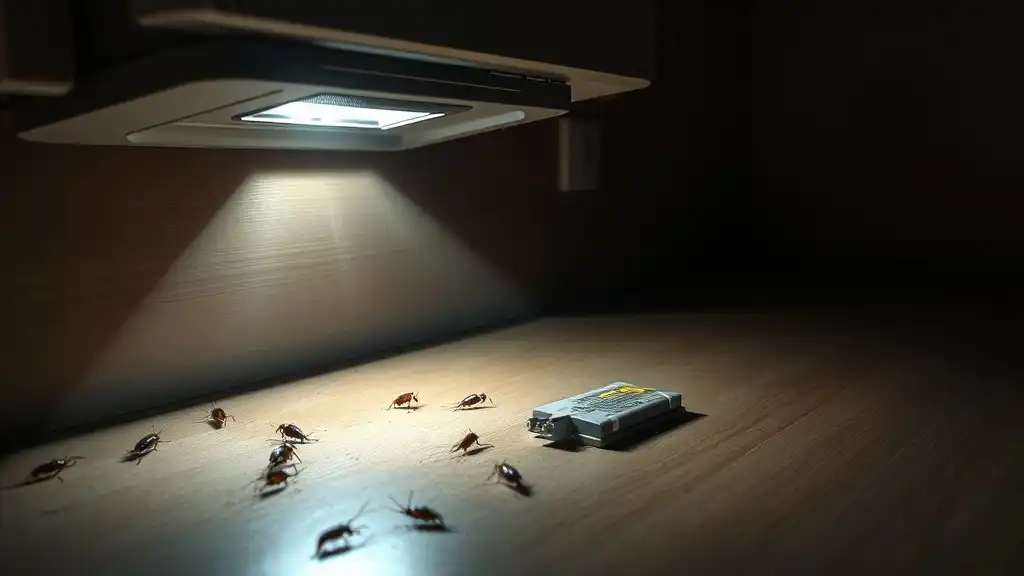
The fastest way to confirm where cockroaches are living is a flashlight inspection of the top 10 hiding spots above combined with sticky monitoring trap deployment. Pull appliances away from walls, check the back panels and motor compartments, inspect cabinet hinges and drawer bases, and look along baseboard edges with a flashlight in a darkened room. Droppings (dark pepper-like specks), smear marks along edges, shed skins, and egg cases confirm active harborage in specific locations. Place sticky traps at floor level along wall-floor junctions in suspected rooms and check them after 24 to 48 hours — the trap with the highest capture count is within 5 to 10 feet of the primary harborage. See our outdoor cockroach guide if evidence points to entry from outside rather than an established indoor colony. For established infestations in wall voids or drain infrastructure, a licensed pest control professional can access locations that standard inspection tools cannot reach and confirm the source population driving the activity you are seeing.
Frequently Asked Questions
Where Do Cockroaches Usually Live?
Cockroaches live wherever they can access warmth, darkness, moisture, and food simultaneously. About 92.7% of infestations occur in residential kitchens, with bathroom under-sink areas and basement drains as the next most common locations. German cockroaches live exclusively indoors near food and water. American and Oriental cockroaches live in sewer systems and drains outdoors and enter buildings through floor drains and pipe penetrations. Brown-banded cockroaches prefer warm, dry indoor locations in furniture and electronics. In 83.4% of urban buildings, some level of cockroach presence is reported annually.
Where Do Cockroaches Hide During the Day?
During daylight hours cockroaches retreat to dark, tight harborage — refrigerator motor compartments, inside cabinet hinge gaps, behind stoves, under bathroom sinks, inside wall voids near plumbing, and inside any crack or crevice that provides body contact on multiple sides simultaneously. This thigmotactic behavior (preference for surfaces touching them on multiple sides) guides them to the narrowest, darkest available space. Finding droppings in a location during a flashlight inspection confirms cockroaches are using that spot as daytime harborage rather than just passing through.
Do Cockroaches Live Outside?
Yes — most cockroach species worldwide are primarily outdoor insects. Around 27% of species thrive exclusively indoors, while the majority live in outdoor environments including leaf litter, mulch, woodpiles, hollow trees, sewers, and drains. Outdoor cockroaches enter buildings accidentally through foundation cracks, floor drains, pipe penetrations, and gaps around doors and windows. In the United States, American cockroaches, smokybrown cockroaches, and Oriental cockroaches all maintain outdoor populations and only enter buildings when outdoor conditions become unfavorable or when harborage near building entries is abundant.
Do Cockroaches Live Inside Walls?
Yes. Wall voids adjacent to kitchens and bathrooms are among the most common primary harborage locations for German cockroach colonies. They access wall voids through gaps around pipe penetrations, electrical outlets, and baseboard gaps, then establish harborage inside the void where they are protected from surface treatments. Finding cockroaches only when specific areas are disturbed, or seeing them emerge from behind outlets and baseboards, typically confirms a wall void infestation. Professional treatment with crack-and-crevice application or void injection is required to reach these locations with insecticide.
What Attracts Cockroaches to Specific Areas of a Home?
Three factors determine which areas cockroaches concentrate in: warmth from appliances or building infrastructure, consistent moisture from plumbing or condensation, and accessible food from cooking debris or garbage. Remove any one of these three and cockroach harborage quality drops significantly. Kitchens attract the highest concentration because all three factors are present simultaneously. Bedrooms and living rooms with no food access and no moisture sources attract only species like brown-banded cockroaches that do not require moisture. Garages and attics attract outdoor species entering through exterior gaps in building areas with less human disturbance.
